

Secure Logistics Market Demand Is Being Set by Loss Severity, Chain-of-Custody Control, and High-Value Movement Risk
Secure logistics is purchased when the shipment value, theft exposure, regulatory liability, or cash-handling risk is high enough that ordinary freight, courier, or warehouse control is not acceptable. The service role is not only armored movement; it includes cash-in-transit, ATM replenishment, vaulting, high-value cargo transport, secure warehousing, GPS-monitored vehicles, tamper-evident packaging, dual-driver routing, route-risk planning, access-controlled handling, and documented chain of custody. The Secure Logistics Market is valued at USD 108.99 billion in 2026 and is projected to reach USD 208.67 billion by 2035, growing at a CAGR of 7.49%. Demand is strongest among banks, central banks, retailers, ATM operators, jewelry and precious-metal dealers, pharmaceutical companies, electronics manufacturers, luxury goods brands, government agencies, and logistics operators handling theft-prone freight.
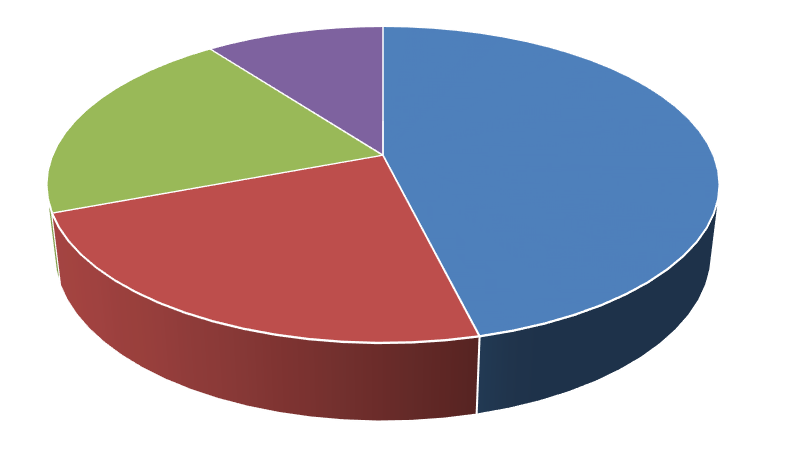
Secure Logistics Market Demand Is More Closely Linked to Loss Severity Than Shipment Volume
The market is not expanding because every shipment needs security. It grows because a smaller share of shipments carries a much higher financial and operational penalty when compromised. A truckload of food, copper, mobile phones, AI chips, prescription drugs, cigarettes, banknotes, gold, or luxury watches can create six-figure to eight-figure exposure in a single event. This makes secure logistics a risk-priced service rather than a standard transport add-on.
In January 2026, CargoNet data showed that U.S. and Canada cargo theft losses reached nearly USD 725 million in 2025, up 60% from the previous year, while confirmed incidents rose 18%. The average value per theft increased 36% to USD 273,990. That figure explains why secure logistics buyers are not only asking for guards or armored vehicles; they are asking for verified carrier identity, geofenced routing, cargo tracking, controlled handover, and exception alerts.
The freight risk profile has also changed from physical hijacking alone to carrier impersonation and shipment diversion. In April 2026, the FBI’s Internet Crime Complaint Center warned that cyber-enabled strategic cargo theft was increasing across the United States and Canada. Criminal groups were using phishing, fake carrier identities, compromised broker accounts, and fraudulent shipment listings to access real loads. This directly increases demand for secure logistics providers that combine transport security with identity verification, dispatcher controls, driver validation, and digital audit records.
Cash-in-Transit Still Holds a Strong Position Because Cash Requires Physical Availability
Cash logistics remains one of the strongest service categories because cash must be collected, counted, authenticated, stored, redistributed, and replenished even in markets with high digital payment adoption. Banks and retailers do not buy this service only for transportation; they buy reduced cash shrinkage, lower branch workload, ATM uptime, insurance compliance, and auditable reconciliation.
Cash-in-transit has a different operating requirement from ordinary logistics. Vehicles need crew protocols, route secrecy, onboard safes, panic alarms, branch-to-vault coordination, insurance-approved handling procedures, and secure counting infrastructure. ATM managed services require replenishment forecasting, cassette preparation, first-line maintenance, cash balancing, and outage reduction. This is why ATM managed services and digital retail cash solutions are gaining share over basic armored pickup.
Brink’s reported in February 2026 that its fourth-quarter 2025 revenue grew 9%, with 5% organic growth, while ATM Managed Services and Digital Retail Solutions recorded 22% organic growth in the quarter. This indicates where customer adoption is moving: banks and retailers increasingly prefer outsourced cash ecosystems rather than vehicle-only pickup contracts. The product type with stronger momentum is therefore managed cash service, not traditional cash-in-transit alone.
India shows why cash logistics cannot be written off as a declining service. In May 2026, the Reserve Bank of India’s annual-report data showed currency printing expenditure fell 23.5% to ₹4,875.2 crore in FY2025–26 from ₹6,372.8 crore, even as cash circulation increased. Lower printing cost does not reduce the logistics requirement; larger circulation values still require secure movement between RBI currency chests, commercial banks, ATMs, retail cash points, and cash-processing facilities.
High-Value Cargo Security Is Strongest Where Resale Value and Theft Liquidity Are High
High-value cargo protection is gaining intensity in electronics, semiconductors, pharmaceuticals, copper, precious metals, tobacco, alcohol, luxury goods, and branded consumer products. These categories are stronger than low-value general cargo because stolen goods can be resold quickly, split into smaller lots, or moved across borders with limited traceability.
Electronics and AI infrastructure hardware are now a higher-risk segment because shipment values have increased. Server racks, GPUs, memory modules, phones, and high-end consumer electronics can convert a single trailer theft into a multimillion-dollar loss. Secure logistics requirements here usually include nonstop routing, team drivers, trailer door sensors, hidden trackers, geofencing, validated carrier assignment, and parking controls.
Metals are another strong application because copper and other non-ferrous metals have easy resale channels. CargoNet’s January 2026 assessment recorded a 77% increase in metals theft in 2025, largely linked to copper demand. This is important for secure logistics because metal cargo is often moved by truck, stored in open industrial yards, and handled by multiple intermediaries. The stronger service fit is therefore not only armored movement but secure yard-to-yard transfer, verified pickup authorization, and monitored staging.
Food and beverage theft also increased sharply, with CargoNet reporting a 47% rise in 2025. Although food does not always appear to be a classic secure logistics category, palletized meat, seafood, cheese, alcohol, and branded packaged goods are attractive because they are easy to liquidate. In June 2026, New York prosecutors announced charges against eight people in a theft ring that allegedly stole nearly USD 5 million of goods from logistics sites in Pennsylvania, Virginia, and New Jersey between October 2025 and April 2026, including USD 432,000 in cheese and more than USD 3.3 million in cigarettes. The case illustrates why retailers and distributors are moving from basic freight vetting to security-controlled carrier assignment.
Compliance and Chain-of-Custody Needs Are Stronger in Pharma Than in General Freight
Pharmaceutical secure logistics is not only about theft prevention. The operating requirement includes temperature integrity, tamper evidence, controlled-substance handling, batch traceability, consignee verification, and proof that custody was maintained from origin to delivery. For vaccines, biologics, oncology drugs, narcotics, and high-value specialty medicines, a shipment failure can trigger product quarantine, regulatory investigation, patient-supply disruption, and insurance claims.
This makes pharma one of the stronger application fits for secure logistics even when shipment volume is lower than retail goods. Buyers usually require GPS visibility, temperature monitoring, validated packaging, alarm escalation, driver training, controlled parking, and documented handoff. Dual-driver movements and nonstop transit become relevant when the cargo value or product sensitivity is high enough to make rest-stop exposure unacceptable.
Healthcare shipments also create reputational risk. A stolen or temperature-compromised product cannot simply be replaced like ordinary merchandise. This is why pharmaceutical manufacturers, wholesalers, 3PLs, and specialty distributors pay more attention to lane risk, validated carriers, exception reporting, and audit-ready documentation.
Service Support and Network Density Decide Which Providers Win
The strongest secure logistics providers are not only those with vehicles. They need branches, vaults, cash-processing centers, trained crews, control towers, insurance coverage, compliance procedures, and incident response capability. Network density matters because banks, retailers, and ATMs require predictable pickup windows, emergency replenishment, and local service continuity.
Loomis, Brink’s, Prosegur, GardaWorld, CMS Info Systems, Radiant Cash Management, and regional armored operators compete differently depending on service depth. Global providers are stronger in multinational valuables movement, cross-border high-value cargo, and large banking contracts. Domestic specialists are stronger where local route knowledge, retail density, currency-chest proximity, and regulatory permissions matter more than global coverage.
The service model with higher growth is integrated secure logistics: transport plus processing, storage, reconciliation, tracking, and reporting. Basic point-to-point armored movement remains necessary but faces margin pressure because buyers increasingly evaluate providers on uptime, loss prevention, digital reporting, and audit performance.
Major Constraints Are Labor Risk, Insurance Cost, Route Exposure, and Fragmented Standards
The Secure Logistics Market has clear demand, but expansion is constrained by operating cost and risk concentration. Armored crews, trained drivers, cash handlers, control-room staff, background checks, vehicle maintenance, fuel, insurance, and security technology all raise the cost base. In many countries, labor availability and crew safety remain major constraints because the work involves violence exposure and strict procedural discipline.
Insurance is another limiting factor. As average theft values rise, insurers push for tighter route controls, better shipment visibility, and stronger proof of due diligence. This increases compliance costs for providers and reduces the number of operators that can handle high-value contracts.
Fragmented standards also restrict scale. TAPA certification, bank security rules, pharmaceutical GDP requirements, customs procedures, aviation security, local firearms rules, and cash-handling regulations vary by region. A secure logistics provider may be strong in cash transport but weak in pharma, or strong in domestic valuables but unable to support bonded cross-border storage.
For 2026, the market’s direction is clear: buyers are not simply buying more security; they are buying fewer points of failure. The strongest demand will remain in services that combine physical protection, identity control, route discipline, custody documentation, and rapid exception response.
Secure Logistics Market Segmentation Is Moving from Armored Movement to Managed Risk Services
Segmentation in secure logistics is best understood by the level of control required over the asset rather than by vehicle type alone. A banknote shipment, a gold consignment, a temperature-sensitive oncology drug, and a truckload of AI servers all need security, but their service design is different. Cash requires reconciliation and vaulting; precious metals require custody integrity and insurance-grade storage; electronics require anti-diversion controls; pharmaceuticals require condition monitoring and regulatory traceability.
By service type, cash-in-transit remains the largest legacy segment, but managed cash services, ATM services, secure warehousing, and high-value cargo monitoring are gaining weight. Cash-in-transit contracts are still essential for banks, central banks, retailers, casinos, fuel stations, toll operators, and public institutions. However, the higher-value contract opportunity is shifting toward end-to-end service models that include cash forecasting, cassette preparation, counting, vault outsourcing, reconciliation, intelligent safes, and digital reporting.
The specification requirement is also widening. Basic secure logistics uses armored vehicles, trained crews, branch-to-branch movement, and route planning. Higher-performance contracts require real-time tracking, geofencing, dual authentication at pickup and delivery, tamper-evident seals, electronic proof of custody, panic alerts, secure parking rules, driver vetting, insurance-compliant reporting, and escalation protocols. In high-risk freight lanes, buyers increasingly ask for route-risk assessment, 24/7 control-tower monitoring, verified carrier assignment, and exception management.
A practical segmentation view is:
- Cash-in-transit and vaulting: banks, ATMs, retailers, government cash offices, currency chests, casinos, toll operators.
- ATM managed services: ATM cash replenishment, cassette loading, forecasting, first-line maintenance, cash balancing, outage reduction.
- Retail cash management: intelligent safes, store cash pickup, deposit automation, reconciliation, shrinkage reduction.
- Valuables logistics: gold, diamonds, jewelry, precious metals, banknotes, artworks, luxury goods.
- High-value cargo security: electronics, semiconductors, AI hardware, branded consumer goods, tobacco, alcohol, pharmaceuticals, metals.
- Secure warehousing and control towers: bonded storage, vault storage, GPS tracking, route control, alarm response, custody reporting.
Cash, ATM, and Retail Contracts Remain Strong Because Service Frequency Is High
Cash-related secure logistics is less about shipment value per movement and more about frequency, network reach, and reconciliation accuracy. A bank branch, ATM network, or retail chain does not need a single secure trip; it needs repeated pickups, replenishment, cash balancing, shortage control, and predictable service-level compliance. That creates recurring contract revenue and makes this segment more stable than project-based high-value cargo movements.
ATM services are stronger than basic cash pickup because banks and payment infrastructure operators want fewer vendors handling forecasting, replenishment, monitoring, and maintenance. A cash-in-transit vehicle may complete the physical movement, but ATM managed services reduce downtime, improve cash availability, and lower branch workload. This is why integrated ATM and digital retail cash services have grown faster than conventional armored transport in mature markets.
India shows a different adoption pattern from the United States and Western Europe. Cash usage remains structurally high across small retail, semi-urban commerce, fuel stations, local services, and informal trade. Secure logistics providers therefore serve both urban ATM networks and retail cash collection across smaller cities. The operating model depends on dense route coverage, local crew availability, strong bank relationships, and regional cash-processing capacity.
In the United States and Canada, cash logistics is relatively mature, but retail cash management still has room for efficiency upgrades. Large retailers use intelligent safes and deposit automation to reduce store-level handling, employee exposure, and reconciliation gaps. For banks, the buying decision is linked to branch rationalization and ATM outsourcing rather than cash circulation alone.
High-Value Cargo Services Are Led by Electronics, Metals, Pharma, and Luxury Goods
The high-value cargo segment is strongest where cargo is compact, liquid in resale markets, and difficult to recover once split. Electronics and semiconductor-related shipments are now among the highest-risk cargo types because server components, memory modules, phones, laptops, and AI hardware carry high value density. A single trailer can contain millions of dollars of cargo, so the secure logistics specification often includes nonstop transit, two-driver teams, concealed tracking devices, sealed trailer protocols, restricted parking, and verified delivery appointments.
Metals are another major application because copper, aluminum, nickel, and other non-ferrous materials can be resold through fragmented channels. The security requirement is different from jewelry logistics. Bulk metal cargo may not need vault-grade storage, but it does need yard security, verified pickup authorization, driver identity checks, seal integrity, and controlled staging.
Pharmaceutical shipments have a separate specification class. High-value medicines require chain of custody, temperature control, batch traceability, and tamper evidence. For controlled substances and specialty biologics, buyers need audit-ready documentation, secure handover, validated packaging, and deviation reporting. The strongest secure logistics providers in this application are those that can integrate security procedures with GDP-aligned logistics, cold-chain visibility, and product quarantine rules.
Luxury goods, jewelry, and precious metals sit at the highest end of custody-sensitive logistics. Here, the buying decision is shaped by insurance approval, vault availability, crew reliability, cross-border documentation, secure airport handling, and discreet routing. The customer base includes bullion dealers, jewelry exporters, luxury retailers, central banks, auction houses, and private wealth logistics providers.
Regional Demand Is Led by Risk Density, Cash Dependence, and Retail Network Structure
North America is a high-value cargo security market because cargo theft values have increased sharply even when incident volumes do not rise at the same pace. The region has long highway distances, large distribution centers, high trailer utilization, and high-value electronics flows linked to data centers, retail, and e-commerce. Secure logistics adoption is strongest in electronics, pharma, tobacco, branded consumer goods, and cash services for large retailers.
Europe’s demand is more compliance- and standards-led. Cross-border trucking, port congestion, bonded warehousing, luxury goods movement, pharma distribution, and TAPA-certified lanes create demand for audited security processes. Western Europe is stronger in premium valuables, pharma, cash processing, and secure warehousing, while Eastern Europe has higher sensitivity to route risk and cross-border cargo theft exposure. Buyers in Europe often emphasize certification, documented procedures, driver vetting, and insurance acceptance.
India is one of the most service-dense markets for cash logistics because of its ATM base, retail cash circulation, bank outsourcing, and semi-urban route complexity. The stronger domestic players compete through branch reach, field crew scale, bank relationships, cash-processing infrastructure, and route coverage. Demand is also linked to counterfeit detection, cash sorting, and managed services for banks and retail chains.
Latin America has high secure logistics intensity because of cash usage, inflation-linked cash handling in some markets, urban crime exposure, and valuables movement. However, currency volatility and domestic consumption swings affect transported cash values and service volumes. Providers with established local licenses, armored fleets, and branch networks have an advantage because new entrants face high regulatory and security barriers.
The Middle East is more specialized. Demand is concentrated in jewelry, bullion, luxury retail, airport cargo, cash services, and secure movement linked to free zones and international trade. Dubai, Abu Dhabi, Riyadh, Doha, and other commercial hubs support secure logistics for precious metals, luxury goods, and high-value air cargo. Africa remains fragmented, with demand led by banking, cash-in-transit, mining, telecom cash collections, and government-linked valuables movement.
Adoption Is Shifting Toward Contract Bundling and Digital Proof of Custody
Customer buying behavior is moving away from one-service procurement. Banks and retailers increasingly prefer bundled contracts covering cash pickup, processing, vaulting, ATM replenishment, reconciliation, and reporting. High-value cargo customers are asking for transport, warehousing, tracking, route monitoring, seal control, and incident escalation under one accountable provider.
The specification shift is visible in three areas. First, buyers want digital proof of custody because paper-based handover is weak in disputed claims. Second, they want real-time exception alerts rather than post-event reporting. Third, they want provider accountability across subcontracted lanes because cargo theft is increasingly linked to identity fraud and fraudulent carrier assignment.
This shift favors larger integrated providers and certified specialists. Smaller local armored transport firms still serve local cash routes and low-complexity contracts, but they face pressure when customers require control towers, APIs, digital reporting, cyber-vetting, insurance documentation, and multi-country service coverage.
Secure Logistics Market Participants Compete on Network Trust, Not Only Fleet Size
The competitive structure includes global cash and valuables logistics companies, regional armored transport operators, specialized high-value cargo firms, secure warehousing providers, cash-processing companies, ATM managed service firms, and security technology vendors. The strongest companies are those that combine physical infrastructure with process reliability. Fleet size matters, but buyer trust is built through loss history, route discipline, crew training, branch coverage, vault capacity, insurance acceptance, and audit performance.
Brink’s is positioned as a global provider of cash and valuables management, ATM managed services, digital retail solutions, and international valuables logistics. Its advantage comes from brand trust, global branch coverage, large banking relationships, and the ability to combine physical cash movement with retail cash automation. The company’s ATM Managed Services and Digital Retail Solutions show how the competitive center is moving toward service integration rather than only armored transport.
Loomis has a strong position in cash handling, international valuables logistics, automated solutions, and foreign exchange/gold services. Its business-line mix shows that traditional cash-in-transit remains important, but international and physical-asset logistics are becoming more relevant where customers need secure movement and storage of high-value assets. The company’s acquisition of a precious metals storage facility in Canada in late 2025 also reflects the rising importance of vaulting and physical asset custody.
Prosegur Cash is another major global participant, with a portfolio covering cash-in-transit, cash management, and transformation products. Its transformation products are important because they include newer service models that reduce manual cash handling and improve retail and bank process efficiency. In early 2026, the company’s transformation products grew even while traditional cash-in-transit revenue was weaker in some regions, showing the demand shift toward higher-value service layers.
GardaWorld Cash is strong in North American cash management and retail cash ecosystem services. Its positioning is centered on end-to-end cash supply chain solutions for financial institutions and consumer businesses. The company benefits from service density in North America, where retailers and banks require branch-level reliability, ATM support, deposit automation, and cash visibility.
In India, CMS Info Systems is one of the most important cash logistics and managed services providers. Its competitive edge comes from pan-India operations, large field workforce, bank relationships, ATM cash management, retail cash management, and integrated managed services. Indian competition is more route-density driven than multinational valuables logistics because local cash movement, bank outsourcing, and regional service reliability decide contract retention.
Other relevant participants include SIS Cash Services, Radiant Cash Management, G4S-linked regional operations, Dunbar legacy assets under Brink’s in the U.S., Malca-Amit for valuables and diamonds, Ferrari Group for luxury and jewelry logistics, and Brinks Global Services for international high-value shipments. In high-value cargo, competition also involves TAPA-certified 3PLs, secure freight forwarders, cold-chain specialists, and control-tower technology providers rather than only armored vehicle companies.
Pricing Pressure Comes from Labor, Insurance, Fuel, and Technology Compliance
Secure logistics pricing is contract-based and usually depends on route frequency, distance, cargo value, crew requirement, vaulting need, risk zone, insurance coverage, reporting requirement, and service-level penalties. Cash pickup in a dense urban route has a different price structure from a precious-metal shipment, a cross-border pharma consignment, or a monitored electronics trailer.
Margin pressure is strongest in labor-heavy cash routes because wages, fuel, vehicle maintenance, training, compliance, and insurance costs rise faster than basic service fees. Providers respond by bundling services, deploying intelligent safes, improving route optimization, increasing cash-processing automation, and selling digital reporting tools. In high-value cargo, pricing is more risk-based; buyers may pay premium rates for secure parking controls, team drivers, real-time monitoring, and insurance-approved custody processes.
Recent developments shaping the competitive and demand environment include:
- January 2026, United States and Canada: CargoNet reported nearly USD 725 million in cargo theft losses for 2025, with average theft value reaching USD 273,990. This supports demand for high-value cargo monitoring, verified carrier controls, and secure routing.
- February 2026, United States: Brink’s reported 9% fourth-quarter revenue growth for 2025 and 22% organic growth in ATM Managed Services and Digital Retail Solutions, showing stronger buyer preference for integrated cash service models.
- February 2026, Sweden/global: Loomis reported 2025 revenue of SEK 30,427 million and 6.0% currency-adjusted growth, with international business growth above 30% in the fourth quarter, reflecting stronger demand for secure movement of physical assets.
- March 2026, India: ICRA noted CMS Info Systems’ cash management business accounted for around 60% of revenue, with managed services up to 40%, confirming India’s shift toward integrated cash and managed service contracts.
- May 2026, Spain/global: Prosegur Cash reported first-quarter 2026 sales of EUR 497.3 million, while transformation products increased their share to 36.4% of total revenue, indicating continued migration from basic cash transport to technology-supported service models.
- May 2026, India: RBI annual-report data showed currency printing expenditure fell 23.5% to ₹4,875.2 crore in FY2025–26, while cash circulation increased, keeping cash movement, sorting, and secure processing relevant for banks and cash logistics operators.


