

Market Summary and Growth Forecast
The global Telemedicine Vital Signs Monitors Market is estimated at $2.35 billion in 2026 and is expected to reach $6.95 billion by 2035, growing at a CAGR of 12.8%.
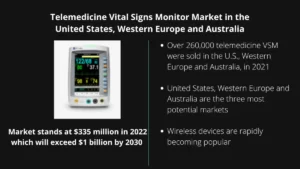
The market covers connected medical devices and monitoring systems used to capture patient vitals outside traditional clinical settings. This includes remote blood pressure monitors, pulse oximeters, digital thermometers, ECG-enabled devices, respiration monitors, connected weighing scales, multi-parameter home monitors, and integrated vital-sign kits used in telehealth and remote patient monitoring programs.
This is no longer a small device category attached to teleconsultation. It is becoming part of care delivery infrastructure. Hospitals want early warning data. Insurers want fewer avoidable admissions. Physicians want better follow-up after discharge. Patients want care without repeated hospital visits. So, the business relevance is clear. The Telemedicine Vital Signs Monitors Market sits at the point where home care, digital health, chronic disease management, and connected diagnostics meet.
| Metric | Estimate |
| Global Market Size, 2026 | $2.35 billion |
| Projected Market Size, 2035 | $6.95 billion |
| CAGR, 2026–2035 | 12.8% |
| Primary Revenue Base | Connected vital-sign monitoring devices, bundled RPM kits, device-linked platforms, clinical monitoring accessories |
| Fastest Demand Pull | Chronic disease monitoring, post-discharge care, elderly care, virtual wards, home-based cardiac and respiratory monitoring |
The biggest demand base comes from chronic care. Hypertension, diabetes-linked complications, COPD, heart failure, sleep-related disorders, and post-surgical recovery all need repeated monitoring. A single virtual consultation has limited value if the clinician does not have reliable vitals. That is why connected monitors are getting bundled into telemedicine workflows rather than sold as standalone consumer gadgets.
Technology is the strongest force shaping the market. Devices are becoming smaller, Bluetooth-enabled, cloud-linked, and easier for elderly patients to use. Multi-parameter monitors are also gaining attention because they reduce device clutter. In one kit, a provider can capture blood pressure, oxygen saturation, pulse rate, temperature, weight, and ECG inputs. This makes remote monitoring more practical for hospitals managing hundreds or thousands of patients.
Regulation and reimbursement are also pushing adoption. In the United States, remote patient monitoring codes have created a clearer business model for providers. In Europe, digital health reimbursement pathways are improving but remain uneven by country. In Asia Pacific, public hospital digitization and private telehealth platforms are building demand, though device affordability still matters. That said, regulation cuts both ways. Clinical-grade devices must meet data privacy, device safety, and interoperability requirements. Low-cost consumer devices can create noise if readings are not trusted by clinicians.
Production and supply dynamics are important too. The hardware base is still dependent on sensor quality, battery systems, microcontrollers, display components, wireless modules, and medical-grade casings. China remains a major production hub for connected health devices and components. The United States, Germany, Japan, South Korea, and Taiwan hold stronger positions in advanced sensors, clinical platforms, and medical device design. India and Southeast Asia are emerging as assembly and cost-competitive device markets.
The market is also shifting from “device sales” to “monitoring outcomes.” Buyers are not only asking, “What is the price of the monitor?” They are asking whether the device reduces readmissions, improves medication adherence, or makes remote triage easier. This changes the sales model. Hospitals and telehealth providers now prefer validated devices with dashboards, alerts, EMR connectivity, patient compliance tracking, and service support.
Key consumers and clients include hospitals, telemedicine platforms, remote patient monitoring service providers, home healthcare agencies, insurance companies, elderly care providers, cardiology clinics, respiratory care centers, primary care networks, government health systems, and corporate wellness providers. Large hospital networks and RPM companies will remain the highest-value customers because they buy devices in volume and need platform-level integration.
By 2035, the Telemedicine Vital Signs Monitors Market will likely be defined by three practical requirements: clinical reliability, ease of use, and integration with care teams. Devices that only collect readings will face price pressure. Devices that help clinicians act faster will gain share.
Expert view: The next phase of this market will not be won by hardware alone. The winners will be companies that combine accurate sensors, patient-friendly design, automated alerts, and reimbursement-ready care workflows. That is where the commercial value is moving.
Competitive Intelligence and Benchmarking
The Telemedicine Vital Signs Monitors Market is competitive but not crowded in the same way as consumer wearables. The stronger players are those that can combine clinical-grade hardware, software connectivity, hospital relationships, and service support. Buyers are careful here. A hospital does not want thousands of low-cost devices that create unreliable readings or workflow noise.
| Company | Portfolio Focus | Market Position |
| Philips | Connected patient monitors, remote monitoring platforms, central monitoring systems, clinical measurement tools, wearable-linked monitoring workflows | Philips holds a strong enterprise position. Its advantage is integration across hospital monitoring and remote care. The company is well placed for health systems moving patients from ICU, ward, and step-down care into home-based monitoring. |
| GE HealthCare | Hospital monitoring systems, virtual care-at-home solutions, command-center style monitoring, care pathway integration | GE HealthCare competes through hospital infrastructure strength. Its role is more platform-led than device-only. The company benefits when health systems want remote monitoring connected to existing clinical operations. |
| Medtronic | Patient monitoring sensors, respiratory monitoring, pulse oximetry, capnography, wearable-based multi-parameter monitoring, clinical software | Medtronic has a strong clinical monitoring base. Its value sits in acute-to-home continuity. It is especially relevant where hospitals need early deterioration signals and post-discharge monitoring support. |
| OMRON Healthcare | Home blood pressure monitors, connected heart-health devices, weight monitoring, remote hypertension programs | OMRON Healthcare is one of the strongest players in home blood pressure monitoring. Its position is strongest in hypertension and cardiovascular risk tracking, which makes it highly relevant in primary care and chronic disease programs. |
| Masimo | Non-invasive monitoring sensors, pulse oximetry, wearable monitoring technologies, hospital and home monitoring interfaces | Masimo has a differentiated sensor technology position. Its strength is measurement accuracy, especially oxygen saturation and advanced non-invasive monitoring. Partnerships improve its access to broader multi-parameter platforms. |
| Baxter / Hillrom | Spot-check vital signs monitors, connected clinical devices, hospital workflow tools, care communication systems | Baxter / Hillrom remains relevant in facility-linked vital signs workflows. Its opportunity is to extend hospital-grade monitoring into home and transitional care settings through connected care partnerships. |
| BioIntelliSense | Medical-grade wearable biosensors, continuous vital-sign tracking, remote monitoring data streams | BioIntelliSense is more focused than diversified. It is positioned around continuous monitoring and wearable biosensor use cases. This makes it strategically important for virtual wards, hospital-at-home programs, and post-discharge monitoring. |
The competitive split is becoming clearer. Philips, GE HealthCare, and Medtronic are stronger in enterprise clinical monitoring. OMRON Healthcare is stronger in home-based hypertension and cardiovascular monitoring. Masimo brings sensor depth. BioIntelliSense brings wearable monitoring specialization. Baxter / Hillrom sits closer to hospital workflow and connected bedside-to-community transition.
A key benchmarking point is interoperability. Buyers increasingly prefer devices that can feed data into electronic medical records, RPM dashboards, and clinician alert systems. Standalone hardware is easier to sell online, but harder to scale in clinical programs.
Expert view: The commercial winners will not simply be the brands with the largest device catalog. They will be the companies that reduce nurse workload, improve patient compliance, and make the data usable inside clinical workflows.
Regional Landscape and Adoption Outlook
The regional outlook for the Telemedicine Vital Signs Monitors Market is uneven. The United States leads by reimbursement and provider-side economics. Europe is driven by virtual wards and aging-related pressure. Asia Pacific is more fragmented, but China, India, Japan, and South Korea each offer a different growth angle.
| Region / Country | 2026 Market Position | Adoption Outlook |
| United States | Largest national market, estimated at 36%–38% of global demand in 2026 | The U.S. remains the most commercialized market because RPM reimbursement, private provider networks, hospital-at-home programs, and chronic care models are already active. Demand is strongest in cardiology, hypertension, COPD, diabetes-linked monitoring, and post-discharge care. |
| Europe | Mature but country-fragmented market, estimated at 22%–24% of global demand in 2026 | The U.K., Germany, France, Netherlands, and Nordics lead adoption. The NHS virtual ward framework has helped normalize home-based acute care models. This supports demand for connected blood pressure monitors, pulse oximeters, thermometers, weight scales, and wearable monitors. NHS England notes that virtual wards are available across every integrated care system, with guidance focused on maintaining capacity and improving occupancy. |
| China | Large-volume growth market, estimated at 13%–15% of global demand in 2026 | China’s growth is tied to digital hospital networks, domestic device manufacturing, aging demographics, and urban chronic disease burden. Local brands will remain strong in cost-sensitive procurement, while premium clinical monitoring will still leave room for multinational suppliers. |
| India | High-growth emerging market, estimated at 5%–7% of global demand in 2026 | India is underpenetrated but attractive. Hypertension, diabetes, and cardiac follow-up create a large use case base. The market will grow through private hospitals, e-pharmacies, home healthcare providers, and teleconsultation platforms. Omron’s India expansion, including a Chennai manufacturing plan for home blood pressure monitors and ECG devices, shows how device localization is becoming more serious. |
| Japan | Mature elderly-care market, estimated at 6%–8% of global demand in 2026 | Japan has strong demand for home BP monitoring, elderly care, post-discharge follow-up, and cardiac risk tracking. Adoption is not explosive, but device trust is high. Local companies such as OMRON Healthcare have a strong brand advantage. |
| South Korea | Smaller but strategically important digital health market | South Korea is moving from temporary and limited telemedicine use toward a more formal framework. Its 2025 legislation created a statutory basis for doctor-patient telemedicine, with 2026 acting as a transition year for standards, pilots, and reimbursement design. |
| Middle East | Relevant in GCC, especially Saudi Arabia and UAE | Saudi Arabia is the strongest regional case. Its Seha Virtual Hospital model supports remote specialist care and virtual monitoring, including heart failure monitoring. The official Saudi health portal states that Seha Virtual Hospital supports more than 242 hospitals and has annual operational capacity above 597,000 beneficiaries. |
Funding models differ sharply. The United States has the clearest provider billing route. Europe has stronger public-system purchasing but slower country-by-country approvals. China relies on hospital digitization and domestic production scale. India is still more private-pay and out-of-pocket in many device categories. Japan and South Korea depend on regulated care pathways. The Middle East is more government-program-led, especially in Saudi Arabia and the UAE.
So, regional growth will not follow one pattern. In the U.S., it is a reimbursement and hospital capacity story. In Europe, it is a virtual ward and public system efficiency story. In India and China, it is a chronic disease and access story. In the Middle East, it is a national digital health infrastructure story.
Recent Developments + Opportunities & Restraints
Recent Developments
| Year / Month | Event | Market Relevance |
| 2024 / August | NHS England issued its virtual wards operational framework. | This strengthened the role of technology-enabled home care in the U.K. and supported demand for connected vital-sign kits used in acute care at home. |
| 2025 / July | OMRON Healthcare moved to deepen its India presence, including plans for its first manufacturing plant in Chennai for home BP monitors and ECG devices. | This points to localization of connected monitoring devices in high-growth emerging markets. Lower local cost can improve penetration. |
| 2025 / September | Philips and Masimo renewed and expanded their strategic collaboration around patient monitoring measurement technologies, wearable solutions, and AI-enabled monitoring capabilities. | This is important because sensor accuracy and platform integration are becoming core buying criteria for hospitals and RPM providers. |
| 2025 / December | South Korea promulgated telemedicine legislation, creating a formal statutory framework for doctor-patient telemedicine. | This improves long-term clarity for telehealth-linked monitoring and gives global technology suppliers a cleaner route for pilot programs and evidence generation. |
| 2026 / June | The FDA launched the READI-Home Innovation Challenge under its Home as a Health Care Hub initiative. | The program is designed to accelerate home-use medical device innovation that can reduce hospital readmissions. This directly supports the clinical logic behind connected vital-sign monitoring. |
Opportunities and Business Insights
- Remote patient monitoring programs will create repeat device demand
Hospitals and RPM service providers will need replacement devices, new patient kits, batteries, cuffs, sensors, and software-linked accessories. This creates recurring commercial demand rather than one-time hardware revenue. - Emerging markets can scale faster through focused chronic disease kits
India, China, Brazil, Mexico, Saudi Arabia, and Southeast Asia do not need full hospital-at-home maturity to grow. A simple hypertension, diabetes, and cardiac follow-up kit can unlock volume. The Telemedicine Vital Signs Monitors Market will benefit when device makers price these bundles for mass outpatient use. - AI-enabled triage can improve monitoring economics
The real cost in RPM is not only the device. It is the clinician time needed to review readings. AI-based alerts, risk scoring, and anomaly detection can reduce dashboard fatigue. That said, the AI layer must be clinically explainable. Otherwise, hospitals will hesitate.
Restraints
- Data reliability remains a commercial risk
If patients use cuffs incorrectly or devices generate inconsistent readings, clinicians lose confidence. Poor data quality can reduce adoption even when the device price is attractive. - Reimbursement is still uneven outside the U.S.
Many countries support telemedicine but do not yet have mature reimbursement for device-enabled remote monitoring. This delays large-scale deployment. - Integration costs can slow procurement
Hospitals want data inside existing workflows. EMR integration, cybersecurity checks, device fleet management, and patient onboarding can make deployment slower than expected.
Expert view: The market is not constrained by lack of interest. It is constrained by operational proof. Buyers want evidence that connected monitoring reduces admissions, improves follow-up, or saves staff time. That is where vendors must focus their commercial story.


