

Industrial Expansion Accelerating Demand in the LT (low tension) panel Market
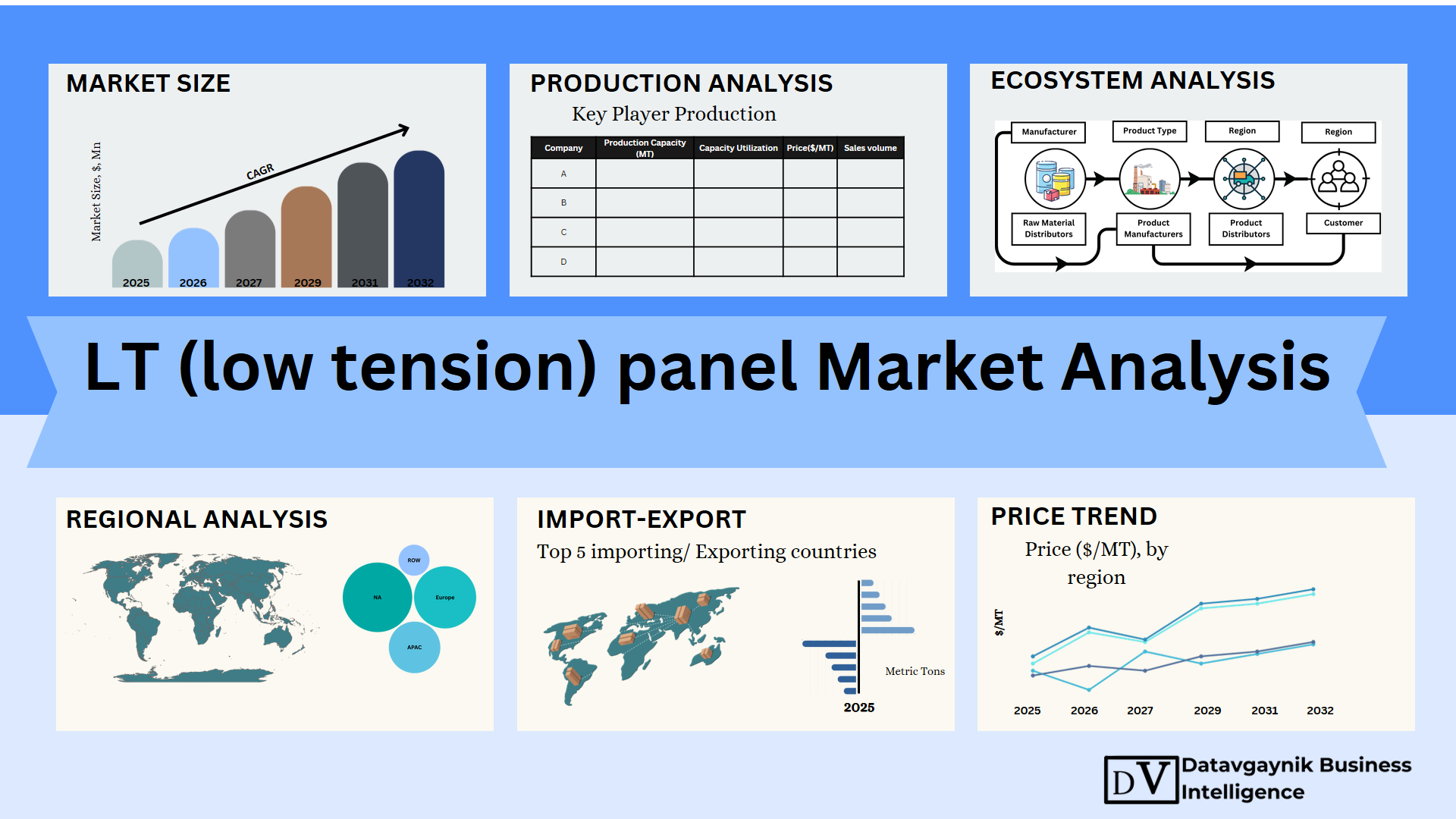
The LT (low tension) panel Market is undergoing a transformative phase, driven by the rapid expansion of global industrial infrastructure. For instance, manufacturing hubs across Asia Pacific, including India and China, are witnessing double-digit growth in factory establishments. According to Datavagyanik, the manufacturing sector in India alone grew by 6.5% year-on-year in 2023, which directly fuels the requirement for low-voltage power distribution systems. LT (low tension) panels, being integral to industrial power management, are seeing a sharp rise in demand due to their critical role in supporting automated production lines, robotic systems, and energy monitoring solutions. The LT (low tension) panel Market has responded with increased innovation and output capacity, aligning with industry needs for safety, scalability, and efficiency.
Urban Infrastructure Growth Propelling the LT (low tension) panel Market
Urbanization is another key catalyst in the growth trajectory of the LT (low tension) panel Market. Cities across Asia, the Middle East, and Africa are experiencing unprecedented construction activity. For example, smart city projects under development in countries like Saudi Arabia (NEOM), India (over 100 cities under Smart Cities Mission), and the UAE (Dubai 2040 Urban Master Plan) are integrating LT panels into their electrical infrastructure to power IoT devices, energy management systems, and automated lighting solutions. Datavagyanik highlights that global urban construction spending exceeded $11 trillion in 2023, and this figure is expected to grow at a CAGR of 6.3% through 2030. The increasing footprint of high-rise buildings, shopping complexes, and residential townships continues to create lucrative opportunities across the LT (low tension) panel Market.
LT (low tension) panel Market Driven by Renewable Energy Integration
One of the most dynamic trends shaping the LT (low tension) panel Market is the aggressive push toward renewable energy integration. As nations aim to decarbonize their energy systems, solar and wind projects are expanding rapidly. In 2023, global solar PV installations reached over 300 GW, while wind power capacity increased by more than 100 GW. LT panels are pivotal in managing low-voltage output from these sources, ensuring efficient and stable transmission to grids and end-users. For example, LT panels are extensively deployed in utility-scale solar farms across the United States and Europe to manage the interface between solar inverters and energy storage units. In India, LT panels are used in rooftop solar systems across commercial and residential buildings, enabling real-time load balancing and voltage regulation. As per Datavagyanik, the LT (low tension) panel Market Size linked to renewable energy applications is expected to grow at over 9% CAGR during the forecast period 2024–2032.
Smart Infrastructure Development Elevating the LT (low tension) panel Market
The shift towards smart infrastructure—both in public and private domains—is significantly boosting the LT (low tension) panel Market. From intelligent transportation systems to energy-efficient commercial buildings, LT panels are at the core of low-voltage power distribution in these environments. In data centers, for instance, LT panels are employed to ensure seamless power supply to servers, preventing downtimes that could cost millions. The U.S. added over 600 MW of new data center capacity in 2023 alone, and each installation depends heavily on reliable LT panels for power control and redundancy. Additionally, the demand for LT panels with IoT capabilities is soaring, enabling predictive maintenance and remote energy management. These smart panels are gaining adoption in Europe and Japan, where there is a focus on reducing operational costs and improving grid performance.
Rise in Automation and IoT Adoption Fueling the LT (low tension) panel Market
Automation and IoT technologies are fundamentally reshaping the operational needs of industrial facilities, and this evolution is directly contributing to the expansion of the LT (low tension) panel Market. Automated manufacturing lines and robotic systems require sophisticated low-voltage distribution and control mechanisms, which LT panels are specifically designed to deliver. For example, Germany’s Industry 4.0 policy has encouraged factories to adopt smart LT panels that offer features such as energy analytics, load profiling, and digital fault logging. Datavagyanik reports a 15% year-on-year increase in demand for automation-compatible LT panels across the European industrial sector. The emergence of smart grids and digital substations further enhances the relevance of LT panels in providing flexible, responsive, and energy-efficient electrical distribution.
LT (low tension) panel Market Expansion Through Rural Electrification Programs
In many developing nations, rural electrification remains a high-priority government objective. Programs in Africa, Southeast Asia, and South America are channeling billions of dollars into extending grid networks to underserved communities. For instance, Nigeria’s Electricity Reform Program aims to connect over 25 million people to the grid by 2030. LT panels are essential for delivering power in these low-voltage distribution networks, especially where renewable sources like solar mini-grids are deployed. Datavagyanik identifies a 22% increase in the procurement of LT panels by public utilities in these regions over the past two years. These panels not only ensure efficient energy transfer but also come equipped with protective features like surge protection and load balancing, which are critical in remote, harsh environments.
Construction Sector Boom Strengthening the LT (low tension) panel Market
The global construction boom is another major force behind the growth of the LT (low tension) panel Market. Residential complexes, office spaces, shopping malls, and transport terminals are all increasing their reliance on structured, reliable low-tension power systems. For example, China alone approved infrastructure projects worth $1.8 trillion in 2023, many of which include commercial buildings that rely on LT panels for distribution of electricity across lighting, HVAC systems, elevators, and emergency equipment. In addition, LEED-certified buildings, which now represent more than 30% of new commercial real estate in the U.S., mandate the use of energy-efficient systems—boosting the demand for smart LT panels. Datavagyanik notes a 12% CAGR in LT panel installations linked to sustainable construction from 2024 to 2032.
Safety and Regulatory Compliance Advancing the LT (low tension) panel Market
Electrical safety remains a fundamental requirement in industrial and commercial establishments, and compliance with stringent safety standards continues to elevate demand within the LT (low tension) panel Market. Regulations such as NEC in the U.S., IEC standards in Europe, and BIS certifications in India emphasize safe electrical distribution, fault isolation, and thermal management. LT panels meet these requirements by offering features such as short circuit protection, overcurrent prevention, and arc flash containment. For example, the healthcare sector, which requires 24/7 power reliability, is increasingly adopting LT panels with built-in diagnostic tools and alarms. Datavagyanik estimates that over 70% of new hospital constructions globally include premium-grade LT panels, reflecting the market’s pivot towards safety-oriented designs.
Technological Innovations Reshaping the LT (low tension) panel Market
Technological progress in modular and digital panel design is opening new growth avenues for the LT (low tension) panel Market. Modular LT panels offer easy customization, faster installation, and scalability, making them ideal for diverse applications from factories to data centers. Innovations such as integrated Human-Machine Interfaces (HMIs), wireless control modules, and remote diagnostics are becoming standard. For instance, Schneider Electric and Siemens have introduced LT panels with cloud-based monitoring and AI-powered fault detection, enabling predictive maintenance. As a result, operational costs are reduced by up to 20%, while uptime and performance metrics improve significantly. Datavagyanik projects that smart LT panels will account for more than 40% of the global LT (low tension) panel Market Size by 2030.
Growing Utility Sector and Power Grid Modernization Stimulating the LT (low tension) panel Market
Modernization of aging power grids and expansion of utility services are proving to be crucial drivers in the LT (low tension) panel Market. Utility companies are replacing legacy distribution systems with smart LT panels capable of real-time load forecasting and automated switching. In the United States, utilities spent over $20 billion on grid modernization in 2023, a significant portion of which was allocated toward LT panel upgrades. Additionally, microgrids and distributed energy systems in regions like Australia and South Korea are incorporating LT panels as part of their core architecture to ensure seamless distribution and peak load management. This sector-specific demand adds stability to the broader LT (low tension) panel Market, with consistent procurement from national and private energy providers.
“Track Country-wise LT (low tension) panel Production and Demand through our LT (low tension) panel Production Database”
- LT (low tension) panel production database for 28+ countries worldwide
- LT (low tension) panel Powder sales volume for 32+ countries
- Country-wise LT (low tension) panel production capacity and production plant mapping, production capacity utilization for 28+ manufacturers
- LT (low tension) panel production plants and production plant capacity analysis for top manufacturers
Asia Pacific Leading Global LT (low tension) panel Market Demand
Asia Pacific dominates the LT (low tension) panel Market due to its rapid industrialization, urban development, and aggressive renewable energy rollout. China, India, and Southeast Asia collectively account for more than 45% of global LT panel installations. For instance, India’s “Make in India” initiative and infrastructure pipeline of over $1.5 trillion through 2030 is a critical driver of sustained demand. LT panels are deployed across new manufacturing plants, metro rail projects, data centers, and residential townships. Datavagyanik highlights that China alone, with over 4 million new residential units added in 2023, significantly drives consumption of LT panels for low-voltage distribution in high-density living environments.
Additionally, the region is seeing a steep rise in renewable energy projects. In Vietnam, over 20 GW of solar and wind capacity is projected to come online by 2026. These installations increasingly rely on LT panels for efficient low-voltage transmission and grid interfacing, significantly contributing to regional demand.
North America LT (low tension) panel Market Expands Through Smart Infrastructure
North America’s LT (low tension) panel Market is experiencing robust growth, primarily driven by smart building technologies, renewable energy, and electric vehicle (EV) infrastructure expansion. In 2023, the United States alone deployed over 3.5 million electric vehicle charging stations, all of which require reliable LT panel integration for power regulation and distribution. Moreover, as per Datavagyanik, over $1.2 trillion in smart infrastructure funding is being executed under initiatives like the Bipartisan Infrastructure Law.
Data centers are another major contributor. Over 60% of new hyperscale data centers built in North America between 2022 and 2024 were designed with advanced LT panels featuring remote energy monitoring, fault diagnostics, and load balancing. These smart LT panels have become standard in facilities that prioritize uptime and energy optimization.
Europe LT (low tension) panel Market Driven by Green Energy and Regulatory Compliance
Europe remains a high-value LT (low tension) panel Market owing to stringent environmental standards, widespread renewable energy adoption, and the region’s focus on sustainable construction. For example, Germany’s energy transition policy, Energiewende, mandates integration of LT panels in both commercial solar systems and decentralized wind units. Datavagyanik identifies that LT panel deployment in solar energy systems across Europe grew by 19% year-on-year in 2023.
In addition, commercial structures across the UK and France are increasingly adopting LT panels compliant with ISO 50001 energy management standards. The need for enhanced safety features and energy efficiency, especially in sectors like healthcare and public infrastructure, has led to strong demand for modular, IoT-enabled LT panels throughout Western Europe.
Middle East LT (low tension) panel Market Fueled by Infrastructure and Mega Projects
The Middle East LT (low tension) panel Market is growing rapidly due to extensive infrastructure development under long-term national strategies. Saudi Arabia’s Vision 2030 and the UAE’s Clean Energy Strategy 2050 are major growth engines. For instance, the NEOM project alone—estimated at $500 billion—requires hundreds of thousands of LT panel units to support smart cities, commercial districts, and industrial zones.
Solar energy is another powerful growth segment. The UAE’s Mohammed bin Rashid Al Maktoum Solar Park, with a planned capacity of 5 GW, is driving the demand for LT panels customized for solar-to-grid interfaces. Datavagyanik notes a 14% CAGR in LT panel demand across Middle Eastern renewables between 2024 and 2032.
Africa and Latin America Emerging as Fast-Growing LT (low tension) panel Markets
Africa and Latin America are emerging as important contributors to the LT (low tension) panel Market, primarily through rural electrification, infrastructure modernization, and urban development. Countries like Nigeria, Kenya, and Ethiopia are investing in off-grid solar installations and rural electrification schemes that heavily rely on LT panels to manage low-voltage outputs and ensure user safety.
In Latin America, Brazil and Mexico are becoming key players in regional production and application. For instance, over 500 new industrial projects were announced across Latin America in 2023, many of which include automation systems requiring advanced LT panels. Datavagyanik highlights a 21% increase in LT panel shipments to Central and South America over the past 18 months, largely due to industrial diversification and real estate development.
LT (low tension) panel Market Production Concentrated in Asia, Europe, and North America
From a production standpoint, the LT (low tension) panel Market is dominated by manufacturers in Asia Pacific, followed by Europe and North America. China is the global manufacturing leader, offering cost-effective LT panel solutions to markets across Africa, Southeast Asia, and Latin America. Datavagyanik reports that over 60% of global LT panels in 2023 were produced in Asia, with Chinese and Indian manufacturers scaling rapidly to meet global demand.
Europe’s production is oriented toward premium, compliance-focused LT panels, especially those required for green energy projects and automation. Germany, France, and Italy lead this segment. Meanwhile, the U.S. and Canada focus on high-tech LT panels with integrated analytics, serving industrial, utility, and IT sectors.
LT (low tension) panel Market Segmentation by Application
The LT (low tension) panel Market is segmented across several key applications, each contributing differently to overall demand. Power distribution remains the largest application, accounting for nearly 40% of LT panel installations globally. This includes electrical distribution in residential, commercial, and industrial buildings. For instance, in the U.S., LT panels are standard in commercial HVAC systems, elevators, and fire safety setups.
Another fast-growing application is automation and process control. Industrial automation systems across automotive, pharmaceuticals, and food processing heavily depend on LT panels for power routing, system protection, and voltage control. Datavagyanik highlights that automation-linked LT panel installations have grown by 17% in the last two years.
Lighting systems, especially in public infrastructure such as stadiums, airports, and highways, represent another vital segment. These applications favor smart LT panels capable of dynamic load adjustments and time-scheduled control.
End-Use Industry Segmentation in the LT (low tension) panel Market
End-use segmentation of the LT (low tension) panel Market reveals distinct demand patterns. Industrial users dominate the segment, accounting for over 45% of the global share. For example, manufacturing zones in Southeast Asia use LT panels to power CNC machines, robotic arms, and conveyance systems.
Commercial use, including malls, data centers, and hospitals, is another major segment. In India, over 700 new commercial buildings were commissioned in 2023, nearly all of which included LT panel installations. Residential demand is growing too, fueled by urban housing projects and smart home systems.
The utility sector, including renewable energy projects and national grids, is investing heavily in LT panels for distribution efficiency and safety compliance. Transportation—particularly metros and airports—relies on LT panels for uninterrupted power to signaling and control systems.
LT (low tension) panel Price Trends Influenced by Raw Material Costs and Tech Integration
The LT (low tension) panel Price Trend has been subject to fluctuations driven by raw material availability, supply chain bottlenecks, and technological upgrades. Copper and aluminum, core components in LT panel conductors, have seen price volatility due to geopolitical disruptions and mining constraints. In 2022, copper prices peaked at $10,800/ton before stabilizing around $8,300/ton in 2023, directly impacting LT (low tension) panel Price levels.
Datavagyanik notes that LT (low tension) panel Price increased by 12–15% globally between 2021 and 2023, particularly for panels featuring smart features like IoT integration, wireless diagnostics, and modular architecture. These features, while increasing upfront LT (low tension) panel Price, deliver better ROI through reduced maintenance and energy savings.
However, competitive manufacturing in Asia has moderated global LT (low tension) panel Price levels. Entry-level panels for residential and small commercial use now range from $200 to $600 per unit, while industrial-grade smart panels can exceed $2,000 depending on customization and integration.
Regional Differences in LT (low tension) panel Price and Demand Elasticity
LT (low tension) panel Price differences across regions are influenced by local regulations, labor costs, and technical specifications. For example, panels in Europe are often priced 20–30% higher than those in Southeast Asia due to compliance with advanced safety and energy efficiency standards.
In North America, high demand for smart LT panels and domestic production capabilities create a moderately priced yet high-performance market. Africa and Latin America, on the other hand, remain price-sensitive regions, where governments and contractors often opt for cost-efficient imports from Asia.
Datavagyanik forecasts a stable LT (low tension) panel Price Trend from 2024 to 2026, with mild inflation in smart panel pricing offset by mass production efficiencies and falling semiconductor costs.
“LT (low tension) panel Manufacturing Database, LT (low tension) panel Manufacturing Capacity”
- LT (low tension) panel top manufacturers market share for 28+ manufacturers
- Top 8 manufacturers and top 18 manufacturers of LT (low tension) panel in North America, Europe, Asia Pacific
- Production plant capacity by manufacturers and LT (low tension) panel production data for 28+ market players
- LT (low tension) panel production dashboard, LT (low tension) panel production data in excel format
Top Global Manufacturers Dominating the LT (low tension) panel Market
The global LT (low tension) panel Market is consolidated around several dominant multinational players, each leveraging advanced technology, global supply chains, and vertical industry integration to maintain competitive edge. These manufacturers not only contribute a significant share of global supply but also set the innovation benchmark in terms of smart panels, modular design, and energy-efficient solutions.
Schneider Electric – A Global Powerhouse in the LT (low tension) panel Market
Schneider Electric holds a prominent position in the LT (low tension) panel Market, with a strong footprint in North America, Europe, and Asia. The company’s flagship product line—PrismaSet Active—is engineered for smart distribution and monitoring in commercial and industrial facilities. These panels integrate seamlessly with Schneider’s EcoStruxure platform, offering remote diagnostics, load optimization, and predictive maintenance capabilities.
The manufacturer commands an estimated 16% global market share in the LT panel segment. Its dominance is driven by large-scale deployments in smart buildings, industrial automation, and infrastructure modernization projects. Schneider has also been a preferred vendor for government-led smart city initiatives in Europe and the Middle East.
ABB – Technological Leadership in Modular LT (low tension) Panels
ABB is another major player in the LT (low tension) panel Market, well-known for its modular LT panel solutions under product lines such as MNS low voltage switchgear systems. These panels are particularly favored in data centers, power plants, and high-capacity industrial units due to their superior thermal stability, arc flash protection, and digital connectivity.
With approximately 12% global market share, ABB maintains strong distribution in North America, Europe, and growing influence in the Asia Pacific region. ABB’s competitive strength lies in its ability to cater to both traditional utility-scale applications and cutting-edge renewable energy deployments.
Siemens – Innovator in Smart LT (low tension) Panels
Siemens has continued to be a technology-forward brand in the LT (low tension) panel Market, with offerings such as the SIVACON S8 and Alpha Universal panel systems. These solutions are used extensively in commercial buildings, energy distribution centers, and infrastructure requiring seamless integration with building management systems.
Siemens commands roughly 10% of the global LT panel market, and is widely recognized for integrating IoT, digital twin modeling, and condition monitoring into its panel architecture. Siemens panels are also gaining popularity in electric vehicle charging infrastructure across Europe and the U.S.
Larsen & Toubro (L&T) – Regional Power in South Asia’s LT (low tension) panel Market
Larsen & Toubro has established itself as the largest Indian manufacturer in the LT (low tension) panel Market, serving key sectors such as infrastructure, manufacturing, power distribution, and real estate. L&T’s T-MAX and Form 4 Type-tested panels are widely used in smart cities and utility substations across India and Southeast Asia.
Holding about 7% of the global market, and over 40% market share in India, L&T is expanding its modular and IoT-enabled panel offerings. The company is also targeting export markets in Africa and the Middle East, where demand for cost-effective, scalable LT panels is rising.
Legrand – Specialized Solutions for Commercial LT (low tension) Panel Applications
Legrand focuses largely on the commercial and residential sectors of the LT (low tension) panel Market, offering products such as XL³ panel boards and Drivia modular distribution systems. These panels are highly valued for aesthetics, compact design, and ease of integration with lighting and HVAC systems.
Legrand holds about 6% of the market, with strong presence in Western Europe and growing traction in urban residential markets in Latin America. Its specialization in commercial and smart home power distribution makes it a go-to brand in building automation projects.
Eaton – Customization and Flexibility in the LT (low tension) panel Market
Eaton’s influence in the LT (low tension) panel Market is centered around its tailored solutions for industrial automation, oil and gas, and transportation. Eaton’s xEnergy LV systems and Pow-R-Line panels are designed for demanding environments requiring high reliability, scalability, and safety compliance.
With a market share nearing 9%, Eaton has built a solid reputation for project-specific customization and performance-focused features. Its panels are used extensively in rail networks, data centers, and utility substations across North America and Europe.
Other Significant Players in the LT (low tension) panel Market
Additional manufacturers such as Hager, Mitsubishi Electric, Hyundai Electric, Fuji Electric, and Havells contribute to the fragmented segment of the LT (low tension) panel Market. These companies cater to niche application areas or serve specific geographic markets.
For instance, Hager has a strong hold on the European mid-tier commercial segment, while Fuji Electric dominates the Japanese industrial panel market. Mitsubishi Electric is gaining ground in EV infrastructure and clean energy projects across South Korea and Southeast Asia.
LT (low tension) panel Market Share Distribution and Competitive Landscape
The global LT (low tension) panel Market is moderately consolidated at the top, with the top five players controlling roughly 55% of total market share. However, the remaining 45% is highly fragmented across regional manufacturers, OEMs, and local panel assemblers. This fragmentation offers competitive pricing benefits but also poses challenges in maintaining standardization and regulatory compliance in emerging markets.
Datavagyanik emphasizes that global market share is expected to gradually shift as smart panels gain traction. Companies heavily invested in R&D and digital capabilities are anticipated to increase their market dominance, especially in high-growth areas such as renewable energy and data center applications.
Recent Developments and Industry News in the LT (low tension) panel Market
- January 2024 – Schneider Electric announced an expansion of its smart panel manufacturing facility in Mexico to support increasing demand from North and Latin America. The new line focuses on IoT-integrated LT panel production with a projected annual capacity of 100,000 units.
- March 2024 – Siemens unveiled its next-gen SIVACON iPanel, optimized for low-voltage distribution in smart buildings and equipped with AI-based fault prediction capabilities.
- February 2024 – ABB signed a strategic agreement with a Middle Eastern utility firm to deliver over 50,000 modular LT panels for a solar megaproject scheduled for completion by 2026.
- November 2023 – Larsen & Toubro secured a $120 million contract to supply LT panels for smart city developments in India’s Tier-2 cities, including IoT-ready panels for real-time energy data monitoring.
- September 2023 – Legrand expanded its footprint in Southeast Asia by launching a new manufacturing facility in Vietnam to supply compact LT panels tailored for commercial and residential buildings.
“LT (low tension) panel Production Data and LT (low tension) panel Production Trend, LT (low tension) panel Production Database and forecast”
- LT (low tension) panel production database for historical years, 10 years historical data
- LT (low tension) panel production data and forecast for next 7 years
Market Scenario, Demand vs Supply, Average Product Price, Import vs Export, till 2035
- Global LT (low tension) panel Market revenue and demand by region
- Global LT (low tension) panel Market production and sales volume
- United States LT (low tension) panel Market revenue size and demand by country
- Europe LT (low tension) panel Market revenue size and demand by country
- Asia Pacific LT (low tension) panel Market revenue size and demand by country
- Middle East & Africa LT (low tension) panel Market revenue size and demand by country
- Latin America LT (low tension) panel Market revenue size and demand by
- Import-export scenario – United States, Europe, APAC, Latin America, Middle East & Africa
- Average product price – United States, Europe, APAC, Latin America, Middle East & Africa
- Market player analysis, competitive scenario, market share analysis
- Business opportunity analysis
Key questions answered in the Global LT (low tension) panel Market Analysis Report:
- What is the market size for LT (low tension) panel in United States, Europe, APAC, Middle East & Africa, Latin America?
- What is the yearly sales volume of LT (low tension) panel and how is the demand rising?
- Who are the top market players by market share, in each product segment?
- Which is the fastest growing business/ product segment?
- What should be the business strategies and Go to Market strategies?
The report covers LT (low tension) panel Market revenue, Production, Sales volume, by regions, (further split into countries):
- Asia Pacific (China, Japan, South Korea, India, Indonesia, Vietnam, Rest of APAC)
- Europe (UK, Germany, France, Italy, Spain, Benelux, Poland, Rest of Europe)
- North America (United States, Canada, Mexico)
- Latin America (Brazil, Argentina, Rest of Latin America)
- Middle East & Africa
Table of Contents:
Low Tension (LT) Panel Market:
- Introduction to the Low Tension (LT) Panel Market
- Overview of Low Tension Panels and Their Role in Electrical Systems
- Historical Evolution and Advancements in LT Panel Technology
- Importance of LT Panels in Modern Electrical Distribution Systems
- Key Components and Features of LT Panels
- Structural Design and Key Components of LT Panels
- Material Selection and Manufacturing Standards
- Customization and Advanced Features in LT Panels
- Types of Low Tension Panels
- Fixed Type LT Panels
- Draw-out Type LT Panels
- Motor Control Centers (MCC) and Other Variants
- Comparison and Application Areas of Different Types
- Applications of Low Tension Panels
- Use in Industrial and Commercial Electrical Systems
- Application in Residential Complexes and High-Rise Buildings
- Role in Power Generation, Transmission, and Distribution Systems
- Emerging Applications in Renewable Energy and Smart Grids
- Market Segmentation by Product Type and End-Use Industry
- By Product Type: Conventional LT Panels, Modular LT Panels, Smart LT Panels
- By End-Use Industry: Power, Oil & Gas, Manufacturing, Construction, and Others
- Market Dynamics and Key Growth Drivers
- Increasing Demand for Efficient Power Distribution Solutions
- Industrial Growth and Infrastructure Development Driving Market Demand
- Technological Innovations in LT Panel Design and Manufacturing
- Government Regulations and Standards Promoting Safety and Reliability
- Global and Regional Market Analysis
- North America: Market Trends, Challenges, and Opportunities
- Europe: Market Overview and Technological Advancements
- Asia-Pacific: High Growth Opportunities and Key Market Insights
- Latin America: Market Demand and Emerging Growth Areas
- Middle East & Africa: Market Development and Key Factors
- Market Size, Share, and Growth Forecast (2023-2035)
- Global Market Overview and Projected Growth Rate
- Regional Market Size and Segmentation
- Long-term Growth Outlook and Forecasting Trends
- Competitive Landscape and Key Market Players
- Leading Manufacturers and Key Players in the LT Panel Market
- Market Share Distribution and Competitive Strategies
- Recent Mergers, Acquisitions, and Strategic Partnerships
- Technological Innovations in LT Panel Design
- Advances in Digitalization and Smart LT Panels
- Integration of IoT and Automation in LT Panel Systems
- Energy-Efficient and Eco-friendly Innovations
- Pricing Trends and Market Valuation
- Price Analysis of Different Types of LT Panels
- Factors Influencing Price Trends in Global and Regional Markets
- Market Valuation and Forecasting Price Movements
- Sustainability and Environmental Impact
- Sustainable Manufacturing Practices in LT Panel Production
- Energy Efficiency and Reduced Carbon Footprint of Modern LT Panels
- Environmental Regulations and Green Certifications
- Challenges and Barriers in the LT Panel Market
- Raw Material Supply Constraints and Cost Fluctuations
- Technological Barriers in Panel Customization
- Regulatory Challenges in Different Markets
- Competition from Alternative Electrical Distribution Solutions
- Investment Opportunities in the LT Panel Market
- High-Growth Regions and Market Segments
- Investment Trends and Capital Flow into the LT Panel Sector
- Opportunities for New Entrants and Market Expansion
- Risk Assessment and Mitigation Strategies
- Key Risks in the LT Panel Supply Chain and Production
- Mitigation Strategies for Regulatory and Technological Risks
- Managing Risks in Global Market Expansion
- Market Forecast (2025-2035)
- Long-Term Growth Projections and Emerging Opportunities
- Market Shifts Due to Technological and Industry Developments
- Future Demand for Smart and Energy-Efficient LT Panels
- Regulatory Landscape and Standards Compliance
- Industry Standards for LT Panels: Safety, Reliability, and Quality
- Regional Regulations Affecting the Design and Manufacturing of LT Panels
- Compliance with International Certification Bodies
- Supply Chain and Distribution Analysis
- Overview of the LT Panel Supply Chain from Manufacturing to Distribution
- Key Suppliers and Distribution Channels
- Trends in Global Sourcing and Distribution Networks
- Consumer Trends and Adoption Rates
- Adoption of LT Panels in Residential, Commercial, and Industrial Applications
- Consumer Demand for Advanced Features and Customization
- Shifting Preferences Towards Smart and Automated Electrical Solutions
- Conclusion and Strategic Recommendations
- Summary of Key Market Insights and Takeaways
- Strategic Recommendations for Manufacturers, Investors, and Stakeholders
- Future Directions for Innovation and Market Expansion


