

Pharmaceutical Industry Expansion Driving the Salicylic Acid and its Derivatives Market
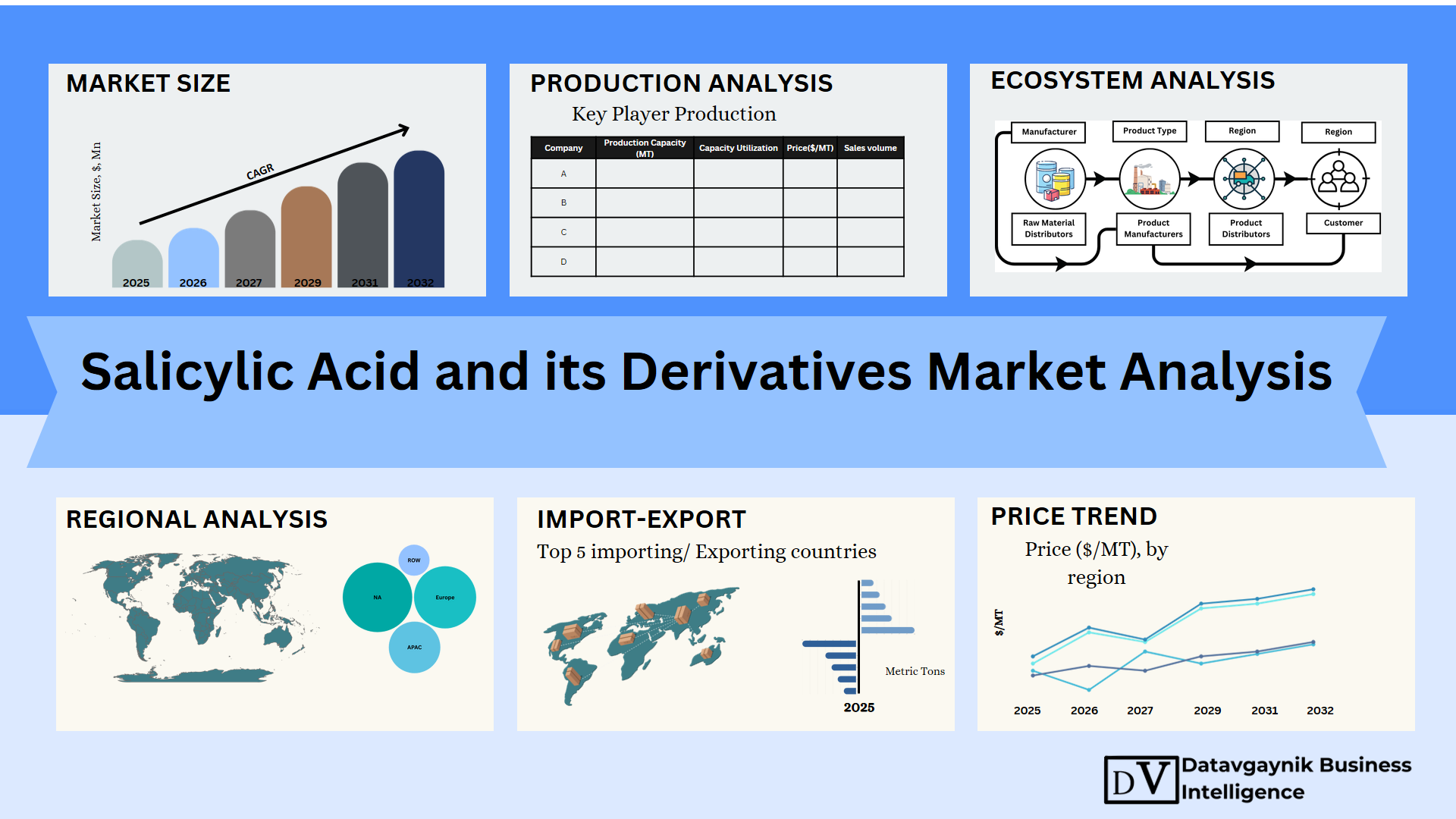
The Salicylic Acid and its Derivatives Market is witnessing robust expansion, primarily fueled by the pharmaceutical industry’s continued reliance on salicylic acid-based compounds. A key growth contributor is acetylsalicylic acid, commonly known as aspirin, which remains one of the most widely used drugs globally. For instance, global consumption of aspirin reached over 40,000 metric tons in 2023, with forecasts projecting a compound annual growth rate (CAGR) of 6.5 percent through 2032. This trend reflects the increasing incidence of chronic diseases such as arthritis, cardiovascular disorders, and diabetes—conditions where aspirin is a frontline treatment.
The rise in self-medication and the preference for over-the-counter (OTC) drugs is also accelerating demand. In the United States alone, OTC drug sales surpassed 38 billion dollars in 2023, and pain relief medications accounted for a significant portion. The accessibility and affordability of salicylic acid derivatives, along with their effectiveness, are expanding their role in daily healthcare regimens, particularly among aging populations who are more susceptible to inflammation and cardiovascular issues. The Salicylic Acid and its Derivatives Market is expected to continue gaining traction as global healthcare systems increasingly promote preventive care.
Salicylic Acid and its Derivatives Market Growth Supported by Rising Skincare and Cosmetic Trends
Another critical driver of the Salicylic Acid and its Derivatives Market is the exponential growth in skincare and personal care products. Salicylic acid is a cornerstone ingredient in formulations for acne treatment, exfoliation, and anti-aging. For example, the global acne treatment market alone is projected to surpass 13 billion dollars by 2030, growing at a CAGR of more than 5 percent, according to Datavagyanik. Products containing salicylic acid are dominating retail shelves due to their keratolytic properties, which help unclog pores and reduce inflammation.
Consumers in emerging markets, particularly in Asia Pacific and Latin America, are increasingly spending on skincare. Rising urbanization, higher disposable incomes, and growing awareness about personal grooming have led to a substantial increase in demand for high-efficacy skincare products. South Korea and Japan are at the forefront, with their cosmetics exports surpassing 10 billion dollars in 2023. Many of these products prominently feature salicylic acid derivatives, underlining the compound’s importance to the clean beauty and dermatological solutions space. The Salicylic Acid and its Derivatives Market is expected to grow proportionately with the expanding global skincare economy.
Salicylic Acid and its Derivatives Market Expansion Driven by Agricultural Innovation
The Salicylic Acid and its Derivatives Market is finding new frontiers in agriculture, where it is increasingly used as a biostimulant and natural pesticide alternative. Salicylic acid plays a key role in systemic acquired resistance in plants, making crops more resilient to disease and environmental stress. In 2023, the global biostimulant market was valued at approximately 3.5 billion dollars, with salicylic acid-based products gaining significant traction due to their effectiveness in promoting plant health.
For instance, salicylic acid treatments in wheat and rice have been shown to improve drought tolerance by over 20 percent, while enhancing yields by 10 to 15 percent. With the global population projected to reach 9.7 billion by 2050, the demand for sustainable agriculture solutions is surging. Farmers are under pressure to maximize crop yields without escalating pesticide use. As a result, the Salicylic Acid and its Derivatives Market is being embraced as a sustainable input solution in both developed and developing economies, particularly in India, China, and Brazil.
The Role of Salicylic Acid and its Derivatives in Food Preservation
In the food and beverage sector, the Salicylic Acid and its Derivatives Market is gaining relevance as a safe, effective preservative, especially in acidic food products. With the global processed food market expected to surpass 4.1 trillion dollars by 2030, the need for effective preservatives that extend shelf life without compromising safety is critical. Salicylic acid’s antimicrobial properties make it ideal for this role.
For example, salicylic acid is used in preserving fruit juices, pickles, and sauces to inhibit microbial activity. As global food export and import volumes grow, food manufacturers are increasingly turning to salicylic acid to meet stringent regulatory and consumer safety standards. Markets in Southeast Asia and the Middle East, where climate conditions challenge food preservation, are particularly driving demand. These applications are further strengthening the global footprint of the Salicylic Acid and its Derivatives Market.
Natural Product Trends Shaping the Future of the Salicylic Acid and its Derivatives Market
A growing preference for natural and plant-derived ingredients is significantly impacting product innovation within the Salicylic Acid and its Derivatives Market. Salicylic acid derived from natural sources like willow bark and wintergreen is gaining traction, especially in the cosmetics and wellness sectors. Natural salicylic acid is now featured in over 35 percent of all new skincare launches in North America and Europe, where clean beauty dominates consumer preferences.
For example, the clean beauty market in the United States alone reached 7.2 billion dollars in 2023 and is expected to grow at 10 percent annually. Consumers are actively avoiding synthetic chemicals and instead opting for naturally sourced ingredients. As regulatory bodies in the European Union and the United States tighten restrictions on synthetic compounds, the demand for natural salicylic acid derivatives is expected to rise sharply. This trend is carving out a distinct segment in the Salicylic Acid and its Derivatives Market focused on botanical extraction and sustainable sourcing.
Technological Advancements Enabling Cost-Efficient and Sustainable Production
The production side of the Salicylic Acid and its Derivatives Market is also evolving, with technology playing a key role in making processes more cost-efficient and environmentally sustainable. Innovations in biotechnological synthesis, including microbial fermentation and enzymatic reactions, are replacing traditional Kolbe-Schmitt processes in several facilities. These advanced methods significantly reduce waste, energy consumption, and production costs.
For example, European manufacturers using bio-based production methods have reported a 25 percent reduction in carbon footprint compared to conventional chemical synthesis. India and China are leading the shift by investing in modular and green chemical plants capable of producing high-purity salicylic acid derivatives for pharmaceutical use. The combination of regulatory incentives, sustainability goals, and cost advantages is prompting global producers to modernize operations. As a result, production capacity in the Salicylic Acid and its Derivatives Market is expected to grow by over 40 percent globally by 2030.
Salicylic Acid and its Derivatives Market Size Expanding Across Diverse Regions
The global Salicylic Acid and its Derivatives Market Size was valued at approximately 523 million dollars in 2023 and is projected to reach over 900 million dollars by 2032, growing at a CAGR of 6.8 percent. This expansion is supported by multiple regional dynamics. North America remains a significant contributor due to its advanced healthcare system and widespread OTC drug usage. Europe follows closely, driven by stringent quality standards and the clean beauty movement.
Meanwhile, Asia Pacific is emerging as the fastest-growing region in the Salicylic Acid and its Derivatives Market, with China and India leading both production and consumption. In India alone, the skincare market is growing at over 9 percent annually, while the pharmaceutical market is expected to surpass 130 billion dollars by 2030. Southeast Asia is also witnessing double-digit growth in both cosmetic and agricultural applications.
Salicylic Acid and its Derivatives Market Diversifying Through Multi-Sector Applications
The versatility of applications continues to be a defining strength of the Salicylic Acid and its Derivatives Market. Few other compounds offer such broad utility—ranging from pain relief and anti-inflammatory applications to skincare, crop protection, and food safety. As sectors like wellness, organic farming, and clean-label consumer goods converge, salicylic acid is increasingly viewed as a multipurpose solution with minimal environmental impact.
For instance, its inclusion in biodegradable pest control and natural exfoliants supports both sustainability and performance expectations. As R&D investments increase, newer derivatives such as salicylic esters and salicylates are being formulated to meet targeted industrial needs, further extending the market’s reach. Innovation in application techniques, from microencapsulation in skincare to nanoformulations in agriculture, is expected to unlock the next wave of growth in the Salicylic Acid and its Derivatives Market.
“Track Country-wise Salicylic Acid and its Derivatives Production and Demand through our Salicylic Acid and its Derivatives Production Database”
-
-
- Salicylic Acid and its Derivatives production database for 30+ countries worldwide
- Salicylic Acid and its Derivatives sales volume for 32+ countries
- Country-wise Salicylic Acid and its Derivatives production capacity, production plant mapping, production capacity utilization for 30+ manufacturers
- Salicylic Acid and its Derivatives production plants and production plant capacity analysis by top manufacturers
-
“Track real-time Salicylic Acid and its Derivatives Prices, Salicylic Acid and its Derivatives price charts for 30+ countries, Salicylic Acid and its Derivatives weekly price tracker and Salicylic Acid and its Derivatives monthly price tracker”
-
-
- Track real-time Salicylic Acid and its Derivatives prices and Salicylic Acid and its Derivatives price trend in 30+ countries though our excel-based Salicylic Acid and its Derivatives price charts
- Real-time Salicylic Acid and its Derivatives price tracker dashboard with 30+ countries
- Complete transparency on Salicylic Acid and its Derivatives price trend through our Salicylic Acid and its Derivatives monthly price tracker, Salicylic Acid and its Derivatives weekly price tracker
-
Regional Growth Dynamics Shaping the Salicylic Acid and its Derivatives Market
The Salicylic Acid and its Derivatives Market is experiencing varied growth trajectories across key global regions, shaped by local industry maturity, population demographics, regulatory frameworks, and consumer behavior. As per Datavagyanik, Asia Pacific has emerged as the fastest-growing region, while North America and Europe continue to dominate in high-value applications.
For instance, China leads global consumption with more than 40 percent share in 2023, driven by its status as both the world’s largest pharmaceutical producer and a global hub for cosmetics manufacturing. India follows closely, with rising consumption in pharmaceuticals and agricultural applications. The country’s expanding middle-class population and increasing investment in rural healthcare are expected to drive a CAGR of 8.1 percent in India’s salicylic acid demand through 2030.
In North America, particularly the United States, the Salicylic Acid and its Derivatives Market is driven by strong demand for over-the-counter pain relief medications and premium skincare products. The U.S. accounts for over 65 percent of the North American market, where aspirin sales alone exceed 2 billion dollars annually. The region’s aging population, coupled with the popularity of anti-aging and clean-label cosmetics, ensures stable long-term growth.
Europe’s growth is backed by strict regulations encouraging the use of natural preservatives and plant-based active ingredients. Germany, France, and the U.K. are the leading countries in both pharmaceutical applications and natural skincare product demand. Germany, for instance, has over 400 cosmetic product launches annually containing salicylic acid or its derivatives, reflecting consumer demand for effective yet compliant ingredients.
Meanwhile, Latin America and the Middle East are emerging as high-potential regions. Brazil’s agricultural boom and Mexico’s robust personal care industry are contributing to steady growth. In the Middle East, countries like the UAE and Saudi Arabia are investing heavily in local pharmaceutical manufacturing and sustainable agriculture, creating new avenues for the Salicylic Acid and its Derivatives Market.
Salicylic Acid and its Derivatives Market Driven by Concentrated Global Production
Production of salicylic acid and its derivatives is geographically concentrated, with China and India dominating the global supply landscape. Datavagyanik identifies China as the largest producer, responsible for nearly 50 percent of global output in 2023. The country benefits from low production costs, abundant access to raw materials such as phenol, and large-scale chemical manufacturing infrastructure.
India, the second-largest producer, has rapidly scaled up its capacity due to robust pharmaceutical and agrochemical sectors. Indian companies, particularly in Gujarat and Maharashtra, are investing in backward integration and green synthesis methods to improve yield and reduce environmental impact. These improvements have made Indian salicylic acid exporters increasingly competitive in the global market.
In Europe, production is more specialized, focusing on high-purity grades used in cosmetics and pharmaceutical-grade applications. Germany and Belgium lead this effort, producing smaller volumes at premium quality standards. The United States also maintains localized production facilities, though a large portion of its consumption is met through imports, primarily from Asia.
Japan and South Korea produce salicylic acid primarily for domestic consumption in cosmetics and dermatological treatments. Their production is characterized by high-quality standards and advanced R&D in formulation chemistry.
Market Segmentation Expanding Applications in the Salicylic Acid and its Derivatives Market
The Salicylic Acid and its Derivatives Market is segmented into multiple application areas: pharmaceuticals, cosmetics and personal care, agriculture, and food preservation. Each segment contributes uniquely to market dynamics.
Pharmaceuticals dominate the demand share, accounting for over 55 percent of total market volume. Salicylic acid derivatives such as aspirin and methyl salicylate are widely used for anti-inflammatory, analgesic, and cardiovascular treatment purposes. For instance, global aspirin sales surpassed 6.5 billion dollars in 2023 and are expected to continue growing with the rise in heart disease and arthritis cases. The World Health Organization estimates that over 1 billion people suffer from chronic pain, highlighting the long-term relevance of these drugs.
The cosmetics and personal care segment is the fastest-growing, projected to expand at over 8 percent CAGR through 2032. Salicylic acid is featured in more than 70 percent of acne treatment products worldwide. Product lines from global skincare brands such as Neutrogena, The Ordinary, and Innisfree prominently use salicylic acid in their core offerings. Increased demand for natural, non-comedogenic, and dermatologist-tested products continues to drive innovation and market expansion.
In agriculture, the Salicylic Acid and its Derivatives Market is becoming essential in modern crop management. As a biostimulant, it enhances plant immunity, reduces disease outbreaks, and improves crop yield. For example, field trials in Southeast Asia reported a 15 to 20 percent yield improvement in rice and chili crops when treated with salicylic acid formulations. The global agricultural biostimulants market is projected to exceed 6.5 billion dollars by 2030, with salicylic acid capturing a growing share due to its dual benefit of sustainability and efficacy.
The food and beverage segment, although smaller in volume, remains critical. Salicylic acid is used in acidic food preservation, particularly in sauces, pickles, and canned goods. As food export volumes grow in warmer climates, especially in Asia and Africa, the demand for preservatives that ensure shelf stability without compromising health safety is rising.
Salicylic Acid and its Derivatives Price Trend Reflects Raw Material Volatility and Demand Surges
Salicylic Acid and its Derivatives Price has been experiencing moderate volatility due to fluctuations in raw material costs, especially phenol and sodium hydroxide. Datavagyanik analysis shows that from 2021 to 2023, prices ranged from 2,200 to 3,100 dollars per metric ton for industrial-grade salicylic acid, influenced by supply chain constraints and energy price shocks during post-pandemic recovery.
The Salicylic Acid and its Derivatives Price Trend in 2024 shows a marginal increase of 4.2 percent year-over-year, attributed to increased demand from the personal care industry and constrained supply in Europe due to environmental compliance costs. For example, energy-intensive chemical plants in Germany were temporarily halted in late 2023, tightening global supply and pushing prices higher.
High-purity cosmetic-grade salicylic acid commands premium pricing, typically ranging from 5,000 to 6,500 dollars per metric ton. These prices are expected to remain firm due to growing demand for natural and organic skincare products, especially in North America and Europe. In comparison, agricultural-grade derivatives maintain lower pricing but show consistent upward movement due to demand in Asia Pacific’s expanding farming sectors.
Furthermore, the Salicylic Acid and its Derivatives Price is increasingly influenced by sustainability premiums. Producers using green chemistry techniques or plant-based raw materials often charge 10 to 15 percent more, but continue to gain market share due to consumer preference for clean-label products. Companies like Novacyl and Jayaashree Industries have already launched eco-friendly product lines that reflect this pricing trend.
Salicylic Acid and its Derivatives Market Outlook Points to Strategic Investment Opportunities
Looking ahead, the Salicylic Acid and its Derivatives Market is expected to be defined by vertical integration, product innovation, and regional capacity expansion. For example, Indian chemical firms are planning backward integration into phenol production to stabilize input costs. Similarly, European producers are investing in bio-based alternatives and closed-loop systems to meet rising environmental standards.
Emerging players in Southeast Asia and Africa are being encouraged by regional governments to set up localized production units. These countries aim to reduce import dependence and stimulate local employment while capitalizing on domestic demand in agriculture and pharmaceuticals. As such, the Salicylic Acid and its Derivatives Market is becoming increasingly decentralized.
From an investment perspective, opportunities lie in downstream product development such as new salicylic esters, skincare formulations, and agrochemical blends. The cosmetics segment, in particular, offers high margins and strong brand loyalty. Brands that innovate with salicylic acid-infused serums, cleansers, and patches are outperforming competitors in both developed and emerging markets.
Finally, monitoring the Salicylic Acid and its Derivatives Price Trend will be essential for stakeholders across the supply chain. Price-sensitive segments like agriculture and food processing are particularly vulnerable to sharp cost fluctuations. Strategic procurement, long-term supplier contracts, and vertical integration can help companies manage volatility while securing consistent product quality.
“Salicylic Acid and its Derivatives Manufacturing Database, Salicylic Acid and its Derivatives Manufacturing Capacity”
-
-
- Salicylic Acid and its Derivatives top manufacturers market share for 30+ manufacturers
- Top 8 manufacturers and top 18 manufacturers of Salicylic Acid and its Derivatives in North America, Europe, Asia Pacific
- Salicylic Acid and its Derivatives production plant capacity by manufacturers and Salicylic Acid and its Derivatives production data for 30+ market players
- Salicylic Acid and its Derivatives production dashboard, Salicylic Acid and its Derivatives production data in excel format
-
“Salicylic Acid and its Derivatives price charts, Salicylic Acid and its Derivatives weekly price tracker and Salicylic Acid and its Derivatives monthly price tracker”
-
-
- Factors impacting real-time Salicylic Acid and its Derivatives prices in 24+ countries worldwide
- Salicylic Acid and its Derivatives monthly price tracker, Salicylic Acid and its Derivatives weekly price tracker
- Real-time Salicylic Acid and its Derivatives price trend, Salicylic Acid and its Derivatives price charts, news and updates
- Tracking Salicylic Acid and its Derivatives price fluctuations
-
Key Manufacturers Dominating the Salicylic Acid and its Derivatives Market
The Salicylic Acid and its Derivatives Market is consolidated among a few leading global players that command significant production capacity, technological expertise, and supply chain control. These manufacturers play a central role in shaping pricing, innovation, and global trade dynamics. Leading companies continue to expand their product portfolios to cater to diverse application segments including pharmaceuticals, cosmetics, agriculture, and food processing.
Among the global leaders is Novacyl, a division of Novacap (France), which has remained a top-tier producer in the Salicylic Acid and its Derivatives Market. Novacyl offers a wide range of high-purity salicylic acid products under the “Aspirex” and “Aspenyl” brands, targeted toward the pharmaceutical and cosmetics industry. With manufacturing facilities in Europe and Asia, the company has focused on sustainable production technologies and bio-based derivatives to meet evolving regulatory and consumer demands.
Alta Laboratories Limited (India) is another significant manufacturer, known for its competitive pricing and large-scale production of industrial and pharmaceutical-grade salicylic acid. Alta’s product lines include Salisyl 99, a high-purity formulation tailored for acne treatment brands, and a robust export portfolio across Europe, North America, and Latin America.
Hebei Jingye Group (China) holds substantial production capacity and serves as a critical supplier in the Salicylic Acid and its Derivatives Market, particularly in the bulk pharmaceutical and agrochemical sectors. The company’s derivative products such as methyl salicylate and sodium salicylate are widely used in pain-relief balms and fertilizers.
Zhenjiang Gaopeng Pharmaceutical Co., Ltd., also based in China, is recognized for its technical formulations used in anti-inflammatory and dermatological applications. Its salicylic acid grades are specifically designed for formulators in skin care and medicated treatment sectors, and its strategic geographic location enhances its export competitiveness to ASEAN and Middle Eastern countries.
Jayaashree Industries, headquartered in India, is one of the key suppliers of both synthetic and naturally sourced salicylic acid. The company’s “Herbal Salicyl” line, derived from willow bark extracts, is gaining traction among clean beauty manufacturers. This positions the firm as a leader in the natural ingredients segment within the Salicylic Acid and its Derivatives Market.
Salicylic Acid and its Derivatives Market Share by Manufacturer
As per Datavagyanik, the top five manufacturers control approximately 65 to 70 percent of the global Salicylic Acid and its Derivatives Market, highlighting a moderate level of market concentration. China and India-based manufacturers hold the largest volume share due to their dominance in pharmaceutical intermediates and industrial chemical production.
Novacyl leads the high-purity cosmetic and pharmaceutical segment, accounting for nearly 18 percent of the global revenue share in 2023. The company’s vertically integrated operations and focus on sustainability have allowed it to maintain leadership in premium European and North American markets.
Alta Laboratories and Zhenjiang Gaopeng together hold about 25 percent of the global market volume, serving as primary suppliers to mass-market OTC drug manufacturers and cosmetic producers. Their ability to produce multiple grades across a wide price range gives them a competitive edge.
Hebei Jingye Group, with expansive domestic operations and global exports, controls over 10 percent of the salicylic acid production market. The company’s strength lies in supplying raw materials to both pharmaceutical and agrochemical sectors at scale, particularly in regions such as Southeast Asia, where demand is growing rapidly.
Jayaashree Industries is a rising player in the clean label and botanical ingredients space, with an estimated 6 percent market share in natural salicylic acid products. Its partnerships with organic skincare brands and farm-to-lab ingredient suppliers contribute to its growing footprint in both Asia and Europe.
Product Line Differentiation Driving Competitive Positioning
Product innovation has become a critical differentiator among manufacturers in the Salicylic Acid and its Derivatives Market. While basic industrial-grade salicylic acid continues to dominate by volume, growth in demand is shifting toward high-performance, application-specific derivatives.
For example, Novacyl’s Aspenyl 5P is a micro-refined, pharmaceutical-grade formulation used by global aspirin producers. Meanwhile, Alta’s Salisyl 99 is preferred by acne-focused cosmetic brands for its consistency and purity, especially in serum and toner applications.
On the derivative side, methyl salicylate is witnessing strong demand in sports ointments and topical analgesics. Manufacturers like Shandong Xinhua Pharmaceutical offer specialized derivatives such as Pharma MS and AgroSafe Methyl Salicylate, each tailored for different regulatory and functional requirements.
In the agricultural segment, sodium salicylate and salicylic esters are being customized into foliar sprays and seed treatment formulations. Manufacturers are increasingly investing in product extension and nanoformulations to improve delivery and efficacy, expanding the depth of the Salicylic Acid and its Derivatives Market.
Recent Developments in the Salicylic Acid and its Derivatives Market
The Salicylic Acid and its Derivatives Market has witnessed several noteworthy developments in the past 24 months, reflecting shifts in production strategy, regulatory compliance, and end-use innovation.
- In January 2023, Novacyl announced the completion of its capacity expansion at its French facility, increasing its salicylic acid production by 12 percent to meet rising demand from European skincare brands.
- In August 2023, Hebei Jingye Group secured a supply agreement with a leading Indian agrochemical firm for 2,000 metric tons of sodium salicylate annually, underscoring the growing cross-border integration of agricultural supply chains.
- By November 2023, Jayaashree Industries introduced its second-generation Herbal Salicyl+, a cold-processed formulation with enhanced stability for inclusion in water-based creams and gels, aimed at the clean beauty segment.
- In March 2024, Alta Laboratories announced its strategic tie-up with a Middle Eastern pharmaceutical distributor to supply aspirin-grade salicylic acid to local manufacturers, marking its entry into a previously underpenetrated market.
- In February 2024, Zhenjiang Gaopeng received ISO 14001 certification for its eco-friendly waste management system, positioning it as a compliant supplier for environmentally conscious multinationals.
These developments signal a growing emphasis on sustainability, regional expansion, and targeted product development. The Salicylic Acid and its Derivatives Market is entering a phase where quality assurance, regulatory alignment, and niche application innovation are becoming as critical as production scale and cost-efficiency.
“Salicylic Acid and its Derivatives Production Data and Salicylic Acid and its Derivatives Production Trend, Salicylic Acid and its Derivatives Production Database and forecast”
-
-
- Salicylic Acid and its Derivatives production database for historical years, 10 years historical data
- Salicylic Acid and its Derivatives production data and forecast for next 7 years
- Salicylic Acid and its Derivatives sales volume by manufacturers
-
“Track Real-time Salicylic Acid and its Derivatives Prices for purchase and sales contracts, Salicylic Acid and its Derivatives price charts, Salicylic Acid and its Derivatives weekly price tracker and Salicylic Acid and its Derivatives monthly price tracker”
-
-
- Gain control on your purchase and sales contracts through our real-time Salicylic Acid and its Derivatives price tracker and Salicylic Acid and its Derivatives price trend analysis
- Salicylic Acid and its Derivatives weekly price tracker and forecast for next four weeks
- Salicylic Acid and its Derivatives monthly price tracker and forecast for next two months
-
Market Scenario, Demand vs Supply, Average Product Price, Import vs Export, till 2035
- Global Salicylic Acid and its Derivatives Market revenue and demand by region
- Global Salicylic Acid and its Derivatives Market production and sales volume
- United States Salicylic Acid and its Derivatives Market revenue size and demand by country
- Europe Salicylic Acid and its Derivatives Market revenue size and demand by country
- Asia Pacific Salicylic Acid and its Derivatives Market revenue size and demand by country
- Middle East & Africa Salicylic Acid and its Derivatives Market revenue size and demand by country
- Latin America Salicylic Acid and its Derivatives Market revenue size and demand by
- Import-export scenario – United States, Europe, APAC, Latin America, Middle East & Africa
- Average product price – United States, Europe, APAC, Latin America, Middle East & Africa
- Market player analysis, competitive scenario, market share analysis
- Business opportunity analysis
Key questions answered in the Global Salicylic Acid and its Derivatives Market Analysis Report:
- What is the market size for Salicylic Acid and its Derivatives in United States, Europe, APAC, Middle East & Africa, Latin America?
- What is the yearly sales volume of Salicylic Acid and its Derivatives and how is the demand rising?
- Who are the top market players by market share, in each product segment?
- Which is the fastest growing business/ product segment?
- What should be the business strategies and Go to Market strategies?
The report covers Salicylic Acid and its Derivatives Market revenue, Production, Sales volume, by regions, (further split into countries):
- Asia Pacific (China, Japan, South Korea, India, Indonesia, Vietnam, Rest of APAC)
- Europe (UK, Germany, France, Italy, Spain, Benelux, Poland, Rest of Europe)
- North America (United States, Canada, Mexico)
- Latin America (Brazil, Argentina, Rest of Latin America)
- Middle East & Africa
Table of Contents:
- Introduction to Salicylic Acid and Its Derivatives
- Overview of Salicylic Acid and Its Chemical Structure
- Historical Development and Commercial Importance
- Chemical Derivatives of Salicylic Acid
- Key Derivatives and Their Properties
- Applications of Each Salicylic Acid Derivative in Various Industries
- Global Market Overview of Salicylic Acid and Derivatives
- Market Size, Trends, and Growth Forecast (2020-2035)
- Key Drivers and Challenges in the Salicylic Acid Market
- Market Segmentation by Application
- Pharmaceutical Applications: Salicylic Acid in Pain Relief and Skincare
- Industrial and Agricultural Uses: Role in Synthesis and Crop Protection
- Cosmetic and Personal Care Products
- Demand and Consumption Patterns
- Consumption Trends in the Pharmaceutical Industry
- Growing Demand for Salicylic Acid in Cosmetics
- Industrial Uses and Growing Market in Agriculture
- Regional Market Insights
- North America: Market Size, Trends, and Consumer Behavior
- Europe: Regulatory Environment and Market Development
- Asia Pacific: Demand Dynamics and Production Capacity
- Latin America: Emerging Markets and Growth Opportunities
- Middle East & Africa: Regional Demand and Key Market Insights
- Production and Manufacturing of Salicylic Acid
- Overview of Salicylic Acid Synthesis Methods
- Advances in Production Technology and Cost Optimization
- Key Manufacturers and Their Market Share
- Price Trends and Forecast
- Historical Pricing of Salicylic Acid and Its Derivatives
- Factors Influencing Price Fluctuations and Future Price Projections
- Supply Chain Analysis
- Key Raw Materials in Salicylic Acid Production
- Supply Chain Challenges and Cost Factors
- Distribution Networks and Logistics
- Competitive Landscape and Market Share
- Leading Manufacturers in the Salicylic Acid Market
- Competitive Strategies and Market Positioning
- Key Trends in Mergers, Acquisitions, and Partnerships
- Technological Innovations in Salicylic Acid Production
- Advances in Green and Sustainable Manufacturing Methods
- Innovations in Derivative Synthesis for Enhanced Performance
- Regulatory Environment and Compliance
- Regulatory Framework for Salicylic Acid in Pharmaceuticals and Cosmetics
- Environmental Regulations and Safety Standards in Production
- Sustainability and Environmental Considerations
- Environmental Impact of Salicylic Acid Production
- Green Chemistry Approaches in Salicylic Acid Derivative Synthesis
- Sustainability Initiatives in the Industry
- Trade and Global Market Access
- Export and Import Trends for Salicylic Acid and Its Derivatives
- Major Exporting and Importing Countries
- Trade Barriers and Impact on Market Expansion
- Market Opportunities and Growth Areas
- Emerging Applications and New Markets for Salicylic Acid Derivatives
- Investment Opportunities in the Salicylic Acid Sector
- Strategic Directions for Market Expansion
- Risk Factors and Barriers
- Key Risks Impacting the Growth of the Salicylic Acid Market
- Barriers to Market Entry for New Manufacturers
- Future Outlook for Salicylic Acid and Its Derivatives
- Long-Term Market Growth Predictions
- Innovations and Trends Shaping the Future of Salicylic Acid Derivatives
- Case Studies of Salicylic Acid Applications
- Successful Use of Salicylic Acid in Pharmaceuticals and Skincare
- Industrial Applications of Salicylic Acid Derivatives in Agriculture and Manufacturing
- Strategic Recommendations for Stakeholders
- Insights for Manufacturers, Investors, and Regulatory Bodies
- Strategies for Navigating Market Challenges and Capitalizing on Opportunities
- Conclusion
- Summary of Key Insights and Market Trends
- Final Thoughts and Strategic Guidance for the Salicylic Acid Market

