

Rapid Expansion of the Polyglycolic acid (PGA) Market Driven by Healthcare Innovations
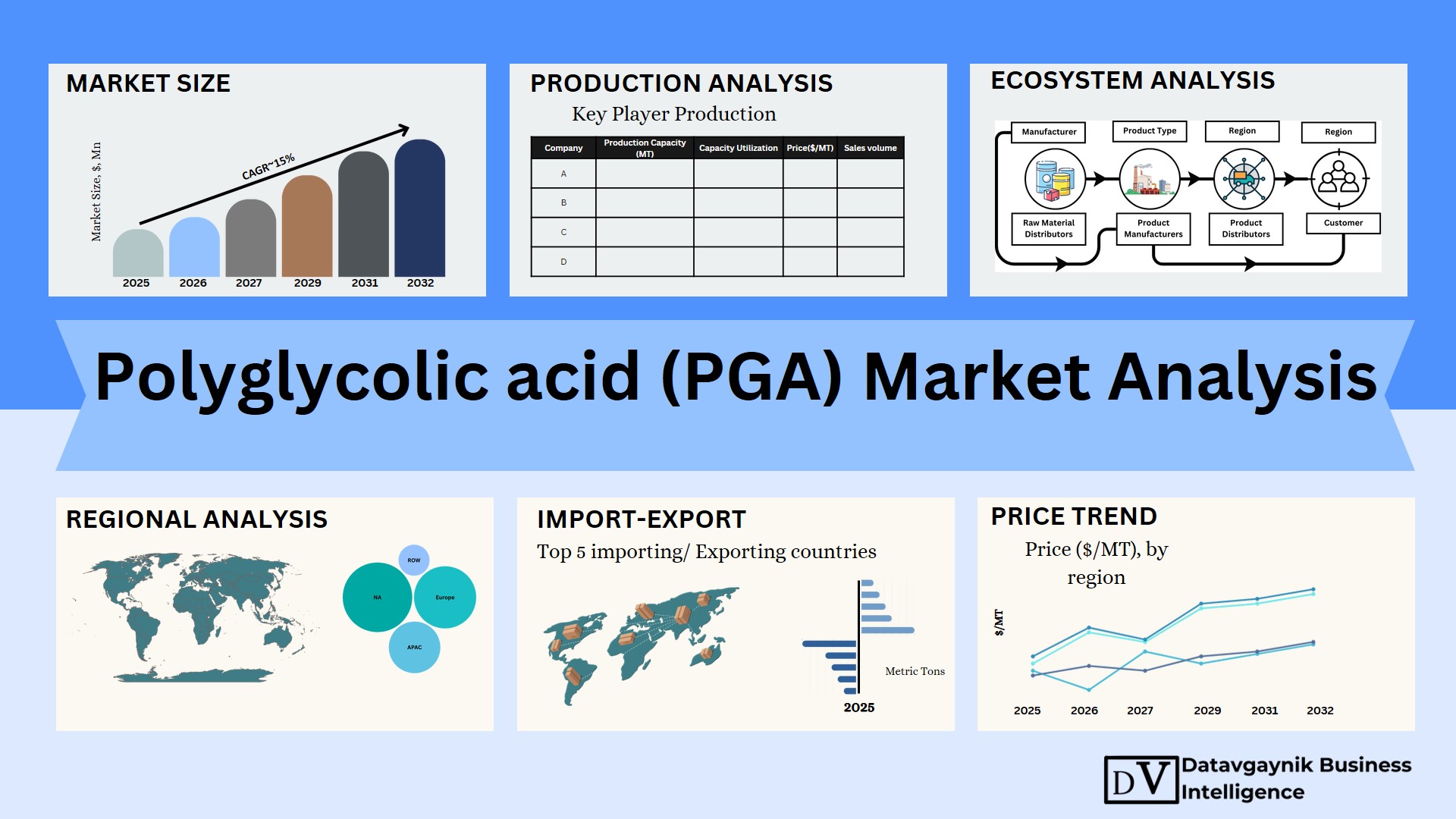
The Polyglycolic acid (PGA) Market is experiencing significant growth, primarily fueled by rapid advancements in medical applications. For instance, the demand for biodegradable surgical sutures made from PGA is growing at a compound annual growth rate (CAGR) close to 8%, as healthcare providers increasingly prefer materials that are biocompatible and safely absorbed by the body. PGA’s ability to degrade without causing harm positions it as a vital polymer in surgeries ranging from cardiovascular to orthopedic and cosmetic procedures. Hospitals and surgical centers are rapidly adopting PGA-based sutures due to their superior performance, which directly enhances patient recovery times and reduces complications. This trend substantially contributes to the overall expansion of the Polyglycolic acid (PGA) Market Size.
In addition to sutures, PGA’s role in drug delivery systems is becoming more prominent. Polyglycolic acid (PGA) microspheres and implants are widely used in controlled-release pharmaceuticals, enabling a gradual, sustained delivery of therapeutic agents. This improves treatment efficacy and patient compliance, particularly in chronic disease management. As pharmaceutical companies increasingly invest in advanced drug delivery platforms, the Polyglycolic acid (PGA) Market benefits from growing integration in these technologies.
Sustainability Focus Accelerates Polyglycolic acid (PGA) Market Growth in Biodegradable Polymers
The increasing global focus on environmental sustainability is a major growth driver for the Polyglycolic acid (PGA) Market. Governments and regulatory bodies are imposing stricter controls on single-use plastics, which has pushed industries to seek biodegradable alternatives. Polyglycolic acid’s natural biodegradability and eco-friendly degradation into harmless substances have made it a preferred material in packaging and agricultural films. For example, demand for biodegradable packaging materials is rising at double-digit rates as consumer awareness around plastic pollution grows. Companies innovating with PGA-based packaging enjoy strong market acceptance due to its ability to reduce environmental impact without compromising product protection.
In agriculture, Polyglycolic acid (PGA) is gaining traction in controlled-release fertilizers that enable nutrients to be released slowly and efficiently. This not only reduces chemical runoff but also enhances soil health, aligning with the increasing emphasis on sustainable farming. With the agriculture sector under pressure to adopt greener practices, PGA use in fertilizers and agrochemicals represents a significant and growing share of the Polyglycolic acid (PGA) Market.
Datavagyanik also covers related markets such as the Polyglycolic Acid (PGA) Suture Market, the Polyglycolic Acid (PGA) for Medical Applications Market, and the Polyglycolic Acid (PGA) for Oil & Gas Industry Market. Tracking these sectors reveals parallel dynamics and helps anticipate shifts likely to affect the primary market.
Pharmaceutical Industry Expansion Enhances Opportunities in Polyglycolic acid (PGA) Market
The pharmaceutical industry’s rapid growth and shift towards advanced drug delivery systems continue to drive the Polyglycolic acid (PGA) Market forward. Controlled-release drug formulations using PGA are particularly valuable for managing diseases that require steady medication levels, such as cancer, diabetes, and chronic infections. Polyglycolic acid (PGA) enables the design of microspheres and implants that release drugs over days or weeks, improving therapeutic outcomes and reducing dosage frequency.
Furthermore, the expanding field of tissue engineering and regenerative medicine is another key application propelling the Polyglycolic acid (PGA) Market. PGA’s use as a scaffold material supports cell growth and tissue regeneration before safely degrading, facilitating innovations in wound healing and organ repair. As research funding and clinical trials in tissue engineering increase, demand for PGA in this sector grows proportionally, broadening the market’s scope.
Technological Advancements Boost Polyglycolic acid (PGA) Market Penetration
Recent technological innovations have enhanced the properties of Polyglycolic acid (PGA), expanding its usability across multiple sectors and accelerating market growth. For example, new production methods now allow better control over PGA’s molecular weight and degradation rate, tailoring the polymer for specific medical or agricultural applications. These improvements increase PGA’s effectiveness in drug delivery and tissue scaffolding, attracting more manufacturers to incorporate it into advanced products.
In packaging, innovation in blending PGA with other biodegradable polymers is producing materials with superior mechanical properties and longer shelf life, opening up new opportunities in food and consumer goods packaging. This adaptability has made the Polyglycolic acid (PGA) Market more competitive and responsive to diverse industry needs.
Rising Demand for Sustainable Agriculture Drives Polyglycolic acid (PGA) Market Growth
Agriculture is emerging as a vital growth engine for the Polyglycolic acid (PGA) Market. Traditional fertilizers often cause nutrient leaching and environmental pollution, but PGA-based controlled-release fertilizers mitigate these issues by releasing nutrients gradually over time. This increases nutrient use efficiency by up to 30%, reduces waste, and supports sustainable farming practices. With global agriculture moving towards sustainability to meet food security goals, the Polyglycolic acid (PGA) Market is poised for substantial expansion in this sector.
Countries focused on organic and precision farming are increasingly adopting PGA-based fertilizers. This trend is particularly evident in regions aiming to reduce chemical inputs and improve soil health, offering long-term demand growth for PGA materials in agriculture.
Increasing Consumer Preference for Eco-Friendly Packaging Supports Polyglycolic acid (PGA) Market
The Polyglycolic acid (PGA) Market is significantly benefiting from growing consumer demand for sustainable packaging. As awareness about the environmental impact of plastic waste escalates, industries such as food and beverages, cosmetics, and consumer goods are shifting toward biodegradable materials. Polyglycolic acid (PGA) offers a compelling solution due to its ability to degrade rapidly in composting environments without leaving harmful residues.
For example, the global biodegradable packaging market is expected to grow at over 15% annually, with PGA capturing a meaningful share due to its superior properties compared to other biopolymers. Companies are increasingly investing in PGA-based films, containers, and coatings, driven by regulatory incentives and consumer pressure. This dynamic creates substantial revenue opportunities within the Polyglycolic acid (PGA) Market.
Regional Healthcare Advancements Propel Polyglycolic acid (PGA) Market Growth in North America and Europe
In mature markets such as North America and Europe, the Polyglycolic acid (PGA) Market is propelled by healthcare infrastructure modernization and rising demand for high-quality medical polymers. The United States, in particular, sees steady growth in PGA utilization for surgical sutures and drug delivery due to the prevalence of minimally invasive surgeries and growing elderly populations.
European countries like Germany and the United Kingdom lead innovation in biodegradable medical devices, leveraging PGA’s properties for complex surgical and regenerative applications. The presence of stringent regulatory standards ensures only high-grade PGA materials are adopted, fostering trust and consistent demand. These regional dynamics are pivotal in sustaining and expanding the Polyglycolic acid (PGA) Market Size globally.
Emerging Asia-Pacific Market Spurs Polyglycolic acid (PGA) Market Expansion
The Asia-Pacific region is rapidly becoming a powerhouse for the Polyglycolic acid (PGA) Market due to burgeoning healthcare infrastructure, agricultural modernization, and increased environmental awareness. China and India are leading this surge, with China dominating global PGA production while also expanding domestic consumption.
In India, rising healthcare investments and a focus on sustainable agriculture are creating fertile ground for PGA adoption. Meanwhile, Japan and South Korea are at the forefront of medical technology innovation, driving demand for high-performance PGA materials in drug delivery and tissue engineering.
The region’s growing middle class and evolving regulatory frameworks supporting biodegradable materials are catalyzing accelerated Polyglycolic acid (PGA) Market growth, positioning Asia-Pacific as a crucial market for stakeholders.
Expanding Industrial Applications Diversify Polyglycolic acid (PGA) Market Demand
Beyond healthcare, agriculture, and packaging, the Polyglycolic acid (PGA) Market is witnessing diversification into various industrial sectors. For example, in electronics, PGA is increasingly used to develop biodegradable components and substrates that address electronic waste challenges. With electronic waste rising annually by approximately 4-5%, sustainable materials like PGA are becoming essential in designing greener electronics.
Textile and consumer goods industries also explore PGA as a reinforcing agent and biodegradable alternative to synthetic fibers. This diversification enhances the resilience and growth potential of the Polyglycolic acid (PGA) Market by tapping into emerging sustainability trends across sectors.
“Track Country-wise Polyglycolic acid (PGA) Production and Demand through our Polyglycolic acid (PGA) Production Database”
- Polyglycolic acid (PGA) production database for 32+ countries worldwide
- Polyglycolic acid (PGA) sales volume for 32+ countries
- Country-wise Polyglycolic acid (PGA) production capacity, production plant mapping, production capacity utilization for 32+ manufacturers
- Polyglycolic acid (PGA) production plants and production plant capacity analysis by top manufacturers
“Track real-time Polyglycolic acid (PGA) Prices, Polyglycolic acid (PGA) price charts for 32+ countries, Polyglycolic acid (PGA) weekly price tracker and Polyglycolic acid (PGA) monthly price tracker”
- Track real-time Polyglycolic acid (PGA) prices and Polyglycolic acid (PGA) price trend in 32+ countries though our excel-based Polyglycolic acid (PGA) price charts
- Real-time Polyglycolic acid (PGA) price tracker dashboard with 32+ countries
- Complete transparency on Polyglycolic acid (PGA) price trend through our Polyglycolic acid (PGA) monthly price tracker, Polyglycolic acid (PGA) weekly price tracker
Geographical Demand Patterns in the Polyglycolic acid (PGA) Market
The Polyglycolic acid (PGA) Market displays significant regional variations in demand, driven by local industrial priorities and regulatory environments. North America leads with strong demand in healthcare and sustainable agriculture. For example, the U.S. healthcare sector’s growing adoption of PGA for biodegradable surgical sutures and advanced drug delivery systems has propelled the region’s market growth by nearly 9% annually over the past five years. Furthermore, the agriculture industry is increasingly incorporating PGA-based controlled-release fertilizers to improve nutrient efficiency while minimizing environmental impact, aligning with sustainable farming policies.
Europe follows closely, with countries such as Germany, the United Kingdom, and France spearheading the use of PGA in medical devices and eco-friendly packaging. The European emphasis on sustainability and stringent regulations against plastic waste have pushed PGA adoption in packaging materials, where demand has surged over 12% year-over-year. Simultaneously, Europe’s advanced pharmaceutical industry leverages PGA for controlled drug release and tissue engineering scaffolds, contributing to the market’s robust growth.
In the Asia-Pacific region, rapid industrialization and healthcare expansion have made this market one of the fastest-growing. For instance, China’s dual role as a top producer and consumer of PGA is notable; rising healthcare infrastructure investments and increasing agricultural modernization are fueling demand with growth rates exceeding 10% annually. Similarly, India’s burgeoning pharmaceutical industry and push for sustainable agriculture have created significant opportunities for PGA applications, especially in biodegradable medical products and fertilizers.
Emerging markets such as Latin America and the Middle East are showing promising early-stage growth. Countries like Brazil and Saudi Arabia are beginning to adopt PGA in agriculture and packaging, driven by rising environmental concerns and governmental sustainability initiatives. Though smaller in scale, these regions are expected to accelerate demand as infrastructure develops and regulatory frameworks tighten.
Global Production Landscape of Polyglycolic acid (PGA)
Production of Polyglycolic acid (PGA) is concentrated predominantly in Asia-Pacific, North America, and Europe, with China emerging as the largest manufacturing hub. For example, China’s chemical industry benefits from cost-effective raw material availability and high-volume production capabilities, allowing it to supply both domestic and international markets competitively. This has positioned China as a major exporter of PGA, with annual production growth rates exceeding 15% in recent years.
In North America, the United States focuses on specialized PGA products tailored for medical applications, particularly high-grade polymers for surgical sutures and drug delivery systems. Production facilities here emphasize quality control and technological innovation, supporting advanced PGA variants with controlled degradation rates and improved mechanical properties.
Europe’s production centers, mainly in Germany, France, and Switzerland, are renowned for research-driven development and manufacturing of medical-grade PGA materials. These countries prioritize sustainable production processes aligned with environmental standards, catering to the demand for biodegradable packaging and agricultural products alongside medical devices.
Emerging producers in India and Japan are scaling their capacities, driven by growing domestic demand and export ambitions. India is investing heavily in expanding production for controlled-release fertilizers and biodegradable medical applications, while Japan focuses on high-tech medical uses and eco-conscious packaging solutions. These developments indicate a diversifying production base that strengthens the global Polyglycolic acid (PGA) Market.
Market Segmentation Insights in the Polyglycolic acid (PGA) Market
The Polyglycolic acid (PGA) Market segmentation reveals distinct growth drivers across applications, production methods, and end-user industries.
By application, healthcare dominates the market with the highest share, thanks to PGA’s critical role in biodegradable surgical sutures, controlled drug delivery systems, and tissue engineering scaffolds. The rising prevalence of chronic diseases and an aging global population intensify demand for PGA-based medical devices. For instance, surgical sutures alone represent over 40% of PGA consumption, with expected growth of around 8-9% annually.
Agriculture represents another rapidly growing segment, largely driven by the adoption of PGA in controlled-release fertilizers and pesticide formulations. These applications improve nutrient efficiency by up to 30% and reduce environmental contamination, aligning with the global push for sustainable farming. As precision agriculture expands, PGA’s share in this sector is projected to grow at over 10% CAGR.
The packaging segment, while currently smaller in volume compared to healthcare and agriculture, is expanding quickly. Increasing bans on single-use plastics and rising consumer demand for eco-friendly packaging drive the use of PGA in films, containers, and coatings. Growth rates here exceed 12% annually in developed regions and are even higher in emerging markets embracing biodegradable alternatives.
By production method, chemical synthesis remains the dominant process for PGA manufacturing due to scalability and cost efficiency. However, biological synthesis through microbial fermentation is gaining interest, especially for applications requiring higher sustainability credentials such as medical devices and packaging. Though currently representing a smaller share, biological synthesis is expected to grow rapidly due to environmental benefits and consumer preferences.
In terms of end-user industries, healthcare and pharmaceuticals lead, followed by agriculture and packaging. Other sectors such as electronics and textiles are beginning to explore PGA’s potential, particularly for biodegradable components and reinforcing materials, respectively, contributing to broader market diversification.
Polyglycolic acid (PGA) Price Trends and Influencing Factors
The Polyglycolic acid (PGA) Price and its evolving trend reflect a complex interplay of raw material costs, production technology advancements, and demand-supply dynamics across regions and applications. Over recent years, PGA price per kilogram has shown moderate fluctuations, generally trending upwards due to increasing demand, especially in healthcare and sustainable packaging.
For instance, the global average Polyglycolic acid (PGA) Price rose by approximately 5-7% annually between 2020 and 2023, primarily driven by surging raw material costs such as glycolic acid and polymerization catalysts. This price pressure has been partly offset by improvements in production efficiency and economies of scale achieved by leading manufacturers, particularly in Asia-Pacific.
Demand spikes in specialized medical-grade PGA have supported higher pricing in healthcare applications, where quality and regulatory compliance justify premium costs. In contrast, PGA used in agricultural and packaging applications is typically more price-sensitive, with market participants negotiating competitive prices as volumes increase.
Looking ahead, the Polyglycolic acid (PGA) Price Trend is expected to continue its upward trajectory, albeit at a moderated pace of around 4-6% annually. This projection is supported by the steady rise in demand for biodegradable polymers and expanding regulatory requirements favoring eco-friendly materials. Additionally, raw material price volatility, particularly glycolic acid derived from petrochemical feedstocks, will remain a key factor influencing PGA pricing dynamics.
Manufacturers investing in innovative production methods, such as biological synthesis, may influence future pricing by potentially lowering production costs and enhancing sustainability, which could create market segmentation based on PGA price and quality tiers.
Regional Variations in Polyglycolic acid (PGA) Price Trends
Polyglycolic acid (PGA) Price varies significantly across regions, influenced by local supply chains, raw material availability, and application focus.
In Asia-Pacific, competitive production costs and abundant raw materials keep PGA prices relatively lower compared to North America and Europe. For example, China’s large-scale chemical manufacturing allows it to offer PGA at prices 10-15% below global averages, supporting its dominance in export markets.
North America’s PGA prices tend to be higher due to stringent quality standards, higher labor costs, and specialized product requirements, especially for healthcare applications. U.S. manufacturers focus on premium PGA grades, sustaining price premiums that reflect the added value and regulatory compliance.
Europe experiences elevated Polyglycolic acid (PGA) Prices driven by high environmental compliance costs and investments in sustainable manufacturing technologies. Additionally, the demand for advanced medical and packaging-grade PGA supports price levels above global averages.
Emerging markets in Latin America, the Middle East, and Africa often face price volatility due to limited local production and dependence on imports. However, as these regions build production capacities and adopt PGA in various industries, localized pricing strategies will likely stabilize, supporting market growth.
Future Outlook for Polyglycolic acid (PGA) Price and Market Dynamics
Looking forward, the Polyglycolic acid (PGA) Market is poised for strong growth across all key regions and segments, with price trends reflecting a balance of rising demand and technological innovation.
For example, anticipated increases in demand for biodegradable packaging alone could push PGA consumption volumes by more than 15% annually in certain markets, exerting upward pressure on prices. Conversely, advances in production efficiency and alternative synthesis methods could moderate price escalation.
Strategic partnerships between raw material suppliers and PGA manufacturers will play a crucial role in stabilizing supply chains and managing Polyglycolic acid (PGA) Price fluctuations. Additionally, regulatory frameworks incentivizing sustainable materials use will drive premium pricing for high-quality, certified biodegradable PGA products.
Overall, the Polyglycolic acid (PGA) Market’s geographic diversity, expanding applications, and evolving price trends create a dynamic environment filled with opportunities for manufacturers and end-users alike.
“Polyglycolic acid (PGA) Manufacturing Database, Polyglycolic acid (PGA) Manufacturing Capacity”
- Polyglycolic acid (PGA) top manufacturers market share for 32+ manufacturers
- Top 12 manufacturers and top 19 manufacturers of Polyglycolic acid (PGA) in North America, Europe, Asia Pacific
- Polyglycolic acid (PGA) production plant capacity by manufacturers and Polyglycolic acid (PGA) production data for 32+ market players
- Polyglycolic acid (PGA) production dashboard, Polyglycolic acid (PGA) production data in excel format
“Polyglycolic acid (PGA) price charts, Polyglycolic acid (PGA) weekly price tracker and Polyglycolic acid (PGA) monthly price tracker”
- Factors impacting real-time Polyglycolic acid (PGA) prices in 32+ countries worldwide
- Polyglycolic acid (PGA) monthly price tracker, Polyglycolic acid (PGA) weekly price tracker
- Real-time Polyglycolic acid (PGA) price trend, Polyglycolic acid (PGA) price charts, news and updates
- Tracking Polyglycolic acid (PGA) price fluctuations
Polyglycolic Acid (PGA) Market: Leading Manufacturers and Market Share Dynamics
The global Polyglycolic Acid (PGA) Market is experiencing significant growth, driven by its applications in medical, agricultural, and packaging industries. As of 2024, the market is valued at approximately USD 5.09 billion and is projected to reach USD 11.11 billion by 2033, growing at a CAGR of 9.07% during the forecast period. This expansion is propelled by increasing demand for biodegradable materials and advancements in production technologies.
Key Manufacturers in the Polyglycolic Acid (PGA) Market
Several companies are at the forefront of PGA production, each contributing uniquely to the market:
- Kureha Corporation (Japan): Kureha is a pioneer in PGA production, having developed a mass-scale manufacturing technique since the early 1990s. The company invested in a manufacturing facility in Belle, West Virginia, strategically located near a DuPont plant that produces glycolic acid, a primary feedstock for PGA. This investment underscores Kureha’s commitment to meeting the growing demand for biodegradable materials in medical applications.
- Corbion N.V. (Netherlands): Corbion specializes in biobased products and has a significant presence in the PGA market. The company’s focus on sustainability aligns with the increasing demand for eco-friendly materials, particularly in packaging and medical sectors.
- Shenzhen Polymtek Biomaterial Co., Ltd. (China): As a key player in the Asian market, Shenzhen Polymtek specializes in the production of PGA for medical applications, including surgical sutures. The company’s strategic positioning in China allows it to cater to the growing demand in the Asia-Pacific region.
- BMG Incorporated (USA): BMG is involved in the production of PGA resins, which are utilized in various applications, including medical devices and packaging materials. The company’s commitment to innovation supports its position in the competitive PGA market.
- Huizhou Foryou Medical Devices Co., Ltd. (China): Foryou Medical Devices focuses on the development and production of PGA-based medical products, such as absorbable sutures. The company’s expertise contributes to the advancement of PGA applications in the healthcare sector.
- Teleflex Incorporated (USA): Teleflex is a global provider of medical technologies, including PGA-based products. The company’s diverse portfolio supports its significant role in the PGA market.
Polyglycolic Acid (PGA) Market Share by Manufacturers
The PGA market is characterized by a competitive landscape with several key players:
- Kureha Corporation: Holding a substantial share in the PGA market, Kureha’s long-standing expertise and strategic investments position it as a leader in PGA production.
- Corbion N.V.: With its focus on biobased products, Corbion captures a significant portion of the market, particularly in regions emphasizing sustainability.
- Shenzhen Polymtek Biomaterial Co., Ltd.: Dominating the Asian market, Shenzhen Polymtek leverages its strategic location and production capabilities to meet regional demand.
- BMG Incorporated: BMG’s involvement in PGA resin production enables it to serve various industries, contributing to its market share.
- Huizhou Foryou Medical Devices Co., Ltd.: Specializing in PGA-based medical products, Foryou Medical Devices holds a notable share in the healthcare segment.
- Teleflex Incorporated: With a diverse product portfolio, Teleflex maintains a significant presence in the global PGA market.
Recent Developments in the Polyglycolic Acid (PGA) Market
The PGA market has witnessed several key developments:
- Technological Advancements: Companies are investing in research and development to enhance PGA production processes, aiming to improve efficiency and reduce costs. These advancements are expected to bolster the market’s growth.
- Regulatory Support: Governments worldwide are implementing regulations that encourage the use of biodegradable materials, including PGA. Such policies are anticipated to drive demand in various sectors.
- Market Expansion: Manufacturers are expanding their production capacities to meet the increasing demand for PGA. This expansion is particularly evident in regions experiencing rapid industrialization and urbanization.
Conclusion
The Polyglycolic Acid (PGA) Market is poised for significant growth, driven by advancements in production technologies, regulatory support, and the increasing demand for biodegradable materials. Key manufacturers, including Kureha Corporation, Corbion N.V., Shenzhen Polymtek Biomaterial Co., Ltd., BMG Incorporated, Huizhou Foryou Medical Devices Co., Ltd., and Teleflex Incorporated, play pivotal roles in shaping the market’s trajectory. Their strategic initiatives and innovations are expected to sustain the momentum of the PGA market in the coming years.
“Polyglycolic acid (PGA) Production Data and Polyglycolic acid (PGA) Production Trend, Polyglycolic acid (PGA) Production Database and forecast”
- Polyglycolic acid (PGA) production database for historical years, 12 years historical data
- Polyglycolic acid (PGA) production data and forecast for next 12 years
- Polyglycolic acid (PGA) sales volume by manufacturers
“Track Real-time Polyglycolic acid (PGA) Prices for purchase and sales contracts, Polyglycolic acid (PGA) price charts, Polyglycolic acid (PGA) weekly price tracker and Polyglycolic acid (PGA) monthly price tracker”
- Gain control on your purchase and sales contracts through our real-time Polyglycolic acid (PGA) price tracker and Polyglycolic acid (PGA) price trend analysis
- Polyglycolic acid (PGA) weekly price tracker and forecast for next four weeks
- Polyglycolic acid (PGA) monthly price tracker and forecast for next two months
Market Scenario, Demand vs Supply, Average Product Price, Import vs Export, till 2035
- Global Polyglycolic acid (PGA) Market revenue and demand by region
- Global Polyglycolic acid (PGA) Market production and sales volume
- United States Polyglycolic acid (PGA) Market revenue size and demand by country
- Europe Polyglycolic acid (PGA) Market revenue size and demand by country
- Asia Pacific Polyglycolic acid (PGA) Market revenue size and demand by country
- Middle East & Africa Polyglycolic acid (PGA) Market revenue size and demand by country
- Latin America Polyglycolic acid (PGA) Market revenue size and demand by
- Import-export scenario – United States, Europe, APAC, Latin America, Middle East & Africa
- Average product price – United States, Europe, APAC, Latin America, Middle East & Africa
- Market player analysis, competitive scenario, market share analysis
- Business opportunity analysis
Key questions answered in the Global Polyglycolic acid (PGA) Market Analysis Report:
- What is the market size for Polyglycolic acid (PGA) in United States, Europe, APAC, Middle East & Africa, Latin America?
- What is the yearly sales volume of Polyglycolic acid (PGA) and how is the demand rising?
- Who are the top market players by market share, in each product segment?
- Which is the fastest growing business/ product segment?
- What should be the business strategies and Go to Market strategies?
The report covers Polyglycolic acid (PGA) Market revenue, Production, Sales volume, by regions, (further split into countries):
- Asia Pacific (China, Japan, South Korea, India, Indonesia, Vietnam, Rest of APAC)
- Europe (UK, Germany, France, Italy, Spain, Benelux, Poland, Rest of Europe)
- North America (United States, Canada, Mexico)
- Latin America (Brazil, Argentina, Rest of Latin America)
- Middle East & Africa
Table of Contents:
- Introduction to Polyglycolic Acid (PGA)
1 Definition and Chemical Properties
1.2 Historical Development and Key Milestones - Polyglycolic Acid (PGA) and Its Biodegradable Properties
1 Biodegradability in Medical and Industrial Applications
2.2 Advantages of PGA Over Other Polymers - Market Overview of Polyglycolic Acid
1 Market Size and Trends
3.2 Key Drivers of Market Growth
3.3 Challenges and Barriers in Market Development - Global Market Dynamics for Polyglycolic Acid
1 Demand and Supply Overview
4.2 Technological Advances Driving Market Expansion
4.3 Competitive Landscape and Key Market Players - Applications of Polyglycolic Acid
1 Use in Medical and Surgical Applications
5.2 Applications in Agricultural and Industrial Sectors
5.3 Emerging Uses of PGA in Consumer Goods - Polyglycolic Acid in Medical and Healthcare Sectors
1 Use in Absorbable Sutures and Medical Devices
6.2 Role in Drug Delivery Systems and Tissue Engineering
6.3 Regulatory Approvals and Adoption Trends - Segmentation of the Polyglycolic Acid Market
1 Market by Application Type
7.2 Market by End-Use Industry
7.3 Market by Geographical Region - North America Polyglycolic Acid Market Insights
1 Market Performance in the U.S. and Canada
8.2 Growth in Medical and Pharmaceutical Sectors
8.3 Market Trends and Regulatory Landscape - Europe Polyglycolic Acid Market Insights
1 Market Demand and Industry Growth in Europe
9.2 Adoption in Healthcare and Bioplastics
9.3 Competitive Environment in the European Market - Asia-Pacific Polyglycolic Acid Market Insights
1 Rapid Growth in Asia-Pacific Regions
10.2 Key Applications in Medical and Agricultural Fields
10.3 Production and Supply Dynamics - Latin America Market Insights
1 Growing Demand in Medical and Agricultural Applications
11.2 Market Development and Opportunities in Latin America
11.3 Future Trends and Key Challenges - Middle East & Africa Market Overview
1 Market Adoption in Healthcare and Agriculture
12.2 Key Regional Players and Growth Opportunities
12.3 Demand for Polyglycolic Acid in Emerging Markets - Competitive Landscape in the Polyglycolic Acid Market
1 Leading Manufacturers and Market Share Analysis
13.2 Competitive Strategies of Key Players
13.3 Market Positioning and Innovation Trends - Technological Advancements in Polyglycolic Acid Production
1 Innovations in Synthesis and Manufacturing Processes
14.2 Enhancements in Production Efficiency
14.3 Advances in Functionalization and Customization - Cost Structure and Pricing of Polyglycolic Acid
1 Breakdown of Production and Manufacturing Costs
15.2 Pricing Trends and Market Competitiveness
15.3 Factors Influencing Pricing and Profit Margins - Raw Materials and Supply Chain for Polyglycolic Acid
1 Sourcing of Raw Materials for PGA Production
16.2 Supply Chain Challenges and Distribution Networks
16.3 Raw Material Cost and Availability - Polyglycolic Acid in Drug Delivery Systems
1 Use in Controlled Release and Biodegradable Drug Carriers
17.2 Role in Advanced Drug Delivery Technologies
17.3 Adoption and Research Trends in Pharmaceutical Applications - Environmental Impact and Sustainability of Polyglycolic Acid
1 Eco-Friendly and Biodegradable Properties
18.2 Sustainability Challenges in Production
18.3 Green Manufacturing Practices and Market Trends - Regulatory Landscape for Polyglycolic Acid
1 Regulations Affecting Medical and Industrial Applications
19.2 Approval Processes for PGA-based Medical Products
19.3 Impact of Regulatory Changes on Market Expansion - Future Market Forecast (2025-2035)
1 Market Growth Projections by Region
20.2 Revenue and Production Forecasts for Key Applications - Opportunities and Challenges in the Agricultural Sector
1 Role of PGA in Biodegradable Agriculture Products
21.2 Opportunities in Soil Treatment and Plant Growth
21.3 Challenges in Scaling Up Applications - Consumer Awareness and Adoption of Polyglycolic Acid
1 Awareness of Biodegradable Materials in the Market
22.2 Adoption of PGA in Consumer Goods and Packaging
22.3 Market Penetration in New Sectors - Impact of COVID-19 on the Polyglycolic Acid Market
1 Disruptions in Supply Chains and Production
23.2 Shift in Demand for Medical and Healthcare Products
23.3 Long-Term Effects and Market Recovery - Strategic Partnerships and Collaborations in the PGA Market
1 Collaborations Between Industry Leaders and Innovators
24.2 Research and Development Partnerships
24.3 Licensing and Distribution Deals - Global Trade and Export Analysis for Polyglycolic Acid
1 Trade Flow of Polyglycolic Acid in Key Regions
25.2 Export and Import Trends and Challenges
25.3 Trade Policies and Impact on Global Market Access - Challenges in Commercialization and Scalability
1 Barriers to Large-Scale Production
26.2 Economic Constraints and Market Entry Barriers
26.3 Addressing Challenges in Demand and Supply - Conclusions and Strategic Recommendations
1 Key Market Insights and Findings
27.2 Strategic Recommendations for Stakeholders and Investors


