

Vascular endothelial growth factor (VEGF) Market Driven by Precision Therapeutics
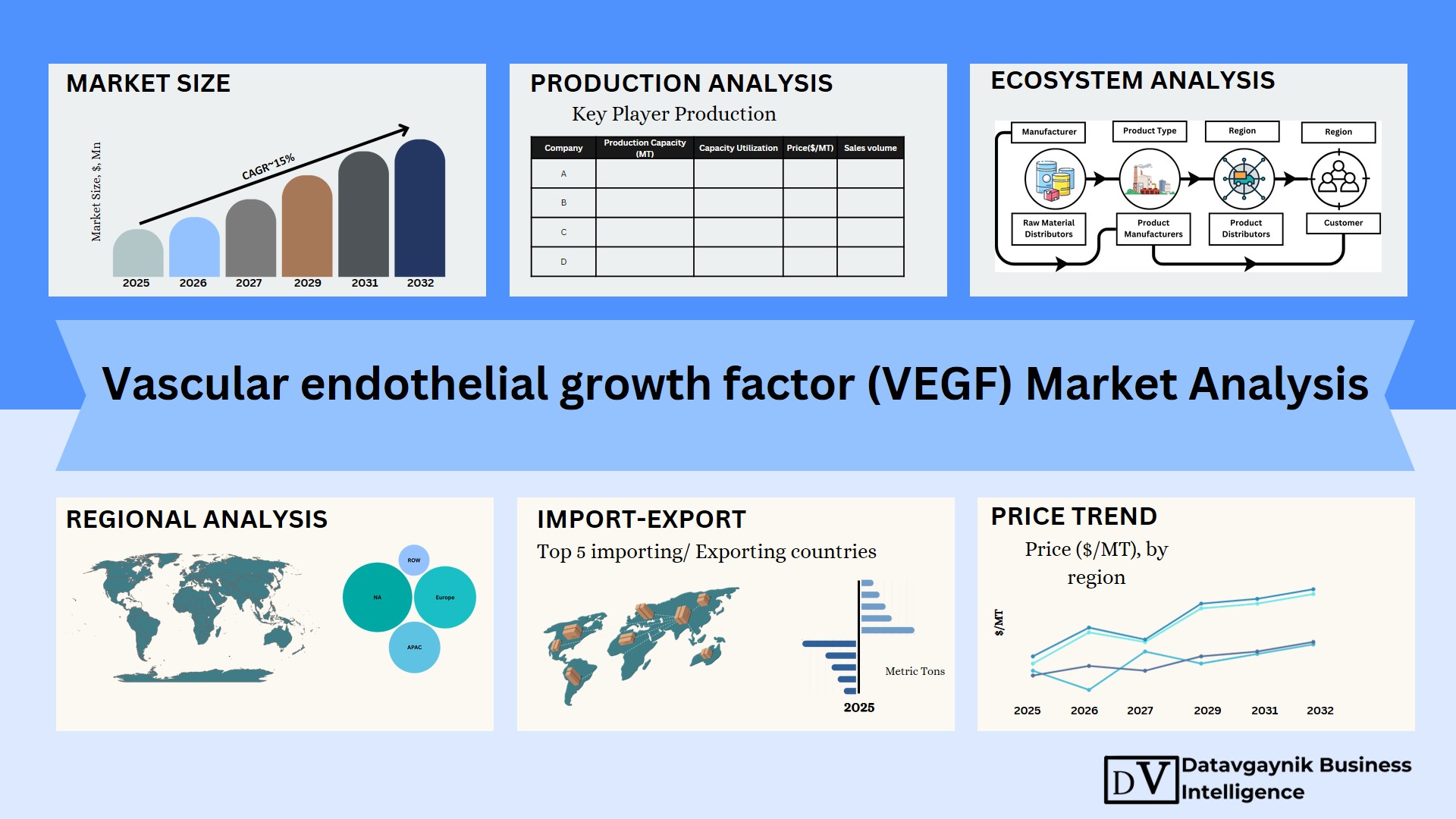
The vascular endothelial growth factor (VEGF) market is undergoing transformative expansion, driven by its increasing adoption in high-impact therapeutic domains. From oncology to ophthalmology, VEGF-targeted therapies have become indispensable. The market is evolving rapidly, not just due to demand, but because of a fundamental shift in how angiogenesis is understood and manipulated across clinical disciplines. The vascular endothelial growth factor (VEGF) market size exceeded $10 billion globally in 2023 and is poised to accelerate further, with an estimated compound annual growth rate (CAGR) of over 8% through 2030.
Oncology Continues to Anchor the Vascular endothelial growth factor (VEGF) Market
In oncology, VEGF inhibition is no longer a supplementary approach—it is foundational. For instance, drugs like bevacizumab, which target VEGF-A, are used in treating colorectal, lung, renal, and glioblastoma cancers. The oncology segment commands more than 60% of the total vascular endothelial growth factor (VEGF) market revenue. This dominance is reinforced by rising cancer incidence worldwide—over 20 million new cases annually—and the expanding pipeline of VEGF-targeted therapies under development. The expansion of immuno-oncology combinations with VEGF inhibitors further intensifies this trend.
Age-Related Macular Degeneration Fuels Ophthalmology Segment Growth
In the ophthalmology space, VEGF inhibitors have revolutionized treatment for age-related macular degeneration (AMD), diabetic retinopathy, and retinal vein occlusion. The number of AMD patients is expected to surpass 300 million globally by 2040. As a result, the demand for intravitreal VEGF inhibitors such as ranibizumab and aflibercept continues to grow. The ophthalmology segment represents nearly 25% of the vascular endothelial growth factor (VEGF) market, with double-digit growth expected over the next five years. The increasing elderly population—projected to reach 2.1 billion people over 60 years by 2050—further compounds this upward trajectory.
Regenerative Medicine Spurs New Application Horizons
Beyond oncology and ophthalmology, regenerative medicine is unlocking new opportunities within the vascular endothelial growth factor (VEGF) market. VEGF’s role in promoting angiogenesis and tissue repair makes it essential in wound healing, ischemic limb conditions, and post-surgical recovery. For example, in diabetic wound healing—a segment expected to grow at 6.5% CAGR—VEGF-based formulations are being tested in both injectable and topical forms. Clinical research in bioengineered tissues, including 3D-printed organs and scaffold-integrated therapeutics, is heavily reliant on VEGF to simulate vascular networks.
Biosimilars Disrupting Market Dynamics
The expiration of patents on blockbuster VEGF inhibitors has opened the floodgates for biosimilars. Biosimilars offer up to 40% cost reduction compared to originator biologics, dramatically improving access in emerging markets. The biosimilars segment within the vascular endothelial growth factor (VEGF) market is growing at a staggering pace, expected to exceed $3 billion by 2027. Countries like India and South Korea are emerging as leading suppliers, while regulators in Europe and the U.S. are accelerating approval pathways. The shift toward biosimilars not only reduces healthcare costs but reshapes the competitive landscape, forcing major players to innovate or face commoditization.
Vascular endothelial growth factor (VEGF) Market Supported by Aging Demographics
The demographic shift toward older populations globally is a long-term driver of the vascular endothelial growth factor (VEGF) market. With age comes a heightened prevalence of chronic diseases like AMD, diabetic retinopathy, peripheral artery disease, and cancer—all of which are target zones for VEGF inhibitors. For example, over 33% of adults over 65 suffer from at least one chronic eye condition requiring VEGF treatment. This aging trend, combined with longer life expectancy and improved diagnostics, ensures that the demand for VEGF-related therapies will continue to expand sustainably.
Technological Advances in VEGF-targeting Therapies
Innovation in VEGF-targeting drug delivery systems is enhancing efficacy and patient compliance. Long-acting implants, sustained-release formulations, and oral tyrosine kinase inhibitors are changing the way VEGF therapies are administered. For instance, novel delivery systems such as the port delivery system (PDS) in ophthalmology have reduced injection frequency from monthly to bi-annually, improving adherence. The shift to oral VEGF inhibitors in oncology—offering convenience and outpatient compatibility—is another transformative development. These innovations are expanding both the scope and accessibility of treatments across the vascular endothelial growth factor (VEGF) market.
Expanding R&D Pipeline Signals Strong Market Fundamentals
The R&D landscape in the vascular endothelial growth factor (VEGF) market remains robust. Over 100 clinical trials are currently exploring VEGF inhibitors, biosimilars, and combination regimens. Companies are investing heavily in next-generation VEGF modulators, including bispecific antibodies and small interfering RNAs (siRNAs). For example, combination trials pairing VEGF blockers with immune checkpoint inhibitors have shown promising results in renal cell carcinoma and hepatocellular carcinoma. This relentless innovation pipeline is reinforcing the scientific credibility and commercial sustainability of the vascular endothelial growth factor (VEGF) market.
Strategic Investments and Collaborations Driving Market Expansion
Strategic alliances between biotech startups, big pharma, and academic institutions are fueling product development and geographic expansion. Over the last three years, there has been a 35% increase in licensing deals related to VEGF technologies. Major partnerships are emerging to co-develop biosimilars, share production platforms, and co-market VEGF-based therapies across borders. These collaborations reduce time-to-market and expand global reach, especially in high-growth regions such as Asia Pacific and Latin America. The vascular endothelial growth factor (VEGF) market is becoming increasingly interconnected and globalized through such synergies.
Government and Institutional Support Strengthens the Ecosystem
Government funding and institutional incentives are playing a pivotal role in reinforcing the vascular endothelial growth factor (VEGF) market. For instance, the U.S. has significantly increased National Institutes of Health (NIH) grants for angiogenesis-related research, much of it focused on VEGF signaling pathways. In Europe, health authorities are promoting biosimilar adoption through fast-track regulatory approvals and hospital procurement incentives. In emerging economies, governments are investing in localized biosimilar production to increase affordability and reduce dependence on imports. These systemic supports are creating a favorable ecosystem for VEGF innovations to thrive.
Vascular endothelial growth factor (VEGF) Market Size Positioned for Global Upsurge
With increasing global incidence of cancer and chronic eye diseases, and growing access to advanced therapeutics, the vascular endothelial growth factor (VEGF) market size is positioned for exponential expansion. Asia Pacific, in particular, is witnessing the fastest growth, driven by rising healthcare expenditure, growing patient populations, and government backing for biotech manufacturing. China and India are leading this regional momentum, accounting for more than 20% of global VEGF biosimilar production. Meanwhile, North America remains the epicenter for innovation, and Europe is leading the push toward biosimilar integration. The global distribution of innovation, production, and demand ensures that the vascular endothelial growth factor (VEGF) market will remain resilient and growth-oriented over the next decade.
“Track Country-wise Vascular endothelial growth factor (VEGF) Production and Demand through our Vascular endothelial growth factor (VEGF) Production Database”
-
-
- Vascular endothelial growth factor (VEGF) production database for 32+ countries worldwide
- Vascular endothelial growth factor (VEGF) sales volume for 32+ countries
- Country-wise Vascular endothelial growth factor (VEGF) production capacity, production plant mapping, production capacity utilization for 32+ manufacturers
- Vascular endothelial growth factor (VEGF) production plants and production plant capacity analysis by top manufacturers
-
“Track real-time Vascular endothelial growth factor (VEGF) Prices, Vascular endothelial growth factor (VEGF) price charts for 32+ countries, Vascular endothelial growth factor (VEGF) weekly price tracker and Vascular endothelial growth factor (VEGF) monthly price tracker”
-
-
- Track real-time Vascular endothelial growth factor (VEGF) prices and Vascular endothelial growth factor (VEGF) price trend in 32+ countries though our excel-based Vascular endothelial growth factor (VEGF) price charts
- Real-time Vascular endothelial growth factor (VEGF) price tracker dashboard with 32+ countries
- Complete transparency on Vascular endothelial growth factor (VEGF) price trend through our Vascular endothelial growth factor (VEGF) monthly price tracker, Vascular endothelial growth factor (VEGF) weekly price tracker
-
North America Leads the Vascular endothelial growth factor (VEGF) Market in Innovation and Consumption
The vascular endothelial growth factor (VEGF) market in North America commands a dominant position due to its strong research ecosystem, early technology adoption, and widespread clinical integration. The United States remains the largest consumer of VEGF inhibitors, driven by high prevalence of cancer, diabetic retinopathy, and age-related macular degeneration. For instance, over 2 million new cancer cases are diagnosed annually in the U.S., a significant portion of which involve angiogenesis-driven tumors that rely on VEGF-targeted treatment protocols.
Furthermore, the high rate of ophthalmologic procedures, especially intravitreal injections for wet AMD and diabetic macular edema, supports continuous demand. Canada mirrors this pattern with strong public health programs covering VEGF therapies under provincial insurance, which has driven uptake of both branded drugs and biosimilars.
Europe’s Vascular endothelial growth factor (VEGF) Market Fueled by Biosimilars and Government Support
Europe’s vascular endothelial growth factor (VEGF) market is marked by widespread biosimilar adoption and advanced pharmaceutical infrastructure. Countries like Germany, France, and the UK are at the forefront of VEGF biosimilar integration. Germany, for instance, benefits from well-established reimbursement policies and incentives for biosimilar use in oncology and ophthalmology, allowing it to become a biosimilar production hub.
In France, national health insurance coverage has expanded patient access to VEGF inhibitors, particularly in ophthalmology. The UK has fostered clinical trial networks focused on VEGF signaling pathways and regenerative medicine. Collectively, these countries contribute over 30% to global vascular endothelial growth factor (VEGF) market revenue, with biosimilars expected to drive double-digit growth through the decade.
Asia Pacific Emerges as the Fastest-Growing Vascular endothelial growth factor (VEGF) Market
Asia Pacific is rapidly transforming into a global hotspot for the vascular endothelial growth factor (VEGF) market. The region is experiencing double-digit growth, driven by the rising burden of chronic diseases and expanding healthcare access. China leads the regional charge, with significant domestic production capacity for VEGF biosimilars and innovative therapies. For example, VEGF inhibitors have been integrated into China’s national drug reimbursement list, triggering a surge in patient uptake across oncology and ophthalmology.
India, with its cost-efficient pharmaceutical manufacturing base, has emerged as a major exporter of VEGF biosimilars to Latin America, Africa, and Southeast Asia. Japan continues to prioritize high-quality production with strict regulatory protocols and a strong focus on precision medicine. South Korea’s biopharma sector is investing heavily in VEGF pipeline drugs and participating in international trials. This regional combination of affordability, innovation, and demand ensures Asia Pacific will remain the fastest-expanding contributor to the vascular endothelial growth factor (VEGF) market.
Latin America and Middle East Open Up New Frontiers for Vascular endothelial growth factor (VEGF) Market Penetration
In Latin America, countries such as Brazil and Mexico are seeing rising VEGF inhibitor adoption, supported by increasing healthcare budgets and public-private partnerships. Brazil has introduced biosimilars into its national oncology and ophthalmology programs, expanding access to previously cost-prohibitive therapies. Mexico, on the other hand, has focused on importing VEGF biosimilars from India and China, improving availability at lower price points.
In the Middle East, Gulf countries like the UAE and Saudi Arabia are incorporating VEGF-targeted therapies into national healthcare protocols. These markets, though smaller in volume, show high per capita spending on specialty treatments and are projected to grow steadily as diagnostic and treatment infrastructure improves.
Segmentation by Drug Class in the Vascular endothelial growth factor (VEGF) Market
The vascular endothelial growth factor (VEGF) market is segmented primarily into three drug classes: monoclonal antibodies, tyrosine kinase inhibitors, and VEGF-trap agents. Monoclonal antibodies such as bevacizumab continue to dominate in oncology applications due to their high efficacy in solid tumors. Tyrosine kinase inhibitors are gaining traction due to their oral administration and systemic effects, making them preferred for long-term therapies.
VEGF-trap agents such as aflibercept have carved out a significant niche in ophthalmology due to their superior durability and reduced injection frequency. These therapies collectively account for the bulk of vascular endothelial growth factor (VEGF) market revenue, with continuous innovation extending their clinical relevance.
Vascular endothelial growth factor (VEGF) Market Segmentation by Application Area
Application-wise, oncology remains the largest segment, comprising over 60% of total vascular endothelial growth factor (VEGF) market demand. Tumor types such as lung, colorectal, breast, and renal cancers continue to rely on VEGF inhibitors as a standard line of therapy. Ophthalmology is the second-largest segment, showing robust growth due to the rising incidence of diabetic eye diseases and age-related macular degeneration.
Emerging applications in regenerative medicine are showing promise as VEGF plays a critical role in tissue repair and vascular regeneration. Wound healing, ischemic limb salvage, and bioengineered tissues represent growing use cases where VEGF is becoming central to next-generation therapies.
Route of Administration and Its Impact on the Vascular endothelial growth factor (VEGF) Market
Intravenous delivery dominates the oncology landscape, especially for monoclonal antibodies, ensuring rapid systemic absorption and clinical control. However, ophthalmology continues to be led by intravitreal injection methods due to the need for direct retinal delivery. Oral VEGF inhibitors are gaining market share, offering convenience and better adherence, especially in outpatient cancer care settings.
The evolution in delivery formats has directly impacted patient outcomes and market growth. For example, the introduction of long-acting VEGF implants and sustained-release injections has reduced patient burden and improved compliance, thereby expanding the patient pool and driving revenue growth in both hospital and specialty clinic settings.
Vascular endothelial growth factor (VEGF) Market Segmentation by End-User
Hospitals remain the largest end-users, accounting for over 65% of vascular endothelial growth factor (VEGF) market revenue. The complexity of oncology cases, the need for infusion infrastructure, and centralized care models keep hospitals at the forefront. Specialty clinics, especially those focused on ophthalmology, are also major consumers. These clinics are critical for managing high-volume intravitreal procedures efficiently and have seen accelerated adoption of newer delivery systems.
Research institutions form a smaller but strategically important segment. With the rise of VEGF-centric research in angiogenesis and regenerative applications, demand for VEGF reagents, pathway modulators, and preclinical trial materials has grown steadily within academic and pharmaceutical R&D environments.
Vascular endothelial growth factor (VEGF) Price Trends Reflect Market Maturity and Innovation
Vascular endothelial growth factor (VEGF) price trends show bifurcation between high-income and emerging markets. In developed countries, branded biologics maintain premium pricing, ranging between $2,000 to $5,000 per treatment cycle. This reflects the value delivered in terms of life extension, disease control, and reduced surgical interventions. For instance, VEGF therapies in oncology often serve as first-line treatments, supporting their continued price stability.
However, the introduction of biosimilars has placed downward pressure on pricing, especially in ophthalmology. In India and parts of Southeast Asia, biosimilar VEGF inhibitors are priced as low as 60–70% below branded counterparts, enabling large-scale adoption in public healthcare systems. The average global vascular endothelial growth factor (VEGF) price trend is declining marginally at 3–5% annually, driven by competition and cost-efficiency in manufacturing.
Regional Variations in Vascular endothelial growth factor (VEGF) Price and Access
Vascular endothelial growth factor (VEGF) price varies significantly by geography. In the U.S., price containment is becoming a key theme, with insurers preferring biosimilars in reimbursement decisions. Europe has seen more aggressive price cuts as part of centralized procurement and biosimilar tendering. Meanwhile, Latin America and Africa face challenges in affordability, making them highly receptive to biosimilar imports.
In Asia Pacific, countries like China have successfully negotiated volume-based procurement contracts that slash VEGF prices by up to 50%, while maintaining therapeutic standards. These evolving vascular endothelial growth factor (VEGF) price trends are reshaping competitive strategies and influencing regional revenue potential.
Competitive Pricing as a Market Strategy in the Vascular endothelial growth factor (VEGF) Market
Manufacturers are increasingly adopting value-based pricing models in the vascular endothelial growth factor (VEGF) market. This includes bundling VEGF therapies with diagnostics, offering price discounts for long-term use, or tying pricing to clinical performance. Such models are especially gaining traction in hospital procurement contracts and public insurance systems.
Companies are also focusing on expanding access through tiered pricing structures—offering lower VEGF prices in low- and middle-income countries while maintaining margins in premium markets. These strategies ensure both market penetration and brand loyalty while balancing global pricing dynamics.
“Vascular endothelial growth factor (VEGF) Manufacturing Database, Vascular endothelial growth factor (VEGF) Manufacturing Capacity”
-
-
- Vascular endothelial growth factor (VEGF) top manufacturers market share for 32+ manufacturers
- Top 12 manufacturers and top 19 manufacturers of Vascular endothelial growth factor (VEGF) in North America, Europe, Asia Pacific
- Vascular endothelial growth factor (VEGF) production plant capacity by manufacturers and Vascular endothelial growth factor (VEGF) production data for 32+ market players
- Vascular endothelial growth factor (VEGF) production dashboard, Vascular endothelial growth factor (VEGF) production data in excel format
-
“Vascular endothelial growth factor (VEGF) price charts, Vascular endothelial growth factor (VEGF) weekly price tracker and Vascular endothelial growth factor (VEGF) monthly price tracker”
-
-
- Factors impacting real-time Vascular endothelial growth factor (VEGF) prices in 32+ countries worldwide
- Vascular endothelial growth factor (VEGF) monthly price tracker, Vascular endothelial growth factor (VEGF) weekly price tracker
- Real-time Vascular endothelial growth factor (VEGF) price trend, Vascular endothelial growth factor (VEGF) price charts, news and updates
- Tracking Vascular endothelial growth factor (VEGF) price fluctuations
-
Top Manufacturers Dominating the Vascular Endothelial Growth Factor (VEGF) Market
The Vascular endothelial growth factor (VEGF) Market is highly competitive and driven by a core group of global pharmaceutical and biotechnology companies. These leading players are investing in advanced R&D, product innovation, and global partnerships to expand their footprint across oncology, ophthalmology, and regenerative medicine. The market’s growth is further catalyzed by the increasing demand for VEGF inhibitors, biosimilars, and targeted therapeutic solutions.
Roche Holding AG (Genentech)
Roche, through its subsidiary Genentech, is a dominant force in the Vascular endothelial growth factor (VEGF) Market. Its flagship product, Avastin (bevacizumab), is a widely used monoclonal antibody targeting VEGF-A. Avastin is extensively applied in colorectal, lung, breast, and kidney cancers and has also been used off-label in ophthalmology. The drug has significantly shaped Roche’s VEGF market share, with annual sales exceeding billions globally.
Additionally, Roche’s ophthalmology-focused VEGF therapy, Lucentis (ranibizumab), co-developed with Novartis, has been pivotal in treating age-related macular degeneration (AMD) and diabetic macular edema (DME). Lucentis’s strong performance has reinforced Roche’s leadership in the ocular segment of the Vascular endothelial growth factor (VEGF) Market.
Novartis AG
Novartis is another key manufacturer with a robust position in the Vascular endothelial growth factor (VEGF) Market. Its portfolio includes Lucentis, marketed outside the U.S., and Beovu (brolucizumab), a newer generation VEGF inhibitor designed for fewer injections and prolonged efficacy in treating AMD and DME.
With Beovu gaining regulatory approval in recent years, Novartis has expanded its presence in the ophthalmic segment, challenging traditional leaders and increasing its VEGF market share in Europe, Asia, and North America.
Regeneron Pharmaceuticals
Regeneron has made a significant impact on the Vascular endothelial growth factor (VEGF) Market through its blockbuster product, Eylea (aflibercept). Eylea functions as a VEGF-trap, binding to VEGF-A, VEGF-B, and PlGF, offering broad-spectrum anti-angiogenic activity. It is approved for AMD, DME, retinal vein occlusion (RVO), and diabetic retinopathy.
Regeneron’s strategic partnerships and continued investment in extending Eylea’s indications have helped it capture a substantial share in the ophthalmology segment of the Vascular endothelial growth factor (VEGF) Market.
Pfizer Inc.
Pfizer has played a major role in the VEGF-targeted oncology landscape with its tyrosine kinase inhibitor, Sutent (sunitinib). Sutent is approved for advanced renal cell carcinoma and gastrointestinal stromal tumors (GISTs). While facing generic competition, the brand still contributes to Pfizer’s overall position in the Vascular endothelial growth factor (VEGF) Market due to its strong legacy in targeted cancer therapies.
Eli Lilly and Company
Eli Lilly’s Cyramza (ramucirumab), a monoclonal antibody targeting VEGFR-2, has secured a niche in advanced cancer therapies. Approved for gastric, non-small cell lung, and colorectal cancers, Cyramza complements the broader oncology pipeline and adds competitive depth to the VEGF inhibitor class.
Bayer AG
Bayer, co-marketer of Eylea with Regeneron outside the U.S., commands a substantial portion of the global Vascular endothelial growth factor (VEGF) Market in the ophthalmic segment. The company’s efforts to expand indications and geographic reach have cemented its role as a key VEGF market stakeholder.
AstraZeneca
AstraZeneca’s VEGF-related strategy includes Lynparza and Imfinzi, which, while not direct VEGF inhibitors, are often used in combination therapies involving VEGF-targeted agents. Their involvement in multi-modal cancer therapies positions AstraZeneca strategically in the evolving landscape of the Vascular endothelial growth factor (VEGF) Market.
Samsung Bioepis and Amgen
Samsung Bioepis and Amgen are prominent players in the biosimilar segment of the Vascular endothelial growth factor (VEGF) Market. Amgen’s Mvasi, a biosimilar to Avastin, and Samsung Bioepis’s efforts in biosimilar development are reshaping cost dynamics and expanding access to VEGF therapies, particularly in emerging markets.
Vascular Endothelial Growth Factor (VEGF) Market Share by Manufacturer
In terms of market share:
- Roche leads with a combined estimated 30–35% share through Avastin and Lucentis.
- Regeneron and Bayer, together, hold around 25–30% of the VEGF market via Eylea.
- Novartis accounts for approximately 15% share, primarily through Beovu and non-U.S. Lucentis sales.
- Pfizer and Eli Lilly collectively represent around 10–12% of the market, mainly through oncology applications.
- Amgen, Samsung Bioepis, and other biosimilar producers are rapidly increasing their market presence, accounting for approximately 8–10%, with a rising trajectory.
Recent Developments and Industry News
- April 2024 – Roche launched a new formulation of Lucentis with extended durability to reduce injection frequency in AMD patients, aiming to compete with Beovu and Eylea in treatment convenience.
- January 2024 – Regeneron received FDA approval for a higher-dose version of Eylea (Eylea HD), offering extended treatment intervals for patients with retinal conditions.
- December 2023 – Novartis announced a strategic collaboration with a Chinese biotech firm to expand Beovu’s access in the Asia Pacific Vascular endothelial growth factor (VEGF) Market.
- October 2023 – Amgen’s biosimilar Mvasi gained expanded EMA approval for additional oncology indications, increasing its footprint across Europe.
- August 2023 – Eli Lilly’s Cyramza showed positive phase III trial results in combination with immunotherapy for colorectal cancer, potentially expanding its use within the Vascular endothelial growth factor (VEGF) Market.
Summary
The Vascular endothelial growth factor (VEGF) Market is led by pharmaceutical giants like Roche, Novartis, Regeneron, Pfizer, and Bayer, each dominating through well-established product lines such as Avastin, Lucentis, Eylea, and Sutent. With biosimilars gaining traction and new formulations improving patient outcomes, the competitive landscape is shifting rapidly. Continued innovation, global partnerships, and regulatory approvals are poised to further drive the growth of the Vascular endothelial growth factor (VEGF) Market in the years ahead.
“Vascular endothelial growth factor (VEGF) Production Data and Vascular endothelial growth factor (VEGF) Production Trend, Vascular endothelial growth factor (VEGF) Production Database and forecast”
-
-
- Vascular endothelial growth factor (VEGF) production database for historical years, 12 years historical data
- Vascular endothelial growth factor (VEGF) production data and forecast for next 12 years
- Vascular endothelial growth factor (VEGF) sales volume by manufacturers
-
“Track Real-time Vascular endothelial growth factor (VEGF) Prices for purchase and sales contracts, Vascular endothelial growth factor (VEGF) price charts, Vascular endothelial growth factor (VEGF) weekly price tracker and Vascular endothelial growth factor (VEGF) monthly price tracker”
-
-
- Gain control on your purchase and sales contracts through our real-time Vascular endothelial growth factor (VEGF) price tracker and Vascular endothelial growth factor (VEGF) price trend analysis
- Vascular endothelial growth factor (VEGF) weekly price tracker and forecast for next four weeks
- Vascular endothelial growth factor (VEGF) monthly price tracker and forecast for next two months
-
Market Scenario, Demand vs Supply, Average Product Price, Import vs Export, till 2035
- Global Vascular endothelial growth factor (VEGF) Market revenue and demand by region
- Global Vascular endothelial growth factor (VEGF) Market production and sales volume
- United States Vascular endothelial growth factor (VEGF) Market revenue size and demand by country
- Europe Vascular endothelial growth factor (VEGF) Market revenue size and demand by country
- Asia Pacific Vascular endothelial growth factor (VEGF) Market revenue size and demand by country
- Middle East & Africa Vascular endothelial growth factor (VEGF) Market revenue size and demand by country
- Latin America Vascular endothelial growth factor (VEGF) Market revenue size and demand by
- Import-export scenario – United States, Europe, APAC, Latin America, Middle East & Africa
- Average product price – United States, Europe, APAC, Latin America, Middle East & Africa
- Market player analysis, competitive scenario, market share analysis
- Business opportunity analysis
Key questions answered in the Global Vascular endothelial growth factor (VEGF) Market Analysis Report:
- What is the market size for Vascular endothelial growth factor (VEGF) in United States, Europe, APAC, Middle East & Africa, Latin America?
- What is the yearly sales volume of Vascular endothelial growth factor (VEGF) and how is the demand rising?
- Who are the top market players by market share, in each product segment?
- Which is the fastest growing business/ product segment?
- What should be the business strategies and Go to Market strategies?
The report covers Vascular endothelial growth factor (VEGF) Market revenue, Production, Sales volume, by regions, (further split into countries):
- Asia Pacific (China, Japan, South Korea, India, Indonesia, Vietnam, Rest of APAC)
- Europe (UK, Germany, France, Italy, Spain, Benelux, Poland, Rest of Europe)
- North America (United States, Canada, Mexico)
- Latin America (Brazil, Argentina, Rest of Latin America)
- Middle East & Africa
Table of Contents:
- Introduction to Vascular Endothelial Growth Factor (VEGF)
1 Definition and Biological Importance of VEGF
1.2 Discovery and History of VEGF in Medical Research - Mechanism of Action of VEGF
1 Role of VEGF in Angiogenesis and Blood Vessel Formation
2.2 VEGF in Tissue Repair and Regeneration - Applications of Vascular Endothelial Growth Factor
1 Use in Oncology and Cancer Treatment
3.2 VEGF in Wound Healing and Tissue Regeneration
3.3 Role in Cardiovascular and Neurological Diseases - Global Market Overview of VEGF
1 Market Size, Trends, and Growth Projections (2020-2035)
4.2 Key Growth Drivers and Market Dynamics
4.3 Challenges in the VEGF Market - VEGF in Cancer Treatment
1 Role of VEGF in Tumor Growth and Metastasis
5.2 VEGF Inhibitors in Cancer Therapies
5.3 Clinical Applications and Ongoing Trials - VEGF in Wound Healing and Tissue Regeneration
1 Use of VEGF in Chronic and Acute Wounds
6.2 VEGF in Bone, Skin, and Cartilage Regeneration
6.3 Clinical Outcomes and Applications in Regenerative Medicine - VEGF in Cardiovascular Applications
1 Role of VEGF in Vascular Repair and Angiogenesis
7.2 VEGF in Cardiac and Vascular Diseases
7.3 Potential in Treating Heart Attacks and Stroke - Market Segmentation for VEGF
1 By Application: Oncology, Regenerative Medicine, Cardiovascular
8.2 By Product Type: VEGF Inhibitors, Recombinant VEGF
8.3 By End-Use: Hospitals, Clinics, Research Institutions - North America VEGF Market Insights
1 Market Size and Trends in the U.S. and Canada
9.2 Adoption of VEGF Therapies in Cancer and Cardiovascular Care
9.3 Regulatory Environment and Market Growth Potential - Europe VEGF Market Insights
1 Market Performance and Trends in Europe
10.2 Applications of VEGF in Oncology and Wound Care
10.3 Regulatory Landscape and Market Access - Asia-Pacific VEGF Market Insights
1 Growth Opportunities in the Asia-Pacific Region
11.2 Market Dynamics and Adoption Trends
11.3 Challenges in Clinical Development and Market Penetration - Latin America VEGF Market Insights
1 Market Expansion and Growth Prospects in Latin America
12.2 Adoption of VEGF in Healthcare Applications
12.3 Regional Regulatory and Competitive Landscape - Middle East & Africa VEGF Market Overview
1 Market Growth and Adoption of VEGF in MENA
13.2 Demand for VEGF-Based Therapies in Oncology and Regenerative Medicine
13.3 Barriers and Opportunities in Regional Markets - Technological Advancements in VEGF Production
1 Innovations in VEGF Recombinant Technology
14.2 Advances in VEGF Delivery Systems and Formulations
14.3 Development of Targeted VEGF Therapies - Regulatory Environment for VEGF
1 Approval Processes for VEGF-Based Products
15.2 Regulatory Standards for VEGF Inhibitors and Recombinant VEGF
15.3 Impact of Regulatory Changes on Market Growth - Cost Structure and Pricing of VEGF-Based Products
1 Breakdown of Production Costs for VEGF Products
16.2 Pricing Trends in Oncology and Regenerative Medicine
16.3 Economic Factors Affecting VEGF Therapy Pricing - Raw Materials and Supply Chain for VEGF
1 Sourcing and Production of Raw Materials for VEGF Therapies
17.2 Supply Chain Dynamics and Distribution Networks
17.3 Challenges in Scaling Production and Distribution - VEGF in Neurological Diseases
1 Role of VEGF in Neuroprotection and Brain Repair
18.2 Potential in Treating Neurodegenerative Diseases
18.3 Research Developments and Clinical Applications - Impact of COVID-19 on the VEGF Market
1 Effects on Clinical Trials and Research Initiatives
19.2 Changes in Demand for VEGF-Based Therapies
19.3 Post-pandemic Market Outlook and Recovery Trends - Consumer and Physician Adoption of VEGF Therapies
1 Awareness and Acceptance of VEGF-Based Treatments
20.2 Adoption in Clinical Practices and Hospital Settings
20.3 Marketing Strategies for VEGF Therapy Products - Strategic Partnerships and Collaborations in VEGF Development
1 Collaborations Between Pharmaceutical and Biotech Companies
21.2 Partnerships in Clinical Trials and Research
21.3 Licensing and Distribution Agreements for VEGF Therapies - Global Trade and Export Dynamics for VEGF-Based Products
1 Export and Import Dynamics in Key Regions
22.2 Trade Barriers and Regulatory Issues in Global Markets
22.3 Opportunities for Export and Market Expansion - Forecast for VEGF Market (2025-2035)
1 Revenue Projections by Region and Application
23.2 Long-Term Growth Forecast for Oncology and Regenerative Medicine
23.3 Demand Projections for VEGF Therapies - Risks and Barriers to VEGF Market Growth
1 Competition from Alternative Angiogenesis Therapies
24.2 Regulatory Challenges and Market Access Barriers
24.3 Risks in Clinical Trials and Product Development - Sustainability and Environmental Impact of VEGF Production
1 Green Chemistry and Sustainable Production Practices
25.2 Reducing Environmental Footprint in VEGF Manufacturing
25.3 Eco-friendly Packaging and Distribution Practices - Future Trends and Innovations in VEGF-Based Therapies
1 Emerging Applications in Cell Therapy and Gene Therapy
26.2 Advancements in Combination Therapies Using VEGF
26.3 Innovations in VEGF Delivery Systems for Enhanced Efficacy - Conclusions and Strategic Recommendations
1 Summary of Market Insights
27.2 Strategic Recommendations for Industry Stakeholders
27.3 Future Directions for Research and Market Development

