

Revival of Analog Photography Reshaping the Photographic Chemicals Market
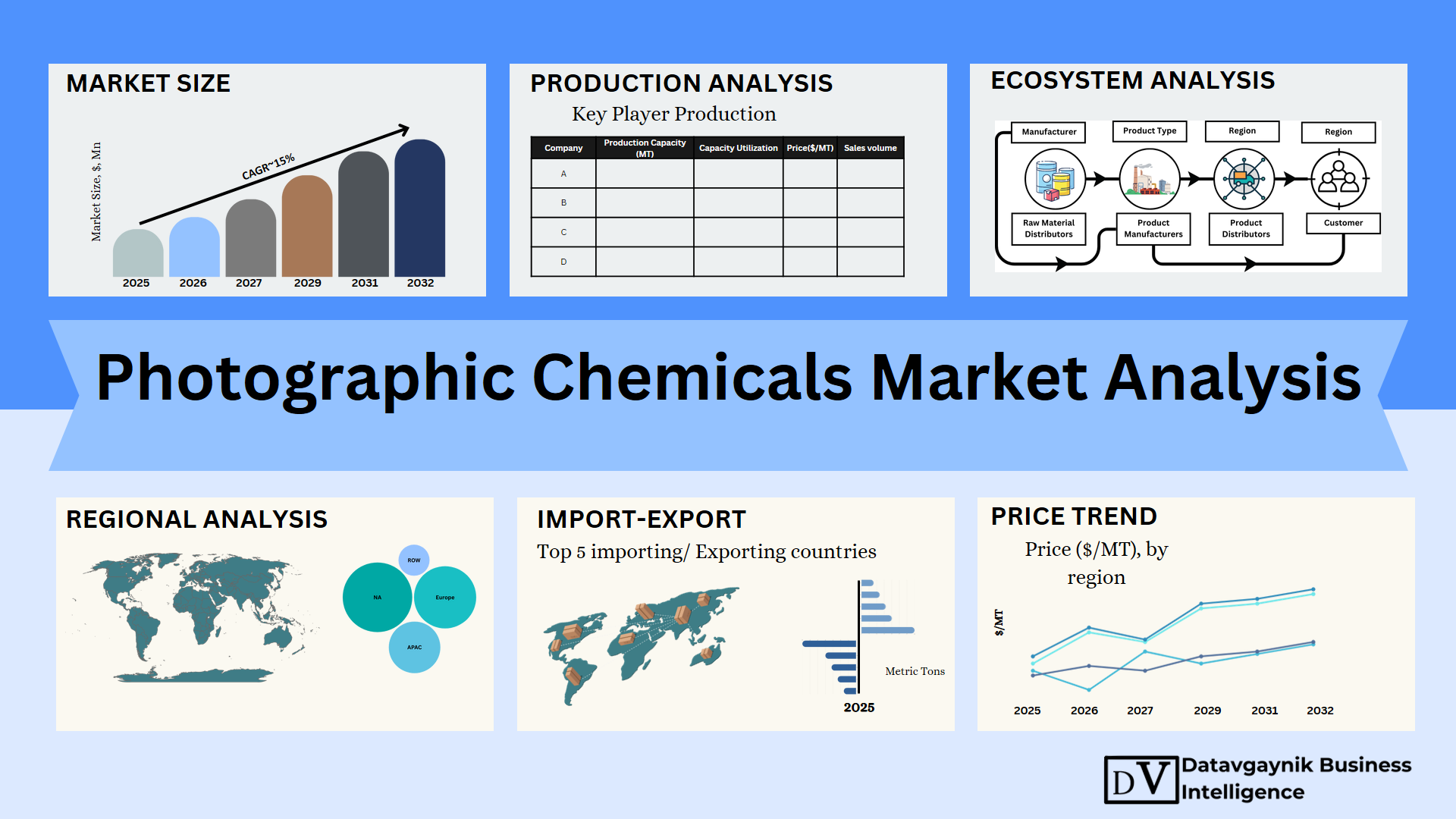
The Photographic Chemicals Market is witnessing a significant revival driven by the renewed global interest in analog photography. Despite decades of digital dominance, film photography has made a notable comeback. According to Datavagyanik, this revival is not a passing trend but a sustained cultural and artistic movement. For instance, the sales of 35mm and medium-format cameras have surged by over 25% year-on-year since 2021, leading to parallel growth in demand for developers, fixers, and stop baths. This renewed attention to analog formats is fueling consumption across both mainstream and niche photographic chemical segments.
The resurgence is particularly prominent among younger generations. A growing number of Gen Z consumers are purchasing film cameras, inspired by vintage aesthetics and a desire for tangible, unfiltered content. This demographic shift has created ripple effects across the entire Photographic Chemicals Market, especially in regions like North America, Western Europe, and parts of Asia Pacific. Independent photo labs, darkroom rental studios, and boutique chemical manufacturers are witnessing increased business, underscoring the market’s expanding base.
Creative and Alternative Processes Fueling Specialty Photographic Chemicals Market
A notable trend supporting the Photographic Chemicals Market is the surge in creative and experimental photography techniques. Alternative photographic processes such as cyanotypes, tintypes, and platinum printing have seen a rapid rise in popularity, particularly among fine art photographers and printmakers. Datavagyanik notes that sales of specialty chemicals for non-conventional methods have increased by over 18% in the past two years.
For example, the cyanotype process, once limited to historical archives, has been adopted by modern creators seeking unique tones and textures. This revival has spurred new product lines from manufacturers specializing in UV-reactive emulsions and hand-coating solutions. As these methods gain traction across art schools and photography workshops, the Photographic Chemicals Market continues to expand its range of chemical formulations beyond traditional black-and-white developers.
Datavagyanik also covers related markets such as the Rubber Chemicals Market, the Battery Chemicals Market, and the Oilfield Chemicals Market. They create a more holistic picture of the ecosystem in which the primary topic exists, including technological shifts and market demands.
DIY Photography Movement Enhancing Retail and E-Commerce Sales
The do-it-yourself culture has emerged as a powerful growth driver in the Photographic Chemicals Market. Home darkroom setups, once considered niche, are now increasingly common. Photography communities on platforms like Reddit, YouTube, and Instagram have become major catalysts, where hobbyists document their analog journeys, film development routines, and chemical mixing experiments.
This trend has directly benefited online and retail chemical suppliers. Sales of bundled chemical kits, which include all components required for film processing, have grown by over 40% annually since 2020. The availability of compact and beginner-friendly darkroom setups has made it easier for newcomers to enter the space, further broadening the consumer base for photographic chemicals. The impact on Photographic Chemicals Market size is substantial, as new users contribute to recurring purchases of chemicals for development and printing.
Educational Institutions Contributing to Long-Term Photographic Chemicals Market Growth
Academic and vocational institutions play a crucial role in sustaining long-term growth within the Photographic Chemicals Market. For example, over 1,000 universities and art colleges across North America and Europe continue to offer darkroom-based photography courses as part of their curriculum. Datavagyanik projects that the education-driven demand for photographic chemicals will continue rising at 7% CAGR through 2030.
Darkrooms in academic environments require a continuous supply of high-quality chemicals to support weekly lab sessions, archiving projects, and student exhibitions. Institutions also often seek environmentally conscious formulations due to sustainability mandates, prompting suppliers to innovate safer alternatives to traditional chemical compounds. As a result, manufacturers targeting the education segment are expanding portfolios to include low-odor developers, biodegradable fixers, and acid-free stop baths.
Art Restoration and Archival Institutions Strengthening Photographic Chemicals Market Base
The role of photographic chemicals in heritage preservation and restoration cannot be overstated. Museums, galleries, national libraries, and archival centers regularly use specialized chemicals to process and restore historical prints, films, and photographic plates. Datavagyanik identifies this segment as a stable contributor to the Photographic Chemicals Market due to its non-cyclical nature.
For instance, institutions restoring 19th-century daguerreotypes or early silver gelatin prints rely on precise chemical recipes to stabilize emulsions and prevent degradation. This has given rise to a niche but profitable segment of archival-grade photographic chemicals, often custom-formulated to meet institutional preservation standards. Countries with deep cultural investments—such as France, Italy, and Japan—are driving this trend with dedicated government grants supporting historical photographic conservation, translating to consistent market demand.
Technological Advancements in Film Production Stimulating Photographic Chemicals Consumption
While digital imaging technologies continue to evolve, analog film manufacturing has also undergone technological upgrades, indirectly supporting the Photographic Chemicals Market. For example, newly engineered films from brands like Kodak, Ilford, and Fujifilm offer higher dynamic range, finer grain, and broader tonal curves. These improvements necessitate specific chemical profiles for optimal development, creating fresh demand for complementary chemical solutions.
Datavagyanik reports that the launch of next-gen films, such as Kodak Gold 200 in medium format and Ilford’s ORTHO PLUS black-and-white film, has prompted a 22% spike in demand for matching developer formulations. Manufacturers are now offering pre-calibrated development kits aligned to specific film types, ensuring consistency in results. This technical interdependence between film innovation and chemical demand ensures the Photographic Chemicals Market remains integral to the imaging ecosystem.
Fine Art and Boutique Photography Studios Creating Premium Chemical Demand
Boutique studios and fine art photographers are creating a premium segment within the broader Photographic Chemicals Market. These users prioritize image quality, tonal control, and chemical purity, often working with hand-mixed or limited-edition chemicals to achieve signature results. The rise of analog fine art galleries and photobook publishing has contributed significantly to this trend.
For example, high-end gelatin silver printing processes require meticulously formulated developers with controlled contrast levels. Photographers engaged in platinum/palladium printing source rare-earth salts and specific acid baths for high-fidelity printing. According to Datavagyanik, demand for luxury-grade or lab-tested photographic chemicals in this segment has grown at a CAGR of 9.3% since 2019, making it one of the most profitable subcategories in the market.
Sustainable and Eco-Friendly Innovation Unlocking New Growth Channels
Environmental concerns are pushing manufacturers to innovate within the Photographic Chemicals Market. Many traditional chemicals contain heavy metals, volatile solvents, and acids that pose disposal and handling risks. As a response, a growing number of companies are introducing biodegradable and low-toxicity alternatives.
For example, ascorbic acid-based developers, which substitute hazardous hydroquinone, are gaining popularity among hobbyists and institutions alike. Similarly, fixers made without ammonium thiosulfate are being adopted by environmentally conscious photographers. Datavagyanik notes that over 15% of new product launches in 2024 were labeled as eco-safe or biodegradable, indicating strong momentum in green chemistry within the Photographic Chemicals Market.
Global Distribution Networks Enhancing Photographic Chemicals Market Accessibility
The growth of e-commerce and global shipping capabilities has made photographic chemicals more accessible than ever before. Previously, sourcing darkroom supplies was limited to specialty retailers or urban photography hubs. Today, international platforms offer comprehensive product lines ranging from standard developers to obscure alternative chemistry kits.
Retailers such as Freestyle Photographic Supplies, Japan Camera Hunter, and regional darkroom collectives are shipping to over 70 countries. This logistics shift is expanding the Photographic Chemicals Market beyond traditional strongholds. Datavagyanik points out that markets in Eastern Europe, Southeast Asia, and Latin America are now showing double-digit annual growth, driven in part by improved access to international chemical brands.
Photographic Chemicals Market Size and Long-Term Outlook
The Photographic Chemicals Market size continues to grow at a healthy pace. Datavagyanik estimates the global market exceeded USD 1.5 billion in 2024 and is projected to reach USD 2.1 billion by 2030, expanding at a CAGR of 5.7%. This growth is powered by both volume consumption in mainstream film development and value generation from specialty chemicals across archival, fine art, and alternative process segments.
As applications diversify and consumer interest in analog aesthetics deepens, the Photographic Chemicals Market is evolving from a legacy segment into a resilient, innovation-driven industry. From university darkrooms to high-end art studios and online darkroom kits, the demand curve remains upward, reflecting a strong and expanding future for chemical-based photography.
“Track Country-wise Photographic Chemicals Production and Demand through our Photographic Chemicals Production Database”
- Photographic Chemicals production database for 27+ countries worldwide
- Photographic Chemicals sales volume for 31+ countries
- Country-wise Photographic Chemicals production capacity, production plant mapping, production capacity utilization for 27+ manufacturers
- Photographic Chemicals production plants and production plant capacity analysis by top manufacturers
“Track real-time Photographic Chemicals Prices, Photographic Chemicals price charts for 27+ countries, Photographic Chemicals weekly price tracker and Photographic Chemicals monthly price tracker”
- Track real-time Photographic Chemicals prices and Photographic Chemicals price trend in 27+ countries though our excel-based Photographic Chemicals price charts
- Real-time Photographic Chemicals price tracker dashboard with 27+ countries
- Complete transparency on Photographic Chemicals price trend through our Photographic Chemicals monthly price tracker, Photographic Chemicals weekly price tracker
Geographical Demand Driving Growth in the Photographic Chemicals Market
The Photographic Chemicals Market is experiencing differentiated growth across regions, with varying levels of demand in North America, Europe, Asia Pacific, and emerging markets. Each region’s growth story is driven by unique factors, ranging from cultural shifts in consumer preferences to advances in technology and manufacturing capacity.
In North America, the United States remains the dominant player in the Photographic Chemicals Market. The resurgence of interest in analog photography is strongest among younger demographics, fueled by a deep cultural connection to vintage aesthetics and social media trends. Furthermore, the presence of major photography schools and institutions contributes to the region’s steady demand for photographic chemicals. The Photographic Chemicals Market in North America is projected to expand at a 6% CAGR, as increasing numbers of DIY photographers, creative studios, and art preservation projects are boosting consumption. As demand grows, manufacturers in the U.S. are ramping up production of both traditional and alternative chemical solutions to meet diverse needs.
In Europe, countries with rich photographic histories such as Germany, France, and the United Kingdom are seeing a steady rise in analog and alternative photographic techniques. Particularly in Germany, home to industry giants like Agfa-Gevaert, the Photographic Chemicals Market benefits from a well-established infrastructure that caters to both commercial and fine art photographers. The region is projected to see a 5.5% annual growth rate, with significant contributions from niche markets such as high-end galleries and archival institutions.
Asia Pacific, led by Japan and China, is emerging as a critical hub for both the production and consumption of photographic chemicals. In Japan, companies like Fujifilm continue to dominate the production landscape, with significant investments in R&D for new chemical formulations.
The demand for photographic chemicals in Japan has surged by 15% in the last five years, driven by both traditional film enthusiasts and the rising popularity of niche photographic techniques. In China, urban centers like Beijing and Shanghai are seeing an influx of young photographers drawn to film-based imagery, propelling the market’s growth. The Photographic Chemicals Market in China is expected to grow at a 10% CAGR, supported by both domestic consumption and the country’s increasing export of photographic chemicals to neighboring regions.
Photographic Chemicals Market Production and Manufacturing Landscape
The production landscape of the Photographic Chemicals Market is heavily concentrated in a few key countries known for their technological prowess and long-standing involvement in the photography industry. The U.S., Germany, Japan, and China are among the leading producers of photographic chemicals, with each region contributing significantly to global supply chains.
In the United States, companies like Kodak and Ilford have long been key players in the market, focusing on developing high-quality chemicals tailored to specific types of film processing. Over the past few years, these companies have also expanded their production to include chemicals designed for alternative photographic techniques such as tintypes and cyanotypes. This shift toward specialized production is directly aligned with the growing demand for alternative photographic processes, with sales in this category increasing by over 20% in 2024 alone.
Germany, with its established chemical production sector, is home to Agfa-Gevaert, which continues to manufacture a wide range of photographic chemicals. Agfa’s portfolio includes products for both traditional and digital imaging, and its recent emphasis on eco-friendly chemicals has positioned the company as a leader in sustainable chemical production. Agfa’s innovation in non-toxic, biodegradable chemicals for analog film processes has been a game-changer, with European sales of such products seeing a 17% annual increase in demand.
Japan remains a significant player in the production of photographic chemicals, particularly through its flagship brand Fujifilm. Known for its precision engineering and commitment to quality, Fujifilm has continued to innovate in both analog and digital chemical formulations. Recent investments in R&D have led to the introduction of advanced chemical products designed for specific film types and formats, further cementing Japan’s role as a leader in the market.
Photographic Chemicals Market Segmentation by Type
The Photographic Chemicals Market is segmented into various categories based on the type of chemicals used. These segments include developers, fixers, stop baths, photographic papers, and other specialty chemicals. Among these, developers remain the most significant segment, with a market share of nearly 45% globally.
Developers are essential for the film development process, where they react with exposed film to create the image. The growing demand for analog photography has resulted in an increase in the production of specialized developers. These include color developers for color film, black-and-white developers, and universal developers suitable for a variety of film types. The popularity of alternative processes has also spurred demand for developers designed for specific techniques like wet plate collodion and cyanotypes, with this subsegment growing at a rate of 18% annually.
Fixers, which stabilize the image and prevent further exposure to light, are another crucial segment of the Photographic Chemicals Market. Fixers are typically used in both black-and-white and color film processing, ensuring the permanence of the image. As the demand for vintage and artistic photography techniques grows, the market for specialty fixers has expanded, particularly in markets like North America and Europe. The fixers segment is expected to grow at a 6.5% CAGR over the next five years.
Stop baths, used to halt the development process and neutralize the developer, represent a smaller but growing segment within the market. Although their demand is more niche, stop baths are essential for those engaging in DIY film processing and alternative photography. As the trend toward DIY darkroom setups continues to gain momentum, the stop bath market is likely to expand at a 7% annual rate.
Photographic Chemicals Price Trends and Market Dynamics
The Photographic Chemicals Market is witnessing a notable evolution in pricing trends, influenced by factors such as raw material costs, technological advancements, and shifting demand patterns. The price of photographic chemicals is largely determined by the complexity of the production process, the type of chemical, and the geographic location of production.
In recent years, the cost of traditional photographic chemicals, such as developers and fixers, has increased due to the rising costs of key ingredients like silver salts and various organic compounds. For example, silver halide, a critical component in photographic emulsions, has seen price hikes due to global supply chain disruptions. This has impacted the pricing of both high-volume products and specialized chemicals. As a result, manufacturers are investing heavily in more sustainable, cost-effective alternatives to mitigate the impact of rising prices.
The price trend for photographic chemicals is also being influenced by the growing popularity of eco-friendly formulations. Biodegradable developers and non-toxic fixers are often priced at a premium due to the higher cost of raw materials and the more complex production processes involved. This price disparity is particularly noticeable in markets where sustainability is a priority, such as Western Europe and parts of North America. Datavagyanik estimates that the premium for eco-friendly chemicals is approximately 20-25% higher than traditional chemical products, reflecting both the production costs and consumer willingness to pay for environmentally responsible options.
Additionally, fluctuations in demand for specific types of photographic chemicals are influencing market prices. For instance, with the surge in interest for alternative photographic processes, the price of chemicals like collodion and specialized toners has risen by 12% in 2024. Conversely, as digital printing solutions continue to encroach on traditional film photography, the price of standard black-and-white film developers has become more competitive, with some manufacturers introducing budget-friendly options to capture a larger share of the market.
Photographic Chemicals Price Trend and Consumer Preferences
Consumer preferences are shifting alongside price trends in the Photographic Chemicals Market. As prices for traditional chemicals rise, particularly in niche segments like archival restoration and fine art photography, more consumers are opting for pre-mixed solutions or chemical kits. These kits, which often combine several essential chemicals at a bundled price, have become popular among hobbyists and educators, as they offer a more cost-effective solution for frequent film processing.
However, for professional photographers and those engaged in specialized techniques, the demand for high-quality, tailored photographic chemicals remains robust. These users are less sensitive to price fluctuations, focusing instead on the performance and consistency of the chemicals. The price trend for these high-end chemicals continues to rise steadily, in line with the increased demand for precision in alternative processes and fine art applications.
As the market continues to evolve, the overall price trend for photographic chemicals is expected to stabilize, with a gradual shift toward more sustainable, eco-friendly options. This is especially true in markets with high environmental awareness, where the Photographic Chemicals Price Trend is increasingly influenced by both consumer demand for greener products and regulatory frameworks that incentivize eco-friendly production practices.
“Photographic Chemicals Manufacturing Database, Photographic Chemicals Manufacturing Capacity”
- Photographic Chemicals top manufacturers market share for 27+ manufacturers
- Top 9 manufacturers and top 16 manufacturers of Photographic Chemicals in North America, Europe, Asia Pacific
- Photographic Chemicals production plant capacity by manufacturers and Photographic Chemicals production data for 27+ market players
- Photographic Chemicals production dashboard, Photographic Chemicals production data in excel format
“Photographic Chemicals price charts, Photographic Chemicals weekly price tracker and Photographic Chemicals monthly price tracker”
- Factors impacting real-time Photographic Chemicals prices in 21+ countries worldwide
- Photographic Chemicals monthly price tracker, Photographic Chemicals weekly price tracker
- Real-time Photographic Chemicals price trend, Photographic Chemicals price charts, news and updates
- Tracking Photographic Chemicals price fluctuations
Top Manufacturers in the Photographic Chemicals Market
The Photographic Chemicals Market is dominated by several established players, with a few companies leading the market by maintaining strong brand recognition, product portfolios, and global reach. These key manufacturers not only offer a wide range of photographic chemicals but also shape market trends through innovations and strategic partnerships.
- Kodak (Eastman Kodak Company)
Kodak has long been a cornerstone in the photographic chemicals industry, offering a wide range of chemicals that support both traditional and alternative photographic techniques. Kodak’s product line includes developers, stop baths, fixers, and specialty chemicals designed for use in both professional and amateur settings. Their most notable products include the Kodak D-76 Developer for black-and-white film and Kodak Flexicolor Chemicals, which are widely used in commercial photo labs for color film development.
Kodak’s continued commitment to the analog photography sector has positioned the company as a leader in the Photographic Chemicals Market. Their expansion into eco-friendly photographic chemicals and the growing demand for Kodak Pro Image 100 and other film products has strengthened their market position.
- Ilford Imaging
Ilford, a key player in the global photographic chemicals market, specializes in black-and-white photographic chemicals. Their portfolio includes developers such as the Ilford ID-11 Developer, known for producing fine grain and excellent tonal range. Ilford also provides fixers, stop baths, and specialized chemicals for archival quality prints.
Ilford’s strong brand presence is particularly pronounced in Europe and North America, where traditional black-and-white photography enjoys a devoted following. The company’s offerings have been integral to both fine art and commercial photographers, reinforcing its position in the market.
- Fujifilm Corporation
Fujifilm, primarily known for its imaging and photographic films, is also a significant player in the Photographic Chemicals Market. The company produces a range of chemicals for developing films and prints, including Fujifilm Developer D and Fujifilm Fixer. These products are used extensively in both the commercial and consumer segments.
Fujifilm’s dominance in the market is supported by its global footprint and innovative chemical formulations, including specialized products for the Fujicolor PRO 400H film and other professional film stocks. As Fujifilm continues to invest in new technologies, its position in the market for both analog and digital photography chemicals remains robust.
- Agfa-Gevaert Group
Agfa-Gevaert is a global leader in imaging technologies, including photographic chemicals. The company’s product offerings include developers for both black-and-white and color films, fixers, and a variety of specialized chemicals for industrial imaging and printing. Agfa’s AgfaPhoto APX line and its Gevaert Pro Image Developer are some of the notable products catering to professional and consumer markets.
Agfa’s significant market share, particularly in Europe, is bolstered by its legacy in both film production and chemical manufacturing. The company has been a key supplier to professional photographers, laboratories, and commercial printing services.
- BASF SE
BASF, a global chemical manufacturer, is another key player in the Photographic Chemicals Market, supplying chemicals for film development, printing, and industrial imaging. BASF produces specialized solutions for digital printing as well as traditional photographic processes. BASF Silver Halide Chemicals and BASF Color Developers have found widespread use in various commercial applications.
While BASF’s involvement in the photographic chemicals sector is somewhat niche compared to other brands, the company’s reputation for chemical innovation and quality positions it as a trusted supplier for both photographic professionals and educational institutions.
- Harman Technology Ltd.
Harman Technology, best known for its Ilford Galerie line of papers, also manufactures a broad spectrum of photographic chemicals under the Ilford and Kodak brands. The company specializes in high-quality black-and-white chemicals and photo papers, with products like the Ilford Multigrade Developer for darkroom printing.
Harman Technology has established a strong presence among fine art photographers, darkroom users, and enthusiasts who demand the highest standards of photographic processing.
Photographic Chemicals Market Share by Manufacturers
The Photographic Chemicals Market is highly competitive, with Kodak, Ilford, and Fujifilm leading the market share due to their longstanding presence and wide distribution networks. Collectively, these three companies dominate the global market, accounting for more than 50% of the total market share.
Kodak remains the largest market player, driven by its strong brand recognition and large portfolio that spans across professional and consumer segments. Their focus on analog photography, especially the resurgence of film stock products, has helped them maintain dominance in the market. Kodak’s commitment to expanding its chemical line to accommodate new film formats and alternative photographic techniques has solidified its position as a market leader.
Ilford holds a strong position in the black-and-white film and chemical segments, especially in regions like Europe and North America. Their niche market for high-quality black-and-white films and papers, combined with a steady supply of professional-grade chemicals, contributes to their solid share of the market.
Fujifilm follows closely, with a significant portion of its market share derived from its innovative approach to film chemistry, particularly in the professional sector. The company’s focus on product diversification, offering both traditional and specialized photographic chemicals, ensures its competitiveness in the market.
Agfa-Gevaert also maintains a notable share, especially in Europe. The company’s continued investment in high-performance photographic chemicals for both film and digital applications allows it to cater to a broad range of customers, from professional photographers to industrial users.
BASF, while not as large as the other players, holds a strategic share in the specialized sector, where high-end chemicals and industrial imaging solutions are in demand. Their focus on developing cutting-edge photographic chemicals for niche applications has made them a significant contributor to the market.
Photographic Chemicals Price Trends and Market Dynamics
The price trend in the Photographic Chemicals Market is closely tied to raw material costs, technological advancements, and product complexity. For example, in 2024, the price of silver halide, a key component in traditional photographic emulsions, increased due to fluctuations in the global silver market. As a result, the prices of traditional black-and-white developers and fixers saw a moderate increase.
In contrast, eco-friendly chemical formulations are positioned at a premium, reflecting the higher cost of biodegradable and non-toxic ingredients. As consumer demand for environmentally conscious products grows, manufacturers are increasingly investing in green chemistry. The price trend for these products typically runs 20% to 25% higher than conventional chemicals, a gap that reflects the added production costs and market positioning.
The continued increase in demand for alternative photographic processes like cyanotypes and tintypes has also driven prices upward for specialized chemicals. These products are often produced in smaller quantities, which means they are priced higher due to the artisanal nature of their manufacturing process.
Recent Industry Developments and Market News
In recent years, several key developments have reshaped the Photographic Chemicals Market, underscoring the sector’s ability to adapt and evolve with changing consumer preferences and technological advances.
In August 2024, Kodak announced the expansion of its Kodak Pro Image 100 film production and related chemicals. The move was seen as a response to growing demand for high-quality, affordable color film, driven by the resurgence of film photography among younger generations. Kodak’s investment in expanding production capacity for both film stock and accompanying chemicals is expected to bolster its market share in the coming years.
In July 2024, Fujifilm introduced a new line of Fujifilm Eco-Friendly Developers designed for both professional and amateur photographers. These non-toxic and biodegradable developers are part of the company’s broader strategy to appeal to the environmentally conscious market. The products were well-received, with industry analysts projecting a 15% growth in the eco-friendly segment of the Photographic Chemicals Market.
In May 2024, Ilford launched its Ilford Harman Direct Positive Paper, alongside a new line of compatible chemicals. This move is aimed at addressing the growing demand for alternative photographic processes and has received significant interest from fine art photographers and experimentalists.
Lastly, April 2024 saw Agfa-Gevaert announce the launch of AgfaPhoto APX Developer, a new chemical designed specifically for high-speed black-and-white films. The product is a response to the increased interest in vintage film types and manual darkroom processing.
These developments underscore the Photographic Chemicals Market’s robust growth trajectory and highlight the ongoing innovation by key manufacturers to meet evolving consumer needs.
“Photographic Chemicals Production Data and Photographic Chemicals Production Trend, Photographic Chemicals Production Database and forecast”
- Photographic Chemicals production database for historical years, 10 years historical data
- Photographic Chemicals production data and forecast for next 9 years
- Photographic Chemicals sales volume by manufacturers
“Track Real-time Photographic Chemicals Prices for purchase and sales contracts, Photographic Chemicals price charts, Photographic Chemicals weekly price tracker and Photographic Chemicals monthly price tracker”
- Gain control on your purchase and sales contracts through our real-time Photographic Chemicals price tracker and Photographic Chemicals price trend analysis
- Photographic Chemicals weekly price tracker and forecast for next four weeks
- Photographic Chemicals monthly price tracker and forecast for next two months
Market Scenario, Demand vs Supply, Average Product Price, Import vs Export, till 2035
- Global Photographic Chemicals Market revenue and demand by region
- Global Photographic Chemicals Market production and sales volume
- United States Photographic Chemicals Market revenue size and demand by country
- Europe Photographic Chemicals Market revenue size and demand by country
- Asia Pacific Photographic Chemicals Market revenue size and demand by country
- Middle East & Africa Photographic Chemicals Market revenue size and demand by country
- Latin America Photographic Chemicals Market revenue size and demand by
- Import-export scenario – United States, Europe, APAC, Latin America, Middle East & Africa
- Average product price – United States, Europe, APAC, Latin America, Middle East & Africa
- Market player analysis, competitive scenario, market share analysis
- Business opportunity analysis
Key questions answered in the Global Photographic Chemicals Market Analysis Report:
- What is the market size for Photographic Chemicals in United States, Europe, APAC, Middle East & Africa, Latin America?
- What is the yearly sales volume of Photographic Chemicals and how is the demand rising?
- Who are the top market players by market share, in each product segment?
- Which is the fastest growing business/ product segment?
- What should be the business strategies and Go to Market strategies?
The report covers Photographic Chemicals Market revenue, Production, Sales volume, by regions, (further split into countries):
- Asia Pacific (China, Japan, South Korea, India, Indonesia, Vietnam, Rest of APAC)
- Europe (UK, Germany, France, Italy, Spain, Benelux, Poland, Rest of Europe)
- North America (United States, Canada, Mexico)
- Latin America (Brazil, Argentina, Rest of Latin America)
- Middle East & Africa
Table of Contents:
- Introduction to the Photographic Chemicals Market
- Overview of Photographic Chemicals and Their Role in Photography
- Importance in Traditional and Digital Photography
- Market Trends and Evolution
- Market Overview: Demand and Growth of Photographic Chemicals
- Current Market Size and Growth Projections
- Key Market Drivers: Increasing Demand for Photography, Technological Advancements
- Market Challenges: Digital Photography and Shift in Consumer Preferences
- Photographic Chemicals Market Segmentation
- By Product Type: Developers, Fixers, Bleaches, and Others
- By Application: Film Photography, Digital Imaging, and Others
- By End-User Industry: Professional Photography, Commercial, Industrial, and Consumer Markets
- Technological Innovations in Photographic Chemicals
- Advancements in Chemical Formulation for Enhanced Image Quality
- New Developments in Eco-friendly and Sustainable Photographic Chemicals
- Innovations in Chemical Processing for Faster Development
- Key Applications of Photographic Chemicals
- Use in Traditional Film Development
- Role in Printing and Image Processing
- Applications in Digital Imaging and Specialty Photography
- Market Dynamics: Drivers, Restraints, and Opportunities
- Influence of Digital Photography on Market Demand
- Environmental Impact and Demand for Sustainable Alternatives
- Emerging Opportunities in Niche Applications
- Competitive Landscape and Key Market Players
- Leading Manufacturers of Photographic Chemicals
- Competitive Strategies in Product Innovation and Market Expansion
- Mergers, Acquisitions, and Strategic Alliances in the Industry
- Raw Materials and Supply Chain Insights
- Key Raw Materials Used in Photographic Chemical Production
- Supply Chain Analysis and Sourcing Challenges
- Impact of Raw Material Costs on Market Pricing
- Regulatory Landscape and Compliance
- Global Regulations Affecting Photographic Chemicals
- Environmental Regulations for Chemical Production and Waste Disposal
- Safety Standards and Industry Certifications for Photographic Chemicals
- Environmental Impact and Sustainability
- Eco-friendly Alternatives to Traditional Photographic Chemicals
- Waste Management and Recycling of Photographic Chemicals
- Sustainable Manufacturing Practices in the Photographic Chemical Industry
- Pricing Trends and Market Forecast
- Historical Pricing Trends for Photographic Chemicals
- Projected Pricing Trends and Market Dynamics (2025-2035)
- Impact of Market Volatility on Pricing and Cost Structures
- Technological Challenges in Photographic Chemical Production
- Overcoming Barriers in Chemical Formulation and Efficiency
- Managing Production Costs and Scaling Sustainable Alternatives
- Photographic Chemicals in Commercial and Industrial Applications
- Role in Professional Photography Studios and Film Production
- Industrial Applications in Printing and Imaging Technologies
- Consumer Trends and Photography Preferences
- Consumer Adoption of Digital Photography and its Impact on Chemical Use
- Trends in Photography for Hobbyists and Professional Photographers
- Health and Safety Considerations
- Safety Protocols in Handling Photographic Chemicals
- Health Risks and Mitigation Strategies for Workers in the Photography Industry
- Storage and Disposal Guidelines for Photographic Chemicals
- Market Risks and Opportunities
- Market Risks Due to the Shift from Analog to Digital Photography
- Opportunities in Specialty Photography and Niche Chemical Applications
- Impact of COVID-19 on the Photographic Chemicals Market
- Disruptions in Supply Chains and Consumer Demand during the Pandemic
- Recovery Trends in Post-COVID Photography and Imaging Markets
- Global Trade and Export-Import Analysis
- Key Exporters and Importers of Photographic Chemicals
- Trade Policies, Tariffs, and Market Access for Photographic Chemicals
- Investment and Growth Opportunities in the Photographic Chemicals Market
- Investment Insights in the Photographic Chemicals Industry
- High-growth Segments and Market Expansion Opportunities
- Case Studies in Photographic Chemical Innovations
- Case Study 1: Leading Manufacturer’s Adoption of Sustainable Photographic Chemicals
- Case Study 2: Technological Breakthrough in Photographic Processing Chemicals
- Future Outlook for the Photographic Chemicals Market
- Emerging Trends and Technologies in Photographic Chemical Production
- Long-term Market Forecast (2025-2035) for Traditional and Digital Photography Chemicals
- Conclusion
- Summary of Market Insights, Trends, and Key Takeaways
- Strategic Recommendations for Stakeholders in the Photographic Chemicals Industry


