

Emerging Trends in the Pyridine-2-carboxylic Acid Market
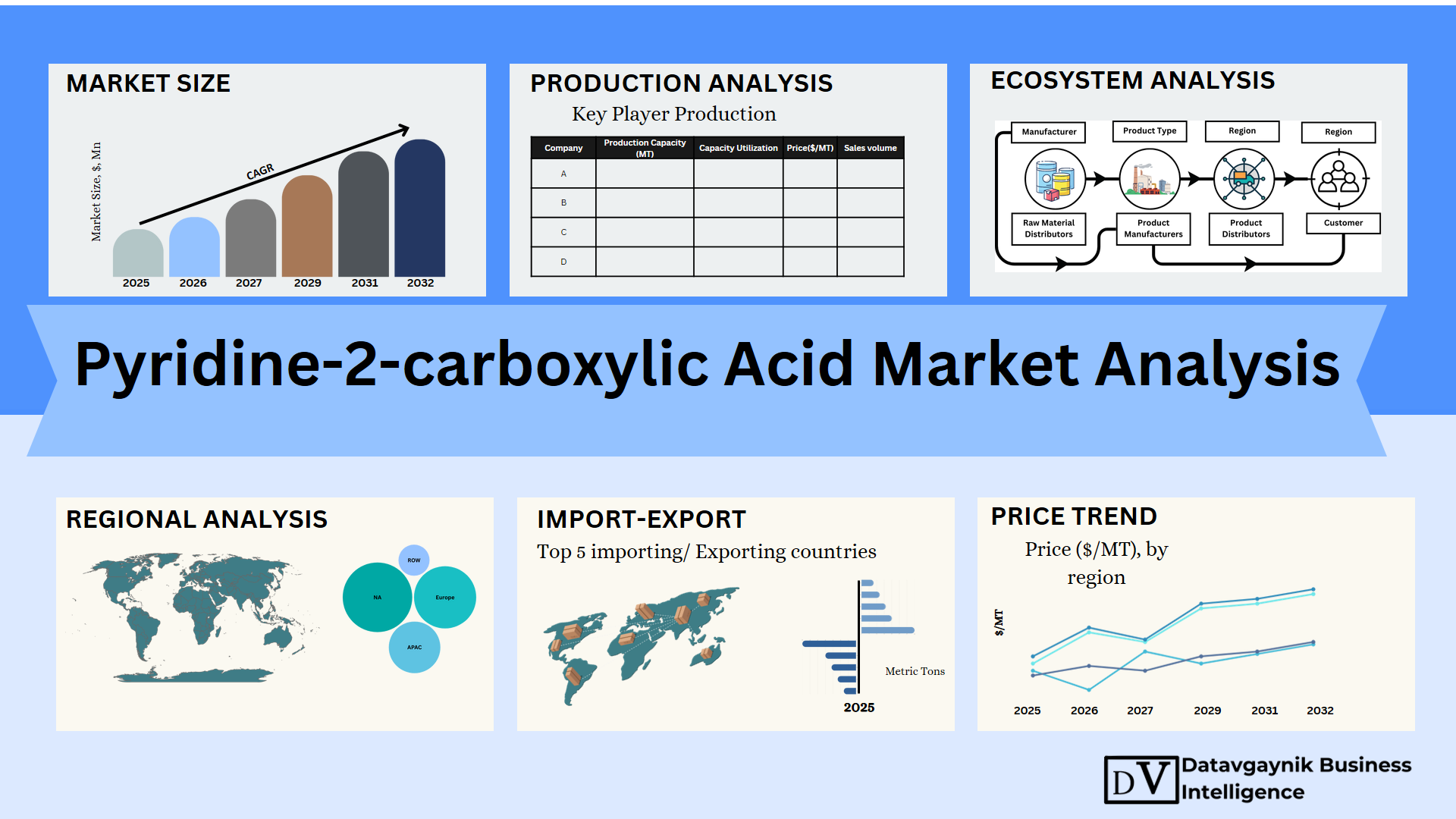
The pyridine-2-carboxylic acid market is experiencing significant growth, driven by its expanding use across pharmaceuticals, agriculture, and chemical manufacturing. One prominent trend is the rising demand for sustainable agrochemical solutions. Pyridine-2-carboxylic acid and its derivatives serve as essential intermediates in producing herbicides and insecticides that offer improved efficiency and reduced environmental impact. As precision agriculture gains traction, the need for specialized chemical inputs like pyridine-2-carboxylic acid increases, fueling the market’s expansion.
In the pharmaceutical sector, the market for pyridine-2-carboxylic acid is growing rapidly due to its role in synthesizing complex drug molecules, including antibiotics and anti-inflammatory agents. With increasing investments in drug discovery and development, particularly for chronic and lifestyle diseases, the demand for chemical intermediates like pyridine-2-carboxylic acid continues to rise. This growth is further supported by emerging markets where pharmaceutical manufacturing is expanding at a fast pace.
Drivers Boosting the Pyridine-2-carboxylic Acid Market Growth
The accelerating adoption of advanced agrochemicals represents a key driver for the pyridine-2-carboxylic acid market. Pyridine-2-carboxylic acid acts as a precursor to herbicides and pesticides that improve crop yields and reduce environmental toxicity, which aligns with the global push for sustainable farming practices. For example, the steady growth in the agrochemical industry creates substantial demand for pyridine-2-carboxylic acid intermediates, making the market increasingly attractive.
In addition to agriculture, pharmaceutical applications significantly propel market growth. The rising prevalence of chronic diseases worldwide drives demand for innovative drug formulations that require pyridine-2-carboxylic acid as a building block. Moreover, expanding healthcare infrastructure and increased R&D activities in emerging economies are opening new avenues for pyridine-2-carboxylic acid utilization, further pushing the market upwards.
Technological Advancements Shaping the Pyridine-2-carboxylic Acid Market
Technological innovation in the synthesis and application of pyridine-2-carboxylic acid is another trend that is reshaping the market. Improvements in catalytic processes have enhanced production efficiency, reducing costs and environmental impact. For instance, developments in green chemistry techniques enable more sustainable and scalable manufacturing of pyridine-2-carboxylic acid, meeting the rising demand for eco-friendly products.
Furthermore, advancements in formulation technologies in agrochemicals and pharmaceuticals leverage pyridine-2-carboxylic acid’s unique chemical properties to improve product stability and efficacy. These innovations contribute to the expanding market size by enabling new applications and improving existing products.
Application Diversification Driving the Pyridine-2-carboxylic Acid Market
Diversification of end-use applications is a strong growth catalyst for the pyridine-2-carboxylic acid market. While traditionally concentrated in agrochemicals and pharmaceuticals, pyridine-2-carboxylic acid is finding increasing relevance in the production of specialty chemicals, including dyes and corrosion inhibitors. This broadening application base supports steady market expansion.
In particular, the chemical industry’s demand for heterocyclic compounds with versatile functional groups positions pyridine-2-carboxylic acid as a preferred intermediate. The rising adoption of such compounds in manufacturing processes, especially in Asia-Pacific, further drives the market’s upward trajectory.
Regional Dynamics Influencing the Pyridine-2-carboxylic Acid Market
Asia-Pacific stands out as a high-growth region for the pyridine-2-carboxylic acid market due to its expanding pharmaceutical manufacturing base and agricultural modernization. Countries like China and India are key production hubs and consumers, benefiting from increasing industrial investments and government initiatives promoting chemical manufacturing. The growing middle-class population and improving healthcare access also underpin rising pharmaceutical demand in these markets.
North America and Europe continue to be significant contributors, driven by stringent environmental regulations that encourage the use of safer chemical intermediates like pyridine-2-carboxylic acid. The demand for innovative agrochemical products and complex pharmaceuticals remains strong in these regions, supporting market stability.
Challenges Impacting the Pyridine-2-carboxylic Acid Market
Despite positive growth prospects, the pyridine-2-carboxylic acid market faces challenges such as raw material price volatility and stringent regulatory frameworks. Fluctuations in feedstock availability can impact production costs, influencing pricing dynamics. Additionally, regulatory scrutiny related to chemical manufacturing and environmental safety requires manufacturers to invest in compliance and adopt greener production technologies.
However, these challenges are gradually being addressed through technological innovation and strategic supply chain management, which help sustain the market’s growth momentum.
Market Outlook and Future Prospects for the Pyridine-2-carboxylic Acid Market
Looking ahead, the pyridine-2-carboxylic acid market is poised for steady expansion, driven by continuous advancements in pharmaceutical and agricultural applications. The integration of sustainable practices and green chemistry in manufacturing processes will play a pivotal role in shaping the market’s future.
Moreover, growing demand for specialty chemicals in emerging industries such as electronics and materials science presents new opportunities for pyridine-2-carboxylic acid. As end-use sectors evolve, the market size is expected to grow substantially, supported by innovation, expanding applications, and increasing global industrialization.
Track Country-wise Pyridine-2-carboxylic Acid Production and Demand through our Pyridine-2-carboxylic Acid Production Database
-
-
- Pyridine-2-carboxylic Acid production database for 28+ countries worldwide
- Pyridine-2-carboxylic Acid sales volume for 32+ countries
- Country-wise Pyridine-2-carboxylic Acid production capacity, production plant mapping, production capacity utilization for 28+ manufacturers
- Pyridine-2-carboxylic Acid production plants and production plant capacity analysis by top manufacturers
-
Track real-time Pyridine-2-carboxylic Acid Prices, Pyridine-2-carboxylic Acid price charts for 28+ countries, Pyridine-2-carboxylic Acid weekly price tracker and Pyridine-2-carboxylic Acid monthly price tracker
-
-
- Track real-time Pyridine-2-carboxylic Acid prices and Pyridine-2-carboxylic Acid price trend in 28+ countries though our excel-based Pyridine-2-carboxylic Acid price charts
- Real-time Pyridine-2-carboxylic Acid price tracker dashboard with 28+ countries
- Complete transparency on Pyridine-2-carboxylic Acid price trend through our Pyridine-2-carboxylic Acid monthly price tracker, Pyridine-2-carboxylic Acid weekly price tracker
-
Geographical Demand Patterns in the Pyridine-2-carboxylic Acid Market
The pyridine-2-carboxylic acid market shows pronounced geographical variations in demand, closely linked to regional industrial strengths and sectoral growth trajectories. Asia-Pacific commands a significant share of the global market, driven by rapid expansion in pharmaceutical manufacturing and agricultural modernization. For instance, in nations such as China and India, pharmaceutical output has been growing at a double-digit rate, which directly fuels demand for pyridine-2-carboxylic acid used in drug synthesis and agrochemical production.
Emerging economies in Southeast Asia are also contributing to increased regional consumption, as rising population and improving healthcare infrastructure escalate pharmaceutical needs. Additionally, the agricultural sector’s shift toward high-yield, sustainable crop production supports continuous uptake of pyridine-2-carboxylic acid-based agrochemicals.
Conversely, mature markets like Europe and North America maintain stable yet moderate demand growth. In these regions, strict environmental and safety regulations encourage the adoption of safer chemical intermediates such as pyridine-2-carboxylic acid. For example, enhanced focus on eco-friendly herbicides and pesticides supports steady consumption in agricultural applications. Moreover, ongoing pharmaceutical innovation drives demand, though growth rates are tempered compared to Asia-Pacific.
Production Trends Driving the Pyridine-2-carboxylic Acid Market
Production of pyridine-2-carboxylic acid is concentrated primarily in regions with well-established chemical manufacturing sectors. Asia-Pacific, particularly China, dominates global production due to its cost-efficient facilities, scale of operations, and access to raw materials. Modern catalytic synthesis methods employed in these plants enhance product yields while lowering production costs, making Asia-Pacific the preferred source for global supply.
Large-scale production hubs leverage advancements in green chemistry to minimize environmental footprint and comply with emerging regulations. For instance, companies are adopting solvent-free synthesis routes and improved catalysts to boost process efficiency. Such innovations not only reduce costs but also improve product quality, supporting the growing demand.
North America and Europe also have significant production capacity, focused more on specialty grades for pharmaceutical and research applications. Production in these regions often emphasizes quality control and regulatory compliance, which can lead to higher manufacturing costs but ensures premium product offerings.
Market Segmentation Overview in the Pyridine-2-carboxylic Acid Market
The pyridine-2-carboxylic acid market is segmented primarily based on application, form, and end-use industry, each influencing demand dynamics and growth potential.
By application, pharmaceutical synthesis remains the largest segment, as pyridine-2-carboxylic acid serves as a key intermediate in manufacturing antibiotics, anti-inflammatory drugs, and other specialty pharmaceuticals. The growth of this segment correlates strongly with increasing global healthcare expenditures and rising prevalence of chronic diseases. For example, expanding production of new antibiotics in response to antibiotic resistance trends has elevated demand for high-purity pyridine-2-carboxylic acid intermediates.
Agricultural chemicals represent another significant segment. Pyridine-2-carboxylic acid is widely used in synthesizing herbicides, fungicides, and insecticides that enhance crop protection while meeting environmental standards. With global agricultural chemical demand growing steadily, this segment shows consistent expansion.
In terms of form, the market is divided between powder and liquid grades. Powder forms dominate due to easier handling and longer shelf life, especially in industrial applications. However, liquid grades are gaining traction in specialized pharmaceutical and agrochemical formulations where solubility and precise dosing are critical.
End-use segmentation highlights pharmaceutical companies, agrochemical manufacturers, and specialty chemical producers as key consumers. Pharmaceutical end-users demand high-purity pyridine-2-carboxylic acid, driving advancements in purification and quality control processes. Agrochemical producers require cost-effective intermediates for large-scale formulations, emphasizing production scale and price competitiveness.
Pyridine-2-carboxylic Acid Price Trends and Market Impact
Price trends in the pyridine-2-carboxylic acid market have shown moderate volatility, influenced by fluctuations in raw material costs, supply-demand dynamics, and regulatory changes. Over recent years, the pyridine-2-carboxylic acid price has generally exhibited an upward trend, driven by increased demand from expanding pharmaceutical and agricultural sectors.
For example, the rising cost of feedstock chemicals such as pyridine and associated derivatives has put upward pressure on production expenses, which translates into higher market prices. Additionally, stricter environmental regulations have compelled manufacturers to invest in cleaner, more efficient processes, adding to production costs.
Seasonal demand variations also impact the pyridine-2-carboxylic acid price trend. Agricultural demand peaks during planting seasons, leading to temporary price surges. Similarly, pharmaceutical R&D cycles and new drug launches can cause short-term spikes in demand and prices.
However, advancements in production technology and increasing scale of manufacturing in Asia-Pacific have helped moderate price increases by improving cost efficiency. Competitive pricing from large producers in this region influences global pyridine-2-carboxylic acid price levels, creating a balance between supply and demand.
Regional Price Variations in the Pyridine-2-carboxylic Acid Market
Geographical factors significantly affect the pyridine-2-carboxylic acid price across regions. In Asia-Pacific, where production hubs are concentrated, prices tend to be more competitive due to local availability and lower production costs. This price advantage stimulates consumption and supports export activities to other regions.
In contrast, Europe and North America often witness higher pyridine-2-carboxylic acid prices because of stricter quality standards, higher labor costs, and environmental compliance expenses. The premium pricing in these regions reflects the emphasis on product quality and sustainability.
Furthermore, logistical costs and import duties can add to the final pyridine-2-carboxylic acid price in regions lacking local production, such as parts of Africa and Latin America. These factors influence purchasing decisions and market penetration strategies of producers.
Influence of Market Segmentation on Pyridine-2-carboxylic Acid Price Trend
Different segments within the pyridine-2-carboxylic acid market display distinct price behaviors. Pharmaceutical-grade pyridine-2-carboxylic acid commands higher prices due to stringent purity requirements, complex processing, and quality assurance protocols. Conversely, agricultural-grade intermediates are priced more competitively to support large-volume applications.
Specialty chemical segments, which use pyridine-2-carboxylic acid in dyes and corrosion inhibitors, tend to experience variable pricing depending on end-use complexity and demand fluctuations. This segmentation allows manufacturers to tailor pricing strategies according to application-specific value and cost structures.
Impact of Production Capacity Expansion on Pyridine-2-carboxylic Acid Price Trend
The expansion of production capacity, especially in Asia-Pacific, is a major factor influencing pyridine-2-carboxylic acid price trends. New manufacturing facilities employing state-of-the-art technology contribute to increased supply, which helps stabilize prices despite growing demand.
For instance, as several large chemical companies scale up output using green synthesis processes, the resulting efficiencies reduce unit costs. This expansion often leads to temporary price corrections until demand catches up with the increased supply.
However, capacity additions require significant capital investment and time, so sudden supply shortages can still trigger price volatility. Manufacturers must balance expansion plans carefully with market demand projections to maintain price stability.
Future Outlook on Pyridine-2-carboxylic Acid Price and Market Dynamics
Looking forward, the pyridine-2-carboxylic acid price trend is expected to reflect a balance between rising demand and improved production capabilities. Increasing application in emerging industries, combined with sustainable manufacturing trends, will support gradual price increases.
Producers are likely to continue investing in process optimization and alternative raw materials to reduce cost pressures. Simultaneously, market segmentation strategies focusing on high-value pharmaceutical and specialty chemical grades will enable premium pricing opportunities.
Overall, the pyridine-2-carboxylic acid market will experience dynamic pricing shaped by regional demand patterns, production innovations, and application diversification, making it a critical segment in the broader chemical intermediate landscape.
Pyridine-2-carboxylic Acid Manufacturing Database, Pyridine-2-carboxylic Acid Manufacturing Capacity
-
-
- Pyridine-2-carboxylic Acid top manufacturers market share for 28+ manufacturers
- Top 10 manufacturers and top 17 manufacturers of Pyridine-2-carboxylic Acid in North America, Europe, Asia Pacific
- Pyridine-2-carboxylic Acid production plant capacity by manufacturers and Pyridine-2-carboxylic Acid production data for 28+ market players
- Pyridine-2-carboxylic Acid production dashboard, Pyridine-2-carboxylic Acid production data in excel format
-
Pyridine-2-carboxylic Acid price charts, Pyridine-2-carboxylic Acid weekly price tracker and Pyridine-2-carboxylic Acid monthly price tracker
-
-
- Factors impacting real-time Pyridine-2-carboxylic Acid prices in 28+ countries worldwide
- Pyridine-2-carboxylic Acid monthly price tracker, Pyridine-2-carboxylic Acid weekly price tracker
- Real-time Pyridine-2-carboxylic Acid price trend, Pyridine-2-carboxylic Acid price charts, news and updates
- Tracking Pyridine-2-carboxylic Acid price fluctuations
-
Key Manufacturers in the Pyridine-2-carboxylic Acid Market
The pyridine-2-carboxylic acid market is shaped by a group of influential manufacturers who dominate through innovation, production scale, and global distribution networks. Among the leading players, several companies stand out for their broad product portfolios and strategic market positioning.
SRF Limited is one of the foremost manufacturers in this market, with a robust production infrastructure focused on high-purity pyridine-2-carboxylic acid tailored for pharmaceutical and agrochemical applications. Their product lines include specialty chemical intermediates that meet stringent quality standards, enabling them to serve both domestic and international clients effectively. SRF’s significant manufacturing capacity and supply chain efficiency contribute to its commanding market presence.
Sisco Research Laboratories Pvt. Ltd. is another major player, known for its emphasis on research-driven production. Their portfolio features high-grade pyridine-2-carboxylic acid designed for use in research, pharmaceutical development, and industrial synthesis. The company’s dedication to quality and innovation allows it to capture a substantial market share, particularly in segments requiring specialized chemical intermediates.
Shanghai Kaixin Pharmaceutical Co., Ltd. plays a critical role in the Asian market, focusing on pharmaceutical-grade pyridine-2-carboxylic acid and related derivatives. Their manufacturing processes incorporate advanced synthesis techniques aimed at reducing impurities and increasing yield, which positions them well to meet the growing demands of pharmaceutical manufacturers in China and beyond.
BLD Pharmatech Ltd. has carved out a niche as a global supplier of pyridine derivatives, including pyridine-2-carboxylic acid. Their product offerings cater to various industries such as pharmaceuticals, agrochemicals, and specialty chemicals. BLD Pharmatech’s expansive distribution network across Europe, North America, and Asia supports their strong market footprint.
Muby Chemicals, an established chemical producer in India, also holds a notable share of the market. Their product range includes pyridine-2-carboxylic acid used in pharmaceutical synthesis and agrochemical formulations. With a focus on cost-effective manufacturing and quality assurance, Muby Chemicals has expanded its reach in both domestic and export markets.
Pyridine-2-carboxylic Acid Market Share Analysis by Manufacturers
The market share distribution among manufacturers reflects both production scale and application specialization. SRF Limited leads the market with an estimated share ranging between 25% and 30%, driven by its vertically integrated production facilities and diversified product lines. Their ability to meet bulk demand without compromising quality makes them a preferred supplier globally.
Sisco Research Laboratories holds around 15% to 20% of the market share, largely attributed to its specialization in high-purity intermediates. Their focus on R&D and tailored chemical synthesis helps capture clientele from pharmaceutical research and development sectors requiring exacting standards.
Shanghai Kaixin Pharmaceutical commands roughly 10% to 15% of the market, benefiting from the rapid pharmaceutical industry growth in China. Their local manufacturing advantage and expanding product range contribute significantly to their market share in Asia-Pacific.
BLD Pharmatech’s share is estimated at 8% to 12%, with strong global distribution channels and diverse product applications across multiple industries. Their emphasis on quality control and regulatory compliance helps them maintain a solid position in mature markets like Europe and North America.
Muby Chemicals holds approximately 5% to 8% of the market, focusing on cost-competitive production serving agricultural and pharmaceutical clients primarily in emerging economies.
Smaller regional manufacturers and specialty chemical companies collectively occupy the remaining share, offering niche products tailored for specific industry needs or regional markets.
Product Line Differentiation Among Pyridine-2-carboxylic Acid Manufacturers
Top manufacturers differentiate themselves by diversifying their product portfolios to meet various customer requirements. For instance, SRF Limited offers multiple grades of pyridine-2-carboxylic acid, including pharmaceutical-grade, technical-grade for agrochemicals, and research-grade intermediates. This product segmentation allows them to serve a broad spectrum of industries while optimizing production efficiency.
Sisco Research Laboratories is known for producing ultra-high purity pyridine-2-carboxylic acid, which is critical for pharmaceutical synthesis requiring minimal impurities. Their product line extends to custom synthesis, catering to specialized needs in drug development pipelines.
Shanghai Kaixin Pharmaceutical focuses on derivatives of pyridine-2-carboxylic acid that serve as precursors in antibiotic synthesis and anti-inflammatory drugs. Their portfolio includes both standard and tailor-made compounds, enabling them to tap into growing pharmaceutical segments.
BLD Pharmatech offers a comprehensive range of pyridine derivatives alongside pyridine-2-carboxylic acid, catering to sectors like dye manufacturing and corrosion inhibition. This diversification helps stabilize their revenue streams against fluctuations in any single industry.
Muby Chemicals emphasizes cost-effective formulations of pyridine-2-carboxylic acid suitable for large-scale agrochemical production. Their product range supports manufacturers requiring high volume but consistent quality intermediates.
Recent Industry Developments and Market Movements
The pyridine-2-carboxylic acid market has experienced several noteworthy developments in recent years that have influenced competitive dynamics and innovation pathways.
In the last two years, SRF Limited has invested substantially in expanding its chemical synthesis facilities to boost capacity and enhance sustainability. Their focus on green chemistry methods has reduced waste and improved process efficiency, positioning them well for future demand growth.
Sisco Research Laboratories announced the launch of a new high-purity pyridine-2-carboxylic acid product line in early 2024, tailored specifically for advanced pharmaceutical applications. This move strengthens their foothold in the high-end market segment requiring stringent quality.
Shanghai Kaixin Pharmaceutical completed a capacity expansion project in late 2023, increasing production output by nearly 20%. This expansion is aimed at meeting surging demand from China’s growing pharmaceutical industry, particularly for antibiotic precursors.
BLD Pharmatech forged strategic partnerships with European specialty chemical manufacturers in mid-2024 to co-develop novel pyridine derivatives, including applications involving pyridine-2-carboxylic acid. These collaborations are expected to open new markets and enhance product innovation.
Muby Chemicals focused on export market growth throughout 2023 and 2024 by upgrading logistics and quality assurance systems. These improvements have allowed the company to expand its presence in Southeast Asia and the Middle East.
Industry Outlook and Emerging Trends
Looking ahead, the pyridine-2-carboxylic acid market is expected to remain competitive, with key manufacturers investing in innovation, sustainability, and capacity expansion to meet increasing global demand. The rising need for pharmaceutical intermediates and eco-friendly agrochemical components will continue to drive growth.
Manufacturers who can optimize production costs while maintaining high purity and quality will secure larger market shares. Additionally, growing demand from emerging economies and new applications in specialty chemicals present significant opportunities.
Collaborations between chemical producers and end-use industries, as seen recently, are likely to accelerate product development and open new avenues for market expansion. The industry is also witnessing a gradual shift towards greener manufacturing technologies, which will become a critical differentiator for market leaders.
Pyridine-2-carboxylic Acid Production Data and Pyridine-2-carboxylic Acid Production Trend, Pyridine-2-carboxylic Acid Production Database and forecast
-
-
- Pyridine-2-carboxylic Acid production database for historical years, 10 years historical data
- Pyridine-2-carboxylic Acid production data and forecast for next 10 years
- Pyridine-2-carboxylic Acid sales volume by manufacturers
-
Track Real-time Pyridine-2-carboxylic Acid Prices for purchase and sales contracts, Pyridine-2-carboxylic Acid price charts, Pyridine-2-carboxylic Acid weekly price tracker and Pyridine-2-carboxylic Acid monthly price tracker
-
-
- Gain control on your purchase and sales contracts through our real-time Pyridine-2-carboxylic Acid price tracker and Pyridine-2-carboxylic Acid price trend analysis
- Pyridine-2-carboxylic Acid weekly price tracker and forecast for next four weeks
- Pyridine-2-carboxylic Acid monthly price tracker and forecast for next two months
-
Market Scenario, Demand vs Supply, Average Product Price, Import vs Export, till 2035
- Global Pyridine-2-carboxylic Acid Market revenue and demand by region
- Global Pyridine-2-carboxylic Acid Market production and sales volume
- United States Pyridine-2-carboxylic Acid Market revenue size and demand by country
- Europe Pyridine-2-carboxylic Acid Market revenue size and demand by country
- Asia Pacific Pyridine-2-carboxylic Acid Market revenue size and demand by country
- Middle East & Africa Pyridine-2-carboxylic Acid Market revenue size and demand by country
- Latin America Pyridine-2-carboxylic Acid Market revenue size and demand by
- Import-export scenario – United States, Europe, APAC, Latin America, Middle East & Africa
- Average product price – United States, Europe, APAC, Latin America, Middle East & Africa
- Market player analysis, competitive scenario, market share analysis
- Business opportunity analysis
Key questions answered in the Global Pyridine-2-carboxylic Acid Market Analysis Report:
- What is the market size for Pyridine-2-carboxylic Acid in United States, Europe, APAC, Middle East & Africa, Latin America?
- What is the yearly sales volume of Pyridine-2-carboxylic Acid and how is the demand rising?
- Who are the top market players by market share, in each product segment?
- Which is the fastest growing business/ product segment?
- What should be the business strategies and Go to Market strategies?
The report covers Pyridine-2-carboxylic Acid Market revenue, Production, Sales volume, by regions, (further split into countries):
- Asia Pacific (China, Japan, South Korea, India, Indonesia, Vietnam, Rest of APAC)
- Europe (UK, Germany, France, Italy, Spain, Benelux, Poland, Rest of Europe)
- North America (United States, Canada, Mexico)
- Latin America (Brazil, Argentina, Rest of Latin America)
- Middle East & Africa
Table of Contents:
Pyridine-2-carboxylic Acid Market
- Introduction to Pyridine-2-carboxylic Acid
- 1.1 Chemical Composition and Properties
- 1.2 Synthesis Methods of Pyridine-2-carboxylic Acid
- 1.3 Historical Context and Market Evolution
- Global Market Overview for Pyridine-2-carboxylic Acid
- 2.1 Market Size and Revenue Trends (2025-2035)
- 2.2 Factors Driving Demand and Growth
- 2.3 Barriers to Market Expansion and Challenges
- End-Use Applications of Pyridine-2-carboxylic Acid
- 3.1 Role in Pharmaceuticals and Drug Synthesis
- 3.2 Agricultural Applications (Pesticides, Herbicides)
- 3.3 Use in Chemical Synthesis and Industrial Applications
- 3.4 Pyridine-2-carboxylic Acid in Food and Beverage Sector
- Market Dynamics and Influencing Factors
- 4.1 Price Trends and Volatility
- 4.2 Raw Material Availability and Supply Chain Disruptions
- 4.3 Environmental and Regulatory Influences on Production
- Production and Manufacturing of Pyridine-2-carboxylic Acid
- 5.1 Manufacturing Techniques and Innovations
- 5.2 Key Suppliers and Manufacturers
- 5.3 Environmental Impact of Pyridine-2-carboxylic Acid Production
- Market Segmentation by Application
- 6.1 Pharmaceutical Industry and Medicinal Uses
- 6.2 Agricultural and Pesticide Formulations
- 6.3 Industrial and Laboratory Applications
- 6.4 Food and Cosmetic Uses
- Regional Market Insights
- 7.1 North America: Market Size and Key Trends
- 7.2 Europe: Growth Potential and Regulatory Considerations
- 7.3 Asia-Pacific: Emerging Markets and Demand Drivers
- 7.4 Latin America: Market Landscape and Opportunities
- 7.5 Middle East & Africa: Market Growth and Investment
- Competitive Landscape of Pyridine-2-carboxylic Acid Market
- 8.1 Leading Market Players and Their Market Shares
- 8.2 Competitive Strategies: Mergers, Acquisitions, and Partnerships
- 8.3 New Entrants and Innovation in the Pyridine-2-carboxylic Acid Space
- Price Analysis and Market Forecast
- 9.1 Historical Price Trends and Influencing Factors
- 9.2 Short-term and Long-term Pricing Projections
- 9.3 Competitive Pricing Strategies in the Global Market
- Supply Chain Analysis
- 10.1 Raw Materials and Supply Chain Challenges
- 10.2 Global Distribution Networks and Logistics
- 10.3 Role of Distributors and Key Supply Chain Partners
- Environmental Impact and Sustainability
- 11.1 Sustainable Production Practices
- 11.2 Eco-friendly Alternatives to Pyridine-2-carboxylic Acid
- 11.3 Regulatory Compliance and Environmental Responsibility
- Technological Innovations in Pyridine-2-carboxylic Acid Production
- 12.1 Advancements in Synthesis Technologies
- 12.2 Green Chemistry Approaches and Process Optimization
- 12.3 Future Prospects for Biotechnological Solutions
- Regulatory Environment and Market Compliance
- 13.1 Global Regulatory Standards for Pyridine-2-carboxylic Acid
- 13.2 Region-Specific Regulations and Their Impact
- 13.3 Key Certifications and Approvals Required for Market Entry
- Consumer Trends and Market Preferences
- 14.1 Growing Demand in Pharmaceuticals and Agrochemicals
- 14.2 Preferences for Sustainable and Eco-friendly Products
- 14.3 Shifts in Consumer Behavior and Their Effect on Market Growth
- Future Market Outlook and Emerging Opportunities
- 15.1 Market Trends to Watch in the Coming Decade
- 15.2 Potential Applications in New Industries and Sectors
- 15.3 Investment Opportunities and Growth Areas for Industry Players
- Conclusion and Strategic Insights
- 16.1 Summary of Market Findings
- 16.2 Key Strategic Recommendations for Industry Participants
- 16.3 Areas for Future Research and Development
Other recently published reports:

