

Surging Industrial Demand Accelerates Momentum in the Reactive Dilluent Market
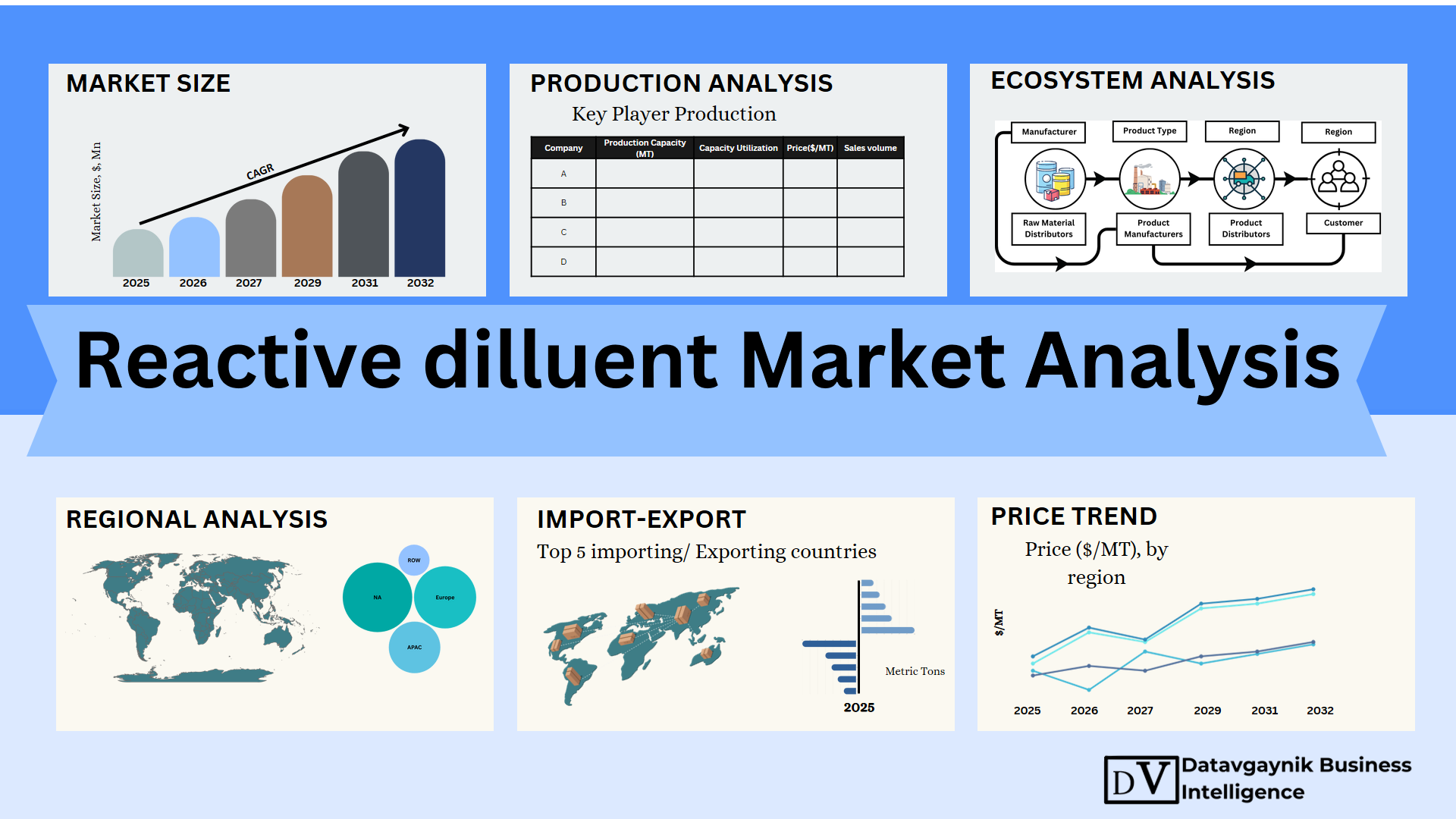
The reactive dilluent market is undergoing a substantial shift, driven by rapid advancements in high-performance industries such as automotive, construction, aerospace, electronics, and wind energy. These industries are increasingly prioritizing lightweight, durable, and sustainable materials—precisely where reactive diluents play a critical role. By improving the processability and curing characteristics of resins, reactive diluents are essential to developing high-performance coatings, adhesives, and composites across these applications.
For instance, the growing production of electric vehicles is transforming the automotive industry, with global EV sales surpassing 10 million units recently. Each EV demands lighter, stronger materials for efficiency and range optimization. Reactive diluents, used to fine-tune epoxy resin viscosity and reduce VOC emissions, have become integral in formulating coatings and structural composites for EVs. As manufacturers move toward water-based and low-emission alternatives, demand in the reactive dilluent market continues to accelerate.
Low-VOC Formulations Fuel Uptake in the Reactive Dilluent Market
One of the most significant drivers of the reactive dilluent market is the global shift toward low-VOC formulations. Volatile organic compound regulations have become increasingly stringent across regions such as North America, Europe, and Asia-Pacific. Manufacturers are actively replacing conventional solvents with reactive diluents that chemically integrate into final products, offering zero or near-zero VOC emissions.
In the construction sector, for example, eco-friendly coatings and sealants formulated with reactive diluents are being rapidly adopted. These products not only meet environmental compliance standards but also offer superior resistance to weathering and chemical exposure. The rising volume of green building certifications is pushing builders and contractors to choose materials with improved environmental profiles. As a result, reactive dilluent market size is expanding in tandem with the global green construction boom, which is expected to exceed $600 billion within the next few years.
Aerospace and Wind Energy Composite Applications Elevate Reactive Dilluent Market Growth
The need for advanced composites in aerospace and wind energy is a significant growth lever for the reactive dilluent market. Composite materials require precise viscosity control for infusion molding and hand lay-up processes—an area where reactive diluents are indispensable. These additives enhance flowability while maintaining mechanical strength and curing speed.
Aircraft manufacturers are continually innovating to improve fuel efficiency by reducing weight. In modern aircraft, over 50% of the structural volume comprises composites. Reactive diluents enable the formulation of these lightweight composites with high-performance attributes such as tensile strength, impact resistance, and durability under extreme environmental conditions.
In wind energy, longer and more durable turbine blades require superior composite structures. As wind installations continue to expand globally, the demand for resins modified with reactive diluents is projected to surge, particularly in markets like China, India, and Europe where renewable energy investment is scaling rapidly.
Growing Application of Epoxy Resins Boosts the Reactive Dilluent Market
The epoxy resin segment represents the dominant application area within the reactive dilluent market. Epoxy resins are widely utilized in coatings, flooring, adhesives, electronics, and composites—each requiring tailored performance attributes achieved through the incorporation of reactive diluents.
For example, in the electronics industry, reactive diluents are used in potting and encapsulation materials to ensure thermal stability, adhesion, and precise curing under micro-scale tolerances. Similarly, industrial floor coatings benefit from epoxy formulations enhanced with reactive diluents, delivering improved abrasion resistance, fast setting times, and low VOC emissions.
As the global epoxy resin industry continues to grow at a projected rate of over 5% CAGR, the demand for reactive diluents will rise proportionally. From anti-corrosive coatings for marine vessels to seamless industrial flooring and printed circuit boards, reactive diluents enable customized performance in every major epoxy application.
Automotive Industry’s Material Shift Reinforces Reactive Dilluent Market Expansion
Automotive manufacturing is in the midst of a structural transformation. Lightweighting, electrification, and environmental compliance are at the core of material innovation. Reactive diluents are a vital component in adhesives, sealants, and coatings that help reduce vehicle weight without compromising strength or durability.
Thermosetting resins modified with reactive diluents are used in bonding vehicle body panels, improving crash performance, and reducing assembly time. Additionally, high-durability coatings formulated with these diluents protect against corrosion and wear, especially in harsh environments.
The rise of electric vehicles has amplified the demand for high-performance adhesives that support battery module assembly, lightweight body construction, and thermal management. Reactive diluents enable these adhesives to maintain optimal flow and cure characteristics under challenging manufacturing conditions. As EV production accelerates, so will the consumption of reactive diluents within the automotive supply chain.
Construction Industry’s Growth Amplifies Use of Reactive Diluents in Adhesives and Sealants
Rapid urbanization, infrastructure investments, and the global push for sustainable building materials are fueling strong demand in the reactive dilluent market. Adhesives and sealants formulated with reactive diluents are widely used in flooring, insulation, panels, and waterproofing applications. These products not only offer excellent mechanical properties but also align with green building requirements through reduced VOC emissions.
For example, in fast-curing tile adhesives and structural sealants, reactive diluents help optimize viscosity and workability while ensuring long-term durability. With global construction output projected to reach over $15 trillion by the end of the decade, the incorporation of reactive diluents in construction-grade chemicals is set to increase significantly.
Electronics Sector Demands Tailored Resin Systems, Propelling the Reactive Dilluent Market
The electronics and electrical industry continues to present high-value opportunities for the reactive dilluent market. As miniaturization of components advances and thermal management becomes more critical, epoxy-based encapsulants and coatings require enhanced flow control, chemical resistance, and thermal conductivity.
Reactive diluents are particularly valuable in achieving these characteristics without compromising insulation or durability. They are used in conformal coatings, potting compounds, and underfill materials across a wide range of electronic devices, from consumer gadgets to industrial sensors.
With global electronics manufacturing on the rise, especially in Asia-Pacific, the demand for customized resin systems using reactive diluents is poised for long-term expansion. Their ability to fine-tune resin behavior under complex manufacturing and operational conditions makes them indispensable in this sector.
Sustainability Pressures and Regulatory Standards Strengthen Market Position of Reactive Diluents
The tightening of global environmental regulations has made compliance a top priority for industries relying on coatings, adhesives, and resins. In this context, reactive diluents have emerged as a preferred alternative to conventional solvents. Unlike traditional thinners, reactive diluents become part of the cured polymer matrix, eliminating emissions and improving product performance.
For example, in Europe, the REACH regulation and similar directives have compelled manufacturers to reduce hazardous emissions. This has led to a widespread shift toward low-emission formulations, especially in coatings and industrial adhesives. Reactive diluents are enabling companies to meet these standards without compromising on processing efficiency or end-product quality.
As environmental sustainability becomes a competitive differentiator across sectors, the use of reactive diluents is expected to grow in line with green manufacturing trends.
“Track Country-wise Reactive dilluent Production and Demand through our Reactive dilluent Production Database”
-
- Reactive dilluent production database for 30+ countries worldwide
- Reactive dilluent sales volume for 31+ countries
- Country-wise Reactive dilluent production capacity, production plant mapping, production capacity utilization for 30+ manufacturers
- Reactive dilluent production plants and production plant capacity analysis by top manufacturers
“Track real-time Reactive dilluent Prices, Reactive dilluent price charts for 30+ countries, Reactive dilluent weekly price tracker and Reactive dilluent monthly price tracker”
-
- Track real-time Reactive dilluent prices and Reactive dilluent price trend in 30+ countries though our excel-based Reactive dilluent price charts
- Real-time Reactive dilluent price tracker dashboard with 30+ countries
- Complete transparency on Reactive dilluent price trend through our Reactive dilluent monthly price tracker, Reactive dilluent weekly price tracker
North America’s High-Performance Sectors Stimulate Demand in the Reactive Dilluent Market
The reactive dilluent market in North America is being propelled by its mature industrial landscape, dominated by sectors such as automotive, aerospace, electronics, and infrastructure. The United States remains the largest contributor to regional demand, supported by rapid adoption of low-VOC coating technologies and specialty adhesives. With over 17 million vehicles produced annually and the electrification of vehicle platforms accelerating, demand for reactive diluents in epoxy resins used in automotive coatings, adhesives, and composites continues to climb.
For example, automotive OEMs in the U.S. are incorporating high-strength composites in EV chassis design, where reactive diluents play a critical role in achieving resin fluidity and curing precision. Similarly, the aerospace sector, led by major players such as Boeing and Lockheed Martin, has integrated lightweight resin systems with reactive diluents to meet fuel efficiency goals. Datavagyanik estimates North America will remain a key high-margin region for the reactive dilluent market, particularly in premium and custom-formulated applications.
Asia Pacific Emerges as the Fastest Growing Region in the Reactive Dilluent Market
Asia Pacific has become the fastest-growing region in the reactive dilluent market, with countries such as China, India, Japan, and South Korea driving exponential demand. This growth is directly tied to industrial expansion, urban infrastructure development, and massive investments in automotive and electronics manufacturing.
In China alone, the output of epoxy resin-based coatings used in construction and transportation sectors is growing at over 8% annually. Reactive diluents are indispensable in reducing viscosity and enabling smooth application across steel structures, roads, and public buildings. Furthermore, China’s dominance in wind energy and electronics production continues to widen the application base for reactive diluents. With over 70% of global PCB (Printed Circuit Board) manufacturing centered in Asia, the region has become a critical hub for reactive diluent consumption in the electronics sector.
India, on the other hand, is witnessing strong uptake in reactive diluents due to large-scale infrastructure projects and the growing adoption of EVs. As the Indian construction chemicals market surpasses $2 billion in size, demand for high-durability, VOC-compliant sealants and adhesives is pushing the reactive dilluent market into a new growth phase.
Europe’s Focus on Sustainability Catalyzes Reactive Dilluent Market Expansion
Europe’s reactive dilluent market is characterized by stringent environmental mandates and a high degree of R&D-driven formulation innovation. Germany, France, Italy, and the UK lead regional demand due to their advanced automotive and industrial sectors. Datavagyanik notes that the push for carbon neutrality across EU nations has dramatically increased the penetration of reactive diluents in low-VOC coatings and solvent-free adhesives.
Germany alone accounts for over 30% of Europe’s demand, fueled by the automotive sector’s transition to lightweight EV platforms and sustainable coating systems. In the construction sector, EU directives aimed at reducing VOC levels in building materials have prompted widespread reformulation of products using reactive diluents as the primary viscosity control agents.
Companies across Europe are now investing in bio-based and aliphatic reactive diluents to meet evolving green chemistry goals. As a result, the region remains a hotbed of innovation and premium-grade reactive dilluent production.
Reactive Dilluent Market in Latin America and MEA Gains Traction Amid Infrastructure Boom
In Latin America and the Middle East & Africa (MEA), the reactive dilluent market is still in its nascent phase but showing robust growth. Brazil and Mexico are leading the Latin American surge, especially in construction and automotive applications. Infrastructure projects such as roads, airports, and industrial parks are increasing the need for long-lasting, weather-resistant coatings, a segment heavily reliant on reactive diluents.
In MEA, urban development in countries like the UAE and Saudi Arabia is stimulating demand for sealants and coatings that can withstand high temperatures and sand abrasion. Reactive diluents, particularly those used in epoxy and polyurethane systems, are gaining popularity in these climates for their durability and environmental resistance.
With construction expenditure in Saudi Arabia expected to exceed $1 trillion over the next decade, the reactive dilluent market in the region is poised to grow in double digits, especially as regulatory bodies emphasize sustainable building solutions.
Production Hubs and Global Supply Centers Define the Reactive Dilluent Market
Globally, reactive dilluent production is concentrated in China, the United States, Germany, Japan, and India. China leads in volume production, driven by cost efficiencies, large-scale resin synthesis capabilities, and proximity to end-use sectors such as electronics and wind energy. Datavagyanik identifies China as the largest exporter of reactive diluents, supplying key markets in Southeast Asia, the Middle East, and Africa.
The United States maintains high-value production aimed at advanced composites and specialty adhesives. Its output is shaped by aerospace, defense, and high-tech manufacturing requirements. Germany, on the other hand, focuses on high-purity and specialty-grade reactive diluents suitable for automotive coatings and industrial sealants. With state-of-the-art R&D facilities and eco-friendly manufacturing technologies, Germany is a net exporter of customized reactive diluent formulations across Europe.
India is increasingly expanding its domestic production to cater to internal demand while reducing dependence on imports. With favorable government policies encouraging chemical manufacturing, Indian producers are scaling up production capacity for epoxy and polyurethane-based reactive diluents.
Reactive Dilluent Market Segmentation Highlights Diverse Use-Case Growth
The reactive dilluent market is segmented by application, resin type, product form, and end-use industry, each contributing distinct growth patterns.
In application terms, coatings and paints remain the largest segment, accounting for nearly 45% of total consumption. Epoxy resin-based coatings, used across industrial flooring, marine, and protective sectors, rely on reactive diluents to enhance adhesion, spreadability, and drying time.
Adhesives and sealants are the next fastest-growing application, driven by booming demand from automotive, electronics, and construction industries. For instance, the structural adhesive market in automotive manufacturing is growing at over 7% CAGR, and reactive diluents are key to enabling efficient bonding processes at scale.
In the composites segment, reactive diluents help produce high-strength, low-weight components in aerospace and renewable energy equipment. As wind turbine blade lengths increase, the requirement for optimized resin systems grows in tandem, further deepening demand for reactive diluents.
By resin type, epoxy dominates the market, with more than 60% share, followed by polyurethane, unsaturated polyester, and acrylics. Each resin type calls for specific reactive diluent chemistry to match mechanical, thermal, and environmental properties.
End-Use Industries Shape the Future Trajectory of the Reactive Dilluent Market
Automotive is the largest end-use industry for the reactive dilluent market. Lightweight vehicle bodies, battery module assembly, and thermal management systems depend on adhesives and composites modified with reactive diluents. As the EV market crosses 15% of global vehicle sales, the need for durable, thermally stable resins will keep increasing.
Construction, comprising adhesives, coatings, and sealants, is another high-volume consumer of reactive diluents. The global construction chemical industry is poised to surpass $85 billion in value, and reactive diluents are foundational in formulating sustainable, long-lasting products.
The electronics industry is fast emerging as a strategic growth sector. Microelectronics, PCBs, and encapsulation materials require precise formulation control, made possible through reactive diluents. With semiconductors and smart devices scaling in complexity, resin system customization—enabled by reactive diluents—becomes even more critical.
Reactive Dilluent Price Trend Reflects Raw Material Volatility and Regulatory Pressures
Reactive dilluent price trends have shown volatility in recent years, primarily due to fluctuations in raw material costs, energy prices, and transportation bottlenecks. Epoxy-based reactive diluents, for example, have witnessed price shifts of 8–15% year-over-year depending on bisphenol A and epichlorohydrin input prices.
During periods of supply chain disruptions—such as port closures or petrochemical feedstock shortages—reactive dilluent price trends have spiked sharply, especially in North America and Europe. Conversely, the rise of domestic production hubs in India and Southeast Asia has helped stabilize regional reactive dilluent prices by reducing dependence on imports.
Datavagyanik highlights that reactive dilluent price fluctuations are increasingly influenced by regulatory costs. As environmental standards become more rigorous, manufacturers are forced to invest in greener synthesis pathways, adding to production costs. For example, bio-based reactive diluents, though eco-friendly, currently carry a premium of 20–30% over traditional aromatic options due to lower production volumes and limited supplier bases.
Despite these challenges, prices are expected to normalize as economies of scale improve and sustainable chemistry becomes mainstream. In the short term, the reactive dilluent price trend will remain dynamic, with modest upward pressure expected in regions transitioning to eco-compliant formulations.
Balancing Cost, Performance, and Sustainability is Key to Reactive Dilluent Market Success
The future of the reactive dilluent market lies in optimizing price-performance ratios while achieving sustainability benchmarks. As product customization becomes central to application success—from aircraft composites to waterborne construction coatings—reactive diluents must evolve in both formulation flexibility and environmental footprint.
Manufacturers that can offer stable reactive dilluent prices while delivering on eco-compliance and technical performance will be well-positioned to lead in this high-growth, innovation-driven market.
“Reactive dilluent Manufacturing Database, Reactive dilluent Manufacturing Capacity”
-
-
- Reactive dilluent top manufacturers market share for 30+ manufacturers
- Top 11 manufacturers and top 18 manufacturers of Reactive dilluent in North America, Europe, Asia Pacific
- Reactive dilluent production plant capacity by manufacturers and Reactive dilluent production data for 30+ market players
- Reactive dilluent production dashboard, Reactive dilluent production data in excel format
-
“Reactive dilluent price charts, Reactive dilluent weekly price tracker and Reactive dilluent monthly price tracker”
-
-
- Factors impacting real-time Reactive dilluent prices in 30+ countries worldwide
- Reactive dilluent monthly price tracker, Reactive dilluent weekly price tracker
- Real-time Reactive dilluent price trend, Reactive dilluent price charts, news and updates
- Tracking Reactive dilluent price fluctuations
-
Leading Manufacturers Shaping the Competitive Reactive Dilluent Market
The reactive dilluent market is dominated by several global players who have established strong positions through innovation, product diversification, and strategic expansion. These companies are continually developing new product lines that respond to the increasing demand for high-performance, low-VOC, and sustainable solutions.
Huntsman Corporation holds one of the largest shares in the global reactive dilluent market. The company is known for its comprehensive range of epoxy-based and specialty reactive diluents used across coatings, adhesives, and composite applications. Huntsman’s product lines include materials optimized for thermal resistance, fast curing, and mechanical strength, making them a preferred choice in the automotive and aerospace industries.
Cardolite is another significant player, with its unique positioning in bio-based reactive diluents. The company manufactures diluents derived from cashew nutshell liquid, offering an eco-friendly alternative with high-performance attributes. Its NX series reactive diluents are widely used in marine coatings, industrial floorings, and high-temperature applications, contributing to Cardolite’s growing market presence.
Aditya Birla Chemicals has built a strong global footprint with a wide array of aliphatic and aromatic reactive diluents. The company serves multiple industries including construction, electronics, and automotive. Its Epotec line of epoxy-based products has become increasingly popular in Asia-Pacific and Middle Eastern markets, especially where high-strength adhesive systems are in demand.
Arkema continues to grow its market share through innovation in acrylic and aliphatic reactive diluents. The company offers both standard and customized diluent solutions for industrial paints and structural adhesives. Arkema’s Sartomer division focuses heavily on UV-curable reactive diluents used in electronics, packaging, and 3D printing.
BASF is a longstanding leader in the chemical industry, and its role in the reactive dilluent market is no exception. The company’s reactive diluents are commonly found in high-durability coatings and engineered plastics. BASF’s Laromer product line includes a variety of mono- and multi-functional reactive diluents tailored for environmental compliance and superior film-forming performance.
Evonik Industries, known for its specialty chemicals, provides epoxy and polyester-compatible reactive diluents designed for low-viscosity and fast-curing applications. Its market share has steadily increased due to the company’s ability to supply tailored solutions for sectors such as wind energy and electronics.
Hexion is a prominent manufacturer of epoxy resins and reactive diluents for thermoset applications. Its products support the growing demand for high-performance adhesives and coatings in North America and Europe. Hexion’s VITROX diluent line targets the transportation and aerospace sectors, focusing on rapid processing and chemical resistance.
Olin Corporation completes the list of key manufacturers with its deep expertise in chlorinated organics and epoxy systems. Its reactive diluents are used heavily in construction adhesives and protective coatings. The company’s regional supply chain and technical support services have helped secure consistent growth in market share, particularly in Latin America.
Reactive Dilluent Market Share by Manufacturer Reflects Competitive Innovation
The global reactive dilluent market is competitive, with market share distributed across major multinationals and regionally focused players. Huntsman leads the market with an estimated 15 percent share, attributed to its strong portfolio and deep presence in North America and Europe. Cardolite follows closely with approximately 12 percent, leveraging the rising demand for green chemistry and bio-based alternatives.
Aditya Birla Chemicals and Arkema each control close to 10 percent of the market, benefiting from strong distribution networks and growing demand in the Asia-Pacific region. BASF and Evonik each account for 8 to 9 percent of global market share, with a stronghold in specialty applications requiring high reactivity and thermal resistance.
Hexion and Olin round out the top tier, each holding between 5 and 7 percent market share. These companies are focused on performance-oriented applications, especially in automotive, marine, and aerospace sectors. Beyond these leading players, a number of mid-sized and niche manufacturers serve specific resin systems, such as unsaturated polyesters and UV-curable formulations, making the overall landscape diverse and dynamic.
Product Line Focus Enhancing Competitive Differentiation
Manufacturers in the reactive dilluent market are increasingly investing in specific product lines to create differentiation. For example, Cardolite’s bio-based NX series and Arkema’s Sartomer line are examples of successful niche strategies. These product lines cater to clients seeking low-toxicity, high-performance materials suitable for both high-end and eco-compliant formulations.
BASF’s Laromer brand continues to be a top choice for customers in the radiation-curing and industrial coating space, with ongoing additions that emphasize low viscosity and reduced emissions. Similarly, Hexion’s VITROX and Evonik’s VISIOMER lines are engineered for optimized performance in sectors requiring rapid throughput and durable end-use conditions.
Aditya Birla’s Epotec series has proven particularly effective in adhesive and construction markets, thanks to its adaptability to local climatic conditions and competitive pricing in high-growth geographies like Southeast Asia and the Middle East.
Recent News and Developments in the Reactive Dilluent Market
The reactive dilluent market has seen several important industry developments over the past few years, reflecting a focus on innovation, capacity expansion, and regulatory adaptation.
In February 2020, Huntsman launched a snap-cure resin system for high-speed composite manufacturing. This development allows for more efficient use of reactive diluents in the rapid molding of automotive parts, aligning with the industry trend toward lightweight electric vehicles.
In March 2021, Arkema announced the expansion of its Sartomer facility in China to meet growing demand for UV-curable resins and reactive diluents. This move solidified Arkema’s footprint in Asia, where electronics and packaging industries are key drivers of growth.
In December 2021, Aditya Birla Chemicals expanded its R&D investment to develop waterborne and solvent-free reactive diluent solutions. This strategic initiative was designed to align with environmental directives emerging across Europe and India.
In early 2022, Cardolite completed the development of a new line of high-performance cashew-based reactive diluents with improved UV resistance. These products are now entering marine and infrastructure markets, where long-term exposure to sunlight is a critical performance requirement.
During Q3 2022, Hexion opened a new application development center in Shanghai. The facility focuses on next-generation reactive diluents and resin technologies for composites, adhesives, and coatings across automotive and electronics industries.
Most recently, in late 2023, Evonik launched a series of ultra-low viscosity diluents intended for epoxy composite manufacturing in wind energy and aerospace. These diluents allow for higher filler loadings without sacrificing processing efficiency, catering to customers focused on cost-effectiveness and mechanical performance.
These strategic moves and product advancements underscore the industry’s emphasis on sustainability, regional expansion, and tailored solutions. As the reactive dilluent market continues to evolve, companies that invest in innovation, localization, and environmental compliance are expected to lead the next wave of market growth.
“Reactive dilluent Production Data and Reactive dilluent Production Trend, Reactive dilluent Production Database and forecast”
-
-
- Reactive dilluent production database for historical years, 11 years historical data
- Reactive dilluent production data and forecast for next 11 years
- Reactive dilluent sales volume by manufacturers
-
“Track Real-time Reactive dilluent Prices for purchase and sales contracts, Reactive dilluent price charts, Reactive dilluent weekly price tracker and Reactive dilluent monthly price tracker”
-
-
- Gain control on your purchase and sales contracts through our real-time Reactive dilluent price tracker and Reactive dilluent price trend analysis
- Reactive dilluent weekly price tracker and forecast for next four weeks
- Reactive dilluent monthly price tracker and forecast for next two months
-
Market Scenario, Demand vs Supply, Average Product Price, Import vs Export, till 2035
- Global Reactive dilluent Market revenue and demand by region
- Global Reactive dilluent Market production and sales volume
- United States Reactive dilluent Market revenue size and demand by country
- Europe Reactive dilluent Market revenue size and demand by country
- Asia Pacific Reactive dilluent Market revenue size and demand by country
- Middle East & Africa Reactive dilluent Market revenue size and demand by country
- Latin America Reactive dilluent Market revenue size and demand by
- Import-export scenario – United States, Europe, APAC, Latin America, Middle East & Africa
- Average product price – United States, Europe, APAC, Latin America, Middle East & Africa
- Market player analysis, competitive scenario, market share analysis
- Business opportunity analysis
Key questions answered in the Global Reactive dilluent Market Analysis Report:
- What is the market size for Reactive dilluent in United States, Europe, APAC, Middle East & Africa, Latin America?
- What is the yearly sales volume of Reactive dilluent and how is the demand rising?
- Who are the top market players by market share, in each product segment?
- Which is the fastest growing business/ product segment?
- What should be the business strategies and Go to Market strategies?
The report covers Reactive dilluent Market revenue, Production, Sales volume, by regions, (further split into countries):
- Asia Pacific (China, Japan, South Korea, India, Indonesia, Vietnam, Rest of APAC)
- Europe (UK, Germany, France, Italy, Spain, Benelux, Poland, Rest of Europe)
- North America (United States, Canada, Mexico)
- Latin America (Brazil, Argentina, Rest of Latin America)
- Middle East & Africa
Table of Contents:
Reactive Diluent Market
- Introduction to Reactive Diluents
- Definition and Role in Industrial Applications
- Key Properties and Functional Characteristics
- Market Relevance and Growth Potential
- Classification of Reactive Diluents
- Types Based on Chemical Composition
- Application-Specific Variants
- Innovations in Reactive Diluent Formulations
- Market Growth Drivers and Industry Challenges
- Technological Advancements in Formulation
- Regulatory and Environmental Considerations
- Barriers to Market Expansion and Key Restraints
- Regional Insights: North America Reactive Diluent Market
- Market Size and Revenue Forecast
- Key Industrial Applications and Demand Trends
- Competitive Landscape and Major Players
- Europe Reactive Diluent Market Overview
- Regional Demand-Supply Dynamics
- Industry-Specific Adoption Trends
- Strategic Developments and Growth Strategies
- Asia Pacific Reactive Diluent Industry Landscape
- Expanding Production Capacities in the Region
- Emerging End-Use Industries Driving Demand
- Import-Export Trends and Market Opportunities
- Latin America Reactive Diluent Market Trends
- Key Factors Influencing Regional Demand
- Economic and Trade Influences on Market Growth
- Regional Investment and Business Expansion
- Middle East & Africa Reactive Diluent Market Outlook
- Demand Projections Across Key Industries
- Infrastructure and Economic Impact on Market Development
- Key Regional Market Participants and Their Strategies
- Production Forecast and Market Expansion (2025-2040)
- Anticipated Production Trends and Growth Sectors
- Industry Adoption of Sustainable Practices
- Influence of Global Supply Chain on Production
- Competitive Landscape and Key Market Players
- Leading Manufacturers and Market Share Analysis
- Business Strategies for Competitive Advantage
- Research & Development Investments and Innovations
- Manufacturing Process and Cost Evaluation
- Key Steps in Reactive Diluent Production
- Efficiency Enhancements in Manufacturing Processes
- Cost Structure and Market Influences on Pricing
- Revenue and Market Share Analysis by Manufacturer
- Financial Performance of Key Players
- Revenue Growth Trends and Projections
- Market Penetration Strategies
- Pricing Strategy and Cost Influences
- Impact of Raw Material Costs on Pricing Models
- Competitive Pricing Trends in Global Markets
- Price Fluctuations and Economic Factors
- Trade and International Market Movements
- Major Exporting and Importing Countries
- Trade Regulations and Their Market Implications
- Regional Trade Agreements and Market Access Strategies
- End-use Industry Demand for Reactive Diluents
- Applications in Coatings, Adhesives, and Sealants
- Growth in Automotive, Construction, and Electronics Industries
- Future Applications in New Market Segments
- Consumption Patterns and Demand Forecast (2025-2040)
- Regional Consumption Analysis
- Industrial Trends Influencing Demand Growth
- Evolving Consumer Preferences and Adoption Rates
- Raw Material Procurement and Supply Chain Management
- Primary Sources of Raw Materials
- Supply Chain Disruptions and Risk Management
- Sustainable Alternatives and Green Sourcing Trends
- Distribution Channels and Market Accessibility
- Logistics and Distribution Framework
- Role of Key Distributors and Retail Networks
- Challenges in Global Market Access
- Environmental Sustainability and Regulatory Compliance
- Industry Standards and Regulatory Frameworks
- Green Manufacturing Practices and Sustainable Solutions
- Certifications and Compliance Strategies
- Investment Trends and Market Growth Prospects
- Market Expansion Strategies and Investment Hotspots
- Mergers, Acquisitions, and Strategic Partnerships
- Investment Risks and Future Market Viability
- Technological Innovations and Future Developments
- Advancements in Material Science and Product Formulation
- Role of Automation and AI in Manufacturing
- Potential Breakthroughs in Reactive Diluent Technologies
- Long-term Market Outlook and Strategic Forecast (2025-2040)
- Growth Projections and Emerging Market Segments
- Challenges and Opportunities for Industry Stakeholders
- Strategies for Sustainable and Profitable Market Growth
- Conclusion and Business Strategy Recommendations
- Summary of Key Findings
- Best Practices for Market Growth and Expansion
- Actionable Insights for Industry Players
Other recently published reports:

