

Expanding Pharmaceutical Sector Driving Palladium on Carbon (Pd/C) Catalyst Market Growth
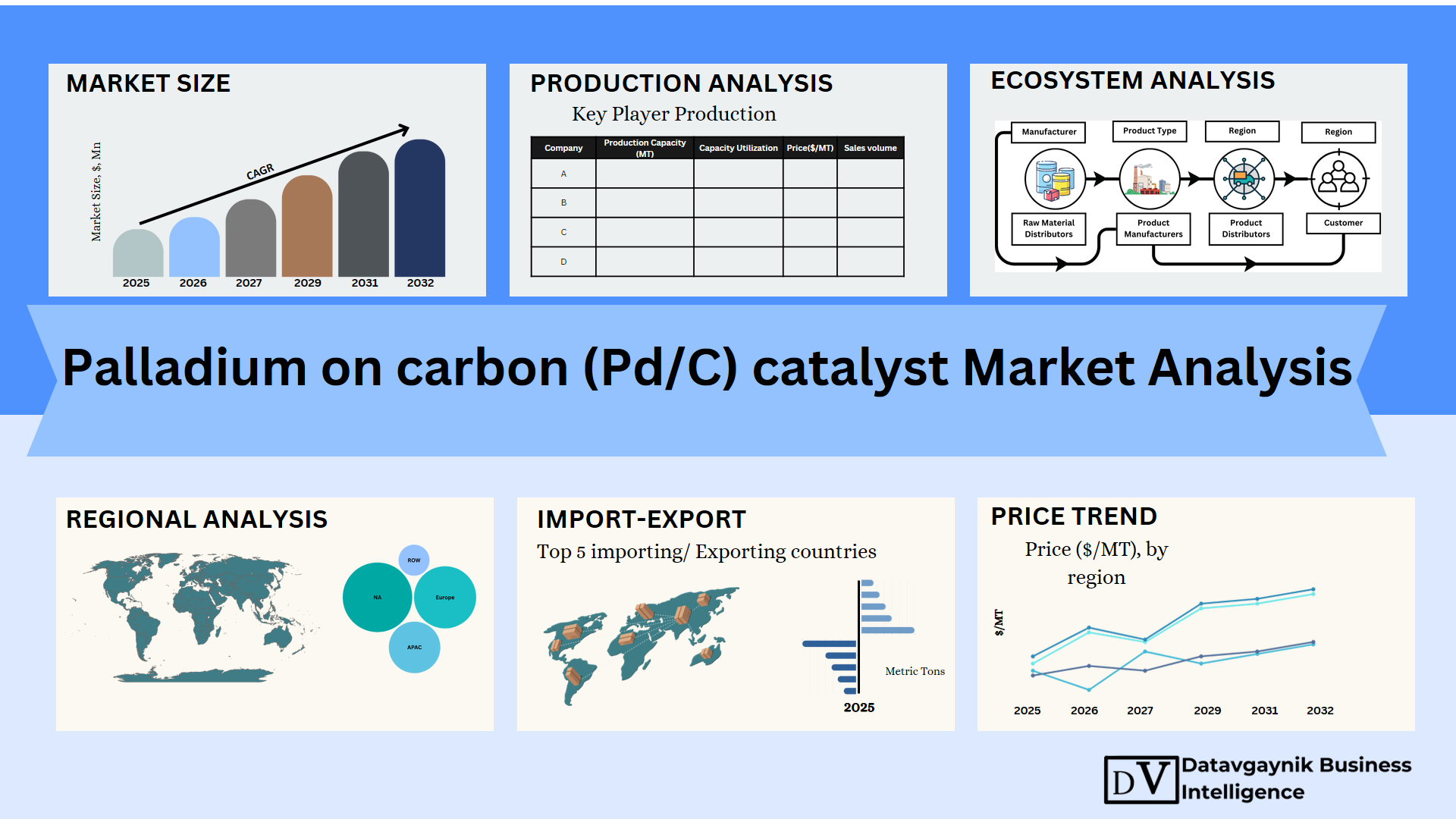
The Palladium on Carbon (Pd/C) catalyst Market is experiencing significant growth propelled by the rapid expansion of the pharmaceutical industry worldwide. With pharmaceutical production increasing steadily, driven by a rising global prevalence of chronic diseases such as cancer, diabetes, and infectious ailments, the demand for Pd/C catalysts has surged accordingly. These catalysts are critical in the synthesis of active pharmaceutical ingredients (APIs), where they enable essential hydrogenation reactions like nitro group reductions and dehalogenation processes.
For example, the production of life-saving antibiotics and anticancer drugs heavily relies on Pd/C catalysts to achieve high selectivity and yield under mild conditions. The pharmaceutical industry’s increasing focus on developing complex molecules and biologics further elevates the necessity of efficient catalytic processes, directly benefiting the Palladium on Carbon (Pd/C) catalyst Market.
Fine Chemicals and Specialty Chemicals Sector Driving Demand in Palladium on Carbon (Pd/C) Catalyst Market
Another significant driver of the Palladium on Carbon (Pd/C) catalyst Market is the burgeoning fine chemicals and specialty chemicals sector. This industry requires catalysts that ensure high purity and precision, especially for the production of agrochemicals, dyes, fragrances, and electronic chemicals.
Pd/C catalysts are favored due to their excellent performance in selective hydrogenation and carbon–carbon coupling reactions such as Suzuki and Heck reactions, which are vital for synthesizing complex organic compounds. For example, agrochemical manufacturers use Pd/C catalysts to produce herbicides and pesticides with specific functional groups, ensuring effectiveness and environmental safety. The increasing demand for specialty chemicals in consumer goods, electronics, and agriculture is driving the Palladium on Carbon (Pd/C) catalyst Market growth as manufacturers seek catalysts that deliver both efficiency and sustainability.
Petrochemical and Refining Industry Elevating Palladium on Carbon (Pd/C) Catalyst Market
The Palladium on Carbon (Pd/C) catalyst Market is further propelled by its critical applications in the petrochemical and refining industries. Pd/C catalysts play a pivotal role in hydroprocessing techniques, including hydrocracking, desulfurization, and hydrogenation of olefins and aromatics. With global environmental regulations becoming increasingly stringent, refiners are under pressure to produce cleaner fuels with ultra-low sulfur content.
Pd/C catalysts excel in these processes by effectively removing impurities and enhancing fuel quality. For instance, the refining sector’s adoption of Pd/C catalysts has surged as it seeks to comply with sulfur limits mandated in transportation fuels, leading to substantial improvements in air quality. The refining industry’s growth and shift towards cleaner fuel production are directly expanding the Palladium on Carbon (Pd/C) catalyst Market.
Green Chemistry Initiatives Accelerate Palladium on Carbon (Pd/C) Catalyst Market Expansion
Sustainability and green chemistry principles are reshaping chemical manufacturing, creating a powerful growth vector for the Palladium on Carbon (Pd/C) catalyst Market. Pd/C catalysts enable numerous environmentally friendly processes by allowing reactions to proceed under mild temperatures and pressures, reducing hazardous waste generation. For example, catalytic hydrogenation with Pd/C using hydrogen gas replaces more toxic reducing agents, aligning with green chemistry goals to minimize environmental impact. Additionally, the recyclability of Pd/C catalysts supports circular economy efforts by reducing palladium consumption and resource depletion. Industries adopting sustainable practices increasingly prefer Pd/C catalysts for their ability to deliver high efficiency with minimal environmental footprint, propelling the market forward in line with global sustainability mandates.
Electronics and Advanced Materials Sector Boosting Palladium on Carbon (Pd/C) Catalyst Market
The Palladium on Carbon (Pd/C) catalyst Market is also fueled by expanding applications in electronics and advanced materials. Palladium’s exceptional catalytic properties facilitate the synthesis of conductive polymers, nanomaterials, and components essential for electronic devices. For instance, Pd/C catalysts are widely used in manufacturing multilayer ceramic capacitors and electronic connectors, which are foundational for smartphones, computers, and renewable energy technologies. As demand for sophisticated electronics and energy storage solutions grows, so does the need for high-performance catalysts like Pd/C that enable precise functionalization reactions. This trend is reinforced by the global surge in consumer electronics and clean energy investments, cementing the role of Pd/C catalysts in next-generation material development.
Hydrogen Economy and Fuel Cell Technology Driving Palladium on Carbon (Pd/C) Catalyst Market
The global push toward a hydrogen economy is another major catalyst behind the growth of the Palladium on Carbon (Pd/C) catalyst Market. Palladium’s outstanding hydrogen absorption and catalytic properties make Pd/C catalysts integral in fuel cells and hydrogen purification processes. For example, Pd/C catalysts are vital in proton-exchange membrane (PEM) fuel cells, which power electric vehicles and stationary clean energy systems. As governments and industries invest billions to expand hydrogen infrastructure and transition from fossil fuels, the demand for Pd/C catalysts in hydrogen production, storage, and fuel cell technologies is accelerating rapidly. This sector’s projected growth, driven by climate goals and energy security concerns, is a key factor propelling the Palladium on Carbon (Pd/C) catalyst Market forward.
Technological Advancements Enhancing Palladium on Carbon (Pd/C) Catalyst Market Potential
Continuous innovations in catalyst design and manufacturing techniques are transforming the Palladium on Carbon (Pd/C) catalyst Market by enhancing catalyst efficiency, durability, and cost-effectiveness. The development of nano-sized palladium particles and modified carbon supports has improved catalyst surface area and active site availability, leading to superior catalytic performance. For instance, the introduction of bimetallic Pd/C catalysts allows for synergistic effects that lower palladium loadings without compromising activity, significantly reducing production costs. These advancements expand the applicability of Pd/C catalysts across new industrial processes, from pharmaceuticals to environmental technologies, supporting sustainable and economically viable chemical manufacturing. Such R&D-driven improvements are key enablers of the expanding Palladium on Carbon (Pd/C) catalyst Market.
Cost Advantages of Palladium on Carbon (Pd/C) Catalyst Market Over Other Precious Metals
Despite palladium’s status as a precious metal, the Palladium on Carbon (Pd/C) catalyst Market benefits from cost advantages relative to other platinum-group catalysts like platinum on carbon. Pd/C catalysts offer high catalytic activity even at lower metal loadings, resulting in reduced overall catalyst usage and lower production costs. This cost efficiency, combined with broad reaction versatility—ranging from hydrogenation to carbon-carbon coupling—makes Pd/C catalysts the preferred choice for many industrial applications. For example, manufacturers in pharmaceuticals and petrochemicals often choose Pd/C over platinum-based catalysts to balance performance with cost, driving increased adoption. The inherent cost-effectiveness of Pd/C catalysts is a significant driver expanding the Palladium on Carbon (Pd/C) catalyst Market globally.
Environmental Regulations Fueling Demand in Palladium on Carbon (Pd/C) Catalyst Market
Tightening environmental regulations worldwide are strongly influencing the Palladium on Carbon (Pd/C) catalyst Market by necessitating cleaner industrial processes and emission control technologies. Pd/C catalysts are widely deployed in catalytic converters for automotive exhaust treatment, reducing harmful emissions such as nitrogen oxides and volatile organic compounds. Additionally, industries increasingly use Pd/C catalysts in wastewater treatment and pollution abatement to meet regulatory standards. For instance, the adoption of Pd/C catalysts in air purification systems enables industries to comply with stringent air quality norms, which are continuously being enforced in regions such as North America and Europe. This regulatory pressure is a key factor driving the global expansion of the Palladium on Carbon (Pd/C) catalyst Market.
Global Industrialization and Emerging Markets Propel Palladium on Carbon (Pd/C) Catalyst Market
Rapid industrialization in emerging economies across Asia Pacific, Latin America, and the Middle East is creating new growth avenues for the Palladium on Carbon (Pd/C) catalyst Market. Countries like China, India, Brazil, and Southeast Asian nations are expanding their chemical, pharmaceutical, and petrochemical manufacturing capacities.
This growth, driven by rising domestic demand and export-oriented production, directly increases the need for efficient catalytic processes that Pd/C catalysts provide. For example, China’s aggressive investment in pharmaceutical API production and petrochemical refining has substantially boosted Pd/C catalyst consumption. Additionally, government policies supporting clean energy and sustainable manufacturing in these regions are further accelerating market expansion. The convergence of industrial growth and environmental focus in emerging markets is a strong engine for the Palladium on Carbon (Pd/C) catalyst Market’s future trajectory.
“Track Country-wise Palladium on carbon (Pd/C) catalyst Production and Demand through our Palladium on carbon (Pd/C) catalyst Production Database”
-
-
- Palladium on carbon (Pd/C) catalyst production database for 32+ countries worldwide
- Palladium on carbon (Pd/C) catalyst sales volume for 32+ countries
- Country-wise Palladium on carbon (Pd/C) catalyst production capacity, production plant mapping, production capacity utilization for 32+ manufacturers
- Palladium on carbon (Pd/C) catalyst production plants and production plant capacity analysis by top manufacturers
-
“Track real-time Palladium on carbon (Pd/C) catalyst Prices, Palladium on carbon (Pd/C) catalyst price charts for 32+ countries, Palladium on carbon (Pd/C) catalyst weekly price tracker and Palladium on carbon (Pd/C) catalyst monthly price tracker”
-
-
- Track real-time Palladium on carbon (Pd/C) catalyst prices and Palladium on carbon (Pd/C) catalyst price trend in 32+ countries though our excel-based Palladium on carbon (Pd/C) catalyst price charts
- Real-time Palladium on carbon (Pd/C) catalyst price tracker dashboard with 32+ countries
- Complete transparency on Palladium on carbon (Pd/C) catalyst price trend through our Palladium on carbon (Pd/C) catalyst monthly price tracker, Palladium on carbon (Pd/C) catalyst weekly price tracker
-
Geographic Demand Insights in the Palladium on Carbon (Pd/C) Catalyst Market
The geographic demand for the Palladium on Carbon (Pd/C) catalyst Market reveals distinct regional dynamics shaped by industrial development, technological advancement, and regulatory landscapes. Asia Pacific dominates demand, accounting for over 40% of the global consumption. This region’s rapid industrialization, especially in China and India, fuels Pd/C catalyst adoption. For instance, China’s pharmaceutical industry, which is growing at around 7% annually, heavily depends on Pd/C catalysts for manufacturing APIs, driving substantial regional demand. India’s rising fine chemicals sector, expanding at nearly 6% yearly, also bolsters Pd/C catalyst utilization.
North America holds the second-largest share, supported by the United States’ advanced pharmaceutical and petrochemical industries. The U.S. pharmaceutical market, valued at over $600 billion, relies extensively on Pd/C catalysts for high-purity drug synthesis, pushing the regional demand upward. Europe follows closely, with Germany, France, and the UK leading due to their strong regulatory focus on green chemistry and stringent environmental norms. These regions invest significantly in sustainable manufacturing processes, where Pd/C catalysts play a critical role in enabling cleaner production.
Emerging markets in Latin America and the Middle East are witnessing accelerated Pd/C catalyst adoption as these regions expand their petrochemical refining and pharmaceutical manufacturing capacities. Brazil’s pharmaceutical sector, growing by around 5.5%, and Middle Eastern investments in clean energy infrastructure contribute notably to rising demand.
Regional Production Landscape Shaping the Palladium on Carbon (Pd/C) Catalyst Market
Asia Pacific is the foremost production hub for Pd/C catalysts, led by China, India, Japan, and South Korea. China’s extensive chemical manufacturing base, combined with its access to raw palladium, allows large-scale production that meets both domestic and export demand. For example, China’s advanced catalyst manufacturing plants produce over 60% of the region’s Pd/C catalysts, serving booming pharmaceutical and petrochemical sectors.
India’s catalyst production capacity is rapidly expanding, supported by government initiatives encouraging local chemical manufacturing. Indian producers focus heavily on pharmaceutical-grade Pd/C catalysts to supply both domestic and export markets. Japan and South Korea contribute high-tech Pd/C catalysts for specialized applications such as fuel cells and electronic materials, underscoring their role in innovation-driven production.
In North America, the U.S. combines strong research capabilities with established manufacturing infrastructure. Leading chemical companies produce high-performance Pd/C catalysts, particularly for pharmaceutical synthesis and environmental technologies. Europe’s production is concentrated in Germany, France, and the UK, where manufacturers focus on sustainable catalyst technologies, often incorporating advanced nano-palladium formulations to enhance efficiency and reduce precious metal usage.
Emerging regions are gradually developing Pd/C catalyst manufacturing, driven by local demand and efforts to reduce import dependency. Latin America and Middle East countries are investing in production facilities aimed at meeting their growing industrial needs.
Market Segmentation: Product Types Driving the Palladium on Carbon (Pd/C) Catalyst Market
The Palladium on Carbon (Pd/C) catalyst Market segmentation by product type highlights 5%, 10%, and 20% palladium loadings as key categories catering to different industrial needs.
5% Pd/C catalysts are widely used in pharmaceutical and fine chemical applications where moderate palladium content provides an optimal balance between cost and catalytic performance. These catalysts are particularly effective in selective hydrogenation reactions requiring precise control, such as the synthesis of antibiotics and agrochemical intermediates.
10% Pd/C catalysts dominate the market due to their versatility and high catalytic activity, making them ideal for diverse applications including API manufacturing, petrochemical refining, and specialty chemical production. For example, their use in Suzuki and Heck coupling reactions, which are fundamental to synthesizing complex organic molecules, underscores their broad industrial acceptance.
20% Pd/C catalysts are preferred in demanding processes requiring enhanced catalytic efficiency and durability. High palladium loading supports applications like fuel cell technologies, hydrogenation of complex organics, and advanced material synthesis. Industries producing high-value polymers and electronic materials favor these catalysts for their superior performance despite higher cost.
Application-Based Segmentation and Its Impact on the Palladium on Carbon (Pd/C) Catalyst Market
Pharmaceuticals remain the largest application segment, consuming over 50% of the global Pd/C catalysts. The synthesis of active pharmaceutical ingredients relies heavily on Pd/C catalysts for efficient, selective hydrogenation and carbon-carbon bond-forming reactions. For example, the rising demand for anticancer and antiviral drugs has propelled the use of Pd/C catalysts in large-scale API manufacturing.
The petrochemical and refining sector constitutes a significant market segment as well, with Pd/C catalysts essential in hydrocracking, desulfurization, and hydrogenation processes to produce cleaner fuels. This segment benefits from stringent fuel quality standards worldwide, pushing refiners to adopt Pd/C catalysts for sulfur removal and olefin saturation.
Fine chemicals and specialty chemicals industries account for a growing share, driven by demand for dyes, fragrances, flavors, and agrochemicals. The precision enabled by Pd/C catalysts in cross-coupling and hydrogenation reactions enables the production of high-purity specialty chemicals critical to these industries.
Environmental applications, including automotive catalytic converters and industrial emission controls, are an emerging segment, increasingly using Pd/C catalysts for their efficiency at lower operating temperatures. The fuel cells and hydrogen economy segment is rapidly expanding, fueled by clean energy initiatives that require Pd/C catalysts in hydrogen purification and fuel cell reactions.
Palladium on Carbon (Pd/C) Catalyst Price Dynamics and Market Impact
The Palladium on Carbon (Pd/C) catalyst Price is inherently tied to the global palladium commodity market, which is highly volatile due to factors such as geopolitical tensions, mining output fluctuations, and industrial demand. Over the last five years, palladium prices have seen sharp fluctuations, reaching peaks above $3,000 per ounce before cooling to around $2,000 per ounce, directly influencing Pd/C catalyst Price.
These price variations impact production costs and, consequently, the overall Palladium on Carbon (Pd/C) catalyst Market pricing structure. Industries sensitive to cost pressures, like fine chemicals and specialty chemicals, seek Pd/C catalysts with optimized palladium loadings to balance performance and expense.
Palladium on Carbon (Pd/C) Catalyst Price Trend Reflects Innovation and Demand Shifts
The Palladium on Carbon (Pd/C) catalyst Price Trend indicates a gradual shift toward more cost-efficient catalyst formulations driven by technological advancements. For instance, the development of nano-structured catalysts and bimetallic Pd/C catalysts reduces palladium consumption without compromising activity, helping stabilize prices despite commodity volatility.
In parallel, the rising demand for Pd/C catalysts in high-growth sectors like pharmaceuticals and hydrogen fuel cells exerts upward pressure on prices, particularly for high-purity and specialized catalyst grades. This dual dynamic of innovation-led cost control and demand-driven price increases characterizes the current Palladium on Carbon (Pd/C) catalyst Price Trend.
Production Methods Influence Palladium on Carbon (Pd/C) Catalyst Market Efficiency and Pricing
The impregnation method dominates Pd/C catalyst production, offering cost-effectiveness and scalability. This technique involves impregnating palladium salts onto activated carbon, followed by reduction, resulting in catalysts with good dispersion and surface area. Its widespread adoption supports stable supply and competitive Palladium on Carbon (Pd/C) catalyst Price.
Advanced production methods, such as chemical vapor deposition and colloidal synthesis, yield catalysts with superior uniformity and activity but come at higher production costs. These high-performance catalysts cater to specialized applications like fuel cells and nanotechnology, commanding premium pricing in the Palladium on Carbon (Pd/C) catalyst Market.
Emerging Market Demand and Its Effect on Palladium on Carbon (Pd/C) Catalyst Market Pricing
Emerging economies in Asia Pacific, Latin America, and the Middle East are fueling incremental demand for Pd/C catalysts, intensifying competition for raw palladium and influencing price trends. For example, China and India’s expanding pharmaceutical and petrochemical sectors increase palladium procurement, occasionally tightening global supply and nudging up Palladium on Carbon (Pd/C) catalyst Prices.
Governments in these regions promoting local catalyst production and sustainable practices are investing in R&D to improve catalyst efficiency, which may moderate price volatility in the mid-to-long term. Still, the combined effect of surging demand and palladium’s finite availability is expected to sustain a generally upward Palladium on Carbon (Pd/C) catalyst Price Trend over the next decade.
Outlook: Market Segmentation and Price Evolution to Shape Palladium on Carbon (Pd/C) Catalyst Market
The Palladium on Carbon (Pd/C) catalyst Market is poised for sustained growth as regional demand expands and production technologies evolve. The diversification of product types and applications enhances market resilience, allowing producers to target specific segments from cost-sensitive pharmaceuticals to high-performance fuel cells.
Simultaneously, Palladium on Carbon (Pd/C) catalyst Price dynamics will remain influenced by commodity market fluctuations, technological innovation, and shifting demand patterns. Companies investing in advanced catalyst design and sustainable production will likely navigate price volatility better, leveraging efficiency gains to meet growing industrial needs.
“Palladium on carbon (Pd/C) catalyst Manufacturing Database, Palladium on carbon (Pd/C) catalyst Manufacturing Capacity”
-
-
- Palladium on carbon (Pd/C) catalyst top manufacturers market share for 32+ manufacturers
- Top 12 manufacturers and top 19 manufacturers of Palladium on carbon (Pd/C) catalyst in North America, Europe, Asia Pacific
- Palladium on carbon (Pd/C) catalyst production plant capacity by manufacturers and Palladium on carbon (Pd/C) catalyst production data for 32+ market players
- Palladium on carbon (Pd/C) catalyst production dashboard, Palladium on carbon (Pd/C) catalyst production data in excel format
-
“Palladium on carbon (Pd/C) catalyst price charts, Palladium on carbon (Pd/C) catalyst weekly price tracker and Palladium on carbon (Pd/C) catalyst monthly price tracker”
-
-
- Factors impacting real-time Palladium on carbon (Pd/C) catalyst prices in 32+ countries worldwide
- Palladium on carbon (Pd/C) catalyst monthly price tracker, Palladium on carbon (Pd/C) catalyst weekly price tracker
- Real-time Palladium on carbon (Pd/C) catalyst price trend, Palladium on carbon (Pd/C) catalyst price charts, news and updates
- Tracking Palladium on carbon (Pd/C) catalyst price fluctuations
-
Leading Manufacturers Driving the Palladium on Carbon (Pd/C) Catalyst Market
The Palladium on Carbon (Pd/C) catalyst Market is dominated by a select group of key manufacturers who hold substantial market shares and influence the overall industry landscape. These companies combine advanced research capabilities with robust production infrastructure, offering diverse product lines tailored to pharmaceuticals, petrochemicals, fine chemicals, and environmental applications. Their strategic investments in technology and sustainability have strengthened their market positions globally.
Palladium on Carbon (Pd/C) Catalyst Market Share by Top Manufacturers
Market concentration within the Palladium on Carbon (Pd/C) catalyst Market is moderate, with the top five manufacturers accounting for nearly 65% of the global market. This reflects a balance between established chemical giants and emerging specialized producers. Among these, the leaders include companies such as Johnson Matthey, BASF SE, Sigma-Aldrich (a Merck Group company), Heraeus Holding GmbH, and Strem Chemicals.
Johnson Matthey is recognized as the largest player, controlling approximately 20-22% of the global market share. The company’s extensive portfolio includes high-performance Pd/C catalysts widely used in pharmaceutical hydrogenation and petrochemical refining. Johnson Matthey’s “JM Pd/C” product line is known for its high activity and selectivity, with various grades tailored to specific industrial needs, including low-metal-loading options that reduce cost without sacrificing performance.
BASF SE holds around 15-17% of the market and is prominent for its catalyst innovation. Their “HyPall” catalyst range encompasses Pd/C catalysts engineered for efficient hydrogenation processes across pharmaceuticals and specialty chemicals. BASF’s focus on environmentally sustainable catalyst formulations aligns with the rising green chemistry demands that dominate the market’s growth trends.
Sigma-Aldrich, under the Merck Group umbrella, captures approximately 10-12% market share, supplying high-purity Pd/C catalysts to pharmaceutical research and development sectors. Their catalysts, branded under “Sigma Catalyst,” emphasize consistent activity and reproducibility, critical for pharmaceutical process optimization. Sigma-Aldrich’s global distribution network supports widespread availability, reinforcing its competitive position.
Heraeus Holding GmbH accounts for about 8-10% of the market, offering Pd/C catalysts utilized extensively in electronic materials and fine chemical synthesis. Heraeus’ product lines emphasize tailored particle size distributions and carbon supports, optimizing catalyst stability and reusability.
Strem Chemicals holds around 5-7% market share, specializing in high-purity palladium catalysts for academic research and pharmaceutical manufacturing. Their “Strem Pd/C” line is valued for precise particle size control and high catalytic activity in selective hydrogenation reactions.
Other regional and specialized manufacturers collectively make up the remaining market share, including companies in China, India, Japan, and South Korea, where rapid industrialization and growing pharmaceutical sectors drive demand for locally produced Pd/C catalysts.
Product Lines and Technological Differentiators Among Manufacturers
Johnson Matthey’s JM Pd/C catalysts are engineered with various palladium loadings (5%, 10%, 20%) and carbon supports designed for optimal dispersion and surface area. Their commitment to sustainability is reflected in catalysts that minimize palladium usage while maintaining superior activity. These catalysts are commonly used in hydrogenation of nitro compounds, dehalogenation, and other pharmaceutical syntheses.
BASF’s HyPall catalysts leverage proprietary carbon supports to enhance catalyst life and reduce metal leaching, addressing environmental and operational challenges faced by industries. Their catalysts are marketed for specialty chemicals, agrochemicals, and environmentally friendly production processes.
Sigma-Aldrich’s Sigma Catalyst line prioritizes batch-to-batch consistency and purity, critical for R&D applications where reproducibility determines process success. Their catalysts support complex coupling reactions and selective hydrogenations essential in drug discovery.
Heraeus’ Pd/C catalysts are known for customization, with particle size control enabling applications in electronics and nanomaterial synthesis. Their ability to provide catalysts with tailored support materials offers clients flexibility in process optimization.
Strem Chemicals specializes in catalysts suited for precision hydrogenation in synthetic organic chemistry. Their products are widely adopted in academic and industrial laboratories focused on novel molecule synthesis.
Recent Industry Developments and News in the Palladium on Carbon (Pd/C) Catalyst Market
In 2024, Johnson Matthey announced the launch of a next-generation Pd/C catalyst line designed to reduce palladium content by up to 30% while improving catalytic efficiency. This development responds to rising palladium prices and environmental regulations, positioning Johnson Matthey as a leader in sustainable catalysis.
BASF SE expanded its manufacturing capabilities in Asia Pacific in early 2025, opening a new catalyst production facility in Singapore. This strategic move aims to better serve the growing pharmaceutical and petrochemical sectors in Southeast Asia and reduce supply chain risks.
Sigma-Aldrich recently enhanced its global distribution network with new logistics centers in Europe and North America, improving the availability of its Pd/C catalysts for rapid pharmaceutical R&D applications. This expansion aligns with increasing demand from biotech firms investing in accelerated drug development.
Heraeus Holding GmbH announced a collaboration with a major electronics manufacturer in late 2024 to develop specialized Pd/C catalysts for next-generation semiconductor materials. This partnership underscores the expanding role of Pd/C catalysts in the rapidly evolving electronics and renewable energy industries.
Strem Chemicals introduced an ultra-fine Pd/C catalyst variant in 2023 designed for high selectivity in complex organic syntheses, particularly useful in personalized medicine and biopharmaceutical manufacturing.
Outlook on Market Share and Manufacturer Strategies
The Palladium on Carbon (Pd/C) catalyst Market is expected to maintain its moderate concentration as top manufacturers continue investing in advanced catalyst technologies and sustainable production methods. Market leaders leverage innovation to reduce palladium content, enhance catalyst recyclability, and address stringent environmental regulations, thereby solidifying their market shares.
Emerging regional manufacturers, especially in Asia, are improving production capabilities and product quality, contributing to a more competitive global landscape. Strategic partnerships, facility expansions, and product line diversification are common approaches among leading players to capture growing demand across pharmaceuticals, petrochemicals, and clean energy sectors.
The dynamic interplay between palladium commodity prices and technological breakthroughs will continue influencing manufacturer market shares, with those able to balance cost-efficiency and high performance expected to lead.
“Palladium on carbon (Pd/C) catalyst Production Data and Palladium on carbon (Pd/C) catalyst Production Trend, Palladium on carbon (Pd/C) catalyst Production Database and forecast”
-
-
- Palladium on carbon (Pd/C) catalyst production database for historical years, 12 years historical data
- Palladium on carbon (Pd/C) catalyst production data and forecast for next 12 years
- Palladium on carbon (Pd/C) catalyst sales volume by manufacturers
-
“Track Real-time Palladium on carbon (Pd/C) catalyst Prices for purchase and sales contracts, Palladium on carbon (Pd/C) catalyst price charts, Palladium on carbon (Pd/C) catalyst weekly price tracker and Palladium on carbon (Pd/C) catalyst monthly price tracker”
-
-
- Gain control on your purchase and sales contracts through our real-time Palladium on carbon (Pd/C) catalyst price tracker and Palladium on carbon (Pd/C) catalyst price trend analysis
- Palladium on carbon (Pd/C) catalyst weekly price tracker and forecast for next four weeks
- Palladium on carbon (Pd/C) catalyst monthly price tracker and forecast for next two months
-
Market Scenario, Demand vs Supply, Average Product Price, Import vs Export, till 2035
- Global Palladium on carbon (Pd/C) catalyst Market revenue and demand by region
- Global Palladium on carbon (Pd/C) catalyst Market production and sales volume
- United States Palladium on carbon (Pd/C) catalyst Market revenue size and demand by country
- Europe Palladium on carbon (Pd/C) catalyst Market revenue size and demand by country
- Asia Pacific Palladium on carbon (Pd/C) catalyst Market revenue size and demand by country
- Middle East & Africa Palladium on carbon (Pd/C) catalyst Market revenue size and demand by country
- Latin America Palladium on carbon (Pd/C) catalyst Market revenue size and demand by
- Import-export scenario – United States, Europe, APAC, Latin America, Middle East & Africa
- Average product price – United States, Europe, APAC, Latin America, Middle East & Africa
- Market player analysis, competitive scenario, market share analysis
- Business opportunity analysis
Key questions answered in the Global Palladium on carbon (Pd/C) catalyst Market Analysis Report:
- What is the market size for Palladium on carbon (Pd/C) catalyst in United States, Europe, APAC, Middle East & Africa, Latin America?
- What is the yearly sales volume of Palladium on carbon (Pd/C) catalyst and how is the demand rising?
- Who are the top market players by market share, in each product segment?
- Which is the fastest growing business/ product segment?
- What should be the business strategies and Go to Market strategies?
The report covers Palladium on carbon (Pd/C) catalyst Market revenue, Production, Sales volume, by regions, (further split into countries):
- Asia Pacific (China, Japan, South Korea, India, Indonesia, Vietnam, Rest of APAC)
- Europe (UK, Germany, France, Italy, Spain, Benelux, Poland, Rest of Europe)
- North America (United States, Canada, Mexico)
- Latin America (Brazil, Argentina, Rest of Latin America)
- Middle East & Africa
Table of Contents:
- Introduction to Palladium on Carbon (Pd/C) Catalyst Market
- Overview of Palladium on Carbon (Pd/C) Catalysts
- Importance and Role of Pd/C Catalysts in Industrial Applications
- Market Trends and Historical Overview of Pd/C Catalysts
- Properties and Mechanism of Palladium on Carbon Catalysts
- Characteristics of Palladium on Carbon Catalysts
- The Catalytic Mechanism of Pd/C in Hydrogenation and Other Reactions
- Comparison with Other Supported Catalysts
- Types of Palladium on Carbon Catalysts
- Conventional Pd/C Catalysts
- Modified Pd/C Catalysts with Enhanced Selectivity
- Nanoparticle Pd/C Catalysts and Their Applications
- Bimetallic Pd/C Catalysts for Specialized Reactions
- Applications of Palladium on Carbon Catalysts
- Hydrogenation and Dehydrogenation Reactions
- Fine Chemical Synthesis and Pharmaceutical Applications
- Hydrogenation of Oils and Fats in Food Industry
- Catalysis in Petrochemical and Refining Processes
- Environmental Catalysis: Air and Water Treatment
- Market Drivers and Growth Factors
- Increasing Demand for Sustainable and Efficient Catalysis
- Technological Advances in Palladium on Carbon Catalyst Development
- Rising Demand in the Pharmaceutical and Chemical Industries
- Regulatory Pressure for Cleaner and Greener Catalysis
- Market Size and Growth Forecast (2025-2035)
- Global Market Overview and Revenue Projections
- Regional Market Insights and Growth Trends
- Market Forecast by Application and Catalyst Type
- Regional Market Insights
- North America: Demand and Application Trends in Pd/C Catalysis
- Europe: Regulatory Influence and Technological Developments
- Asia-Pacific: Market Growth and Industrial Adoption of Pd/C Catalysts
- Latin America and Middle East & Africa: Emerging Market Opportunities
- Competitive Landscape and Key Market Players
- Leading Manufacturers and Suppliers of Palladium on Carbon Catalysts
- Market Share Analysis and Competitive Positioning
- Key Innovations and Product Development Strategies
- Strategic Collaborations, Mergers, and Acquisitions in the Pd/C Catalyst Industry
- Technological Innovations in Pd/C Catalysts
- Development of High-Activity and High-Selectivity Pd/C Catalysts
- Advances in Catalyst Recycling and Regeneration
- Use of Pd/C Catalysts in Emerging and Green Chemistry Applications
- Production and Manufacturing of Palladium on Carbon Catalysts
- Raw Material Sourcing: Palladium and Carbon
- Manufacturing Processes and Challenges in Pd/C Catalyst Production
- Scaling Production and Ensuring Catalyst Quality
- Pricing Trends and Market Economics
- Price Fluctuations in Palladium and Pd/C Catalysts
- Factors Affecting the Cost of Pd/C Catalysts
- Economic Impact of Pd/C Catalysts on Industrial Operations
- Sustainability and Environmental Considerations
- Sustainability Issues in Pd/C Catalyst Production and Usage
- Recycling and Reusing Palladium in Catalytic Applications
- Regulatory and Environmental Pressures Driving Sustainable Catalysis
- Regulatory Landscape and Compliance
- Global and Regional Standards for Pd/C Catalysts
- Health and Safety Regulations for Catalyst Manufacturing and Usage
- Compliance with Environmental and Industry-Specific Regulations
- Global Trade and Market Dynamics
- Export and Import Trends in Palladium on Carbon Catalysts
- Trade Barriers and Policies Affecting Global Market Access
- Key Exporting and Importing Regions
- Risks and Opportunities in the Pd/C Catalysts Market
- Risks Related to Palladium Price Volatility and Supply Chain Challenges
- Opportunities for Expansion in Emerging Markets
- Innovations Driving New Applications for Pd/C Catalysts
- Impact of Industry 4.0 on Pd/C Catalyst Production
- The Role of Automation in Pd/C Catalyst Manufacturing
- Digitalization in Catalyst Development and Optimization
- Industry 4.0 Technologies and Their Impact on Catalyst Performance
- Consumer Trends and Demand Drivers
- Growing Demand for High-Performance and Green Catalysts
- Shift Towards Sustainable and Efficient Chemical Processes
- Increasing Interest in Pd/C Catalysts in the Pharmaceutical Industry
- Future Outlook and Market Projections (2025-2035)
- Long-Term Market Growth Projections for Pd/C Catalysts
- Future Trends and Technological Developments in Pd/C Catalysis
- Emerging Markets and New Applications Driving Future Demand
- Conclusion and Strategic Recommendations
- Key Insights and Takeaways from the Pd/C Catalysts Market Analysis
- Strategic Recommendations for Stakeholders and Market Participants
- Final Thoughts on Market Trends, Opportunities, and Challenges
Other recently published reports:

