

Rising Energy Transition Accelerating Selective Hydrogenation Catalysts Market
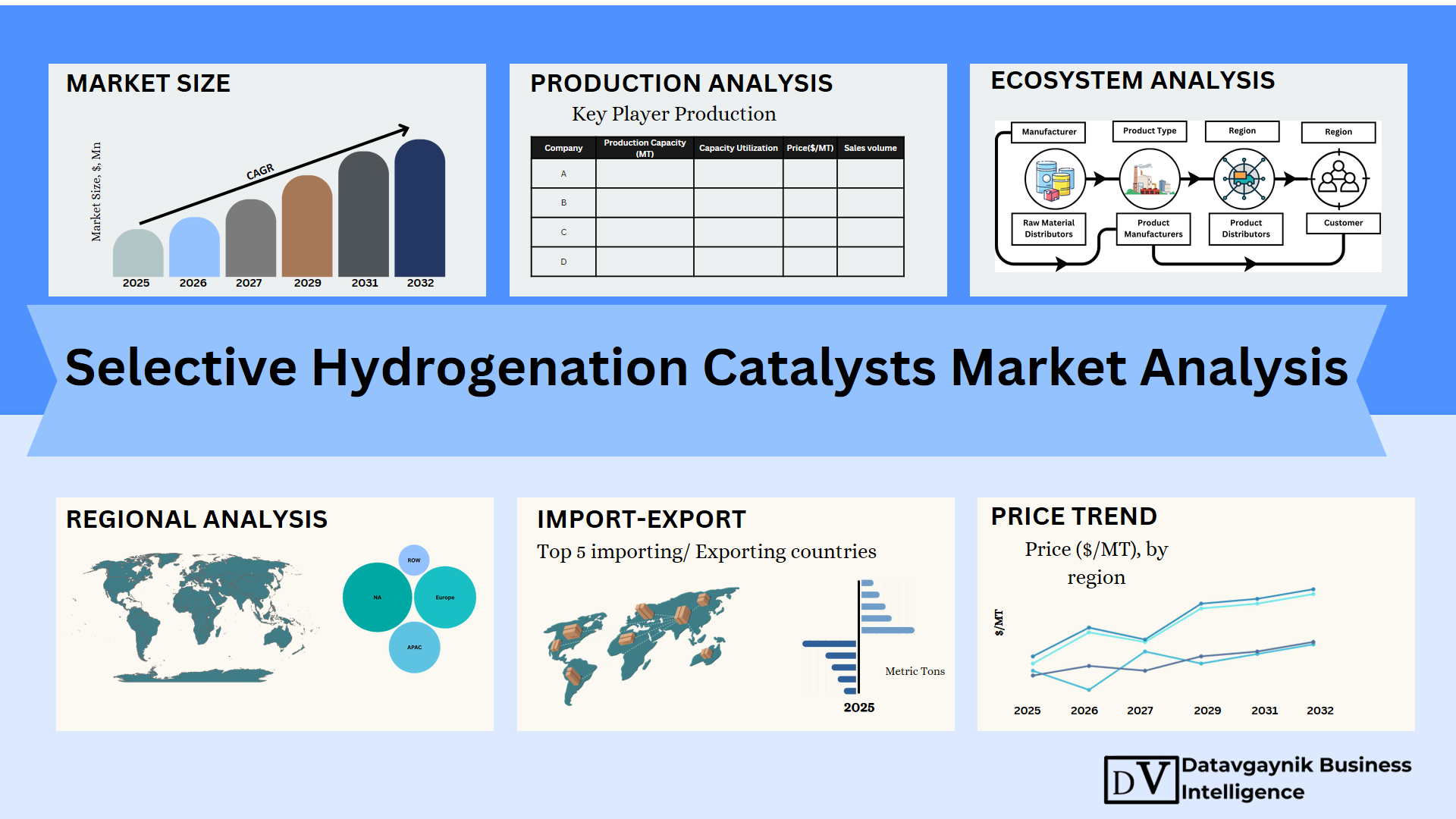
The Selective Hydrogenation Catalysts Market is undergoing a fundamental transformation as the global push for cleaner, low-emission fuels intensifies. Countries are enforcing stricter fuel standards to cut sulfur emissions and improve air quality. This regulatory pressure is compelling refiners to adopt highly selective catalysts that efficiently remove sulfur and olefins while preserving hydrocarbon structure and energy value.
For instance, the demand for ultra-low sulfur diesel has surged globally, especially in regions like Asia and Europe where emission norms have tightened significantly in the past five years. Refiners are upgrading their hydrotreating units with advanced selective hydrogenation catalysts that support deep desulfurization and olefin saturation. These catalysts are critical in enabling compliance while maintaining operational efficiency. The Selective Hydrogenation Catalysts Market Size is scaling in response to these urgent environmental imperatives and industrial investments.
Petrochemical Expansion Driving Demand in Selective Hydrogenation Catalysts Market
The booming global petrochemical sector is a major growth engine for the Selective Hydrogenation Catalysts Market. The increasing consumption of polymers, synthetic rubbers, and resins in packaging, construction, automotive, and electronics is driving up the need for high-purity feedstocks like ethylene, propylene, and butadiene.
Selective hydrogenation is essential in purifying these olefins, especially in removing trace impurities like acetylene from ethylene streams and butadiene from C4 cuts. In these processes, even minor impurities can poison downstream polymerization catalysts or degrade product performance. This makes high-performance hydrogenation catalysts indispensable. As new petrochemical complexes come online across China, India, the Middle East, and the U.S., the demand for acetylene and diene hydrogenation catalysts is rising sharply. The Selective Hydrogenation Catalysts Market is benefitting from this surge in capacity expansion and operational upgrades.
Renewable Chemical Production Boosting Selective Hydrogenation Catalysts Market
As sustainability becomes a strategic priority across industries, the Selective Hydrogenation Catalysts Market is gaining momentum from the rapid adoption of bio-based and renewable chemicals. The shift from fossil-based to biomass-derived feedstocks introduces new processing challenges, requiring catalysts with higher selectivity, resistance to impurities, and lower energy demand.
Selective hydrogenation plays a central role in converting bio-oils, fatty acid methyl esters, and lignocellulosic derivatives into usable fuels and chemical intermediates. For example, in green diesel production, selective saturation of double bonds and removal of oxygenates are critical steps that rely on efficient catalysts. As bio-refinery projects multiply across Europe, North America, and Asia, the demand for specialized catalysts designed for renewable feedstocks is accelerating. This diversification of applications is creating robust, long-term growth potential for the Selective Hydrogenation Catalysts Market.
Innovation and R&D Redefining Selective Hydrogenation Catalysts Market Competitiveness
Technology advancement is transforming the Selective Hydrogenation Catalysts Market from a commodity-driven segment to a performance-oriented domain. Catalyst manufacturers are leveraging breakthroughs in materials science to enhance selectivity, reduce energy input, and extend operational lifespan. Trends such as bimetallic catalysts, tailored supports, and nano-scale active sites are now at the forefront.
These innovations are allowing for precision control over reaction kinetics and catalyst poisoning resistance. For instance, bimetallic formulations combining nickel and molybdenum or palladium and silver offer superior performance in applications involving reactive intermediates or high sulfur content. These next-generation catalysts are enabling more stable processing environments in refining, olefin purification, and even pharmaceutical manufacturing.
The evolution of production technology is also shaping the market. Fixed-bed and slurry-phase reactor compatibility is a key factor in catalyst selection, and innovations are making it easier for producers to transition to cleaner, more flexible hydrogenation systems. This trend reinforces the importance of R&D in securing a competitive edge within the Selective Hydrogenation Catalysts Market.
Growth in Food Processing Industry Supporting Selective Hydrogenation Catalysts Market
The transformation of the global food industry is providing a strong tailwind for the Selective Hydrogenation Catalysts Market. Edible oils and fats require hydrogenation to enhance shelf life, stability, and texture. As consumer demand for processed and shelf-stable foods increases, so does the need for high-purity, trans-fat-free products that comply with health regulations.
Selective hydrogenation enables the precise control of unsaturation levels in vegetable oils, making it possible to eliminate trans fats while retaining desirable physical properties. This application has become increasingly vital in regions with regulatory bans on industrial trans fats. Food manufacturers are turning to advanced catalysts that offer controlled hydrogenation under milder conditions, improving both safety and product quality. The growing consumption of plant-based oils and processed food products continues to expand the catalyst demand across this sector.
Industrialization in Emerging Markets Expanding Selective Hydrogenation Catalysts Market Footprint
Emerging economies are playing an increasingly central role in shaping the Selective Hydrogenation Catalysts Market. Rapid urbanization and industrial expansion in regions such as Southeast Asia, Latin America, and the Middle East are creating new demand centers for refining, petrochemical, and food processing activities. These developments are translating into heightened requirements for hydrogenation processes at scale.
Countries like India and Indonesia are investing in new refinery projects and petrochemical plants to reduce import dependency and cater to domestic energy demand. As these economies enforce stricter emissions norms and increase their chemical output, the use of advanced selective hydrogenation catalysts is growing accordingly. The Selective Hydrogenation Catalysts Market Size in these regions is projected to register double-digit annual growth over the coming years due to the convergence of policy mandates, infrastructure upgrades, and energy diversification goals.
Cost Efficiency and Process Optimization Boosting Selective Hydrogenation Catalysts Market Demand
Operational efficiency and cost reduction remain high priorities across industries, driving sustained interest in the Selective Hydrogenation Catalysts Market. Catalysts that enable high yields under low temperature and pressure conditions significantly reduce energy consumption and operational expenses. This makes them particularly attractive in cost-sensitive markets such as bulk chemical manufacturing and fuel refining.
For example, replacing conventional hydrogenation catalysts with advanced variants can lower energy requirements by up to 20%, while extending catalyst life by 30% or more. In large-scale refining operations, these improvements translate into substantial savings and increased plant reliability. As industries strive for leaner and greener processes, the use of next-generation selective catalysts is becoming standard practice.
Expanding Role of Selective Hydrogenation Catalysts in Pharmaceuticals and Fine Chemicals
The pharmaceutical and fine chemical industries are increasingly contributing to the growth of the Selective Hydrogenation Catalysts Market. Precision hydrogenation is a key step in synthesizing active pharmaceutical ingredients and intermediates. The need for exact control over reaction pathways, enantioselectivity, and minimal byproduct formation has driven the demand for highly specialized catalysts.
Applications include the reduction of nitro groups, hydrogenation of aromatic compounds, and formation of chiral molecules—all of which require catalysts with specific properties and high activity at low concentrations. As drug development pipelines grow and regulatory expectations for purity tighten, pharmaceutical producers are investing in cleaner, scalable hydrogenation solutions. This is further expanding the market footprint into high-margin segments with complex processing needs.
“Track Country-wise Selective Hydrogenation Catalysts Production and Demand through our Selective Hydrogenation Catalysts Production Database”
-
-
- Selective Hydrogenation Catalysts production database for 32+ countries worldwide
- Selective Hydrogenation Catalysts sales volume for 32+ countries
- Country-wise Selective Hydrogenation Catalysts production capacity, production plant mapping, production capacity utilization for 32+ manufacturers
- Selective Hydrogenation Catalysts production plants and production plant capacity analysis by top manufacturers
-
“Track real-time Selective Hydrogenation Catalysts Prices, Selective Hydrogenation Catalysts price charts for 32+ countries, Selective Hydrogenation Catalysts weekly price tracker and Selective Hydrogenation Catalysts monthly price tracker”
-
-
- Track real-time Selective Hydrogenation Catalysts prices and Selective Hydrogenation Catalysts price trend in 32+ countries though our excel-based Selective Hydrogenation Catalysts price charts
- Real-time Selective Hydrogenation Catalysts price tracker dashboard with 32+ countries
- Complete transparency on Selective Hydrogenation Catalysts price trend through our Selective Hydrogenation Catalysts monthly price tracker, Selective Hydrogenation Catalysts weekly price tracker
-
Asia-Pacific Leading Global Demand in Selective Hydrogenation Catalysts Market
The Selective Hydrogenation Catalysts Market is witnessing its strongest demand momentum from the Asia-Pacific region. Rapid industrialization, capacity expansions in petrochemicals, and a growing focus on energy security have positioned countries like China and India at the center of global catalyst consumption. For instance, China, home to more than 30 percent of the world’s chemical output, continues to expand its refining and polymer production, creating sustained demand for selective hydrogenation catalysts across a range of applications.
India’s refining industry is scaling rapidly, with public and private sector investments directed toward ultra-low sulfur diesel production and renewable fuel processing. These developments have led to a consistent annual rise in demand for hydrogenation catalysts, particularly in acetylene removal, vegetable oil hydrogenation, and nitro compound reduction. As Southeast Asia follows a similar trajectory with new petrochemical complexes coming online in Thailand, Indonesia, and Vietnam, the region as a whole is set to contribute over 40 percent of the global growth in the Selective Hydrogenation Catalysts Market over the next five years.
North America: Technology-Driven Growth in Selective Hydrogenation Catalysts Market
The Selective Hydrogenation Catalysts Market in North America is defined by advanced technology adoption and a focus on sustainability-driven upgrades. The region’s mature refining and petrochemical industries are investing in cleaner, more efficient production methods, especially with environmental policies tightening across the United States and Canada.
Hydrogenation catalysts are central to bio-refinery operations, which are expanding due to the rising production of renewable diesel, sustainable aviation fuel, and green hydrogen. For example, the adoption of selective catalysts in fixed-bed and slurry reactors is increasing as producers aim to optimize hydrogen usage, reduce side reactions, and extend catalyst life. In fine chemicals and pharmaceuticals, precision catalytic processes are gaining priority, further strengthening market demand.
North American manufacturers are also exporting high-performance catalysts to Latin America and Asia, capitalizing on their expertise in catalyst engineering and formulation. This dual role of consumption and export makes North America a significant force in shaping both demand and supply dynamics of the Selective Hydrogenation Catalysts Market.
Europe: Regulatory Push and Specialty Applications Advancing Selective Hydrogenation Catalysts Market
In Europe, the Selective Hydrogenation Catalysts Market is expanding as stringent regulations around emissions and environmental safety fuel investments in cleaner processes. Countries such as Germany, France, and the Netherlands are leading with innovation in catalyst design tailored for sustainable chemical production.
Germany, for instance, has emerged as a global hub for bio-based chemical synthesis, driving demand for catalysts used in selective hydrogenation of renewable feedstocks. France’s growth in green hydrogen infrastructure and pharmaceutical manufacturing is also contributing to increasing adoption. Meanwhile, the United Kingdom’s focus on decarbonizing industrial clusters through hydrogen production has led to a surge in the use of selective catalysts for hydrogen purification and synthetic fuel synthesis.
Specialty applications in the food sector, particularly the hydrogenation of edible oils and fats, are strong contributors to regional demand. The market is also seeing significant activity in catalyst recycling and reuse, with companies emphasizing circular economy principles in catalyst life cycle management.
Middle East and Latin America Emerging as High-Growth Zones in Selective Hydrogenation Catalysts Market
The Selective Hydrogenation Catalysts Market is gaining momentum in emerging regions such as the Middle East and Latin America, driven by increasing investments in downstream processing. In the Middle East, countries like Saudi Arabia and the United Arab Emirates are scaling up their petrochemical output under economic diversification programs. Selective hydrogenation catalysts are critical in these large-scale facilities for the purification of olefins, removal of sulfur compounds, and the production of clean fuels.
In Latin America, Brazil and Mexico are witnessing strong growth in both refining and agricultural processing industries. Hydrogenation is essential for producing biodiesel from soybean oil and other feedstocks, and the demand for trans-fat-free oils in processed food manufacturing is also rising. As the chemical and food sectors expand, these regions are expected to register among the fastest CAGR in the Selective Hydrogenation Catalysts Market over the next decade.
Strategic Global Production Hubs Shaping Selective Hydrogenation Catalysts Market Supply Chain
The global supply chain of the Selective Hydrogenation Catalysts Market is shaped by concentrated production in key industrial hubs, including China, the United States, Germany, Japan, and South Korea. These countries combine advanced manufacturing infrastructure with high R&D investment to develop catalysts with greater efficiency, selectivity, and lifespan.
China dominates in volume-based production, supplying cost-effective catalysts for bulk petrochemical and edible oil hydrogenation. Meanwhile, the United States and Germany focus on precision-engineered catalysts tailored for pharmaceutical, renewable, and fine chemical sectors. Japan and South Korea, known for high-purity and specialty chemical production, emphasize high-activity catalysts compatible with low-impurity feedstocks.
The rise of localized production in Southeast Asia and the Middle East is gradually reducing dependency on imports. However, technology licensing and supply partnerships with top-tier manufacturers remain crucial to maintain performance standards, particularly in high-value applications.
Application-Based Segmentation Driving Differentiated Demand in Selective Hydrogenation Catalysts Market
The Selective Hydrogenation Catalysts Market is segmented across diverse application areas, each with unique demand characteristics. Petrochemicals remain the largest consumer segment, where catalysts are essential for converting alkynes, dienes, and aromatics into purer, more stable olefin streams used in polymer production.
In refining, selective hydrogenation is critical for hydrodesulfurization and hydrocracking processes to produce ultra-low sulfur fuels. Pharmaceutical applications rely on precision hydrogenation to synthesize complex molecules, while food processing uses catalysts for modifying oils and fats. The growth of renewable energy technologies has also created new demand in biomass-to-liquid fuel conversion and green hydrogen synthesis.
Polymers and specialty resins represent another important segment, especially in the development of high-performance materials requiring controlled molecular weight and chemical stability. This multi-sectoral application base ensures sustained growth across all end-user industries within the Selective Hydrogenation Catalysts Market.
Reactor Technology Influencing Catalyst Demand in Selective Hydrogenation Catalysts Market
Reactor design and operational strategy play a pivotal role in catalyst selection and usage patterns in the Selective Hydrogenation Catalysts Market. Fixed-bed reactors are widely used in petrochemicals and refining due to their reliability and ease of scale-up, making them a dominant technology segment.
Slurry-phase reactors, on the other hand, offer superior mass transfer characteristics and are preferred in pharmaceutical and fine chemical industries where reaction control and selectivity are paramount. Fluidized-bed systems are gaining popularity in large-scale applications requiring high throughput and uniform catalyst exposure.
The choice of reactor configuration significantly impacts catalyst performance, longevity, and reusability, making compatibility a key consideration in market strategy. As energy efficiency and yield optimization remain central to industrial economics, advanced catalysts designed for specific reactor environments are gaining traction across all sectors.
Selective Hydrogenation Catalysts Price Trend Reflecting Raw Material Volatility and Innovation Cycles
The Selective Hydrogenation Catalysts Price is subject to fluctuations based on several influencing factors including metal availability, processing complexity, and market demand. Precious metal-based catalysts, especially those containing palladium, platinum, or rhodium, command premium prices due to their superior selectivity and activity.
Over the last three years, Selective Hydrogenation Catalysts Price Trend has shown moderate inflationary pressure, primarily driven by volatility in metal prices and supply chain disruptions. For instance, the average cost of palladium-based catalysts increased by over 15 percent during periods of mining constraints and geopolitical instability.
Base metal catalysts, such as those using nickel or cobalt, offer a more cost-effective alternative but are increasingly affected by rising demand from battery and EV sectors. This cross-sectoral competition influences availability and pricing for catalytic applications as well. Meanwhile, continuous improvements in catalyst regeneration and recyclability are helping offset pricing pressure and extend value through multiple use cycles.
Regional and Application-Based Pricing Variance in Selective Hydrogenation Catalysts Price Trend
The Selective Hydrogenation Catalysts Price Trend also varies significantly by geography and application. In North America and Europe, where environmental and performance standards are stringent, the preference is for high-end, long-lifecycle catalysts. These tend to carry a premium due to the need for enhanced selectivity and resistance to poisoning.
In contrast, markets in Asia-Pacific and Latin America are more cost-sensitive, and demand leans towards bulk catalysts used in large-scale, high-throughput operations. However, even in these regions, increasing focus on energy efficiency and environmental impact is driving gradual adoption of mid-to-high range catalytic solutions.
Application-specific demand also influences pricing. Catalysts used in pharmaceutical or fine chemical synthesis tend to have a higher per-unit cost due to small-batch precision requirements, while those used in oil refining benefit from scale but require frequent regeneration. This dynamic pricing environment requires manufacturers to balance innovation, metal sourcing, and regional demand characteristics effectively.
“Selective Hydrogenation Catalysts Manufacturing Database, Selective Hydrogenation Catalysts Manufacturing Capacity”
-
-
- Selective Hydrogenation Catalysts top manufacturers market share for 32+ manufacturers
- Top 12 manufacturers and top 19 manufacturers of Selective Hydrogenation Catalysts in North America, Europe, Asia Pacific
- Selective Hydrogenation Catalysts production plant capacity by manufacturers and Selective Hydrogenation Catalysts production data for 32+ market players
- Selective Hydrogenation Catalysts production dashboard, Selective Hydrogenation Catalysts production data in excel format
-
“Selective Hydrogenation Catalysts price charts, Selective Hydrogenation Catalysts weekly price tracker and Selective Hydrogenation Catalysts monthly price tracker”
-
-
- Factors impacting real-time Selective Hydrogenation Catalysts prices in 32+ countries worldwide
- Selective Hydrogenation Catalysts monthly price tracker, Selective Hydrogenation Catalysts weekly price tracker
- Real-time Selective Hydrogenation Catalysts price trend, Selective Hydrogenation Catalysts price charts, news and updates
- Tracking Selective Hydrogenation Catalysts price fluctuations
-
Leading Manufacturers Dominating the Selective Hydrogenation Catalysts Market
The Selective Hydrogenation Catalysts Market is consolidated around a core group of global manufacturers who hold significant influence through their technology capabilities, global reach, and industry partnerships. These companies operate across multiple geographies and end-use sectors, offering a wide portfolio of catalyst solutions customized for applications in refining, petrochemicals, pharmaceuticals, and renewable fuels.
BASF is one of the largest players in the Selective Hydrogenation Catalysts Market, with an extensive range of catalysts designed for fixed-bed, slurry, and fluidized applications. The company’s product line includes the E 15x series, which is specifically used for selective hydrogenation of acetylene in ethylene-rich streams. BASF’s catalysts are widely deployed in ethylene crackers and polymer-grade olefin purification units, offering high activity and low ethylene loss.
Clariant is another major manufacturer with a strong footprint in hydrogenation technologies. Its Selective Hydrogenation product range includes the HyMax and EnviCat series. HyMax catalysts are known for their high selectivity in diene and alkyne hydrogenation processes, while EnviCat is tailored for environmental applications such as removal of sulfur and nitrogen compounds. Clariant’s focus on renewable feedstock processing and biofuel catalyst systems is contributing to the company’s growing market share, particularly in Europe and North America.
Johnson Matthey holds a prominent position in the Selective Hydrogenation Catalysts Market due to its specialization in precious metal-based catalysts. Its product portfolio includes platinum and palladium-based formulations used in the fine chemical and pharmaceutical sectors. The PURAT and PRICAT series from Johnson Matthey are widely used in the selective hydrogenation of nitroaromatics and olefins, offering superior selectivity and low by-product formation.
R. Grace & Co. has also emerged as a key manufacturer, particularly in the refining segment. Grace’s ART (Advanced Refining Technologies) joint venture with Chevron is responsible for a significant share of hydroprocessing catalyst production globally. Grace’s range includes fixed-bed catalysts used in naphtha hydrogenation and diesel hydrodesulfurization. The company’s innovation in pore structure design and active phase dispersion offers extended cycle lengths and resistance to fouling.
Haldor Topsoe is well-known for its highly specialized catalyst solutions tailored for hydrogen and synthesis gas production. In the Selective Hydrogenation Catalysts Market, Topsoe supplies catalysts for feedstock purification, acetylene removal, and olefin saturation. The TK and HTZ series are commonly used in ammonia and methanol plants for front-end purification, a critical process to protect downstream synthesis catalysts. The company’s consistent focus on energy-efficient and low-carbon technologies strengthens its global leadership.
Axens, a French company with deep roots in refining and petrochemicals, also plays an important role in this market. Axens provides selective hydrogenation catalysts primarily for use in hydroprocessing and olefin purification. Its offerings include the AxS series for diene and styrene hydrogenation in C4 and C5 cuts. With the ongoing shift toward renewable diesel, Axens is expanding its reach in bio-refinery applications through tailored hydrogenation catalyst systems.
Other notable players include UOP (a Honeywell company), which provides catalytic solutions for refining, and Süd-Chemie, which has a presence in both traditional and specialty catalytic applications. Together, these manufacturers account for a dominant portion of global production and supply in the Selective Hydrogenation Catalysts Market.
Manufacturer Market Share and Competitive Landscape in the Selective Hydrogenation Catalysts Market
The Selective Hydrogenation Catalysts Market is moderately consolidated, with the top five players commanding more than 60 percent of the global market share. BASF and Clariant lead in volume-based production for petrochemicals and refining, while Johnson Matthey and Haldor Topsoe dominate in high-performance and precious metal catalyst segments.
BASF is estimated to hold around 18 percent of the global market, with its broad application portfolio and strong presence in Asia and Europe. Clariant follows closely with a 15 percent share, driven by its focus on clean energy and sustainable chemistry applications. Johnson Matthey controls approximately 12 percent of the market, with a concentration in fine chemicals and active pharmaceutical ingredient synthesis. Haldor Topsoe and Grace account for a combined 20 percent, supported by extensive deployment in refining and gas processing.
The remainder of the market is split between regional and niche manufacturers, who cater to specialized needs such as food-grade oil hydrogenation or customized reactor configurations. Market fragmentation in the lower value, high-volume segment is higher, particularly in Asia-Pacific where domestic producers serve bulk petrochemical operations.
Product innovation, pricing flexibility, and technical support remain key competitive levers, with leading manufacturers continuing to invest in performance enhancement and lifecycle extension of catalyst products.
Product Lines and Technology Differentiation in the Selective Hydrogenation Catalysts Market
Differentiation in the Selective Hydrogenation Catalysts Market often comes down to application-specific customization and performance under real-world process conditions. For instance, Johnson Matthey’s PRICAT catalysts are designed for low-temperature operation in liquid-phase reactions, which is essential for pharmaceutical and agrochemical manufacturing where thermal degradation of substrates must be minimized.
Clariant’s EnviCat series, on the other hand, is optimized for treating waste gas and liquid streams, aligning with environmental mandates in industrial facilities. BASF’s F100 series finds strong application in selective hydrogenation of feedstocks for LDPE and LLDPE production, where minimizing olefin losses is critical.
Axens’ selective catalysts have been engineered to resist coking and deactivation in high-throughput cracking units. Haldor Topsoe is integrating machine learning into catalyst monitoring and performance prediction, offering clients improved plant reliability and catalyst changeout optimization.
Each of these product lines reflects a high degree of R&D investment and alignment with evolving process needs across diverse industrial sectors.
Recent Developments and Industry Updates in the Selective Hydrogenation Catalysts Market
The Selective Hydrogenation Catalysts Market has seen a number of strategic developments and product innovations in the past 18 months. In April 2024, BASF announced the expansion of its catalyst production facility in Ludwigshafen, aimed at boosting supply to European and Middle Eastern refineries. This move is expected to add new capacity for advanced fixed-bed hydrogenation catalysts.
In July 2023, Clariant launched a next-generation variant of its HyMax catalyst series, designed for higher selectivity and longer catalyst life in olefin purification. This launch is targeted toward the growing number of steam cracker units in Asia-Pacific.
Johnson Matthey, in October 2023, entered into a long-term agreement with a leading pharmaceutical firm to supply hydrogenation catalysts for a new API manufacturing hub in North America. The partnership focuses on high-value, low-impurity catalysts tailored to regulated drug synthesis.
Haldor Topsoe, in collaboration with a major Indian refiner, began pilot testing its HTZ-6 series in January 2024 for renewable diesel production using palm oil feedstock. The trial marks a milestone in adapting conventional hydrogenation systems for second-generation biofuels.
Grace, through its ART JV, secured a contract in late 2023 to supply selective hydrogenation catalysts for a greenfield refinery project in the Middle East. The plant will feature integrated hydrocracking and olefin conversion units, making catalyst performance a critical factor in meeting both output and environmental goals.
These developments highlight the dynamic nature of the Selective Hydrogenation Catalysts Market, with manufacturers competing on technological leadership, geographic expansion, and alignment with sustainable production trends.
“Selective Hydrogenation Catalysts Production Data and Selective Hydrogenation Catalysts Production Trend, Selective Hydrogenation Catalysts Production Database and forecast”
-
-
- Selective Hydrogenation Catalysts production database for historical years, 12 years historical data
- Selective Hydrogenation Catalysts production data and forecast for next 12 years
- Selective Hydrogenation Catalysts sales volume by manufacturers
-
“Track Real-time Selective Hydrogenation Catalysts Prices for purchase and sales contracts, Selective Hydrogenation Catalysts price charts, Selective Hydrogenation Catalysts weekly price tracker and Selective Hydrogenation Catalysts monthly price tracker”
-
-
- Gain control on your purchase and sales contracts through our real-time Selective Hydrogenation Catalysts price tracker and Selective Hydrogenation Catalysts price trend analysis
- Selective Hydrogenation Catalysts weekly price tracker and forecast for next four weeks
- Selective Hydrogenation Catalysts monthly price tracker and forecast for next two months
-
Market Scenario, Demand vs Supply, Average Product Price, Import vs Export, till 2035
- Global Selective Hydrogenation Catalysts Market revenue and demand by region
- Global Selective Hydrogenation Catalysts Market production and sales volume
- United States Selective Hydrogenation Catalysts Market revenue size and demand by country
- Europe Selective Hydrogenation Catalysts Market revenue size and demand by country
- Asia Pacific Selective Hydrogenation Catalysts Market revenue size and demand by country
- Middle East & Africa Selective Hydrogenation Catalysts Market revenue size and demand by country
- Latin America Selective Hydrogenation Catalysts Market revenue size and demand by
- Import-export scenario – United States, Europe, APAC, Latin America, Middle East & Africa
- Average product price – United States, Europe, APAC, Latin America, Middle East & Africa
- Market player analysis, competitive scenario, market share analysis
- Business opportunity analysis
Key questions answered in the Global Selective Hydrogenation Catalysts Market Analysis Report:
- What is the market size for Selective Hydrogenation Catalysts in United States, Europe, APAC, Middle East & Africa, Latin America?
- What is the yearly sales volume of Selective Hydrogenation Catalysts and how is the demand rising?
- Who are the top market players by market share, in each product segment?
- Which is the fastest growing business/ product segment?
- What should be the business strategies and Go to Market strategies?
The report covers Selective Hydrogenation Catalysts Market revenue, Production, Sales volume, by regions, (further split into countries):
- Asia Pacific (China, Japan, South Korea, India, Indonesia, Vietnam, Rest of APAC)
- Europe (UK, Germany, France, Italy, Spain, Benelux, Poland, Rest of Europe)
- North America (United States, Canada, Mexico)
- Latin America (Brazil, Argentina, Rest of Latin America)
- Middle East & Africa
Table of Contents:
Selective Hydrogenation Catalysts Market
- Executive Summary
- Key Market Highlights
- Strategic Insights for Industry Stakeholders
- Introduction to Selective Hydrogenation Catalysts
- Definition and Importance in Industrial Processes
- Evolution of Selective Hydrogenation Technology
- Market Landscape and Industry Overview
- Current Market Scenario
- Key Industry Trends and Innovations
- Catalyst Chemistry and Functional Mechanisms
- Overview of Catalyst Types (Palladium, Nickel, Platinum, etc.)
- Reaction Pathways and Selectivity Mechanisms
- Market Segmentation Analysis
- By Catalyst Type (Heterogeneous, Homogeneous, Supported Catalysts)
- By Application (Petrochemicals, Fine Chemicals, Pharmaceuticals, etc.)
- By End-Use Industry (Oil & Gas, Chemical, Food Processing, etc.)
- Global Market Size and Growth Forecast (2020-2035)
- Revenue and Volume Projections
- Market Growth Rates and Trends
- Regional Market Insights
- North America: Production Dynamics and Market Trends
- Europe: Regulatory Influence and Market Opportunities
- Asia Pacific: Emerging Economies and Demand Surge
- Latin America: Market Development and Key Drivers
- Middle East & Africa: Strategic Outlook and Growth Potential
- Technological Advancements and R&D Developments
- Innovations in Catalyst Design and Performance
- Role of Nanotechnology in Selective Hydrogenation
- Raw Materials and Feedstock Analysis
- Key Raw Materials for Catalyst Production
- Supply Chain Dynamics and Price Volatility
- Manufacturing Process and Production Analysis
- Overview of Production Techniques
- Cost Structure and Efficiency Optimization
- Competitive Landscape and Market Positioning
- Market Share Analysis of Leading Companies
- Profiles of Major Industry Players and Their Strategies
- Global Trade Dynamics and Export-Import Analysis
- International Trade Flows and Market Accessibility
- Impact of Global Trade Policies on Catalyst Distribution
- Market Drivers, Challenges, and Opportunities
- Key Factors Driving Market Growth
- Industry Challenges and Potential Risks
- Emerging Opportunities in New Applications
- Pricing Analysis and Market Economics
- Historical and Current Price Trends
- Factors Influencing Market Pricing
- Regulatory Environment and Sustainability Considerations
- Global Regulations Affecting Catalyst Production and Use
- Environmental Impact and Sustainability Initiatives
- Application-Specific Market Insights
- Selective Hydrogenation in Olefins, Acetylenes, Aromatics, etc.
- Performance Metrics and Efficiency in Various Applications
- Supply Chain and Distribution Channel Analysis
- Key Suppliers, Distributors, and Logistics Networks
- Challenges in Supply Chain Management
- Strategic Partnerships and Industry Collaborations
- Mergers, Acquisitions, and Joint Ventures
- Impact of Strategic Alliances on Market Dynamics
- Macroeconomic Factors and Their Impact
- Influence of Global Economic Trends on Market Demand
- Impact of Energy Prices and Industrial Growth
- Future Outlook and Market Forecast (2025-2035)
- Projected Growth Patterns and Market Potential
- Strategic Recommendations for Stakeholders
Other recently published reports:

