

Rising Industrial Demand Driving the Ozone Destruct Catalyst Market
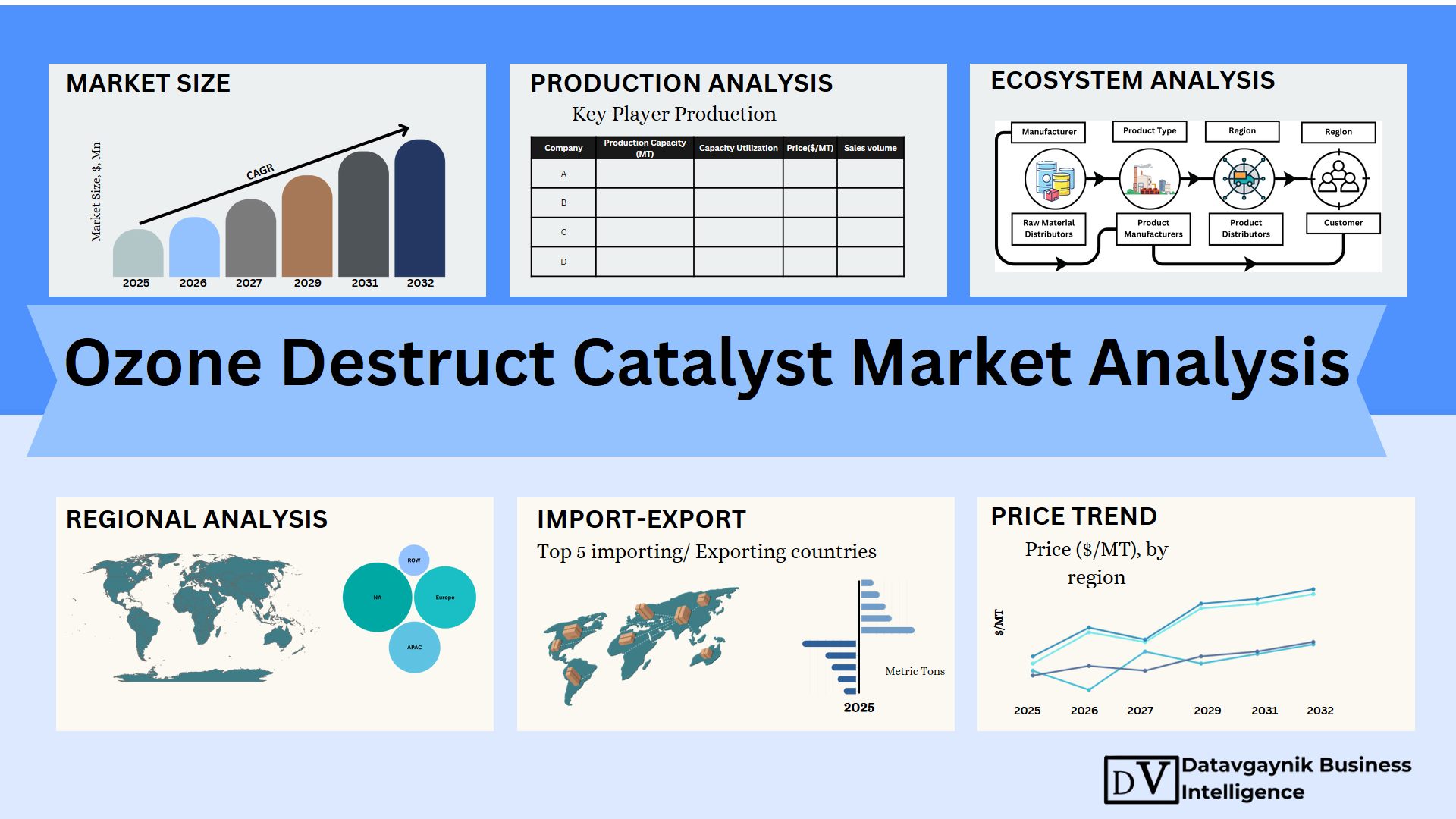
The Ozone Destruct Catalyst Market is undergoing a transformative shift, driven by the surge in industrial applications where ozone is used for sterilization, oxidation, and purification processes. Industrial sectors such as semiconductor manufacturing, water treatment, pharmaceuticals, and food processing are witnessing robust growth, and with that comes an increased need to manage residual ozone safely and efficiently.
For instance, in the semiconductor industry, ozone is extensively employed in wafer cleaning and photolithography processes. The global semiconductor manufacturing equipment market is forecasted to exceed $150 billion by 2026, growing at a CAGR of over 9%. This rising demand for semiconductor components, particularly in EVs, AI technologies, and consumer electronics, directly amplifies the requirement for ozone-based etching and cleaning systems—thereby bolstering the Ozone Destruct Catalyst Market. Without efficient ozone destruct catalysts, these facilities risk equipment corrosion and compromised cleanroom standards.
Environmental Compliance Fueling Ozone Destruct Catalyst Market Growth
Stringent regulatory frameworks focused on air quality and industrial emissions are a major force accelerating the expansion of the Ozone Destruct Catalyst Market. Regulatory agencies across major economies are enforcing tighter exposure limits on ozone emissions, particularly in enclosed environments such as hospitals, semiconductor cleanrooms, and food processing units.
For example, the Occupational Safety and Health Administration (OSHA) mandates an ozone exposure limit of 0.1 ppm over an 8-hour time-weighted average. As industrial and commercial ozone usage rises, so does the necessity for ozone destruct systems that comply with such safety thresholds. This regulatory landscape ensures a sustained demand trajectory for ozone destruction technologies, embedding catalysts as an integral part of facility infrastructure.
Ozone Destruct Catalyst Market Size Supported by Water Treatment Industry Expansion
The Ozone Destruct Catalyst Market Size is significantly influenced by the global expansion of municipal and industrial water treatment facilities. As per Datavagyanik, the global water treatment market is projected to surpass $300 billion by 2030, with ozone-based disinfection systems accounting for a rapidly increasing share due to their non-toxic and residue-free advantages.
Municipalities across North America, Europe, and Asia are scaling their wastewater treatment capabilities in response to both population growth and tightening water safety norms. For instance, ozone is used to eliminate bacteria, viruses, and pharmaceuticals from effluents without creating harmful byproducts like chlorine does. However, the residual ozone must be neutralized before discharge, a function served by ozone destruct catalysts. This growing infrastructure development directly correlates with a parallel rise in demand for high-performance catalytic ozone destruction units.
Healthcare and Pharmaceutical Growth Strengthens Ozone Destruct Catalyst Market
The Ozone Destruct Catalyst Market is also witnessing a surge in demand due to rising applications in healthcare and pharmaceutical environments. Hospitals, laboratories, and cleanrooms use ozone for sterilization due to its ability to eliminate pathogens without leaving chemical residues.
The global healthcare sterilization equipment market is growing at a CAGR of 7.8% and is expected to reach $15 billion by 2028. Within this ecosystem, ozone is increasingly preferred for sterilizing surgical tools, air ducts, and lab environments. However, due to the toxicity of ozone at even low concentrations, medical facilities are mandated to deploy ozone destruct systems to maintain safe air quality. This direct dependency makes the healthcare sector a critical driver for the Ozone Destruct Catalyst Market.
Air Purification Trends Enhancing Ozone Destruct Catalyst Market Prospects
A notable driver shaping the Ozone Destruct Catalyst Market is the rising adoption of ozone-based air purifiers in commercial, industrial, and residential sectors. Indoor air quality concerns have prompted organizations to deploy advanced purification systems, especially in densely populated urban areas.
Global demand for air purification systems is projected to grow at a CAGR of 8.5%, reaching over $45 billion by 2030. Ozone is commonly used in these systems for its oxidizing power; however, post-purification, the excess ozone must be safely neutralized. This functional requirement has fueled the demand for compact, efficient, and long-lasting ozone destruct catalysts, particularly in high-traffic environments such as airports, hospitals, schools, and office buildings.
Technological Advancements Elevating Ozone Destruct Catalyst Market Efficiency
Innovations in catalyst materials and reactor designs are expanding the capabilities of the Ozone Destruct Catalyst Market. The development of highly porous materials like manganese dioxide, advanced zeolites, and metal oxides such as copper and cobalt has increased the efficacy and lifespan of ozone destruct catalysts under diverse operating conditions.
For example, thermal catalytic destruction systems that operate at high temperatures are now being optimized to consume less energy while handling larger ozone volumes. Similarly, ambient temperature catalysts are gaining popularity in HVAC and residential systems due to their cost-effectiveness and ease of integration. These technological advancements are not only widening the application scope but also enhancing the economic viability of ozone destruction across industries.
Ozone Destruct Catalyst Market Taps into Green Technology Movement
The push for greener, non-chlorine-based disinfection methods has led industries to adopt ozone solutions over traditional chemical treatments. However, sustainable use of ozone depends on safe neutralization of residual ozone, making destruction catalysts essential for environmentally responsible operations.
Industries are under growing pressure to reduce their environmental footprint. For instance, the food and beverage sector, which increasingly uses ozone for microbial control, needs ozone destruct systems to comply with safety and emissions standards. The trend toward zero-waste processing and sustainable packaging aligns with the need for eco-friendly ozone neutralization, positioning the Ozone Destruct Catalyst Market as a crucial enabler of green industrial transformation.
Aerospace and Defense Applications Creating Niche Opportunities in Ozone Destruct Catalyst Market
High-altitude aircraft cabins naturally accumulate ozone, which can cause health issues like headaches, fatigue, and respiratory discomfort for passengers and crew. Modern aircraft are therefore equipped with ozone destruct units in their air systems.
With global air traffic projected to double by 2040, and newer aircraft models incorporating advanced cabin air purification, the aerospace sector is emerging as a strategic vertical within the Ozone Destruct Catalyst Market. Military aircraft, long-haul commercial jets, and space-bound vehicles all require compact, high-efficiency catalysts to remove ozone from recirculated air. This niche yet high-value application segment offers growth avenues for specialized catalyst manufacturers.
Smart Cities and Infrastructure Modernization Boost Ozone Destruct Catalyst Market
Urbanization and the rise of smart city projects globally are catalyzing investments in air and water treatment infrastructure. From metro stations to corporate campuses and smart homes, ozone technologies are being integrated for odor control, disinfection, and purification.
As urban centers implement stricter air quality measures and intelligent environmental monitoring systems, the role of ozone destruct catalysts becomes central to achieving sustainability goals. For example, in commercial real estate, integrated building management systems increasingly rely on ozone-based sterilization, which in turn requires embedded ozone destruction components to ensure occupant safety. This trend is expanding the Ozone Destruct Catalyst Market beyond traditional industrial applications.
Ozone Destruct Catalyst Market Size Underpinned by Global Sustainability Goals
The growing alignment of global industrial practices with sustainability frameworks such as ESG (Environmental, Social, and Governance) metrics is also influencing the Ozone Destruct Catalyst Market Size. Companies are increasingly being evaluated based on their environmental impact, including emission control measures.
Investments in green manufacturing, circular economy principles, and clean energy technologies all leverage ozone in some form. From hydrogen fuel cell production to solar panel cleaning and pharmaceutical manufacturing, ozone’s role is expanding, and so is the need to neutralize it post-process. This evolution underlines a strategic growth path for the Ozone Destruct Catalyst Market over the next decade.
“Track Country-wise Ozone Destruct Catalyst Production and Demand through our Ozone Destruct Catalyst Production Database”
-
-
- Ozone Destruct Catalyst production database for 32+ countries worldwide
- Ozone Destruct Catalyst sales volume for 32+ countries
- Country-wise Ozone Destruct Catalyst production capacity, production plant mapping, production capacity utilization for 32+ manufacturers
- Ozone Destruct Catalyst production plants and production plant capacity analysis by top manufacturers
-
“Track real-time Ozone Destruct Catalyst Prices, Ozone Destruct Catalyst price charts for 32+ countries, Ozone Destruct Catalyst weekly price tracker and Ozone Destruct Catalyst monthly price tracker”
-
-
- Track real-time Ozone Destruct Catalyst prices and Ozone Destruct Catalyst price trend in 32+ countries though our excel-based Ozone Destruct Catalyst price charts
- Real-time Ozone Destruct Catalyst price tracker dashboard with 32+ countries
- Complete transparency on Ozone Destruct Catalyst price trend through our Ozone Destruct Catalyst monthly price tracker, Ozone Destruct Catalyst weekly price tracker
-
North America Sets the Pace for Innovation in the Ozone Destruct Catalyst Market
The Ozone Destruct Catalyst Market in North America is expanding rapidly, driven by a convergence of regulatory enforcement and technological advancement. Industries such as semiconductor fabrication, pharmaceuticals, and advanced water treatment are central to this growth. For instance, the United States has over 16,000 publicly owned treatment works, many of which are shifting toward ozone-based disinfection due to stricter effluent standards. These plants require reliable ozone destruction systems to neutralize residual ozone before air release.
The growth of semiconductor manufacturing in Arizona and Texas is another major demand driver. As wafer processing lines scale up, so does the use of high-purity ozone, necessitating highly efficient catalyst systems. Datavagyanik notes that North America will continue to be a key innovator in the Ozone Destruct Catalyst Market as companies prioritize low-emission, high-efficiency systems.
Europe’s Sustainability Focus Accelerates the Ozone Destruct Catalyst Market
Europe represents a mature yet rapidly evolving region for the Ozone Destruct Catalyst Market. The European Union’s policies around zero pollution and air quality compliance are pushing industries to adopt advanced ozone management solutions. Countries such as Germany, France, and the Netherlands are witnessing increased demand across water utilities, cleanrooms, and food processing units.
Germany, with its leadership in chemicals and automotive manufacturing, has been a notable adopter of ozone destruct technologies. In clean-in-place operations within beverage bottling plants, ozone is preferred over harsh chemicals, but residual ozone must be managed precisely to meet workplace safety standards. The food-grade catalyst systems designed for this purpose are contributing significantly to the region’s market share.
Moreover, Europe’s aerospace sector creates niche opportunities. For example, aircraft manufacturing plants in France integrate ozone destruct catalysts into cabin air systems to eliminate ozone at cruising altitudes. As commercial air travel rebounds and sustainable aviation gains traction, this segment is expected to fuel further growth in the European Ozone Destruct Catalyst Market.
Asia Pacific Emerges as a High-Growth Zone for the Ozone Destruct Catalyst Market
Asia Pacific is registering the fastest growth in the Ozone Destruct Catalyst Market, driven by large-scale industrialization and growing environmental awareness. Countries such as China, India, Japan, and South Korea are at the forefront, especially in sectors like electronics manufacturing, healthcare, and water treatment.
China alone has over 3,000 wastewater treatment facilities, with more being built as urbanization increases. These plants are increasingly using ozone for disinfection, especially in coastal regions where marine discharge quality is tightly regulated. Additionally, China’s electronics sector, which accounts for nearly 30% of the global output, relies on ozone for wafer cleaning and oxidation, thereby demanding highly specialized catalyst systems to manage ozone residues.
India’s pharmaceutical manufacturing clusters in Hyderabad and Gujarat are turning to ozone sterilization due to its effectiveness and eco-friendly profile. As these sectors continue to expand with export-oriented production, the need for durable and cost-effective catalysts grows. Datavagyanik projects that Asia Pacific will represent over 40% of global catalyst demand within the next decade, as industries scale and diversify.
Middle East and Latin America Develop Emerging Demand in the Ozone Destruct Catalyst Market
Although relatively smaller in market share, the Middle East and Latin America are showing promising signs of growth in the Ozone Destruct Catalyst Market. In the Middle East, countries like the UAE and Saudi Arabia are investing heavily in advanced water reuse and desalination systems. These systems often deploy ozone as a disinfectant, requiring integrated ozone destruct units to ensure safe air emissions.
In Latin America, Brazil and Mexico are expanding their food and beverage production capacities. With growing preference for ozone over chlorine in food sterilization and packaging environments, the demand for ozone destruction solutions is gaining momentum. The increasing urban pollution and efforts toward air quality management in major cities are also contributing to the regional uptick in catalyst usage.
Segmentation by Catalyst Type Fuels Tailored Growth in the Ozone Destruct Catalyst Market
The Ozone Destruct Catalyst Market is segmented by material type, and each catalyst variant plays a unique role across industries. Manganese dioxide-based catalysts are among the most widely used due to their high activity at room temperature and cost-efficiency. These are often found in HVAC systems for commercial and residential air purification.
Activated carbon-based catalysts serve lower temperature environments and are prominent in indoor settings like hospitals and office spaces. On the other hand, metal oxide catalysts, such as copper and cobalt oxides, dominate high-temperature industrial applications such as semiconductor processing lines and chemical manufacturing plants.
Zeolite-based catalysts are emerging as a specialized option for targeted adsorption and catalytic breakdown of ozone in critical air zones, particularly where odor control is also required. Each segment addresses distinct challenges, providing manufacturers an opportunity to diversify portfolios and enhance value propositions across the Ozone Destruct Catalyst Market.
Application Segments Define Demand Hotspots in the Ozone Destruct Catalyst Market
Key application segments in the Ozone Destruct Catalyst Market include water treatment, semiconductor fabrication, healthcare sterilization, food processing, and indoor air quality management. Water and wastewater treatment remains the dominant segment, supported by rising public investment in infrastructure. For example, the addition of ozone treatment modules in new plants creates repeat demand for destruction systems during both installation and maintenance cycles.
In semiconductor facilities, cleanroom standards are non-negotiable, requiring ultra-pure environments. Ozone, while essential for micro-level cleaning, must be decomposed efficiently to prevent trace contamination. Catalyst systems in this space often include high-efficiency, long-lifecycle designs.
Healthcare and pharmaceutical applications are growing as hospitals adopt ozone-based room disinfection for infection control. In these controlled environments, even minor ozone leaks are unacceptable, which necessitates robust catalytic destruction. Similarly, in food processing, the use of ozone for shelf-life extension and pathogen control must be balanced with effective ozone removal, especially in enclosed packaging zones.
Ozone Destruct Catalyst Price and Affordability Trends Reflect Market Maturity
Ozone Destruct Catalyst Price trends vary by region, material type, and application. In mature markets like North America and Europe, prices are stabilizing due to competition and volume manufacturing. For example, the average Ozone Destruct Catalyst Price in industrial-grade systems ranges between $800 and $1,500 per unit depending on specifications and lifecycle performance.
In Asia, however, lower labor and material costs have led to more competitive pricing. As a result, the region is emerging not only as a consumer but also as a significant exporter. The average Ozone Destruct Catalyst Price in Asia is 15–20% lower compared to the global average, especially in standard HVAC-compatible systems.
The Ozone Destruct Catalyst Price Trend is shifting in favor of modular, service-based pricing models. Industrial buyers now seek not only initial cost savings but also lifetime performance metrics. Catalysts with longer replacement intervals, higher throughput capacity, and recyclability are commanding premium prices. This price-performance shift is expected to deepen as sustainability benchmarks tighten.
Raw Material Costs and Innovation Shape the Ozone Destruct Catalyst Price Trend
Raw material availability directly impacts the Ozone Destruct Catalyst Price Trend. Manganese, activated carbon, and metal oxides such as cobalt and nickel are the primary components in most catalyst systems. Global fluctuations in metal prices can therefore influence short-term cost dynamics.
For example, during periods of cobalt supply constraints, manufacturers tend to shift to alternative metal oxides, which may lower performance but stabilize prices. On the other hand, innovation in low-metal or hybrid catalysts is helping to insulate the Ozone Destruct Catalyst Market from price shocks.
The increasing use of nanomaterials and surface-coating technologies has enabled the production of catalysts with higher efficiency at lower material volumes, offering price resilience. As these innovations scale, Datavagyanik expects the Ozone Destruct Catalyst Price Trend to moderate, with price-per-performance ratio improving across most segments.
Distribution Channels Evolve Alongside the Ozone Destruct Catalyst Market
The Ozone Destruct Catalyst Market is also witnessing changes in how products reach end users. Direct sales remain dominant for industrial and municipal projects, where large-scale customization and service integration are required. However, distributors and specialized dealers are playing a growing role in serving mid-sized enterprises and commercial facilities.
E-commerce platforms are beginning to influence the residential and small-business segments, particularly for plug-and-play air purification systems. These channels offer rapid delivery and customer education, making it easier for newer buyers to access ozone destruction solutions. The broader adoption of online configuration tools is also enabling buyers to match catalyst models with their specific operational parameters, enhancing purchase efficiency.
Global Supply Chain Developments Impact the Ozone Destruct Catalyst Market
Geopolitical developments and pandemic-induced disruptions have brought attention to the fragility of catalyst supply chains. Countries that relied heavily on imports are now seeking to localize production. For example, initiatives in India and Southeast Asia are offering incentives for domestic catalyst manufacturing, aiming to reduce dependency on overseas suppliers.
At the same time, global manufacturers are diversifying their sourcing strategies. Multinational companies are forming regional hubs to mitigate risks, stabilize pricing, and improve lead times. These developments are expected to create a more balanced and resilient supply framework for the Ozone Destruct Catalyst Market over the next decade.
“Ozone Destruct Catalyst Manufacturing Database, Ozone Destruct Catalyst Manufacturing Capacity”
-
-
- Ozone Destruct Catalyst top manufacturers market share for 32+ manufacturers
- Top 12 manufacturers and top 19 manufacturers of Ozone Destruct Catalyst in North America, Europe, Asia Pacific
- Ozone Destruct Catalyst production plant capacity by manufacturers and Ozone Destruct Catalyst production data for 32+ market players
- Ozone Destruct Catalyst production dashboard, Ozone Destruct Catalyst production data in excel format
-
“Ozone Destruct Catalyst price charts, Ozone Destruct Catalyst weekly price tracker and Ozone Destruct Catalyst monthly price tracker”
-
-
- Factors impacting real-time Ozone Destruct Catalyst prices in 32+ countries worldwide
- Ozone Destruct Catalyst monthly price tracker, Ozone Destruct Catalyst weekly price tracker
- Real-time Ozone Destruct Catalyst price trend, Ozone Destruct Catalyst price charts, news and updates
- Tracking Ozone Destruct Catalyst price fluctuations
-
Global Leaders Shaping the Ozone Destruct Catalyst Market
The Ozone Destruct Catalyst Market is led by a concentrated group of manufacturers who dominate through technological innovation, global distribution networks, and strong relationships across end-use industries. These players have established credibility by offering consistent performance, long catalyst life, and regulatory compliance across high-demand applications such as semiconductor manufacturing, air purification, and advanced water treatment systems.
Among the key manufacturers in this space are Applied Ceramics, Ducon Technologies, Lenntech, A-1 Air Filters, and Seibu Giken. These companies account for a large portion of the global Ozone Destruct Catalyst Market share, particularly in North America, Europe, and Asia Pacific. Datavagyanik estimates that the top five players together control over 60% of the global market volume.
Applied Ceramics Holds a Leadership Position with High-Performance Product Lines
Applied Ceramics is a dominant name in the Ozone Destruct Catalyst Market, offering a range of high-efficiency catalytic systems designed for semiconductor fabs, pharmaceutical cleanrooms, and aerospace applications. The company’s flagship product line, CeramPure, is known for its robust performance at high ozone concentrations and in elevated temperature environments.
CeramPure catalysts are often integrated into air handling units where ozone removal is critical to prevent corrosion of sensitive electronic equipment. With a global footprint that includes manufacturing and distribution hubs in the United States, Europe, and Asia, Applied Ceramics is considered a go-to supplier for mission-critical applications. The company alone accounts for approximately 20% of global market share, particularly dominating the semiconductor sector.
Ducon Technologies Drives Demand Through Turnkey Environmental Systems
Ducon Technologies offers a broad portfolio of environmental solutions, with its ozone destruct catalysts integrated into multi-functional air pollution control systems. The company’s proprietary destruction units are used across chemical, oil and gas, and manufacturing industries where high ozone emissions require safe handling.
Ducon’s edge lies in providing customized turnkey systems that incorporate ozone destruct catalysts with thermal and wet scrubbing technologies. This integrated approach makes it highly attractive to industries looking to meet environmental compliance without piecemeal solutions. The company is estimated to hold nearly 15% of the Ozone Destruct Catalyst Market share, especially within heavy industrial sectors.
Lenntech Gains Strength Through Water Treatment Specialization
Lenntech is widely recognized for its expertise in water treatment, and this specialization gives it a competitive advantage in the Ozone Destruct Catalyst Market. The company’s Ozone Off-Gas Destruct Units are commonly installed in wastewater treatment facilities and municipal drinking water plants where ozone is used for disinfection.
Lenntech’s units feature high-capacity catalysts suited for low-maintenance operation and continuous airflow environments. The company has gained a significant footprint in Europe and the Middle East, where water reuse and desalination plants are driving catalyst demand. Its market share is estimated at around 10%, with a strong position in the public infrastructure segment.
A-1 Air Filters and Seibu Giken Carve Niche Markets
A-1 Air Filters has built a reputation for offering compact and portable ozone destruct units that cater to indoor air quality applications in residential and commercial buildings. Its air purification product line, known as OzoneClean, is deployed in hospitals, data centers, and clean office spaces where space constraints and noise sensitivity are critical. While its overall market share is smaller, at approximately 5%, the company commands significant loyalty in the commercial HVAC segment.
Seibu Giken, a Japanese manufacturer, is notable for combining ozone destruct catalysts with advanced desiccant rotor technology. This hybrid design is popular in semiconductor cleanrooms and precision labs where both humidity and ozone levels must be controlled. Seibu Giken’s technological innovation and penetration in East Asia contribute to its 6–7% share in the Ozone Destruct Catalyst Market, particularly in Japan and South Korea.
Emerging Players and Regional Manufacturers Expanding Market Access
Several regional manufacturers are gradually expanding their presence in the global Ozone Destruct Catalyst Market. Companies based in India, China, and Southeast Asia are increasing their production capacities to serve domestic demand while entering new export markets. These players typically offer cost-competitive solutions for mid-scale installations in air purification, food processing, and small industrial setups.
Their growth is supported by government incentives to localize environmental technology manufacturing and reduce dependency on imports. While each may hold a small market share individually—typically below 2%—together they represent an emerging competitive force that could reshape pricing dynamics over the coming years.
Market Share Distribution Highlights a Tiered Competitive Landscape
The overall Ozone Destruct Catalyst Market share distribution reveals a tiered structure. The top three manufacturers—Applied Ceramics, Ducon Technologies, and Lenntech—collectively account for approximately 45% of the global market. Mid-tier companies such as A-1 Air Filters and Seibu Giken control another 10–15%, primarily through specialization and regional strength. The remaining 40% is fragmented among niche players, new entrants, and regional manufacturers.
This distribution reflects a balance between technological differentiation and application-specific demand. High-performance segments like semiconductor and aerospace remain under the purview of established players, while the commoditized air purification and municipal water treatment applications provide entry points for smaller firms.
Recent Developments Reshape Competition in the Ozone Destruct Catalyst Market
Recent events have reshaped the strategic focus of key players in the Ozone Destruct Catalyst Market. In April 2024, Applied Ceramics announced the expansion of its manufacturing facility in Singapore to cater to increasing demand from semiconductor clients in Southeast Asia. The move is expected to enhance delivery timelines and service support in one of the world’s fastest-growing chip manufacturing hubs.
In January 2025, Lenntech launched an upgraded ozone destruct unit for high-flow municipal water plants, with redesigned catalyst beds for increased throughput and lower pressure drop. This development is aimed at winning large-scale public contracts in Europe and the Middle East.
Meanwhile, Ducon Technologies entered into a strategic partnership with a Middle Eastern petrochemical company in late 2024 to provide integrated air pollution control systems including ozone destruction modules. This partnership is expected to open new avenues in oil and gas sector applications where ozone is used in oxidative desulfurization processes.
Additionally, smaller players are investing in R&D to compete with next-generation catalyst materials. In March 2025, a Southeast Asian manufacturer introduced a photocatalytic ozone destruct unit using titanium dioxide composites, targeting energy-efficient indoor systems.
These developments highlight the dynamic nature of the Ozone Destruct Catalyst Market, where innovation, regional strategy, and customization are key levers of competitiveness.
“Ozone Destruct Catalyst Production Data and Ozone Destruct Catalyst Production Trend, Ozone Destruct Catalyst Production Database and forecast”
-
-
- Ozone Destruct Catalyst production database for historical years, 12 years historical data
- Ozone Destruct Catalyst production data and forecast for next 12 years
- Ozone Destruct Catalyst sales volume by manufacturers
-
“Track Real-time Ozone Destruct Catalyst Prices for purchase and sales contracts, Ozone Destruct Catalyst price charts, Ozone Destruct Catalyst weekly price tracker and Ozone Destruct Catalyst monthly price tracker”
-
-
- Gain control on your purchase and sales contracts through our real-time Ozone Destruct Catalyst price tracker and Ozone Destruct Catalyst price trend analysis
- Ozone Destruct Catalyst weekly price tracker and forecast for next four weeks
- Ozone Destruct Catalyst monthly price tracker and forecast for next two months
-
Market Scenario, Demand vs Supply, Average Product Price, Import vs Export, till 2035
- Global Ozone Destruct Catalyst Market revenue and demand by region
- Global Ozone Destruct Catalyst Market production and sales volume
- United States Ozone Destruct Catalyst Market revenue size and demand by country
- Europe Ozone Destruct Catalyst Market revenue size and demand by country
- Asia Pacific Ozone Destruct Catalyst Market revenue size and demand by country
- Middle East & Africa Ozone Destruct Catalyst Market revenue size and demand by country
- Latin America Ozone Destruct Catalyst Market revenue size and demand by
- Import-export scenario – United States, Europe, APAC, Latin America, Middle East & Africa
- Average product price – United States, Europe, APAC, Latin America, Middle East & Africa
- Market player analysis, competitive scenario, market share analysis
- Business opportunity analysis
Key questions answered in the Global Ozone Destruct Catalyst Market Analysis Report:
- What is the market size for Ozone Destruct Catalyst in United States, Europe, APAC, Middle East & Africa, Latin America?
- What is the yearly sales volume of Ozone Destruct Catalyst and how is the demand rising?
- Who are the top market players by market share, in each product segment?
- Which is the fastest growing business/ product segment?
- What should be the business strategies and Go to Market strategies?
The report covers Ozone Destruct Catalyst Market revenue, Production, Sales volume, by regions, (further split into countries):
- Asia Pacific (China, Japan, South Korea, India, Indonesia, Vietnam, Rest of APAC)
- Europe (UK, Germany, France, Italy, Spain, Benelux, Poland, Rest of Europe)
- North America (United States, Canada, Mexico)
- Latin America (Brazil, Argentina, Rest of Latin America)
- Middle East & Africa
Table of Contents:
Ozone Destruct Catalyst Market:
- Introduction to Ozone Destruct Catalysts
- Overview of Ozone Depletion and the Need for Ozone Destruction Catalysts
- Role of Catalysts in Environmental Protection and Ozone Layer Preservation
- Key Applications of Ozone Destruct Catalysts in Industrial Processes
- Chemistry and Mechanism of Ozone Destruction
- Chemical Reactions Involved in Ozone Destruction
- Catalytic Mechanism for Ozone Decomposition
- Importance of Catalytic Activity in Enhancing Ozone Destruction Efficiency
- Types of Ozone Destruct Catalysts
- Metal-Based Catalysts: Platinum, Palladium, and Other Precious Metals
- Transition Metal Oxides and Their Role in Ozone Degradation
- Innovative Catalytic Materials for Ozone Destruction
- Applications of Ozone Destruct Catalysts
- Industrial Emission Control: Ozone Depletion in Air and Water Treatment
- Use in Refrigeration, Air Conditioning, and Chemical Manufacturing
- Applications in Environmental Remediation and Pollution Control
- Market Overview of Ozone Destruct Catalysts
- Current Market Size and Forecasted Growth (2025-2040)
- Market Drivers: Regulatory Policies and Environmental Concerns
- Challenges in the Ozone Destruct Catalyst Market
- Regional Market Insights
- North America: Environmental Regulations and Market Demand
- Europe: Impact of Stricter Ozone Control Regulations
- Asia-Pacific: Growth Opportunities and Emerging Markets
- Latin America and Middle East: Regulatory Developments and Market Growth
- Technological Innovations in Ozone Destruction Catalysts
- Advanced Catalytic Materials for Higher Efficiency
- Innovations in Catalyst Longevity and Regeneration
- New Techniques for Improving Selectivity in Ozone Destruction
- Economic Impact and Pricing Trends
- Cost Structures in the Ozone Destruct Catalyst Market
- Price Fluctuations and Their Impact on Market Dynamics
- Economic Benefits of Implementing Efficient Ozone Destruct Catalysts
- Sustainability and Environmental Impact
- Environmental Benefits of Ozone Destruct Catalysts in Reducing Pollution
- Catalysts’ Role in Mitigating Ozone Depletion and Global Warming
- Life Cycle Assessment (LCA) of Ozone Destruct Catalysts
- Competitive Landscape in the Ozone Destruct Catalyst Market
- Key Market Players and Competitive Strategies
- Role of Research and Development in Gaining Market Share
- Mergers, Acquisitions, and Collaborations in the Catalyst Industry
- Regulatory Framework for Ozone Destruction Catalysts
- Global and Regional Ozone Layer Protection Regulations
- Standards for Ozone Depletion and Emissions Control
- Compliance Challenges for Catalyst Manufacturers and Users
- Challenges in the Ozone Destruct Catalyst Market
- Catalyst Efficiency vs. Cost Considerations
- Handling Catalyst Deactivation and Longevity
- Overcoming Material and Technological Limitations
- Investment Opportunities in Ozone Destruct Catalysts
- Investment in Sustainable Catalyst Technologies
- Potential Growth Areas in Emerging Economies
- Funding Trends and Market Entry Strategies
- Raw Materials and Supply Chain for Ozone Destruct Catalysts
- Sourcing and Availability of Raw Materials for Catalyst Production
- Impact of Material Shortages on Catalyst Manufacturing
- Supply Chain Dynamics and Global Logistics for Catalysts
- Consumer Demand and Industry Preferences
- Demand for Environmentally Friendly and Efficient Catalysts
- Shifting Preferences in Industrial and Commercial Applications
- Impact of Consumer Awareness on the Ozone Destruct Catalyst Market
- Research and Development in Ozone Destruction Catalysts
- Key Areas of Research in Catalyst Design and Performance
- Collaborative Research in Environmental Catalysis
- Promising Innovations in Ozone Destruction Technologies
- Case Studies in Ozone Destruction and Catalysis
- Successful Industrial Applications of Ozone Destruct Catalysts
- Real-World Examples of Ozone Depletion Control in Different Sectors
- Lessons Learned from Implementation and Trials
- Future Outlook for the Ozone Destruct Catalyst Market
- Long-Term Market Projections and Emerging Trends
- Impact of Policy and Technological Advancements on Market Growth
- Predictions for Market Developments Beyond 2040
- Key Insights and Industry Recommendations
- Strategic Insights for Manufacturers and Industry Stakeholders
- Recommendations for Effective Market Penetration and Growth
- Future Directions in Ozone Destruction and Environmental Catalysis
- Concluding Remarks
- Summary of Key Findings in the Ozone Destruct Catalyst Market
- Importance of Ozone Destruct Catalysts in Global Environmental Health
- Final Thoughts on the Future of the Ozone Destruction Technology
Other recently published reports:

