

Surging Demand for Moisture-Sensitive Drug Stability Drives Pharmaceutical Packaging Adsorbents Market
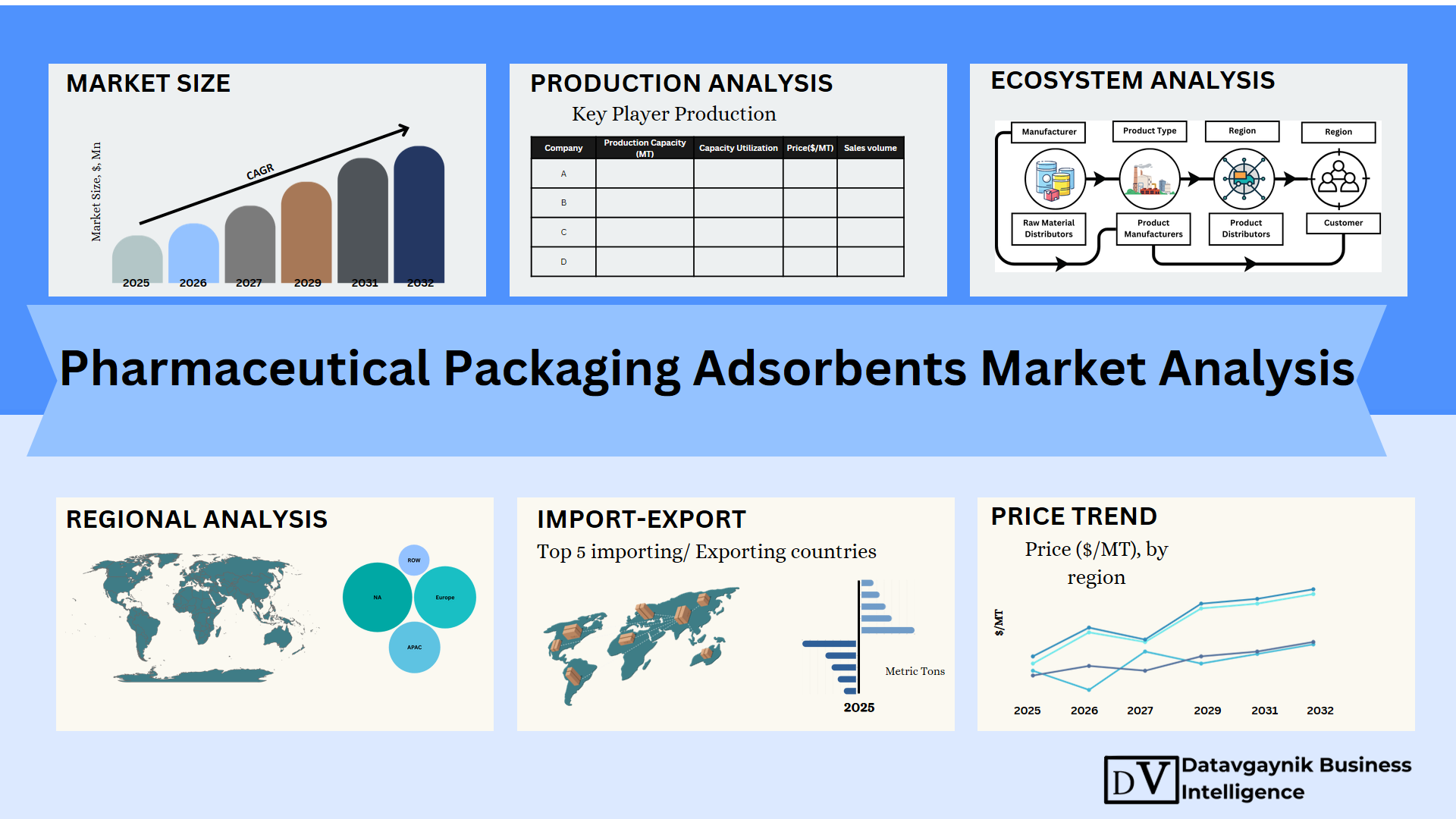
The Pharmaceutical Packaging Adsorbents Market is witnessing robust expansion, propelled by the rising demand for moisture-sensitive pharmaceutical formulations. For instance, biologics, biosimilars, and advanced injectable drugs are exceptionally sensitive to environmental elements such as humidity and oxygen. As the pharmaceutical industry continues shifting toward high-value, precision-based treatments, demand for packaging solutions that ensure environmental control has increased exponentially.
The use of adsorbents such as silica gel, activated carbon, molecular sieves, and calcium oxide plays a central role in preserving the efficacy and stability of these complex drugs. With over 40% of newly approved drugs now categorized as moisture-sensitive, maintaining microclimatic stability inside packaging is no longer optional but a strategic requirement. Consequently, the Pharmaceutical Packaging Adsorbents Market Size is poised for sustained growth, reflecting both the surge in drug development and the regulatory focus on quality assurance.
Biopharmaceutical Revolution Fueling the Pharmaceutical Packaging Adsorbents Market
The exponential rise in biopharmaceuticals has become a key engine powering the Pharmaceutical Packaging Adsorbents Market. The global biopharmaceutical sector, valued at over $400 billion and growing at a CAGR of more than 9%, is increasingly reliant on packaging that preserves product integrity during storage and distribution. For example, monoclonal antibodies, cell therapies, and mRNA-based vaccines all require stringent moisture and oxygen control.
As these therapies are often freeze-dried or stored in vials and ampoules, the role of adsorbents becomes pivotal. The integration of moisture-absorbing canisters and oxygen scavengers in biopharmaceutical packaging ensures that drug potency is not compromised. This evolution in drug delivery formats is driving innovation in the Pharmaceutical Packaging Adsorbents Market, as packaging solutions must evolve alongside drug complexity.
Regulatory Standards as a Catalyst for Pharmaceutical Packaging Adsorbents Market Expansion
Compliance with global regulatory frameworks is acting as both a driver and differentiator within the Pharmaceutical Packaging Adsorbents Market. Regulatory agencies such as the FDA, EMA, and ICH emphasize the critical role of packaging in ensuring drug stability, patient safety, and shelf-life extension. For instance, pharmaceutical products exposed to humidity above 40% relative humidity (RH) have shown degradation in active pharmaceutical ingredients (APIs), leading to compromised efficacy.
Packaging that fails to meet environmental control standards faces delayed approvals and market recalls. As a result, pharmaceutical manufacturers are proactively investing in advanced adsorbent solutions that not only ensure compliance but also support brand reputation. The growing number of drugs failing real-time stability tests underscores the urgency of integrating adsorbent technologies within pharmaceutical packaging strategies, directly contributing to the expansion of the Pharmaceutical Packaging Adsorbents Market.
Explosive Growth in Pharmaceutical Manufacturing Accelerating Adsorbent Demand
Global pharmaceutical production is scaling up significantly, with emerging markets such as India, China, and Brazil playing a central role. India alone contributes to over 20% of the global supply of generic medicines and is projected to see a production increase of 12% annually through 2030. This rapid growth necessitates robust packaging infrastructure, creating a surge in demand for adsorbents used in large-scale pharmaceutical packaging.
For example, high-volume tablet manufacturing facilities are integrating desiccant sachets, canisters, and active barrier systems to prevent humidity-induced degradation. The resulting impact on the Pharmaceutical Packaging Adsorbents Market is clear: increased production volumes require cost-effective yet high-performance adsorbents that can withstand variable storage and shipping conditions across global supply chains.
Growing Focus on Drug Shelf-Life Enhancement Boosts Pharmaceutical Packaging Adsorbents Market
Shelf-life stability is emerging as a high-priority metric in pharmaceutical quality management. Products that maintain potency over extended periods reduce waste, lower costs, and enhance patient compliance. Moisture and oxygen exposure are two leading causes of early drug degradation, affecting both solid and liquid dosage forms.
The integration of adsorbents in pharmaceutical packaging, such as molecular sieves that maintain RH below 10% or oxygen scavengers that reduce oxidative stress, significantly prolongs product shelf life. As an example, solid oral dosages stored with integrated silica gel systems exhibit 30% longer stability compared to standard blister packs. This focus on extended usability is a key force pushing the Pharmaceutical Packaging Adsorbents Market forward.
Cold Chain Logistics Growth Reinforces Pharmaceutical Packaging Adsorbents Market Development
Temperature-sensitive logistics, particularly for vaccines and biologics, is experiencing double-digit growth across global markets. Cold chain shipments are projected to reach over $20 billion in value by 2026, driven by mRNA vaccines, gene therapies, and biologic injectables. In such logistics environments, condensation risk is a persistent threat, requiring effective adsorbent integration.
Pharmaceutical packaging adsorbents play a critical role in maintaining environmental stability during transportation. For example, specialized desiccants designed for low-temperature absorption prevent product contamination caused by cold-induced moisture accumulation. This necessity enhances the strategic importance of the Pharmaceutical Packaging Adsorbents Market, as pharmaceutical companies seek to de-risk global distribution.
Smart and Active Packaging Driving a Paradigm Shift in Pharmaceutical Packaging Adsorbents Market
Innovation in smart and active packaging is redefining the capabilities of the Pharmaceutical Packaging Adsorbents Market. Beyond passive moisture absorption, new systems now integrate sensors, indicators, and responsive materials that adjust to environmental changes in real time.
For instance, active packaging solutions equipped with time-temperature indicators and RH sensors not only absorb moisture but also provide visibility into packaging performance. These solutions are particularly useful in global supply chains where real-time condition monitoring can prevent product loss. The rise in smart packaging demand is creating a premium segment within the Pharmaceutical Packaging Adsorbents Market, attracting pharmaceutical players seeking data-driven stability assurance.
Eco-Conscious Innovations Fueling Sustainable Pharmaceutical Packaging Adsorbents Market
The global shift toward sustainable practices is influencing pharmaceutical packaging strategies. Brands are under increasing pressure to reduce environmental footprints without compromising product safety. This has led to a rise in demand for biodegradable and recyclable adsorbent materials within the Pharmaceutical Packaging Adsorbents Market.
For example, paper-based desiccant sachets and compostable molecular sieve carriers are being adopted by manufacturers who aim to meet sustainability benchmarks while maintaining drug efficacy. Pharmaceutical companies are evaluating lifecycle impacts of their packaging, and eco-friendly adsorbents offer a tangible solution. The push for sustainable innovation is not only reshaping material preferences but also setting new standards across the Pharmaceutical Packaging Adsorbents Market landscape.
Complex Drug Formulations Requiring Next-Gen Adsorbents to Safeguard Stability
With the increasing complexity of drug formulations—ranging from orally disintegrating tablets to sublingual films and transdermal patches—the demand for highly specialized adsorbent solutions is escalating. These advanced dosage forms are especially vulnerable to environmental degradation, requiring packaging with ultra-low residual moisture content.
For instance, molecular sieves with pore sizes engineered to match moisture molecule sizes are now being embedded in flexible packaging to protect sensitive APIs. The growing number of drugs formulated using novel delivery mechanisms is directly influencing the product development pipeline within the Pharmaceutical Packaging Adsorbents Market. This complexity demands not just high adsorption capacity but also compatibility with a broad spectrum of pharmaceutical compounds.
Rising Chronic Disease Burden Escalates Need for Long-Term Drug Packaging Solutions
The rising global burden of chronic diseases—diabetes, cardiovascular disorders, and cancer—has led to a surge in the production of long-term medications. These products often require multi-month storage and distribution cycles, necessitating packaging solutions that offer robust protection against environmental exposure.
For example, diabetes medications such as insulin and oral antihyperglycemics often include silica gel or oxygen absorbers in their packaging to preserve stability. With chronic diseases expected to account for over 70% of all global deaths by 2030, the demand for resilient packaging will intensify. This directly strengthens the growth trajectory of the Pharmaceutical Packaging Adsorbents Market, especially in segments focused on extended-release and temperature-sensitive drugs.
“Track Country-wise Pharmaceutical Packaging Adsorbents Production and Demand through our Pharmaceutical Packaging Adsorbents Production Database”
-
-
- Pharmaceutical Packaging Adsorbents production database for 32+ countries worldwide
- Pharmaceutical Packaging Adsorbents sales volume for 32+ countries
- Country-wise Pharmaceutical Packaging Adsorbents production capacity, production plant mapping, production capacity utilization for 32+ manufacturers
- Pharmaceutical Packaging Adsorbents production plants and production plant capacity analysis by top manufacturers
-
“Track real-time Pharmaceutical Packaging Adsorbents Prices, Pharmaceutical Packaging Adsorbents price charts for 32+ countries, Pharmaceutical Packaging Adsorbents weekly price tracker and Pharmaceutical Packaging Adsorbents monthly price tracker”
-
-
- Track real-time Pharmaceutical Packaging Adsorbents prices and Pharmaceutical Packaging Adsorbents price trend in 32+ countries though our excel-based Pharmaceutical Packaging Adsorbents price charts
- Real-time Pharmaceutical Packaging Adsorbents price tracker dashboard with 32+ countries
- Complete transparency on Pharmaceutical Packaging Adsorbents price trend through our Pharmaceutical Packaging Adsorbents monthly price tracker, Pharmaceutical Packaging Adsorbents weekly price tracker
-
North America Drives Innovation in Pharmaceutical Packaging Adsorbents Market
The Pharmaceutical Packaging Adsorbents Market in North America is propelled by a high concentration of pharmaceutical manufacturing facilities, robust regulatory frameworks, and early adoption of advanced packaging technologies. The United States alone contributes a significant portion of global drug development output, with a large share involving moisture-sensitive formulations such as biosimilars, mRNA therapies, and injectable biologics. These drug types demand highly specialized adsorbent materials such as molecular sieves and activated carbon with precision-engineered porosity.
For example, biologic therapies stored in lyophilized vials require extreme control over internal humidity, often using desiccant canisters integrated directly into packaging. The demand for such integrated solutions is accelerating, reinforcing North America’s lead position in the Pharmaceutical Packaging Adsorbents Market.
Europe’s Pharmaceutical Excellence Accelerates Pharmaceutical Packaging Adsorbents Market Maturity
Europe represents a mature yet evolving segment within the global Pharmaceutical Packaging Adsorbents Market. Countries like Germany, France, and Switzerland are not only leading drug producers but also innovators in high-performance packaging materials. For instance, Germany’s extensive biologics production has led to widespread adoption of oxygen-scavenging packaging, enhancing drug shelf-life across Europe and export markets.
European manufacturers are also at the forefront of sustainable innovations. The region has seen growing preference for paper-based and biodegradable adsorbents, particularly in compliance with evolving environmental regulations. This shift toward green technologies is adding a new dimension to the Pharmaceutical Packaging Adsorbents Market in Europe, where sustainability and pharmaceutical precision now go hand in hand.
Asia Pacific Emerges as a High-Growth Hub in the Pharmaceutical Packaging Adsorbents Market
The Asia Pacific region is witnessing exponential growth in the Pharmaceutical Packaging Adsorbents Market, driven by expanding pharmaceutical manufacturing capabilities and increasing exports. India and China have established themselves as global pharmaceutical production powerhouses, contributing to over 70% of global generic drug exports. This growth trajectory directly elevates the demand for cost-effective yet high-quality packaging adsorbents.
For instance, Indian manufacturers are increasingly using silica gel sachets and activated carbon tablets for blister packaging in both domestic and international shipments. Meanwhile, China’s evolution into a biosimilar manufacturing center has fueled adoption of molecular sieves in lyophilized product packaging. The rising need for efficient cold chain logistics in Asia, particularly for vaccines, is further boosting demand for advanced adsorbent technologies across the region.
Latin America and Middle East Gaining Momentum in Pharmaceutical Packaging Adsorbents Market
While still emerging, Latin America and the Middle East are gaining traction in the Pharmaceutical Packaging Adsorbents Market. Brazil and Mexico have seen increased domestic drug production and regulatory tightening, which is prompting manufacturers to upgrade packaging standards. For instance, humidity-sensitive antibiotics and analgesics produced in Brazil are now packaged with dual-layer sachets containing desiccants, ensuring drug stability throughout regional distribution.
In the Middle East, markets like the UAE and Saudi Arabia are investing heavily in pharmaceutical infrastructure. The growing focus on vaccine manufacturing and health security in the Gulf countries is creating opportunities for customized adsorbents in high-sensitivity applications, reinforcing the strategic relevance of the Pharmaceutical Packaging Adsorbents Market in these regions.
Diversified Production Landscape Strengthens Global Pharmaceutical Packaging Adsorbents Market
The global Pharmaceutical Packaging Adsorbents Market is underpinned by a diversified production landscape spanning high-tech hubs in North America and Europe and high-volume manufacturing centers in Asia. In regions such as Japan and South Korea, production is geared toward high-performance adsorbents tailored for biologics and gene therapies, often incorporating smart sensors and active layers.
Conversely, China and India dominate the production of traditional silica gel and clay-based adsorbents, serving both domestic demand and export markets. This balance of innovation and volume is critical in maintaining global supply chain fluidity. For instance, a European vaccine manufacturer might use molecular sieves sourced from Japan but pair them with cost-effective sachets produced in India, showing the interconnected nature of the Pharmaceutical Packaging Adsorbents Market.
Pharmaceutical Packaging Adsorbents Market Segmentation Drives Targeted Innovation
Segmentation within the Pharmaceutical Packaging Adsorbents Market is sharpening focus across applications, materials, and drug types. Moisture control remains the dominant application, with over 60% of adsorbents used to manage internal humidity. Oxygen control is gaining prominence in biologics and specialty therapeutics, particularly those vulnerable to oxidation.
Material-wise, silica gel leads due to its affordability and versatility, while molecular sieves are preferred for extreme low-humidity requirements. Activated carbon finds niche application in odor and volatile compound control, such as with transdermal patches and over-the-counter drugs. The segmentation by dosage form further intensifies competition, as injectables and lyophilized products demand high-performance adsorbents, while solid dosages often opt for integrated cap systems and sachets.
This layered segmentation is critical to the Pharmaceutical Packaging Adsorbents Market, as it enables tailored solutions for varying drug stability challenges.
Specialty Drugs and Cold Chain Logistics Reshape Pharmaceutical Packaging Adsorbents Price Dynamics
The Pharmaceutical Packaging Adsorbents Price landscape is evolving with demand complexity. Traditional materials like silica gel remain cost-effective, with prices generally ranging from low to mid per kilogram depending on volume and grade. However, high-purity molecular sieves and smart adsorbents incorporating sensors command premium pricing due to advanced production methods and regulatory compliance requirements.
For instance, packaging adsorbents integrated with RFID tracking or time-temperature indicators may cost significantly more but offer quantifiable value in terms of drug protection. The rise in cold chain logistics is particularly impacting the Pharmaceutical Packaging Adsorbents Price Trend, as pharmaceutical companies are willing to pay more for adsorbents that can function reliably at sub-zero temperatures and handle condensation spikes during transit.
As more pharmaceutical players move toward personalized medicine and biologics, pricing differentiation based on performance and function will deepen across the Pharmaceutical Packaging Adsorbents Market.
Supply Chain Optimization Influencing Pharmaceutical Packaging Adsorbents Price Trend
Datavagyanik notes that global supply chain restructuring post-pandemic has also affected the Pharmaceutical Packaging Adsorbents Price Trend. Manufacturers are shifting toward regional sourcing models to minimize risk and transportation delays. This has led to moderate price increases in some categories due to localized production costs but improved availability and lead times.
For example, U.S.-based pharmaceutical firms are sourcing more from domestic adsorbent manufacturers to ensure uninterrupted supply, which has increased short-term costs but improved resilience. At the same time, mass producers in Asia have begun automating production lines to offset labor cost inflation, stabilizing prices for traditional adsorbent formats such as sachets and canisters.
This interplay between cost control and reliability is shaping a more nuanced Pharmaceutical Packaging Adsorbents Price Trend, particularly for multinational pharmaceutical supply chains.
Smart Packaging and Sustainability Introduce High-Value Segments in Pharmaceutical Packaging Adsorbents Market
As pharmaceutical packaging evolves, the Pharmaceutical Packaging Adsorbents Market is expanding into high-value segments led by smart and eco-conscious solutions. Smart packaging, such as adsorbents with embedded sensors or visual indicators, is gaining adoption among companies seeking to reduce waste and enhance quality assurance. These solutions often carry higher costs but deliver added value by providing real-time condition tracking and early warning mechanisms.
On the sustainability front, innovations in compostable desiccants and recyclable adsorbent carriers are opening new revenue channels. These offerings cater to the growing demand from both regulators and consumers for greener pharmaceutical packaging. Pharmaceutical brands integrating such solutions are not only enhancing shelf-life performance but also aligning with global sustainability goals, further elevating the strategic importance of the Pharmaceutical Packaging Adsorbents Market.
Regional Disparities in Pharmaceutical Packaging Adsorbents Price and Accessibility
While demand is global, disparities in Pharmaceutical Packaging Adsorbents Price and accessibility persist. Developed regions such as North America and Western Europe benefit from consistent access to advanced materials, albeit at higher price points. Emerging markets, though price-sensitive, are seeing gradual integration of premium adsorbents due to rising regulatory expectations and export ambitions.
For instance, Indian manufacturers supplying to Europe are increasingly adopting molecular sieve-based packaging despite higher costs, as the regulatory benefits outweigh the expense. This trend is shifting the Pharmaceutical Packaging Adsorbents Price Trend upward in traditionally cost-sensitive regions, signaling a long-term pivot toward quality-driven procurement.
“Pharmaceutical Packaging Adsorbents Manufacturing Database, Pharmaceutical Packaging Adsorbents Manufacturing Capacity”
-
-
- Pharmaceutical Packaging Adsorbents top manufacturers market share for 32+ manufacturers
- Top 12 manufacturers and top 19 manufacturers of Pharmaceutical Packaging Adsorbents in North America, Europe, Asia Pacific
- Pharmaceutical Packaging Adsorbents production plant capacity by manufacturers and Pharmaceutical Packaging Adsorbents production data for 32+ market players
- Pharmaceutical Packaging Adsorbents production dashboard, Pharmaceutical Packaging Adsorbents production data in excel format
-
“Pharmaceutical Packaging Adsorbents price charts, Pharmaceutical Packaging Adsorbents weekly price tracker and Pharmaceutical Packaging Adsorbents monthly price tracker”
-
-
- Factors impacting real-time Pharmaceutical Packaging Adsorbents prices in 32+ countries worldwide
- Pharmaceutical Packaging Adsorbents monthly price tracker, Pharmaceutical Packaging Adsorbents weekly price tracker
- Real-time Pharmaceutical Packaging Adsorbents price trend, Pharmaceutical Packaging Adsorbents price charts, news and updates
- Tracking Pharmaceutical Packaging Adsorbents price fluctuations
-
Top Manufacturers Dominating the Pharmaceutical Packaging Adsorbents Market
The Pharmaceutical Packaging Adsorbents Market is consolidated among a few global leaders that hold significant influence over production volumes, product innovation, and strategic partnerships. These manufacturers focus on meeting rising demand for moisture and oxygen control in packaging through continuous development of advanced materials and proprietary technologies.
Clariant AG remains a dominant player in the Pharmaceutical Packaging Adsorbents Market. With a strong portfolio including its Sorb-It, Tri-Sorb, and PharmaKeep lines, Clariant delivers desiccants specifically engineered for pharmaceutical applications. Sorb-It is a high-capacity silica gel widely used in solid oral dosage packaging, while Tri-Sorb features molecular sieves with low relative humidity thresholds ideal for lyophilized products. Clariant also produces PharmaKeep, an oxygen-absorbing adsorbent integrated with temperature-sensitive packaging. The company holds an estimated 18 to 20 percent market share globally.
Multisorb Technologies, a subsidiary of Filtration Group, commands a substantial portion of the Pharmaceutical Packaging Adsorbents Market through its active packaging systems. Multisorb’s StripPax and StabilOx product lines are widely used for both solid and liquid drug packaging. StripPax combines high-capacity moisture and oxygen absorption in a compact form, suitable for blister and bottle applications. StabilOx is specifically developed for oxidative-sensitive biologics, offering real-time oxygen scavenging. Multisorb is estimated to hold a global market share of approximately 15 percent.
Sanner GmbH has built a strong presence in the Pharmaceutical Packaging Adsorbents Market with a specialized focus on desiccant closures and integrated solutions. Its AdPack and AdCap product lines are widely adopted across European and North American pharmaceutical manufacturers. AdCap, in particular, is used in moisture-sensitive tablet and capsule containers, combining high barrier protection with a user-friendly design. Sanner commands close to 10 percent of the global market share and has been growing steadily through co-development projects with pharma brands.
Desiccare Inc. provides a diverse range of adsorbents and packaging solutions including silica gel, clay, and molecular sieves. The company’s Pharma-Desiccant product series is tailored for regulatory-compliant applications in pharmaceutical and biotech markets. Desiccare’s emphasis on customizable solutions has helped it secure a strong foothold in contract manufacturing organizations, which contributes to its estimated 7 to 8 percent share of the Pharmaceutical Packaging Adsorbents Market.
Absortech Group, although originally known for logistics moisture control, has expanded its pharmaceutical portfolio in recent years. Its Desi Pharm line caters to low-cost, high-efficiency desiccant sachets targeted at generic drug manufacturers. With production hubs in Asia and distribution reach in Europe and Latin America, Absortech holds a growing market share approaching 5 percent, particularly in emerging economies.
Oker-Chemie GmbH and CSP Technologies are among other notable participants. CSP’s Activ-Film material is an advanced multilayer polymer integrated with active desiccants, widely used in transdermal and diagnostic device packaging. Its customizable nature makes it highly suitable for next-gen pharmaceutical delivery systems. Though CSP holds a smaller share, estimated at 3 to 4 percent, its specialization in high-value, niche applications enhances its strategic importance in the Pharmaceutical Packaging Adsorbents Market.
Manufacturer Market Share Distribution and Strategic Focus
The Pharmaceutical Packaging Adsorbents Market is increasingly segmented by functionality and innovation. While Clariant and Multisorb dominate the broader space with full-spectrum offerings, companies like Sanner and CSP focus on product-specific or drug-specific packaging needs. The top five manufacturers collectively control over 60 percent of the market, while the remaining 40 percent is distributed among regional players and specialty providers.
In high-growth regions such as Asia Pacific, local manufacturers are beginning to capture more share. For example, Indian companies are supplying cost-effective silica gel sachets to domestic generics producers and exporting to Africa and Southeast Asia. However, global pharmaceutical companies still rely on premium adsorbents from established players due to compliance requirements and the need for quality assurance.
Key Product Lines Fueling Market Share Gains
Product specialization has played a major role in shaping manufacturer positioning within the Pharmaceutical Packaging Adsorbents Market. For example:
- Clariant’s PharmaKeep line is increasingly used in packaging for gene therapies and advanced injectables, helping the company extend its reach in the biotech segment.
- Multisorb’s StabilOx is gaining traction in biologics packaging, contributing to the firm’s strong performance in the injectable drugs segment.
- Sanner’s AdPack is rapidly becoming the standard for integrated caps in over-the-counter packaging due to its combination of safety, aesthetics, and moisture control.
- CSP Technologies continues to grow its presence in device packaging, particularly for diagnostics and wearables, areas that are becoming increasingly relevant as the healthcare landscape shifts toward home-based care.
These focused product strategies enable manufacturers to differentiate themselves in a market where material performance and drug compatibility are non-negotiable.
Recent Developments and Industry News in the Pharmaceutical Packaging Adsorbents Market
The Pharmaceutical Packaging Adsorbents Market has seen several notable developments in the past year, signaling continued investment and innovation:
- In March 2024, Clariant announced the expansion of its Health Care Packaging production site in Dongguan, China. The expansion focuses on increasing capacity for PharmaKeep and Sorb-It products, with a focus on serving Asia-based pharmaceutical clients.
- Multisorb Technologies launched its digital packaging validation tool in July 2023, allowing pharmaceutical companies to simulate adsorbent performance under different environmental conditions before full-scale implementation.
- Sanner GmbH unveiled a new fully recyclable AdPack Eco desiccant sachet in January 2024, aligning with pharmaceutical companies’ growing sustainability targets. The sachet is already being piloted by three major European pharmaceutical brands.
- In October 2023, CSP Technologies introduced Activ-Blister, a solution targeting oral thin films and fast-dissolving tablets, which are sensitive to both oxygen and humidity. The product is expected to commercialize fully by Q2 2025.
- Desiccare Inc. announced a strategic collaboration with a Middle Eastern pharmaceutical consortium in August 2023 to localize production of medical-grade desiccants in the UAE, a move expected to strengthen the company’s position in emerging markets.
These industry developments underline the competitive dynamics of the Pharmaceutical Packaging Adsorbents Market, where continuous innovation, compliance alignment, and geographic expansion define market leadership.
“Pharmaceutical Packaging Adsorbents Production Data and Pharmaceutical Packaging Adsorbents Production Trend, Pharmaceutical Packaging Adsorbents Production Database and forecast”
-
-
- Pharmaceutical Packaging Adsorbents production database for historical years, 12 years historical data
- Pharmaceutical Packaging Adsorbents production data and forecast for next 12 years
- Pharmaceutical Packaging Adsorbents sales volume by manufacturers
-
“Track Real-time Pharmaceutical Packaging Adsorbents Prices for purchase and sales contracts, Pharmaceutical Packaging Adsorbents price charts, Pharmaceutical Packaging Adsorbents weekly price tracker and Pharmaceutical Packaging Adsorbents monthly price tracker”
-
-
- Gain control on your purchase and sales contracts through our real-time Pharmaceutical Packaging Adsorbents price tracker and Pharmaceutical Packaging Adsorbents price trend analysis
- Pharmaceutical Packaging Adsorbents weekly price tracker and forecast for next four weeks
- Pharmaceutical Packaging Adsorbents monthly price tracker and forecast for next two months
-
Market Scenario, Demand vs Supply, Average Product Price, Import vs Export, till 2035
- Global Pharmaceutical Packaging Adsorbents Market revenue and demand by region
- Global Pharmaceutical Packaging Adsorbents Market production and sales volume
- United States Pharmaceutical Packaging Adsorbents Market revenue size and demand by country
- Europe Pharmaceutical Packaging Adsorbents Market revenue size and demand by country
- Asia Pacific Pharmaceutical Packaging Adsorbents Market revenue size and demand by country
- Middle East & Africa Pharmaceutical Packaging Adsorbents Market revenue size and demand by country
- Latin America Pharmaceutical Packaging Adsorbents Market revenue size and demand by
- Import-export scenario – United States, Europe, APAC, Latin America, Middle East & Africa
- Average product price – United States, Europe, APAC, Latin America, Middle East & Africa
- Market player analysis, competitive scenario, market share analysis
- Business opportunity analysis
Key questions answered in the Global Pharmaceutical Packaging Adsorbents Market Analysis Report:
- What is the market size for Pharmaceutical Packaging Adsorbents in United States, Europe, APAC, Middle East & Africa, Latin America?
- What is the yearly sales volume of Pharmaceutical Packaging Adsorbents and how is the demand rising?
- Who are the top market players by market share, in each product segment?
- Which is the fastest growing business/ product segment?
- What should be the business strategies and Go to Market strategies?
The report covers Pharmaceutical Packaging Adsorbents Market revenue, Production, Sales volume, by regions, (further split into countries):
- Asia Pacific (China, Japan, South Korea, India, Indonesia, Vietnam, Rest of APAC)
- Europe (UK, Germany, France, Italy, Spain, Benelux, Poland, Rest of Europe)
- North America (United States, Canada, Mexico)
- Latin America (Brazil, Argentina, Rest of Latin America)
- Middle East & Africa
Table of Contents:
Pharmaceutical Packaging Adsorbents Market:
- Executive Summary
- Key Highlights of the Market
- Summary of Market Size and Growth Trends
- Strategic Insights for Stakeholders
- Introduction to Pharmaceutical Packaging Adsorbents
- Definition and Market Overview
- Importance in Pharmaceutical Industry
- Evolution of Adsorbent Technologies
- Market Ecosystem Overview
- Structure of the Pharmaceutical Packaging Industry
- Role of Adsorbents in Packaging Integrity
- Key Stakeholders in the Value Chain
- Global Pharmaceutical Packaging Adsorbents Market Landscape (2020-2035)
- Market Size, Volume, and Revenue Trends
- Market Segmentation Overview
- Growth Opportunities and Emerging Trends
- Drivers, Restraints, and Market Challenges
- Factors Driving Market Growth
- Market Restraints and Barriers to Adoption
- Opportunities in Emerging Markets
- Regulatory and Compliance Challenges
- Product Segmentation Analysis
- By Adsorbent Type (Silica Gel, Activated Carbon, Molecular Sieves, Others)
- By Form (Packets, Canisters, Capsules, Strips)
- By Function (Moisture Control, Oxygen Control, Ethylene Control)
- Pharmaceutical Packaging Applications
- Solid Dosage Forms (Tablets, Capsules)
- Injectable Pharmaceuticals
- Diagnostic and Medical Devices
- Biopharmaceuticals and Specialty Drugs
- Regional Market Dynamics
- North America Market Overview
- Europe Market Dynamics and Growth Trends
- Asia-Pacific Emerging Opportunities and Market Size
- Latin America Industry Insights
- Middle East & Africa Market Development Analysis
- Global Market Size and Forecast (2020-2035)
- Revenue Forecast by Region and Product
- Volume Analysis by Application
- Market Growth Projections and Trends
- Competitive Landscape and Market Share Analysis
- Overview of Key Industry Players
- Market Positioning and Competitive Strategies
- SWOT Analysis of Leading Companies
- Strategic Initiatives: Mergers, Acquisitions, Partnerships
- Innovation and Technological Advancements
- Recent Technological Developments in Adsorbents
- Impact of Smart Packaging Technologies
- Trends in Sustainable and Eco-Friendly Adsorbent Solutions
- Supply Chain Analysis
- Overview of the Pharmaceutical Packaging Supply Chain
- Raw Material Procurement and Supplier Analysis
- Distribution Channels and Logistics Overview
- Manufacturing Process and Cost Structure
- Detailed Process Flow for Adsorbent Production
- Cost Analysis: Raw Materials, Labor, Equipment, and Overhead
- Economies of Scale and Cost Optimization Strategies
- Raw Materials and Procurement Strategy
- Key Raw Materials Used in Adsorbent Manufacturing
- Global Raw Material Supply Chain Dynamics
- Price Trends and Impact on Production Costs
- Regulatory and Quality Compliance
- Global Regulatory Landscape for Pharmaceutical Packaging
- Compliance with FDA, EMA, and Other Standards
- Impact of Regulations on Market Dynamics
- Pharmaceutical Packaging Adsorbents Consumption Patterns
- Consumption Analysis by Region
- Trends in End-User Preferences
- Impact of Consumer Awareness on Market Growth
- Environmental Impact and Sustainability Initiatives
- Environmental Concerns Related to Adsorbent Use
- Recycling and Waste Management Practices
- Sustainable Alternatives and Green Packaging Solutions
- Risk Assessment and Mitigation Strategies
- Identification of Key Market Risks
- Strategies to Minimize Supply Chain Disruptions
- Risk Management in Regulatory and Quality Compliance
- Investment and Business Development Opportunities
- Market Entry Strategies for New Entrants
- Attractive Investment Regions and Segments
- Venture Capital Trends and Funding Opportunities
- Market Outlook and Strategic Forecast (2025-2035)
- Forecasting Methodology
- Scenario-Based Market Projections
- Growth Outlook Under Different Economic Conditions
- Impact of Global Events on Market Dynamics
- Influence of Global Health Crises (e.g., COVID-19) on Market Growth
- Impact of Geopolitical Factors on Supply Chain and Trade
- Key Insights and Strategic Recommendations
- Strategic Imperatives for Market Leaders
- Growth Strategies for Emerging Players
- Market Entry and Expansion Recommendations
- Appendices
- Research Methodology
- Data Sources and References
- Glossary of Terms
- List of Abbreviations
Other recently published reports:

