
Healthiest Vegan Milk Market Driven by Fortified Nutrition, Lactose-Free Demand, and Retail Shelf Expansion
Healthiest Vegan Milk refers to plant-based milk products positioned around nutritional quality, low saturated fat, lactose-free consumption, clean-label ingredients, calcium or vitamin fortification, protein density, and functional use in coffee, cereals, smoothies, cooking, and direct drinking. The global Healthiest Vegan Milk market is estimated at USD 17.8 billion in 2026 and is projected to reach USD 32.1 billion by 2033, growing at a CAGR of 8.8%. Demand is concentrated across almond, oat, soy, coconut, rice, pea, cashew, and blended plant-based milk formats, with almond milk stronger in legacy retail penetration, oat milk gaining faster in cafés and barista applications, and soy milk retaining relevance among protein-focused buyers. The market is not only vegan-led; a large part of consumption comes from lactose-intolerant consumers, flexitarian households, dairy-allergy buyers, calorie-conscious users, and urban shoppers replacing one or two dairy occasions rather than eliminating dairy entirely.
Healthiest Vegan Milk Demand Is Moving from Niche Vegan Use to Everyday Grocery Replenishment
Demand growth is strongest where plant-based milk has moved into repeat grocery behavior. In the United States, plant-based milk remained the highest-penetration plant-based category in 2025, with 38% of households purchasing it and 75% of those buyers returning for repeat purchases. This repeat rate is commercially important because milk alternatives are bought more frequently than plant-based meat, frozen meals, or snacks. A household that uses oat milk in coffee or almond milk in breakfast cereal creates a weekly or monthly replenishment cycle, which gives the category better shelf stability than occasional vegan food products.
Health-led positioning is also changing product mix. Unsweetened almond milk appeals to calorie-conscious users because many variants contain around 30–40 calories per serving, while fortified soy milk is stronger among buyers comparing protein levels with dairy milk. Oat milk has gained because its texture performs better in coffee, even though it usually carries higher carbohydrate content than almond or soy. Pea milk and blended high-protein formulations are gaining shelf space because consumers increasingly compare vegan milk on protein, calcium, vitamin D, sugar, additives, and mouthfeel rather than only plant source.
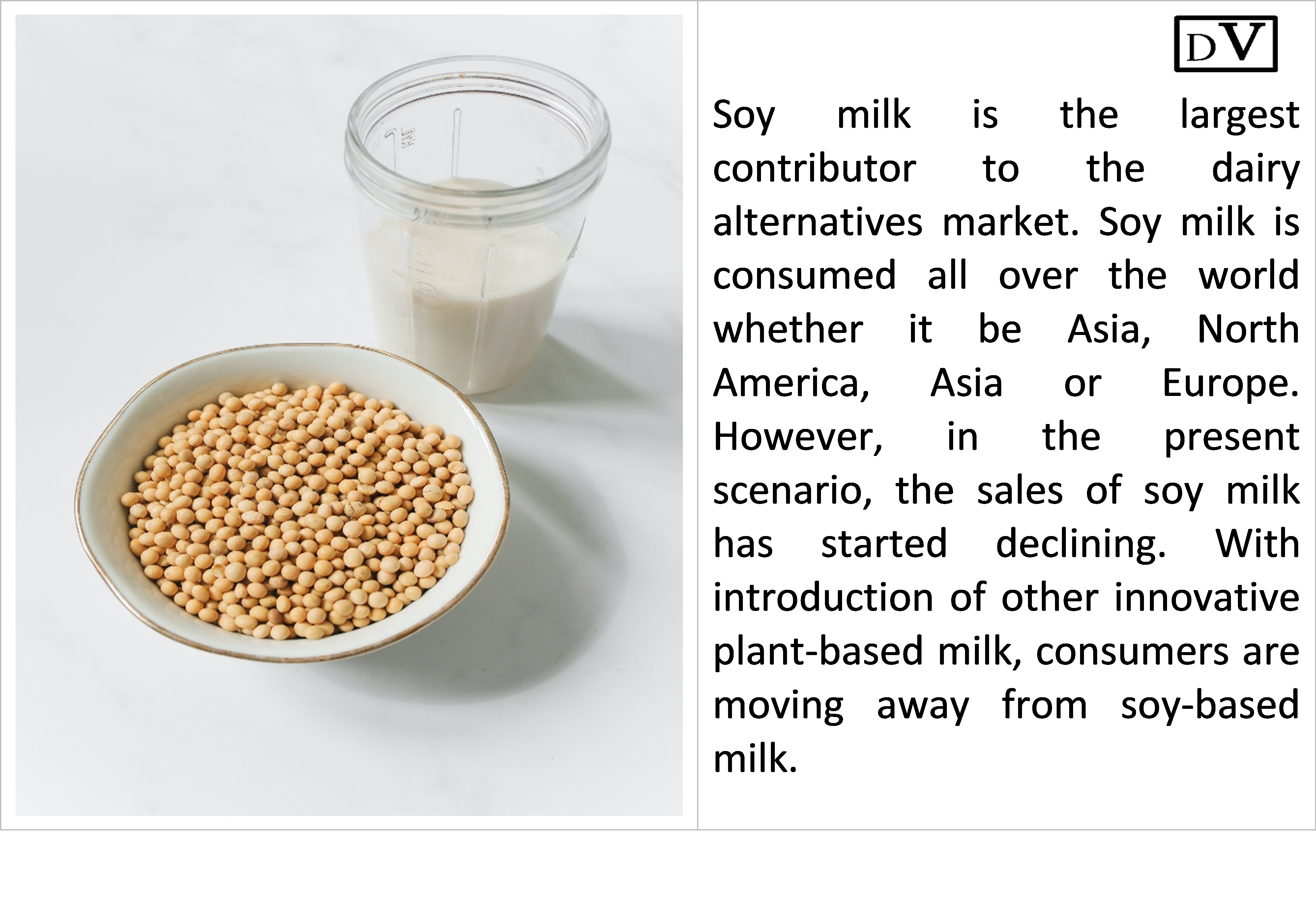
Almond, Oat, and Soy Milk Lead for Different Consumption Reasons
Almond milk remains a leading segment because it has broad retail availability, a neutral taste profile, low-calorie positioning, and strong private-label penetration. Its weakness is water-use scrutiny and lower protein density, which makes it less suitable for buyers seeking dairy-like nutrition. Oat milk is stronger in cafés, foodservice, and barista channels because it foams well, has a creamier mouthfeel, and fits coffee-shop usage. This is why oat milk often commands a price premium over basic almond milk.
Soy milk remains important in the Healthiest Vegan Milk market because it is one of the closest plant-based options to dairy milk in protein terms. It is especially relevant in Asia-Pacific, where soy beverage familiarity is high and supply chains are mature. However, soy faces taste barriers in some Western markets, and some buyers avoid it because of allergen concerns or ingredient perception. Coconut and rice milk serve more specific use cases, including cooking, desserts, and allergen-sensitive diets, but they are not as strong in mainstream breakfast or coffee applications.
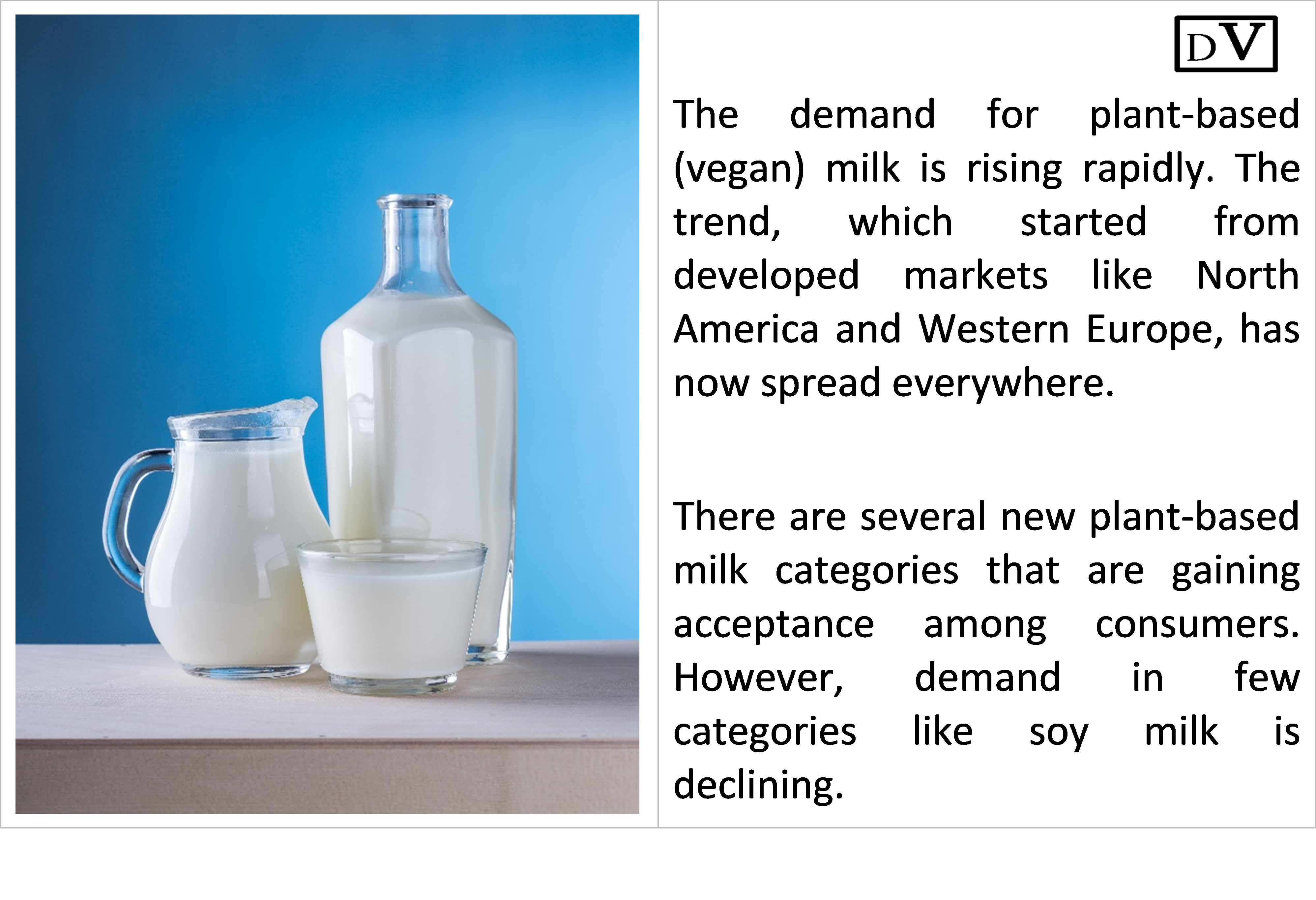
Almond, Oat, and Soy Milk Lead for Different Consumption Reasons
Almond milk remains a leading segment because it has broad retail availability, a neutral taste profile, low-calorie positioning, and strong private-label penetration. Its weakness is water-use scrutiny and lower protein density, which makes it less suitable for buyers seeking dairy-like nutrition. Oat milk is stronger in cafés, foodservice, and barista channels because it foams well, has a creamier mouthfeel, and fits coffee-shop usage. This is why oat milk often commands a price premium over basic almond milk.
Soy milk remains important in the Healthiest Vegan Milk market because it is one of the closest plant-based options to dairy milk in protein terms. It is especially relevant in Asia-Pacific, where soy beverage familiarity is high and supply chains are mature. However, soy faces taste barriers in some Western markets, and some buyers avoid it because of allergen concerns or ingredient perception. Coconut and rice milk serve more specific use cases, including cooking, desserts, and allergen-sensitive diets, but they are not as strong in mainstream breakfast or coffee applications.
Supply Availability and Pricing Are Shaped by Ingredients, Fortification, and Channel Mix
The Healthiest Vegan Milk supply chain depends on crop availability, ingredient processing, aseptic packaging, fortification systems, and cold-chain or ambient distribution. Almond supply connects heavily to U.S. production, especially California. Oat milk supply has benefited from wider oat availability in Europe and North America, while soy milk is supported by large soybean processing capacity in the U.S., Brazil, China, and Southeast Asia.
Pricing remains a major constraint. Plant-based milk often sells at a premium to conventional dairy milk because of smaller production runs, ingredient processing, enzyme treatment in oat milk, fortification, packaging, branding, and refrigerated distribution. Private-label products are reducing this gap. In June 2025, European plant-based retail data showed that more affordable own-brand products were helping volume movement across major European markets, which directly affects Healthiest Vegan Milk adoption because price-sensitive consumers are less likely to repeat premium products during food inflation.
Company behavior also shows how competitive pressure is reshaping portfolios. In October 2024, Danone’s Alpro discontinued its “This Is Not M!lk” product in the UK and shifted emphasis toward core oat products after consumer research showed preference for oat taste. This indicates that even large brands are cutting slower-moving SKUs and focusing on repeatable, high-velocity formats. In October 2025, Oatly reported Q3 sold finished goods volume of 83.6 million liters, up from 77.2 million liters a year earlier, but also reported North America revenue pressure, showing that the oat milk segment is growing unevenly across regions.
Adoption Barriers Remain Nutrition Comparison, Price, and Processing Perception
The main challenge for Healthiest Vegan Milk is not awareness; it is nutritional credibility and repeat value. Consumers increasingly check protein content, added sugar, gum stabilizers, oils, calcium fortification, vitamin B12, and vitamin D. Products positioned as “healthy” but carrying high sugar or weak protein density face weaker retention. The U.S. plant-based milk category also faced pressure in 2024, when sales declined while dairy milk improved, showing that buyers can trade back to dairy when price, protein, or taste expectations are not met.
The strongest growth path is therefore not a single plant source. It is fortified, unsweetened, protein-balanced, affordable, and application-specific vegan milk. Almond milk leads in retail breadth, oat milk leads in café compatibility, and soy or pea-based milk leads where protein comparison matters. The Healthiest Vegan Milk market is expanding, but winners are being decided by repeat purchase economics, nutritional labeling, private-label affordability, and product performance in daily consumption occasions.
Part 2: Regional Healthiest Vegan Milk Market Behavior, Supply Setup, and Segmentation
Europe Shows the Strongest Link Between Retail Reformulation and Price-Led Adoption
Europe has become one of the most structured markets for Healthiest Vegan Milk because retail chains, private-label suppliers, café operators, and oat-processing networks are pushing plant-based drinks into everyday shopping baskets. Germany, the UK, France, the Netherlands, Sweden, and Spain lead demand because supermarkets have built wide shelf space for oat, almond, soy, coconut, and blended drinks across ambient and chilled formats. Germany is especially important because 37% of households bought plant-based milk in 2024, while private-label plant-based food volume increased 13.9%. This shows that consumer adoption is not only brand-led; affordability is becoming a stronger driver than novelty.
The UK market is more oat-led than almond-led. Oat milk has become the preferred plant-based drink in British retail because it fits tea, coffee, cereal, and barista use. UK supermarket oat milk sales increased 7.2% in the year to February 2025, while nearly 35% of UK households consumed plant-based drinks and oat milk accounted for about 40% of market volume. This makes the UK a coffee-shop and grocery-led oat market rather than a broad plant-source market. Danone’s Alpro investment in British oat sourcing through Navara Oat Milling also shows a shift toward domestic raw material linkage instead of complete reliance on imported processed inputs.
France is building volume from a smaller base but with stronger category growth. In 2024, French consumers bought 232 million units across five plant-based categories, including milk and beverages, with total category value reaching €537 million. Plant-based milk benefits from this because French retail adoption is expanding through hypermarkets, organic stores, and private-label lines. However, dairy culture remains strong, so health-positioned vegan milk performs better when linked to lactose intolerance, low sugar, organic positioning, or breakfast usage rather than strict vegan identity.
North America Remains Large but More Price- and Protein-Sensitive
The United States is still a major demand country for Healthiest Vegan Milk, but growth is more selective than in earlier years. Plant-based milk was purchased by 38% of U.S. households in 2025, and 75% of buyers purchased more than once. This repeat-purchase figure confirms that the category has a stable replenishment base. However, U.S. plant-based milk retail sales fell 2% to USD 2.7 billion in 2025, with unit sales down 5%. The pressure came from premium pricing, protein comparison with dairy milk, and consumer concern about ultra-processed products.
Almond milk remains strong in the U.S. because California supplies the world’s largest almond base, enabling large-scale almond beverage production by brands and private-label manufacturers. Oat milk has grown faster in coffee, but almond milk has stronger shelf maturity across Walmart, Costco, Kroger, Target, Whole Foods, and club channels. Soy milk has become more niche in the U.S. compared with Asia, but it remains relevant for consumers seeking protein closer to dairy milk.
Canada plays a smaller but strategically useful role because oats, soybeans, and food-grade processing capacity are available domestically. Canadian plant-based milk adoption is concentrated in urban centers such as Toronto, Vancouver, Montréal, and Calgary, where premium grocery and café penetration is higher. The supply setup is linked to oat sourcing, aseptic packaging, and chilled distribution rather than large standalone plant milk consumption volume.
China and Wider Asia-Pacific Are Led by Soy Familiarity, Urban Retail, and Functional Nutrition
China is a major demand and supply country because plant-based beverages have a long base in soy milk, walnut drinks, peanut milk, coconut beverages, and grain drinks. Unlike Western markets, where vegan milk competes mainly with dairy milk, China’s category includes traditional plant beverages and newer premium oat, almond, and barista products. China’s dairy alternatives market is estimated at USD 5.67 billion in 2026 and is projected to reach USD 8.95 billion by 2031. The strongest consumption clusters are Tier 1 and Tier 2 cities, where convenience stores, e-commerce, coffee chains, and premium supermarkets carry higher-priced oat and almond products.
Japan and South Korea show more restrained but premium demand. Soy milk is established in Japan through packaged beverages, while oat and almond products are positioned around wellness, convenience, and café use. South Korea’s demand is influenced by convenience-store channels and younger consumers buying ready-to-drink nutrition beverages. Southeast Asia has broader coconut and soy availability, but imported almond and oat milk remain premium because of higher logistics and packaging costs.
India is still small in packaged plant-based milk compared with dairy, but it is one of the faster-growing markets. The Indian plant-based milk market is estimated at USD 67.57 million in 2026 and is projected to reach USD 132.96 million by 2031 at 14.49% CAGR. Demand is concentrated in metro cities, quick-commerce platforms, modern retail, gyms, cafés, and lactose-intolerant consumer groups. GFI India identified more than 45 brands and 223 SKUs in the plant-based dairy category, including milk, yogurt, butter, cheese, paneer, and ghee. This indicates active product experimentation, but scale is still restricted by price sensitivity and dairy’s deep household penetration.
Segmentation Highlights by Product, Channel, and Customer Base
- By product type: Almond milk leads in mature retail markets due to availability and low-calorie positioning; oat milk leads in cafés and premium grocery; soy milk leads where protein and cultural familiarity matter; pea and blended milk serve high-protein positioning.
- By formulation: Unsweetened, fortified, barista, organic, flavored, and high-protein variants are stronger than basic plain products in premium channels.
- By channel: Supermarkets and hypermarkets drive volume; e-commerce and quick-commerce support trial; cafés and foodservice improve oat milk visibility.
- By customer group: Flexitarian households, lactose-intolerant consumers, vegans, gym users, parents buying allergy-safe products, and urban café consumers form the main buyer base.
- By price band: Private-label products serve repeat buyers; branded oat and almond drinks dominate premium shelves; protein-fortified products carry the highest margin pressure.
Supply-Demand Balance and Pricing Movement
The market’s supply-demand balance is shifting from brand expansion to SKU rationalization. Retailers are reducing slow-moving novelty products and keeping high-repeat oat, almond, soy, and barista formats. Pricing remains above dairy milk in many markets because plant-based milk needs crop sourcing, soaking or milling, enzyme processing, homogenization, fortification, stabilizers, aseptic cartons, refrigerated logistics, and trade margins. Private-label growth is the main corrective force. Where own-brand oat or almond milk approaches dairy price levels, repeat usage improves. Where branded vegan milk remains more than twice the price of dairy, trial converts less reliably into monthly replenishment.
Part 3: Competitive Structure, Brands, Manufacturing Economics, and Recent Developments
Large Food Companies Hold Distribution Strength, While Specialist Brands Shape Product Identity
The Healthiest Vegan Milk market is led by a mix of multinational dairy-alternative companies, packaged food groups, plant-based specialists, supermarket private labels, regional soy beverage companies, and foodservice suppliers. Exact market share is difficult to verify across all regions because retail scanner data, foodservice sales, e-commerce movement, and private-label volumes are not disclosed uniformly. Competitive position is therefore better assessed through product range, retail shelf access, manufacturing scale, crop sourcing, barista-channel strength, brand recall, fortification capability, and pricing discipline.
Danone is one of the strongest global players through Alpro, Silk, So Delicious, and related plant-based portfolios. Alpro is especially strong in Europe, where it sells oat, almond, soy, coconut, rice, hazelnut, and barista drinks. Silk remains a major U.S. brand across almond, soy, oat, cashew, and protein-focused plant milk. Danone’s advantage comes from retail relationships, chilled distribution, R&D capability, fortification standards, and the ability to rationalize SKUs when consumer preference shifts.
Oatly is the most visible oat-specialist brand and remains important in cafés and barista channels. Its competitive strength is application fit: oat milk performs well in coffee because it provides texture and foam stability. Oatly reported Q3 2025 sold volume of 150.6 million liters, up 6.6% from 141.3 million liters in Q3 2024. This confirms global volume resilience, although North America remained weak because of lower revenue from its largest foodservice customer. Oatly’s position shows the advantage and risk of foodservice dependency: café placement builds brand visibility, but large account changes can sharply affect regional sales.
Califia Farms competes strongly in North America through almond milk, oat milk, creamers, barista blends, cold brew, and ready-to-drink formats. Its packaging identity and café linkage give it a premium position. Blue Diamond Growers has a strong almond supply advantage through Almond Breeze, supported by California almond sourcing and long-standing nut processing capability. The Hain Celestial Group participates through Dream and related dairy-alternative brands, while SunOpta has an important role as a contract manufacturer and ingredient-linked supplier for plant-based beverages in North America.
In Asia, soy-based beverage companies and food conglomerates are highly relevant. Vitasoy has strong regional recognition in Hong Kong, mainland China, Australia, and Southeast Asia. Yili, Mengniu, and other Chinese dairy and beverage companies participate in plant-based and grain beverage categories through broader beverage portfolios. Their advantage is not vegan branding but retail access, production scale, local flavor adaptation, and distribution into convenience stores and supermarkets.
In India, the market is more fragmented. Urban brands such as So Good, Sofit, Urban Platter, Goodmylk, One Good, Raw Pressery, and emerging D2C labels compete through almond, soy, oat, coconut, and blended products. Most Indian brands operate at smaller volume than dairy companies, so channel access through quick commerce, Amazon, BigBasket, Blinkit, cafés, gyms, and premium supermarkets matters more than national dairy-style distribution.
Manufacturing Economics Depend on Crop Input, Processing Yield, and Packaging Scale
Cost pressure in Healthiest Vegan Milk is tied to five inputs: plant ingredient cost, processing yield, fortification, packaging, and logistics. Almond milk cost is affected by almond crop pricing and import exposure in countries without almond production. Oat milk requires milling, enzymatic conversion, filtration, homogenization, and sometimes oil or stabilizer addition for mouthfeel. Soy milk has stronger protein economics but faces allergen labeling and taste barriers in several Western markets.
Aseptic cartons allow ambient storage and broader distribution, while chilled products depend on refrigerated retail and shorter shelf rotation. Barista milk usually carries higher pricing because it needs foam stability, fat balance, emulsification, and café performance consistency. Protein-fortified and children-focused products require additional vitamin and mineral premixes, higher quality control, and clearer label management.
Margins are under pressure in mature markets because private labels are expanding quickly. Supermarkets can use own-brand oat and almond milk to pull shoppers into the category at lower price points, while branded suppliers must defend premium pricing through taste, texture, organic claims, protein, sustainability, or café credibility. This is why many brands are reducing experimental SKUs and prioritizing proven products.
Distribution Reach Is a Stronger Advantage Than Manufacturing Alone
For a finished consumer product like Healthiest Vegan Milk, manufacturing capacity is only useful when matched with shelf access and repeat purchase. Supermarkets control volume, cafés shape oat milk visibility, and online channels support niche brands. Foodservice is especially important for oat milk because many consumers first try it in cappuccinos, lattes, and iced coffee before buying retail cartons.
Private-label competition is strongest in Europe, where retailers use plant-based drinks to support broader protein-transition commitments and price parity goals. In the U.S., branded products still carry more influence, but store brands in almond and oat milk are growing because buyers compare price per liter more closely during inflationary periods. In India and Southeast Asia, online grocery and quick-commerce platforms help overcome limited shelf space in traditional retail.
Recent Developments Impacting Healthiest Vegan Milk
- October 2024, United Kingdom: Danone’s Alpro discontinued “This Is Not M!lk” in UK stores after consumer research indicated stronger preference for its core oat range. The move showed SKU rationalization and stronger focus on high-repeat oat products.
- March 2025, United Kingdom: Danone’s Alpro announced a multi-million-pound investment to use 100% British oats in its most popular oat drink, sourced through local farming and Navara Oat Milling. This strengthens local sourcing and reduces dependence on imported oat inputs.
- April 2025, United States: Oatly reported Q1 2025 sold volume of 144.6 million liters, up 9.2% from 132.4 million liters in Q1 2024, while produced finished goods reached 143.1 million liters. This supported oat milk supply stability despite uneven regional sales.
- June 2025, Europe: GFI Europe retail analysis showed private-label plant-based food volume growth in major markets, with Germany’s private-label volume up 13.9% in 2024. This directly affects plant-based milk because affordability is becoming a stronger repeat-purchase driver.
- October 2025, Global: Oatly reported Q3 2025 sold volume of 150.6 million liters, up 6.6% year over year, but North America revenue remained pressured by lower sales to its largest foodservice customer. This showed that café-linked demand is valuable but account concentration can create regional volatility.
- February 2026, United Kingdom: The UK Supreme Court ruled that Oatly could not use the word “milk” in specific trademark marketing. The decision reinforces labeling risk for plant-based drink brands and may push more companies toward terms such as oat drink, almond drink, and plant-based beverage.
