

Rising Demand in Household Cleaning Fuels Alkylbenzene Sulfonate Market Expansion
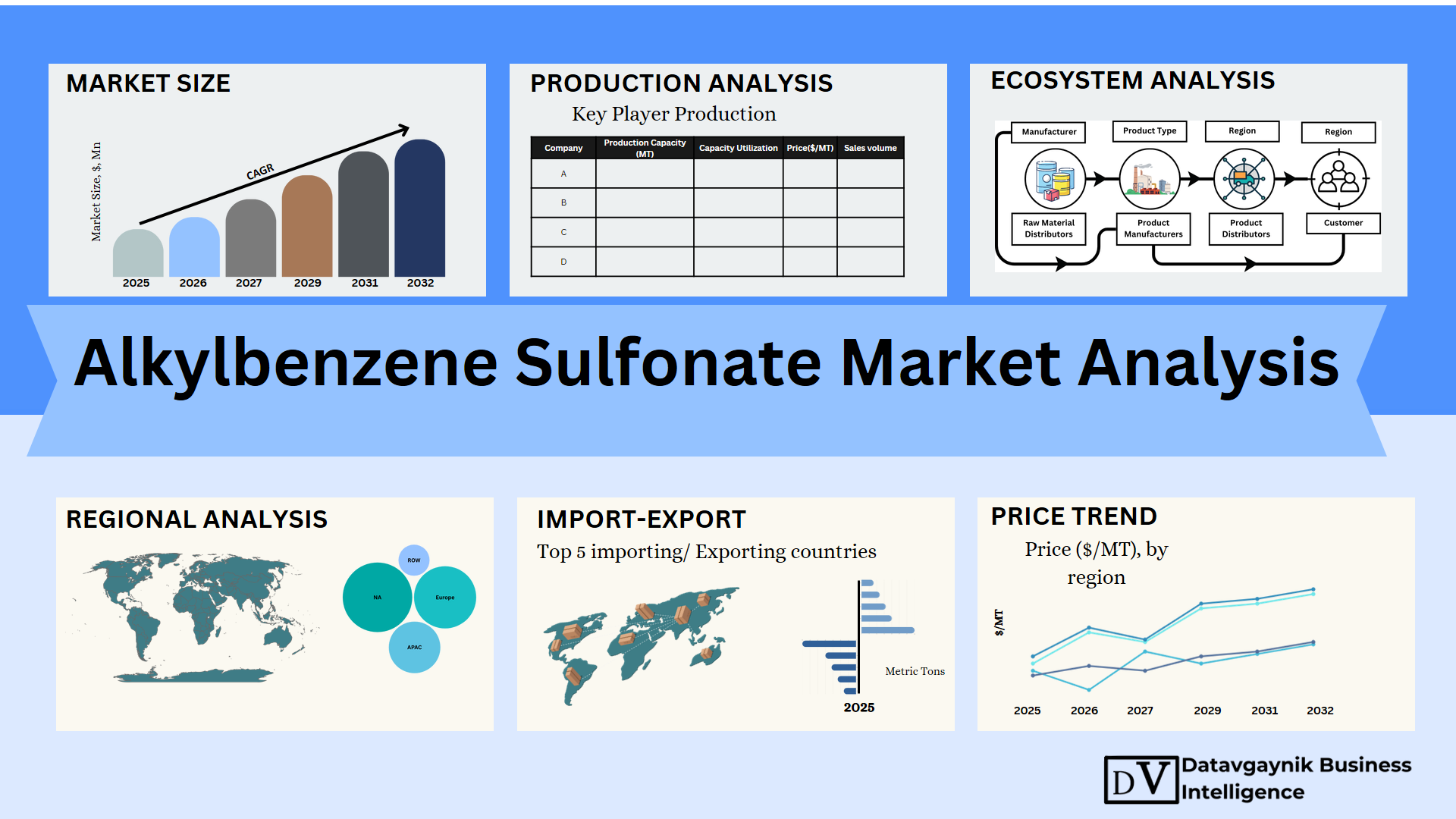
The alkylbenzene sulfonate market is witnessing dynamic growth, predominantly propelled by soaring demand from the household cleaning sector. Detergents and surface cleaners represent the largest consumption segment, accounting for a substantial share of the overall market. For example, the global laundry detergent market has grown steadily at a rate exceeding 5% annually over the past half-decade, resulting in parallel growth in alkylbenzene sulfonate consumption due to its superior surfactant properties. This surge is especially pronounced in densely populated and rapidly urbanizing regions such as Asia-Pacific, where increasing disposable incomes and lifestyle changes are fueling heightened demand for effective cleaning agents.
Industrial and Institutional Cleaning as a Significant Alkylbenzene Sulfonate Market Driver
Alongside household applications, the industrial and institutional cleaning sector is a key contributor to the alkylbenzene sulfonate market’s robust trajectory. Facilities in healthcare, hospitality, and food processing industries require powerful and cost-efficient cleaning solutions. Alkylbenzene sulfonate fits this demand perfectly due to its excellent grease-cutting ability and affordability. The market in this segment is growing approximately 6% annually, driven by stringent hygiene regulations and rising standards of sanitation globally. This trend has encouraged manufacturers to increase production capacities and innovate formulations containing alkylbenzene sulfonate, reinforcing its market position.
Personal Care Industry Amplifies Alkylbenzene Sulfonate Market Demand
The booming personal care industry has emerged as a vital growth avenue for the alkylbenzene sulfonate market. This surfactant’s foaming and emulsifying qualities make it indispensable in products such as shampoos, body washes, and facial cleansers. The heightened awareness of personal hygiene post-pandemic has accelerated consumption of such products by nearly 8% yearly in major markets, pushing alkylbenzene sulfonate demand upwards. The shift towards natural and mild surfactants has also led to an increased focus on linear alkylbenzene sulfonate, a more environmentally friendly variant, which is rapidly capturing market share.
Emerging Markets Drive Alkylbenzene Sulfonate Market Growth through Urbanization and Industrialization
The alkylbenzene sulfonate market is deeply influenced by economic growth in emerging economies. Rapid industrialization, expanding middle classes, and rising urban populations in countries like India, China, and parts of Southeast Asia are creating a robust base for increased alkylbenzene sulfonate consumption. For instance, urban population growth rates exceeding 2% annually in these regions correlate directly with increased use of detergents and personal care products. Industrial sectors are also scaling up, driving demand for institutional cleaning chemicals that utilize alkylbenzene sulfonate as a core ingredient. This combination of factors ensures that the alkylbenzene sulfonate market size will continue to expand rapidly in these geographies.
Environmental Sustainability Trends Reshape the Alkylbenzene Sulfonate Market
Sustainability is now a core theme influencing the alkylbenzene sulfonate market. Regulatory frameworks across Europe, North America, and increasingly Asia-Pacific emphasize biodegradable and environmentally friendly chemical formulations. This has propelled the demand for linear alkylbenzene sulfonate, which offers superior biodegradability compared to its branched counterpart. Innovation in product formulations aims to reduce environmental impact without compromising cleaning efficacy. As a result, manufacturers investing in green chemistry and sustainable production processes are gaining competitive advantages, positioning themselves strongly in the evolving alkylbenzene sulfonate market landscape.
Agricultural and Industrial Applications Expand the Alkylbenzene Sulfonate Market Footprint
Beyond cleaning and personal care, alkylbenzene sulfonate finds important applications in agriculture and other industrial domains. It acts as an emulsifying agent in pesticides and herbicides, enhancing the stability and effectiveness of agrochemical formulations. Given the global push to improve agricultural productivity, especially in developing nations, demand for alkylbenzene sulfonate in this sector is rising steadily. Additionally, industries such as oil and gas utilize alkylbenzene sulfonate in enhanced oil recovery and as additives in paints and coatings, broadening the market base further. These diversified applications contribute significantly to the overall growth momentum of the alkylbenzene sulfonate market.
Technological Advancements Bolster Alkylbenzene Sulfonate Market Competitiveness
Technological progress in surfactant production is playing a crucial role in accelerating the alkylbenzene sulfonate market growth. Innovations such as cold-water-effective detergents and formulations with improved biodegradability are expanding application potentials and consumer acceptance. Production technologies have evolved to enhance yield efficiency and reduce energy consumption, aligning with environmental regulations and cost optimization goals. This has enabled manufacturers to meet the rising global demand while adhering to stricter sustainability standards, thereby reinforcing the alkylbenzene sulfonate market’s resilience and future growth prospects.
Regional Market Dynamics Highlight Asia-Pacific as a Growth Powerhouse for Alkylbenzene Sulfonate Market
The Asia-Pacific region stands as the dominant growth engine for the alkylbenzene sulfonate market. Countries such as China, India, Indonesia, and Thailand are witnessing explosive growth in industrialization, urbanization, and household consumption. For instance, China’s detergent consumption increased by over 7% annually between 2018 and 2023, directly influencing alkylbenzene sulfonate demand. The combination of low production costs, abundant raw materials, and supportive government policies makes Asia-Pacific the leading producer and consumer in this market. Investments in expanding manufacturing capacities and eco-friendly product development further solidify the region’s pivotal role in shaping the global alkylbenzene sulfonate market.
Mature Markets in North America and Europe Drive Innovation and Sustainability in Alkylbenzene Sulfonate Market
While the Asia-Pacific leads in volume, the North American and European alkylbenzene sulfonate markets emphasize innovation, quality, and sustainability. Strict environmental regulations have compelled manufacturers to pivot toward biodegradable surfactants such as linear alkylbenzene sulfonate. The demand for premium household and personal care products with eco-friendly profiles is increasing steadily, supporting market growth at a moderate yet stable pace. Additionally, the presence of major chemical companies investing in R&D activities ensures continuous improvement in alkylbenzene sulfonate formulations, meeting evolving consumer preferences and regulatory standards.
Growing Consumer Awareness Accelerates Alkylbenzene Sulfonate Market Demand Globally
A crucial factor driving the alkylbenzene sulfonate market is the global surge in consumer awareness about hygiene, safety, and sustainability. Increased public focus on sanitation, particularly after the pandemic, has led to higher consumption of detergents, disinfectants, and personal care products containing alkylbenzene sulfonate. Consumers are progressively favoring biodegradable and skin-friendly ingredients, boosting demand for advanced formulations. This trend is observable across both developed and developing regions, making consumer behavior a significant market driver for alkylbenzene sulfonate.
Strategic Investments and Capacity Expansions Reinforce Alkylbenzene Sulfonate Market Outlook
To keep pace with escalating demand, key players in the alkylbenzene sulfonate market are making strategic investments in expanding production facilities and enhancing supply chain efficiency. For instance, capacity expansions in key manufacturing hubs like China, the US, and Germany are underway to cater to both domestic needs and export markets. These investments are coupled with initiatives to improve process sustainability and product innovation. This proactive approach is expected to bolster the market size and help companies secure competitive advantages in a rapidly evolving industry landscape.
“Track Country-wise Alkylbenzene Sulfonate Production and Demand through our Alkylbenzene Sulfonate Production Database”
-
-
- Alkylbenzene Sulfonate production database for 30+ countries worldwide
- Alkylbenzene Sulfonate sales volume for 31+ countries
- Country-wise Alkylbenzene Sulfonate production capacity, production plant mapping, production capacity utilization for 30+ manufacturers
- Alkylbenzene Sulfonate production plants and production plant capacity analysis by top manufacturers
-
“Track real-time Alkylbenzene Sulfonate Prices, Alkylbenzene Sulfonate price charts for 30+ countries, Alkylbenzene Sulfonate weekly price tracker and Alkylbenzene Sulfonate monthly price tracker”
-
-
- Track real-time Alkylbenzene Sulfonate prices and Alkylbenzene Sulfonate price trend in 30+ countries though our excel-based Alkylbenzene Sulfonate price charts
- Real-time Alkylbenzene Sulfonate price tracker dashboard with 30+ countries
- Complete transparency on Alkylbenzene Sulfonate price trend through our Alkylbenzene Sulfonate monthly price tracker, Alkylbenzene Sulfonate weekly price tracker
-
Geographical Demand Dynamics Shaping the Alkylbenzene Sulfonate Market
The alkylbenzene sulfonate market exhibits distinct geographical demand patterns driven by regional economic growth, urbanization, and consumer behavior. Asia-Pacific dominates global consumption, accounting for over 50% of the market share. For instance, China and India alone contribute nearly 40% of global demand, fueled by rapid industrialization and expanding middle-class populations. China’s detergent market has seen a double-digit growth rate in recent years, with urban household penetration exceeding 65%, thereby driving significant alkylbenzene sulfonate consumption in both household and industrial sectors. Similarly, India’s rising hygiene awareness and growing FMCG sector have pushed alkylbenzene sulfonate demand upwards by approximately 7% annually, reinforcing Asia-Pacific as the core growth engine.
North America and Europe: Mature Markets Steering Sustainable Demand in Alkylbenzene Sulfonate Market
In contrast, North America and Europe represent mature but evolving markets for alkylbenzene sulfonate. These regions prioritize sustainability and regulatory compliance, influencing demand trends significantly. For example, in the US and Canada, demand growth is moderate, hovering around 3-4% annually, yet the focus on biodegradable surfactants has intensified consumption of linear alkylbenzene sulfonate variants. European countries, led by Germany, France, and the UK, are witnessing a strategic shift towards eco-friendly formulations driven by stringent environmental policies. Despite slower volume growth, these markets emphasize high-quality, sustainable products, which commands premium pricing and innovation within the alkylbenzene sulfonate market.
Emerging Markets in Latin America and Middle East Propel Alkylbenzene Sulfonate Market Expansion
Latin America and the Middle East are emerging as promising regions within the alkylbenzene sulfonate market landscape. Brazil, Mexico, and Argentina are rapidly increasing their household cleaning product consumption, with annual alkylbenzene sulfonate demand growth rates around 6-7%. These markets are benefiting from rising disposable incomes and increasing awareness of sanitation. The Middle East, particularly Gulf Cooperation Council countries, leverages its expanding industrial base and urban development to boost alkylbenzene sulfonate usage, especially in industrial cleaners and personal care segments. For example, Saudi Arabia’s cleaning chemical demand has grown at nearly 8% per annum, directly contributing to regional alkylbenzene sulfonate market growth.
Production Hubs Drive Competitive Advantage in the Alkylbenzene Sulfonate Market
Production dynamics in the alkylbenzene sulfonate market are shaped by regional manufacturing capabilities, raw material accessibility, and technological advancements. Asia-Pacific leads global production, with China being the largest manufacturer, leveraging abundant raw materials such as linear alkylbenzene and cost-effective labor. Chinese alkylbenzene sulfonate production capacity has expanded by over 10% annually, supported by significant investments in eco-friendly technologies. India is emerging rapidly, with production increasing at nearly 8% yearly, driven by Make-in-India initiatives and rising domestic demand. Europe’s production, centered in Germany and Italy, emphasizes high-quality and sustainable output, with manufacturers investing heavily in research to meet stringent regulations. The United States maintains advanced production technologies, focusing on innovation and sustainability, which sustain its competitive position despite higher production costs.
Alkylbenzene Sulfonate Market Segmentation by Type: LAS Dominance and BAS Decline
Within the alkylbenzene sulfonate market segmentation by type, linear alkylbenzene sulfonate (LAS) dominates due to its superior biodegradability and cost-efficiency. LAS accounts for approximately 75% of total alkylbenzene sulfonate consumption globally. Its preference stems from growing environmental regulations that restrict branched alkylbenzene sulfonate (BAS) usage, which is less biodegradable. For example, in Europe and North America, BAS has witnessed a decline of nearly 15% over the last five years, while LAS adoption increased by over 12%, driven by regulatory compliance and consumer preference for greener products. BAS, however, retains niche applications in certain industrial sectors requiring high performance under extreme conditions, but its overall market share is shrinking steadily.
Form-Based Segmentation: Liquid Alkylbenzene Sulfonate Market Gains Traction
The alkylbenzene sulfonate market is also segmented by form, with liquid formulations gaining significant traction over powders. Liquid alkylbenzene sulfonate products have grown by approximately 8% annually, favored in industrial and institutional cleaning due to ease of handling, faster solubility, and superior blend compatibility. For example, liquid detergents in the US and Europe have captured over 60% of the alkylbenzene sulfonate market by form, reflecting changing consumer preferences for convenient and effective cleaning solutions. Powder forms, though still prevalent in emerging markets due to cost-effectiveness and longer shelf life, are experiencing slower growth rates near 3-4% annually, impacted by the global shift toward liquid and concentrated formulations.
Application-Wise Segmentation Highlights Household Detergents as Primary Alkylbenzene Sulfonate Market Driver
Household detergents constitute the largest application segment within the alkylbenzene sulfonate market, contributing to over 45% of overall demand. The rise in laundry detergent consumption globally, growing at roughly 6% annually, is a primary catalyst. For example, rising detergent penetration in rural India and China has led to surges in alkylbenzene sulfonate usage in these regions. Industrial and institutional cleaners represent the next significant segment, growing at a rate of 5-6% annually, driven by expanding healthcare and hospitality sectors requiring effective cleaning agents. Personal care products, including shampoos and body washes, are also rising in importance, exhibiting growth rates near 7%, as consumer preference for high-foaming and mild surfactants intensifies.
Alkylbenzene Sulfonate Price Trend Reflects Raw Material Volatility and Sustainability Investments
The alkylbenzene sulfonate price trend has shown moderate volatility influenced by fluctuations in raw material costs, particularly linear alkylbenzene (LAB) prices, which account for a significant portion of production costs. For instance, between 2020 and 2023, LAB prices experienced swings up to 15%, driven by petrochemical feedstock supply chain disruptions and energy cost variations. This volatility directly impacted the alkylbenzene sulfonate price, leading to short-term price adjustments globally. However, increased investments in sustainable production processes and shifts towards greener formulations have added upward pressure on prices, as eco-friendly alkylbenzene sulfonate variants demand higher manufacturing expenses.
Regional Variations in Alkylbenzene Sulfonate Price Influence Market Competitiveness
Price trends in the alkylbenzene sulfonate market differ significantly across regions due to production cost structures and regulatory environments. Asia-Pacific enjoys relatively lower alkylbenzene sulfonate prices, attributed to cost-efficient manufacturing and abundant raw material availability. Prices here remain approximately 10-15% lower than those in Europe and North America. In contrast, strict environmental regulations and high labor costs in Europe and North America contribute to premium pricing for sustainable alkylbenzene sulfonate products. For example, European markets see price premiums averaging 12-18% over Asian counterparts, reflecting the added value of eco-friendly compliance and advanced product attributes.
Supply Chain Resilience and Price Stability: Critical for Alkylbenzene Sulfonate Market Growth
Recent disruptions in global supply chains have underscored the importance of resilience and flexibility in stabilizing alkylbenzene sulfonate price trends. For example, the pandemic-induced logistical challenges in 2020-2021 caused temporary price spikes due to raw material shortages and transportation delays. In response, manufacturers have diversified sourcing strategies, increased regional production capacities, and enhanced inventory management. These measures have contributed to a more balanced alkylbenzene sulfonate price trend in subsequent years, enabling steady market growth despite external shocks.
Technological Advancements Drive Value-Based Pricing in Alkylbenzene Sulfonate Market
Innovations in alkylbenzene sulfonate production and formulation are shifting the market toward value-based pricing models. Enhanced surfactant efficiency, reduced environmental impact, and multifunctional formulations justify premium pricing strategies. For example, producers of linear alkylbenzene sulfonate with superior biodegradability command up to 20% higher prices than standard variants. This trend incentivizes investment in research and development and supports the overall premiumization of the alkylbenzene sulfonate market, aligning with global shifts toward sustainability and performance.
Competitive Landscape and Pricing Strategies in the Alkylbenzene Sulfonate Market
Market players are adopting dynamic pricing strategies to remain competitive amid fluctuating raw material costs and evolving regulatory demands. Bulk procurement contracts, long-term supply agreements, and flexible pricing models are becoming standard practices. For instance, major producers offer tiered pricing based on volume and product specifications, balancing affordability with profitability. This approach helps stabilize the alkylbenzene sulfonate price while catering to diverse customer segments, ensuring sustained demand and market penetration across regions.
“Alkylbenzene Sulfonate Manufacturing Database, Alkylbenzene Sulfonate Manufacturing Capacity”
-
-
- Alkylbenzene Sulfonate top manufacturers market share for 30+ manufacturers
- Top 11 manufacturers and top 18 manufacturers of Alkylbenzene Sulfonate in North America, Europe, Asia Pacific
- Alkylbenzene Sulfonate production plant capacity by manufacturers and Alkylbenzene Sulfonate production data for 30+ market players
- Alkylbenzene Sulfonate production dashboard, Alkylbenzene Sulfonate production data in excel format
-
“Alkylbenzene Sulfonate price charts, Alkylbenzene Sulfonate weekly price tracker and Alkylbenzene Sulfonate monthly price tracker”
-
-
- Factors impacting real-time Alkylbenzene Sulfonate prices in 30+ countries worldwide
- Alkylbenzene Sulfonate monthly price tracker, Alkylbenzene Sulfonate weekly price tracker
- Real-time Alkylbenzene Sulfonate price trend, Alkylbenzene Sulfonate price charts, news and updates
- Tracking Alkylbenzene Sulfonate price fluctuations
-
Leading Manufacturers Driving the Alkylbenzene Sulfonate Market Landscape
The alkylbenzene sulfonate market is shaped by a select group of global chemical giants whose production capabilities, innovative product portfolios, and expansive distribution networks define competitive dynamics. Industry leaders such as BASF, Stepan Company, Solvay, Evonik Industries, and Croda International collectively control a significant majority of the market share, each bringing distinct strengths to the alkylbenzene sulfonate market.
BASF stands as one of the foremost manufacturers in the alkylbenzene sulfonate market, leveraging its global reach and advanced chemical production expertise. The company’s product lines include high-performance linear alkylbenzene sulfonate formulations designed for household detergents and industrial cleaners. BASF’s focus on sustainability has led to the development of environmentally friendly variants with enhanced biodegradability, addressing rising regulatory demands and consumer preferences. Their diverse product portfolio ensures adaptability across various market segments, reinforcing their leading position in the alkylbenzene sulfonate market.
Stepan Company is another pivotal player, renowned for its comprehensive range of surfactants, including several grades of alkylbenzene sulfonate tailored for different applications. Stepan’s product lineup caters extensively to household, personal care, and institutional cleaning sectors, with a notable emphasis on liquid alkylbenzene sulfonate formulations that meet evolving market needs. The company’s strategic investments in capacity expansion and sustainable technologies have solidified its market presence, allowing it to maintain a strong share within the alkylbenzene sulfonate market globally.
Solvay, a multinational chemical company, holds a prominent share in the alkylbenzene sulfonate market through its specialty surfactant offerings. Its alkylbenzene sulfonate products are widely used in industrial cleaning and agrochemical formulations. Solvay’s dedication to research and development has produced innovative, high-performance surfactants with improved environmental profiles, catering to the growing demand for green chemicals. Their robust global supply chain and partnerships across multiple industries contribute significantly to their competitive edge in the alkylbenzene sulfonate market.
Evonik Industries is known for its cutting-edge chemical innovations and sustainable production techniques. In the alkylbenzene sulfonate market, Evonik offers a range of surfactants optimized for household detergents and personal care products. Their product portfolio includes linear alkylbenzene sulfonate variants with enhanced biodegradability, aligning with global sustainability trends. Evonik’s commitment to reducing environmental impact while maintaining product performance has elevated its stature in the alkylbenzene sulfonate market, particularly in Europe and North America.
Croda International has carved a niche in specialty surfactants, including alkylbenzene sulfonate products tailored for premium personal care and household cleaning applications. Croda’s innovations focus on gentle yet effective formulations, emphasizing skin compatibility and environmental responsibility. Their product lines are gaining traction as consumers demand safer and greener cleaning solutions, positioning Croda as an influential participant in the alkylbenzene sulfonate market, especially in developed economies.
Manufacturer Market Share in the Alkylbenzene Sulfonate Market
The alkylbenzene sulfonate market is moderately consolidated, with the top five manufacturers collectively controlling roughly 65-70% of the global market share. BASF leads this group, accounting for an estimated 20-22% of the market, bolstered by its extensive product range and global footprint. Stepan Company holds approximately 15-17%, benefiting from its strong North American base and increasing presence in Asia-Pacific. Solvay’s market share is close to 12-14%, supported by its specialty chemicals portfolio and strategic regional expansions.
Evonik Industries commands around 10-12% of the alkylbenzene sulfonate market, driven by innovation and sustainability initiatives. Croda International controls roughly 6-8%, primarily due to its focus on niche, premium products in personal care and household segments. Other regional and smaller manufacturers fill the remaining market share, competing on price, customization, and local supply chain advantages.
The manufacturer market shares vary regionally, with BASF and Solvay dominating Europe, Stepan Company leading in North America, and several Asian producers gaining ground in the rapidly expanding Asia-Pacific alkylbenzene sulfonate market. These variations reflect strategic investments and regional market dynamics that influence production and distribution.
Product Lines and Innovations by Top Alkylbenzene Sulfonate Manufacturers
BASF’s product portfolio includes the Lutensol and Sokalan series, which feature linear alkylbenzene sulfonate formulations optimized for biodegradability and cleaning efficiency. These product lines cater to diverse applications such as laundry detergents, dishwashing liquids, and institutional cleaners. BASF continuously updates these formulations to meet stringent environmental standards and consumer demands for sustainability.
Stepan Company offers its Stepanate and Steposol surfactant families, including various grades of alkylbenzene sulfonate designed for liquid and powder detergents, personal care, and industrial cleaners. Stepan’s ability to customize products to meet specific customer requirements has strengthened its position in the alkylbenzene sulfonate market.
Solvay’s surfactant products include its Seppic line, which emphasizes biodegradable surfactants with excellent foaming and emulsifying properties. The company has also developed specialty formulations targeting agrochemical emulsifiers and enhanced oil recovery applications, expanding its alkylbenzene sulfonate market reach.
Evonik Industries markets its alkylbenzene sulfonate surfactants under the TEGO and VESTAMIN brands, focusing on eco-friendly solutions with high cleaning power and skin compatibility. The company prioritizes sustainable production practices, which resonate well with regulatory demands and environmentally conscious consumers.
Croda International’s product offerings in the alkylbenzene sulfonate market include the Incrosoft and Incromine ranges, designed to provide mildness and environmental safety in personal care products and household cleaners. Croda’s R&D investments focus on improving biodegradability and reducing potential irritation, aligning with premium market trends.
Recent Industry Developments and Market Updates in Alkylbenzene Sulfonate Market
In recent years, several key developments have shaped the alkylbenzene sulfonate market landscape. In early 2024, BASF announced a major expansion of its surfactant production facility in Europe, aiming to increase capacity for linear alkylbenzene sulfonate formulations in response to growing demand for sustainable cleaning products. This strategic move underscores the company’s commitment to capturing a larger share of the eco-friendly segment within the alkylbenzene sulfonate market.
Stepan Company unveiled new green surfactant product lines in mid-2023, emphasizing fully biodegradable and renewable raw material-based alkylbenzene sulfonate variants. This launch aligns with global consumer shifts toward sustainable cleaning agents and reinforces Stepan’s leadership in innovation.
In late 2023, Solvay entered into a strategic partnership with an Asian chemical producer to expand its alkylbenzene sulfonate manufacturing footprint in Southeast Asia. This move aims to leverage the region’s rapid industrial growth and increasing demand for surfactants in household and personal care products.
Evonik Industries announced in early 2025 its latest R&D breakthrough in producing ultra-low environmental impact alkylbenzene sulfonate surfactants, targeting regulatory compliance ahead of anticipated stricter European and North American standards. This development is expected to reshape market expectations regarding surfactant sustainability and performance.
Croda International expanded its production capacity in 2024, focusing on specialty alkylbenzene sulfonate surfactants for premium personal care brands. The company also invested in new biotechnological processes to enhance product mildness and reduce ecological footprints.
Additionally, the alkylbenzene sulfonate market is witnessing increasing collaboration among manufacturers and chemical distributors to optimize supply chains and improve product availability in emerging markets. This trend reflects a strategic response to recent global supply chain disruptions and rising demand volatility.
“Alkylbenzene Sulfonate Production Data and Alkylbenzene Sulfonate Production Trend, Alkylbenzene Sulfonate Production Database and forecast”
-
-
- Alkylbenzene Sulfonate production database for historical years, 11 years historical data
- Alkylbenzene Sulfonate production data and forecast for next 11 years
- Alkylbenzene Sulfonate sales volume by manufacturers
-
“Track Real-time Alkylbenzene Sulfonate Prices for purchase and sales contracts, Alkylbenzene Sulfonate price charts, Alkylbenzene Sulfonate weekly price tracker and Alkylbenzene Sulfonate monthly price tracker”
-
-
- Gain control on your purchase and sales contracts through our real-time Alkylbenzene Sulfonate price tracker and Alkylbenzene Sulfonate price trend analysis
- Alkylbenzene Sulfonate weekly price tracker and forecast for next four weeks
- Alkylbenzene Sulfonate monthly price tracker and forecast for next two months
-
Market Scenario, Demand vs Supply, Average Product Price, Import vs Export, till 2035
- Global Alkylbenzene Sulfonate Market revenue and demand by region
- Global Alkylbenzene Sulfonate Market production and sales volume
- United States Alkylbenzene Sulfonate Market revenue size and demand by country
- Europe Alkylbenzene Sulfonate Market revenue size and demand by country
- Asia Pacific Alkylbenzene Sulfonate Market revenue size and demand by country
- Middle East & Africa Alkylbenzene Sulfonate Market revenue size and demand by country
- Latin America Alkylbenzene Sulfonate Market revenue size and demand by
- Import-export scenario – United States, Europe, APAC, Latin America, Middle East & Africa
- Average product price – United States, Europe, APAC, Latin America, Middle East & Africa
- Market player analysis, competitive scenario, market share analysis
- Business opportunity analysis
Key questions answered in the Global Alkylbenzene Sulfonate Market Analysis Report:
- What is the market size for Alkylbenzene Sulfonate in United States, Europe, APAC, Middle East & Africa, Latin America?
- What is the yearly sales volume of Alkylbenzene Sulfonate and how is the demand rising?
- Who are the top market players by market share, in each product segment?
- Which is the fastest growing business/ product segment?
- What should be the business strategies and Go to Market strategies?
The report covers Alkylbenzene Sulfonate Market revenue, Production, Sales volume, by regions, (further split into countries):
- Asia Pacific (China, Japan, South Korea, India, Indonesia, Vietnam, Rest of APAC)
- Europe (UK, Germany, France, Italy, Spain, Benelux, Poland, Rest of Europe)
- North America (United States, Canada, Mexico)
- Latin America (Brazil, Argentina, Rest of Latin America)
- Middle East & Africa
Table of Contents:
Alkylbenzene Sulfonate Market Report
- Executive Summary
- 1.1 Key Market Highlights
- 1.2 Summary of Market Dynamics
- 1.3 Key Findings and Strategic Insights
- Introduction to Alkylbenzene Sulfonate (ABS) Market
- 2.1 Definition and Chemical Composition
- 2.2 Historical Background and Market Evolution
- 2.3 Scope and Objectives of the Report
- Market Drivers, Restraints, and Opportunities
- 3.1 Key Growth Drivers
- 3.2 Major Market Challenges and Barriers
- 3.3 Opportunities in Emerging Economies
- 3.4 Regulatory and Environmental Influences
- Global Alkylbenzene Sulfonate Market Overview (2020–2035)
- 4.1 Market Size Analysis and Growth Trends
- 4.2 Global Revenue Forecasts
- 4.3 Emerging Trends Shaping the Market
- Segmentation Analysis
- 5.1 By Product Type (Linear ABS, Branched ABS, Others)
- 5.2 By Application (Detergents, Industrial Cleaners, Emulsifiers, Others)
- 5.3 By End-Use Industry (Household, Industrial, Institutional)
- Regional Market Insights
- 6.1 North America: Market Outlook and Opportunities
- 6.2 Europe: Demand Analysis and Forecasts
- 6.3 Asia Pacific: Key Trends and Growth Drivers
- 6.4 Latin America: Investment Landscape
- 6.5 Middle East & Africa: Market Dynamics
- Production and Supply Chain Analysis
- 7.1 Global Production Capacity and Utilization Rates
- 7.2 Key Production Technologies and Innovations
- 7.3 Supply Chain Structure and Efficiency
- Global Demand and Consumption Patterns
- 8.1 Consumption Trends by Region
- 8.2 End-Use Industry Consumption Analysis
- 8.3 Import-Export Patterns and Trade Flows
- Competitive Landscape and Market Share Analysis
- 9.1 Overview of Leading Companies
- 9.2 Market Share by Key Players
- 9.3 Competitive Strategies and SWOT Profiles
- 9.4 Recent Mergers, Acquisitions, and Collaborations
- Pricing Analysis
- 10.1 Historical Price Trends (2019–2025)
- 10.2 Price Forecasts and Influencing Factors
- 10.3 Regional Price Variations and Analysis
- Technological Advancements and Innovations
- 11.1 Recent Developments in ABS Production
- 11.2 Impact of Technology on Efficiency and Cost
- 11.3 Sustainable and Eco-Friendly Production Methods
- Environmental Impact and Sustainability Factors
- 12.1 Environmental Concerns Related to ABS
- 12.2 Sustainability Trends in Production and Usage
- 12.3 Global Regulations Impacting the ABS Market
- Raw Material Analysis
- 13.1 Key Raw Materials and Their Global Availability
- 13.2 Cost Trends of Raw Materials
- 13.3 Impact of Raw Material Prices on Profit Margins
- Value Chain and Distribution Analysis
- 14.1 Value Addition in the ABS Market
- 14.2 Key Distributors and Supply Chain Partners
- 14.3 Logistics, Warehousing, and Distribution Trends
- Key End-Use Industry Analysis
- 15.1 Household Cleaning Products Industry
- 15.2 Industrial Cleaning Agents Market
- 15.3 Agricultural and Chemical Applications
- Risk Factors and Market Challenges
- 16.1 Supply Chain Disruptions
- 16.2 Geopolitical Risks and Trade Barriers
- 16.3 Economic Factors Affecting Market Growth
- Strategic Insights for Market Entry
- 17.1 Entry Barriers and Mitigation Strategies
- 17.2 Key Considerations for New Entrants
- 17.3 Successful Case Studies of Market Expansion
- Future Outlook and Market Forecast (2025–2035)
- 18.1 Market Size and Revenue Projections
- 18.2 Growth Potential by Region and Application
- 18.3 Long-Term Strategic Trends
- Appendices
- 19.1 Abbreviations and Glossary of Terms
- 19.2 Research Methodology
- 19.3 Data Sources and References
- 19.4 Disclaimer
Other recently published reports:

