

Evolving Demand Patterns in the Benzoin Resin Market
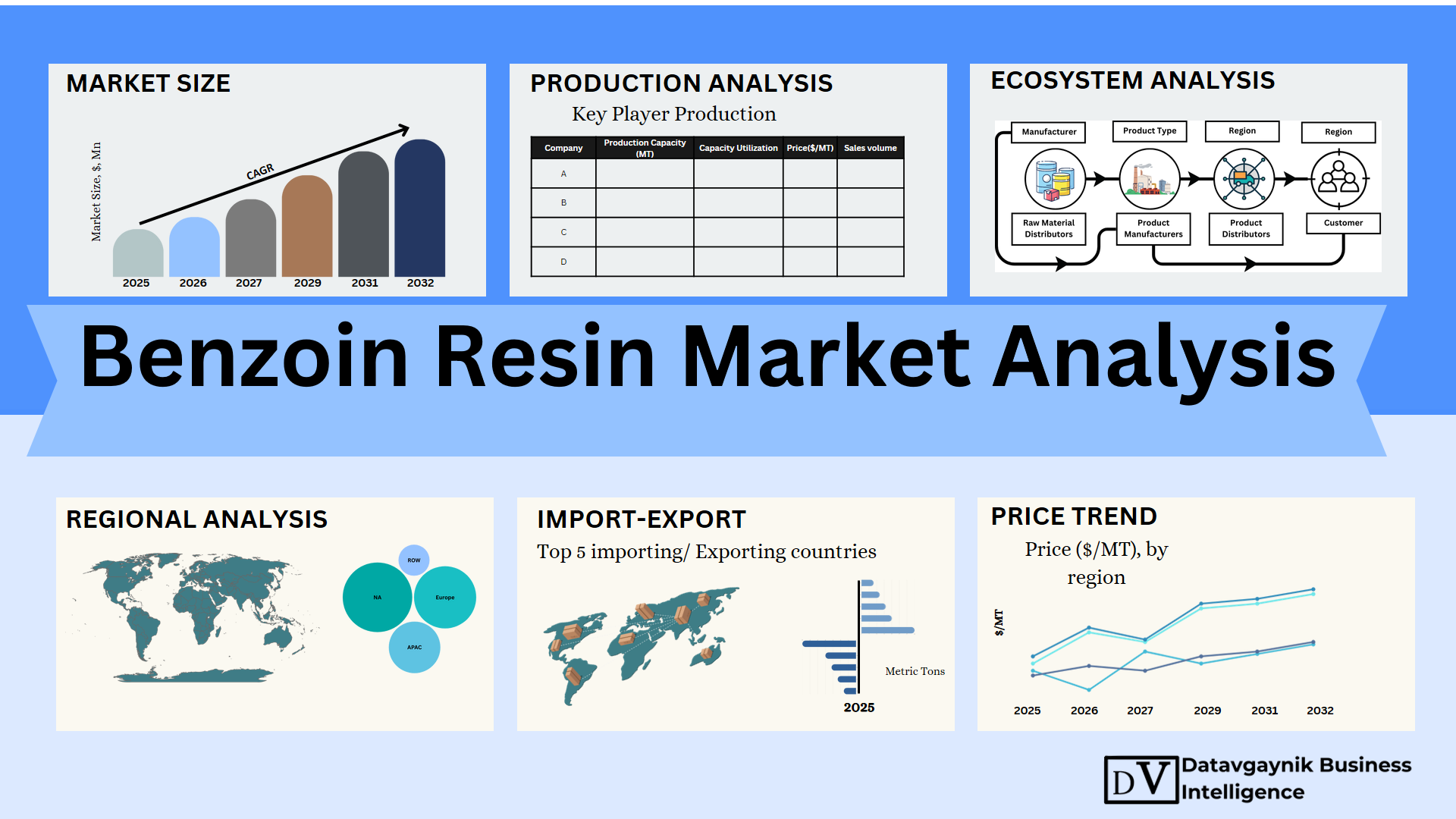
The Benzoin Resin Market is experiencing a dynamic shift in demand patterns, largely influenced by its expanding application base across industries such as pharmaceuticals, cosmetics, incense manufacturing, and food additives. For instance, the growing popularity of natural and plant-based ingredients in the cosmetics sector is driving a notable increase in benzoin resin usage for fragrance and preservative purposes. This trend is further reinforced by rising consumer awareness regarding the therapeutic benefits of benzoin resin, such as its antibacterial and anti-inflammatory properties. The global personal care sector, valued at over 550 billion USD in 2024, is projected to grow steadily at 5–6% annually, creating sustained opportunities for benzoin resin suppliers.
Expanding Applications Driving the Benzoin Resin Market
The expansion of application areas has been a major driver for the Benzoin Resin Market. In the pharmaceutical industry, benzoin resin is gaining traction in formulations for wound healing, antiseptic creams, and respiratory treatments. For example, the demand for topical ointments containing natural resins has increased by nearly 12% over the past five years due to the rising incidence of skin infections and the growing preference for plant-derived solutions. Similarly, in incense production, benzoin resin is valued for its aromatic qualities and ability to bind other fragrance ingredients. With the global incense market expected to surpass 4 billion USD by 2028, benzoin resin’s role in this sector is set to strengthen.
Influence of the Aromatherapy and Wellness Sector on the Benzoin Resin Market
Aromatherapy has become one of the fastest-growing segments impacting the Benzoin Resin Market. As consumers increasingly seek holistic health solutions, benzoin resin’s soothing scent and stress-relieving properties are gaining wider recognition. For instance, the global aromatherapy sector is growing at a CAGR of over 8%, with benzoin oil blends becoming popular in diffusers and massage oils. Wellness product manufacturers are actively incorporating benzoin resin as a key ingredient, leveraging its natural origin and therapeutic profile to appeal to premium and organic product consumers.
Natural Ingredient Movement Supporting the Benzoin Resin Market
The global shift toward natural ingredients in manufacturing has emerged as a significant growth driver for the Benzoin Resin Market. Regulatory changes in Europe and North America favoring plant-based additives over synthetic chemicals are prompting manufacturers to reformulate products, with benzoin resin serving as a viable alternative. For instance, clean-label cosmetic launches increased by nearly 20% between 2020 and 2024, creating higher procurement volumes for natural resins. This movement is also evident in food preservation, where benzoin resin’s antimicrobial properties are being explored as a safer substitute for synthetic preservatives.
Industrial Growth in Asia-Pacific Boosting the Benzoin Resin Market
Asia-Pacific has become a key region in the Benzoin Resin Market due to the abundance of benzoin-producing trees in countries such as Indonesia, Laos, and Vietnam. Expanding manufacturing capacity, favorable climate conditions for resin harvesting, and rising domestic demand in countries like India and China are all contributing to strong market growth. For example, incense production in India alone has seen a 15% rise in exports in the past three years, with benzoin resin being a major raw material. This regional production advantage positions Asia-Pacific as a vital hub for global supply.
Innovation in Extraction and Processing Enhancing the Benzoin Resin Market
Technological advancements in extraction and refining processes are improving the quality, consistency, and yield of benzoin resin, supporting its adoption in high-value sectors. The development of solvent-free extraction methods and sustainable harvesting techniques is particularly noteworthy. For example, automated distillation units can now process resin more efficiently, reducing impurities and enhancing aromatic intensity for fragrance applications. Such innovations are likely to enhance the competitiveness of suppliers and expand the Benzoin Resin Market into more premium product categories.
Pharmaceutical Sector Opportunities in the Benzoin Resin Market
The pharmaceutical sector remains one of the most promising growth areas for the Benzoin Resin Market. Benzoin resin’s bioactive compounds are increasingly being studied for antimicrobial, expectorant, and wound-healing effects. For instance, the prevalence of respiratory issues such as asthma and chronic bronchitis is on the rise, and benzoin-based inhalation products are gaining popularity in certain markets. Additionally, the use of benzoin resin in adhesive bandages and wound dressings is expanding due to its skin-protective qualities. These factors collectively create a robust pipeline of demand in the medical segment.
Rising Consumer Spending in Luxury Fragrances Driving the Benzoin Resin Market
Luxury fragrance manufacturers are playing a pivotal role in expanding the Benzoin Resin Market. With the global luxury perfume market projected to grow at more than 6% annually, benzoin resin’s warm, balsamic scent is becoming a sought-after note in high-end formulations. For example, niche perfumeries in Europe and the Middle East are incorporating higher concentrations of benzoin resin to create distinctive, long-lasting fragrances. This segment also benefits from consumers’ willingness to pay premium prices for products containing rare, natural ingredients.
Sustainability Trends Reshaping the Benzoin Resin Market
Sustainability concerns are influencing the Benzoin Resin Market from both the supply and demand sides. Harvesting practices are being adapted to ensure the long-term availability of Styrax trees, the primary source of benzoin resin. For example, resin tapping techniques that minimize tree damage and allow for regeneration cycles are gaining adoption among producers. On the demand side, companies are marketing benzoin resin as a sustainably sourced material, aligning with broader corporate social responsibility initiatives and attracting environmentally conscious buyers.
Benzoin Resin Market Size and Future Growth Potential
The Benzoin Resin Market Size has been expanding steadily, driven by a combination of rising consumer demand, industrial diversification, and favorable trade conditions. In the past five years, the market has registered consistent growth, and projections suggest sustained momentum over the next decade. Factors such as increasing penetration in emerging markets, broader acceptance in food and beverage preservation, and continued innovation in product formulations are expected to contribute to this upward trajectory. With major producers scaling operations and enhancing quality control, the Benzoin Resin Market Size is positioned for long-term resilience.
Track Country-wise Benzoin Resin Production and Demand through our Benzoin Resin Production Database
-
-
- Benzoin Resin production database for 28+ countries worldwide
- Benzoin Resin sales volume for 32+ countries
- Country-wise Benzoin Resin production capacity, production plant mapping, production capacity utilization for 28+ manufacturers
- Benzoin Resin production plants and production plant capacity analysis by top manufacturers
-
Track real-time Benzoin Resin Prices, Benzoin Resin price charts for 28+ countries, Benzoin Resin weekly price tracker and Benzoin Resin monthly price tracker
-
-
- Track real-time Benzoin Resin prices and Benzoin Resin price trend in 28+ countries though our excel-based Benzoin Resin price charts
- Real-time Benzoin Resin price tracker dashboard with 28+ countries
- Complete transparency on Benzoin Resin price trend through our Benzoin Resin monthly price tracker, Benzoin Resin weekly price tracker
-
Geographical Demand Dynamics in the Benzoin Resin Market
The Benzoin Resin Market exhibits significant geographical demand variations shaped by regional consumption patterns, industrial growth, and cultural preferences. Asia-Pacific dominates demand, driven primarily by Indonesia, Laos, and Vietnam—major benzoin resin producers—where traditional uses in incense and religious ceremonies sustain steady consumption. For example, Indonesia accounts for nearly 40% of global benzoin resin production, supporting robust domestic and export markets. Moreover, growing urbanization and rising disposable incomes in countries like India and China are fueling benzoin resin demand in cosmetics and pharmaceuticals, with India’s personal care market expanding at over 7% annually.
In contrast, North America and Europe present mature markets where demand growth is driven by premium fragrance and natural wellness sectors. For instance, the luxury fragrance industry in Europe has recorded a 6% annual increase, incorporating benzoin resin for its distinctive aromatic profile. Meanwhile, Latin America is emerging as a promising market due to increasing awareness of natural health products and traditional medicine usage. Collectively, these regional demand drivers contribute to a diversified and resilient Benzoin Resin Market.
Production Trends Shaping the Benzoin Resin Market
Production in the Benzoin Resin Market is heavily concentrated in Southeast Asia, where favorable climatic conditions and the availability of Styrax trees enable year-round resin extraction. Indonesia’s plantations, for example, have expanded by approximately 15% over the past five years to meet growing global demand. Additionally, advances in sustainable harvesting techniques, such as controlled tapping and tree rotation, have improved yields while reducing environmental impact. These methods have increased resin extraction efficiency by nearly 10%, ensuring steady supply to the market.
Moreover, smaller producers in Laos and Vietnam are investing in modern processing facilities to enhance resin quality and meet stringent export standards. This is critical as buyers in pharmaceutical and fragrance industries demand higher purity levels. In parallel, some African countries are exploring benzoin resin cultivation, presenting future diversification potential for the market. However, logistical challenges and infrastructure gaps in these nascent regions currently limit large-scale production growth.
Market Segmentation Analysis in the Benzoin Resin Market
The Benzoin Resin Market can be segmented based on application, source type, and grade, each revealing distinct growth trajectories. Application-wise, pharmaceuticals account for approximately 30% of market share, propelled by increased utilization of benzoin resin in wound care and respiratory formulations. For example, the global topical ointment market has grown at a CAGR of 5.5%, boosting demand for bioactive natural ingredients like benzoin resin.
Cosmetics and personal care represent another significant segment, valued at nearly 25% of the market. The surge in organic and clean-label product launches, rising by 18% between 2020 and 2024, has encouraged formulators to incorporate benzoin resin as a natural preservative and fragrance fixative. Incense and religious applications continue to command a substantial share, particularly in regions with strong cultural traditions involving aromatic resins.
From a source perspective, benzoin resin is classified into Siam and Sumatra types, each with unique chemical profiles and market positioning. Siam benzoin, predominantly from Thailand and Laos, is favored for pharmaceutical and fragrance uses due to its higher vanillin content. Sumatra benzoin, sourced mainly from Indonesia, is more common in incense production because of its sweeter aroma and lower cost. This differentiation influences pricing and buyer preferences across applications.
Grading standards based on purity, resin content, and color also impact the Benzoin Resin Market’s segmentation. Higher-grade resins attract premium pricing and are preferred in cosmetics and pharmaceuticals, while lower grades are typically utilized in incense manufacturing. This stratification enables suppliers to cater to diverse customer needs, maximizing market reach and profitability.
Benzoin Resin Price Trends Reflecting Market Dynamics
The Benzoin Resin Price Trend over recent years has demonstrated moderate volatility, primarily influenced by supply-demand imbalances, production costs, and geopolitical factors. For example, in 2022, prices surged by nearly 12% due to reduced yields in Indonesia caused by adverse weather conditions and increased labor costs. This tightening supply pushed buyers in fragrance and pharmaceutical sectors to secure long-term contracts, stabilizing prices in the subsequent period.
Generally, benzoin resin prices are sensitive to fluctuations in raw material availability, as the resin is labor-intensive to harvest and dependent on seasonal cycles. Moreover, the Benzoin Resin Price has been affected by rising transportation and logistics expenses, which account for approximately 15% of the final cost in export-dependent markets. The COVID-19 pandemic further disrupted supply chains, resulting in short-term price spikes followed by gradual normalization.
Looking ahead, the Benzoin Resin Price Trend is expected to follow a gradual upward trajectory aligned with increasing demand from diversified applications and stricter quality requirements. For example, the pharmaceutical sector’s growing preference for pharmaceutical-grade resin could push prices higher due to more rigorous processing needs. Similarly, sustainability-driven harvesting practices may increase production costs, indirectly impacting Benzoin Resin Prices.
Regional Production and Export Patterns in the Benzoin Resin Market
Indonesia remains the world’s largest producer and exporter of benzoin resin, contributing nearly half of global supply. Its plantations benefit from favorable tropical climates, and the government’s support for sustainable forestry practices is enhancing long-term viability. Indonesian exports primarily target Asia, Europe, and North America, with India and China emerging as major importers.
Laos and Vietnam follow as important regional producers, though their market shares are smaller due to limited cultivation areas. These countries are increasing investment in processing technologies to boost export quality. Thailand, the source of premium Siam benzoin resin, commands higher prices due to superior fragrance properties and pharmaceutical suitability. This premium positioning allows Thailand to maintain a strong foothold in luxury fragrance and health product markets.
African countries such as Ethiopia and Tanzania are experimenting with benzoin resin cultivation, aiming to capitalize on rising global demand. However, these regions currently face challenges in scaling production to meet international quality and volume standards. If addressed, this could diversify the Benzoin Resin Market’s supply base and reduce dependency on Southeast Asia.
Impact of Market Segmentation on Pricing in the Benzoin Resin Market
The segmentation of the Benzoin Resin Market significantly influences price structures across regions and applications. For example, Siam benzoin commands prices that are 15-20% higher than Sumatra benzoin due to its superior chemical composition and market reputation. This price differential is particularly pronounced in pharmaceutical and luxury fragrance sectors, where product efficacy and aroma quality are critical.
Grade differentiation also affects pricing, with high-purity resins attracting premiums of up to 25% compared to standard grades used in incense production. Furthermore, certified organic or sustainably harvested benzoin resin can command a price premium of 10-15%, reflecting growing consumer demand for ethically sourced ingredients. These pricing layers enable suppliers to tailor offerings according to customer budgets and quality expectations.
Application-based segmentation further dictates pricing trends. The pharmaceutical segment, which requires stringent quality control and certification, tends to pay higher prices than incense manufacturers, who prioritize volume and cost-efficiency. For example, benzoin resin used in medical-grade adhesives often involves additional processing steps, driving up costs and prices. This nuanced pricing landscape underpins the overall Benzoin Resin Price Trend in the global market.
Global Trade Flows and Their Influence on the Benzoin Resin Market
International trade plays a crucial role in shaping the Benzoin Resin Market, with Southeast Asian countries acting as exporters and regions like North America, Europe, and parts of Asia as importers. Trade agreements and tariffs impact the flow and cost structure, influencing market competitiveness. For example, reduced tariffs between ASEAN countries have facilitated increased intra-regional trade of benzoin resin, supporting supply chain efficiency.
Conversely, trade restrictions or political instability in key producing countries can disrupt supplies and create price volatility. For instance, temporary export restrictions during harvest seasons in Indonesia have historically caused short-term price hikes, reflecting the delicate balance in global supply. Importers are increasingly adopting diversified sourcing strategies to mitigate risks, purchasing benzoin resin from multiple regions to ensure continuity.
Benzoin Resin Price Trend and Market Outlook
The Benzoin Resin Price Trend is closely linked to market fundamentals such as raw material availability, demand fluctuations, and production innovations. Prices have generally shown resilience, rising modestly in line with demand growth from pharmaceuticals, cosmetics, and incense industries. For example, annual benzoin resin price increases of 3-5% have been observed over the past three years, reflecting steady expansion of application areas.
Looking forward, the Benzoin Resin Market is poised for continued price appreciation driven by rising raw material costs, stricter quality standards, and increased interest in sustainable sourcing. For instance, new environmental regulations requiring eco-friendly harvesting techniques may raise production expenses, indirectly pushing prices upward. At the same time, growing consumer preference for natural and organic products will sustain demand, supporting price stability.
The interplay between expanding demand, constrained supply, and evolving quality expectations will shape the Benzoin Resin Price Trend in the coming decade. Stakeholders in the market should anticipate moderate price growth alongside opportunities to capitalize on high-value product segments and emerging geographic markets.
Benzoin Resin Manufacturing Database, Benzoin Resin Manufacturing Capacity
-
-
- Benzoin Resin top manufacturers market share for 28+ manufacturers
- Top 10 manufacturers and top 17 manufacturers of Benzoin Resin in North America, Europe, Asia Pacific
- Benzoin Resin production plant capacity by manufacturers and Benzoin Resin production data for 28+ market players
- Benzoin Resin production dashboard, Benzoin Resin production data in excel format
-
Benzoin Resin price charts, Benzoin Resin weekly price tracker and Benzoin Resin monthly price tracker
-
-
- Factors impacting real-time Benzoin Resin prices in 28+ countries worldwide
- Benzoin Resin monthly price tracker, Benzoin Resin weekly price tracker
- Real-time Benzoin Resin price trend, Benzoin Resin price charts, news and updates
- Tracking Benzoin Resin price fluctuations
-
Top Manufacturers in the Benzoin Resin Market
The Benzoin Resin Market is shaped by a blend of regional producers and global chemical companies, each bringing unique strengths to the industry. Southeast Asian countries, particularly Indonesia, Thailand, and Laos, dominate raw material production due to ideal climatic conditions and centuries-old expertise in resin harvesting. Key manufacturers from these regions focus on both raw resin extraction and initial processing to supply domestic and international markets.
Prominent companies in the global Benzoin Resin Market include Parchem, Chemi Enterprises LLP, Alpha Chemica, Merck, MilliporeSigma, and Central Drug House. Parchem, with its diverse portfolio, supplies benzoin resins tailored for pharmaceutical, cosmetic, and incense uses. Indian players such as Chemi Enterprises and Alpha Chemica leverage competitive production costs and growing technical capabilities to expand their footprint, supplying benzoin in powder, resinoid, and extract forms suited for chemical synthesis and fragrance applications.
Merck and its subsidiary MilliporeSigma stand out for their high-purity benzoin products designed primarily for pharmaceutical formulations and laboratory research. Their products often meet stringent regulatory and quality standards, giving them an edge in highly specialized sectors. European-based companies like Bontoux and Fraterworks focus on premium benzoin resinoid products tailored to fragrance and wellness industries, emphasizing aromatic quality and sustainable sourcing.
New entrants and regional specialists such as BioCrick in India and ATAMAN Kimya in Turkey also contribute to market diversity, offering benzoin products for industrial applications, including flavoring and chemical intermediates. Meanwhile, suppliers like Eden Botanicals and Nature in Bottle cater specifically to the organic and natural products segment, reflecting the rising consumer preference for ethically sourced and natural aromatic ingredients.
Market Share Distribution by Manufacturers in the Benzoin Resin Market
The Benzoin Resin Market share is largely influenced by geographical advantages, production scale, and product specialization. Southeast Asia accounts for nearly 60% of the global production capacity, with Indonesian and Thai manufacturers controlling significant shares due to their proximity to natural Styrax tree plantations and well-established supply chains.
In the pharmaceutical and specialty chemicals sector, multinational corporations such as Merck and MilliporeSigma hold approximately 20-25% of the market, leveraging their technological capabilities and global reach. Their dominance in this segment is supported by continuous investments in R&D and compliance with global regulatory frameworks.
Indian manufacturers, including Chemi Enterprises LLP and Alpha Chemica, have steadily increased their market share to around 10-12%, driven by competitive pricing and expanding export volumes. Their focus on diverse product forms, such as benzoin powder and resinoids, has broadened their client base across cosmetic, pharmaceutical, and industrial sectors.
European fragrance houses and suppliers like Bontoux and Fraterworks, though representing a smaller overall volume, capture a premium segment of the Benzoin Resin Market focused on high-value aromatic products. Their market share ranges between 5-7% but is significant in terms of revenue due to the higher price points of specialty benzoin resinoids.
Emerging players from Turkey, India, and Africa contribute collectively around 5-8%, as the market expands into new geographical regions and applications. Their ability to offer tailored products and competitive pricing is gradually reshaping the competitive landscape.
Key Product Lines and Offerings in the Benzoin Resin Market
Manufacturers in the Benzoin Resin Market have developed diverse product lines to cater to varied applications, reflecting the multi-industry use of benzoin resin.
Parchem offers a broad range of benzoin resins, including Siam and Sumatra types, in raw, powdered, and processed resinoid forms. Their product lines serve pharmaceutical applications such as topical ointments and cough syrups, as well as cosmetics and incense manufacturers.
Chemi Enterprises provides benzoin in multiple forms, including purified powders and resinoids, for use in fragrance production, chemical intermediates, and laboratory reagents. Their flexible packaging options and quality assurance measures have made them a preferred supplier in Asia.
Alpha Chemica’s product line focuses on fine chemical grade benzoin suited for research and industrial synthesis. Their offerings also include natural benzoin extracts used in organic cosmetic formulations.
Merck’s benzoin products stand out for their pharmaceutical-grade purity and batch-to-batch consistency. Their catalog includes benzoin resinoids optimized for topical pharmaceutical use, backed by rigorous quality control and certifications.
MilliporeSigma supplies benzoin primarily for laboratory use, including analytical reagents and specialty resinoids tailored to research institutions and pharmaceutical companies.
European suppliers like Bontoux and Fraterworks concentrate on benzoin resinoids with distinct aromatic profiles, often offering diluted blends or organic-certified products. These are especially popular in luxury perfumes and natural wellness products.
Organic-focused companies such as Eden Botanicals and Nature in Bottle offer benzoin resinoids derived from sustainably harvested sources, emphasizing natural purity and catering to the growing organic cosmetics market.
Recent Developments and Industry Trends in the Benzoin Resin Market
Recent years have seen multiple noteworthy developments shaping the Benzoin Resin Market and its key players:
- Sustainability and Ethical Sourcing Initiatives
Manufacturers are increasingly adopting sustainable harvesting techniques to protect Styrax tree populations and local ecosystems. Several companies have launched reforestation projects and trained harvesters in responsible tapping methods, ensuring long-term resin availability while meeting growing consumer demand for ethically sourced ingredients.
- Product Innovation and Quality Enhancement
To meet rising quality expectations, manufacturers are investing in refining processes that enhance benzoin resin purity and aromatic consistency. New resinoid formulations with tailored scent profiles are gaining traction in luxury fragrances and therapeutic products, opening higher-margin market segments.
- Geographic Expansion and Market Penetration
Companies are broadening their global reach by entering emerging markets in Africa, Latin America, and parts of Asia. These regions show rising demand due to increased awareness of natural and traditional aromatic products, presenting opportunities for manufacturers to diversify revenue streams.
- Regulatory Compliance and Certification
As benzoin resin finds increased use in pharmaceuticals and cosmetics, manufacturers have prioritized compliance with international standards such as ISO and GMP certifications. This ensures product safety and quality, enhancing trust among global buyers.
- Supply Chain Adaptations Post-Pandemic
The COVID-19 pandemic exposed vulnerabilities in global supply chains. Market leaders responded by diversifying sourcing locations, increasing inventory buffers, and adopting digital supply chain management tools. These measures have improved supply stability and responsiveness to market fluctuations.
These manufacturers and recent trends collectively underline a Benzoin Resin Market that is both traditional in its roots and dynamic in its evolution. The blend of established producers with innovative players and expanding geographic footprints is shaping a competitive and resilient global market landscape.
Benzoin Resin Production Data and Benzoin Resin Production Trend, Benzoin Resin Production Database and forecast
-
-
- Benzoin Resin production database for historical years, 10 years historical data
- Benzoin Resin production data and forecast for next 10 years
- Benzoin Resin sales volume by manufacturers
-
Track Real-time Benzoin Resin Prices for purchase and sales contracts, Benzoin Resin price charts, Benzoin Resin weekly price tracker and Benzoin Resin monthly price tracker
-
-
- Gain control on your purchase and sales contracts through our real-time Benzoin Resin price tracker and Benzoin Resin price trend analysis
- Benzoin Resin weekly price tracker and forecast for next four weeks
- Benzoin Resin monthly price tracker and forecast for next two months
-
Market Scenario, Demand vs Supply, Average Product Price, Import vs Export, till 2035
- Global Benzoin Resin Market revenue and demand by region
- Global Benzoin Resin Market production and sales volume
- United States Benzoin Resin Market revenue size and demand by country
- Europe Benzoin Resin Market revenue size and demand by country
- Asia Pacific Benzoin Resin Market revenue size and demand by country
- Middle East & Africa Benzoin Resin Market revenue size and demand by country
- Latin America Benzoin Resin Market revenue size and demand by
- Import-export scenario – United States, Europe, APAC, Latin America, Middle East & Africa
- Average product price – United States, Europe, APAC, Latin America, Middle East & Africa
- Market player analysis, competitive scenario, market share analysis
- Business opportunity analysis
Key questions answered in the Global Benzoin Resin Market Analysis Report:
- What is the market size for Benzoin Resin in United States, Europe, APAC, Middle East & Africa, Latin America?
- What is the yearly sales volume of Benzoin Resin and how is the demand rising?
- Who are the top market players by market share, in each product segment?
- Which is the fastest growing business/ product segment?
- What should be the business strategies and Go to Market strategies?
The report covers Benzoin Resin Market revenue, Production, Sales volume, by regions, (further split into countries):
- Asia Pacific (China, Japan, South Korea, India, Indonesia, Vietnam, Rest of APAC)
- Europe (UK, Germany, France, Italy, Spain, Benelux, Poland, Rest of Europe)
- North America (United States, Canada, Mexico)
- Latin America (Brazil, Argentina, Rest of Latin America)
- Middle East & Africa
Table of Contents:
Benzoin Resin Market
- Introduction to Benzoin Resin
- 1.1 Chemical Composition and Structure
- 1.2 Natural Sources and Extraction Methods
- 1.3 Applications and Benefits in Various Industries
- Market Overview and Key Trends
- 2.1 Global Market Size and Growth Projections
- 2.2 Major Industry Drivers and Influencing Factors
- 2.3 Market Challenges and Potential Barriers
- Production and Manufacturing Processes
- 3.1 Methods of Resin Extraction and Purification
- 3.2 Advancements in Production Techniques
- 3.3 Sustainability and Eco-Friendly Practices in Manufacturing
- Applications of Benzoin Resin
- 4.1 Use in Adhesives and Sealants
- 4.2 Role in the Paints and Coatings Industry
- 4.3 Applications in Cosmetics and Fragrance Products
- 4.4 Pharmaceutical and Medicinal Uses
- 4.5 Role in the Food and Beverage Industry
- Health Benefits and Medicinal Properties
- 5.1 Antiseptic and Anti-inflammatory Effects
- 5.2 Use in Traditional Medicine and Healing
- 5.3 Potential in Modern Therapeutics
- Regulatory Landscape and Safety Standards
- 6.1 Food and Drug Regulations for Resin Products
- 6.2 Environmental and Safety Guidelines for Manufacturing
- 6.3 Compliance with International Standards and Certifications
- Market Segmentation by End-Use Industry
- 7.1 Pharmaceutical and Healthcare Industry Demand
- 7.2 Industrial Uses: Coatings, Inks, and Adhesives
- 7.3 Cosmetics and Personal Care Product Usage
- 7.4 Consumer Goods and Other Applications
- Regional Insights and Market Dynamics
- 8.1 North America Market Trends and Demand
- 8.2 Europe Market Growth and Opportunities
- 8.3 Asia-Pacific Market Potential and Developments
- 8.4 Latin America Market Prospects
- 8.5 Middle East & Africa Market Overview
- Competitive Landscape and Key Players
- 9.1 Major Market Players and Competitive Analysis
- 9.2 Strategic Initiatives and Partnerships
- 9.3 Mergers, Acquisitions, and Market Consolidations
- Supply Chain and Distribution Channels
- 10.1 Key Raw Material Sourcing
- 10.2 Logistics and Distribution Models
- 10.3 Role of Distributors and Retailers
- Pricing Analysis and Cost Structure
- 11.1 Production Cost Breakdown
- 11.2 Pricing Trends and Market Factors
- 11.3 Impact of Raw Material Costs on Final Pricing
- Technological Innovations and Future Trends
- 12.1 Emerging Technologies in Benzoin Resin Production
- 12.2 Research and Development Focus Areas
- 12.3 Future Market Trends and Opportunities
- Impact of Sustainability and Environmental Concerns
- 13.1 Eco-Friendly Production Methods and Materials
- 13.2 Recycling and Reuse in the Resin Industry
- 13.3 Government and Industry Actions Towards Sustainability
- Market Demand, Consumption, and Forecast (2025-2040)
- 14.1 Market Dynamics by Region and Application
- 14.2 Long-Term Market Projections and Future Demand
Other recently published reports:

