

Surging Demand in the Cobalt-Molybdenum (Co-Mo) Catalysts Market Fueled by Clean Fuel Regulations
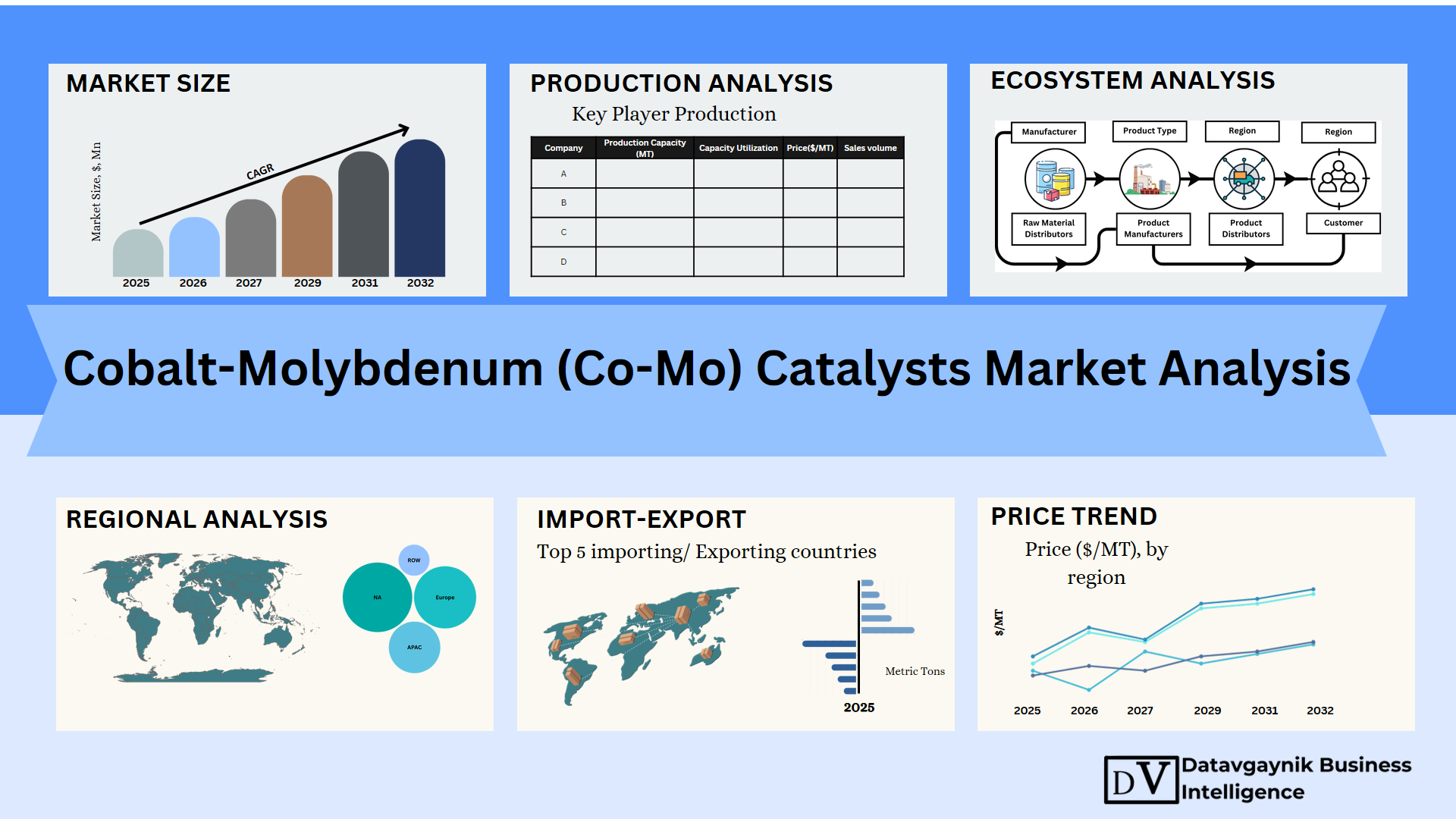
The Cobalt-Molybdenum (Co-Mo) Catalysts Market is rapidly expanding due to the intensifying global push for cleaner fuels. With stricter environmental policies worldwide, refineries are compelled to remove sulfur and nitrogen compounds from petroleum products to meet ultra-low sulfur diesel and gasoline standards. For example, regulations enforcing sulfur content below 10 parts per million have led to a sharp rise in hydrodesulfurization activities, a process where Co-Mo catalysts are indispensable. This regulatory environment is expected to drive the demand for Co-Mo catalysts by nearly 5% annually over the next five years, directly boosting market size as refineries upgrade their catalytic units to comply with stringent emissions norms.
Petrochemical Industry Expansion Drives Growth in the Cobalt-Molybdenum (Co-Mo) Catalysts Market
Rapid growth in the petrochemical sector, particularly in Asia-Pacific and the Middle East, is another critical growth driver for the Cobalt-Molybdenum (Co-Mo) Catalysts Market. Co-Mo catalysts are essential in hydrocracking and hydrogenation processes, which convert heavy hydrocarbons into valuable products such as lubricants, plastics, and chemicals used across various industries. The expanding middle class and industrial base in emerging markets have accelerated petrochemical demand by over 6% per year, translating into sustained and growing demand for Co-Mo catalysts. For instance, refinery capacity expansions in India and China continue to escalate, directly lifting the consumption of these catalysts in petrochemical production.
Advancements in Hydrogenation Reactions Boost the Cobalt-Molybdenum (Co-Mo) Catalysts Market
Hydrogenation processes in industries such as food processing and biofuel production are fueling significant growth in the Cobalt-Molybdenum (Co-Mo) Catalysts Market. These catalysts improve reaction efficiency in converting unsaturated fats to saturated fats and upgrading bio-oils into cleaner fuels. For example, as the global biofuel market grows at a CAGR of about 7%, driven by demand for sustainable energy, the role of Co-Mo catalysts in hydrogenation is becoming increasingly vital. The adoption of Co-Mo catalysts in this sector is expanding rapidly due to their ability to enhance selectivity and reduce by-products, thus opening new revenue streams within the overall market.
Renewable Energy Transition Propels the Cobalt-Molybdenum (Co-Mo) Catalysts Market Forward
The global shift towards renewable energy and decarbonization strategies significantly impact the Cobalt-Molybdenum (Co-Mo) Catalysts Market. Co-Mo catalysts are critical for producing green hydrogen through water electrolysis and in technologies aimed at carbon emission reduction. For example, the hydrogen economy is projected to grow exponentially in the coming decade, with annual investments in green hydrogen infrastructure increasing by double digits. This surge directly translates into heightened demand for Co-Mo catalysts, as they serve as essential materials for efficient hydrogen production, driving innovation and adoption in this clean technology segment.
Industrialization in Emerging Economies Elevates the Cobalt-Molybdenum (Co-Mo) Catalysts Market Demand
Emerging markets in Asia and Africa are undergoing rapid industrialization, leading to an increased appetite for chemicals, fuels, and petrochemical products, thereby boosting the Cobalt-Molybdenum (Co-Mo) Catalysts Market. Growing urbanization, expanding manufacturing bases, and infrastructure projects in these regions are intensifying demand for energy and refining products. For instance, countries like Indonesia, Vietnam, and Nigeria have seen refinery expansions and new petrochemical plant constructions, which require efficient catalysts to meet growing production needs. This regional industrial growth is expected to sustain the market momentum for Co-Mo catalysts over the next decade.
Enhanced Catalyst Efficiency Drives Adoption in the Cobalt-Molybdenum (Co-Mo) Catalysts Market
Ongoing advancements in catalyst formulations are significantly impacting the Cobalt-Molybdenum (Co-Mo) Catalysts Market by improving catalyst selectivity, stability, and resistance to deactivation. These enhancements enable refineries and chemical manufacturers to optimize processing efficiencies and reduce operational costs. For example, new generation Co-Mo catalysts with higher active surface areas and prolonged lifespans have been adopted by leading petrochemical firms, resulting in a 10-15% increase in overall process productivity. This improvement is pushing industries towards upgrading existing catalyst systems, fueling market growth with demand for advanced Co-Mo catalyst variants.
Regulatory Pressure and Sustainability Goals Shape the Cobalt-Molybdenum (Co-Mo) Catalysts Market Dynamics
The tightening of environmental regulations worldwide, aimed at lowering sulfur emissions and enhancing fuel quality, is a major force propelling the Cobalt-Molybdenum (Co-Mo) Catalysts Market. Governments are enforcing stricter emission standards, pushing industries to adopt cleaner production methods that heavily rely on Co-Mo catalysts for efficient sulfur and nitrogen removal. For example, compliance requirements in North America and Europe are accelerating upgrades in refining infrastructure, boosting catalyst demand. Moreover, sustainability agendas focused on reducing carbon footprints are encouraging the integration of Co-Mo catalysts in green hydrogen production and renewable chemical synthesis, driving a new wave of market expansion.
“Track Country-wise Cobalt-Molybdenum (Co-Mo) Catalystsr Production and Demand through our Cobalt-Molybdenum (Co-Mo) Catalystsr Production Database”
-
-
- Cobalt-Molybdenum (Co-Mo) Catalystsr production database for 30+ countries worldwide
- Cobalt-Molybdenum (Co-Mo) Catalystsr sales volume for 31+ countries
- Country-wise Cobalt-Molybdenum (Co-Mo) Catalystsr production capacity, production plant mapping, production capacity utilization for 30+ manufacturers
- Cobalt-Molybdenum (Co-Mo) Catalystsr production plants and production plant capacity analysis by top manufacturers
-
“Track real-time Cobalt-Molybdenum (Co-Mo) Catalystsr Prices, Cobalt-Molybdenum (Co-Mo) Catalystsr price charts for 30+ countries, Cobalt-Molybdenum (Co-Mo) Catalystsr weekly price tracker and Cobalt-Molybdenum (Co-Mo) Catalystsr monthly price tracker”
-
-
- Track real-time Cobalt-Molybdenum (Co-Mo) Catalystsr prices and Cobalt-Molybdenum (Co-Mo) Catalystsr price trend in 30+ countries though our excel-based Cobalt-Molybdenum (Co-Mo) Catalystsr price charts
- Real-time Cobalt-Molybdenum (Co-Mo) Catalystsr price tracker dashboard with 30+ countries
- Complete transparency on Cobalt-Molybdenum (Co-Mo) Catalystsr price trend through our Cobalt-Molybdenum (Co-Mo) Catalystsr monthly price tracker, Cobalt-Molybdenum (Co-Mo) Catalystsr weekly price tracker
-
Geographical Demand Trends in the Cobalt-Molybdenum (Co-Mo) Catalysts Market
The Cobalt-Molybdenum (Co-Mo) Catalysts Market demonstrates varied demand intensity across key regions, driven by industrial growth, refining activities, and environmental mandates. Asia-Pacific emerges as the largest consumer region, propelled by rapid industrialization and an expanding petrochemical industry in countries such as China, India, and Southeast Asia. For example, China’s refining capacity has been growing at a steady annual rate of around 7%, which directly boosts Co-Mo catalyst consumption for hydrodesulfurization and hydrocracking processes. India’s refinery expansion, supported by the enforcement of Bharat Stage VI emission standards, further amplifies the market demand. Southeast Asian nations, with rising urbanization and energy needs, continue to upgrade refineries, creating new avenues for Co-Mo catalysts.
North America’s Influence on the Cobalt-Molybdenum (Co-Mo) Catalysts Market
In North America, the Cobalt-Molybdenum (Co-Mo) Catalysts Market is predominantly influenced by the mature refining sector and stringent regulatory landscape. The United States accounts for a significant share due to its extensive refinery infrastructure and the push for ultra-low sulfur fuels under EPA Tier 3 regulations. Refining throughput exceeding 18 million barrels per day necessitates advanced catalysts to meet sulfur limits and enhance fuel quality. The shale gas boom has increased natural gas availability, stimulating demand for hydrocracking and hydrogenation applications where Co-Mo catalysts are vital. Moreover, North America’s emphasis on clean energy technologies and biofuel production is gradually increasing Co-Mo catalyst adoption in emerging hydrogenation and renewable fuel processes.
Europe’s Role in Shaping the Cobalt-Molybdenum (Co-Mo) Catalysts Market
Europe holds a significant position in the Cobalt-Molybdenum (Co-Mo) Catalysts Market, driven by its focus on sustainability and strict emissions regulations. Countries such as Germany, France, and the United Kingdom have implemented rigorous fuel quality standards, necessitating extensive use of Co-Mo catalysts in refining and chemical manufacturing. Europe’s push toward green hydrogen and renewable energy technologies also supports catalyst demand, particularly for hydrogenation processes critical in fuel cell development. For example, Germany’s chemical industry, one of the largest in Europe, relies heavily on Co-Mo catalysts to optimize hydrocracking and hydrodesulfurization efficiency, bolstering market growth across the continent.
Middle East and Africa’s Growing Cobalt-Molybdenum (Co-Mo) Catalysts Market Potential
The Middle East and Africa region is rapidly expanding its footprint in the Cobalt-Molybdenum (Co-Mo) Catalysts Market due to the presence of vast oil reserves and increasing refining capacities. Countries like Saudi Arabia, UAE, and Kuwait are investing heavily in refinery modernization to produce cleaner fuels and meet global emission standards. The refining sector’s upgrade programs incorporate advanced Co-Mo catalysts to enhance hydrodesulfurization and hydrocracking processes, driving market demand. Additionally, emerging African economies are showing growing interest in petrochemical and refining infrastructure development, providing new opportunities for Co-Mo catalyst suppliers.
Latin America’s Emerging Demand for Cobalt-Molybdenum (Co-Mo) Catalysts
Latin America is witnessing a gradual increase in demand within the Cobalt-Molybdenum (Co-Mo) Catalysts Market, primarily fueled by refinery expansions and regulatory alignment with international fuel quality standards. Brazil and Mexico, with sizeable refining sectors, are actively adopting advanced catalytic solutions to reduce sulfur content and improve fuel efficiency. The region’s ongoing investments in petrochemical industries and fuel upgrading technologies indicate a positive growth trajectory for Co-Mo catalysts, supported by rising industrial activities and sustainability efforts.
Production Landscape of the Cobalt-Molybdenum (Co-Mo) Catalysts Market
The production of Co-Mo catalysts is concentrated in regions with established chemical manufacturing and refining sectors, including Asia-Pacific, North America, and Europe. Countries like China and India have ramped up production capacities to meet their booming domestic demand while also emerging as major exporters. For example, Chinese catalyst manufacturers have invested substantially in research and development to improve catalyst performance and cost efficiency, enabling them to supply competitive products globally. Similarly, Indian producers focus on scaling manufacturing to support refinery upgrades and green energy projects. In Europe and North America, production emphasizes high-performance and specialized Co-Mo catalysts tailored for stringent environmental compliance and advanced refining technologies.
Market Segmentation in the Cobalt-Molybdenum (Co-Mo) Catalysts Market
The Cobalt-Molybdenum (Co-Mo) Catalysts Market is segmented by application, type, end-use industry, and form, each segment contributing uniquely to market dynamics.
By Application: Hydrodesulfurization leads demand due to the universal need to lower sulfur content in fuels, supporting regulatory compliance globally. Hydrocracking follows closely, fueled by the rising need to convert heavy oils into lighter, more valuable products like diesel and gasoline. Hydrogenation applications, particularly in biofuels and chemical synthesis, are gaining traction with increasing focus on sustainability.
By Type: Conventional Co-Mo catalysts continue to hold a significant market share, valued for their proven reliability and cost-effectiveness. However, advanced Co-Mo catalysts engineered for enhanced selectivity, stability, and lifespan are rapidly penetrating the market, especially in regions with strict fuel quality standards.
By End-Use Industry: Oil and gas refining dominates consumption, accounting for the largest portion of the market, driven by ongoing refinery upgrades and clean fuel mandates. Petrochemicals form another major segment, as Co-Mo catalysts are crucial in producing intermediates and specialty chemicals. Chemical manufacturing and emerging sectors like biofuels and hydrogen production are steadily expanding their share of the market.
By Form: Powdered Co-Mo catalysts are preferred in applications requiring high surface area and rapid reaction kinetics, such as hydrocracking. Pelletized forms are widely used in large-scale refining operations due to their durability and ease of handling during prolonged use.
Cobalt-Molybdenum (Co-Mo) Catalysts Price Trends and Influences
The Cobalt-Molybdenum (Co-Mo) Catalysts Price trend reflects the complex interplay of raw material costs, technological advancements, and market demand. Cobalt and molybdenum, the primary metals in these catalysts, experience price volatility influenced by geopolitical factors, mining output, and supply chain disruptions. For example, cobalt prices have seen fluctuations due to production challenges in key mining regions, impacting overall catalyst production costs. Similarly, molybdenum prices respond to global steel industry demand, as it is also used extensively in steel alloys.
Impact of Raw Material Prices on the Cobalt-Molybdenum (Co-Mo) Catalysts Market
Rising raw material prices have a direct bearing on the Cobalt-Molybdenum (Co-Mo) Catalysts Price, often leading to higher production costs passed on to end-users. For instance, a surge in cobalt prices by over 20% in recent years has forced manufacturers to innovate, focusing on optimizing catalyst formulations to reduce cobalt content without compromising performance. This trend has encouraged the development of advanced Co-Mo catalysts that balance cost efficiency with superior catalytic activity, thereby maintaining market growth despite price pressures.
Technological Advancements Influencing the Cobalt-Molybdenum (Co-Mo) Catalysts Price Trend
Innovations in catalyst manufacturing are shaping the Cobalt-Molybdenum (Co-Mo) Catalysts Price trend by improving catalyst longevity and reducing operational expenses for refiners. For example, catalysts with enhanced resistance to deactivation reduce the frequency of replacements, providing cost savings over time. These advances allow producers to command premium pricing justified by increased efficiency and lower lifecycle costs, which drives demand in regions with stringent fuel regulations.
Regional Price Variations in the Cobalt-Molybdenum (Co-Mo) Catalysts Market
The Cobalt-Molybdenum (Co-Mo) Catalysts Price varies geographically, influenced by factors such as local manufacturing capabilities, import dependencies, and regulatory environments. Asia-Pacific markets often benefit from lower prices due to large-scale local production and raw material availability. In contrast, Europe and North America experience relatively higher prices due to stringent quality standards and reliance on specialized, high-performance catalysts. This price disparity encourages regional innovation and supply chain optimization, fostering competitive dynamics within the global market.
Market Outlook: Cobalt-Molybdenum (Co-Mo) Catalysts Price and Demand Correlation
Overall, the Cobalt-Molybdenum (Co-Mo) Catalysts Price trend remains tightly coupled with market demand and raw material supply conditions. As demand intensifies from refining upgrades, petrochemical expansion, and clean energy projects, prices are likely to reflect these growth dynamics. However, ongoing advancements in catalyst technology and increasing production capacities, especially in Asia-Pacific, are expected to moderate price volatility, ensuring sustained market growth with accessible cost structures.
“Cobalt-Molybdenum (Co-Mo) Catalystsr Manufacturing Database, Cobalt-Molybdenum (Co-Mo) Catalystsr Manufacturing Capacity”
-
-
- Cobalt-Molybdenum (Co-Mo) Catalystsr top manufacturers market share for 30+ manufacturers
- Top 11 manufacturers and top 18 manufacturers of Cobalt-Molybdenum (Co-Mo) Catalystsr in North America, Europe, Asia Pacific
- Cobalt-Molybdenum (Co-Mo) Catalystsr production plant capacity by manufacturers and Cobalt-Molybdenum (Co-Mo) Catalystsr production data for 30+ market players
- Cobalt-Molybdenum (Co-Mo) Catalystsr production dashboard, Cobalt-Molybdenum (Co-Mo) Catalystsr production data in excel format
-
“Cobalt-Molybdenum (Co-Mo) Catalystsr price charts, Cobalt-Molybdenum (Co-Mo) Catalystsr weekly price tracker and Cobalt-Molybdenum (Co-Mo) Catalystsr monthly price tracker”
-
-
- Factors impacting real-time Cobalt-Molybdenum (Co-Mo) Catalystsr prices in 30+ countries worldwide
- Cobalt-Molybdenum (Co-Mo) Catalystsr monthly price tracker, Cobalt-Molybdenum (Co-Mo) Catalystsr weekly price tracker
- Real-time Cobalt-Molybdenum (Co-Mo) Catalystsr price trend, Cobalt-Molybdenum (Co-Mo) Catalystsr price charts, news and updates
- Tracking Cobalt-Molybdenum (Co-Mo) Catalystsr price fluctuations
-
Leading Manufacturers in the Cobalt-Molybdenum (Co-Mo) Catalysts Market
The Cobalt-Molybdenum (Co-Mo) Catalysts Market is dominated by a handful of global manufacturers known for their technological expertise, extensive production capabilities, and innovative product portfolios. Key players include companies such as Albemarle Corporation, BASF SE, Johnson Matthey, Sinopec Catalyst Company, and Haldor Topsoe. These manufacturers collectively hold a substantial share of the market, driven by their ability to supply high-performance catalysts tailored to stringent environmental regulations and complex refining processes.
Market Share Distribution Among Top Manufacturers in the Cobalt-Molybdenum (Co-Mo) Catalysts Market
Albemarle Corporation stands as a market leader, commanding a significant share of the global Cobalt-Molybdenum (Co-Mo) Catalysts Market. Its product lines focus on advanced hydroprocessing catalysts widely adopted in hydrodesulfurization (HDS) and hydrocracking applications. Albemarle’s ability to deliver catalysts with high selectivity and long operational life has secured its dominant presence in refining hubs across North America, Asia-Pacific, and Europe.
BASF SE holds a strong position, particularly in Europe and Asia, offering a diverse range of Co-Mo catalysts under its HydroCat product family. These catalysts are engineered for efficient sulfur removal and hydrogenation processes, providing refineries with improved yields and reduced emissions. BASF’s continuous investment in catalyst research and development supports its steady market share growth by addressing evolving regulatory requirements.
Johnson Matthey is another heavyweight in the Cobalt-Molybdenum (Co-Mo) Catalysts Market, specializing in proprietary formulations that emphasize catalyst durability and enhanced activity. Its line of hydroprocessing catalysts, including the HT (high throughput) series, is well recognized for meeting ultra-low sulfur fuel standards while enabling operational cost reductions. The company’s focus on sustainable technologies and clean energy solutions expands its reach into emerging applications like hydrogen production.
Sinopec Catalyst Company, leveraging China’s rapidly growing refining sector, commands a growing market share within the Asia-Pacific region. The company’s Co-Mo catalysts, tailored for China VI fuel standards, have been widely adopted across domestic refineries upgrading their hydroprocessing units. Sinopec’s scale and integration within China’s petrochemical ecosystem provide a competitive advantage that bolsters its position in the market.
Haldor Topsoe, with its extensive expertise in catalyst manufacturing, holds a niche yet important share of the Cobalt-Molybdenum (Co-Mo) Catalysts Market. Its product offerings focus on customized Co-Mo catalysts optimized for specific refinery configurations and hydrogenation processes. Topsoe’s strategic emphasis on innovation and energy-efficient catalysts aligns with the increasing demand for sustainable refining technologies.
Product Line Highlights and Manufacturer Specializations in the Cobalt-Molybdenum (Co-Mo) Catalysts Market
Albemarle Corporation’s flagship hydroprocessing catalysts, including the ALBEMARLE HT-100 series, are designed for deep desulfurization and stable hydrocracking performance. These catalysts feature optimized cobalt-to-molybdenum ratios and enhanced pore structures to maximize active sites, improving sulfur removal efficiency and catalyst longevity. Albemarle also offers tailored catalyst solutions to meet the demands of renewable fuel processing and bio-oil hydrogenation.
BASF’s HydroCat product family encompasses a range of Co-Mo catalysts formulated for various refinery applications. HydroCat D and HydroCat HD series target hydrodesulfurization and hydrocracking, respectively, with formulations focused on minimizing catalyst deactivation and maintaining high activity under severe operating conditions. BASF’s continued R&D investment has produced catalysts capable of handling heavier feedstocks while delivering ultra-low sulfur fuel production.
Johnson Matthey’s HT series catalysts emphasize robustness and high throughput in challenging refining environments. These catalysts support refinery operators in meeting stringent fuel standards while reducing hydrogen consumption and process downtime. The company also develops Co-Mo catalysts integrated into hydrogen fuel production and ammonia synthesis, expanding its presence beyond traditional refining applications.
Sinopec Catalyst Company’s product line includes Co-Mo catalysts that comply with China VI standards, focusing on improving refinery process efficiencies and environmental compliance. Their catalysts have been widely deployed in domestic refineries undergoing rapid modernization. Sinopec’s integration of proprietary manufacturing techniques ensures cost-effective production and competitive pricing.
Haldor Topsoe’s product range is characterized by customizable Co-Mo catalysts that align with unique refinery process needs. The company works closely with clients to optimize catalyst formulations, balancing activity, selectivity, and stability. Their catalysts are increasingly adopted in hydrogenation reactions supporting both conventional refining and emerging clean energy technologies.
Recent Industry Developments and Market News in the Cobalt-Molybdenum (Co-Mo) Catalysts Market
The Cobalt-Molybdenum (Co-Mo) Catalysts Market has seen notable developments over the past two years as companies respond to shifting regulatory landscapes and energy transition imperatives.
In early 2024, Albemarle Corporation announced a major expansion of its catalyst manufacturing facility in North America, aiming to increase production capacity by 25%. This move reflects growing demand for Co-Mo catalysts in hydrodesulfurization and renewable fuel processing, positioning Albemarle to capture greater market share amid tightening emissions standards.
BASF SE launched a new generation of HydroCat catalysts in mid-2023, optimized for deep desulfurization with improved resistance to contaminants commonly found in heavy crude oils. This product introduction supports refiners facing increasingly complex feedstock challenges and aligns with stricter environmental regulations worldwide.
In late 2023, Johnson Matthey secured multiple supply contracts with refiners in Europe and Asia for its HT series Co-Mo catalysts. These agreements underscore the company’s leadership in delivering catalysts that meet ultra-low sulfur fuel mandates while reducing operational costs. Johnson Matthey also intensified its R&D efforts targeting hydrogen economy applications, signaling its strategic focus on future energy markets.
Sinopec Catalyst Company has been expanding its R&D collaboration with domestic and international partners throughout 2023 and 2024 to develop catalysts tailored for green hydrogen production and biofuel upgrading. These initiatives align with China’s broader energy transition goals and reinforce Sinopec’s position in the rapidly evolving Asia-Pacific market.
Haldor Topsoe announced a partnership in early 2024 with a major refinery operator in the Middle East to co-develop customized Co-Mo catalysts aimed at optimizing hydrocracking efficiency under high-temperature conditions. This collaboration highlights Topsoe’s approach of integrating customer-specific solutions and innovation to enhance refinery performance.
This detailed overview of top manufacturers, market share distribution, product line focus, and recent market developments provides a clear picture of the competitive landscape and strategic directions shaping the Cobalt-Molybdenum (Co-Mo) Catalysts Market.
“Cobalt-Molybdenum (Co-Mo) Catalystsr Production Data and Cobalt-Molybdenum (Co-Mo) Catalystsr Production Trend, Cobalt-Molybdenum (Co-Mo) Catalystsr Production Database and forecast”
-
-
- Cobalt-Molybdenum (Co-Mo) Catalystsr production database for historical years, 11 years historical data
- Cobalt-Molybdenum (Co-Mo) Catalystsr production data and forecast for next 11 years
- Cobalt-Molybdenum (Co-Mo) Catalystsr sales volume by manufacturers
-
“Track Real-time Cobalt-Molybdenum (Co-Mo) Catalystsr Prices for purchase and sales contracts, Cobalt-Molybdenum (Co-Mo) Catalystsr price charts, Cobalt-Molybdenum (Co-Mo) Catalystsr weekly price tracker and Cobalt-Molybdenum (Co-Mo) Catalystsr monthly price tracker”
-
-
- Gain control on your purchase and sales contracts through our real-time Cobalt-Molybdenum (Co-Mo) Catalystsr price tracker and Cobalt-Molybdenum (Co-Mo) Catalystsr price trend analysis
- Cobalt-Molybdenum (Co-Mo) Catalystsr weekly price tracker and forecast for next four weeks
- Cobalt-Molybdenum (Co-Mo) Catalystsr monthly price tracker and forecast for next two months
-
Market Scenario, Demand vs Supply, Average Product Price, Import vs Export, till 2035
- Global Cobalt-Molybdenum (Co-Mo) Catalysts Market revenue and demand by region
- Global Cobalt-Molybdenum (Co-Mo) Catalysts Market production and sales volume
- United States Cobalt-Molybdenum (Co-Mo) Catalysts Market revenue size and demand by country
- Europe Cobalt-Molybdenum (Co-Mo) Catalysts Market revenue size and demand by country
- Asia Pacific Cobalt-Molybdenum (Co-Mo) Catalysts Market revenue size and demand by country
- Middle East & Africa Cobalt-Molybdenum (Co-Mo) Catalysts Market revenue size and demand by country
- Latin America Cobalt-Molybdenum (Co-Mo) Catalysts Market revenue size and demand by
- Import-export scenario – United States, Europe, APAC, Latin America, Middle East & Africa
- Average product price – United States, Europe, APAC, Latin America, Middle East & Africa
- Market player analysis, competitive scenario, market share analysis
- Business opportunity analysis
Key questions answered in the Global Cobalt-Molybdenum (Co-Mo) Catalysts Market Analysis Report:
- What is the market size for Cobalt-Molybdenum (Co-Mo) Catalysts in United States, Europe, APAC, Middle East & Africa, Latin America?
- What is the yearly sales volume of Cobalt-Molybdenum (Co-Mo) Catalysts and how is the demand rising?
- Who are the top market players by market share, in each product segment?
- Which is the fastest growing business/ product segment?
- What should be the business strategies and Go to Market strategies?
The report covers Cobalt-Molybdenum (Co-Mo) Catalysts Market revenue, Production, Sales volume, by regions, (further split into countries):
- Asia Pacific (China, Japan, South Korea, India, Indonesia, Vietnam, Rest of APAC)
- Europe (UK, Germany, France, Italy, Spain, Benelux, Poland, Rest of Europe)
- North America (United States, Canada, Mexico)
- Latin America (Brazil, Argentina, Rest of Latin America)
- Middle East & Africa
Table of Contents:
- Introduction to Cobalt-Molybdenum (Co-Mo) Catalysts
- Overview of Co-Mo Catalysts and Their Applications
- Key Characteristics and Properties of Co-Mo Catalysts
- Importance of Co-Mo Catalysts in Industrial Processes
- Market Overview and Dynamics
- Global Market Size and Growth Trends for Co-Mo Catalysts
- Market Drivers: Technological Advancements and Demand from Refining Industries
- Market Challenges: Cost Factors and Availability of Raw Materials
- Types of Cobalt-Molybdenum (Co-Mo) Catalysts
- Traditional vs. Modified Co-Mo Catalysts
- Comparison with Other Metal-Based Catalysts (e.g., Nickel, Iron)
- Development of High-Performance Co-Mo Catalysts for Specialized Applications
- Application Areas of Co-Mo Catalysts
- Role in Petroleum Refining: Hydrotreating and Hydrocracking Processes
- Applications in the Production of Cleaner Fuels and Petrochemicals
- Co-Mo Catalysts in Environmental Protection and Pollution Control
- Regional Market Analysis
- North America: Market Insights and Leading Application Sectors
- Europe: Regulatory Impacts and Refining Industry Trends
- Asia-Pacific: Growth Potential in Emerging Economies and Industrialization
- Latin America and the Middle East: Opportunities and Demand for Co-Mo Catalysts
- Technological Advancements in Co-Mo Catalysts
- Innovations in Co-Mo Catalyst Preparation and Synthesis Techniques
- Developments in Catalyst Life Cycle, Regeneration, and Reusability
- Future Trends: Nanotechnology and Advanced Material Combinations
- Co-Mo Catalysts in Refining Processes
- Role of Co-Mo Catalysts in Desulfurization, Denitrogenation, and Demetallization
- Impact on Hydroprocessing Efficiency and Product Quality
- Case Studies of Co-Mo Catalysts in Commercial Refining Operations
- Production and Supply Chain Dynamics
- Overview of the Global Supply Chain for Co-Mo Catalysts
- Key Manufacturers, Suppliers, and Their Production Capacities
- Raw Material Sourcing: Cobalt and Molybdenum Supply Chain Analysis
- Competitive Landscape
- Leading Market Players and Their Product Offerings
- Analysis of Strategic Partnerships, Mergers, and Acquisitions
- Competitive Positioning of Co-Mo Catalysts Manufacturers
- Pricing Trends and Market Forecast
- Historical Price Trends and Their Impact on Market Growth
- Price Fluctuations in Cobalt and Molybdenum: Implications for Catalyst Pricing
- Future Price Projections and the Influence of Supply & Demand
- Environmental Impact and Sustainability
- Environmental Benefits of Using Co-Mo Catalysts in Industrial Processes
- Sustainable Sourcing and Recycling of Cobalt and Molybdenum
- Regulatory and Environmental Standards for Co-Mo Catalyst Use
- Challenges in the Co-Mo Catalysts Market
- High Cost of Raw Materials and the Impact on Market Prices
- Issues Related to Catalyst Deactivation and Maintenance
- Competition from Alternative Catalysts and Technology Substitutes
- Opportunities for Market Growth
- Emerging Applications in Renewable Energy and Biofuels
- Opportunities in Developing Economies with Expanding Refining Industries
- Technological Advancements and Their Potential for Co-Mo Catalyst Enhancement
- Co-Mo Catalysts in the Global Energy Transition
- Role in the Production of Low-Sulfur Fuels and Cleaner Emissions
- Potential Contribution to the Hydrogen Economy and Fuel Cells
- Impact of Environmental Policies on Co-Mo Catalyst Demand
- Demand and Consumption Analysis
- Global Demand Trends and Market Consumption by Region
- Sector-wise Consumption: Refining, Petrochemical, and Environmental Applications
- Growth Prospects in Emerging Sectors like Green Chemistry
- Production and Export Statistics
- Production Volumes and Capacities in Major Manufacturing Regions
- Export and Import Trends of Co-Mo Catalysts: Key Markets and Trade Dynamics
- Strategic Trade Partnerships for Co-Mo Catalyst Suppliers
- Future Outlook and Market Projections
- Forecast of Co-Mo Catalyst Market Growth (2025-2035)
- Expected Technological Breakthroughs and Their Market Impact
- Emerging Market Opportunities in the Post-COVID Economy
- Case Studies of Successful Co-Mo Catalyst Implementation
- Real-World Applications in Major Refineries and Petrochemical Plants
- Case Study on Co-Mo Catalyst Efficiency and Performance Improvement
- Success Stories of Sustainable Co-Mo Catalyst Development
- Strategic Recommendations for Industry Stakeholders
- Key Insights for Manufacturers, Distributors, and End-Users
- Recommendations for Enhancing Product Offerings and Market Reach
- Strategic Approaches to Addressing Cost and Environmental Challenges
- Conclusion: Key Insights and Market Takeaways
- Summary of Major Market Trends and Dynamics
- Key Challenges and Opportunities for Stakeholders
- Final Thoughts on the Future of the Co-Mo Catalysts Market
Other recently published reports:

