

Lightweighting Strategies Propelling the Advanced Adhesive Resins for Aerospace Market
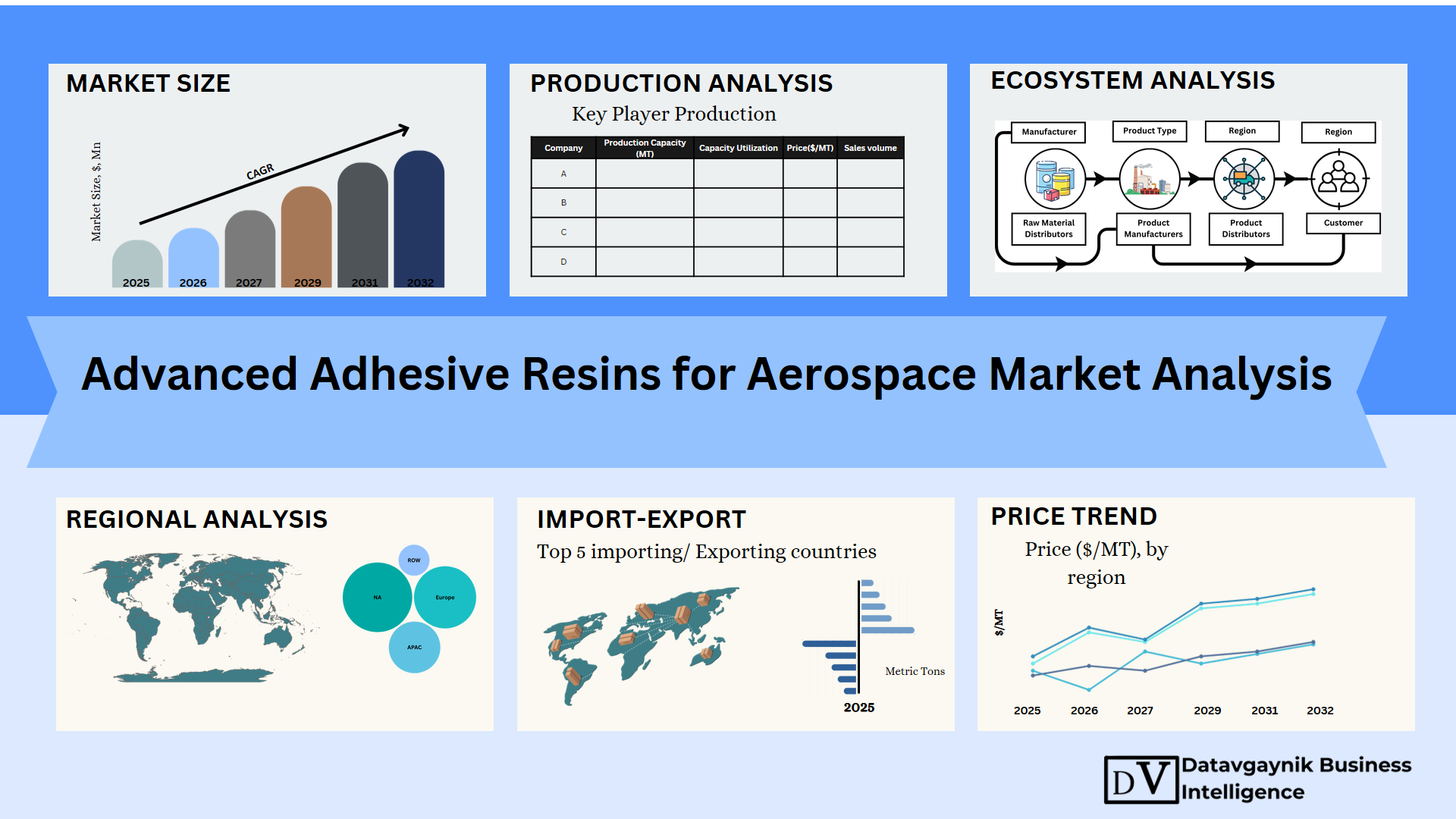
The Advanced Adhesive Resins for Aerospace Market is being propelled by the aerospace industry’s aggressive push toward lightweighting strategies. Aircraft manufacturers are increasingly replacing mechanical fasteners with advanced adhesive resins, especially in the bonding of composites, aluminum, and titanium. This shift is largely due to the ability of these resins to reduce structural weight while maintaining exceptional bond strength and durability. For instance, advanced adhesives used in composite-intensive aircraft such as the Boeing 787 Dreamliner and Airbus A350 have been instrumental in reducing overall weight by 15% to 20%, contributing significantly to fuel savings and emission reduction.
Rising Composite Utilization Supporting the Advanced Adhesive Resins for Aerospace Market
The Advanced Adhesive Resins for Aerospace Market is expanding in direct correlation with the rising use of composite materials in both commercial and defense aerospace sectors. Composites now constitute over 50% of the structural weight of modern aircraft. Advanced adhesive resins have become critical in bonding these materials, providing thermal resistance, fatigue strength, and protection against environmental degradation. The growing application of carbon fiber-reinforced polymers and thermoplastics in aircraft structures has heightened the reliance on specialty resins that can handle the physical stresses and operational demands of long-haul aviation.
Fuel Efficiency Targets Strengthening the Advanced Adhesive Resins for Aerospace Market
Fuel efficiency continues to be a major performance benchmark in aircraft development, and the Advanced Adhesive Resins for Aerospace Market is playing a central role in achieving this objective. Aircraft designed with adhesive-bonded composite structures experience less drag and consume less fuel over their lifecycle. For example, industry studies show that a 10% reduction in aircraft weight can result in a 6% to 8% improvement in fuel efficiency. Advanced adhesive resins contribute to this through their ability to join lightweight materials while eliminating rivets and bolts, which typically add to the airframe’s mass.
Commercial Aircraft Production Accelerating the Advanced Adhesive Resins for Aerospace Market
The surge in commercial aircraft production is a powerful growth catalyst for the Advanced Adhesive Resins for Aerospace Market. Global aircraft orders from major players like Boeing, Airbus, and COMAC have seen a sharp rise, with Airbus alone recording over 2,000 aircraft in its backlog by the end of 2023. As air travel continues to rebound and expand, particularly across the Asia-Pacific and Middle East regions, manufacturers are increasing their reliance on advanced adhesive resins for applications such as structural assembly, aerodynamic refinements, and interior panel bonding.
Growth in Space Exploration and Defense Boosting the Advanced Adhesive Resins for Aerospace Market
Another critical dimension of growth within the Advanced Adhesive Resins for Aerospace Market is the rise in space exploration and defense programs. From reusable rockets to hypersonic military aircraft, the need for materials that can withstand extreme heat, radiation, and pressure is rising. Adhesive resin formulations with high-temperature resistance above 250°C, enhanced radiation shielding properties, and structural flexibility are now being integrated into projects like NASA’s Artemis missions and India’s Gaganyaan program. Military aircraft platforms such as the F-35 Lightning II and India’s Tejas Mk2 are also incorporating advanced adhesives in stealth components and avionics housing, highlighting the cross-sector expansion of this market.
Electrification Trends Driving the Advanced Adhesive Resins for Aerospace Market
The global movement toward electric and hybrid-electric aircraft is further reinforcing demand in the Advanced Adhesive Resins for Aerospace Market. Electrified aircraft demand adhesives that can offer dielectric properties, heat dissipation, and resistance to electromagnetic interference. Applications in battery enclosures, electric propulsion integration, and lightweight casing materials are growing rapidly. As battery-powered aircraft become more commercially viable, adhesive resins that enable structural bonding while ensuring thermal management are gaining significant traction.
MRO Activities Supporting the Advanced Adhesive Resins for Aerospace Market
The maintenance, repair, and overhaul (MRO) segment is emerging as a key demand driver within the Advanced Adhesive Resins for Aerospace Market. As the global aircraft fleet expands, particularly aging aircraft in service for more than 15 years, there is a growing need for high-performance resins for structural repair, delamination correction, and component refurbishment. Advanced adhesives are preferred in MRO for their ability to deliver rapid curing, minimal surface preparation, and long-lasting bonds. For instance, the global MRO market is projected to exceed USD 120 billion by 2027, offering consistent downstream demand for aerospace-grade adhesives.
Customization Trends Reshaping the Advanced Adhesive Resins for Aerospace Market
Customization requirements across aerospace platforms are encouraging manufacturers to innovate resin chemistries tailored to specific operational needs. For instance, the Advanced Adhesive Resins for Aerospace Market is seeing the emergence of hybrid epoxy systems with dual curing mechanisms for complex geometries. Fire-retardant properties, resistance to high-altitude pressure changes, and long-term mechanical stability under vibration are now standard specifications demanded by aircraft OEMs and component suppliers. Adhesive manufacturers are thus expanding their portfolios to include product lines that address narrow-body, wide-body, rotorcraft, and unmanned aerial vehicle requirements.
Environmental Regulations Catalyzing Innovation in the Advanced Adhesive Resins for Aerospace Market
Environmental compliance is another factor influencing innovation within the Advanced Adhesive Resins for Aerospace Market. Regulatory pressures to reduce volatile organic compound (VOC) emissions and improve lifecycle sustainability are pushing manufacturers to develop solvent-free, recyclable, and bio-based adhesive resins. These formulations aim to meet aerospace standards without compromising mechanical performance or curing properties. For instance, waterborne polyurethane dispersions and low-VOC acrylic resins are now entering commercial use for bonding interior panels and electronics within the aerospace industry.
Advanced Adhesive Resins for Aerospace Market Size Reflecting Upward Momentum
Datavagyanik indicates that the Advanced Adhesive Resins for Aerospace Market Size surpassed USD 1.2 billion in 2023 and is forecasted to witness a compound annual growth rate (CAGR) exceeding 6.5% through 2032. This growth is being sustained by continuous R&D efforts, aerospace fleet modernization, and the rise of new aviation platforms such as electric VTOLs and reusable space vehicles. Market expansion is especially visible in North America and Asia-Pacific, where both production capacity and end-use applications are accelerating.
Technology Integration Transforming the Advanced Adhesive Resins for Aerospace Market
The integration of next-generation technologies such as nanotechnology and smart sensors is creating new performance benchmarks for adhesives in aerospace. Nanoparticle-enhanced resins offer improved thermal conductivity, increased mechanical strength, and better crack resistance. Meanwhile, smart adhesives embedded with self-sensing capabilities are being developed to monitor joint integrity in real-time. These innovations are setting the tone for the next evolution of the Advanced Adhesive Resins for Aerospace Market.
Cross-Sector Collaboration Enriching the Advanced Adhesive Resins for Aerospace Market
Collaborations between chemical companies and aerospace OEMs are accelerating product development cycles. Strategic alliances focused on co-developing custom adhesive solutions are driving new product introductions. For instance, resin manufacturers are now working directly with airframe engineers to design adhesives for next-generation aircraft that combine structural load-bearing capabilities with multi-functionality such as thermal insulation or radar transparency. These synergies are enhancing the value proposition and driving adoption across global aerospace programs.
“Track Country-wise Advanced Adhesive Resins for Aerospace Production and Demand through our Advanced Adhesive Resins for Aerospace Production Database”
-
-
- Advanced Adhesive Resins for Aerospace production database for 27+ countries worldwide
- Advanced Adhesive Resins for Aerospace Powder sales volume for 31+ countries
- Country-wise Advanced Adhesive Resins for Aerospace production capacity and production plant mapping, production capacity utilization for 27+ manufacturers
- Advanced Adhesive Resins for Aerospace production plants and production plant capacity analysis for top manufacturers
-
North America Holding a Dominant Position in the Advanced Adhesive Resins for Aerospace Market
North America remains the largest consumer of advanced adhesive resins due to its well-established aerospace ecosystem, robust manufacturing infrastructure, and leadership in both commercial and defense aviation. The presence of major OEMs such as Boeing, Lockheed Martin, and Northrop Grumman continues to drive consumption across structural bonding, avionics encapsulation, and repair operations. The United States accounts for over 35% of the global demand in the Advanced Adhesive Resins for Aerospace Market, with increased application in lightweight airframe integration and modular cabin design.
For instance, growing initiatives around electric and autonomous aircraft development in the U.S. have directly translated into rising consumption of resins with flame retardancy, thermal management, and dielectric performance. The expansion of maintenance, repair, and overhaul (MRO) activities across states like Texas, California, and Florida further contributes to sustained resin demand, particularly in retrofit and refurbishment programs.
Europe’s Sustainability Focus Accelerating the Advanced Adhesive Resins for Aerospace Market
Europe represents the second-largest regional cluster in the Advanced Adhesive Resins for Aerospace Market, largely driven by the presence of Airbus, Rolls-Royce, Dassault Aviation, and Safran. The European Union’s strong emphasis on emission reduction, material recyclability, and sustainable aviation is pushing resin producers toward low-VOC formulations and circular production cycles.
Germany, France, and the UK dominate regional consumption, with Germany leading in structural adhesive applications and France accelerating usage through composite-bonding solutions in Airbus aircraft. For example, Airbus’s next-generation hydrogen-powered aircraft initiatives have created new demand for advanced adhesives capable of integrating composite fuel tanks and lightweight fuselage components. In the UK, aerospace clusters in Bristol and Farnborough are fueling MRO-related demand for adhesives that support the maintenance of older fleets and upgrade of military aircraft systems.
Asia-Pacific Emerging as a High-Growth Zone in the Advanced Adhesive Resins for Aerospace Market
Asia-Pacific is exhibiting the highest growth rate in the Advanced Adhesive Resins for Aerospace Market, driven by rapid commercial aircraft production, indigenous defense programs, and expansion in space-related applications. China’s COMAC aircraft program and India’s Tejas fighter aircraft have created significant pull for domestic resin production and imports of high-performance adhesives.
China now represents over 20% of global demand, with its aerospace industry increasingly focused on composite-heavy airframes. The demand is not only limited to structural bonding but also includes advanced resin systems for battery enclosures, fire-resistant cabin components, and avionics thermal management. Japan and South Korea are also increasing investment in aerospace R&D, creating demand for thermally stable and radiation-resistant adhesives suitable for both orbital and suborbital missions.
India’s defense modernization efforts under the “Make in India” program are boosting consumption of epoxy and polyurethane resins used in indigenous aircraft assembly, electronic housing, and UAV production. Additionally, growing low-cost carrier networks in Southeast Asia are elevating demand for MRO adhesives, especially for panel bonding and corrosion-resistant sealing.
Middle East Strengthening Its Footprint in the Advanced Adhesive Resins for Aerospace Market
The Middle East’s demand in the Advanced Adhesive Resins for Aerospace Market is linked to fleet expansion by airlines like Emirates, Etihad, and Qatar Airways, as well as defense investments under economic diversification programs. The UAE and Saudi Arabia are developing regional aerospace hubs and increasing local manufacturing capabilities, especially in MRO and satellite assembly.
Resin demand in the Middle East is primarily focused on flame-retardant, high-temperature adhesives used in aircraft cabin retrofits and composite structural repairs. For instance, the UAE’s Hope Mars Mission and investments in unmanned systems are shaping demand for resins with high chemical and radiation resistance.
Latin America and Africa Offering Niche Opportunities in the Advanced Adhesive Resins for Aerospace Market
Although smaller in scale, Latin America and Africa are gradually contributing to the global Advanced Adhesive Resins for Aerospace Market. Brazil, with its Embraer-led aircraft manufacturing, is a notable user of structural adhesives for small- to medium-sized commercial aircraft. In Africa, growing air connectivity and military procurements in nations like South Africa are generating regional demand, primarily for repair and maintenance applications.
Global Production Landscape of the Advanced Adhesive Resins for Aerospace Market
Production of advanced adhesive resins is heavily concentrated in regions with strong chemical manufacturing ecosystems and aerospace R&D capabilities. The United States, Germany, Japan, and China collectively account for over 70% of global production. Resin manufacturing in these countries supports both local demand and exports to regions with growing aerospace needs but limited production infrastructure.
For example, the U.S. is home to manufacturers like 3M, Huntsman, and H.B. Fuller, which operate advanced facilities focused on aerospace-grade epoxy and polyurethane resins. Germany leads Europe in production, supported by players like Henkel and BASF, who are investing in sustainable resin chemistries. China, while rapidly scaling its production, still relies on imported high-end formulations due to gaps in specialty polymer synthesis and performance testing infrastructure.
Segmentation Driving Innovation in the Advanced Adhesive Resins for Aerospace Market
The Advanced Adhesive Resins for Aerospace Market is segmented across resin types, applications, and end-use sectors, with each category showing distinct performance and growth characteristics.
By Resin Type:
- Epoxy Resins dominate due to their structural integrity, thermal resistance, and bonding reliability. They hold over 40% share in the market.
- Polyurethane Resins are increasingly favored for flexible bonding and vibration-damping capabilities in aircraft interiors.
- Acrylic Resins are growing rapidly due to their fast-curing nature and low VOC emissions, making them suitable for interior panels and electronics.
- Silicone Resins are essential in avionics, sensor systems, and engines, where high-temperature endurance and insulation are critical.
By Application:
- Structural Bonding represents the largest segment, driven by increasing composite adoption in primary airframes.
- Interior Assembly sees high demand for lightweight, fire-safe adhesives in cabin walls, flooring, and seating.
- Aerospace Electronics rely on adhesives for shock resistance, moisture sealing, and thermal conductivity.
- Repairs and MRO adhesives are gaining traction due to growing fleet maintenance needs.
By End Use:
- Commercial Aviation contributes the highest revenue share due to new aircraft production and passenger fleet expansion.
- Defense and Military Aviation is expected to grow at a faster pace with drones, fighter jets, and surveillance aircraft requiring multifunctional adhesives.
- Spacecraft and Satellites represent a niche but high-margin segment, with demand for radiation-resistant and cryo-stable adhesive systems.
- Urban Air Mobility (UAM) is an emerging segment where lightweight adhesives play a critical role in eVTOL and short-haul electric aircraft development.
Advanced Adhesive Resins for Aerospace Price Trend and Cost Dynamics
The Advanced Adhesive Resins for Aerospace Price varies significantly depending on formulation complexity, base material, regulatory compliance, and performance grade. High-performance epoxy and silicone resins used in structural and thermal-critical applications can range between USD 80 to USD 300 per kg. Price-sensitive acrylic and polyurethane variants, primarily used in interiors, typically range from USD 25 to USD 100 per kg.
The Advanced Adhesive Resins for Aerospace Price Trend has shown moderate inflation in recent years, with costs increasing by 3% to 5% annually. This is due to volatility in raw material inputs such as epichlorohydrin, bisphenol-A, and specialty isocyanates, along with rising transportation costs and regulatory compliance expenditure.
For instance, supply chain disruptions during 2020–2022 led to localized shortages and temporary price spikes in aerospace-grade adhesives. However, post-2023, stabilization in logistics and the reopening of resin plants have brought relative price equilibrium. Nevertheless, ongoing pressure to innovate and meet environmental standards is contributing to a steady upward shift in average product pricing.
Regional Disparities in Advanced Adhesive Resins for Aerospace Price and Accessibility
In high-demand regions like North America and Western Europe, economies of scale and mature supply chains have helped moderate Advanced Adhesive Resins for Aerospace Price levels despite rising material costs. In contrast, emerging markets in Southeast Asia and the Middle East face higher landed costs due to import dependency and limited local manufacturing. Price-sensitive buyers in these regions are turning to hybrid adhesive systems and tailored imports from China or India to manage costs.
Datavagyanik highlights that pricing strategies are evolving from volume-based discounts to value-based pricing models, particularly in aerospace electronics and specialty bonding applications where technical performance outweighs cost sensitivity.
“Advanced Adhesive Resins for Aerospace Manufacturing Database, Advanced Adhesive Resins for Aerospace Manufacturing Capacity”
-
-
- Advanced Adhesive Resins for Aerospace top manufacturers market share for 27+ manufacturers
- Top 8 manufacturers and top 17 manufacturers of Advanced Adhesive Resins for Aerospace in North America, Europe, Asia Pacific
- Production plant capacity by manufacturers and Advanced Adhesive Resins for Aerospace production data for 27+ market players
- Advanced Adhesive Resins for Aerospace production dashboard, Advanced Adhesive Resins for Aerospace production data in excel format
-
Dominant Players in the Advanced Adhesive Resins for Aerospace Market
The Advanced Adhesive Resins for Aerospace Market is defined by a concentrated group of multinational corporations with deep expertise in specialty chemicals, aerospace-grade formulations, and regulatory compliance. These manufacturers are responsible for supplying a majority of the global demand for high-performance adhesive resins tailored for structural bonding, cabin interiors, electronic component protection, and aircraft maintenance.
3M Company
3M remains a dominant force in the Advanced Adhesive Resins for Aerospace Market, offering a wide portfolio of structural adhesives, tapes, sealants, and specialty bonding agents. Its product lines such as Scotch-Weld Epoxy Adhesives and AC series structural bonding resins are widely used in both OEM assembly and maintenance environments. 3M’s formulations are valued for their rapid curing properties, impact resistance, and temperature stability, particularly in composite-to-metal bonding applications in aircraft fuselages and wings. The company maintains a global manufacturing and distribution presence, which strengthens its footprint across North America, Europe, and Asia-Pacific.
Henkel AG & Co. KGaA
Henkel holds a substantial share in the Advanced Adhesive Resins for Aerospace Market through its well-established LOCTITE and Bonderite product ranges. These adhesives are extensively applied in structural assembly, avionics protection, and vibration-resistant bonding. Henkel has also introduced low-VOC and REACH-compliant formulations to cater to growing sustainability demands in Europe. Its broad aerospace-certified portfolio, which includes epoxy, polyurethane, and acrylic chemistries, makes it a preferred supplier for both commercial aircraft OEMs and military contractors.
Huntsman Corporation
Huntsman is another leading manufacturer, known for its high-performance Araldite and Epibond adhesive systems. These resins are widely utilized in primary aircraft structures, offering high shear strength, chemical resistance, and durability under high-load conditions. Huntsman’s products are embedded across civil and military platforms, including wing spars, empennage bonding, and engine nacelle assemblies. The company has invested significantly in aerospace R&D, driving innovation in thermosetting and nanomodified epoxy systems tailored for extreme temperature and high-vibration environments.
H.B. Fuller Company
H.B. Fuller has emerged as a competitive supplier in the Advanced Adhesive Resins for Aerospace Market through its advanced engineering adhesives business. Its offerings include epoxy and polyurethane formulations designed for lightweight composite assemblies and aerospace interiors. The company has gained traction in both OEM production and aftermarket maintenance by offering value-engineered solutions that combine cost-efficiency with high mechanical performance. Key product ranges include TEC Bond structural adhesives and Royal Adhesives series for aerospace interiors and structural repairs.
Solvay S.A.
Solvay commands a niche but critical share in the Advanced Adhesive Resins for Aerospace Market, primarily supplying specialty resins that support thermal management, electromagnetic shielding, and structural integrity. The company’s Cycom® and FusePly™ products are deployed in advanced composite assemblies and next-generation airframes. Solvay has positioned itself at the intersection of aerospace materials science and sustainability, offering products that reduce process cycle times and improve material recyclability, which is highly aligned with industry-wide decarbonization goals.
Sika AG
Sika, although traditionally known for construction chemicals, has expanded its aerospace adhesives portfolio through acquisitions and product innovation. The Sikaflex® and SikaForce® series are used in sealing, panel bonding, and composite repair applications. Sika has gained a foothold in cabin interiors, offering adhesives that comply with stringent flammability and smoke toxicity standards. The company is increasingly targeting aircraft MRO facilities and low-volume military platforms with flexible resin systems adaptable to field repairs and custom modifications.
Arkema Group
Arkema, through its Bostik brand, provides aerospace-grade adhesives with a focus on flame retardancy and electronic component encapsulation. The company is growing its footprint in the Asia-Pacific region and has invested in expanding its production capabilities for thermosetting acrylics and polyurethanes. Arkema’s adhesives are being integrated into avionics systems, insulation panels, and airframe accessories, especially for lightweight UAVs and regional aircraft.
Toray Advanced Composites
While primarily known for its carbon fiber products, Toray is increasingly participating in the Advanced Adhesive Resins for Aerospace Market through integrated bonding solutions. The company offers specialty epoxy systems co-developed with composite materials for seamless compatibility. These are tailored for automated fiber placement (AFP) and resin transfer molding (RTM) processes in aerospace manufacturing. Toray’s vertical integration strategy allows aircraft OEMs to benefit from consistent performance across both structural composites and adhesive bonding interfaces.
Manufacturer Market Share Distribution in the Advanced Adhesive Resins for Aerospace Market
The top five manufacturers—3M, Henkel, Huntsman, H.B. Fuller, and Solvay—collectively account for over 60% of the global Advanced Adhesive Resins for Aerospace Market. This dominance is attributed to their legacy partnerships with major OEMs, proprietary resin technologies, and global certifications (such as FAR, EASA, and MIL-STD compliance). Mid-tier players like Sika, Arkema, and Toray are gradually expanding their market share by focusing on niche applications such as MRO, UAVs, and green aviation programs.
Regional dominance is evident, with North American firms holding the largest share, followed by Europe. Asian manufacturers are actively scaling production but still trail in terms of market penetration in high-performance resin categories. Market share is also increasingly influenced by product specialization, regulatory alignment, and digital integration in production tracking and application monitoring.
Recent Developments and Industry Movements in the Advanced Adhesive Resins for Aerospace Market
- In February 2024, 3M announced the launch of a new aerospace-grade epoxy adhesive series optimized for automated dispensing and robotic application, targeting electric aircraft and UAV assembly lines.
- In November 2023, Henkel expanded its aerospace R&D center in Germany to develop next-generation adhesives with enhanced fire resistance and low outgassing characteristics for cabin interiors.
- In July 2023, Huntsman introduced a nanofilled epoxy resin under the Epibond brand, engineered to increase fatigue life in high-load composite joints, now being adopted in several U.S. defense programs.
- In May 2023, Solvay signed a strategic partnership with a leading air taxi developer to co-engineer lightweight adhesive systems suitable for high-cycling UAM platforms.
- In September 2023, H.B. Fuller completed the acquisition of a specialty adhesives startup focusing on bio-based resin formulations, strengthening its position in the sustainable aerospace materials segment.
- In March 2024, Sika launched a low-temperature curing polyurethane adhesive system targeting cold-weather MRO applications in Canada and Northern Europe.
- In January 2024, Arkema announced a capacity expansion at its Asian manufacturing facility to meet increasing demand from local aerospace OEMs and component manufacturers.
“Advanced Adhesive Resins for Aerospace Production Data and Advanced Adhesive Resins for Aerospace Production Trend, Advanced Adhesive Resins for Aerospace Production Database and forecast”
-
-
- Advanced Adhesive Resins for Aerospace production database for historical years, 10 years historical data
- Advanced Adhesive Resins for Aerospace production data and forecast for next 7 years
-
Market Scenario, Demand vs Supply, Average Product Price, Import vs Export, till 2035
- Global Advanced Adhesive Resins for Aerospace Market revenue and demand by region
- Global Advanced Adhesive Resins for Aerospace Market production and sales volume
- United States Advanced Adhesive Resins for Aerospace Market revenue size and demand by country
- Europe Advanced Adhesive Resins for Aerospace Market revenue size and demand by country
- Asia Pacific Advanced Adhesive Resins for Aerospace Market revenue size and demand by country
- Middle East & Africa Advanced Adhesive Resins for Aerospace Market revenue size and demand by country
- Latin America Advanced Adhesive Resins for Aerospace Market revenue size and demand by
- Import-export scenario – United States, Europe, APAC, Latin America, Middle East & Africa
- Average product price – United States, Europe, APAC, Latin America, Middle East & Africa
- Market player analysis, competitive scenario, market share analysis
- Business opportunity analysis
Key questions answered in the Global Advanced Adhesive Resins for Aerospace Market Analysis Report:
- What is the market size for Advanced Adhesive Resins for Aerospace in United States, Europe, APAC, Middle East & Africa, Latin America?
- What is the yearly sales volume of Advanced Adhesive Resins for Aerospace and how is the demand rising?
- Who are the top market players by market share, in each product segment?
- Which is the fastest growing business/ product segment?
- What should be the business strategies and Go to Market strategies?
The report covers Advanced Adhesive Resins for Aerospace Market revenue, Production, Sales volume, by regions, (further split into countries):
- Asia Pacific (China, Japan, South Korea, India, Indonesia, Vietnam, Rest of APAC)
- Europe (UK, Germany, France, Italy, Spain, Benelux, Poland, Rest of Europe)
- North America (United States, Canada, Mexico)
- Latin America (Brazil, Argentina, Rest of Latin America)
- Middle East & Africa
Table of Contents:
arket”:
- Introduction to Advanced Adhesive Resins for Aerospace
- Overview of Aerospace Adhesive Requirements
- Importance of Adhesive Resins in Aircraft Design and Manufacturing
- Types of Adhesive Resins Used in Aerospace
- Epoxy Resins: Properties and Applications
- Phenolic Resins: Benefits for High-Temperature Environments
- Polyurethane and Silicone Adhesives in Aerospace
- New Resin Technologies: Hybrid and Advanced Composites
- Key Properties of Aerospace Adhesive Resins
- Strength, Durability, and Thermal Stability
- Resistance to Environmental Factors: UV, Moisture, and Chemicals
- Adhesion to Metal, Composite, and Plastic Surfaces
- Applications of Adhesive Resins in the Aerospace Industry
- Structural Bonding in Aircraft Components
- Use in Interior and Exterior Parts: Seating, Panels, and Windows
- Adhesives for Aircraft Assembly and Maintenance
- Special Applications: Smart Materials and Weight Reduction
- Global Aerospace Adhesive Resins Market Overview
- Market Size, Growth Trends, and Forecast (2020-2035)
- Demand Drivers in the Aerospace Sector
- Technological Advancements and Their Market Impact
- Regional Market Insights
- North America: Aerospace Manufacturing and Adhesive Resin Demand
- Europe: Regulatory Standards and Innovation in Aerospace Adhesives
- Asia Pacific: Market Expansion and Aerospace Industry Growth
- Latin America: Market Opportunities and Challenges in Aerospace Adhesives
- Middle East & Africa: Aerospace Development and Material Requirements
- Manufacturing and Production of Aerospace Adhesive Resins
- Key Manufacturers and Suppliers in the Aerospace Adhesive Resin Market
- Production Technologies and Innovations in Resin Manufacturing
- Challenges in Scaling Production for Aerospace Applications
- Supply Chain and Distribution of Aerospace Adhesive Resins
- Global Supply Chain and Raw Material Sourcing
- Logistics and Distribution Challenges in Aerospace Materials
- The Role of Suppliers and Distributors in the Aerospace Industry
- Performance and Quality Control of Aerospace Adhesive Resins
- Testing Methods for Adhesive Resin Strength and Durability
- Certification and Compliance with Aerospace Standards
- Ensuring Consistency in Resin Performance Under Extreme Conditions
- Sustainability and Environmental Impact of Aerospace Adhesive Resins
- Eco-Friendly Resins and Sustainable Production Practices
- Addressing Environmental Regulations in the Aerospace Industry
- Recycling and Disposal Challenges of Aerospace Adhesives
- Market Trends and Innovations in Aerospace Adhesive Resins
- Advances in High-Temperature and High-Performance Adhesives
- Development of Lightweight and Stronger Adhesive Materials
- Integration with Smart Materials and Self-Healing Adhesives
- Cost Analysis of Aerospace Adhesive Resins
- Price Trends and Cost Drivers in Adhesive Resin Manufacturing
- Impact of Raw Material Prices on Final Product Costs
- Cost-Effectiveness for Aircraft Manufacturers and End Users
- Regulatory Landscape for Aerospace Adhesive Resins
- Industry Standards and Certification Requirements for Aerospace Materials
- Regional Variations in Aerospace Adhesive Regulations
- Navigating Compliance Challenges for Global Aerospace Manufacturers
- Competitive Landscape in the Aerospace Adhesive Resin Market
- Market Share of Key Manufacturers and Suppliers
- Competitive Strategies and Product Differentiation
- Mergers, Acquisitions, and Strategic Partnerships
- Challenges in the Advanced Aerospace Adhesive Resin Market
- Addressing Performance Limitations and Material Compatibility
- Managing Supply Chain Disruptions and Raw Material Shortages
- Overcoming Regulatory and Environmental Barriers
- Future Outlook and Growth Opportunities
- Forecasted Growth in the Aerospace Adhesive Resin Market
- Emerging Markets and New Applications in Aerospace
- Strategic Opportunities for Manufacturers and Investors
- Consumer Preferences and Demand Dynamics
- Understanding Manufacturer Needs and Trends in Adhesive Resins
- Role of Aerospace OEMs (Original Equipment Manufacturers) in Shaping the Market
- Shifts in Demand for Performance vs. Cost-Effectiveness
- Technological Disruptions in Aerospace Adhesive Resin Materials
- Integration of Nanomaterials and Carbon Nanotubes in Adhesives
- The Role of Artificial Intelligence and Automation in Resin Development
- Future Trends in Resin Curing and Processing Technologies
- Case Studies in Aerospace Adhesive Resin Applications
- Successful Case Studies in Commercial and Military Aircraft
- Lessons Learned from Key Aerospace Projects Using Advanced Adhesives
- Impact on Manufacturing Efficiency and Product Lifespan
- Conclusion and Strategic Insights
- Key Takeaways from the Aerospace Adhesive Resin Market Study
- Opportunities for Growth and Innovation in Aerospace Adhesives
- Strategic Recommendations for Manufacturers, Suppliers, and End Users

