

Surging Demand in Biopharmaceuticals Driving the Antifoaming Agents for Fermentation Processes Market
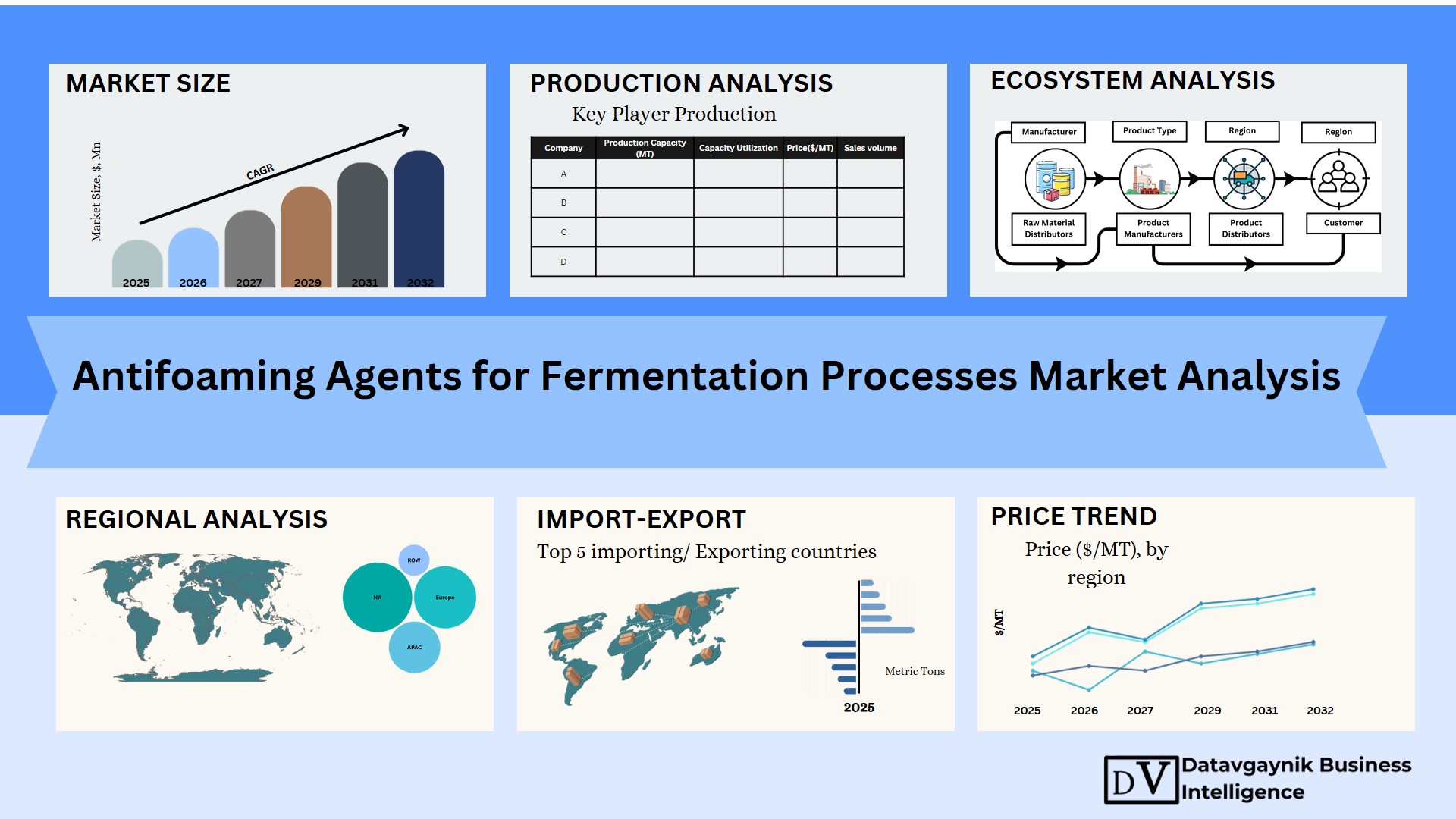
The Antifoaming Agents for Fermentation Processes Market is undergoing rapid expansion, primarily propelled by the escalating demand in the biopharmaceutical sector. As pharmaceutical manufacturers increase the output of biologics, antibiotics, and vaccines, the need for uninterrupted and efficient fermentation becomes critical. For instance, monoclonal antibody production through microbial fermentation generates substantial foam, which, if unmanaged, results in contamination, vessel overflow, or compromised yields. Datavagyanik estimates that over 60% of large-scale biologics manufacturers have integrated high-efficiency antifoaming agents to mitigate foam-related inefficiencies.
The Antifoaming Agents for Fermentation Processes Market size is projected to rise significantly as fermentation-based drug manufacturing expands. For example, global biologics market growth is forecasted at a CAGR of 9% from 2024 to 2032, and with fermentation being a foundational step in biologic drug production, the parallel demand for antifoaming agents continues to intensify. The scalability of these agents—particularly those designed to comply with pharmaceutical-grade safety norms—is becoming a focal investment area for manufacturers.
Bioethanol Surge Accelerates Growth in Antifoaming Agents for Fermentation Processes Market
The shift towards sustainable energy sources has turned bioethanol into a critical pillar of the global renewable fuels initiative. This surge is directly influencing the Antifoaming Agents for Fermentation Processes Market, as large-scale bioethanol production relies heavily on fermentation. For instance, a single bioethanol facility processing millions of liters of feedstock can produce foam levels that disrupt operations without appropriate foam control solutions.
Datavagyanik highlights that in 2023, over 78 billion liters of bioethanol were produced globally, and this figure is expected to surpass 110 billion liters by 2030. Regions such as Brazil, the United States, China, and India are aggressively expanding their bioethanol programs, further boosting demand for high-performance, biodegradable antifoaming agents. In this context, the Antifoaming Agents for Fermentation Processes Market is witnessing increasing adoption of silicone-based and organic oil-based agents that ensure compatibility with sensitive bioprocesses.
Antifoaming Agents for Fermentation Processes Market Gains from the Fermented Food and Beverage Boom
Another significant contributor to the Antifoaming Agents for Fermentation Processes Market is the expanding fermented food and beverage industry. Consumer preferences are shifting toward probiotic-rich, functional foods such as kefir, yogurt, kombucha, and fermented soy products. These fermentation-heavy product lines inherently produce foam, which, if not controlled, degrades batch consistency and product quality.
For instance, the global market for fermented foods is growing at a pace exceeding 6.5% annually, led by increased demand in North America, Western Europe, and the Asia-Pacific region. This trajectory is directly amplifying the demand for food-grade antifoaming agents that can comply with FDA, EFSA, and other regional food safety regulations. In dairy processing alone, antifoaming agents are becoming a standard operational requirement to avoid foaming-related losses in large-scale milk fermentation tanks.
Process Optimization Imperatives Fuel Adoption in the Antifoaming Agents for Fermentation Processes Market
As fermentation facilities scale their operations, the operational imperative shifts toward process standardization and optimization. Foam, in these settings, becomes a technical challenge that limits oxygen transfer, interferes with pH control, and disrupts automated systems. The Antifoaming Agents for Fermentation Processes Market is thus gaining momentum due to its contribution toward yield maximization and downtime minimization.
Datavagyanik notes that companies implementing automated foam detection and injection systems paired with low-viscosity antifoaming agents have reported yield improvements of up to 12%. For example, fermentation operations in the enzyme manufacturing sector, particularly in the production of amylases and proteases, rely heavily on antifoaming agents to prevent batch failures due to excessive frothing.
Technological Innovation Expanding Boundaries of the Antifoaming Agents for Fermentation Processes Market
The Antifoaming Agents for Fermentation Processes Market is benefiting from a wave of technological advancements in formulation science. Next-generation products now deliver superior spreadability, fast defoaming action, and longer persistence under harsh conditions such as extreme pH, high shear, or sterilization temperatures. Such characteristics are essential in fermentation applications involving genetically engineered microbial strains, which are increasingly being used in synthetic biology and precision fermentation.
For instance, silicone-polyether blends and bio-based formulations are being rapidly adopted for their ability to perform in varied fermentation settings without compromising the final product’s safety. Datavagyanik projects that advanced formulation types will account for over 40% of the total Antifoaming Agents for Fermentation Processes Market by 2028, as industries demand multifunctional, residue-free, and regulatory-compliant products.
Sustainability Trends Reshaping the Antifoaming Agents for Fermentation Processes Market
With the rise of ESG mandates and environmental accountability, the Antifoaming Agents for Fermentation Processes Market is shifting toward greener alternatives. Biodegradable and non-toxic agents derived from plant oils and other renewable feedstocks are gaining preference, particularly in food and pharmaceutical fermentation environments.
For example, many European manufacturers have begun phasing out petroleum-based defoamers in favor of biodegradable compounds to comply with REACH and other sustainability protocols. Datavagyanik emphasizes that sustainable antifoaming agents now represent over 30% of new product launches in this segment. Moreover, this transformation is not merely regulatory—it is driven by end-users seeking safer, less intrusive additives that can be integrated into clean-label processes.
Automation and Industry 4.0 Trends Enhancing the Role of Antifoaming Agents for Fermentation Processes Market
The ongoing adoption of Industry 4.0 technologies in bioprocessing—such as real-time fermentation monitoring, AI-based process optimization, and smart sensors—is opening new opportunities for the Antifoaming Agents for Fermentation Processes Market. In automated fermentation systems, maintaining stable foam levels is essential for system accuracy, pressure regulation, and sensor calibration.
Smart bioreactors increasingly incorporate integrated antifoam injection modules, which dispense precise volumes based on predictive analytics. Datavagyanik notes that such setups reduce antifoam consumption by nearly 20% while ensuring consistent foam suppression. These advancements not only boost efficiency but also lower operational costs, making them attractive across sectors ranging from vaccine production to plant-based protein fermentation.
Globalization of Fermentation Manufacturing Stimulating Antifoaming Agents for Fermentation Processes Market
Another influential trend driving the Antifoaming Agents for Fermentation Processes Market is the globalization of fermentation manufacturing. As companies look to establish fermentation hubs closer to raw material sources or target markets, fermentation capacity is expanding in Latin America, Southeast Asia, and Eastern Europe.
These expansions are often characterized by new facilities equipped with modern fermentation lines, where foam control is integrated as a standard process parameter. For example, large-scale fermentation operations in Brazil’s bioethanol sector or India’s biopharma clusters require robust antifoam strategies tailored to high-throughput, high-variability conditions. Datavagyanik highlights that regional demand for antifoaming agents is accelerating at double-digit rates in emerging economies, contributing substantially to the global Antifoaming Agents for Fermentation Processes Market size.
Regulatory Pressures Advancing the Quality Benchmark in the Antifoaming Agents for Fermentation Processes Market
Regulatory bodies across regions are enforcing tighter controls on additives used in food and drug fermentation, leading to a rise in demand for high-purity, certified antifoaming agents. This is especially relevant in pharmaceutical fermentation where residual foam inhibitors can compromise downstream purification and final product safety.
For instance, pharmaceutical-grade antifoaming agents must meet specifications related to toxicity, solubility, and biocompatibility. Datavagyanik observes that manufacturers are increasingly reformulating their product lines to secure cGMP compliance, Halal/Kosher certifications, and GRAS (Generally Recognized as Safe) status. This trend is compelling suppliers to offer differentiated products tailored to highly regulated markets, thereby elevating product quality standards across the Antifoaming Agents for Fermentation Processes Market.
Diversification of Application Areas Expanding Market Potential
While traditional applications like antibiotics and alcohol production remain core, the Antifoaming Agents for Fermentation Processes Market is witnessing rising adoption in niche sectors. For example, the use of microbial fermentation in producing meat analogs, biosurfactants, and sustainable chemicals is growing rapidly. These applications often involve complex substrates or novel microbial systems, which are particularly prone to foam generation.
Fermentation facilities engaged in bioplastic or flavor compound production are now seeking specialized antifoaming agents compatible with their engineered organisms and unique process conditions. Datavagyanik identifies this diversification as a key lever driving value-added growth in the Antifoaming Agents for Fermentation Processes Market, with several startups and mid-scale manufacturers entering the space with application-specific solutions.
“Track Country-wise Antifoaming Agents for Fermentation Processes Production and Demand through our Antifoaming Agents for Fermentation Processes Production Database”
-
-
- Antifoaming Agents for Fermentation Processes production database for 27+ countries worldwide
- Antifoaming Agents for Fermentation Processes Powder sales volume for 31+ countries
- Country-wise Antifoaming Agents for Fermentation Processes production capacity and production plant mapping, production capacity utilization for 27+ manufacturers
- Antifoaming Agents for Fermentation Processes production plants and production plant capacity analysis for top manufacturers
-
North America Leads Global Consumption in Antifoaming Agents for Fermentation Processes Market
The North American region dominates the Antifoaming Agents for Fermentation Processes Market, primarily due to its mature biotechnology and pharmaceutical industries. The United States, in particular, represents a major consumption hub, accounting for over 35% of global demand. For instance, large-scale biologics manufacturers in California and Massachusetts deploy advanced antifoaming solutions across vaccine and monoclonal antibody production facilities.
Datavagyanik highlights that U.S. biopharma facilities invest heavily in food- and pharma-grade antifoaming agents to ensure fermentation stability, minimize contamination risks, and meet FDA compliance standards. Moreover, the U.S. bioethanol industry, producing over 15 billion gallons annually, requires continuous foam control to prevent overflow in fermentation tanks. This contributes significantly to the overall expansion of the Antifoaming Agents for Fermentation Processes Market in the region.
Europe’s Sustainability Push Bolstering Demand in the Antifoaming Agents for Fermentation Processes Market
In Europe, the Antifoaming Agents for Fermentation Processes Market is expanding rapidly due to stringent sustainability regulations and a strong focus on food and pharmaceutical safety. Germany, France, and the Netherlands are central to this trend, with manufacturers emphasizing the use of biodegradable, non-toxic defoaming agents that align with EU environmental directives such as REACH and EFSA standards.
For instance, Germany’s growing biologics and enzyme production sectors, which rely on microbial and fungal fermentation, necessitate advanced foam suppression technologies. Similarly, France’s wine and dairy fermentation industries increasingly require food-safe antifoaming agents to support rising demand for fermented beverages and probiotic-rich foods. Datavagyanik notes that European companies are also investing in organic plant-based formulations, leading to a rising share of eco-friendly products in the regional Antifoaming Agents for Fermentation Processes Market.
Asia Pacific Registers Fastest Growth in Antifoaming Agents for Fermentation Processes Market
The Asia Pacific region has emerged as the fastest-growing contributor to the Antifoaming Agents for Fermentation Processes Market. Rapid industrialization, strong pharmaceutical pipelines, and surging demand for fermented foods and biofuels are key drivers across countries such as China, India, Japan, and South Korea.
China leads regional production and consumption, driven by its massive biomanufacturing ecosystem. With over 400 large-scale fermentation facilities operating across pharmaceuticals, food, and industrial enzymes, foam control is vital for uninterrupted productivity. Datavagyanik estimates that the country’s antifoaming agent consumption in fermentation applications will increase at a CAGR exceeding 10% through 2030. India, on the other hand, is seeing notable demand from its growing antibiotic manufacturing and bioethanol sectors. These dynamics underscore the strategic significance of the Antifoaming Agents for Fermentation Processes Market in Asia’s industrial expansion.
Latin America’s Biofuel Ambitions Elevating Antifoaming Agents for Fermentation Processes Market Potential
Latin America, especially Brazil, is a major contributor to the Antifoaming Agents for Fermentation Processes Market through its expansive ethanol industry. Brazil produced over 27 billion liters of ethanol in 2023 alone, with nearly 90% of it derived through fermentation of sugarcane molasses. This large-scale production process generates intense foam activity that demands robust foam suppression systems.
Antifoaming agents are thus a routine requirement in fermentation vessels to prevent losses and maintain yield efficiency. Datavagyanik highlights that Brazilian ethanol producers are increasingly adopting high-efficiency silicone-based and vegetable-oil-based defoamers to meet growing sustainability mandates. As regional energy policies continue to support biofuel programs, the Antifoaming Agents for Fermentation Processes Market in Latin America is expected to expand at a stable pace.
Middle East and Africa Exhibit Emerging Demand for Antifoaming Agents for Fermentation Processes Market
In the Middle East and Africa, demand for antifoaming agents in fermentation processes is on the rise due to industrial diversification and increasing investments in pharmaceutical and food processing sectors. Countries such as Saudi Arabia and the UAE are promoting biotechnology-driven healthcare expansion and bioethanol-based energy transition, both of which rely heavily on controlled fermentation.
For example, fermentation-based production of dairy and beverages in the GCC is steadily growing due to shifting consumer preferences toward probiotic products. These fermentation lines require reliable antifoaming solutions to maintain quality standards and production consistency. Datavagyanik indicates that while the region currently imports a significant portion of its antifoaming agents, domestic production capabilities are expected to scale up over the coming years to cater to local demand more efficiently.
Antifoaming Agents for Fermentation Processes Market Segmentation by Application
The Antifoaming Agents for Fermentation Processes Market is segmented based on application areas such as pharmaceuticals, biofuels, food & beverages, agricultural bioprocessing, and specialty chemicals. Each application segment presents unique foam control challenges that drive tailored product innovation.
In the pharmaceutical domain, antifoaming agents are essential during the fermentation of active pharmaceutical ingredients, vaccines, and antibiotics. Foam control is critical to maintaining sterile conditions and avoiding cross-contamination, especially in cGMP-compliant production environments.
In biofuels, particularly ethanol and biodiesel, large fermenters operate continuously, where foam overflow can lead to significant material loss and equipment corrosion. Hence, silicone-based and mineral oil-based agents are deployed to maintain optimal yields and reduce cleaning cycles.
For the food and beverage industry, antifoaming agents ensure product consistency during fermentation of beer, yogurt, vinegar, and soy products. Here, food-safe, odorless, and tasteless formulations are necessary to preserve the sensory characteristics of the final product. This application segment is growing rapidly as global fermented food consumption increases at over 6% annually.
Production Hubs and Supply Chain Dynamics in the Antifoaming Agents for Fermentation Processes Market
The global Antifoaming Agents for Fermentation Processes Market is anchored by production hubs in the United States, Germany, China, and Japan. These regions possess the technological capabilities and regulatory expertise to develop high-performance formulations that serve pharma, food, and industrial-grade fermentation operations.
China has emerged as a key producer of low-cost antifoaming agents, particularly silicone-based and mineral oil-based types, which are exported to Southeast Asia, Africa, and Latin America. The United States and Europe, on the other hand, focus on high-end formulations that cater to regulated sectors like pharmaceuticals and nutraceuticals. Datavagyanik notes that supply chain resilience has become a focal point, with global players setting up localized production units to mitigate disruptions and reduce logistics costs.
Antifoaming Agents for Fermentation Processes Price Trend Influenced by Raw Materials and Regulations
The Antifoaming Agents for Fermentation Processes Price Trend is shaped by fluctuations in raw material costs, regulatory compliance requirements, and formulation complexity. Prices vary significantly based on agent type—silicone-based antifoaming agents tend to be more expensive than hydrocarbon or natural oil-based variants due to their superior performance and chemical stability.
In 2024, Datavagyanik observed a moderate price increase of 4–6% in silicone-based antifoaming agents, driven by rising costs of siloxanes and global shipping constraints. Conversely, vegetable oil-based agents showed stable pricing, benefiting from improved oilseed harvests in Asia and Latin America.
The Antifoaming Agents for Fermentation Processes Price is also influenced by product purity and end-use certifications. Agents intended for pharmaceutical use undergo more rigorous purification and validation, commanding premiums of 15–25% compared to industrial-grade equivalents. Price competitiveness is further affected by regional regulations—such as the EU’s emphasis on REACH-compliant, biodegradable defoamers—which incentivize suppliers to develop advanced, eco-friendly formulations, albeit at a higher cost.
Regional Disparities in Antifoaming Agents for Fermentation Processes Price
Price disparities persist across regions, with Asia Pacific typically offering the most cost-effective supply. For example, India and China offer defoaming agents for fermentation at 15–20% lower average prices than their European or North American counterparts. This is primarily due to economies of scale, lower labor costs, and domestic availability of key inputs.
However, European and North American buyers often pay a premium for sourcing agents that comply with pharmaceutical and food safety regulations. In Western Europe, the Antifoaming Agents for Fermentation Processes Price for pharma-grade variants can exceed USD 5,000 per metric ton, compared to USD 3,800–4,200 in Asia for comparable products. Datavagyanik notes that while buyers in regulated sectors prioritize quality over cost, emerging markets are more price-sensitive and favor general-purpose or hybrid formulations that balance performance with affordability.
Outlook on Antifoaming Agents for Fermentation Processes Price Trend
Looking ahead, the Antifoaming Agents for Fermentation Processes Price Trend is expected to remain stable to moderately inflationary, influenced by sustainability-driven reformulations and energy market volatility. As end-users shift towards bio-based and biodegradable antifoaming agents, the demand for plant-derived feedstocks will increase, which could exert upward pricing pressure depending on agricultural yields and supply chain efficiency.
Datavagyanik projects that innovation in concentrated, low-dosage formulations may offset some of the cost increases by reducing per-batch usage. Furthermore, as automation in fermentation continues to scale, demand for consistent, programmable antifoaming agent delivery systems will rise, placing additional emphasis on formulation precision and long-term performance stability—factors that could influence future pricing tiers.
“Antifoaming Agents for Fermentation Processes Manufacturing Database, Antifoaming Agents for Fermentation Processes Manufacturing Capacity”
-
- Antifoaming Agents for Fermentation Processes top manufacturers market share for 27+ manufacturers
- Top 8 manufacturers and top 17 manufacturers of Antifoaming Agents for Fermentation Processes in North America, Europe, Asia Pacific
- Production plant capacity by manufacturers and Antifoaming Agents for Fermentation Processes production data for 27+ market players
- Antifoaming Agents for Fermentation Processes production dashboard, Antifoaming Agents for Fermentation Processes production data in excel format
Leading Manufacturers in the Antifoaming Agents for Fermentation Processes Market
The Antifoaming Agents for Fermentation Processes Market is consolidated around a few globally dominant players, supported by several regional and niche manufacturers. The top players in this space hold a significant portion of global market share, particularly due to their technical capabilities, diversified product lines, and regulatory approvals required for use in sensitive applications like food and pharmaceuticals.
Dow Inc. – Broad Portfolio and Global Reach
Dow Inc. is a leading player in the Antifoaming Agents for Fermentation Processes Market with a diverse product portfolio under its DOWSIL series. The company’s silicone-based antifoaming agents are extensively used in biopharmaceutical and industrial fermentation operations, known for their high efficacy, low usage rates, and compliance with food and pharma-grade standards.
Dow holds an estimated 14–16% market share globally, owing to its expansive distribution network and extensive collaboration with fermentation technology providers. Products like DOWSIL™ AF Emulsion Series are tailored for microbial fermentation systems where foam generation is continuous and unpredictable. These agents are valued for their fast knockdown characteristics and minimal residue impact.
Evonik Industries – Specialty Focus with Pharma Compliance
Evonik Industries is a key contributor to the Antifoaming Agents for Fermentation Processes Market, particularly in pharmaceutical and food-grade applications. The company’s Antifoam SE series is specifically designed for use in fermentation-based processes such as enzyme production, antibiotic synthesis, and food fermentation.
Evonik’s market share stands around 11–13%, with strong penetration in Europe and Asia. Its manufacturing strengths lie in producing ultra-pure, highly compatible silicone and non-silicone-based formulations that meet the demanding standards of regulated sectors. The company’s focus on innovation in biodegradable and clean-label formulations has further strengthened its position in the premium segment of the market.
BASF SE – Diversified Offerings and Sustainable Chemistry Leadership
BASF SE is another major player in the Antifoaming Agents for Fermentation Processes Market with a market share of approximately 10–12%. BASF’s range includes Pluronic® and Foamaster® series, which are extensively applied in industrial, food, and agricultural fermentation processes.
These formulations offer compatibility across a wide pH range and perform well under sterilization conditions, making them suitable for large-scale fermentation operations. BASF also focuses on sustainable chemistry, offering products derived from bio-based raw materials and reducing the environmental impact associated with foam control agents. Their strength lies in providing customized defoaming solutions based on specific fermentation media and process conditions.
Shin-Etsu Chemical Co., Ltd. – Precision Manufacturing for High-Sensitivity Applications
Shin-Etsu is a specialist in high-purity silicone antifoaming agents used in precision fermentation industries such as pharmaceuticals and specialty food products. With a market share in the range of 8–10%, the company is known for its advanced emulsification technology and long-lasting antifoaming behavior in continuous fermenters.
Shin-Etsu’s SE Antifoam Series is widely recognized for its low interaction with microbial cultures and excellent sterilization stability. The company’s core markets include Japan, South Korea, and select parts of Europe and North America, where stringent quality and safety requirements prevail.
Wacker Chemie AG – Regional Dominance and Regulatory Focus
Wacker Chemie AG commands an estimated 7–9% share in the Antifoaming Agents for Fermentation Processes Market, with strong demand across Europe and Asia. Its SILFOAM® brand includes a broad range of silicone-based and hybrid antifoaming agents engineered specifically for fermentation tanks and bioreactors.
Wacker’s formulations are designed for low usage rates and prolonged effectiveness under high agitation and aeration, typical in fermentation systems. The company’s strategic partnerships with fermentation equipment manufacturers further enhance the effectiveness of its products in real-world settings.
Other Prominent Manufacturers and Regional Players
Beyond the global leaders, several other companies have established a solid presence in the Antifoaming Agents for Fermentation Processes Market:
- Elkem ASA: Known for high-performance silicone-based agents with application in pharmaceutical-grade fermentation.
- Ashland Inc.: Offers defoamers primarily used in nutraceutical fermentation and food bioprocessing.
- Momentive Performance Materials: Supplies silicone emulsions designed for large-scale industrial fermenters.
- Kemira Oyj: Strong in industrial and bioethanol fermentation foam control, particularly in European markets.
Regional players such as India Glycols, China’s Shandong Antifoam, and South Korea’s Dongjin Semichem are also increasing their footprint by offering cost-competitive, locally produced antifoaming agents tailored to specific industry needs.
Antifoaming Agents for Fermentation Processes Market Share by Manufacturer
The global Antifoaming Agents for Fermentation Processes Market is moderately concentrated. The top five manufacturers—Dow, Evonik, BASF, Shin-Etsu, and Wacker—collectively control roughly 50–55% of the global market. These players benefit from deep industry integration, proprietary formulations, and long-standing relationships with leading fermentation companies.
Mid-tier and regional manufacturers account for another 30–35% of the market. These companies compete on cost-efficiency, quick supply cycles, and adaptation to local regulatory requirements. The remaining market share is fragmented across smaller suppliers and contract formulators, many of whom offer customized solutions to niche fermentation applications.
Recent Developments and Strategic Initiatives in the Antifoaming Agents for Fermentation Processes Market
In recent years, market players have ramped up investment in R&D, regulatory compliance, and sustainable formulation innovation. Several noteworthy developments have shaped the Antifoaming Agents for Fermentation Processes Market trajectory:
- January 2024 – BASF launched a next-generation defoamer series for probiotic food fermentation, with improved dispersibility and compatibility with live cultures. These products cater to growing demand in health foods and dietary supplements.
- October 2023 – Shin-Etsu expanded its production facility in Japan, focusing on ultra-pure silicone-based agents for use in biologics and vaccine manufacturing. This move was driven by the increased global demand for fermentation-based pharmaceutical products.
- July 2023 – Wacker Chemie AG signed a strategic partnership with a leading bioreactor manufacturer to integrate its SILFOAM® range into automated foam control systems. This integration aims to enhance antifoaming efficiency in high-volume fermentation lines across Europe and Southeast Asia.
- March 2023 – Evonik introduced a biodegradable antifoaming line for agricultural bioprocessing, targeting fermentation-based fertilizer and pesticide production. These new products respond to the increasing need for sustainable agricultural inputs.
- September 2022 – Dow launched a digital performance monitoring platform for fermentation customers using its DOWSIL™ defoamers. This tool enables real-time foam tracking and optimization of antifoamer dosing, aligning with Industry 4.0 trends in bioprocessing.
“Antifoaming Agents for Fermentation Processes Production Data and Antifoaming Agents for Fermentation Processes Production Trend, Antifoaming Agents for Fermentation Processes Production Database and forecast”
-
-
- Antifoaming Agents for Fermentation Processes production database for historical years, 10 years historical data
- Antifoaming Agents for Fermentation Processes production data and forecast for next 7 years
-
Market Scenario, Demand vs Supply, Average Product Price, Import vs Export, till 2035
- Global Antifoaming Agents for Fermentation Processes Market revenue and demand by region
- Global Antifoaming Agents for Fermentation Processes Market production and sales volume
- United States Antifoaming Agents for Fermentation Processes Market revenue size and demand by country
- Europe Antifoaming Agents for Fermentation Processes Market revenue size and demand by country
- Asia Pacific Antifoaming Agents for Fermentation Processes Market revenue size and demand by country
- Middle East & Africa Antifoaming Agents for Fermentation Processes Market revenue size and demand by country
- Latin America Antifoaming Agents for Fermentation Processes Market revenue size and demand by
- Import-export scenario – United States, Europe, APAC, Latin America, Middle East & Africa
- Average product price – United States, Europe, APAC, Latin America, Middle East & Africa
- Market player analysis, competitive scenario, market share analysis
- Business opportunity analysis
Key questions answered in the Global Antifoaming Agents for Fermentation Processes Market Analysis Report:
- What is the market size for Antifoaming Agents for Fermentation Processes in United States, Europe, APAC, Middle East & Africa, Latin America?
- What is the yearly sales volume of Antifoaming Agents for Fermentation Processes and how is the demand rising?
- Who are the top market players by market share, in each product segment?
- Which is the fastest growing business/ product segment?
- What should be the business strategies and Go to Market strategies?
The report covers Antifoaming Agents for Fermentation Processes Market revenue, Production, Sales volume, by regions, (further split into countries):
- Asia Pacific (China, Japan, South Korea, India, Indonesia, Vietnam, Rest of APAC)
- Europe (UK, Germany, France, Italy, Spain, Benelux, Poland, Rest of Europe)
- North America (United States, Canada, Mexico)
- Latin America (Brazil, Argentina, Rest of Latin America)
- Middle East & Africa
Table of Contents:
- Introduction to Antifoaming Agents in Fermentation Processes
-
- Overview of Antifoaming Agents and Their Role in Fermentation
- Importance of Foam Control in Industrial Fermentation
- Key Benefits and Properties of Antifoaming Agents
- Market Overview and Dynamics
-
- Global Market Size and Growth Forecasts (2019–2035)
- Market Drivers and Key Growth Opportunities
- Challenges in the Use of Antifoaming Agents in Fermentation
- Types of Antifoaming Agents for Fermentation
-
- Silicone-Based Antifoaming Agents
- Organic and Fatty Acid-Based Antifoaming Agents
- Other Chemical and Natural Alternatives
- Selection Criteria for Different Fermentation Applications
- Applications of Antifoaming Agents in Fermentation
-
- Role in Bioethanol and Biofuel Production
- Use in Pharmaceutical and Biotechnology Fermentation
- Antifoaming Agents in Food and Beverage Fermentation
- Applications in Agricultural and Industrial Fermentation
- Technological Advancements in Antifoaming Agents
-
- Innovations in Formulation for Improved Performance
- Development of Eco-Friendly and Biodegradable Antifoaming Agents
- Advances in Nano-Technology for Antifoam Effectiveness
- Regulatory and Safety Considerations
-
- Global Regulations on the Use of Antifoaming Agents
- Compliance with Food, Pharmaceutical, and Environmental Standards
- Safety and Toxicology of Antifoaming Agents in Fermentation
- Market Segmentation by Region
-
- North American Market Insights and Key Trends
- European Market Dynamics and Regulatory Impact
- Growing Demand in the Asia-Pacific Region
- Latin America and Middle East & Africa Market Opportunities
- Competitive Landscape
-
- Leading Manufacturers of Antifoaming Agents for Fermentation
- Key Market Share Insights and Competitive Strategies
- Mergers, Acquisitions, and Collaborations in the Market
- Pricing Trends and Cost Analysis
-
- Price Dynamics for Antifoaming Agents Across Regions
- Factors Influencing the Cost of Antifoaming Products
- Cost-Effectiveness in Industrial and Commercial Applications
- Raw Materials and Supply Chain Analysis
-
- Key Raw Materials Used in Antifoaming Agent Production
- Supply Chain Challenges and Material Sourcing for Fermentation
- Innovations in Sourcing and Distribution
- Consumer Insights and Market Demand
-
- Consumer Preferences in Antifoaming Agent Selection
- Trends Toward More Sustainable and Non-Toxic Formulations
- Market Demand in Food and Beverage, Pharmaceuticals, and Biofuels
- Technological Barriers and Solutions in Antifoaming Agent Usage
-
- Overcoming Foam Control Issues in Large-Scale Fermentation
- Challenges in Maintaining Effectiveness Over Time
- Innovations to Enhance Stability and Efficiency
- Market Segmentation by End-Use Industry
-
- Pharmaceutical and Biotechnology Applications
- Biofuel Production and Its Requirements
- Food and Beverage Fermentation Processes
- Agriculture, Wastewater Treatment, and Other Sectors
- Environmental Impact and Sustainability
-
- Reducing the Environmental Footprint of Antifoaming Agents
- Development of Green Antifoaming Technologies
- Biodegradable and Non-Toxic Antifoaming Agents for Sustainable Practices
- Distribution Networks and Marketing Strategies
-
- Key Distribution Channels for Antifoaming Agents
- Marketing and Branding Strategies for Targeted Industries
- Expanding Reach in Emerging and Developing Markets
- Supply Chain Resilience and Efficiency
-
- Enhancing the Supply Chain for Consistent Delivery
- Risk Management in Raw Material Sourcing
- Strategies for Overcoming Logistics and Distribution Barriers
- Regulatory Challenges and Future Compliance
-
- Navigating Regulations for Antifoaming Agents in Different Industries
- Compliance with FDA, EMA, and Other Regulatory Bodies
- Predicting Future Regulatory Changes and Their Impact on the Market
- Technological Innovations and Research Developments
-
- Emerging Technologies for Improved Antifoaming Efficiency
- Research in Biobased and Natural Alternatives to Traditional Antifoams
- Breakthroughs in Foam Control Systems for Fermentation
- Market Entry Strategies for New Players
-
- Barriers to Entry in the Antifoaming Agent Market
- Opportunities for New Entrants and Emerging Technologies
- Competitive Strategies for Gaining Market Share
- Future Market Outlook and Forecast (2030–2035)
-
- Projected Growth and Market Demand for Antifoaming Agents
- Emerging Applications in Non-Traditional Sectors
- Long-Term Forecast and Opportunities for Expansion

