

Bauxite (Natural Alumina Source) Market: Key Drivers and Market Trends
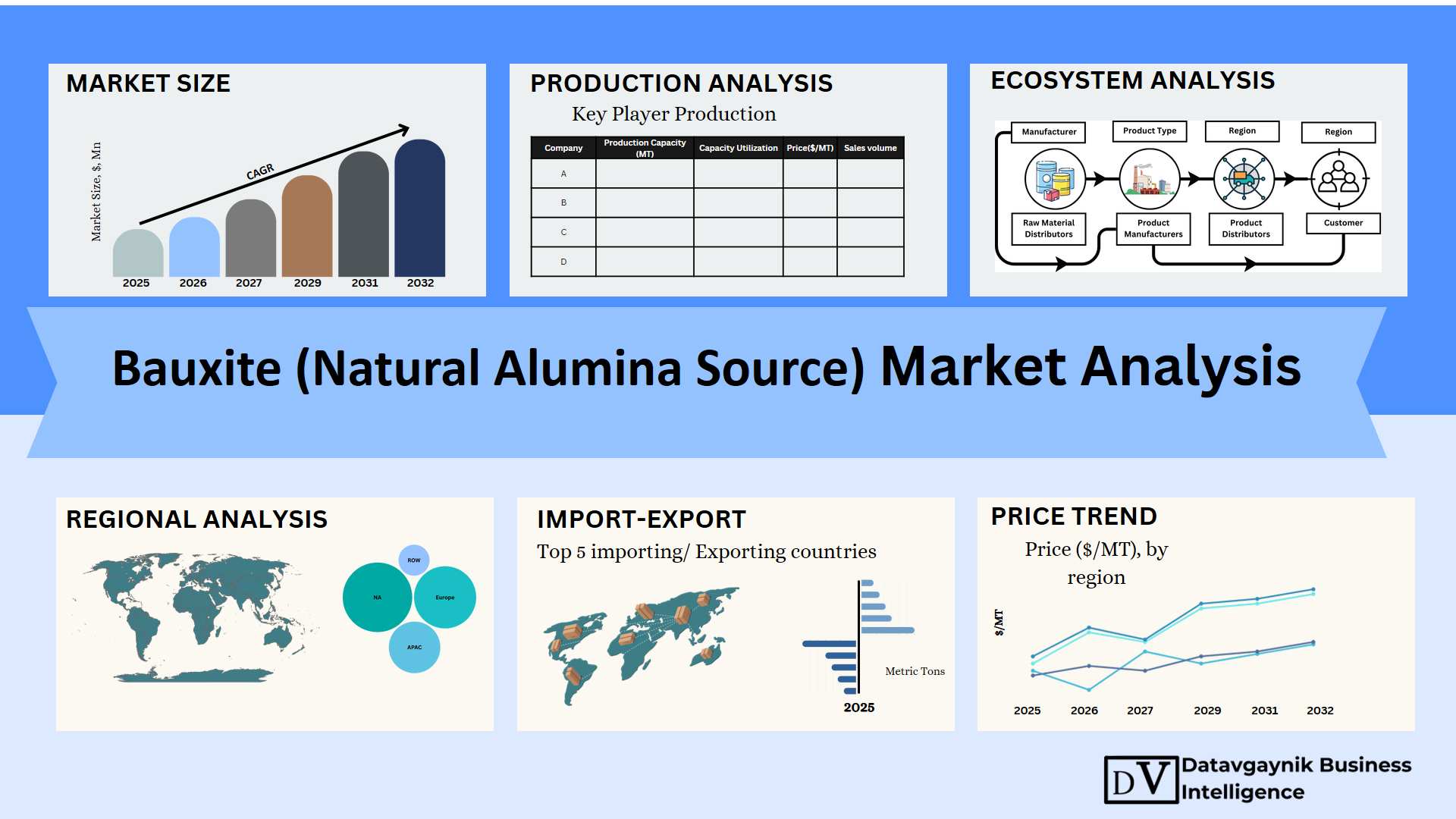
The global Bauxite (Natural Alumina Source) Market is expected to experience robust growth between 2024 and 2032. Bauxite, as the primary raw material for aluminum production, plays a pivotal role in various industries, including automotive, aerospace, construction, and packaging. The increasing demand for aluminum, coupled with technological advancements in extraction and refining processes, has led to a surge in bauxite demand. With the growing need for lightweight and corrosion-resistant materials, the Bauxite (Natural Alumina Source) Market is witnessing significant trends that are shaping its future trajectory.
Rising Demand for Aluminum in the Automotive and Aerospace Industries
One of the foremost drivers of the Bauxite (Natural Alumina Source) Market is the rising demand for aluminum, particularly in the automotive and aerospace sectors. Aluminum is favored for its lightweight properties, which contribute to fuel efficiency, reduced emissions, and improved performance in vehicles and aircraft. The automotive industry’s shift toward lightweight materials to enhance fuel economy is particularly evident in the increasing adoption of aluminum in electric vehicles (EVs).
For instance, the adoption of aluminum in electric vehicles has increased rapidly, with electric cars expected to use up to 30% more aluminum than conventional vehicles. According to the International Aluminum Institute, global aluminum demand from the automotive sector is anticipated to grow at a compounded annual growth rate (CAGR) of 5.6% from 2020 to 2025. This surge in demand is directly impacting the Bauxite (Natural Alumina Source) Market, as aluminum production remains dependent on bauxite as the core raw material.
Datavagyanik also covers related markets such as the Aluminum Oxide (Bauxite) Market. These materials are considered in high-temperature and specialty chemical environments, where glass production, catalysis, and safety regulations influence adoption patterns.
Expansion in the Construction and Infrastructure Sectors
The growth of urbanization and infrastructure development in emerging economies, particularly in Asia and Africa, is another key factor driving the Bauxite (Natural Alumina Source) Market. Bauxite-derived aluminum is widely used in construction materials such as windows, doors, roofing, and curtain walls. The ongoing boom in the construction sector, especially in rapidly developing economies like China and India, is further enhancing the demand for aluminum.
In 2021, the global construction market was valued at approximately USD 10 trillion, and it is expected to expand at a CAGR of 7.1% from 2023 to 2030. The increasing use of aluminum in sustainable construction due to its high strength-to-weight ratio and resistance to environmental wear and tear has reinforced its importance. As a result, bauxite suppliers are under growing pressure to meet the escalating demand for this vital resource.
Surge in Renewable Energy Applications
The growing emphasis on renewable energy has also led to an uptick in bauxite demand. Aluminum, as a highly durable and lightweight material, is extensively used in wind turbines, solar panels, and energy storage systems. As the world pivots toward clean energy, the use of aluminum in renewable energy infrastructure has become more critical.
The International Renewable Energy Agency (IRENA) has highlighted that the share of renewables in global power generation is expected to increase to 70% by 2050. The demand for aluminum in the renewable energy sector is poised to grow in tandem with this shift. For instance, the global aluminum demand from wind turbines is estimated to increase by 6% annually, as the sector requires lightweight materials for efficient energy generation. This trend is poised to support the long-term growth of the Bauxite (Natural Alumina Source) Market, as bauxite remains the primary source for aluminum production.
Growth in the Packaging Industry
Aluminum’s role in the packaging industry, particularly for cans and foils, is another critical driver of the Bauxite (Natural Alumina Source) Market. The shift towards recyclable and eco-friendly packaging has intensified aluminum’s usage, given its lightweight and recyclable properties. Aluminum packaging is increasingly replacing other materials in food and beverage packaging due to its ability to preserve product quality and extend shelf life.
The aluminum packaging market was valued at USD 33.9 billion in 2020 and is expected to expand at a CAGR of 6.5% from 2021 to 2028. As more consumers and corporations prioritize sustainability, the packaging industry is placing greater emphasis on the use of aluminum. This increasing demand for aluminum packaging is directly contributing to a rise in bauxite consumption, as aluminum production is highly reliant on bauxite.
Electric Vehicle (EV) Adoption and Its Impact on Bauxite Demand
The rapid adoption of electric vehicles is one of the most significant trends influencing the Bauxite (Natural Alumina Source) Market. As the global automotive industry transitions toward electric mobility, the need for lightweight materials to enhance battery efficiency and vehicle range is becoming more pronounced. Bauxite, through its derivative, aluminum, plays a vital role in this transition.
For example, the adoption of aluminum in electric vehicles (EVs) is expected to grow exponentially, with automakers using lightweight aluminum components in batteries, chassis, and body parts. The demand for aluminum in EVs is projected to reach 6 million tons by 2030, as per a report by the Aluminum Association. This translates into an increased need for bauxite, as aluminum remains the preferred metal for EV manufacturers looking to reduce vehicle weight and improve energy efficiency.
Industrial and Chemical Applications of Alumina
Beyond the automotive, aerospace, and construction sectors, alumina, derived from bauxite, has a wide range of industrial applications, including abrasives, refractories, ceramics, and water treatment. The growing need for high-quality alumina in the manufacturing of industrial abrasives and chemicals further propels the Bauxite (Natural Alumina Source) Market.
As industries such as steel production, cement manufacturing, and power generation continue to expand, the demand for bauxite, particularly high-grade bauxite, is increasing. For example, the global refractories market is expected to grow from USD 26.56 billion in 2020 to USD 33.68 billion by 2025, a CAGR of 5.1%. This growth is directly related to the increasing consumption of alumina in the production of refractory materials, which further bolsters the demand for bauxite as the foundational raw material.
Geopolitical Factors and Bauxite Supply Security
Geopolitical factors also play a significant role in shaping the dynamics of the Bauxite (Natural Alumina Source) Market. Major bauxite-producing countries, such as Guinea, Australia, and Indonesia, have become key players in securing bauxite supplies. For instance, Guinea is one of the world’s largest bauxite producers, and its strategic reserves make it a crucial supplier to aluminum-producing countries.
Given the geopolitical tensions and supply chain disruptions caused by factors such as trade wars and international sanctions, nations are increasingly focusing on securing reliable and local sources of bauxite. Countries like the United States have been exploring their own bauxite reserves to reduce dependence on imports. This shift toward supply security will drive investments in bauxite exploration and production, contributing to the market’s growth.
“Track Country-wise Bauxite (Natural Alumina Source) Production and Demand through our Bauxite (Natural Alumina Source) Production Database”
-
-
- Bauxite (Natural Alumina Source) production database for 23+ countries worldwide
- Bauxite (Natural Alumina Source) sales volume for 28+ countries
- Country-wise Bauxite (Natural Alumina Source) production capacity, production plant mapping, production capacity utilization for 23+ manufacturers
- Bauxite (Natural Alumina Source) production plants and production plant capacity analysis by top manufacturers
-
“Track real-time Bauxite (Natural Alumina Source) Prices, Bauxite (Natural Alumina Source) price charts for 23+ countries, Bauxite (Natural Alumina Source) weekly price tracker and Bauxite (Natural Alumina Source) monthly price tracker”
-
-
- Track real-time Bauxite (Natural Alumina Source) prices and Bauxite (Natural Alumina Source) price trend in 23+ countries though our excel-based Bauxite (Natural Alumina Source) price charts
- Real-time Bauxite (Natural Alumina Source) price tracker dashboard with 23+ countries
- Complete transparency on Bauxite (Natural Alumina Source) price trend through our Bauxite (Natural Alumina Source) monthly price tracker, Bauxite (Natural Alumina Source) weekly price tracker
-
Geographical Demand in the Bauxite (Natural Alumina Source) Market
The Bauxite (Natural Alumina Source) Market is characterized by significant geographical demand, with regions such as Asia-Pacific, Europe, and North America leading consumption. This demand is largely driven by industrial growth, particularly in automotive, aerospace, packaging, and construction sectors.
In Asia-Pacific, countries like China, India, and Indonesia dominate both production and consumption of bauxite. China, as the largest producer and consumer of aluminum, continues to fuel its aluminum demand by importing substantial amounts of bauxite. The country’s aluminum consumption is rising rapidly due to its expanding automotive sector,
where the shift towards electric vehicles (EVs) has heightened demand for lightweight materials such as aluminum. China’s aluminum consumption is expected to grow at a CAGR of 4.3% from 2021 to 2025, further boosting the demand for bauxite as the core raw material for aluminum production. Similarly, India’s increasing focus on infrastructure development and automotive production has led to a steady rise in bauxite consumption, particularly in sectors like construction and packaging.
In the Middle East and Africa, the demand for bauxite is rising due to the growth of aluminum production facilities in countries like Saudi Arabia, the UAE, and Bahrain. Saudi Arabia’s Vision 2030 initiative, which aims to diversify its economy away from oil dependency, is a key driver behind the country’s increasing bauxite imports to support its expanding aluminum sector. Furthermore, Bahrain’s Alba (Aluminum Bahrain) plant is one of the largest aluminum smelters globally, ensuring that the demand for bauxite remains high in the region.
Bauxite (Natural Alumina Source) Production Dynamics
When considering Bauxite (Natural Alumina Source) Market production, Australia remains the dominant producer, accounting for nearly one-third of global bauxite production. The country’s vast bauxite reserves, particularly in Western Australia and Queensland, position it as a leading exporter, primarily to China, Japan, and India. Australia’s robust mining infrastructure and technological advancements in bauxite extraction and refining have solidified its position as the world’s largest exporter of bauxite.
Guinea, in West Africa, has emerged as a key player in the production of bauxite due to its extensive reserves. Guinea’s bauxite production has experienced significant growth, driven by substantial investments in mining operations. In fact, the country’s bauxite exports have risen sharply, with a projected increase of 25% in the coming years. Guinea’s ability to supply high-quality bauxite has made it an essential supplier to global markets, particularly to China’s aluminum production sector.
Brazil and Indonesia are also notable contributors to global bauxite production. Brazil’s bauxite reserves, particularly in the Amazon region, are among the largest in the world, making it a vital player in the global supply chain. Indonesia, traditionally known for its nickel production, has recently ramped up its bauxite output, focusing on alumina production for local aluminum manufacturing. As Indonesia’s export policies evolve, the country is set to play an increasingly important role in the global bauxite market.
Bauxite (Natural Alumina Source) Market Segmentation by Application
The Bauxite (Natural Alumina Source) Market can be segmented into various application areas, each experiencing varying levels of growth. The primary application of bauxite remains in aluminum production, where it is processed into alumina and refined to produce aluminum. This segment dominates the market, driven by the increasing demand for lightweight, durable, and corrosion-resistant materials across multiple industries such as automotive, aerospace, packaging, and construction.
In the automotive industry, the demand for aluminum is expected to grow as more manufacturers switch to electric vehicles. Aluminum is increasingly used in battery enclosures, body panels, and other lightweight components to improve vehicle efficiency and reduce emissions. The electric vehicle market alone is forecasted to consume more than 6 million tons of aluminum by 2030, which will significantly drive the demand for bauxite.
Another growing application of bauxite is in the production of refractory materials. Alumina derived from bauxite is used to manufacture materials that can withstand high temperatures, such as those used in steel production, cement manufacturing, and power generation. With the steel production industry alone projected to increase by 3.6% annually through 2025, the demand for bauxite-derived alumina in refractories will continue to rise.
Bauxite is also utilized in chemical production, particularly for the production of aluminum sulfate, which is used in water treatment. As global water treatment needs expand due to urbanization and environmental concerns, the demand for aluminum sulfate will continue to drive bauxite consumption. Furthermore, bauxite’s role in abrasive materials, including sandpaper and grinding wheels, is also growing, driven by the industrial manufacturing boom.
Bauxite (Natural Alumina Source) Price Trends and Their Influence
The Bauxite (Natural Alumina Source) Price and Bauxite (Natural Alumina Source) Price Trend have shown fluctuations in recent years due to varying factors such as geopolitical tensions, supply chain disruptions, and shifts in demand from key markets. For instance, in 2021, the price of bauxite surged due to increased demand for aluminum across various industries. This price surge was partly attributed to supply chain disruptions caused by the COVID-19 pandemic, which impacted production levels in major bauxite-exporting countries like Guinea and Australia.
In the coming years, the Bauxite (Natural Alumina Source) Price Trend is expected to remain volatile, influenced by global demand for aluminum, particularly in electric vehicles and renewable energy sectors. As demand for aluminum rises, the pressure on bauxite suppliers will increase, pushing prices upward. At the same time, geopolitical tensions in key bauxite-producing countries such as Guinea and Brazil may cause periodic supply disruptions, which could further impact bauxite prices.
Despite the fluctuating price trends, there has been a noticeable shift towards more sustainable and efficient extraction processes, which could help stabilize prices in the long term. Technological advancements in bauxite refining, including methods to extract alumina from lower-grade bauxite, are expected to alleviate some of the pressures on bauxite prices by improving production efficiency. Moreover, as countries such as the United States and European nations work to secure their bauxite supplies, the emphasis on long-term supply contracts and diversified sources may also mitigate price volatility.
Future Outlook of the Bauxite (Natural Alumina Source) Market
The Bauxite (Natural Alumina Source) Market’s future outlook remains strong, driven by the continued growth in demand from key industries such as automotive, aerospace, and renewable energy. The transition to electric vehicles is expected to significantly influence aluminum production, thereby boosting bauxite demand. For example, the global electric vehicle fleet is projected to increase to over 145 million by 2030, resulting in an increase in aluminum usage of approximately 5 million tons per year.
Emerging markets, particularly in Asia and Africa, will continue to be major drivers of bauxite demand. As these regions industrialize and urbanize, the demand for aluminum and bauxite will grow. China’s role as the largest consumer of bauxite is expected to remain dominant, with the country ramping up its aluminum production to meet its expanding infrastructure needs. India’s industrial growth, along with its focus on renewable energy, will also play a significant role in shaping the demand for bauxite in the coming years.
At the same time, supply chain dynamics will evolve as bauxite-producing countries invest in infrastructure, technology, and mining practices. Guinea and Australia are expected to continue their dominance in global production, while emerging players like Indonesia and Brazil will strengthen their position in the market. The geopolitical landscape will continue to impact trade flows, particularly as countries seek to reduce their dependency on imports by developing domestic bauxite reserves.
“Bauxite (Natural Alumina Source) Manufacturing Database, Bauxite (Natural Alumina Source) Manufacturing Capacity”
-
-
- Bauxite (Natural Alumina Source) top manufacturers market share for 23+ manufacturers
- Top 6 manufacturers and top 13 manufacturers of Bauxite (Natural Alumina Source) in North America, Europe, Asia Pacific
- Bauxite (Natural Alumina Source) production plant capacity by manufacturers and Bauxite (Natural Alumina Source) production data for 23+ market players
- Bauxite (Natural Alumina Source) production dashboard, Bauxite (Natural Alumina Source) production data in excel format
-
“Bauxite (Natural Alumina Source) price charts, Bauxite (Natural Alumina Source) weekly price tracker and Bauxite (Natural Alumina Source) monthly price tracker”
-
-
- Factors impacting real-time Bauxite (Natural Alumina Source) prices in 18+ countries worldwide
- Bauxite (Natural Alumina Source) monthly price tracker, Bauxite (Natural Alumina Source) weekly price tracker
- Real-time Bauxite (Natural Alumina Source) price trend, Bauxite (Natural Alumina Source) price charts, news and updates
- Tracking Bauxite (Natural Alumina Source) price fluctuations
-
Leading Manufacturers in the Bauxite (Natural Alumina Source) Market
The Bauxite (Natural Alumina Source) Market is dominated by several key players, each contributing significantly to global production and supply. These manufacturers not only extract and process bauxite but also offer a range of products catering to various industrial applications.
Rio Tinto
Rio Tinto is a prominent player in the bauxite industry, with extensive operations in Australia and Guinea. The company projects its bauxite production for 2025 to be between 57 million and 59 million tons, an increase from its 2024 guidance of 53 million to 56 million tons. Rio Tinto’s bauxite is primarily used in alumina refineries to produce aluminum, serving sectors such as automotive, aerospace, and packaging.
Alcoa Corporation
Alcoa is a leading aluminum producer with significant bauxite mining operations in Australia, Brazil, and Guinea. The company offers metallurgical-grade bauxite, which is essential for aluminum production. Alcoa’s bauxite is known for its high quality, making it suitable for both domestic and international markets. The company continues to invest in sustainable mining practices to reduce environmental impact.
South32
South32 operates the Worsley Alumina facility in Western Australia, one of the world’s largest alumina refineries. In February 2025, South32 received environmental approval to extend the operational life of this facility by developing new bauxite mining areas. This extension is expected to support production through at least fiscal year 2036, ensuring a stable supply of bauxite for alumina refining.
Rusal
United Company Rusal is a major aluminum producer with bauxite mining operations in Russia, Guinea, and other countries. The company supplies bauxite to its alumina refineries, producing alumina for aluminum production. Rusal’s bauxite is recognized for its quality and consistency, meeting the demands of various industrial applications.
Norsk Hydro ASA
Norsk Hydro is a Norwegian aluminum and renewable energy company with bauxite mining operations in Brazil and Guinea. The company produces bauxite for its alumina refineries, contributing to its aluminum production. Norsk Hydro emphasizes sustainable mining practices and has initiatives aimed at reducing the environmental footprint of its operations.
Bauxite (Natural Alumina Source) Market Share by Manufacturers
The global bauxite market is characterized by the dominance of a few key manufacturers who collectively hold a substantial share of the market. While exact market share percentages may vary, the following companies are recognized as leading contributors:
- Rio Tinto: With extensive operations in Australia and Guinea, Rio Tinto is among the top bauxite producers globally. Its strategic focus on expanding production capacity positions it as a significant player in the market.
- Alcoa Corporation: Alcoa’s integrated operations, encompassing bauxite mining, alumina refining, and aluminum production, contribute to its substantial market presence. The company’s commitment to innovation and sustainability enhances its competitiveness.
- South32: The approval to extend the Worsley Alumina facility’s operations reinforces South32’s position in the market. The development of new bauxite mining areas ensures a continued supply to its alumina refinery.
- Rusal: As one of the world’s largest aluminum producers, Rusal’s bauxite mining operations support its extensive alumina refining and aluminum production activities, solidifying its market position.
- Norsk Hydro ASA: Norsk Hydro’s integrated value chain, from bauxite mining to aluminum production, along with its focus on renewable energy, strengthens its position in the global bauxite market.
Recent Developments and Industry News
The bauxite industry has experienced several noteworthy developments in recent months, reflecting the dynamic nature of global demand, environmental considerations, and corporate strategies.
- South32’s Expansion Approval: In February 2025, South32 received environmental approval from the Australian federal government to extend the operational life of its Worsley Alumina facility. This approval allows the company to develop new bauxite mining areas, ensuring production continuity through at least fiscal year 2036.
- Environmental Concerns in Australia: In March 2025, actor Leonardo DiCaprio criticized the Australian government’s approval of South32’s bauxite mine expansion in Western Australia. The expansion involves clearing native vegetation in the Northern Jarrah Forests, raising environmental and biodiversity concerns. Prime Minister Anthony Albanese responded, expressing surprise at DiCaprio’s awareness of the local mining project.
- US Tariff Discussions: Australia’s aluminum industry, led by companies like Rio Tinto and Alcoa, faces potential challenges due to proposed US tariffs on aluminum imports. The 25% tariff could impact Australian aluminum exports to the US, affecting local smelters and employment. Industry leaders express concern over the potential economic implications.
- Production Forecasts: In December 2024, Rio Tinto projected its 2025 bauxite production to be between 57 million and 59 million tons, up from the previous year’s estimate. This forecast reflects the company’s strategy to meet the growing global demand for aluminum, driven by sectors like automotive and construction.
These developments underscore the complex interplay of environmental considerations, international trade policies, and corporate strategies shaping the bauxite industry. As global demand for aluminum continues to rise, driven by applications in electric vehicles and renewable energy projects, the role of key manufacturers in ensuring sustainable and responsible bauxite production remains critical.
“Bauxite (Natural Alumina Source) Production Data and Bauxite (Natural Alumina Source) Production Trend, Bauxite (Natural Alumina Source) Production Database and forecast”
-
-
- Bauxite (Natural Alumina Source) production database for historical years, 10 years historical data
- Bauxite (Natural Alumina Source) production data and forecast for next 7 years
- Bauxite (Natural Alumina Source) sales volume by manufacturers
-
“Track Real-time Bauxite (Natural Alumina Source) Prices for purchase and sales contracts, Bauxite (Natural Alumina Source) price charts, Bauxite (Natural Alumina Source) weekly price tracker and Bauxite (Natural Alumina Source) monthly price tracker”
-
-
- Gain control on your purchase and sales contracts through our real-time Bauxite (Natural Alumina Source) price tracker and Bauxite (Natural Alumina Source) price trend analysis
- Bauxite (Natural Alumina Source) weekly price tracker and forecast for next four weeks
- Bauxite (Natural Alumina Source) monthly price tracker and forecast for next two months
-
Market Scenario, Demand vs Supply, Average Product Price, Import vs Export, till 2032
- Global Bauxite (Natural Alumina Source) Market revenue and demand by region
- Global Bauxite (Natural Alumina Source) Market production and sales volume
- United States Bauxite (Natural Alumina Source) Market revenue size and demand by country
- Europe Bauxite (Natural Alumina Source) Market revenue size and demand by country
- Asia Pacific Bauxite (Natural Alumina Source) Market revenue size and demand by country
- Middle East & Africa Bauxite (Natural Alumina Source) Market revenue size and demand by country
- Latin America Bauxite (Natural Alumina Source) Market revenue size and demand by
- Import-export scenario – United States, Europe, APAC, Latin America, Middle East & Africa
- Average product price – United States, Europe, APAC, Latin America, Middle East & Africa
- Market player analysis, competitive scenario, market share analysis
- Business opportunity analysis
Key questions answered in the Global Bauxite (Natural Alumina Source) Market Analysis Report:
- What is the market size for Bauxite (Natural Alumina Source) in United States, Europe, APAC, Middle East & Africa, Latin America?
- What is the yearly sales volume of Bauxite (Natural Alumina Source) and how is the demand rising?
- Who are the top market players by market share, in each product segment?
- Which is the fastest growing business/ product segment?
- What should be the business strategies and Go to Market strategies?
The report covers Bauxite (Natural Alumina Source) Market revenue, Production, Sales volume, by regions, (further split into countries):
- Asia Pacific (China, Japan, South Korea, India, Indonesia, Vietnam, Rest of APAC)
- Europe (UK, Germany, France, Italy, Spain, Benelux, Poland, Rest of Europe)
- North America (United States, Canada, Mexico)
- Latin America (Brazil, Argentina, Rest of Latin America)
- Middle East & Africa
Table of Contents:
-
Introduction to Bauxite (Natural Alumina Source) Market
- Definition and Chemical Composition
- Industrial Importance and Global Demand
- Market Growth Drivers and Key Challenges
-
Market Segmentation and Product Classification
- By Purity Level (Metallurgical Grade, Refractory Grade, Chemical Grade)
- By Application (Aluminum Production, Cement, Refractories, Abrasives)
- By End-Use Industry
-
Global Bauxite (Natural Alumina Source) Market Trends and Forecast (2019-2032)
- Market Valuation and Historical Growth Patterns
- Future Demand Trends and Investment Opportunities
- Emerging Technologies Impacting the Industry
-
Regional Market Insights and Economic Influence
- North America: Production Trends, Trade Statistics, and Industrial Consumption
- Europe: Market Regulations, Import-Export Dynamics, and Sustainability Initiatives
- Asia-Pacific: Major Production Hubs, Economic Impact, and Future Expansion
- Latin America: Resource Availability, Export Potential, and Infrastructure Challenges
- Middle East & Africa: Growth Potential, Mining Operations, and Market Challenges
-
Bauxite (Natural Alumina Source) Production and Refining Analysis
- Global Mining and Extraction Methods
- Processing and Refining Techniques for Alumina Production
- Key Producers and Production Capacities
-
Competitive Landscape and Industry Leaders
- Major Market Players and Their Market Shares
- Mergers, Acquisitions, and Strategic Business Expansions
- Competitive Strategies and Innovation Trends
-
Pricing Trends and Revenue Analysis (2019-2024)
- Market Price Variations and Factors Influencing Pricing
- Revenue Growth of Leading Manufacturers
- Cost-Efficiency and Profitability Analysis
-
Trade and Supply Chain Analysis: Export, Import, and Logistics
- Leading Exporting Countries and Global Trade Flows
- Import Demand and Regional Market Access
- Supply Chain Disruptions and Future Trade Policies
-
Industrial and Commercial Applications of Bauxite (Natural Alumina Source)
- Aluminum Production and Smelting Industry
- Role in Refractory, Cement, and Construction Materials
- Use in Chemical Processing, Abrasives, and Other Industries
-
Manufacturing Cost Structure and Raw Material Sourcing
- Cost Breakdown of Mining and Refining Processes
- Key Raw Material Suppliers and Market Dependency
- Supply Chain Optimization and Cost Management Strategies
-
Marketing, Distribution, and Sales Strategies
- Distribution Channels and Regional Market Expansion
- Market Entry Barriers and Competitive Landscape
- Consumer Preferences and End-User Demand Analysis
-
Future Market Outlook and Strategic Forecast (2025-2032)
- Innovations in Bauxite Mining and Sustainable Processing
- Investment Potential in Emerging Markets
- Market Risks, Regulatory Challenges, and Future Growth Projections

