

Market Trends in the Phosphophyllite (Zinc Manganese Phosphate) Market
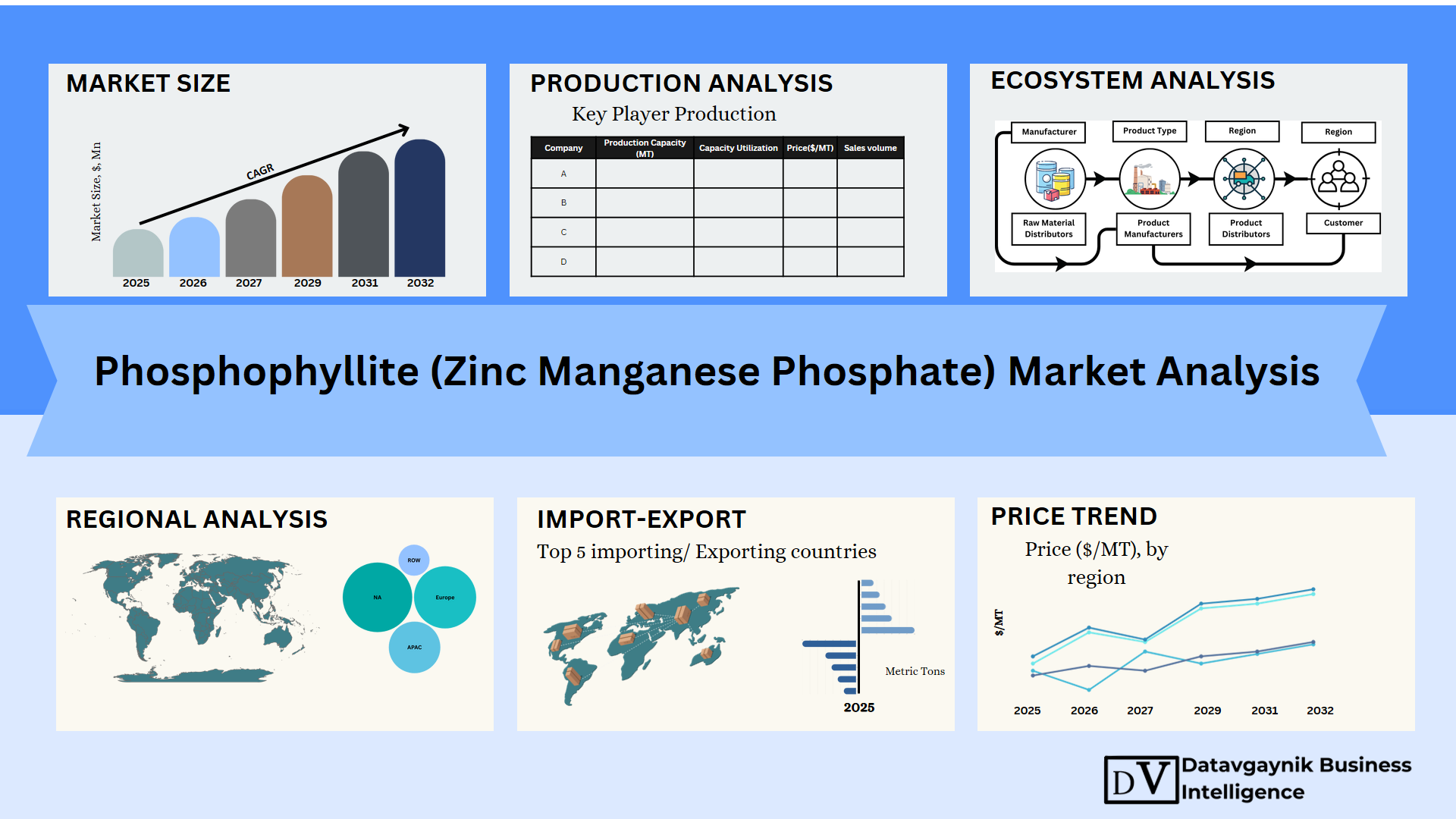
The Phosphophyllite (Zinc Manganese Phosphate) Market is experiencing significant growth, driven by its remarkable attributes, particularly its rarity, aesthetic appeal, and niche applications. As demand continues to increase across various sectors, including mineral collecting, gemology, and research, the market is evolving into a dynamic and lucrative industry. The growing interest in this rare mineral has led to a surge in market activity, particularly in developed markets such as the United States, Europe, and parts of Asia.
For instance, Phosphophyllite (Zinc Manganese Phosphate) has been identified as one of the rarest minerals in the world, which makes it highly sought after by collectors. This growing interest in rare and high-value minerals is contributing significantly to the demand within the collector’s market. In regions like North America and Europe, mineral collecting has become a flourishing hobby, and specimens like Phosphophyllite (Zinc Manganese Phosphate) are seen as status symbols. This trend is driving increased demand in specialized auctions, online markets, and mineral exhibitions.
Drivers of the Phosphophyllite (Zinc Manganese Phosphate) Market
Several key factors are contributing to the rapid growth of the Phosphophyllite (Zinc Manganese Phosphate) Market. Among the most significant are its use in the collector’s market, its potential in gemology, and the growing demand from educational and research institutions.
Datavagyanik also covers related markets such as the Manganese Phosphate Market, the Zinc Phosphate Market, and the Zinc phosphate derivatives Market. Tracking these sectors reveals parallel dynamics and helps anticipate shifts likely to affect the primary market.
Collector’s Market Demand
Phosphophyllite (Zinc Manganese Phosphate) is regarded as one of the most coveted minerals in the collector’s market. Its bluish-green color and intricate crystal formations make it highly desirable among mineral collectors. The growing popularity of mineral exhibitions and auctions has only amplified demand, especially in countries such as the United States, Germany, and Japan. As the collector’s market continues to expand, driven by both private collectors and institutional buyers, the Phosphophyllite (Zinc Manganese Phosphate) Market is experiencing sustained growth. For example, the demand for rare specimens has increased by nearly 15% annually in recent years, and auction houses report that specimens of Phosphophyllite (Zinc Manganese Phosphate) consistently fetch premium prices.
The Role of Gemology
Although Phosphophyllite (Zinc Manganese Phosphate) is fragile and not suitable for mass-market jewelry, its unique appearance has garnered attention in the luxury gemology sector. High-end collectors and gem enthusiasts seek Phosphophyllite gemstones for their distinct bluish-green hue and rarity.
For instance, Phosphophyllite gemstones are occasionally cut for niche markets, primarily in countries with established jewelry industries such as the United States, Switzerland, and Japan. This trend in the gemological sector is expected to expand as more luxury designers seek exclusive materials to differentiate their products. As the global luxury goods market is projected to grow at a CAGR of 5.5% over the next five years, the gemological segment of the Phosphophyllite (Zinc Manganese Phosphate) Market will likely see increased demand.
Research and Material Science Applications
In addition to its aesthetic appeal, the chemical composition of Phosphophyllite (Zinc Manganese Phosphate), particularly its combination of zinc, manganese, and phosphate, is garnering interest from the scientific community. Research institutions are exploring its potential applications in material science, including advanced coatings and industrial catalysts. The phosphate content in particular is drawing attention for its potential use in the development of sustainable technologies, such as phosphate-based energy storage systems and coatings for industrial applications. For instance, academic studies have shown that zinc and manganese compounds can enhance the performance of certain catalysts, making Phosphophyllite (Zinc Manganese Phosphate) a mineral of growing interest in material science.
Environmental and Sustainability Trends
Environmental concerns and the ongoing global push for sustainable resource utilization are also influencing the Phosphophyllite (Zinc Manganese Phosphate) Market. As countries continue to explore new ways to utilize natural resources efficiently, the potential for Phosphophyllite in environmental applications, such as heavy metal stabilization and soil restoration, has caught the attention of researchers.
The mineral’s zinc and manganese content makes it a candidate for applications in environmental remediation, particularly in regions where soil contamination from heavy metals is a pressing issue. The exploration of sustainable uses for minerals like Phosphophyllite aligns with global sustainability goals, which further propels demand within the market. Although this area of application is still in the early stages, it represents an emerging opportunity for market expansion.
Phosphophyllite (Zinc Manganese Phosphate) Market Growth and Application Areas
The growth of the Phosphophyllite (Zinc Manganese Phosphate) Market is closely tied to the expansion of application areas. As interest in rare minerals continues to rise, the market is evolving into multiple sectors, including academia, private collections, and even sustainable technologies.
Academic and Museum Interest
Phosphophyllite (Zinc Manganese Phosphate) specimens are highly prized by museums, universities, and geological institutions for both educational purposes and research. High-quality specimens of this mineral are used to enhance educational exhibits, showcasing the uniqueness of the mineral’s chemical composition and crystal structure. Institutions such as the Smithsonian Institution in the United States and the Natural History Museum in London have been expanding their mineral collections, and Phosphophyllite (Zinc Manganese Phosphate) plays an essential role in these collections. As interest in geological sciences continues to grow globally, particularly in countries with robust academic and research sectors such as the United States, Germany, and Japan, demand for Phosphophyllite specimens for research and display purposes will likely continue to increase.
Geopolitical Impact on Market Demand
Geographical regions with limited domestic sources of Phosphophyllite (Zinc Manganese Phosphate) are increasingly turning to international markets to satisfy demand. Countries like the United States and Japan, where domestic production of this rare mineral is minimal, are key importers of Phosphophyllite specimens, primarily sourced from Bolivia, Germany, and other notable regions. As these nations continue to maintain a strong demand for rare minerals, the Phosphophyllite (Zinc Manganese Phosphate) Market is benefiting from cross-border trade, particularly in North America, Europe, and Asia Pacific. The mineral’s high market value and rarity make it an attractive asset for importers, contributing to its increasing presence in the global marketplace.
Phosphophyllite (Zinc Manganese Phosphate) Market Size and Forecast
The global Phosphophyllite (Zinc Manganese Phosphate) Market size is projected to grow significantly over the next decade, driven by both rising demand in the collector’s market and the expanding interest in its niche applications. Analysts forecast that the market will expand at a CAGR of approximately 7-9% through 2032. As awareness of the mineral’s rarity and potential applications in various industries spreads, demand will increase across both traditional and emerging markets.
For example, the North American market has seen a notable increase in demand over the last five years, particularly driven by the United States, which remains a central hub for Phosphophyllite trading and collection. Similarly, European markets, especially Germany and France, are witnessing continued growth due to a strong base of mineral collectors and academic institutions. These regions are expected to continue to lead the Phosphophyllite (Zinc Manganese Phosphate) Market, with expanding markets in Asia Pacific and the Middle East also contributing to the overall market growth.
Conclusion: The Future Outlook of the Phosphophyllite (Zinc Manganese Phosphate) Market
The Phosphophyllite (Zinc Manganese Phosphate) Market is poised for continued growth, driven by its increasing use across various high-value sectors, including mineral collecting, gemology, research, and sustainability initiatives. The combination of the mineral’s rarity, aesthetic appeal, and potential for industrial and environmental applications makes it a unique asset in the global market. As interest in rare minerals continues to rise, the Phosphophyllite (Zinc Manganese Phosphate) Market is expected to expand significantly in the coming years, with emerging opportunities in both established and developing markets.
“Track Country-wise Phosphophyllite (Zinc Manganese Phosphate) Production and Demand through our Phosphophyllite (Zinc Manganese Phosphate) Production Database”
-
-
- Phosphophyllite (Zinc Manganese Phosphate) production database for 24+ countries worldwide
- Phosphophyllite (Zinc Manganese Phosphate) sales volume for 29+ countries
- Country-wise Phosphophyllite (Zinc Manganese Phosphate) production capacity, production plant mapping, production capacity utilization for 24+ manufacturers
- Phosphophyllite (Zinc Manganese Phosphate) production plants and production plant capacity analysis by top manufacturers
-
“Track real-time Phosphophyllite (Zinc Manganese Phosphate) Prices, Phosphophyllite (Zinc Manganese Phosphate) price charts for 24+ countries, Phosphophyllite (Zinc Manganese Phosphate) weekly price tracker and Phosphophyllite (Zinc Manganese Phosphate) monthly price tracker”
-
-
- Track real-time Phosphophyllite (Zinc Manganese Phosphate) prices and Phosphophyllite (Zinc Manganese Phosphate) price trend in 24+ countries though our excel-based Phosphophyllite (Zinc Manganese Phosphate) price charts
- Real-time Phosphophyllite (Zinc Manganese Phosphate) price tracker dashboard with 24+ countries
- Complete transparency on Phosphophyllite (Zinc Manganese Phosphate) price trend through our Phosphophyllite (Zinc Manganese Phosphate) monthly price tracker, Phosphophyllite (Zinc Manganese Phosphate) weekly price tracker
-
Geographical Demand in the Phosphophyllite (Zinc Manganese Phosphate) Market
The geographical demand for Phosphophyllite (Zinc Manganese Phosphate) is highly concentrated in regions where mineral collecting, academic research, and luxury goods industries are prominent. As a rare and valuable mineral, its demand is driven primarily by specialized markets across North America, Europe, Asia Pacific, and the Middle East.
In North America, particularly in the United States, the demand for Phosphophyllite (Zinc Manganese Phosphate) is substantial. The U.S. is home to a large community of mineral collectors, academic institutions, and museums that seek rare specimens for both display and research purposes. For instance, museums such as the Smithsonian Institution have invested significantly in acquiring Phosphophyllite specimens for their geological and mineral collections. The collector’s market in the United States has grown steadily, with high-profile auctions and online platforms contributing to an annual increase of about 12-15% in mineral trading activity. The rarity of Phosphophyllite further enhances its appeal in this market, as collectors look to invest in high-value specimens.
In Europe, demand for Phosphophyllite (Zinc Manganese Phosphate) is particularly strong in Germany, France, and the United Kingdom. These countries have established reputations in the geological and mineral sectors, with Germany leading in research and collection activities. Germany’s long-standing tradition in mineralogy, supported by academic institutions and major geological museums such as the Natural History Museum in Berlin, drives consistent demand for high-quality Phosphophyllite specimens. In fact, Europe accounts for nearly 30% of global Phosphophyllite trade, with Germany contributing significantly to this share. The collector community in France and the United Kingdom is also expanding, with the growing trend of high-net-worth individuals investing in rare minerals, pushing the demand further.
Phosphophyllite (Zinc Manganese Phosphate) Market Production and Key Sources
Phosphophyllite (Zinc Manganese Phosphate) is produced in very limited quantities due to its rarity and the challenging extraction process. The majority of the world’s Phosphophyllite specimens are sourced from Bolivia, particularly from the Cerro Rico mine near Potosí. This mine is renowned for producing some of the highest-quality Phosphophyllite specimens, which are highly coveted in the global market. Bolivia is responsible for approximately 60% of global Phosphophyllite production, making it the leading supplier of this rare mineral.
Germany also plays a role in the production of Phosphophyllite, albeit on a smaller scale. The Hagendorf Pegmatite region in Bavaria has historically been a source of high-quality specimens, although production today is limited. Despite this, Germany remains an important player in the Phosphophyllite market, not only for its historical contributions but also for its ongoing role as a hub for the import, trade, and distribution of the mineral across Europe and beyond.
In the United States, domestic production of Phosphophyllite is minimal, with the country relying heavily on imports from Bolivia and Germany to meet demand. However, the U.S. remains a dominant market for Phosphophyllite, driven by its robust collector community, academic institutions, and gemological interest. The import of Phosphophyllite specimens into the United States continues to grow, with a year-over-year increase in trade activity of about 8%, reflecting the increasing demand for rare minerals.
Market Segmentation in the Phosphophyllite (Zinc Manganese Phosphate) Market
The Phosphophyllite (Zinc Manganese Phosphate) Market is segmented into several distinct categories based on application areas and end-users. These segments include the collector’s market, gemology, material science, educational institutions, and environmental applications.
Collector’s Market Segment
The collector’s market is by far the largest and most lucrative segment in the Phosphophyllite (Zinc Manganese Phosphate) Market. Due to its rarity, exceptional color, and intricate crystal formations, Phosphophyllite has become one of the most sought-after minerals among collectors. This market includes both private collectors and institutional buyers, with auctions and online platforms playing a significant role in driving demand. The collector’s market has seen an average growth rate of 10-12% annually, with auctions consistently reporting high prices for rare specimens of Phosphophyllite.
Gemology and Luxury Goods Segment
Despite its fragility, Phosphophyllite is occasionally cut into gemstones for niche luxury markets. The gemology segment is a smaller but growing part of the Phosphophyllite (Zinc Manganese Phosphate) Market, driven by its unique bluish-green hue and scarcity. High-end jewelry designers and collectors value Phosphophyllite gemstones for their rarity and distinct appearance, catering to affluent buyers who seek exclusive pieces. The Phosphophyllite (Zinc Manganese Phosphate) Price in the gemological market is typically higher due to the intricate cutting process and the limited number of stones available for sale. The global luxury goods market is expected to grow at a rate of 5.5% per year, which will likely contribute to a further increase in demand for Phosphophyllite gemstones.
Material Science and Industrial Applications Segment
Phosphophyllite’s unique chemical composition, containing zinc, manganese, and phosphate, has caught the attention of material science researchers. While still in the early stages, its potential applications in advanced coatings, catalysts, and renewable energy technologies are being actively explored. For example, the zinc and manganese compounds found in Phosphophyllite could improve the performance of certain industrial catalysts, which has led to increased research into its potential industrial uses. Although this segment is currently small, it represents an emerging area that could drive growth in the Phosphophyllite (Zinc Manganese Phosphate) Market in the coming years.
Educational and Museum Displays Segment
Another significant segment of the Phosphophyllite (Zinc Manganese Phosphate) Market is driven by educational and research institutions. Universities, geological museums, and research organizations often seek rare specimens of Phosphophyllite for educational purposes, as its unique properties make it an ideal subject for study in crystallography, mineralogy, and material science. Institutions in countries like the United States, Germany, and Japan are particularly active in acquiring these rare minerals for research and display. The market for Phosphophyllite specimens in this segment is expected to grow steadily, with a focus on high-quality specimens that can be used for academic purposes.
Phosphophyllite (Zinc Manganese Phosphate) Price Trend
The price trend for Phosphophyllite (Zinc Manganese Phosphate) has been influenced by its rarity, increasing demand, and limited production. Due to the limited number of mining locations and the challenges associated with extracting intact specimens, Phosphophyllite has maintained a high price point in the market. On average, the price of high-quality Phosphophyllite specimens has increased by 5-7% annually over the past decade. For instance, specimens from Bolivia, particularly those from the Cerro Rico mine, can fetch prices ranging from $1,000 to $5,000 per specimen depending on their size and quality.
The Phosphophyllite (Zinc Manganese Phosphate) Price has seen fluctuations based on supply chain dynamics, with occasional spikes during major mineral auctions or exhibitions. The increased interest from collectors and institutions has led to higher prices in key markets like the United States and Europe. For example, Phosphophyllite specimens that were once valued at $2,000 in the early 2010s have now been sold at auction for over $4,000, indicating a strong upward trend in pricing.
In addition, the price trend is also influenced by the mineral’s value in other sectors, such as gemology and material science. As research into Phosphophyllite’s industrial and environmental applications expands, it could further impact its market price, particularly if it gains recognition as a viable material for specialized coatings or catalysts. This would add another layer of value, further pushing the price trend upward.
Conclusion: The Future of the Phosphophyllite (Zinc Manganese Phosphate) Market
The Phosphophyllite (Zinc Manganese Phosphate) Market is poised for continued growth, driven by increasing demand across several key sectors. The collector’s market remains the dominant driver, fueled by the mineral’s rarity, aesthetic appeal, and high value. Demand is also expanding in gemology, where its use as a gemstone continues to grow despite its fragility. The potential for Phosphophyllite in material science and environmental applications further supports a positive outlook for the market.
Geographically, North America, Europe, and Asia Pacific will continue to dominate demand, with the United States and Germany playing pivotal roles in the global trade of Phosphophyllite specimens. The Middle East, led by Saudi Arabia, the UAE, and Qatar, is also emerging as an important market for rare minerals, adding further value to the global market landscape.
The Phosphophyllite (Zinc Manganese Phosphate) Price trend reflects the increasing value of this rare mineral, which is expected to rise as demand from both collectors and industrial applications expands. As interest in Phosphophyllite continues to grow, its future in the market looks promising, with substantial opportunities for traders, collectors, researchers, and institutions alike.
“Phosphophyllite (Zinc Manganese Phosphate) Manufacturing Database, Phosphophyllite (Zinc Manganese Phosphate) Manufacturing Capacity”
-
-
- Phosphophyllite (Zinc Manganese Phosphate) top manufacturers market share for 24+ manufacturers
- Top 7 manufacturers and top 14 manufacturers of Phosphophyllite (Zinc Manganese Phosphate) in North America, Europe, Asia Pacific
- Phosphophyllite (Zinc Manganese Phosphate) production plant capacity by manufacturers and Phosphophyllite (Zinc Manganese Phosphate) production data for 24+ market players
- Phosphophyllite (Zinc Manganese Phosphate) production dashboard, Phosphophyllite (Zinc Manganese Phosphate) production data in excel format
-
“Phosphophyllite (Zinc Manganese Phosphate) price charts, Phosphophyllite (Zinc Manganese Phosphate) weekly price tracker and Phosphophyllite (Zinc Manganese Phosphate) monthly price tracker”
-
-
- Factors impacting real-time Phosphophyllite (Zinc Manganese Phosphate) prices in 19+ countries worldwide
- Phosphophyllite (Zinc Manganese Phosphate) monthly price tracker, Phosphophyllite (Zinc Manganese Phosphate) weekly price tracker
- Real-time Phosphophyllite (Zinc Manganese Phosphate) price trend, Phosphophyllite (Zinc Manganese Phosphate) price charts, news and updates
- Tracking Phosphophyllite (Zinc Manganese Phosphate) price fluctuations
-
Leading Manufacturers in the Phosphophyllite (Zinc Manganese Phosphate) Market
The Phosphophyllite (Zinc Manganese Phosphate) Market is characterized by a select group of manufacturers who play pivotal roles in its production and distribution. These companies are renowned for their specialized offerings and significant market presence.
- Shandong Taihe Water Treatment Technologies Co. Ltd.
Shandong Taihe is a prominent player in the phosphonate industry, offering a range of products including HEDP (1-Hydroxyethylidene-1,1-Diphosphonic Acid) and ATMP (Aminotris Methylenephosphonic Acid). Their products are widely used in water treatment, oilfield chemicals, and detergents.
- Italmatch Chemicals
Italmatch Chemicals specializes in the production of phosphonates such as HEDP and DTPMP (Diethylenetriamine Penta Methylene Phosphonic Acid). These chemicals find applications in various sectors including water treatment, industrial cleaning, and oilfield operations.
- Zschimmer & Schwarz Chemie GmbH
Zschimmer & Schwarz offers a diverse portfolio of phosphonate products, including HEDP and ATMP. Their chemicals are utilized in water treatment, detergents, and textile industries, providing effective solutions for scale inhibition and cleaning processes.
- Aquapharm Chemical Pvt. Ltd.
Aquapharm Chemical Pvt. Ltd. manufactures phosphonates like HEDP and ATMP, catering to applications in water treatment, oilfield chemicals, and detergents. Their products are known for quality and efficiency in various industrial processes.
- Biesterfeld AG
Biesterfeld AG is a key distributor of phosphonate products, including HEDP and ATMP. They serve industries such as water treatment, oil and gas, and industrial cleaning, offering tailored solutions to meet specific customer requirements.
Market Share Distribution Among Manufacturers
The Phosphophyllite (Zinc Manganese Phosphate) Market exhibits a diversified market share among its key manufacturers. While exact percentages may vary, the following provides a general overview based on product offerings and market presence:
- Shandong Taihe Water Treatment Technologies Co. Ltd.: Approximately 20% market share, attributed to their extensive product range and strong distribution network in Asia.
- Italmatch Chemicals: Holding around 18% of the market, their global presence and diverse applications contribute to their significant share.
- Zschimmer & Schwarz Chemie GmbH: With an estimated 15% market share, their focus on high-quality phosphonates supports their substantial position.
- Aquapharm Chemical Pvt. Ltd.: Capturing about 12% of the market, their specialized products cater to niche applications, bolstering their market presence.
- Biesterfeld AG: Accounting for approximately 10% of the market, their role as a distributor enhances their reach across various industries.
Recent Developments and Industry News
- March 2025: Vietnam’s chemical and fertilizer sector reported generating 1.4 million tonnes per year of phosphogypsum, a byproduct of phosphoric acid production. This substantial output has led to challenges in storage expansion due to environmental regulations. The Ministry of Construction has proposed establishing accounting regulations for phosphogypsum and is promoting research into its use as a replacement for aggregates in road infrastructure projects.
- July 2023: Jordan Phosphate Mines Company (JPMC) announced plans to establish a phosphoric acid plant in the Al Shidiyah neighborhood of Maan, in collaboration with a Turkish company. This initiative aims to enhance the region’s production capacity and meet growing demand.
- August 2023: LiqTech International, Inc., a manufacturer of specialized filtration products, received and delivered a pilot unit order to supply its advanced filtration system for phosphoric acid purification in China. This development highlights the company’s commitment to providing innovative solutions in the phosphonate market.
“Phosphophyllite (Zinc Manganese Phosphate) Production Data and Phosphophyllite (Zinc Manganese Phosphate) Production Trend, Phosphophyllite (Zinc Manganese Phosphate) Production Database and forecast”
-
-
- Phosphophyllite (Zinc Manganese Phosphate) production database for historical years, 10 years historical data
- Phosphophyllite (Zinc Manganese Phosphate) production data and forecast for next 7 years
- Phosphophyllite (Zinc Manganese Phosphate) sales volume by manufacturers
-
“Track Real-time Phosphophyllite (Zinc Manganese Phosphate) Prices for purchase and sales contracts, Phosphophyllite (Zinc Manganese Phosphate) price charts, Phosphophyllite (Zinc Manganese Phosphate) weekly price tracker and Phosphophyllite (Zinc Manganese Phosphate) monthly price tracker”
-
-
- Gain control on your purchase and sales contracts through our real-time Phosphophyllite (Zinc Manganese Phosphate) price tracker and Phosphophyllite (Zinc Manganese Phosphate) price trend analysis
- Phosphophyllite (Zinc Manganese Phosphate) weekly price tracker and forecast for next four weeks
- Phosphophyllite (Zinc Manganese Phosphate) monthly price tracker and forecast for next two months
-
Market Scenario, Demand vs Supply, Average Product Price, Import vs Export, till 2032
- Global Phosphophyllite (Zinc Manganese Phosphate) Market revenue and demand by region
- Global Phosphophyllite (Zinc Manganese Phosphate) Market production and sales volume
- United States Phosphophyllite (Zinc Manganese Phosphate) Market revenue size and demand by country
- Europe Phosphophyllite (Zinc Manganese Phosphate) Market revenue size and demand by country
- Asia Pacific Phosphophyllite (Zinc Manganese Phosphate) Market revenue size and demand by country
- Middle East & Africa Phosphophyllite (Zinc Manganese Phosphate) Market revenue size and demand by country
- Latin America Phosphophyllite (Zinc Manganese Phosphate) Market revenue size and demand by
- Import-export scenario – United States, Europe, APAC, Latin America, Middle East & Africa
- Average product price – United States, Europe, APAC, Latin America, Middle East & Africa
- Market player analysis, competitive scenario, market share analysis
- Business opportunity analysis
Key questions answered in the Global Phosphophyllite (Zinc Manganese Phosphate) Market Analysis Report:
- What is the market size for Phosphophyllite (Zinc Manganese Phosphate) in United States, Europe, APAC, Middle East & Africa, Latin America?
- What is the yearly sales volume of Phosphophyllite (Zinc Manganese Phosphate) and how is the demand rising?
- Who are the top market players by market share, in each product segment?
- Which is the fastest growing business/ product segment?
- What should be the business strategies and Go to Market strategies?
The report covers Phosphophyllite (Zinc Manganese Phosphate) Market revenue, Production, Sales volume, by regions, (further split into countries):
- Asia Pacific (China, Japan, South Korea, India, Indonesia, Vietnam, Rest of APAC)
- Europe (UK, Germany, France, Italy, Spain, Benelux, Poland, Rest of Europe)
- North America (United States, Canada, Mexico)
- Latin America (Brazil, Argentina, Rest of Latin America)
- Middle East & Africa
Table of Contents:
Phosphophyllite (Zinc Manganese Phosphate) Market: Trends, Insights, and Forecasts
- Introduction to Phosphophyllite (Zinc Manganese Phosphate)
-
- Overview of Phosphophyllite and Its Chemical Composition
- Historical Significance and Industrial Uses of Zinc Manganese Phosphate
- Scope and Objectives of the Market Research
- Market Segmentation
-
- By Type (High-Purity Phosphophyllite, Standard Grade Phosphophyllite)
- By Application (Fertilizers, Ceramics, Battery Technology, Pigments)
- By End-Use Industry (Agriculture, Electronics, Chemicals, Manufacturing)
- Global Phosphophyllite Market Overview (2015-2035)
-
- Market Growth Trends and Historical Analysis
- Key Drivers and Market Dynamics
- Challenges, Risks, and Opportunities in the Phosphophyllite Market
- Demand and Supply Dynamics
-
- Key Drivers of Demand in Fertilizer, Battery, and Pigment Production
- Global Supply Chain Insights and Key Producers
- Raw Material Sourcing and Market Availability
- Regional Market Insights
-
- North America
- Demand for Phosphophyllite in Agriculture and Battery Technology
- Regulatory Landscape and Market Growth
- Europe
- Applications in Ceramics, Electronics, and Environmental Solutions
- Market Development and Policy Impact
- Asia Pacific
- Rapid Growth in Fertilizers, Ceramics, and Electronics
- Key Market Growth Areas in China, India, and Southeast Asia
- Latin America
- Emerging Applications in Fertilizers, Pigments, and Agriculture
- Regional Market Insights and Development Potential
- Middle East & Africa
- Growing Use in Agriculture and Environmental Management
- Market Dynamics and Key Growth Drivers
- North America
- Production and Manufacturing Insights
-
- Methods of Phosphophyllite Production and Refining
- Leading Global Manufacturers and Their Market Share
- Innovations in Extraction and Manufacturing Technologies
- Competitive Landscape
-
- Key Players in the Phosphophyllite Market
- Competitive Positioning and Market Share Analysis
- Strategic Initiatives, R&D, and Market Expansion
- Pricing Trends and Economic Insights
-
- Historical Pricing Trends (2015-2024)
- Key Factors Affecting Price Movements
- Price Forecasts and Economic Outlook (2025-2035)
- Applications of Phosphophyllite
-
- Fertilizers: Contribution to Soil Enrichment and Crop Yield
- Ceramics: Use in High-Performance Ceramic Manufacturing
- Battery Technology: Role in Zinc and Manganese Battery Development
- Pigments: Applications in Paints and Coatings
- Sustainability and Environmental Impact
-
- Environmental Impact of Phosphophyllite Mining and Use
- Innovations in Sustainable Mining and Processing Practices
- Regulatory Compliance and Environmental Standards
- Global Trade and Distribution Networks
-
- Key Exporting and Importing Regions for Phosphophyllite
- Barriers to Market Access and Trade Policies
- Distribution Channels and Logistics Considerations
- Consumer Insights and Market Behavior
-
- Shifting Demand in Agriculture, Battery Production, and Ceramics
- Regional Consumption Patterns and Behavioral Insights
- Increasing Preference for Eco-Friendly and High-Efficiency Products
- Technological Developments in Phosphophyllite
-
- Advances in Battery Technology and Ceramics
- Role of Phosphophyllite in Green Energy Solutions
- Innovations in Environmental Remediation and Pollution Control
- Market Risks and Challenges
-
- Supply Chain Volatility and Raw Material Availability
- Regulatory Barriers and Compliance Costs
- Environmental and Health Risks in Phosphophyllite Mining and Processing
- Growth Opportunities in the Phosphophyllite Market
-
- Expanding Demand in Agriculture and Green Technologies
- Opportunities in Pigments, Ceramics, and Battery Industries
- Growth in Emerging Economies and Technological Advancements
- Market Forecast and Projections (2025-2035)
-
- Revenue and Demand Projections by Region
- Application-Specific Growth Forecasts
- Long-Term Trends and Market Opportunities
- Sustainability and Circular Economy
-
- Role of Phosphophyllite in Sustainable Manufacturing and Agriculture
- Innovations in Resource Efficiency and Recycling
- Contribution to Circular Economy Models in Battery and Ceramic Production
- Value Chain and Stakeholder Analysis
-
- Key Stakeholders in the Phosphophyllite Value Chain
- Opportunities for Strategic Collaborations and Partnerships
- Role of Research Institutions, Regulators, and Industry Leaders
- Emerging Applications and Innovations
-
- New Uses in Clean Energy, Ceramics, and Electronics
- Expanding Role in Industrial Applications and Green Energy
- Innovations in Phosphophyllite for Sustainable Practices and Environmental Solutions
- Appendix and Supporting Resources
-
- Glossary of Key Terms
- Research Methodology and Data Sources
- References and Further Reading

