

Market Summary and Growth Forecast
The global Vein Illuminator Market is estimated at $124 million in 2026 and is expected to reach $208 million by 2035, growing at a CAGR of 5.9%.
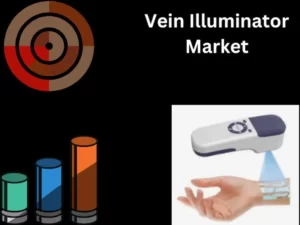
Vein illuminators are non-invasive medical devices that help clinicians identify superficial veins before or during needle-based procedures. Most advanced systems use near-infrared light to capture the contrast between blood vessels and surrounding tissue. The vein pattern is then projected onto the patient’s skin or displayed through an imaging interface. Simpler products use contact or side-transillumination to expose veins close to the skin.
Commercial systems such as the AccuVein AV500 can show veins, valves, bifurcations, and blood patterns in real time. Christie Medical Holdings’ VeinViewer platform processes reflected near-infrared light and projects a digital vessel map directly over the patient’s skin. Contact devices from TransLite, sold under the Veinlite brand, use portable LED transillumination and occupy a lower price tier. These different architectures allow suppliers to serve large hospitals as well as smaller clinics, emergency teams, and individual practitioners.
Global Market Forecast
| Market indicator | Analyst estimate |
| Global market size, 2026 | $124 million |
| Projected market size, 2035 | $208 million |
| Forecast CAGR, 2026–2035 | 5.9% |
| Incremental revenue opportunity | $84 million |
| Primary revenue base | Device sales, stands, accessories, service and software-enabled visualization |
| Forecast period | 2026–2035 |
The estimates cover dedicated vein-location and vein-illumination equipment used in human healthcare. They include portable devices, cart-mounted platforms, charging systems, positioning stands, manufacturer-provided accessories, software-enabled visualization features, and related service revenue. Ultrasound systems, intravenous catheters, phlebotomy supplies, biometric vein-recognition equipment, and general-purpose medical imaging systems are excluded.
Business Relevance During 2026–2035
The commercial relevance of the Vein Illuminator Market comes from a basic operational problem: venous access is common, but it isn’t always simple. Pediatric patients, older adults, people receiving repeated chemotherapy, patients with obesity, individuals with darker skin tones, and those with damaged or collapsed veins may require multiple attempts before access is secured.
For hospitals, repeated needle attempts consume nursing time and delay treatment. They can also increase material use, patient discomfort, bruising, and escalation to more experienced personnel. A vein illuminator doesn’t replace clinical skill. It gives the clinician more information before selecting an insertion site.
For example, an oncology nurse handling a patient with a long infusion history may use near-infrared visualization to identify an alternative superficial vessel instead of repeatedly attempting access at the most visible site.
The clinical evidence remains nuanced. A meta-analysis covering 18 randomized trials and more than 5,000 pediatric participants found that near-infrared devices reduced procedure time and the number of cannulation attempts. However, the evidence certainty was low, and improvement in first-attempt success was not consistent across every setting. This supports targeted deployment in difficult-access populations rather than automatic use for every patient.
Macro Forces Shaping Demand
Clinical workflow standardization: Hospitals are moving away from informal device availability toward defined difficult-intravenous-access protocols. Facilities increasingly want clear rules covering when visualization should be used, who should operate the device, and when a patient should be escalated to ultrasound-guided access. Research on hospital protocols shows that integration into nursing workflows remains an important part of achieving meaningful utilization.
Portable device adoption: Early vein-imaging systems were comparatively large and expensive. Current development is centered on smaller handheld formats, rechargeable batteries, mobile stands, faster image processing, and reduced setup time. Portable models are extending the addressable customer base beyond tertiary hospitals into blood collection centers, ambulatory facilities, aesthetic practices, and emergency medical services.
Hospital productivity pressure: Buyers are becoming less interested in visibility claims alone. They want evidence around first-attempt success, procedure time, catheter selection, patient satisfaction, and reductions in avoidable escalation. So, commercial success will depend on workflow economics and not just image quality.
Regulatory and quality requirements: In the United States, listed vein-location devices fall within the FDA’s general hospital device framework. The AccuVein AV500 and associated stands are listed under product code KZA and regulation number 880.6970. Manufacturers must still maintain appropriate registration, labeling, quality systems, complaint handling, and post-market reporting. In Europe, products placed on the market are subject to the requirements of Regulation (EU) 2017/745, including safety, performance, conformity assessment, and post-market obligations.
Production reliability: The main manufacturing inputs include near-infrared emitters, optical sensors, cameras, projectors, embedded processors, batteries, housings, and calibrated mounting assemblies. Projection alignment and image registration are critical. Even a small offset between the detected vein and the projected pattern can undermine clinician confidence. Battery performance, charging compatibility, field servicing, and calibration controls will therefore remain important procurement criteria. FDA reports involving charging and projection-alignment issues illustrate why hospitals assess reliability and service support alongside image performance.
Key Consumers and Clients
| Customer group | Primary requirement |
| Hospitals and health systems | IV insertion, emergency access, pediatric care, oncology, radiology and preoperative procedures |
| Diagnostic laboratories | Faster blood collection and fewer repeat punctures |
| Blood and plasma centers | High-throughput donor vein identification |
| Pediatric hospitals | Visualization of smaller and less visible superficial veins |
| Oncology and infusion centers | Access support for patients receiving repeated therapy |
| Ambulatory surgery centers | Rapid preoperative cannulation |
| Emergency medical services | Portable access support outside hospital settings |
| Aesthetic and vein clinics | Identification or avoidance of superficial vessels during injections and vein procedures |
| Home-infusion providers | Compact and simplified visualization equipment |
The market will expand steadily rather than explosively. Hospitals must still justify capital expenditure, train users, and determine where visualization offers an advantage over palpation or ultrasound. That said, lower-cost devices and more portable designs will make adoption easier across smaller healthcare facilities.
Market Segmentation and Forecast Scope
The Vein Illuminator Market is best segmented by technology, product configuration, clinical application, end user, and geography. This structure separates the device’s technical architecture from the way it is purchased and used.
Segmentation Framework
| Segmentation dimension | Included sub-segments | Forecast interpretation |
| By Technology | Projected near-infrared imaging; contact or side-transillumination | Near-infrared systems lead institutional spending, while transillumination supports lower-cost and highly portable use |
| By Product Configuration | Handheld and portable; cart or stand-mounted; fixed and tabletop | Handheld products record the strongest unit growth due to easier deployment across departments |
| By Application | Peripheral IV access; venipuncture and blood collection; infusion and oncology access; sclerotherapy and aesthetic procedures; other superficial vascular localization | IV access remains the largest application, while aesthetics and outpatient procedures grow faster from a smaller base |
| By End User | Hospitals; laboratories and blood centers; ambulatory and specialty clinics; EMS and home-care providers | Hospitals lead revenue, but non-hospital channels add more incremental customers |
| By Region | North America; Europe; Asia Pacific; Latin America, Middle East and Africa | North America leads value, while Asia Pacific delivers the fastest expansion |
By Technology
Projected Near-Infrared Imaging
Projected near-infrared systems are estimated to account for approximately 63% of global revenue in 2026. These devices illuminate tissue with near-infrared light, detect differences in absorption or reflection, process the image, and project a vessel map onto the skin.
Their higher revenue share reflects premium pricing, hospital-oriented configurations, stands, batteries, service requirements, and software-supported imaging features. Leading systems can provide different image modes, vein-width representation, focal guidance, and hands-free positioning.
This segment should grow at around 6.2% CAGR during 2026–2035. Demand will come from improved portability, better projection accuracy, broader distribution, and integration with catheter-selection workflows.
Contact and Side-Transillumination
These products place or hold a light source close to the skin. Light passes through superficial tissue, making the vein appear as a darker structure. Devices are usually compact and substantially less expensive than digital projection systems.
The technology is relevant for phlebotomy, pediatric procedures, emergency use, and cost-sensitive outpatient environments. Official product pricing from Veinlite starts below $300, showing how this category can reach customers that cannot justify a multi-thousand-dollar imaging platform.
Unit sales will remain healthy, although revenue growth will be moderated by lower average selling prices and limited software monetization.
By Product Configuration
Handheld and Portable Devices
This is the fastest-growing configuration. Handheld products can move between departments and may be used in ambulances, physician offices, laboratories, infusion centers, or home-care settings.
The segment is forecast to grow at approximately 6.7% CAGR through 2035. Its strategic advantage is utilization. A portable device can serve several rooms or clinical teams without requiring dedicated installation.
Cart and Stand-Mounted Systems
These systems are primarily purchased by hospitals requiring hands-free operation, stable positioning, and full-body access. They carry higher selling prices and generate accessory and service revenue.
Growth will remain stable in emergency departments, pediatric hospitals, oncology units, radiology departments, and vascular-access teams. However, longer capital-budget cycles will prevent this segment from matching the unit growth of handheld products.
Fixed and Tabletop Devices
Fixed and tabletop products serve procedure rooms, blood collection stations, and other defined work areas. Their role is comparatively narrow. Suppliers must demonstrate a clear workflow advantage because portability is becoming the preferred purchasing criterion.
By Application
Peripheral Intravenous Access
This application covers site assessment and vein localization before peripheral IV catheter placement. It represents the core commercial use case and is likely to retain the largest revenue contribution throughout the forecast.
Demand will be strongest where difficult access is common. This includes emergency care, pediatrics, oncology, bariatric care, and older patient populations.
Venipuncture and Blood Collection
Diagnostic laboratories, blood banks, plasma centers, and hospital phlebotomy departments use these devices to locate suitable vessels before collecting blood. The commercial case is based on throughput, reduced repeat attempts, and patient experience.
Infusion and Oncology Access
Patients receiving repeated infusions may have scarred or depleted access sites. Visualization allows the clinician to assess alternative superficial vessels and preserve frequently used sites. This is a smaller application than general IV access but carries a stronger clinical-value proposition.
Sclerotherapy and Aesthetic Procedures
Aesthetic clinics may use visualization to locate superficial vessels for treatment or to avoid them during injectable procedures. Distribution partnerships involving aesthetic-product suppliers have opened an additional route to market for premium handheld systems.
This application is forecast to grow at approximately 7.4% CAGR during 2026–2035, making it one of the fastest-moving commercial niches.
By End User
Hospitals
Hospitals are estimated to represent approximately 54% of global revenue in 2026. Their leading position comes from higher device density, premium system purchases, multiple clinical departments, and demand for hands-free accessories.
Laboratories, Blood Banks and Plasma Centers
These customers prioritize compact devices, short learning curves, durability, and rapid turnover. Price sensitivity is higher than in tertiary hospitals, creating opportunities for mid-range NIR products and transillumination systems.
Ambulatory and Specialty Clinics
This group includes infusion centers, pediatric clinics, surgery centers, vein clinics, and aesthetic practices. It is expected to post the fastest end-user growth because purchasing decisions are less centralized and portable systems can be tied to specific revenue-producing procedures.
EMS and Home Care
Adoption remains comparatively small but strategically relevant. Battery life, rugged design, device weight, ease of cleaning, and performance in changing light conditions are central purchasing criteria.
By Region
North America will remain the largest regional market. It benefits from established vascular-access practices, premium device penetration, strong medical-technology distribution, and demand from both hospital and aesthetic channels.
Europe will record measured growth. Replacement sales and adoption in pediatric, oncology, blood collection, and outpatient settings will support demand. Compliance costs under the EU medical-device framework may favor suppliers with established quality systems and distributor networks.
Asia Pacific is forecast to be the fastest-growing region at around 7.2% CAGR during 2026–2035. Hospital expansion, increasing private healthcare investment, larger diagnostic networks, and the availability of lower-priced regional products will broaden adoption.
Latin America, the Middle East and Africa will remain distributor-led markets. Premium systems will be concentrated in major hospitals and private healthcare groups, while portable lower-cost products will have wider commercial potential.
Market Trends and Innovation Landscape
Innovation in the Vein Illuminator Market is shifting from basic vessel visibility toward better clinical decision support. The next generation of products will need to answer three questions: Which vein is suitable? What catheter size should be used? Can the procedure be completed with fewer attempts?
Key Innovation Trends
| Innovation area | Current direction | Expected commercial impact |
| Image processing | Higher contrast, reduced lag, sharper vessel boundaries and adaptive imaging modes | Improves clinician confidence and supports use across different skin and lighting conditions |
| Projection accuracy | Better alignment between the captured vessel and the skin projection | Becomes a core quality and procurement benchmark |
| Portability | Smaller housings, rechargeable batteries and lighter stands | Expands demand across outpatient, mobile and shared-device settings |
| Workflow guidance | Catheter-sizing references and vein-width assessment | Moves products from simple visualization toward procedural guidance |
| Connectivity | Image capture, documentation and potential device-utilization tracking | Supports quality improvement and hospital asset management |
| Low-cost design | Simplified optics, LED systems and embedded processing | Opens cost-sensitive hospitals and emerging markets |
| Clinical targeting | Use protocols based on difficult-access risk | Improves utilization and strengthens the economic case |
From Vein Visibility to Vein Assessment
Earlier systems focused on making an otherwise invisible vein visible. Newer development is centered on assessment. Clinicians want to understand vessel direction, branching, valves, relative width, and the suitability of a proposed access site.
AccuVein’s AV500 displays superficial vein patterns, bifurcations and valves. Christie Medical Holdings has moved further toward procedure guidance through CathCompass, an integrated color-coded catheter-sizing reference available with selected VeinViewer Flex and Vision2 systems. The feature allows users to compare a visual representation of catheter gauge against the vein image before insertion.
This matters commercially. Products that influence catheter selection or access-site assessment can be positioned as workflow tools rather than optional viewing devices.
Portable Systems Will Reshape Pricing
The industry has two distinct price structures. Premium digital NIR systems compete through projection quality, software features, stands, hands-free operation, and service. Portable transillumination products compete through simplicity and price.
Cost reduction will come from more efficient LEDs, compact sensors, embedded processors, standardized batteries, and simplified optical assemblies. This should narrow the performance gap between premium and mid-range devices. It will also pressure suppliers to justify high prices through measurable clinical and workflow benefits.
Clinical Evidence Is Becoming More Selective
The research direction is moving away from the question “Does visualization work?” toward “For which patients and under which workflow does it work best?”
Evidence published in 2024 found reductions in procedure time and cannulation attempts in pediatric populations, but inconsistent results for first-attempt success and pain. A later review concluded that routine use for every peripheral IV insertion was not supported by current evidence. Other research is developing decision tools to help clinicians identify when visualization technology should be used.
This creates a more disciplined adoption model. Hospitals may deploy devices through difficult-access protocols, pediatric units, oncology departments, or vascular-access teams rather than purchasing one for every ward.
Expert view: The strongest suppliers won’t argue that every patient needs vein visualization. They’ll prove which patient groups benefit and provide a repeatable protocol for reaching them.
AI Remains an Emerging Rather Than Established Feature
Artificial intelligence is not yet a mainstream commercial requirement in this category. Most marketed devices rely on conventional optical capture, contrast enhancement, image processing, and real-time projection.
Research teams are experimenting with deep-learning models that segment veins from NIR images and deploy the model on compact edge hardware. One published prototype used a modified U-Net architecture and a portable embedded processor to identify veins in the antecubital region. The work shows technical potential, but it remains closer to research-stage engineering than broad commercial implementation.
During the later forecast period, AI could support automatic vessel segmentation, image-quality checks, vein-diameter estimation, insertion-site recommendations, and training analytics. Regulatory validation and diverse clinical datasets will be necessary before these features influence large-scale purchasing.
Partnerships and Portfolio Expansion
The market’s commercial development relies heavily on distributors and adjacent medical-technology channels.
In 2019, CAREstream Group acquired Christie Medical Holdings after distributing VeinViewer products for more than a decade. The transaction connected vein visualization with CAREstream’s broader clinical, anesthesia, emergency, and aesthetic distribution activities.
In 2024, the strategic relationship between Merz Aesthetics and AccuVein moved toward a scaled national rollout in the United States. The agreement positioned the AV500 within an established aesthetic-sales network, showing how vein visualization can move beyond hospital vascular access into injectable and cosmetic procedures.
Greiner Bio-One also distributes VeinViewer products across a broad group of European and adjacent markets. Such arrangements give specialized manufacturers access to established blood-collection and pre-analytics customers without building a direct commercial organization in every country.
Outlook for Innovation Through 2035
Product development will concentrate on five practical outcomes:
- Faster setup and automatic focusing.
- More accurate skin projection.
- Better visibility across varying skin characteristics.
- Guidance on vessel and catheter suitability.
- Lower acquisition and ownership costs.
Expert view: By 2035, the Vein Illuminator Market will be less defined by who produces the brightest vein image and more by who can turn that image into a reliable clinical decision. Portability will drive volume. Workflow evidence will protect pricing.
Competitive Intelligence and Benchmarking
Competition in the Vein Illuminator Market remains fragmented. It includes premium imaging specialists, lower-cost optical-device manufacturers, regional distributors, and direct-to-clinic brands. Large diversified medical-device companies have not consolidated the category. So, specialist suppliers still control product development and channel strategy.
Competitive Benchmarking
| Company | Portfolio and market position | Strategic strengths | Competitive limitation |
| AccuVein, Inc. | Premium handheld near-infrared projection systems supported by mobile stands, fixed mounts, charging equipment, training, and clinical education | Strong hospital recognition, compact form factor, established evidence base, and expansion into aesthetics | Premium pricing and competition from lower-cost digital systems |
| Christie Medical Holdings, Inc. | High-definition handheld and mobile vascular-imaging platforms with image modes, vessel assessment, documentation, and catheter-sizing support | Broad pre-, during-, and post-access positioning; strong institutional and alternate-care offering | Larger system footprint and higher procurement complexity |
| TransLite LLC | Contact and side-transillumination devices for pediatrics, neonatology, EMS, dentistry, phlebotomy, and sclerotherapy | Low acquisition cost, application-specific portfolio, vein stabilization, and easy portability | Lower imaging depth and fewer digital functions than projected NIR systems |
| Shenzhen Vivolight Medical Device & Technology Co., Ltd. | Portable projection systems, depth-enabled models, screen-assisted devices, and head-mounted visualization concepts | In-house optical engineering, broader pricing coverage, export capability, and growing regulatory reach | Must build hospital-level brand trust against established US suppliers |
| BLZ Technology (Wuhan) Co., Ltd. | Handheld digital vein finders with distance sensing, multiple projection colors, depth modes, and image-storage functions | Competitive pricing, feature-rich products, and strong potential in distributor-led markets | Limited direct commercial presence in major Western hospital systems |
| NextVein LLC | Value-oriented handheld and hands-free projection systems supplied through a US-focused sales and service model | Affordable positioning, direct support, evaluation programs, and lower entry cost for smaller facilities | Relies on an external manufacturing platform and has a narrower technology portfolio |
| Hellovein | Portable NIR projection devices aimed at clinics, training centers, mobile providers, and aesthetic users | Digital-first distribution, accessible pricing, adjustable image modes, and strong outpatient positioning | Smaller institutional footprint and less published product-specific evidence |
AccuVein, Inc.
AccuVein occupies the premium end of the market. Its portfolio is built around lightweight non-contact devices that project superficial vasculature directly onto the skin. The company also offers hands-free stands and mounting systems, allowing the same device to be used for initial assessment and needle placement.
Its competitive advantage comes from brand recognition, portability, hospital references, and a focused clinical-education strategy. In March 2026, the company introduced a fourth-generation platform with an upgraded image engine, automated diagnostics, and backward compatibility with much of its installed accessory base. This protects customer investment and gives hospitals a simpler replacement path.
Market position: Premium benchmark supplier with strong exposure to US hospitals, outpatient care, and medical aesthetics.
Christie Medical Holdings, Inc.
Christie Medical Holdings, operating within the CAREstream America group, competes through a broader vascular-assessment proposition. Its systems combine near-infrared capture, digital image processing, direct projection, adjustable imaging modes, and image-storage capability.
The company’s strategy is less focused on finding a visible vein alone. It positions its equipment as a tool for evaluating vessels before access, observing the procedure, and assessing refill or infiltration afterward. Its portable system can also be connected to existing fixtures for hands-free use. This supports deployment in hospitals, plasma centers, surgery centers, EMS, and home healthcare.
Market position: Premium institutional competitor differentiated by full-field imaging and procedural-assessment functions.
TransLite LLC
TransLite serves the market through compact side-transillumination devices sold under the Veinlite platform. Its range is divided by clinical use. Separate configurations address mixed adult populations, pediatric care, neonatal access, emergency medicine, animal research, and sclerotherapy.
The company competes on simplicity and price. Listed equipment starts at approximately $249, while several application-specific models remain below $700. This places the range well below premium projection systems. The contact design also applies light pressure around the selected vein, helping stabilize vessels that may otherwise roll during insertion.
Market position: Leading specialist in low-cost transillumination and application-specific vein-access devices.
Shenzhen Vivolight Medical Device & Technology Co., Ltd.
Vivolight Medical is one of the more important Chinese technology challengers. It combines vein visualization with a wider optical and laser-medical-device platform. Its portfolio includes portable projection systems, models with depth measurement, integrated display options, floor and tabletop stands, and head-mounted vascular-visualization concepts.
The company’s latest generation combines direct skin projection with an LCD interface, additional visualization colors, improved depth assessment, and extended battery operation. The product is listed in the United States and carries a European CE mark, supporting broader export development.
Market position: High-growth Chinese manufacturer positioned between premium Western systems and lower-cost generic equipment.
BLZ Technology (Wuhan) Co., Ltd.
BLZ Technology markets a portfolio of handheld near-infrared systems through its vein-imaging brand. Its higher-end models offer automatic distance guidance, brightness adjustment, projection-color selection, depth modes, and image export.
This mix is commercially relevant in mid-priced hospital tenders. Distance sensors can also reduce poor image quality caused by incorrect working distance. The company has a stronger engineering profile than many unbranded Chinese exporters, but its international market access still depends heavily on distributors.
Market position: Feature-rich mid-tier supplier with strong export potential across Asia, Europe, Latin America, and the Middle East.
NextVein LLC
NextVein targets customers who want digital projection without premium-system pricing. Its commercial model includes a portable device, hands-free accessories, direct US service, extended warranty options, and product-evaluation support.
The company’s system is manufactured by Vivolight Medical. So, NextVein’s differentiation comes primarily from pricing, customer support, local service, and market access rather than proprietary optical hardware. Its value proposition is suitable for community hospitals, outpatient centers, infusion providers, and independent clinics.
Market position: US value challenger using an OEM platform and service-led commercial strategy.
Hellovein
Hellovein focuses on portable NIR systems for IV access, phlebotomy, aesthetics, EMS, medical education, and outpatient applications. Its devices provide adjustable projection colors, image sizes, brightness settings, and enhanced viewing modes.
The company uses direct online sales and content-led marketing to reach smaller healthcare providers. This lowers channel costs and supports competitive pricing. However, gaining large hospital contracts will require stronger clinical documentation, biomedical service capacity, and tender-market experience.
Market position: Emerging digital-first challenger with particular relevance in aesthetics, training, and independent clinical practices.
Competitive Outlook
Premium suppliers will retain an advantage in large hospitals where service quality, clinical training, alignment accuracy, and device reliability matter more than initial price. Chinese suppliers and value brands will gain share in smaller hospitals and emerging markets.
The middle of the market may become crowded. A device that only provides multiple colors and brightness settings will be difficult to differentiate. Suppliers will need depth guidance, automatic focusing, durable batteries, clearer clinical evidence, or lower ownership costs.
Expert view: The competitive battle is moving away from simple vein visibility. Buyers increasingly want proof that a system improves site selection, reduces escalation, supports catheter choice, and performs consistently across departments.
Regional Landscape and Adoption Outlook
The regional forecast below reconciles with the estimated global value of $124 million in 2026 and $208 million in 2035. Figures are rounded analyst estimates.
Regional Market Forecast
| Geography | 2026 Market Size | 2026 Share | 2035 Market Size | 2026–2035 CAGR | Adoption stage |
| United States | $47.1 million | 38.0% | $76.3 million | 5.5% | Established |
| Europe | $29.8 million | 24.0% | $46.2 million | 5.0% | Established but fragmented |
| China | $13.6 million | 11.0% | $27.0 million | 7.9% | Rapid expansion |
| India | $5.0 million | 4.0% | $10.5 million | 8.6% | Early high-growth |
| Japan | $8.7 million | 7.0% | $13.0 million | 4.6% | Selective and quality-driven |
| South Korea | $3.7 million | 3.0% | $6.3 million | 6.1% | Developing |
| Middle East | $5.0 million | 4.0% | $8.7 million | 6.4% | Project-led |
| Rest of World | $11.1 million | 9.0% | $20.0 million | 6.8% | Distributor-led |
| Global | $124.0 million | 100% | $208.0 million | 5.9% | — |
United States
The United States is the largest country market. Adoption is supported by large hospital systems, specialized vascular-access teams, pediatric hospitals, oncology networks, blood and plasma centers, and a substantial medical-aesthetics sector.
Premium projection systems have stronger acceptance here than in most other markets. Hospitals can link purchasing decisions to nursing productivity, patient-experience indicators, reduced escalation calls, and difficult-access protocols. Outpatient clinics also have access to lower-cost devices through direct purchasing channels.
Vein-location devices under FDA product code KZA are listed as Class I devices under regulation 21 CFR 880.6970. This creates a relatively manageable pathway compared with higher-risk diagnostic and therapeutic equipment, although manufacturers remain responsible for establishment registration, listing, quality controls, labeling, and post-market obligations.
Adoption outlook: Stable replacement demand in hospitals plus faster expansion in aesthetics, urgent care, independent infusion, dentistry, and home healthcare.
Europe
Europe is a sizeable but fragmented market. Germany, the United Kingdom, France, Italy, the Netherlands, and the Nordic countries represent the most attractive national opportunities.
Public procurement plays a greater role than in the United States. Buyers often require local-language documentation, CE marking, distributor support, clinical evidence, and competitive tender pricing. Premium systems are more likely to be purchased by university hospitals, pediatric facilities, oncology departments, and major blood-collection networks.
Products placed on the EU market must comply with Regulation (EU) 2017/745 and the related obligations covering conformity assessment, economic operators, clinical evaluation, surveillance, and traceability. These requirements create additional costs for smaller suppliers and favor companies with established European representatives and quality systems.
Adoption outlook: Measured growth led by portable replacement systems, outpatient care, pediatric use, and expansion through established laboratory and preanalytics distributors.
China
China combines a large hospital system with an increasingly capable domestic medical-device manufacturing base. International companies retain relevance in premium tertiary hospitals, but local suppliers such as Vivolight and BLZ Technology can compete through lower pricing, faster customization, and domestic service.
Purchasing is likely to divide into two tiers. Major urban hospitals may select higher-specification devices with depth assessment and stable projection. Secondary hospitals, blood centers, and private clinics will be more price sensitive.
Medical devices sold in China are subject to NMPA registration or filing requirements. Overseas applicants must appoint a domestic legal entity to act as their agent, while applicants are expected to maintain an appropriate quality-management system and traceable registration information.
Adoption outlook: Strong unit growth, rising domestic-brand participation, and increasing price competition. China is forecast to become the second-largest individual country market before 2035.
India
India has the highest projected growth rate among the named geographies, although it starts from a smaller base. Demand is concentrated in private hospital chains, tertiary government hospitals, pediatric centers, diagnostic laboratories, oncology facilities, blood banks, and premium aesthetic clinics.
Affordability will determine the speed of penetration. Premium imported systems may remain limited to major metropolitan hospitals. Portable mid-priced projection devices and lower-cost transillumination products have a wider addressable market.
All medical devices in India are regulated under the Drugs and Cosmetics framework and the Medical Devices Rules, 2017. Importers and manufacturers must follow the relevant licensing pathway. The framework covers risk classification, import licensing, manufacturing licensing, quality requirements, and post-market responsibilities.
Government procurement can create volume, but pricing requirements may be restrictive. Private hospital chains offer a faster route for suppliers that can demonstrate reduced procedure time and improved patient satisfaction.
Adoption outlook: Fastest growth through distributor partnerships, localized pricing, clinical demonstrations, and compact systems priced below premium US platforms.
Japan
Japan is a mature medical-technology market with high expectations for quality, reliability, cleaning validation, product documentation, and local after-sales support. Adoption is likely to focus on pediatrics, oncology, geriatric care, blood collection, and selected emergency departments.
The market is less likely to accept low-cost products without strong technical documentation. Local distributor relationships and Japanese-language training are important. Approval and regulatory oversight are shared between the Ministry of Health, Labour and Welfare and the Pharmaceuticals and Medical Devices Agency under the PMD Act.
Adoption outlook: Moderate growth driven by replacement demand and an aging patient population. Premium quality matters more than aggressive pricing.
South Korea
South Korea offers a smaller but technology-receptive market. Major tertiary hospitals, cosmetic clinics, pediatric departments, and medical-training institutions are the most relevant users.
The MFDS regulates medical-device approval and certification. Technical-document requirements vary by device classification, with lower-risk devices generally following certification pathways and higher-risk categories receiving direct MFDS review.
In May 2026, the regulator announced a new expedited approval and review process for innovative medical devices, targeting faster market access. Standard vein illuminators may not automatically qualify, but the reform signals a more innovation-oriented environment for devices that add validated automation or decision-support functions.
Adoption outlook: Above-average growth, especially in aesthetic medicine and digitally advanced hospitals.
Middle East
The Middle East is relevant due to hospital infrastructure expansion in Saudi Arabia and the United Arab Emirates. Premium private hospitals and government-backed tertiary facilities are the main purchasers. Demand also exists in cosmetic medicine, medical tourism, pediatrics, and emergency care.
Saudi Arabia requires medical-device registration and marketing authorization through the SFDA. Its Health Sector Transformation Program is expanding and restructuring healthcare delivery, which supports long-term demand for workflow-enhancing medical equipment.
The UAE provides an electronic registration route for equipment intended for import and trade. Dubai’s healthcare investment environment and continuing expansion of hospital and outpatient capacity make it a regional entry point for international suppliers.
Adoption outlook: Project-led growth concentrated in Saudi Arabia and the UAE. Regional distributors, tender experience, and fast technical support will be essential.
Expert view: India and China will add the most new device users. The United States will continue generating the highest revenue because premium systems, accessories, service, and replacement purchases carry greater value per account.
Recent Developments, Opportunities and Restraints
Recent Developments
| Date | Development | Market implication |
| March 2026 | AccuVein launched a next-generation US vein-visualization platform with a redesigned projection engine, automated self-diagnostics, updated internal components, and compatibility with much of its earlier accessory base. | Strengthens replacement demand and protects the supplier’s installed-base advantage. |
| June 2026 | Vivolight Medical introduced an upgraded projection system offering improved depth measurement, smoother imaging, more display colors, an integrated LCD, and a larger battery. The company reported US FDA listing and European CE marking. | Raises competitive pressure in the mid-priced segment and supports Chinese suppliers’ expansion into regulated export markets. |
| May 2026 | South Korea’s MFDS announced an expedited review framework targeting a 240-day approval process for new drugs, biosimilars, and innovative medical devices, effective from June 1, 2026. | Could support faster entry for advanced devices incorporating validated automation, AI, or decision-support functions. |
| November 2025 | India’s CDSCO reiterated that medical devices require appropriate licensing for import, manufacture, sale, and distribution under the Medical Devices Rules. | Increases compliance discipline and may reduce the role of unlicensed low-cost imports. |
Opportunities and Business Insights
Emerging-market product localization
India, China, Southeast Asia, Latin America, and parts of the Middle East remain underpenetrated. The strongest opportunity is not to sell the highest-priced system everywhere. It is to create a durable mid-range device with local service, a clear warranty, replaceable batteries, and practical clinical training.
Automated vessel assessment
Computer vision could support automatic vein segmentation, depth estimation, image-quality checks, and recommended projection distance. Edge-AI research has already demonstrated that vein-segmentation models can operate on compact embedded hardware. Commercial adoption will depend on clinical validation and careful regulatory positioning.
Productivity-linked hospital selling
Suppliers can improve conversion by measuring failed attempts, escalation calls, procedure time, consumable use, and device utilization before and after deployment. A shared device placed under a difficult-access protocol may generate a stronger return than purchasing equipment for every ward.
Market Restraints
Inconsistent clinical benefit: Visibility does not always translate into successful cannulation. Vessel depth, movement, insertion technique, and clinician experience remain important.
Budget competition: Vein illuminators compete with ultrasound systems, nursing training, additional vascular-access staff, and other hospital capital requirements.
Pricing pressure: Lower-cost Chinese systems and online brands are narrowing the visible feature gap between premium and value products.
Reliability and training: Poor projection alignment, incorrect working distance, insufficient charging, or limited staff training can reduce trust and leave devices unused.


