

IED Detection System Market Demand Is Moving Toward Vehicle-Mounted, Portable, and Sensor-Fused Threat Identification
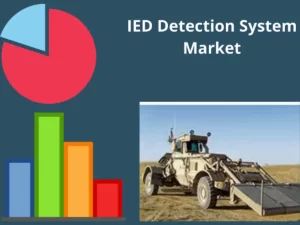
An IED Detection System refers to a defense and security solution used to identify improvised explosive devices through technologies such as ground-penetrating radar, electromagnetic induction, chemical sensors, thermal imaging, acoustic detection, handheld detectors, robotic platforms, and vehicle-mounted route-clearance systems. The global mine and IED detection system market is estimated at around USD 5.0–5.3 billion in 2026 and is projected to reach nearly USD 8.0 billion by 2035, reflecting a CAGR of about 4.8% during 2026–2035. Demand is mainly linked to military route clearance, convoy protection, border security, explosive ordnance disposal, critical infrastructure protection, and humanitarian demining. The market is segmented by deployment into vehicle-mounted, handheld, robotic, fixed, and UAV-assisted systems; by technology into GPR, EMI, chemical trace detection, thermal, acoustic, and multi-sensor systems; and by end user into defense forces, homeland security agencies, police/EOD units, and demining organizations.
Defense Procurement and Route-Clearance Requirements Keep IED Detection System Demand Concentrated
IED detection demand is not a high-volume commercial electronics market; it is procurement-led, mission-specific, and strongly tied to conflict exposure. Military and defense users remain the largest customer group because they require detection systems that can operate in mixed terrain, damaged roads, convoy corridors, border zones, and post-conflict clearance areas. Vehicle-mounted platforms hold stronger revenue weight than basic handheld devices because one system can include radar arrays, armored integration, operator displays, jammers, camera payloads, robotic interfaces, and lifecycle support.
This is why the market behaves differently from airport explosive screening or building security equipment. Buyer decisions are driven less by unit price and more by survivability, detection probability, false-alarm rate, integration with protected vehicles, field maintenance, and training support. A handheld detector may fit police or patrol-level search operations, but military route clearance normally requires a wider sensor envelope and standoff capability.
European and NATO-linked demand has become more visible since 2024 because defense budgets have moved upward. SIPRI reported global military expenditure of USD 2.887 trillion in 2025, up 2.9% in real terms from 2024, while Europe increased military spending by 14%. EU member-state defense expenditure reached EUR 343 billion in 2024 and was expected to rise to EUR 381 billion in 2025. This spending environment supports procurement of engineering vehicles, EOD robots, route-clearance packages, sensor suites, and soldier-portable detection systems rather than only major combat platforms.
Vehicle-Mounted and Robotic Detection Systems Are Stronger Than Basic Handheld Units in High-Risk Areas
Vehicle-mounted IED detection systems lead in operationally exposed environments because they allow detection before troops dismount. Ground-penetrating radar is important where buried metallic and low-metal-content threats are present, while electromagnetic induction remains useful for metallic objects. Multi-sensor fusion is gaining preference because no single technology performs consistently across dry soil, wet soil, urban rubble, roadside clutter, snow, or sand.
Robotic systems are also gaining procurement attention because they reduce direct operator exposure during confirmation and disposal. In June 2025, Belgium’s Ministry of Defence awarded L3Harris Technologies a contract for 14 T4 medium-sized robots for EOD operations, including platform delivery, in-country support, training, maintenance, and counter-IED configuration enhancements. This type of purchase shows how customers increasingly buy a service-supported system package rather than only hardware.
Handheld IED detection systems remain relevant for patrols, checkpoints, building searches, vehicle inspection, and dismounted operations. However, their revenue share is lower where militaries need integrated convoy or route-clearance capability. The handheld segment is more price-sensitive, especially for law enforcement and lower-budget security agencies, while vehicle-mounted and robotic systems carry higher average selling prices because of ruggedization, sensor integration, software, testing, spares, and operator training.
Pricing, Supply, and Technology Adoption Are Shaped by Sensor Accuracy and Field Support
Pricing in the IED Detection System market is influenced by sensor type, platform integration, environmental qualification, software analytics, and support contract length. A basic metal-detection unit is far cheaper than a vehicle-mounted multi-sensor package with GPR, thermal imaging, mapping, protected displays, and maintenance support. Procurement also includes calibration, spares, training simulators, field servicing, and periodic software updates, making lifecycle cost a major buying factor.
Supply is concentrated among defense electronics companies, sensor specialists, EOD robotics manufacturers, and armored vehicle integrators. Companies such as Thales, Northrop Grumman, BAE Systems, Rheinmetall, L3Harris, Safran, Leonardo, CEIA, Smiths Detection, and Teledyne FLIR compete across different parts of the ecosystem. The market is not purely manufacturing-led; after-sales service, operator training, and local defense relationships strongly influence contract awards.
Adoption is also moving toward AI-assisted signal interpretation, automated anomaly detection, and unmanned platforms, but technical limitations remain. False positives create operational delays, while false negatives can be fatal. Detection accuracy can fall in cluttered roads, mineralized soil, dense urban debris, and areas with non-metallic explosive containers. These limitations keep demand steady for multi-sensor systems, but they also slow replacement cycles because defense buyers require field validation before broad deployment.
Main Challenges Remain False Alarms, High Cost, and Uneven Demand Outside Active Security Zones
The market’s growth is moderate rather than explosive because procurement is cyclical and linked to defense budgets, active conflict risk, border security priorities, and humanitarian clearance funding. Countries facing insurgency, cross-border terrorism, mined terrain, or post-conflict reconstruction show higher demand intensity. In stable countries, purchases are limited to EOD units, police bomb squads, military engineering teams, airports, and critical infrastructure security.
The main challenge is operational reliability. IEDs vary widely in casing material, triggering method, explosive composition, burial depth, and concealment pattern. This makes universal detection difficult. High-end systems improve detection probability, but they are expensive and require trained operators. Budget-constrained buyers may continue using older handheld or vehicle-mounted systems longer than planned, creating replacement demand but slowing immediate adoption of advanced systems.
Overall, the IED Detection System market is expected to expand through defense modernization, EOD robot procurement, route-clearance upgrades, and border-security investment. Growth will remain strongest where buyers need deployable systems with low false-alarm rates, rugged field performance, and service support rather than standalone detection hardware.
Europe, North America, India, and the Middle East Shape the Main IED Detection System Demand Base
Regional demand for IED Detection System procurement is strongest where military engineering, EOD, border security, internal security, and post-conflict clearance budgets remain active. Europe has become the most visible growth cluster because defence spending has moved sharply upward since the Ukraine war. SIPRI placed European military spending at USD 864 billion in 2025 after a 14% increase, while the European Defence Agency reported EU-27 defence expenditure at EUR 343 billion in 2024, up 19% from 2023. This matters for IED detection because engineering units, explosive ordnance disposal teams, route-clearance fleets, and unmanned ground systems are normally funded through broader land-force modernization and force-protection budgets.
The United Kingdom, Germany, France, Poland, Belgium, and the Nordic countries are important European demand countries. The UK is a strong procurement market because it has a mature EOD capability, domestic defence technology base, and overseas operational experience. In May 2024, the UK Ministry of Defence selected L3Harris Technologies for an USD 18 million contract covering up to 50 T4 explosive ordnance disposal robots. Belgium followed in June 2025 with a contract for 14 T4 robots. These orders show that European demand is moving toward robotic inspection, standoff manipulation, and urban explosive-threat response rather than only handheld metal detection.
North America remains a high-value market because of the U.S. installed base, long military exposure to counter-insurgency operations, strong defense electronics supply, and federal funding for homeland security and public safety. The U.S. customer base includes the Army, Marine Corps, Air Force EOD units, police bomb squads, federal agencies, airport security, and critical infrastructure operators. Demand is more replacement- and upgrade-led than volume-led. Older route-clearance and EOD platforms are replaced when sensors, control stations, batteries, rugged displays, or communication links no longer meet field requirements.
India is one of the most demand-relevant Asian markets because IED threats are linked to border security, counter-insurgency operations, convoy protection, and internal security deployments. India’s Ministry of Defence received ₹7.85 lakh crore for FY 2026–27, a 15.19% increase over FY 2025–26 budget estimates, with ₹1.39 lakh crore earmarked for procurement from domestic defence industries. This supports local sourcing of defence electronics, robotic platforms, minefield systems, protected vehicles, and counter-threat systems. India is not only an import market; it is also building domestic assembly and systems integration capacity through DRDO-linked technology transfer, public-sector defence units, and private defence manufacturers.
The Middle East remains a specialized demand cluster because of high defence expenditure, border threats, urban security needs, and long-running explosive ordnance risks in conflict-affected zones. SIPRI estimated Middle East military expenditure at USD 243 billion in 2024, a 15% increase from 2023. Saudi Arabia, Israel, the UAE, Turkey, and Iraq remain important buyers for EOD robots, detection sensors, route-clearance systems, and trace explosive detection. Demand is strongest in militaries and internal security agencies, while humanitarian mine-action requirements remain relevant in Iraq, Syria, Yemen, and post-conflict territories.
Supply is concentrated in the U.S., UK, France, Germany, Italy, Israel, Canada, and parts of Asia. The U.S. has strength in robotics, sensors, military electronics, and defense-grade integration. Europe supplies mine detectors, EOD robots, trace detectors, vehicle integration, GPR systems, and protected engineering equipment. Israel has strong expertise in border surveillance, unmanned systems, and counter-terror technologies. India, Turkey, and South Korea are expanding local defence production, but high-end sensors, rugged electronics, and specialist detection modules may still involve imported inputs.
IED detection systems are assembled from multiple high-value components: radar antennas, electromagnetic coils, chemical detection modules, thermal cameras, rugged computers, control software, batteries, robotic manipulators, actuators, mobility platforms, armored mounting kits, and communication links. Quality control is demanding because field failure can directly affect operator safety. Testing normally includes environmental exposure, electromagnetic interference, vibration, dust, moisture, soil-type validation, target-recognition trials, and operator usability checks.
Segmentation behavior varies by region:
- Vehicle-mounted systems dominate high-threat military route-clearance demand because they provide standoff detection and protection for convoy operations.
- Handheld detectors remain strongest in police, patrol, checkpoint, and low-budget military applications because they are easier to deploy and less expensive.
- EOD robots are gaining share in Europe, North America, and Gulf countries because urban threat response requires remote inspection and manipulation.
- Ground-penetrating radar and multi-sensor systems are preferred where low-metal or non-metallic threats reduce the effectiveness of basic metal detectors.
- Trace explosive detection is stronger in airport, government building, checkpoint, and forensic security applications than battlefield route clearance.
Procurement behavior is contract-led and service-heavy. Buyers normally evaluate detection probability, false-alarm rate, ruggedization, training support, spare-parts availability, and integration with existing vehicles or command systems. Pricing is moving upward for advanced systems because multi-sensor payloads, robotic autonomy, encrypted communication, and field analytics raise bill-of-material cost. At the same time, basic handheld detector pricing remains competitive because more suppliers can serve that segment.
Replacement cycles differ by application. Handheld units may be replaced when sensitivity, battery life, or calibration reliability drops. Vehicle-mounted and robotic systems follow longer replacement cycles because procurement cost is higher and buyers often upgrade payloads, software, cameras, batteries, and manipulators instead of replacing the full platform. Demand therefore remains uneven: strong in countries with active operational risk, moderate in countries with only police bomb-squad requirements, and project-led in humanitarian clearance zones.
Competitive Positioning Depends on Sensor Depth, Robotics Capability, and Procurement Access
The IED Detection System market is served by a mix of defence primes, robotics manufacturers, trace-detection companies, specialist sensor firms, vehicle integrators, and regional distributors. Exact market share is not consistently disclosed because many contracts are bundled under broader EOD, force protection, land systems, border security, or explosive detection programs. Competitive strength is therefore better assessed through product portfolio, installed base, procurement access, technology depth, and service support.
L3Harris Technologies is a leading participant in EOD robotics through its T4 robot platform. Its recent UK and Belgium contracts show strong access to European defence procurement. The T4 platform is positioned for explosive ordnance disposal, confined-space operations, and ground explosive-threat response. Its advantage comes from robotic manipulation, control precision, training support, and lifecycle service rather than only hardware delivery.
Teledyne FLIR is another major robotics and sensor supplier. Its PackBot 510 is a man-transportable unmanned ground robot used for bomb disposal, reconnaissance, CBRN detection, and hazardous material operations. Teledyne FLIR states that more than 4,000 PackBot robots have been delivered worldwide, giving the company an installed-base advantage. The platform’s strength is rapid deployment, rugged mobility, real-time video/audio relay, and use by military and first-responder customers.
Smiths Detection is stronger in explosive trace detection than route-clearance vehicles. Its IONSCAN 600 is a portable desktop explosives and narcotics trace detector using ion mobility spectrometry. This product fits airports, government facilities, checkpoints, customs, forensic labs, and high-security buildings. Smiths’ advantage comes from regulatory qualification, installed base in security screening, and global service reach. It does not compete in exactly the same way as EOD robot suppliers; it serves the trace detection and screening side of the explosive-threat ecosystem.
CEIA is an important specialist in handheld and ground-search detection. Its CMD V2 and CMD 3 platforms are designed for high-sensitivity detection of metal and minimum-metal-content targets, including conductive non-metallic devices and command wires. CEIA’s competitive position is built around compact detector design, field sensitivity, usability, and supply into defence, humanitarian demining, and security markets. Its products are especially relevant where buyers need portable detection tools rather than vehicle-mounted systems.
Rheinmetall, Pearson Engineering, BAE Systems, Leonardo, Thales, Safran, Northrop Grumman, Chemring, QinetiQ, and Elbit Systems participate across adjacent counter-IED, route-clearance, sensor, electronic warfare, protected vehicle, and systems integration roles. Pearson Engineering is notable in route-clearance attachments and vehicle-mounted mine/IED protection tools. Thales, Safran, Leonardo, and Rheinmetall have stronger positions where detection is integrated into broader land systems, electronic warfare, protected mobility, or military engineering packages.
Competitive advantage is rarely based on one detector alone. Buyers often prefer suppliers that can deliver training, simulation, spare parts, field repair, software upgrades, and integration with national defence platforms. This favors established defence suppliers in North America and Europe. However, regional suppliers in India, Turkey, Israel, and South Korea are gaining relevance where governments prioritize local content and import substitution.
Pricing behavior reflects the gap between low-complexity and high-complexity systems. A handheld detector is mainly priced around sensor sensitivity, rugged design, battery performance, and certification. A robotic or vehicle-mounted system includes mobility hardware, cameras, manipulator arms, communications, ruggedized control stations, software, spares, and training. Contract pricing may also include multi-year support, depot repair, operator courses, and upgrade options. This creates higher margins for integrated system suppliers but also exposes them to long procurement cycles and strict acceptance testing.
Cost pressure is visible in electronics, batteries, optical sensors, RF components, radar modules, and rugged computing. Defence buyers want higher detection confidence and lower false alarms, but they also face budget scrutiny. This supports modular systems where buyers can upgrade payloads instead of replacing the entire system. Distributors and local integrators also remain important because many defence agencies require in-country service, local language training, and quick spare-parts access.
Recent developments connected to the market include:
- In May 2024, the UK Ministry of Defence selected L3Harris Technologies for an USD 18 million contract to deliver up to 50 T4 EOD robots, supporting urban explosive-threat response and remote manipulation.
- In June 2025, Belgium’s Ministry of Defence awarded L3Harris Technologies a contract for 14 T4 medium-sized EOD robots, confirming European demand for robotic counter-IED capability.
- In 2024, EU-27 defence expenditure reached EUR 343 billion, up 19% from 2023, strengthening procurement conditions for land-force protection, EOD equipment, robotics, and sensor systems.
- In FY 2026–27, India allocated ₹7.85 lakh crore to the Ministry of Defence, including ₹1.39 lakh crore for procurement from domestic defence industries, supporting local sourcing and assembly opportunities.
- In December 2025, Japan approved a record defence budget proposal of more than USD 58 billion for the fiscal year beginning April 2026, reflecting wider Asia-Pacific demand for defence modernization and unmanned security systems.
- In 2025, SIPRI estimated global military spending at USD 2.887 trillion, with Europe rising 14% to USD 864 billion, creating a larger budget base for force protection, engineering, EOD, and route-clearance systems.


