

Rapid Growth in the Odour Removal Catalysts Market Driven by Environmental Regulations
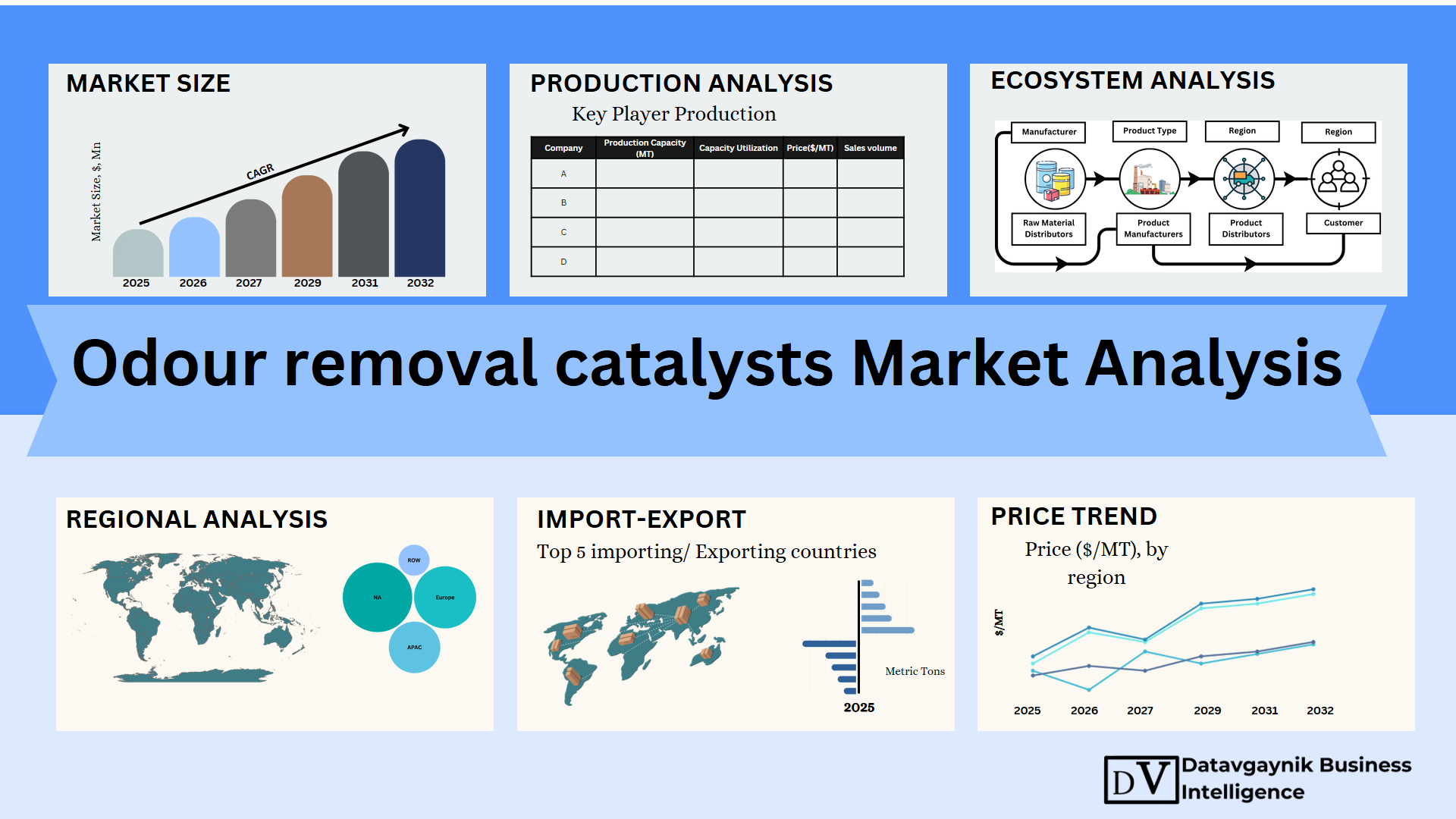
The odour removal catalysts market is experiencing robust growth, fueled by the implementation of stricter environmental regulations worldwide. Governments are increasingly enforcing stringent air quality standards that target volatile organic compounds (VOCs) and hazardous air pollutants (HAPs). This regulatory pressure compels industries such as chemical manufacturing, wastewater treatment, and petrochemicals to adopt advanced odour removal catalysts. The rising demand is reflected in market size projections showing consistent growth at over 7% compound annual growth rate (CAGR) through the next decade. This expansion highlights the critical role odour removal catalysts play in helping industries comply with evolving environmental mandates and avoid costly penalties.
Industrialization Accelerates Demand in the Odour Removal Catalysts Market
Rapid industrialization in emerging economies is a major factor driving the odour removal catalysts market. Industrial sectors like chemicals, petrochemicals, and food processing are expanding rapidly, generating increased volumes of odorous emissions. For example, chemical production in Asia has grown at rates exceeding 5% annually in recent years, intensifying the need for effective odour management solutions. Similarly, wastewater treatment infrastructure has expanded significantly, doubling in capacity in certain regions, thus elevating demand for odour control catalysts. This growth is underpinned by the limitations of traditional odour control methods, prompting a shift toward more advanced catalytic technologies capable of handling complex emissions.
Increasing Public Awareness Fuels Expansion of the Odour Removal Catalysts Market
Public concern about air quality and the health impacts of odour pollution is influencing the trajectory of the odour removal catalysts market. Communities exposed to unpleasant odours often report respiratory problems and reduced quality of life, prompting municipalities and industries to invest in better odour control systems. For instance, investment in advanced odour abatement solutions has increased by approximately 15% in regions with heightened public awareness over the last few years. This trend is driving industries to adopt catalytic technologies that offer efficient and sustainable odour neutralization, fueling market expansion and technological innovation.
Urbanization and Population Density Intensify Demand in the Odour Removal Catalysts Market
As urban areas expand and populations rise, residential zones increasingly border industrial sites and waste treatment facilities, leading to more frequent odour complaints. This proximity heightens the demand for effective odour removal catalysts to maintain community satisfaction and regulatory compliance. Urban populations in key regions are projected to increase substantially, creating greater pressure on industries and municipalities to implement robust odour control solutions. The growing interface between urban life and industrial activity makes odour removal catalysts indispensable for sustainable urban development and environmental management.
Technological Advancements Propel Efficiency in the Odour Removal Catalysts Market
Innovation in catalyst design and materials is transforming the odour removal catalysts market by improving efficiency, lifespan, and cost-effectiveness. For example, newer catalysts utilize advanced metal oxides and bio-catalysts that offer higher selectivity and longer operational periods, reducing maintenance costs. These technological breakthroughs enable industries to tackle a wider range of odorous compounds more effectively, enhancing compliance with stricter emission limits. The continuous evolution of catalyst technology is a key driver in expanding market applications across sectors such as petrochemicals, wastewater treatment, and food processing.
Waste Management Challenges Amplify Growth in the Odour Removal Catalysts Market
The increase in solid waste generation and wastewater volumes, particularly in urban centers, has escalated the challenge of odour control, pushing the odour removal catalysts market forward. Landfills, composting sites, and treatment plants produce a variety of odorous compounds that require specialized catalytic solutions. For instance, the volume of municipal solid waste globally is expected to reach nearly 3.5 billion tons by 2050, creating significant demand for effective odour mitigation technologies. The critical need to manage emissions from waste treatment processes is one of the strongest growth factors fueling the adoption of odour removal catalysts.
Food and Beverage Industry Regulations Support Expansion of the Odour Removal Catalysts Market
Stringent hygiene and environmental standards in the food and beverage sector are compelling manufacturers to invest in advanced odour removal catalysts. Odour control is essential not only for maintaining workplace safety and product quality but also for complying with regulations that safeguard consumer health. Industries like meat processing, dairy, and brewing are increasingly adopting catalytic technologies to reduce odorous emissions. This regulatory pressure, combined with growing consumer demand for sustainable production, is driving significant growth in the odour removal catalysts market within the food and beverage sector.
Petrochemical and Refining Sectors Intensify Demand in the Odour Removal Catalysts Market
The petrochemical and refining industries produce substantial odorous emissions, including sulfur and nitrogen compounds, which pose serious environmental and community concerns. This has created a pressing need for specialized odour removal catalysts capable of efficiently mitigating these pollutants. As refining capacity expands globally, with notable investments in Asia and the Middle East, the demand for high-performance catalytic solutions is rising sharply. The ability of odour removal catalysts to reduce foul-smelling emissions while supporting operational efficiency positions them as critical components in refining and petrochemical processes.
Regional Growth Patterns in the Odour Removal Catalysts Market Highlight Market Potential
The odour removal catalysts market exhibits varied growth dynamics across different regions, driven by local industrial activities and regulatory frameworks. North America, with its stringent EPA regulations, leads in the adoption of advanced odour control technologies. Europe follows closely, propelled by the European Union’s strict Industrial Emissions Directive and national environmental policies. Rapid industrialization and urbanization in Asia Pacific countries such as China and India contribute to one of the fastest-growing markets globally. This regional diversity creates multiple growth opportunities, with each geography presenting unique drivers and challenges for market participants.
Increasing Research and Development Accelerates Innovation in the Odour Removal Catalysts Market
Investment in research and development is a major factor accelerating innovation in the odour removal catalysts market. Companies are focusing on developing catalysts that deliver higher conversion rates of odorous compounds at lower operational costs. For example, catalysts designed for thermal and photocatalytic oxidation are becoming more efficient, enabling industries to achieve superior odour abatement with reduced energy consumption. The emphasis on R&D not only advances product performance but also supports the market’s response to tightening regulations and evolving industrial requirements, strengthening the overall growth trajectory.
Sustainability Trends Enhance Demand in the Odour Removal Catalysts Market
Growing emphasis on sustainability and green technologies is pushing industries to adopt environmentally friendly odour control solutions. Catalysts that reduce emissions without generating secondary pollutants are increasingly preferred. Bio-catalysts and other eco-friendly catalytic materials are gaining traction as industries seek to lower their environmental footprint. This trend aligns with broader global commitments to climate action and pollution reduction, making sustainability a key factor driving the demand and innovation within the odour removal catalysts market.
“Track Country-wise Odour removal catalysts Production and Demand through our Odour removal catalysts Production Database”
-
-
- Odour removal catalysts production database for 32+ countries worldwide
- Odour removal catalysts sales volume for 32+ countries
- Country-wise Odour removal catalysts production capacity, production plant mapping, production capacity utilization for 32+ manufacturers
- Odour removal catalysts production plants and production plant capacity analysis by top manufacturers
-
“Track real-time Odour removal catalysts Prices, Odour removal catalysts price charts for 32+ countries, Odour removal catalysts weekly price tracker and Odour removal catalysts monthly price tracker”
-
-
- Track real-time Odour removal catalysts prices and Odour removal catalysts price trend in 32+ countries though our excel-based Odour removal catalysts price charts
- Real-time Odour removal catalysts price tracker dashboard with 32+ countries
- Complete transparency on Odour removal catalysts price trend through our Odour removal catalysts monthly price tracker, Odour removal catalysts weekly price tracker
-
Geographical Demand Dynamics in the Odour Removal Catalysts Market
The geographical demand for odour removal catalysts market reveals distinct growth patterns influenced by regional industrialization, regulatory frameworks, and environmental priorities. In North America, demand is propelled by stringent environmental standards set by agencies like the EPA, driving widespread adoption of advanced odour control technologies across chemical, petrochemical, and wastewater treatment sectors. The region’s focus on sustainability and emission reduction has resulted in a steady market expansion, with growth rates estimated around 6-7% annually.
Europe’s odour removal catalysts market exhibits robust demand, largely due to the European Union’s comprehensive environmental directives such as the Industrial Emissions Directive (IED). Countries like Germany and France lead with significant investments in odour control for automotive, waste management, and food processing industries. For example, Germany’s chemical sector, responsible for nearly 30% of the EU’s chemical output, is a key consumer of high-performance catalysts, driving the market toward more eco-friendly and energy-efficient products.
Asia Pacific stands out as the fastest-growing region for the odour removal catalysts market, fueled by rapid industrial growth and urbanization. China’s industrial expansion, with over 9% annual growth in chemical production capacity, underpins an increasing demand for effective odour removal catalysts, especially in wastewater treatment and petrochemical refineries. India is witnessing parallel growth, with its National Clean Air Programme (NCAP) intensifying focus on emission control technologies. Southeast Asian countries, including Indonesia and Vietnam, are also scaling up adoption as urban populations rise, creating new market opportunities for odour removal catalysts.
Latin America’s market is gaining momentum due to expanding petrochemical and waste management sectors, especially in Brazil and Mexico. Investments in environmental compliance and infrastructure development are key drivers of demand. Similarly, Middle East and Africa are emerging markets where growing industrial activities and environmental concerns are prompting initial yet accelerating adoption of odour removal catalysts.
Production Landscape in the Odour Removal Catalysts Market
Production of odour removal catalysts is concentrated in countries with strong industrial bases and advanced chemical manufacturing capabilities. China dominates the global production landscape, leveraging cost advantages, large-scale manufacturing facilities, and technological improvements. Chinese producers have increased output by approximately 8% annually, catering to both domestic demand and exports to emerging markets in Asia, Africa, and Latin America.
The United States maintains a significant production footprint driven by innovation and high-quality standards. U.S. manufacturers invest heavily in research and development, resulting in catalysts with enhanced efficiency, durability, and environmental compatibility. This production strength supports domestic demand and meets export requirements, especially in North America and Europe.
Germany and Japan represent key European and Asian production hubs, respectively. German manufacturers focus on sustainable production processes and green catalyst technologies, aligned with regional environmental policies. Japan’s production emphasizes advanced catalyst designs for applications in automotive emissions and industrial odour control, driven by stringent national air quality standards. South Korea also contributes to the production landscape with growing investments in catalyst technology, particularly for electronics and petrochemical sectors.
Emerging producers in Southeast Asia and India are gradually increasing their share, supported by government initiatives to boost domestic manufacturing and reduce import dependence. These developments enhance supply chain resilience for the odour removal catalysts market globally.
Market Segmentation Overview in the Odour Removal Catalysts Market
Segmentation of the odour removal catalysts market reveals diversified applications and product types that cater to distinct industrial needs.
By Product Type, activated carbon catalysts hold a substantial market share due to their high adsorption capacity for VOCs and organic odours. Their use in industries such as wastewater treatment and chemical manufacturing is widespread. Zeolite-based catalysts are preferred in petrochemical sectors for their thermal stability and regeneration capabilities, contributing to increased demand in refining and gas processing applications.
Metal oxide catalysts, which facilitate oxidation of sulphur and nitrogen-based odorous compounds, are gaining traction in petrochemical and wastewater industries. For instance, demand for metal oxide catalysts has grown by over 10% in regions expanding petrochemical refining capacity. Bio-catalysts, leveraging biological mechanisms for odour neutralization, are emerging in waste management and composting sectors, aligning with sustainability trends.
By Application, wastewater treatment remains the largest segment, reflecting the urgent need to control odours from sewage and sludge processing plants. The sector’s expansion is evident from rising municipal investments, with urban wastewater treatment capacity expected to increase by 40% in Asia Pacific by 2030, directly boosting catalyst demand.
The petrochemical and chemical industries constitute another significant application area, driven by high volumes of odorous emissions from refining and chemical processes. Food and beverage processing is a growing segment, with hygiene and regulatory compliance necessitating advanced odour removal catalysts to maintain product quality. Waste management, encompassing landfill and composting sites, also contributes substantially to market demand.
By End-User Industry, the industrial sector dominates usage due to extensive manufacturing and refining activities. Municipal sectors are increasingly adopting odour removal catalysts to address urban air quality challenges, particularly in growing cities. Commercial applications in hospitality and large facilities are emerging, while residential demand for compact, eco-friendly odour control solutions is gradually rising.
Price Trends and Pricing Dynamics in the Odour Removal Catalysts Market
Odour removal catalysts price trends reflect the interplay between raw material costs, technological advancements, and supply-demand dynamics. Over the past five years, prices have shown moderate volatility influenced by fluctuations in key raw materials such as activated carbon and precious metals used in catalysts.
For example, activated carbon prices experienced a 15% increase during periods of raw material scarcity but stabilized as production ramped up in major manufacturing hubs. Technological improvements that enhance catalyst longevity and efficiency have contributed to an overall decline in effective odour removal costs, even when unit prices remain steady or slightly higher. This has made odour removal catalysts more accessible to a wider range of industries.
Price variations also occur regionally. Asia Pacific markets typically benefit from lower production costs and localized manufacturing, resulting in competitive odour removal catalysts price points. Conversely, North America and Europe often see higher prices due to stringent quality and environmental standards, as well as higher labor and compliance costs.
The adoption of premium catalytic solutions, such as bio-catalysts and advanced metal oxides, tends to drive higher price brackets but offers value through reduced operational expenses and environmental compliance. Such market stratification in pricing encourages a broad spectrum of product offerings catering to diverse industrial budgets and requirements.
Impact of Production Capacity and Supply Chain on Odour Removal Catalysts Price Trend
Production capacity expansions in major manufacturing countries have contributed to stabilizing the odour removal catalysts price trend despite growing demand. For instance, China’s increased production capacity has eased supply constraints, preventing sharp price escalations and supporting global supply chains.
However, occasional disruptions in raw material supply, such as activated carbon sourced from limited geographic areas, can create temporary price spikes. Manufacturers are investing in alternative materials and process optimizations to mitigate these effects, which supports a more predictable price environment.
Supply chain developments, including improved logistics and localized production in emerging markets, have reduced lead times and transportation costs, positively influencing the odour removal catalysts price trend. The increasing focus on sustainable sourcing and eco-friendly manufacturing also factors into pricing considerations, as environmentally responsible production may incur higher upfront costs but aligns with long-term market expectations.
Market Segmentation Influence on Odour Removal Catalysts Price and Demand
Segmentation by catalyst form—powdered, granular, and honeycomb—also impacts price trends and demand patterns in the odour removal catalysts market. Powdered catalysts, widely used due to ease of dispersion, generally command lower prices but may require more frequent replacement. Granular catalysts, preferred in fixed-bed reactors for their durability, sit in a mid-price range balancing cost and lifespan.
Honeycomb catalysts, commonly applied in automotive and high-efficiency industrial systems, represent the higher end of the price spectrum due to their advanced design and manufacturing complexity. Demand for honeycomb catalysts is growing in regions with strict automotive emission norms, such as Europe and North America, which also supports premium pricing.
Regional Price Differentiation in the Odour Removal Catalysts Market
Price differentiation across regions aligns with variations in industrial maturity, regulatory demands, and production capabilities. For example, North America’s odour removal catalysts price levels tend to be higher due to advanced product specifications and compliance requirements. Europe exhibits similar trends, reinforced by the region’s stringent environmental policies.
Asia Pacific’s competitive manufacturing environment often results in lower price points, making it a preferred market for cost-sensitive industries and emerging economies. This affordability has accelerated market penetration in sectors like wastewater treatment and food processing, where cost-efficiency is paramount.
Latin America and the Middle East, while currently smaller markets, are witnessing increasing demand for odour removal catalysts and associated pricing adjustments as industrial activities intensify. These regions are expected to follow pricing trends influenced by supply chain maturation and increasing quality standards.
Future Outlook on Odour Removal Catalysts Price Trend and Market Demand
Looking ahead, the odour removal catalysts price trend is expected to remain stable with moderate upward pressure stemming from rising raw material costs and enhanced product features. Innovations that improve catalyst lifespan and efficiency are likely to offset cost increases by lowering overall operational expenditures for end-users.
Market demand will continue to grow across all regions, with particular emphasis on Asia Pacific and emerging economies where industrialization and urbanization are accelerating. The expanding application base—from petrochemicals and wastewater treatment to food processing and waste management—ensures sustained demand for diverse catalyst types at varying price points.
As environmental regulations tighten further worldwide, industries will increasingly prioritize advanced odour removal catalysts that balance cost and performance, driving ongoing market evolution.
“Odour removal catalysts Manufacturing Database, Odour removal catalysts Manufacturing Capacity”
-
-
- Odour removal catalysts top manufacturers market share for 32+ manufacturers
- Top 12 manufacturers and top 19 manufacturers of Odour removal catalysts in North America, Europe, Asia Pacific
- Odour removal catalysts production plant capacity by manufacturers and Odour removal catalysts production data for 32+ market players
- Odour removal catalysts production dashboard, Odour removal catalysts production data in excel format
-
“Odour removal catalysts price charts, Odour removal catalysts weekly price tracker and Odour removal catalysts monthly price tracker”
-
-
- Factors impacting real-time Odour removal catalysts prices in 32+ countries worldwide
- Odour removal catalysts monthly price tracker, Odour removal catalysts weekly price tracker
- Real-time Odour removal catalysts price trend, Odour removal catalysts price charts, news and updates
- Tracking Odour removal catalysts price fluctuations
-
Leading Manufacturers in the Odour Removal Catalysts Market
The odour removal catalysts market is shaped by several key manufacturers who dominate global supply through innovation, production capacity, and diverse product portfolios. These companies leverage advanced technology to meet the growing demand from industries such as petrochemicals, wastewater treatment, and food processing.
Prominent among these manufacturers is Johnson Matthey, known for its robust portfolio of catalytic solutions including activated carbon catalysts and metal oxide catalysts designed for odour abatement. Johnson Matthey’s product line, such as the “Environmental Catalysts” series, is widely deployed in automotive emissions control and industrial air purification systems. The company holds a significant share of the global odour removal catalysts market due to its continuous investment in research and development that enhances catalyst performance and durability.
Clariant AG is another major player, specializing in zeolite-based and bio-catalysts. Clariant’s “Catox” product line offers tailored odour control solutions for chemical and petrochemical plants, emphasizing sustainability and regeneration capabilities. The company’s market share is reinforced by its focus on eco-friendly technologies and partnerships with industries requiring stringent emission control.
BASF SE commands a considerable portion of the odour removal catalysts market through its comprehensive range of catalysts designed for various industrial sectors. BASF’s “Catalysts for Emission Control” includes products optimized for thermal and photocatalytic oxidation processes, addressing odour emissions from wastewater and refining plants. The company’s global manufacturing footprint and integrated supply chain allow it to meet diverse regional demands effectively.
R. Grace & Co. holds a strong position by offering a wide spectrum of activated carbon and metal oxide catalysts. Their “Pure Air” product line is designed to reduce volatile organic compounds and sulphur emissions, widely used in food processing and chemical manufacturing. Grace’s commitment to innovation and sustainability bolsters its market presence, particularly in North America and Asia Pacific.
Honeywell UOP stands out for its catalytic solutions in the petrochemical and refining sectors. Their odour removal catalysts focus on reducing nitrogen and sulphur compounds, key contributors to odour pollution in industrial emissions. Honeywell’s “UOP Ecofining Process Catalysts” are examples of high-efficiency products gaining traction in markets aiming to reduce environmental impact while optimizing refining processes.
Haldor Topsoe specializes in advanced metal oxide catalysts and bio-catalysts that address odour emissions in wastewater treatment and chemical manufacturing. The company’s “Odour Control Catalyst” range is recognized for high activity and stability under harsh industrial conditions. Haldor Topsoe’s increasing investments in green technology support its growing share in Europe and Asia.
Zeochem AG is noted for its zeolite catalyst products used extensively in odour control for petrochemical industries. Their specialized catalyst formulations are engineered for thermal stability and regeneration, helping industries meet evolving emission standards. Zeochem’s market share benefits from strategic collaborations and innovation in catalyst materials.
Odour Removal Catalysts Market Share by Manufacturers
Market share distribution among these leading players reflects their geographic reach, product innovation, and sector-specific expertise. Johnson Matthey and BASF are estimated to command the largest shares, jointly accounting for approximately 35-40% of the global odour removal catalysts market. Their broad product portfolios and strong global presence enable them to cater to multiple industries, from automotive to wastewater treatment.
Clariant AG and W. R. Grace & Co. hold significant mid-level shares, roughly 15-20% each, driven by specialized catalyst technologies and regional market penetration, especially in Europe and Asia Pacific. Honeywell UOP and Haldor Topsoe collectively control around 10-15%, focusing on niche applications in petrochemical refining and wastewater treatment.
Smaller players and regional manufacturers fill the remaining market, often focusing on localized industries or specific catalyst types such as bio-catalysts or powdered catalysts. The market remains moderately consolidated but continues to attract new entrants due to growing demand and technological advancements.
Specific Product Lines Influencing Market Positions
Johnson Matthey’s “Environmental Catalysts” have become synonymous with reliable odour removal, featuring proprietary activated carbon composites that enhance VOC capture efficiency. Their catalysts’ adaptability to various industrial exhaust streams contributes heavily to their sustained market dominance.
Clariant’s “Catox” series includes bio-catalysts that utilize microbial processes to degrade organic odours, catering specifically to waste management and composting industries. These products align with rising sustainability mandates and have opened new market segments, boosting Clariant’s competitive edge.
BASF’s range of photocatalytic oxidation catalysts offers a cutting-edge approach to odour neutralization using light-activated materials, which is increasingly sought after in urban air purification and commercial applications. This innovation differentiates BASF in a market that values both effectiveness and environmental compatibility.
Grace’s “Pure Air” catalysts focus on sulphur compound oxidation, a critical requirement in food processing and chemical sectors where odour control directly affects product quality and regulatory compliance. Their ability to customize catalysts for client-specific emission profiles strengthens their market share.
Honeywell UOP’s “Ecofining Process Catalysts” are integrated solutions that address both odour and pollutant removal, positioning the company as a key supplier to the refining industry undergoing decarbonization and emission reduction transitions.
Haldor Topsoe’s catalysts emphasize durability and performance in wastewater treatment plants, where long operational life under harsh chemical conditions is essential. Their growing presence in emerging markets is supported by these high-performance catalysts.
Zeochem’s zeolite catalysts’ regeneration capabilities offer cost advantages, appealing to industries where continuous operation and catalyst reuse are critical. This product strength reinforces their position in petrochemical odour control.
Recent Industry Developments and Market Player Initiatives
In the first quarter of 2025, Johnson Matthey announced a strategic expansion of its odour removal catalyst production capacity in the United States, aimed at meeting increased demand from the growing wastewater treatment sector. This move reflects the company’s confidence in sustained market growth and its commitment to localizing supply chains.
Clariant AG launched an upgraded version of its “Catox” bio-catalyst series in late 2024, featuring enhanced biodegradability and higher catalytic activity. The product rollout has been well received in European waste management projects focused on circular economy principles.
BASF SE introduced a new line of photocatalytic oxidation catalysts in early 2025, targeting urban air purification markets in Asia. This launch coincides with government initiatives to improve air quality in densely populated cities and supports BASF’s strategic growth in the region.
R. Grace & Co. entered a joint venture with a major petrochemical company in Southeast Asia in late 2024, aiming to develop customized sulphur-oxidizing catalysts for local refineries. This partnership is expected to boost Grace’s market share in a rapidly industrializing region.
Honeywell UOP announced its collaboration with renewable energy firms to adapt its odour removal catalysts for waste-to-energy plants, aligning with global trends toward sustainable industrial practices. This development was highlighted at the International Catalysis Symposium in March 2025.
Haldor Topsoe’s recent acquisition of a bio-catalyst start-up in early 2025 enhances its technological capabilities in eco-friendly odour control, allowing the company to expand offerings for municipal wastewater treatment applications.
Zeochem AG has invested in R&D for next-generation zeolite catalysts, focusing on improved thermal stability and regeneration cycles, aiming for a commercial launch by late 2025. This initiative supports Zeochem’s long-term strategy to innovate within petrochemical odour management.
“Odour removal catalysts Production Data and Odour removal catalysts Production Trend, Odour removal catalysts Production Database and forecast”
-
-
- Odour removal catalysts production database for historical years, 12 years historical data
- Odour removal catalysts production data and forecast for next 12 years
- Odour removal catalysts sales volume by manufacturers
-
“Track Real-time Odour removal catalysts Prices for purchase and sales contracts, Odour removal catalysts price charts, Odour removal catalysts weekly price tracker and Odour removal catalysts monthly price tracker”
-
-
- Gain control on your purchase and sales contracts through our real-time Odour removal catalysts price tracker and Odour removal catalysts price trend analysis
- Odour removal catalysts weekly price tracker and forecast for next four weeks
- Odour removal catalysts monthly price tracker and forecast for next two months
-
Market Scenario, Demand vs Supply, Average Product Price, Import vs Export, till 2035
- Global Odour removal catalysts Market revenue and demand by region
- Global Odour removal catalysts Market production and sales volume
- United States Odour removal catalysts Market revenue size and demand by country
- Europe Odour removal catalysts Market revenue size and demand by country
- Asia Pacific Odour removal catalysts Market revenue size and demand by country
- Middle East & Africa Odour removal catalysts Market revenue size and demand by country
- Latin America Odour removal catalysts Market revenue size and demand by
- Import-export scenario – United States, Europe, APAC, Latin America, Middle East & Africa
- Average product price – United States, Europe, APAC, Latin America, Middle East & Africa
- Market player analysis, competitive scenario, market share analysis
- Business opportunity analysis
Key questions answered in the Global Odour removal catalysts Market Analysis Report:
- What is the market size for Odour removal catalysts in United States, Europe, APAC, Middle East & Africa, Latin America?
- What is the yearly sales volume of Odour removal catalysts and how is the demand rising?
- Who are the top market players by market share, in each product segment?
- Which is the fastest growing business/ product segment?
- What should be the business strategies and Go to Market strategies?
The report covers Odour removal catalysts Market revenue, Production, Sales volume, by regions, (further split into countries):
- Asia Pacific (China, Japan, South Korea, India, Indonesia, Vietnam, Rest of APAC)
- Europe (UK, Germany, France, Italy, Spain, Benelux, Poland, Rest of Europe)
- North America (United States, Canada, Mexico)
- Latin America (Brazil, Argentina, Rest of Latin America)
- Middle East & Africa
Table of Contents:
Odour Removal Catalysts Market:
- Introduction to Odour Removal Catalysts
- Understanding the Role of Catalysts in Odour Removal
- Importance of Odour Control in Various Industries
- Applications and Benefits of Odour Removal Catalysts
- Mechanisms of Odour Removal by Catalysts
- Chemical Reactions Involved in Odour Neutralization
- Catalytic Oxidation vs. Adsorption for Odour Control
- Key Factors Influencing the Effectiveness of Odour Removal Catalysts
- Types of Odour Removal Catalysts
- Metal-Based Catalysts: Platinum, Palladium, and Others
- Activated Carbon Catalysts and Their Use in Odour Removal
- Novel and Green Catalysts for Sustainable Odour Control
- Applications of Odour Removal Catalysts
- Industrial Air Purification: Manufacturing Plants, Chemical Factories
- Waste Management and Odour Control in Landfills
- Odour Removal in the Food and Beverage Industry
- Residential and Commercial Use in HVAC Systems
- Market Overview of Odour Removal Catalysts
- Current Market Size and Growth Projections (2025-2040)
- Key Market Drivers: Health, Environmental Regulations, and Industry Needs
- Challenges in the Odour Removal Catalyst Market
- Regional Market Insights
- North America: Regulatory Influence and Market Trends
- Europe: Advancements in Odour Removal and Environmental Policies
- Asia-Pacific: Market Growth and Emerging Demand in Industrial Sectors
- Latin America and Middle East: Market Opportunities and Regional Growth
- Technological Innovations in Odour Removal Catalysts
- Advances in Catalytic Materials for More Efficient Odour Removal
- New Catalytic Processes for Long-Lasting and Sustainable Odour Control
- Hybrid and Multicomponent Catalysts for Complex Odour Problems
- Economic Impact and Pricing Trends
- Cost Structure of Odour Removal Catalysts
- Market Pricing Trends and Their Implications on Industrial Adoption
- Economic Benefits of Implementing Advanced Odour Removal Technologies
- Sustainability and Environmental Impact
- Environmental Benefits of Using Catalysts for Odour Removal
- Life Cycle Assessment (LCA) of Odour Removal Catalysts
- Contribution to Reducing Pollutants and Toxic Emissions
- Competitive Landscape of Odour Removal Catalysts
- Key Players in the Market and Their Competitive Strategies
- Market Share Analysis of Leading Catalyst Manufacturers
- Collaborations, Mergers, and Acquisitions in the Odour Control Industry
- Regulatory Landscape and Standards for Odour Removal
- Government Regulations Governing Odour Emissions
- Industry Standards for Odour Removal Efficiency and Performance
- Compliance Challenges for Manufacturers and Users of Odour Removal Catalysts
- Challenges in the Odour Removal Catalyst Market
- Catalyst Durability and Deactivation Issues
- Overcoming Complex Odour Sources in Industrial Applications
- High Manufacturing Costs and Raw Material Sourcing Challenges
- Investment Trends and Opportunities in Odour Removal Catalysts
- Investment in Sustainable and Eco-Friendly Odour Control Solutions
- Opportunities for Market Expansion in Emerging Economies
- Financial Growth Potential and Risks in the Catalyst Industry
- Raw Materials and Supply Chain for Odour Removal Catalysts
- Sourcing Raw Materials for Catalyst Manufacturing
- Supply Chain Risks and Opportunities in Catalyst Production
- Trends in the Global Supply of Critical Materials for Odour Catalysts
- Consumer Demand and Industry Preferences
- Increasing Consumer Awareness of Indoor Air Quality
- Preferences for Safe, Non-Toxic Odour Removal Solutions
- Shifting Industry Focus Toward Environmentally Responsible Products
- Research and Development in Odour Removal Catalysts
- Key Research Areas in Catalyst Innovation
- Collaborations Between Universities, Research Institutes, and Industry
- Promising Developments in High-Efficiency and Cost-Effective Catalysts
- Case Studies in Odour Removal Applications
- Real-World Applications of Odour Removal Catalysts in Various Industries
- Successful Odour Control Projects in Residential, Commercial, and Industrial Sectors
- Lessons Learned from Large-Scale Odour Removal Systems
- Future Outlook for the Odour Removal Catalysts Market
- Long-Term Market Projections and Emerging Trends
- The Role of Advanced Catalysts in Odour Control and Public Health
- Predictions for Market Growth and Technological Innovations
- Key Insights and Recommendations for Stakeholders
- Strategic Recommendations for Catalyst Manufacturers
- Insights for Regulatory Bodies and Industry Leaders
- Future Directions for Odour Removal Catalyst Technologies
- Concluding Remarks
- Summary of Key Findings and Trends in the Odour Removal Catalyst Market
- The Importance of Odour Removal Catalysts for Sustainable and Healthy Environments
- Final Thoughts on Market Opportunities and Technological Advancements
Other recently published reports:

