

Rising Demand for Processed Foods Driving the Oil Hydrogenation Catalyst Market
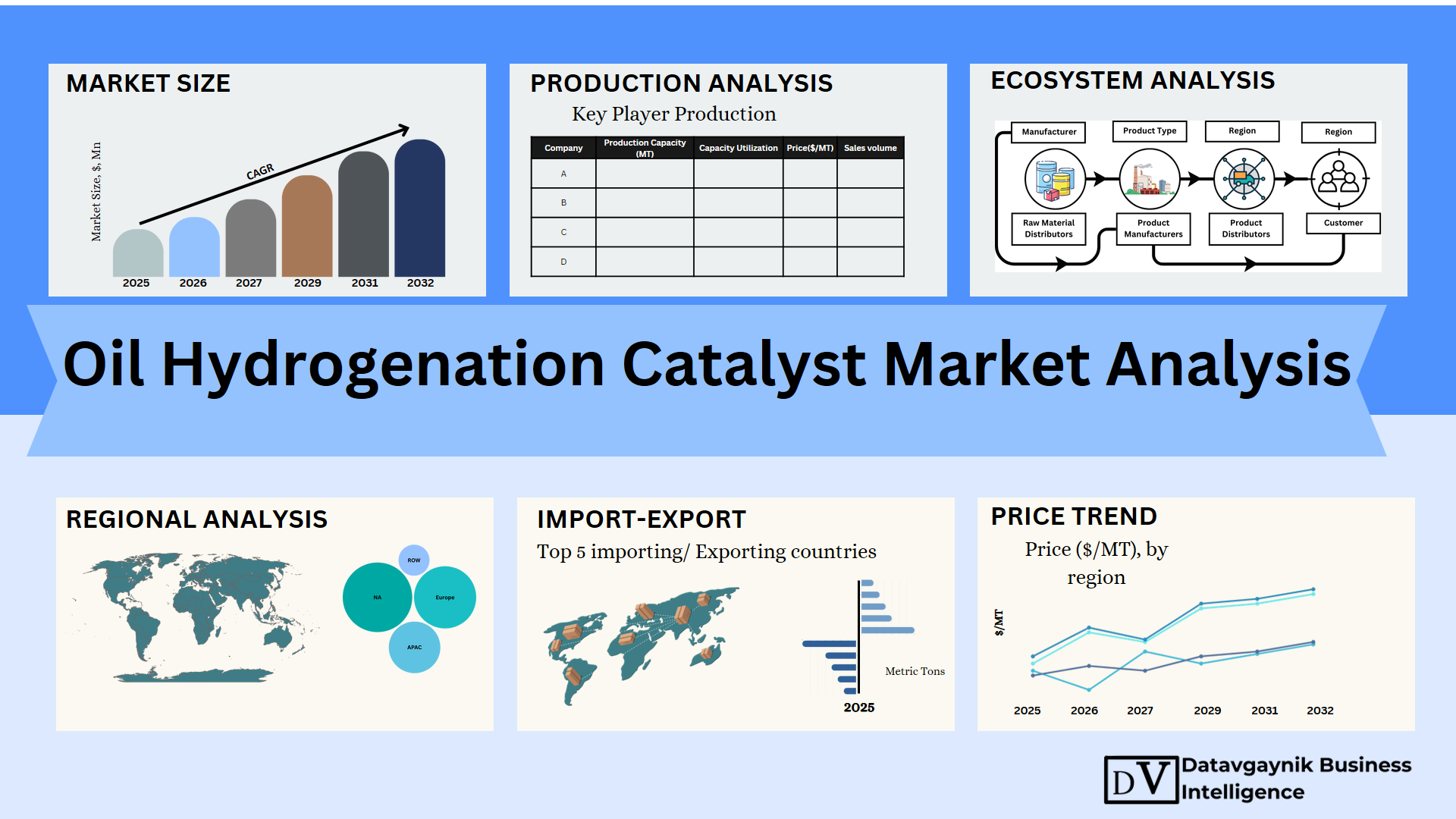
The oil hydrogenation catalyst market is expanding rapidly, propelled primarily by the booming processed food industry. Processed and packaged foods, such as margarines, shortenings, and baked goods, rely heavily on hydrogenated oils to enhance shelf life, texture, and stability. For example, global consumption of processed foods has been growing at an annual rate exceeding 5%, creating a significant surge in the demand for hydrogenation catalysts. These catalysts enable the conversion of unsaturated oils into more stable, saturated fats that withstand oxidation and spoilage. With the global processed food market exceeding several trillion dollars, the oil hydrogenation catalyst market size is expected to grow in parallel, driven by escalating consumer demand for convenient, long-lasting food products.
Biofuel Industry Growth Accelerates Oil Hydrogenation Catalyst Market Demand
A major growth engine for the oil hydrogenation catalyst market is the expanding biofuel sector. Hydrogenation catalysts play a critical role in converting vegetable oils and animal fats into biodiesel and other renewable fuels.
The biofuel industry has witnessed annual growth rates of nearly 10%, largely due to increasing governmental policies aimed at reducing carbon emissions and dependence on fossil fuels. For example, biodiesel production capacity worldwide has seen a double-digit increase year-over-year, surpassing 40 billion liters recently. This growth creates strong, sustained demand for advanced hydrogenation catalysts that not only improve fuel yield and quality but also reduce production costs and environmental impact. As biofuel mandates become more stringent globally, the oil hydrogenation catalyst market will continue to benefit from this rising trend.
Technological Advancements Enhancing Efficiency in the Oil Hydrogenation Catalyst Market
Technological innovation remains a cornerstone in the oil hydrogenation catalyst market, driving increased catalyst performance and sustainability. Modern catalysts, such as modified nickel-based systems, have achieved significant gains in reaction efficiency—often improving hydrogenation speed by over 20% compared to older formulations. These advancements reduce hydrogen consumption and energy use, thereby lowering production costs and carbon footprints. For example, catalysts incorporating rare earth metals or advanced supports have shown superior activity and longer operational lifespans, reducing the frequency of catalyst replacement. Such improvements not only benefit food and biofuel applications but also extend into pharmaceutical and specialty chemical industries, broadening the oil hydrogenation catalyst market’s reach and profitability.
Expanding Applications in Cosmetics and Pharmaceuticals Boost Oil Hydrogenation Catalyst Market
The oil hydrogenation catalyst market is also gaining traction from its growing use in cosmetics and pharmaceuticals. Hydrogenated oils improve the texture, stability, and safety of creams, lotions, and medicinal formulations. The global cosmetics market has been growing steadily at around 4-6% annually, with hydrogenated oils being critical ingredients in many products. Similarly, pharmaceutical manufacturing increasingly relies on hydrogenation catalysts for synthesizing active ingredients, ensuring purity and efficacy. For instance, selective hydrogenation processes facilitated by palladium or platinum catalysts enable precise molecular modifications essential in drug development. This diversification of applications solidifies the oil hydrogenation catalyst market’s resilience and growth potential.
Geographic Trends Shaping the Oil Hydrogenation Catalyst Market
Regionally, the oil hydrogenation catalyst market is shaped by distinct industrial and regulatory environments. The United States leads with large-scale production capacity supported by innovation-driven companies and strict regulations pushing for trans-fat reduction and sustainable fuels. Europe’s market is driven by sustainability initiatives and stringent environmental policies, with countries like Germany and France focusing heavily on green catalyst technologies and renewable biofuel production.
For example, Germany’s investments in eco-friendly catalyst research have positioned it as a leader in sustainable hydrogenation processes. Meanwhile, the Asia Pacific region, led by China and India, is experiencing rapid market expansion fueled by increasing edible oil consumption, biofuel production, and industrialization. The growing middle class and urbanization in these countries are boosting demand for processed foods and renewable fuels, thereby significantly contributing to the oil hydrogenation catalyst market size growth.
Nickel-Based Catalysts Dominate the Oil Hydrogenation Catalyst Market
Nickel-based catalysts remain the workhorse of the oil hydrogenation catalyst market due to their high activity, cost-effectiveness, and broad applicability. They are extensively used in the hydrogenation of vegetable oils such as soybean, palm, and sunflower oils, which collectively account for a major portion of global edible oil production. Nickel catalysts enable rapid conversion of unsaturated fats to more stable saturated fats, enhancing food product shelf life and quality. The low cost relative to precious metals makes nickel catalysts favorable in large-scale food processing and biofuel production facilities. The continuous improvements in nickel catalyst formulations, including enhanced supports and promoters, have further increased their efficiency, driving significant adoption across industries.
Precious Metal Catalysts Expanding Niche Applications in the Oil Hydrogenation Catalyst Market
While nickel catalysts dominate, precious metal catalysts like platinum and palladium are increasingly important for specialized applications within the oil hydrogenation catalyst market. Platinum catalysts exhibit exceptional stability and high catalytic activity, particularly valuable in pharmaceutical synthesis and specialty chemicals where precise hydrogenation is required. Palladium catalysts are favored for selective hydrogenation reactions due to their high reusability and efficiency, despite their higher cost. These catalysts enable fine control over molecular structure modifications, essential in producing high-value chemicals and active pharmaceutical ingredients. Though a smaller segment by volume, precious metal catalysts command a premium in value, representing a growing share of the oil hydrogenation catalyst market driven by innovation and specialty demand.
Shift Towards Sustainable and Green Hydrogenation Catalysts in the Oil Hydrogenation Catalyst Market
The oil hydrogenation catalyst market is witnessing a pronounced shift towards sustainable and environmentally friendly catalysts. Rising regulatory pressures on reducing emissions and waste are compelling manufacturers to develop green catalysts that minimize toxic byproducts and energy consumption. For example, catalysts with enhanced selectivity reduce unwanted side reactions, improving process efficiency and lowering raw material usage. Companies are increasingly investing in heterogeneous catalysts that are easier to separate and recycle, promoting circular economy principles. This sustainability focus not only aligns with global climate goals but also provides competitive advantages, positioning the oil hydrogenation catalyst market for long-term growth fueled by eco-conscious industrial practices.
Increasing Industrial Applications Fuel Oil Hydrogenation Catalyst Market Expansion
Beyond food, biofuels, and pharmaceuticals, the oil hydrogenation catalyst market is expanding into diverse industrial sectors including lubricants, surfactants, and specialty chemicals. Hydrogenation processes modify oil and fat properties to tailor products for specific performance characteristics. For instance, hydrogenated oils are used to improve the stability and viscosity of lubricants critical for automotive and machinery applications. The surfactant industry utilizes hydrogenation catalysts to produce non-toxic, biodegradable compounds for detergents and personal care products. Specialty chemicals derived via hydrogenation often require high-purity catalysts to meet stringent quality standards. This broadening of industrial applications diversifies the demand base, enhancing the resilience and growth trajectory of the oil hydrogenation catalyst market.
Increasing Consumer Awareness Impacting the Oil Hydrogenation Catalyst Market Dynamics
Consumer awareness around health and environmental sustainability is influencing the oil hydrogenation catalyst market in significant ways. For example, growing demand for trans-fat-free and low-saturated fat products has led food manufacturers to adopt improved catalyst technologies that enable partial or complete hydrogenation while minimizing harmful trans isomers. Additionally, end-users are favoring products made with sustainably sourced feedstocks, driving catalyst producers to develop solutions compatible with bio-based oils and renewable raw materials. This shift is reflected in the market’s increasing investment in R&D focused on catalysts tailored for novel feedstocks such as algae and synthetic oils, positioning the oil hydrogenation catalyst market at the forefront of evolving consumer and regulatory trends.
“Track Country-wise Oil Hydrogenation Catalyst Production and Demand through our Oil Hydrogenation Catalyst Production Database”
-
-
- Oil Hydrogenation Catalyst production database for 32+ countries worldwide
- Oil Hydrogenation Catalyst sales volume for 32+ countries
- Country-wise Oil Hydrogenation Catalyst production capacity, production plant mapping, production capacity utilization for 32+ manufacturers
- Oil Hydrogenation Catalyst production plants and production plant capacity analysis by top manufacturers
-
“Track real-time Oil Hydrogenation Catalyst Prices, Oil Hydrogenation Catalyst price charts for 32+ countries, Oil Hydrogenation Catalyst weekly price tracker and Oil Hydrogenation Catalyst monthly price tracker”
-
-
- Track real-time Oil Hydrogenation Catalyst prices and Oil Hydrogenation Catalyst price trend in 32+ countries though our excel-based Oil Hydrogenation Catalyst price charts
- Real-time Oil Hydrogenation Catalyst price tracker dashboard with 32+ countries
- Complete transparency on Oil Hydrogenation Catalyst price trend through our Oil Hydrogenation Catalyst monthly price tracker, Oil Hydrogenation Catalyst weekly price tracker
-
Geographical Demand Patterns Shaping the Oil Hydrogenation Catalyst Market
The oil hydrogenation catalyst market demonstrates varied demand dynamics across global regions, driven by differing industrial bases, regulatory environments, and consumption patterns. For example, North America, led by the United States, continues to exhibit robust demand owing to advanced food processing and biofuel industries. The U.S. edible oil consumption is increasing at a rate of around 3% annually, with hydrogenation catalysts essential for producing trans-fat-free oils and renewable diesel fuels.
Europe’s demand is equally strong, powered by stringent sustainability regulations and high biofuel mandates, particularly in countries like Germany and France, where biofuel consumption grew by nearly 15% over the past two years. Meanwhile, the Asia Pacific region shows the fastest growth in the oil hydrogenation catalyst market, with China and India expanding their processed food sectors at rates exceeding 7% annually. This growth is mirrored in the rising biofuel production capacities, which have doubled in the last five years. Southeast Asian countries like Indonesia and Malaysia, key palm oil producers, also contribute significantly to regional catalyst demand, utilizing hydrogenation to produce stable, export-grade edible oils.
Production Concentration and Capacity Expansion in the Oil Hydrogenation Catalyst Market
Production of oil hydrogenation catalysts is concentrated in industrial hubs with strong chemical manufacturing infrastructure. The United States and Germany remain leaders in high-value catalyst production, focusing on advanced nickel, platinum, and palladium-based catalysts with superior efficiency and environmental compliance. For instance, U.S. catalyst manufacturers have recently expanded capacity by over 20% to meet rising biofuel industry needs.
China has emerged as a global powerhouse in volume production, leveraging cost-competitive manufacturing to supply nickel-based catalysts primarily used in edible oil hydrogenation. Indian production facilities have rapidly scaled, driven by domestic food processing demand and exports to neighboring regions. Moreover, South Korea and Japan continue to innovate in catalyst technologies, emphasizing high-performance catalysts for pharmaceutical and specialty chemical applications. This geographic production distribution aligns with demand centers but also indicates growing export flows, especially from Asia to developing markets in Africa and Latin America.
Market Segmentation Based on Catalyst Type Driving the Oil Hydrogenation Catalyst Market
Segmenting the oil hydrogenation catalyst market by catalyst type reveals nickel-based catalysts commanding the largest share, exceeding 60% of global volume, due to their cost-effectiveness and versatility in edible oil and biofuel production. For example, the hydrogenation of palm and soybean oils, which collectively account for more than half of edible oil production worldwide, predominantly uses nickel catalysts. Platinum-based catalysts, while representing a smaller volume share, are critical for high-value applications such as pharmaceutical synthesis, accounting for approximately 15% of the market in value terms.
Palladium catalysts, with specialized use in selective hydrogenation, constitute around 10%, driven by the fine chemical and cosmetic industries. The remaining share includes ruthenium and rhodium catalysts, primarily used in niche, high-precision hydrogenation processes. This segmentation highlights how varying industry requirements and price sensitivities shape catalyst selection and the overall oil hydrogenation catalyst market structure.
Market Segmentation by Feedstock and its Impact on the Oil Hydrogenation Catalyst Market
Feedstock type significantly influences the oil hydrogenation catalyst market, as catalyst formulations must suit the specific chemical characteristics of oils and fats. Vegetable oils, such as soybean, palm, and sunflower, dominate feedstock usage, accounting for over 70% of catalyst consumption. This dominance is supported by the expansion of processed food and biofuel sectors reliant on hydrogenated vegetable oils. For instance, global soybean oil hydrogenation demand has grown by more than 5% annually in recent years, directly impacting catalyst demand.
Animal fats, used in specialized food and biofuel applications, contribute around 15% to feedstock-related catalyst demand, with growth fueled by biofuel mandates in regions like Latin America. Fossil oil hydrogenation, although a smaller segment, remains vital in petroleum refining and synthetic fuel production, influencing catalyst demand patterns in mature industrial economies. Emerging feedstocks such as algae and synthetic oils, while currently niche, are gaining traction due to sustainability drivers, promising to expand the oil hydrogenation catalyst market as these raw materials become commercially viable.
Market Segmentation by Application: Expanding the Oil Hydrogenation Catalyst Market
Application-wise, food processing dominates the oil hydrogenation catalyst market, consuming nearly 50% of total catalyst volume. This sector includes margarine, shortening, and other hydrogenated fat products. The biofuel sector is the fastest-growing application, now accounting for roughly 25% of catalyst demand, propelled by mandates for renewable diesel and biodiesel. For example, biodiesel production increased by over 12% globally last year, intensifying catalyst demand.
The pharmaceutical industry, comprising about 15% of the market, requires catalysts for selective hydrogenation in drug manufacturing, emphasizing catalyst purity and specificity. Other applications, such as cosmetics, specialty chemicals, and petroleum refining, together make up the remaining market share, each exhibiting steady growth driven by product innovation and environmental regulations. This broad application base ensures the oil hydrogenation catalyst market’s resilience and continuous expansion.
Oil Hydrogenation Catalyst Price Trends Reflecting Market Dynamics
The oil hydrogenation catalyst price trend has been shaped by fluctuations in raw material costs, technological innovation, and demand-supply dynamics. Nickel prices, a major determinant of catalyst cost, have experienced volatility, with spikes of up to 30% in recent years due to supply constraints and rising demand from battery manufacturing. Such fluctuations directly influence nickel-based catalyst prices, which constitute the bulk of the market.
Precious metal catalyst prices, including platinum and palladium, have seen upward pressure, driven by their limited availability and high demand in pharmaceutical and fine chemical sectors. For example, palladium prices surged by nearly 40% over two years, reflecting growing industrial usage. Technological advancements aimed at improving catalyst longevity and efficiency have somewhat mitigated price pressures by reducing replacement frequency. Overall, the oil hydrogenation catalyst price trend reflects a balance between raw material cost volatility and industry innovation.
Regional Differences in Oil Hydrogenation Catalyst Price Trends
Price trends in the oil hydrogenation catalyst market vary geographically, influenced by regional production costs and supply chain factors. In North America and Europe, higher environmental and labor costs translate into premium catalyst prices, especially for high-performance platinum and palladium catalysts. These markets also witness higher demand for green catalysts that command a price premium due to sustainable production processes.
In contrast, Asia Pacific benefits from lower manufacturing costs, particularly in China and India, resulting in more competitively priced nickel-based catalysts catering to large-scale edible oil hydrogenation. Southeast Asia’s palm oil industry leverages these cost advantages to maintain profitability. These regional pricing disparities create complex trade flows, with manufacturers in lower-cost regions exporting catalysts to meet demand in higher-priced markets, further influencing the global oil hydrogenation catalyst price trend.
Impact of Technological Innovation on Oil Hydrogenation Catalyst Price and Market Competitiveness
Technological innovation continues to play a crucial role in shaping the oil hydrogenation catalyst price and market competitiveness. Enhanced catalyst formulations that improve hydrogenation rates and reduce energy consumption allow manufacturers to command higher prices justified by operational savings. For instance, catalysts designed to minimize trans-fat formation in edible oils enable food producers to meet regulatory requirements more efficiently, creating value that supports premium pricing. Similarly, catalysts that offer longer service life reduce downtime and replacement costs, appealing to biofuel and pharmaceutical producers. These performance gains drive a willingness among buyers to invest in advanced catalysts, supporting a positive oil hydrogenation catalyst price trend despite raw material cost pressures.
Supply Chain Dynamics Affecting the Oil Hydrogenation Catalyst Market and Price Trends
Supply chain factors critically influence the oil hydrogenation catalyst market and price trends. The sourcing of critical metals like nickel, platinum, and palladium depends on mining activities concentrated in a few countries, leading to periodic supply bottlenecks and price spikes. For example, disruptions in palladium supply from Russia and South Africa have historically caused sudden price increases. Additionally, geopolitical tensions and trade tariffs between major economies impact catalyst availability and cost. The recent global emphasis on supply chain resilience has prompted catalyst manufacturers to diversify sourcing and increase local production, especially in Asia and North America. These shifts are expected to stabilize oil hydrogenation catalyst prices over time, reducing vulnerability to external shocks while supporting steady market growth.
Future Outlook on Oil Hydrogenation Catalyst Price and Market Growth
Looking ahead, the oil hydrogenation catalyst price trend is expected to balance upward raw material costs with technological progress and growing demand across sectors. The increasing focus on sustainability and low-emission production will drive investments in green catalysts, often priced at a premium due to their environmental benefits. Rising biofuel production globally, expected to grow at over 8% annually in the next five years, will sustain demand for catalysts optimized for renewable feedstocks. Meanwhile, expanding pharmaceutical and specialty chemical applications will underpin demand for high-performance precious metal catalysts. Taken together, these factors suggest the oil hydrogenation catalyst market will experience steady volume growth coupled with a moderate upward price trend, creating profitable opportunities for innovative producers and suppliers worldwide.
“Oil Hydrogenation Catalyst Manufacturing Database, Oil Hydrogenation Catalyst Manufacturing Capacity”
-
-
- Oil Hydrogenation Catalyst top manufacturers market share for 32+ manufacturers
- Top 12 manufacturers and top 19 manufacturers of Oil Hydrogenation Catalyst in North America, Europe, Asia Pacific
- Oil Hydrogenation Catalyst production plant capacity by manufacturers and Oil Hydrogenation Catalyst production data for 32+ market players
- Oil Hydrogenation Catalyst production dashboard, Oil Hydrogenation Catalyst production data in excel format
-
“Oil Hydrogenation Catalyst price charts, Oil Hydrogenation Catalyst weekly price tracker and Oil Hydrogenation Catalyst monthly price tracker”
-
-
- Factors impacting real-time Oil Hydrogenation Catalyst prices in 32+ countries worldwide
- Oil Hydrogenation Catalyst monthly price tracker, Oil Hydrogenation Catalyst weekly price tracker
- Real-time Oil Hydrogenation Catalyst price trend, Oil Hydrogenation Catalyst price charts, news and updates
- Tracking Oil Hydrogenation Catalyst price fluctuations
-
Leading Manufacturers Shaping the Oil Hydrogenation Catalyst Market
The oil hydrogenation catalyst market is dominated by several key global manufacturers who have established strong footholds through technological innovation, expansive production capacities, and strategic partnerships. These players drive market trends, product developments, and regional expansion, collectively holding a significant share of the global market. Among the foremost companies are Johnson Matthey, BASF SE, Clariant AG, Haldor Topsoe, and Sinopec Catalyst Company, each offering specialized catalyst solutions tailored for various industrial hydrogenation processes.
Johnson Matthey: A Pioneer in High-Performance Oil Hydrogenation Catalysts
Johnson Matthey stands out in the oil hydrogenation catalyst market with its comprehensive portfolio of nickel and precious metal-based catalysts. The company’s product lines, including the HT and Catalyst P series, cater specifically to edible oil hydrogenation and biofuel production. Johnson Matthey emphasizes sustainable catalyst design, offering formulations that reduce hydrogen consumption and minimize trans-fat formation. Its market share is considerable, with estimates suggesting the company commands around 20% of the global oil hydrogenation catalyst market, supported by strong R&D capabilities and global manufacturing footprint.
BASF SE: Innovation-Driven Market Leadership in Oil Hydrogenation Catalysts
BASF SE holds a prominent position in the oil hydrogenation catalyst market through its advanced catalyst systems used across food processing, pharmaceuticals, and biofuel industries. Its innovative HYDROFINING® catalyst line is widely recognized for improving hydrogenation efficiency and reducing environmental impact. BASF’s extensive production capacity and strategic investments in green catalyst technologies contribute to its estimated 18-22% market share. The company’s global reach allows it to serve key growth regions such as Asia Pacific and Europe, maintaining competitiveness in both high-volume and specialized applications.
Clariant AG: Specialized Catalysts for Selective Hydrogenation Applications
Clariant AG focuses on specialty catalysts within the oil hydrogenation catalyst market, particularly targeting selective hydrogenation in pharmaceuticals and fine chemicals. Its PRECISIO™ catalyst series is engineered for high selectivity and durability, addressing market needs for precise hydrogenation processes. Although Clariant’s overall market share in the oil hydrogenation catalyst market is smaller compared to nickel catalyst leaders, its presence is significant in niche sectors where catalyst performance is critical. The company’s commitment to sustainable production also aligns with broader market trends favoring eco-friendly catalyst technologies.
Haldor Topsoe: Technology-Driven Growth in the Oil Hydrogenation Catalyst Market
Haldor Topsoe is a key player leveraging cutting-edge technology to capture a growing share of the oil hydrogenation catalyst market. The company’s HYDROTREAT™ catalysts are designed to optimize hydrogenation in biofuel and chemical industries, emphasizing high activity and longevity. With growing demand for renewable fuels, Haldor Topsoe’s strategic focus on sustainable catalyst solutions has expanded its market share to an estimated 10-15%. Their global production facilities and collaborations with major industrial partners enable quick adaptation to evolving market requirements.
Sinopec Catalyst Company: Emerging Influence in Asia Pacific Oil Hydrogenation Catalyst Market
Sinopec Catalyst Company, a subsidiary of Sinopec Group, is a rising force in the oil hydrogenation catalyst market, especially in the Asia Pacific region. The company specializes in cost-competitive nickel-based catalysts suited for large-scale edible oil hydrogenation and biofuel production. Products such as the SPC series catalysts have gained popularity due to their efficiency and affordability. Sinopec’s market share in the oil hydrogenation catalyst market is growing rapidly, currently estimated at around 8-12%, driven by strong domestic demand in China and export expansion to neighboring countries.
Other Notable Manufacturers Contributing to the Oil Hydrogenation Catalyst Market
In addition to the leaders, companies like Evonik Industries, Albemarle Corporation, and Clariant’s joint ventures contribute meaningfully to the oil hydrogenation catalyst market. Evonik offers specialty catalyst formulations focused on pharmaceutical and cosmetic applications, while Albemarle provides catalysts tailored for biofuel and petroleum refining sectors. These manufacturers, though smaller in market share relative to industry giants, add diversity to the market through innovative products addressing specific application requirements.
Oil Hydrogenation Catalyst Market Share Analysis by Manufacturer
Analyzing the oil hydrogenation catalyst market share reveals a competitive landscape dominated by a handful of companies controlling nearly 70-75% of the global market. Johnson Matthey and BASF together represent approximately 40% of the market, reflecting their broad product portfolios and extensive global reach. Haldor Topsoe and Clariant follow with combined shares around 20%, primarily serving specialized hydrogenation segments requiring high-performance catalysts. Sinopec’s increasing presence in Asia Pacific is notable, with its market share steadily rising due to expanding domestic production and exports. The remaining market is fragmented among smaller manufacturers catering to regional or niche demand.
Product Line Differentiation and Market Positioning
Manufacturers distinguish themselves in the oil hydrogenation catalyst market through targeted product lines that address diverse industry needs. Johnson Matthey’s HT series emphasizes low trans-fat formation in edible oils, meeting consumer health demands, while BASF’s HYDROFINING® catalysts focus on environmental compliance and process efficiency in biofuel production. Clariant’s PRECISIO™ series targets pharmaceutical-grade hydrogenation requiring precision and catalyst longevity. Sinopec’s SPC series offers cost-effective solutions for bulk edible oil hydrogenation. This product differentiation strategy enables companies to optimize their market positioning, cater to evolving regulatory standards, and capture growth in emerging sectors.
Recent Industry Developments and Market Trends in Oil Hydrogenation Catalyst Market
The oil hydrogenation catalyst market has witnessed several key developments over the past two years, reflecting technological advancements and shifting market dynamics. In early 2024, Johnson Matthey launched an improved nickel catalyst variant with enhanced lifespan and reduced hydrogen consumption, reinforcing its market leadership. BASF, in late 2023, expanded its production facility in Germany to increase capacity for green hydrogenation catalysts tailored for the European biofuel market. Haldor Topsoe announced a strategic partnership with a major Asian biofuel producer in mid-2023 to co-develop sustainable catalysts designed for next-generation renewable fuels.
Sinopec Catalyst Company reported a 15% increase in production capacity in 2023 to meet surging demand in China’s edible oil sector, signaling its growing influence. Clariant’s ongoing research collaboration with a European pharmaceutical manufacturer aims to develop catalysts with higher selectivity and reduced environmental impact, expected to yield commercial products by 2025.
Emerging Trends Shaping the Competitive Landscape
The oil hydrogenation catalyst market is increasingly influenced by sustainability trends, with manufacturers investing heavily in eco-friendly catalyst technologies. There is also a rising emphasis on catalysts designed for alternative feedstocks, such as algae oils and synthetic bio-oils, which are gaining commercial traction. Digitalization and process optimization through data analytics are becoming competitive differentiators, enabling manufacturers to offer tailored catalyst solutions that improve operational efficiency and reduce costs.
Outlook for Manufacturer Market Shares and Industry Growth
Looking forward, the oil hydrogenation catalyst market is expected to experience continued consolidation, with top manufacturers expanding their shares through innovation, capacity expansion, and strategic alliances. Companies that can deliver catalysts meeting stringent environmental regulations and cater to emerging biofuel and specialty chemical applications will solidify their market positions. Regional market dynamics, especially in Asia Pacific, will also influence manufacturer shares, as local production capabilities strengthen and demand grows.
“Oil Hydrogenation Catalyst Production Data and Oil Hydrogenation Catalyst Production Trend, Oil Hydrogenation Catalyst Production Database and forecast”
-
-
- Oil Hydrogenation Catalyst production database for historical years, 12 years historical data
- Oil Hydrogenation Catalyst production data and forecast for next 12 years
- Oil Hydrogenation Catalyst sales volume by manufacturers
-
“Track Real-time Oil Hydrogenation Catalyst Prices for purchase and sales contracts, Oil Hydrogenation Catalyst price charts, Oil Hydrogenation Catalyst weekly price tracker and Oil Hydrogenation Catalyst monthly price tracker”
-
-
- Gain control on your purchase and sales contracts through our real-time Oil Hydrogenation Catalyst price tracker and Oil Hydrogenation Catalyst price trend analysis
- Oil Hydrogenation Catalyst weekly price tracker and forecast for next four weeks
- Oil Hydrogenation Catalyst monthly price tracker and forecast for next two months
-
Market Scenario, Demand vs Supply, Average Product Price, Import vs Export, till 2035
- Global Oil Hydrogenation Catalyst Market revenue and demand by region
- Global Oil Hydrogenation Catalyst Market production and sales volume
- United States Oil Hydrogenation Catalyst Market revenue size and demand by country
- Europe Oil Hydrogenation Catalyst Market revenue size and demand by country
- Asia Pacific Oil Hydrogenation Catalyst Market revenue size and demand by country
- Middle East & Africa Oil Hydrogenation Catalyst Market revenue size and demand by country
- Latin America Oil Hydrogenation Catalyst Market revenue size and demand by
- Import-export scenario – United States, Europe, APAC, Latin America, Middle East & Africa
- Average product price – United States, Europe, APAC, Latin America, Middle East & Africa
- Market player analysis, competitive scenario, market share analysis
- Business opportunity analysis
Key questions answered in the Global Oil Hydrogenation Catalyst Market Analysis Report:
- What is the market size for Oil Hydrogenation Catalyst in United States, Europe, APAC, Middle East & Africa, Latin America?
- What is the yearly sales volume of Oil Hydrogenation Catalyst and how is the demand rising?
- Who are the top market players by market share, in each product segment?
- Which is the fastest growing business/ product segment?
- What should be the business strategies and Go to Market strategies?
The report covers Oil Hydrogenation Catalyst Market revenue, Production, Sales volume, by regions, (further split into countries):
- Asia Pacific (China, Japan, South Korea, India, Indonesia, Vietnam, Rest of APAC)
- Europe (UK, Germany, France, Italy, Spain, Benelux, Poland, Rest of Europe)
- North America (United States, Canada, Mexico)
- Latin America (Brazil, Argentina, Rest of Latin America)
- Middle East & Africa
Table of Contents:
Oil Hydrogenation Catalyst Market
- Executive Summary
- Key Market Insights and Highlights
- Growth Projections and Market Trends
- Strategic Recommendations for Stakeholders
- Introduction to Oil Hydrogenation Catalysts
- Definition, Chemical Composition, and Properties
- Role of Catalysts in Oil Hydrogenation Processes
- Market Scope and Study Methodology
- Market Dynamics
- Key Drivers of Market Growth: Demand for Hydrogenated Oils
- Technological Advancements in Catalyst Development
- Challenges and Restraints in Catalyst Production
- Opportunities in Emerging Applications and Markets
- Global Oil Hydrogenation Catalyst Market Overview (2020–2035)
- Market Size and Revenue Forecasts
- Growth Rate and Market Trends Analysis
- Key Factors Shaping the Market Development
- Segmentation by Catalyst Type
- Metal-based Catalysts: Nickel, Palladium, Platinum, etc.
- Non-Metal Catalysts and Their Advancements
- Custom and Specialized Catalysts
- Segmentation by Application
- Hydrogenation of Vegetable Oils
- Hydrogenation of Animal Fats
- Biofuels and Renewable Energy Applications
- Pharmaceutical and Fine Chemical Industry
- Segmentation by End-User Industry
- Food and Beverage Industry
- Petrochemicals and Biofuels
- Cosmetics and Personal Care
- Pharmaceuticals and Nutraceuticals
- Regional Market Analysis
- North America: Market Dynamics, Growth Drivers, and Regulatory Landscape
- Europe: Industry Trends, Key Players, and Market Potential
- Asia Pacific: Emerging Markets, Demand Forecasts, and Investment Opportunities
- Latin America: Market Challenges and Growth Prospects
- Middle East & Africa: Infrastructure Development and Demand Outlook
- Production and Manufacturing Analysis
- Global Production Capacities and Key Players
- Manufacturing Techniques: Metal Loading, Activation, and Recycling
- Cost Structure and Production Efficiency
- Supply Chain and Distribution Analysis
- Overview of the Supply Chain for Oil Hydrogenation Catalysts
- Raw Material Sourcing and Major Suppliers
- Distribution Networks, Logistics, and Cost Considerations
- Import & Export Analysis
- Global Trade Dynamics and Key Exporting/Importing Countries
- Market Trends in International Trade Flows
- Impact of Trade Regulations and Policies on Market Growth
- Competitive Landscape
- Market Share of Leading Manufacturers
- Competitive Strategies: Innovation, Mergers, and Partnerships
- Profiles of Key Companies in the Oil Hydrogenation Catalyst Market
- Pricing and Cost Structure Analysis
- Historical Pricing Trends and Forecast (2020–2035)
- Pricing Variations by Region and Catalyst Type
- Factors Affecting Cost Structure in Catalyst Production
- Demand and Consumption Analysis
- Global Demand Patterns by Region and Industry
- Consumption Forecasts (2020–2035)
- Key Drivers of Consumption Growth
- Technological Innovations in Oil Hydrogenation Catalysts
- Advances in Catalyst Efficiency and Activity
- Nanotechnology and Green Catalysis in Hydrogenation
- Development of More Sustainable and Cost-Effective Catalysts
- Regulatory Environment and Industry Standards
- Global and Regional Regulatory Requirements for Catalysts
- Environmental and Safety Regulations Impacting Production
- Standards for Quality and Compliance in the Oil Hydrogenation Process
- Sustainability and Environmental Impact
- Sustainable Practices in Catalyst Manufacturing
- Environmental Impact of Oil Hydrogenation Processes
- Lifecycle Assessment and Recycling of Catalysts
- Risk Assessment and Market Challenges
- Market Risks: Economic, Environmental, and Regulatory
- Supply Chain Risks and Disruptions
- Strategies for Mitigating Risks and Ensuring Market Stability
- Investment Opportunities and Market Growth
- High-Growth Regions and Sectors
- Strategic Investment Trends in Oil Hydrogenation Catalysts
- Recommendations for Market Entry and Expansion
- Future Market Outlook (2020–2035)
- Long-Term Market Projections and Key Trends
- Emerging Technologies and Market Shifts
- Impact of Changing Regulations on Market Development
- Appendix
- Glossary of Terms and Definitions
- Research Methodology and Data Sources
- Acronyms and Industry Abbreviations
- Company Profiles of Key Industry Players
- Business Overview, Product Portfolio, and Strategy
- Market Presence and Financial Performance
- Recent Developments and Strategic Initiatives
- FAQs and Expert Insights
- Frequently Asked Questions About the Oil Hydrogenation Catalyst Market
- Expert Opinions on Future Market Trends and Opportunities
Other recently published reports:

