

Explosive Growth Trajectory Reshaping the Olefin Purification Catalystse Market
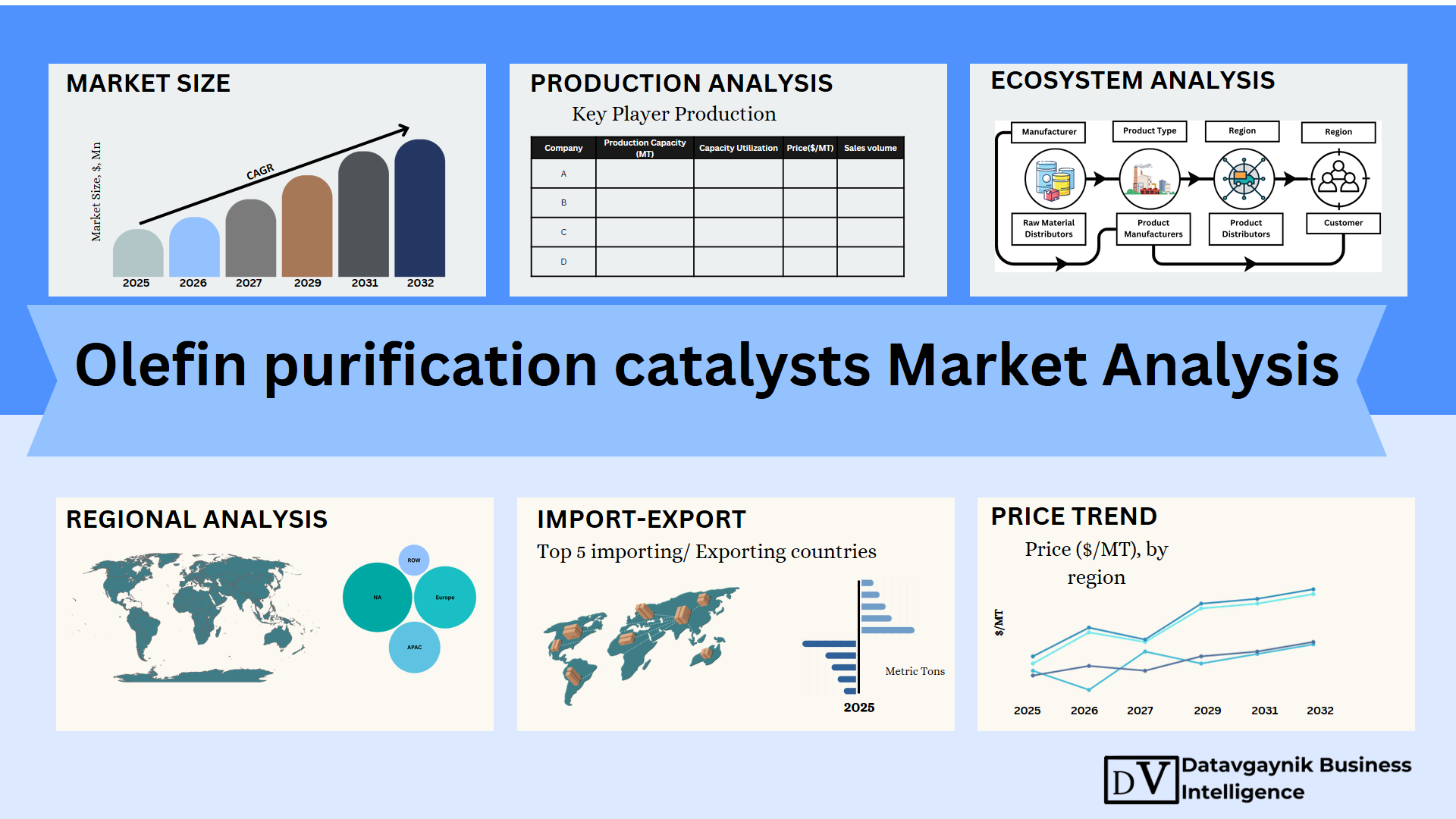
The Olefin purification catalystse Market is undergoing a rapid evolution, driven by the exponential rise in global olefin production and an aggressive push toward achieving ultra-high product purity. Olefins such as ethylene and propylene have become the backbone of industries ranging from plastics to automotive to electronics. As olefin production capacity continues to expand—particularly in Asia-Pacific and North America—the need for efficient, selective, and high-performance purification catalysts is no longer optional but essential. The Olefin purification catalystse Market Size has entered a decisive growth phase, with the market projected to double within the next five years, propelled by strong capacity expansions and operational upgrades across global petrochemical hubs.
Packaging and Polymer Demand Catalyzing the Olefin Purification Catalystse Market
Demand for olefin-derived polymers is surging at an unprecedented pace. The global flexible packaging sector alone is expected to surpass 400 billion units in volume by 2026, requiring massive volumes of polyethylene and polypropylene—both of which depend on purified ethylene and propylene feedstocks. In applications such as food-safe films, beverage containers, and hygiene packaging, even trace-level impurities can compromise the final product. This has intensified the requirement for purification catalysts that deliver sub-ppm (parts per million) levels of contaminants. As a result, the Olefin purification catalystse Market is witnessing record-level investments in hydrogenation and adsorption catalyst technologies specifically engineered for polymer-grade olefins.
Energy-Efficient Production Driving the Olefin Purification Catalystse Market Forward
Modern olefin plants are shifting toward more energy-efficient processes such as propane dehydrogenation (PDH) and methanol-to-olefins (MTO). These methods offer greater yield and feedstock flexibility but also introduce complex impurities like methylacetylene, dienes, and carbon monoxide into the olefin stream. The Olefin purification catalystse Market is responding by advancing catalyst solutions that not only handle higher impurity loads but also operate at lower temperatures and pressures—substantially reducing energy consumption. Catalysts designed for PDH processes, for example, have seen a 35% increase in adoption in the past three years, driven by their ability to enhance purification efficiency without compromising throughput.
Environmental Regulations Pushing Innovation in the Olefin Purification Catalystse Market
The regulatory landscape is playing a pivotal role in shaping the Olefin purification catalystse Market. Emissions limits for carbon monoxide, VOCs, and sulfur compounds are becoming stricter, particularly in regions like Europe and North America. In response, catalyst manufacturers are prioritizing innovation to create materials that enable cleaner processes. For instance, recent developments in bimetallic hydrogenation catalysts have enabled over 90% reduction in acetylene content at lower hydrogen usage, directly supporting regulatory compliance and sustainability goals. The market is rapidly moving toward solutions that align with zero-flare and carbon-neutral ambitions, making catalytic purification a cornerstone of regulatory alignment.
Petrochemical Expansion in Emerging Economies Boosts the Olefin Purification Catalystse Market
Countries such as India, Vietnam, and Saudi Arabia are investing heavily in petrochemical infrastructure to reduce dependence on imports and build self-sufficiency. These mega-projects, often integrated with refineries or natural gas processing units, have triggered an explosion in olefin output, creating new frontiers for the Olefin purification catalystse Market. For example, India’s ethylene production capacity is expected to expand by over 20% in the next three years, and every added ton of capacity increases the need for high-performance purification systems. This regional expansion has also sparked intense competition among catalyst suppliers, driving rapid technological iteration and localized manufacturing.
High-Performance Polymers Demanding Ultra-Pure Feedstocks in the Olefin Purification Catalystse Market
Applications in electronics, aerospace, and medical devices increasingly require polymers with enhanced strength, clarity, and resistance to degradation. These characteristics demand olefins with impurity levels far below conventional standards. The Olefin purification catalystse Market is rising to this challenge by focusing on advanced materials such as nano-structured catalysts and highly dispersed metals that enable near-complete removal of target contaminants. For example, in medical-grade polypropylene production, acetylene content in the feedstock must be reduced to below 0.1 ppm—targets achievable only with the latest generation of purification catalysts.
Integration of On-Purpose Technologies Reshaping the Olefin Purification Catalystse Market
On-purpose olefin technologies like PDH, CTO (coal-to-olefins), and MTO are no longer niche—they are becoming mainstream due to their feedstock flexibility and economic efficiency. However, they introduce new challenges in olefin purification due to elevated impurity levels and broader contaminant profiles. The Olefin purification catalystse Market is evolving in response, with solutions that offer multi-stage purification capabilities. This includes layered catalysts that perform simultaneous hydrogenation and adsorption or modular catalyst beds that can be customized based on the impurity fingerprint of a given process. These innovations are rapidly gaining traction, especially in Asia-Pacific.
Technological Advancements Amplifying the Efficiency of the Olefin Purification Catalystse Market
The Olefin purification catalystse Market is undergoing a wave of technology-driven disruption. Breakthroughs in catalyst design, such as the use of alloy nanoparticles and core-shell structures, are delivering significant performance gains. These technologies enhance selectivity, reduce regeneration frequency, and extend catalyst life—resulting in lower total cost of ownership. For example, a recent shift toward nickel-based bimetallic catalysts has cut downtime in several U.S. PDH units by over 20%, directly improving production economics. These kinds of advancements are helping manufacturers reduce operational costs while meeting increasingly stringent purity specifications.
Strategic Collaborations Accelerating the Olefin Purification Catalystse Market Growth
Collaborations between petrochemical giants and catalyst innovators are becoming central to the Olefin purification catalystse Market. Rather than off-the-shelf purchases, many companies are co-developing bespoke catalyst formulations tailored to their unique feedstock and process configurations. These partnerships have led to double-digit efficiency improvements and new product launches. For instance, several joint ventures in Europe have introduced integrated catalyst systems that combine hydrogenation and molecular sieving in a single unit—streamlining purification while reducing footprint. This model of collaborative development is expected to become the standard as olefin complexity increases.
Olefin Purification Catalystse Market Size Strengthened by Supply Chain Localization
To counteract global supply chain disruptions, companies are increasingly localizing catalyst production. This trend is especially prominent in high-growth regions such as the Middle East and Southeast Asia, where petrochemical projects are bundling catalyst manufacturing with process unit construction. The Olefin purification catalystse Market Size is being further supported by rising regional demand and the creation of localized R&D hubs. This localization not only ensures supply stability but also enhances responsiveness to process-specific challenges, making regional producers more competitive in global olefin markets.
“Track Country-wise Olefin purification catalysts Production and Demand through our Olefin purification catalysts Production Database”
-
-
- Olefin purification catalysts production database for 32+ countries worldwide
- Olefin purification catalysts sales volume for 32+ countries
- Country-wise Olefin purification catalysts production capacity, production plant mapping, production capacity utilization for 32+ manufacturers
- Olefin purification catalysts production plants and production plant capacity analysis by top manufacturers
-
“Track real-time Olefin purification catalysts Prices, Olefin purification catalysts price charts for 32+ countries, Olefin purification catalysts weekly price tracker and Olefin purification catalysts monthly price tracker”
-
-
- Track real-time Olefin purification catalysts prices and Olefin purification catalysts price trend in 32+ countries though our excel-based Olefin purification catalysts price charts
- Real-time Olefin purification catalysts price tracker dashboard with 32+ countries
- Complete transparency on Olefin purification catalysts price trend through our Olefin purification catalysts monthly price tracker, Olefin purification catalysts weekly price tracker
-
Asia-Pacific Leading the Surge in Olefin Purification Catalystse Market Demand
Asia-Pacific is currently the most dynamic region in the Olefin purification catalystse Market, accounting for over 45% of global consumption. This dominance is anchored by the rapid growth of olefin production capacities in China, India, and Southeast Asia. For instance, China alone has added more than 15 million metric tons of new ethylene and propylene capacity in the last three years through PDH and MTO plants. These technologies generate high impurity streams, necessitating advanced purification catalysts.
The region’s plastics demand is another key driver. With packaging, construction, and automotive sectors growing at double-digit rates in several Asian economies, there is a sharp uptick in demand for ultra-pure olefin feedstocks. This has directly translated into rising consumption of hydrogenation and adsorption catalysts, reinforcing Asia-Pacific’s position as the epicenter of the Olefin purification catalystse Market.
North America’s Shale Boom Reshaping Olefin Purification Catalystse Market Production
North America has emerged as a global production hub in the Olefin purification catalystse Market, largely due to the shale gas revolution. The abundant availability of ethane has led to a proliferation of ethylene crackers across the United States, with many plants integrated with purification units utilizing specialized catalyst beds.
For example, the rise of PDH facilities in Texas and Louisiana has significantly altered the demand mix for purification technologies. These units generate streams rich in propylene but also contain methylacetylene and propadiene, which must be selectively removed. As a result, the demand for high-selectivity hydrogenation catalysts in the region has surged by over 40% in the past five years.
Moreover, the U.S. has become a net exporter of purification catalysts, particularly to Latin America and the Middle East, enhancing its influence on the Olefin purification catalystse Market supply chain.
Europe’s Regulatory Edge Elevating Olefin Purification Catalystse Market Technology
Europe maintains a significant share of the Olefin purification catalystse Market through its emphasis on environmental compliance and process innovation. Countries like Germany, France, and the Netherlands have developed purification technologies designed to meet stringent EU emission standards.
The shift towards decarbonization and circular economy principles is prompting European manufacturers to adopt purification catalysts that minimize waste, operate at lower temperatures, and reduce CO2 emissions. This has encouraged the development of bimetallic and multi-stage catalyst systems that deliver over 95% conversion efficiency while using less hydrogen—an increasingly expensive resource in the region.
In parallel, Europe’s petrochemical sector continues to modernize its older ethylene crackers with new catalyst systems that support both performance and sustainability goals. This dual objective is reshaping the regional demand structure within the Olefin purification catalystse Market.
Middle East Scaling Up Olefin Purification Catalystse Market Infrastructure
The Middle East is making aggressive investments in petrochemical infrastructure, creating fresh demand in the Olefin purification catalystse Market. Countries like Saudi Arabia and the UAE are rapidly expanding their olefin production through mega-projects integrated with refining operations. For instance, newly launched mixed-feed crackers are expected to contribute more than 10 million metric tons of olefins annually by 2027.
These facilities require cutting-edge purification catalysts that can handle complex and variable impurity loads. In addition, the region’s push to diversify away from crude oil has positioned downstream chemicals—including purified olefins—as a strategic growth pillar. This transition is contributing to a regional spike in both catalyst demand and in-country production initiatives, further embedding the Middle East into the global Olefin purification catalystse Market map.
Latin America’s Moderate but Steady Growth in the Olefin Purification Catalystse Market
Latin America is witnessing steady growth in the Olefin purification catalystse Market, supported by industrial recovery and the expansion of domestic petrochemical facilities. Brazil, Mexico, and Argentina are investing in process modernization, leading to an increased reliance on purification catalysts to maintain competitive output quality.
Although the region currently imports a significant share of its purification catalysts from North America and Europe, rising demand from local packaging and automotive industries is incentivizing the development of localized purification solutions. For example, the automotive plastics segment in Brazil is expected to grow by 8% annually, creating downstream pressure on feedstock purity, and therefore boosting catalyst consumption.
Olefin Purification Catalystse Market Segmentation: Catalyst Type and Application Insights
The Olefin purification catalystse Market is segmented primarily by catalyst type, with hydrogenation and adsorption catalysts dominating. Hydrogenation catalysts account for more than 60% of the total market share, driven by their effectiveness in eliminating acetylene, dienes, and carbon monoxide. These catalysts are critical in processes such as steam cracking and PDH.
Adsorption catalysts, while smaller in volume, are rapidly gaining traction due to their role in trace impurity removal—especially moisture and sulfur compounds. These catalysts are often deployed as guard beds to protect more sensitive downstream polymerization catalysts.
Application-wise, the largest demand comes from the petrochemical industry, which uses olefins as primary feedstock for a wide range of downstream products. Polymer production is the second-largest segment, with high-purity olefins being a prerequisite for producing defect-free polypropylene and polyethylene.
Feedstock-Based Demand Dynamics in the Olefin Purification Catalystse Market
The type of feedstock used in olefin production also plays a crucial role in shaping catalyst demand. Ethylene produced through steam cracking of ethane requires catalysts focused on acetylene removal, while propylene from PDH and FCC processes demands more complex purification.
Methanol-to-olefins (MTO) and coal-to-olefins (CTO) processes—popular in China—introduce even more diverse impurities, necessitating multi-functional catalyst systems. As these technologies grow, particularly in regions with limited access to natural gas, the Olefin purification catalystse Market is expected to diversify further, with suppliers developing tailored catalyst solutions for each feedstock type.
Olefin Purification Catalystse Price Trend Reflects Feedstock and Metal Volatility
The Olefin purification catalystse Price Trend is increasingly influenced by fluctuations in raw material costs, especially precious and base metals such as palladium, nickel, and copper. For instance, a 20% surge in nickel prices in the past year has raised production costs for hydrogenation catalysts, pushing the Olefin purification catalystse Price upward by 8–10% on average.
Additionally, regional energy costs are affecting the overall Olefin purification catalystse Price Trend. In Europe, higher gas prices have led to increased operating costs in catalyst manufacturing, while in Asia, competitive electricity pricing has kept production costs more stable.
Prices also vary by catalyst regeneration cycles and lifespan. Long-life catalysts, while more expensive upfront, are gaining popularity in cost-sensitive markets due to reduced replacement frequency and lower maintenance costs.
Regional Trade Patterns and Their Impact on Olefin Purification Catalystse Price
Global trade flows are playing a pivotal role in determining the Olefin purification catalystse Price across regions. Asia-Pacific continues to offer the most competitive pricing due to large-scale manufacturing and favorable logistics, whereas Europe and North America command premium prices due to regulatory compliance, product quality, and shorter supply chains.
Emerging markets in Southeast Asia and Latin America are increasingly importing from both China and the U.S., seeking a balance between cost and performance. As demand matures in these markets, price differentiation based on performance metrics—such as selectivity and conversion rate—will become more pronounced, influencing the global Olefin purification catalystse Price Trend.
Local Production Initiatives to Stabilize Olefin Purification Catalystse Price in Developing Regions
To address pricing volatility and ensure supply security, several developing countries are investing in local catalyst production. This shift is particularly visible in India and the Middle East, where governments are offering incentives to establish purification catalyst plants within petrochemical zones.
Localizing production not only reduces dependency on imports but also allows better control over Olefin purification catalystse Price, shielding manufacturers from currency fluctuations and global logistics disruptions. As this trend accelerates, developing economies are expected to emerge as both consumers and suppliers in the broader Olefin purification catalystse Market.
“Olefin purification catalysts Manufacturing Database, Olefin purification catalysts Manufacturing Capacity”
-
-
- Olefin purification catalysts top manufacturers market share for 32+ manufacturers
- Top 12 manufacturers and top 19 manufacturers of Olefin purification catalysts in North America, Europe, Asia Pacific
- Olefin purification catalysts production plant capacity by manufacturers and Olefin purification catalysts production data for 32+ market players
- Olefin purification catalysts production dashboard, Olefin purification catalysts production data in excel format
-
“Olefin purification catalysts price charts, Olefin purification catalysts weekly price tracker and Olefin purification catalysts monthly price tracker”
-
-
- Factors impacting real-time Olefin purification catalysts prices in 32+ countries worldwide
- Olefin purification catalysts monthly price tracker, Olefin purification catalysts weekly price tracker
- Real-time Olefin purification catalysts price trend, Olefin purification catalysts price charts, news and updates
- Tracking Olefin purification catalysts price fluctuations
-
Top Players Dominating the Olefin purification catalystse Market
The Olefin purification catalystse Market is primarily led by a concentrated group of multinational catalyst manufacturers with deep technical expertise, robust R&D infrastructure, and global supply chains. These companies command a substantial share of the market and continue to influence its evolution through product innovation and regional expansion.
One of the most prominent players is BASF, which controls a significant portion of the global market for purification catalysts. BASF’s strength lies in its specialized hydrogenation catalysts used in removing acetylene and dienes from olefin streams. Under its Puristar series, BASF offers high-activity, long-life catalysts that are widely used in both steam cracking and PDH-based olefin plants. The company has also introduced multi-metallic systems aimed at lowering regeneration frequency, making it highly attractive for continuous-process operators.
Johnson Matthey is another key contributor to the Olefin purification catalystse Market. With decades of experience in catalyst development, the company holds a strong position in both North America and Europe. Its Selectoxo and HySiv product ranges are optimized for low-temperature hydrogenation and moisture adsorption, respectively. These catalysts are often preferred in MTO and CTO operations due to their high selectivity and efficiency under variable feedstock conditions.
Clariant holds a strong third position globally. The company has gained traction with its EnviCat series, which is engineered for environmentally focused olefin purification. These catalysts are increasingly in demand in regions with strict emission control regulations, such as the EU. Clariant’s strength lies in its ability to deliver customized purification systems tailored to feedstock profiles and local operating conditions.
UOP, a Honeywell subsidiary, commands a strong presence especially in North American and Middle Eastern markets. The company’s Polybed and Oleflex lines are commonly deployed in large-scale petrochemical operations. UOP has established itself as a trusted partner in PDH technology licensing, and its catalyst products are often bundled with process design packages. This gives UOP a strategic edge in emerging market expansions.
Grace Catalysts Technologies has also established a growing footprint in the Olefin purification catalystse Market, particularly through its expertise in FCC and downstream olefin purification. Grace’s CatPoly series offers unique catalyst formulations that help maximize olefin recovery while ensuring tight control of contaminants. The company is focusing increasingly on extending catalyst life cycles and reducing energy inputs.
Manufacturer Market Share in the Olefin purification catalystse Market
Based on current deployment data and project contracts, BASF and Johnson Matthey together account for approximately 35 to 40 percent of the global Olefin purification catalystse Market. Their dominance is supported by long-term contracts with leading petrochemical companies and consistent investment in research and innovation.
Clariant holds an estimated 15 to 20 percent share, strengthened by its specialized environmental-grade catalyst systems that align with global decarbonization efforts. UOP, due to its integration with PDH technology packages, maintains close to 15 percent, while the remainder of the market is shared by niche players and regional suppliers, including Grace, Axens, and emerging Chinese manufacturers.
The Asian market is witnessing a gradual shift in manufacturer share due to the emergence of regional players offering cost-effective alternatives. Chinese companies are beginning to develop purification catalysts that, while still trailing in high-end performance, are gaining market share in cost-sensitive applications, especially in domestic CTO and MTO installations.
Strategic Product Lines Reshaping Competitive Dynamics
Each major player is advancing differentiated product lines that address the evolving challenges in olefin purification. BASF’s Puristar R series, for example, is known for its sulfur-tolerant hydrogenation capabilities, making it ideal for feedstocks with variable impurity profiles.
Johnson Matthey’s Selectoxo line has been re-engineered to offer higher resistance to thermal degradation, a key requirement for high-temperature PDH systems. Their HySiv materials, based on proprietary zeolite structures, provide unparalleled moisture and sulfur adsorption, crucial for polymer-grade olefin production.
Clariant’s EnviCat series has been optimized for low-carbon operations and is often selected by European producers aiming to align with carbon-neutral mandates. These catalysts enable high impurity conversion with reduced hydrogen usage, a critical parameter in regions with volatile energy pricing.
UOP’s Oleflex-related catalysts are typically integrated into their licensed units, providing both technical performance and process compatibility. This bundled model helps UOP secure long-term catalyst contracts linked to new capacity installations.
Recent Developments and Industry Moves in the Olefin purification catalystse Market
In 2024, BASF announced the expansion of its catalyst production facility in Texas, focused specifically on high-capacity hydrogenation catalysts. This move aims to meet the rising demand from PDH units coming online in North America and Latin America.
Johnson Matthey unveiled a next-generation adsorption catalyst in Q4 2023 designed for rapid deployment in modular purification systems. This innovation targets smaller-scale producers seeking operational flexibility without sacrificing purity levels.
Clariant completed a partnership with an Indian petrochemical major in mid-2024 to co-develop localized purification solutions for coal-to-olefin applications. This marks a strategic push into high-growth markets where traditional catalyst imports are becoming cost-prohibitive.
In Q1 2025, Grace launched a revamped version of its CatPoly catalysts with enhanced thermal stability for FCC downstream purification. This addresses the increasing demand for catalysts that can withstand broader temperature fluctuations without losing selectivity.
Meanwhile, several Chinese manufacturers announced scaled production of MTO-compatible catalysts during late 2023, signaling a rising ambition to compete in performance-sensitive segments. Their current focus is on improving metal dispersion and optimizing bimetallic formulations.
“Olefin purification catalysts Production Data and Olefin purification catalysts Production Trend, Olefin purification catalysts Production Database and forecast”
-
-
- Olefin purification catalysts production database for historical years, 12 years historical data
- Olefin purification catalysts production data and forecast for next 12 years
- Olefin purification catalysts sales volume by manufacturers
-
“Track Real-time Olefin purification catalysts Prices for purchase and sales contracts, Olefin purification catalysts price charts, Olefin purification catalysts weekly price tracker and Olefin purification catalysts monthly price tracker”
-
-
- Gain control on your purchase and sales contracts through our real-time Olefin purification catalysts price tracker and Olefin purification catalysts price trend analysis
- Olefin purification catalysts weekly price tracker and forecast for next four weeks
- Olefin purification catalysts monthly price tracker and forecast for next two months
-
Market Scenario, Demand vs Supply, Average Product Price, Import vs Export, till 2035
- Global Olefin purification catalysts Market revenue and demand by region
- Global Olefin purification catalysts Market production and sales volume
- United States Olefin purification catalysts Market revenue size and demand by country
- Europe Olefin purification catalysts Market revenue size and demand by country
- Asia Pacific Olefin purification catalysts Market revenue size and demand by country
- Middle East & Africa Olefin purification catalysts Market revenue size and demand by country
- Latin America Olefin purification catalysts Market revenue size and demand by
- Import-export scenario – United States, Europe, APAC, Latin America, Middle East & Africa
- Average product price – United States, Europe, APAC, Latin America, Middle East & Africa
- Market player analysis, competitive scenario, market share analysis
- Business opportunity analysis
Key questions answered in the Global Olefin purification catalysts Market Analysis Report:
- What is the market size for Olefin purification catalysts in United States, Europe, APAC, Middle East & Africa, Latin America?
- What is the yearly sales volume of Olefin purification catalysts and how is the demand rising?
- Who are the top market players by market share, in each product segment?
- Which is the fastest growing business/ product segment?
- What should be the business strategies and Go to Market strategies?
The report covers Olefin purification catalysts Market revenue, Production, Sales volume, by regions, (further split into countries):
- Asia Pacific (China, Japan, South Korea, India, Indonesia, Vietnam, Rest of APAC)
- Europe (UK, Germany, France, Italy, Spain, Benelux, Poland, Rest of Europe)
- North America (United States, Canada, Mexico)
- Latin America (Brazil, Argentina, Rest of Latin America)
- Middle East & Africa
Table of Contents:
Olefin Purification Catalysts Market:
- Executive Summary
- Key Market Highlights
- Summary of Growth Drivers and Challenges
- Strategic Recommendations for Stakeholders
- Introduction to Olefin Purification Catalysts
- Definition and Role in Petrochemical Processing
- Key Properties and Functional Mechanisms
- Importance in Industrial Applications
- Market Evolution and Historical Perspective
- Timeline of Olefin Purification Catalyst Development
- Technological Milestones and Innovations
- Shifts in Industrial Demand and Application Trends
- Product Portfolio Analysis
- Classification by Catalyst Type (Metal-Based, Zeolite-Based, etc.)
- Performance Characteristics and Comparison
- Innovations in Catalyst Design and Composition
- Global Olefin Purification Catalysts Market Outlook (2020–2040)
- Market Size and Revenue Trends
- Demand and Supply Dynamics
- Forecasted Growth Patterns and Market Maturity
- Key Market Drivers, Restraints, and Opportunities
- Industrial Demand in Petrochemicals and Refining
- Environmental Regulations Impacting Catalyst Development
- Emerging Markets and Untapped Growth Potential
- Technological Advancements in Olefin Purification
- Breakthroughs in Catalyst Efficiency
- Process Optimization Techniques
- Role of Nanotechnology and Advanced Materials
- Regional Market Insights and Growth Potential
- North America: Regulatory Landscape, Market Size, and Key Players
- Europe: Technological Leadership and Environmental Compliance Trends
- Asia-Pacific: Rapid Industrialization and Demand Surge
- Latin America: Emerging Market Dynamics and Opportunities
- Middle East & Africa: Petrochemical Hub and Export-Oriented Growth
- Competitive Landscape and Strategic Positioning
- Global Market Share Analysis of Key Players
- Company Profiles, Product Portfolios, and Strategic Initiatives
- Recent Mergers, Acquisitions, and Collaborations
- Production Landscape and Manufacturing Analysis
- Global Production Capacities and Facility Distribution
- Manufacturing Process Overview
- Cost Structures and Operational Efficiencies
- Supply Chain Analysis
- Raw Material Sourcing and Supplier Ecosystem
- Distribution Networks and Logistics Challenges
- Value Chain Integration Strategies
- Price Trend Analysis and Profitability Metrics
- Historical Price Trends (2020–2040)
- Regional Pricing Variations
- Profit Margins and Cost Optimization Strategies
- Trade and Export-Import Dynamics
- Global Trade Flow of Olefin Purification Catalysts
- Key Exporting and Importing Countries
- Impact of Tariffs and Trade Policies
- Application Landscape and Industry Demand Analysis
- Olefin Purification in Petrochemical Refineries
- Use in Polymer Manufacturing Processes
- Other Emerging Industrial Applications
- End-Use Industry Insights
- Energy and Petrochemical Sector Analysis
- Plastics and Polymers Industry Impact
- Environmental and Green Technology Applications
- Sustainability and Environmental Impact Assessment
- Eco-Friendly Catalyst Technologies
- Lifecycle Analysis and Environmental Footprint
- Regulatory Compliance for Sustainable Production
- Risk Assessment and Market Challenges
- Raw Material Price Volatility
- Technological Obsolescence Risks
- Regulatory and Environmental Compliance Challenges
- Investment Landscape and Growth Opportunities
- Key Investment Regions and Hotspots
- Venture Capital and Private Equity Trends
- Strategic Recommendations for Investors
- Impact of Global Events on Market Dynamics
- Post-Pandemic Recovery and Industrial Rebound
- Geopolitical Tensions and Supply Chain Disruptions
- Economic Shifts and Impact on Industrial Demand
- Market Forecast and Future Outlook (2025–2040)
- Long-Term Market Projections
- Emerging Trends and Technological Roadmaps
- Strategic Growth Opportunities and Market Evolution
- Case Studies and Industry Best Practices
- Success Stories of Market Leaders
- Innovations Driving Market Transformation
- Lessons from Pioneering Companies
- Appendices
- Abbreviations and Glossary
- Research Methodology and Data Sources
- List of Tables, Figures, and Charts
Other recently published reports:

