

Rising Demand Driving Polyhexamethylene biguanide (PHMB) Market Growth
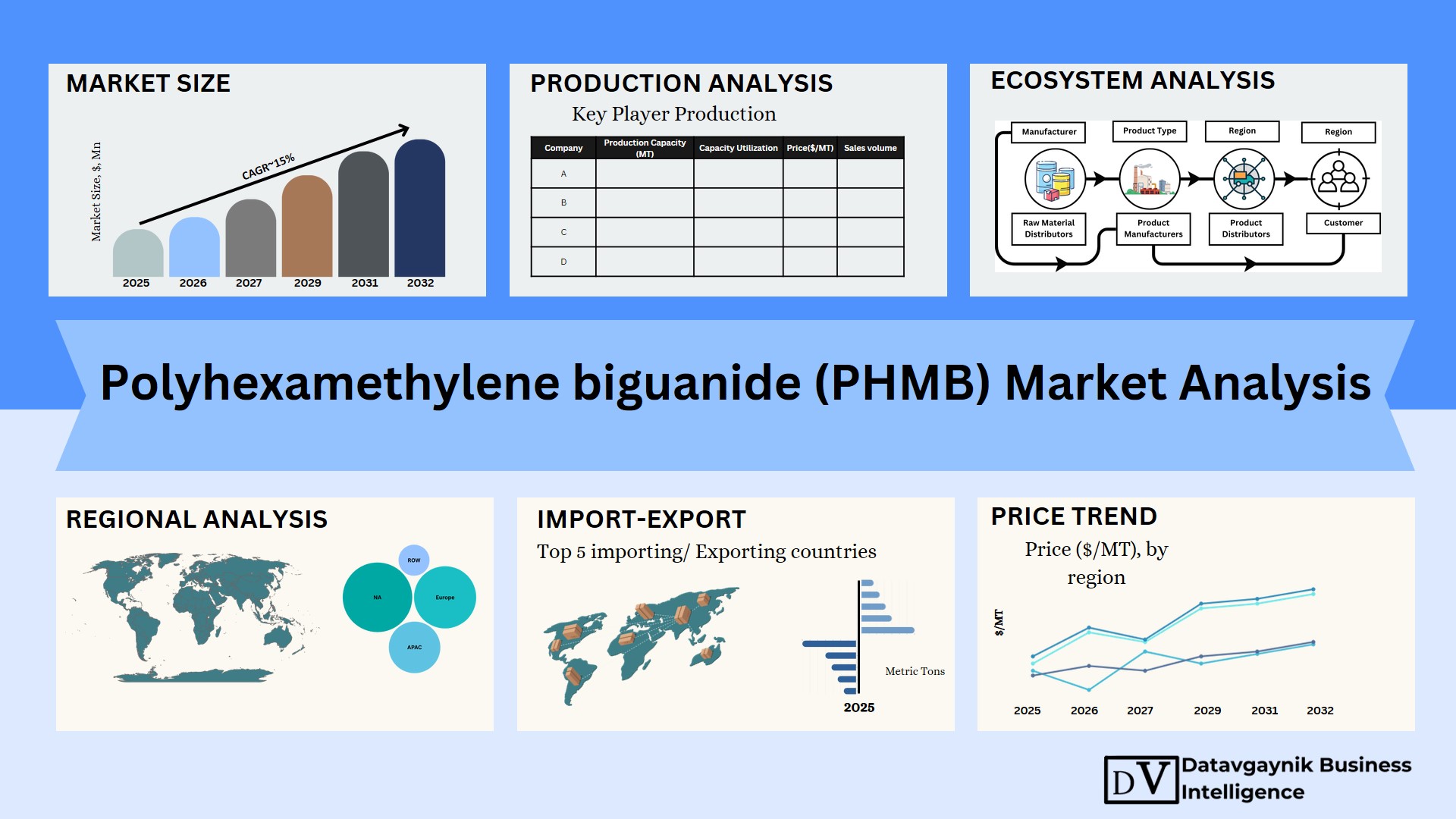
The Polyhexamethylene biguanide (PHMB) Market is experiencing an unprecedented surge driven by escalating global hygiene awareness and expanding applications across healthcare, water treatment, and consumer products. For instance, the global disinfectant market, which heavily utilizes PHMB as a key antimicrobial agent, is projected to grow at a CAGR of over 7% between 2023 and 2030. This growth is largely fueled by rising concerns about hospital-acquired infections (HAIs), which affect an estimated 7 million patients annually in the U.S. alone, underscoring the critical role of effective antimicrobial compounds like PHMB in infection control.
PHMB’s broad-spectrum biocidal efficacy against bacteria, fungi, and viruses positions it as an indispensable ingredient, particularly in healthcare facilities and public sanitation. The increasing prevalence of multi-drug resistant pathogens has amplified demand for advanced disinfectants, where PHMB’s proven safety and effectiveness make it preferable to traditional chemicals such as chlorine or quaternary ammonium compounds. This trend aligns with healthcare-associated infection control protocols that now emphasize biocides combining potency with low toxicity, driving the Polyhexamethylene biguanide (PHMB) Market size to expand significantly.
Expanding Healthcare Applications Propel Polyhexamethylene biguanide (PHMB) Market
Healthcare remains the largest and fastest-growing end-user segment within the Polyhexamethylene biguanide (PHMB) Market. For example, PHMB’s incorporation in wound care products is rapidly increasing, with the global advanced wound care market anticipated to surpass USD 18 billion by 2030, growing at a CAGR of approximately 5.5%. PHMB’s unique ability to prevent bacterial colonization and promote healing has made it a staple in wound dressings, surgical gels, and antiseptic solutions.
Moreover, the rise in surgical procedures worldwide—estimated at over 310 million annually—further amplifies demand for antimicrobial agents in sterilization and disinfection. PHMB’s compatibility with sensitive tissues and its low cytotoxicity provide critical advantages in applications such as eye care and contact lens solutions, which are witnessing double-digit growth in emerging economies. Countries like India and China have recorded a surge in ophthalmic product consumption by more than 12% year-over-year, highlighting a key growth avenue in the Polyhexamethylene biguanide (PHMB) Market.
Water Treatment Sector Fuels Polyhexamethylene biguanide (PHMB) Market Expansion
One of the most dynamic growth areas for the Polyhexamethylene biguanide (PHMB) Market is water treatment. PHMB serves as a highly effective algaecide and disinfectant in municipal and industrial water systems, including swimming pools and spas. The global water treatment chemicals market size was valued at USD 37 billion in 2022 and is projected to grow at over 6% CAGR through 2030, propelled by tightening regulations on water quality and environmental sustainability.
For example, European nations such as Germany and the Netherlands are aggressively adopting PHMB-based water treatment solutions due to their reduced environmental footprint compared to chlorine-based alternatives. PHMB’s biodegradability and lower toxicity have positioned it as the preferred biocide in regions with stringent environmental regulations, thereby accelerating demand. Industrial sectors relying on closed-loop cooling and process water systems are increasingly transitioning to PHMB formulations, which offer longer-lasting microbial control without the harmful byproducts of conventional chemicals, contributing to robust Polyhexamethylene biguanide (PHMB) Market growth.
Consumer Products and Personal Care Driving Polyhexamethylene biguanide (PHMB) Market Demand
The surge in consumer hygiene awareness, especially post-COVID-19, has been a decisive catalyst for the Polyhexamethylene biguanide (PHMB) Market within personal care and household products. For example, the hand sanitizer market alone ballooned from USD 2.1 billion in 2019 to over USD 10 billion in 2022, highlighting the spike in demand for antimicrobial agents.
PHMB’s ability to provide long-lasting antimicrobial protection while maintaining product safety standards has made it a favored preservative in shampoos, conditioners, facial cleansers, and disinfecting wipes. This is supported by growing consumer preferences for products that balance efficacy with minimal skin irritation, leading manufacturers to reformulate personal care lines using PHMB. The increasing trend of “clean beauty” and sustainability has further boosted PHMB’s adoption, with several leading cosmetics companies launching PHMB-based preservative systems that extend shelf life without compromising on environmental impact, signaling a sustained upward trajectory in the Polyhexamethylene biguanide (PHMB) Market size.
Sustainability Imperatives Accelerate Polyhexamethylene biguanide (PHMB) Market Adoption
Environmental concerns are reshaping the Polyhexamethylene biguanide (PHMB) Market as industries seek safer, greener alternatives to conventional disinfectants and biocides. PHMB’s eco-friendly profile—characterized by low aquatic toxicity, biodegradability, and minimal bioaccumulation—makes it a strategic choice amidst global regulatory tightening on hazardous chemical usage.
For instance, the EU’s Biocidal Products Regulation (BPR) has catalyzed a shift away from harsh chemicals, propelling PHMB’s market penetration in European countries by over 9% annually. Similarly, in North America, PHMB is increasingly favored in sustainable water treatment and household cleaning products, responding to rising consumer and governmental pressure to reduce environmental footprints.
Companies leveraging PHMB to develop innovative formulations are capitalizing on this eco-conscious wave. The trend extends to the textile industry, where PHMB-treated fabrics that offer antimicrobial properties and reduce odor-causing bacteria are gaining traction, especially in medical and sportswear applications. Such cross-sector sustainability-driven demand is a significant driver expanding the global Polyhexamethylene biguanide (PHMB) Market.
Textile Industry’s Contribution to Polyhexamethylene biguanide (PHMB) Market Growth
The textile sector represents a rapidly evolving frontier for the Polyhexamethylene biguanide (PHMB) Market. The rise of antimicrobial textiles is underpinned by increased consumer focus on hygiene, odor control, and fabric longevity. For example, the global antimicrobial textile market is projected to grow at a CAGR exceeding 13% through 2030, with PHMB being a leading active ingredient due to its durable and effective microbial inhibition.
In healthcare, PHMB-treated hospital linens and patient gowns reduce the risk of cross-contamination, addressing stringent infection control requirements. The sportswear segment also benefits from PHMB’s odor-neutralizing capabilities, enhancing product appeal in a $200 billion global athletic apparel market growing by nearly 6% annually. Innovations enabling PHMB to bind effectively with various fabric types have widened its adoption, strengthening the Polyhexamethylene biguanide (PHMB) Market across geographies.
Industrial and Agricultural Applications Boost Polyhexamethylene biguanide (PHMB) Market Penetration
Beyond conventional sectors, the Polyhexamethylene biguanide (PHMB) Market is witnessing expanding applications in industrial and agricultural arenas. PHMB’s antimicrobial efficacy in coatings and paints prevents microbial degradation and biofouling, enhancing product durability. The global antimicrobial coatings market, valued at USD 10 billion in 2023, is forecasted to grow at approximately 8% CAGR, with PHMB-based products contributing a notable share due to superior safety profiles.
In agriculture, PHMB is employed as a disinfectant for irrigation systems and storage facilities, helping curb contamination and improve crop safety. This trend is gaining momentum especially in Asia Pacific, where agricultural modernization and biosecurity measures drive demand. Countries such as India and China have incorporated PHMB into integrated pest management programs to reduce chemical pesticide usage, reflecting a broader sustainability push and further expanding the Polyhexamethylene biguanide (PHMB) Market footprint.
Regulatory Endorsements Strengthen Polyhexamethylene biguanide (PHMB) Market Momentum
The regulatory landscape is pivotal in shaping the Polyhexamethylene biguanide (PHMB) Market trajectory. PHMB enjoys strong endorsements from key agencies including the U.S. FDA and EPA, as well as Europe’s ECHA under the Biocidal Products Regulation. These approvals affirm PHMB’s safety and efficacy, providing manufacturers with confidence to adopt PHMB in a wide spectrum of applications.
For example, the EPA’s registration of PHMB as an effective antimicrobial agent for hospital disinfectants has accelerated its use in infection prevention protocols. Similarly, the European Commission’s recent expansions of allowable PHMB uses in personal care products and water treatment underscore regulatory support aligned with sustainability and human safety. Such frameworks mitigate market entry barriers and support rapid expansion, underpinning the Polyhexamethylene biguanide (PHMB) Market’s robust growth outlook.
Technological Innovations Propel Polyhexamethylene biguanide (PHMB) Market Competitiveness
Innovations in PHMB formulations and production technologies are key drivers amplifying its market adoption. Advances such as microencapsulation and gel-based delivery systems have enhanced the stability, controlled release, and user safety of PHMB, enabling entry into niche medical and cosmetic applications.
Manufacturing improvements focusing on greener synthesis routes and process automation have lowered production costs, increasing accessibility for emerging markets. For example, emerging biotechnological methods utilizing enzymatic catalysis promise to reduce environmental impacts, aligning with growing regulatory and consumer demands. These technological strides expand the versatility of PHMB and unlock new use cases, reinforcing the expanding Polyhexamethylene biguanide (PHMB) Market size.
“Track Country-wise Polyhexamethylene biguanide (PHMB) Production and Demand through our Polyhexamethylene biguanide (PHMB) Production Database”
-
-
- Polyhexamethylene biguanide (PHMB) production database for 32+ countries worldwide
- Polyhexamethylene biguanide (PHMB) sales volume for 32+ countries
- Country-wise Polyhexamethylene biguanide (PHMB) production capacity, production plant mapping, production capacity utilization for 32+ manufacturers
- Polyhexamethylene biguanide (PHMB) production plants and production plant capacity analysis by top manufacturers
-
“Track real-time Polyhexamethylene biguanide (PHMB) Prices, Polyhexamethylene biguanide (PHMB) price charts for 32+ countries, Polyhexamethylene biguanide (PHMB) weekly price tracker and Polyhexamethylene biguanide (PHMB) monthly price tracker”
-
-
- Track real-time Polyhexamethylene biguanide (PHMB) prices and Polyhexamethylene biguanide (PHMB) price trend in 32+ countries though our excel-based Polyhexamethylene biguanide (PHMB) price charts
- Real-time Polyhexamethylene biguanide (PHMB) price tracker dashboard with 32+ countries
- Complete transparency on Polyhexamethylene biguanide (PHMB) price trend through our Polyhexamethylene biguanide (PHMB) monthly price tracker, Polyhexamethylene biguanide (PHMB) weekly price tracker
-
Geographical Demand Dynamics in the Polyhexamethylene biguanide (PHMB) Market
The global Polyhexamethylene biguanide (PHMB) Market exhibits pronounced regional variations driven by differing industrial growth, regulatory landscapes, and consumer preferences. Asia Pacific stands out as the fastest-growing region, driven by rapid industrialization and expanding healthcare infrastructure. For example, China’s healthcare expenditure grew at a CAGR of over 11% between 2017 and 2023, fueling demand for antimicrobial agents such as PHMB in wound care and disinfectants. India’s burgeoning middle class and government initiatives targeting rural healthcare accessibility have further accelerated PHMB adoption, with the personal care segment alone projected to grow at a CAGR exceeding 9% in the next five years.
North America maintains a dominant position in the Polyhexamethylene biguanide (PHMB) Market, primarily due to its advanced healthcare systems and stringent hygiene protocols. The United States accounts for a major share, supported by over USD 40 billion spent annually on infection prevention products. The COVID-19 pandemic intensified the use of PHMB-based disinfectants and personal care items, elevating market penetration. For instance, PHMB-infused wound dressings have seen a growth rate of approximately 7% annually in the U.S., reflecting a broader emphasis on infection control.
Europe’s Polyhexamethylene biguanide (PHMB) Market is characterized by strong regulatory frameworks that encourage the use of safer, eco-friendly biocides. Countries such as Germany, the UK, and France lead in PHMB adoption, especially in healthcare and water treatment sectors. The European water treatment chemicals market is expected to grow at a CAGR of around 5.5% through 2030, with PHMB-based solutions gaining preference due to regulatory constraints on chlorine-based disinfectants. Additionally, rising demand for antimicrobial textiles in the healthcare and sports sectors is contributing to steady market growth.
Latin America and the Middle East & Africa regions are emerging markets for PHMB, supported by increasing hygiene awareness and expanding industrial sectors. Brazil, for example, has witnessed a 12% annual increase in demand for antimicrobial disinfectants, correlating with growing urbanization and healthcare investments. Similarly, South Africa and the Gulf countries are gradually adopting PHMB in water treatment and personal care products, driven by water scarcity concerns and health safety priorities, setting the stage for accelerated Polyhexamethylene biguanide (PHMB) Market growth.
Polyhexamethylene biguanide (PHMB) Market Production Landscape
The Polyhexamethylene biguanide (PHMB) Market production is dominated by key chemical manufacturing hubs in Asia, North America, and Europe. China remains the largest producer, leveraging its vast chemical industry infrastructure and cost advantages. For instance, China’s chemical manufacturing output increased by 8.3% annually from 2018 to 2023, facilitating large-scale PHMB production to meet domestic and export demand.
The United States also holds a significant share in global PHMB production, with manufacturers focusing on high-purity formulations for medical and personal care applications. U.S. production is characterized by stringent quality controls and regulatory compliance, contributing to its strong export capabilities, especially to North America and Latin America.
Germany and other Western European countries contribute a substantial volume of PHMB production, often emphasizing environmentally sustainable manufacturing processes. Germany’s push towards green chemistry has resulted in the integration of biotechnological methods in PHMB synthesis, reducing environmental footprints and aligning with EU sustainability targets. This innovation enhances Europe’s position as a supplier of high-quality, regulatory-compliant PHMB products.
Emerging production capacities are also developing in India and South Korea, driven by growing local demand and government incentives for pharmaceutical and chemical manufacturing. These countries are investing in state-of-the-art production facilities that blend chemical synthesis with eco-friendly techniques, aiming to capture both domestic and regional market shares. For example, India’s chemical manufacturing sector is expected to grow at a CAGR of nearly 10% over the next decade, bolstering the regional Polyhexamethylene biguanide (PHMB) Market production base.
Market Segmentation Driving the Polyhexamethylene biguanide (PHMB) Market Expansion
Understanding market segmentation is critical to grasp the diverse demand drivers within the Polyhexamethylene biguanide (PHMB) Market. Segmentation by application reveals healthcare and medical sectors as the primary consumers, accounting for over 40% of global demand. Wound care products, antiseptic solutions, and medical device sterilization dominate this segment, benefiting from PHMB’s broad antimicrobial spectrum and low toxicity. The wound care segment alone is poised for growth exceeding 5.5% annually, driven by the rising incidence of chronic wounds and surgical procedures worldwide.
Water treatment emerges as the second largest application sector, representing approximately 30% of PHMB consumption. The sector’s expansion is closely tied to global water quality regulations and sustainability initiatives. For example, the global swimming pool chemicals market, valued at USD 3.5 billion in 2023, is rapidly adopting PHMB-based algaecides due to their long-lasting efficacy and eco-friendliness compared to chlorine. Industrial water treatment applications also bolster demand, especially in sectors such as power generation and manufacturing, where microbial contamination control is critical.
Personal care and consumer goods represent a fast-growing segment, with PHMB used as an antimicrobial preservative in shampoos, conditioners, hand sanitizers, and disinfecting wipes. The surge in personal hygiene awareness has driven this segment’s growth rate to nearly 8% annually. Emerging markets such as Southeast Asia and Latin America are witnessing a sharp rise in demand for PHMB-infused consumer products, reflecting shifting consumer behaviors favoring effective and skin-safe preservatives.
The textile industry is a noteworthy emerging segment within the Polyhexamethylene biguanide (PHMB) Market, where antimicrobial fabric treatments are gaining popularity. Medical textiles, sportswear, and hygiene fabrics infused with PHMB are projected to grow at a CAGR exceeding 12% by 2030, driven by heightened hygiene standards and performance demands. The incorporation of PHMB enhances fabric durability against microbial degradation and odor, meeting rising consumer expectations.
Agricultural and industrial applications collectively contribute to a smaller but rapidly expanding share of the Polyhexamethylene biguanide (PHMB) Market. In agriculture, PHMB’s use in irrigation system disinfection and storage hygiene is growing at over 7% annually, reflecting increased biosecurity efforts. Industrial applications in coatings and paints are also evolving, with PHMB-based formulations reducing biofouling and extending product lifecycles, addressing a USD 10 billion antimicrobial coatings market growing at 8% CAGR.
Polyhexamethylene biguanide (PHMB) Price Trends and Market Dynamics
Polyhexamethylene biguanide (PHMB) Price trends are shaped by raw material availability, production efficiency, regulatory policies, and demand fluctuations across sectors. Over the past five years, PHMB prices have demonstrated relative stability with moderate upward pressure due to rising raw material costs, particularly hexamethylene diamine and biguanide derivatives, which constitute over 60% of production expenses.
For instance, between 2021 and 2024, PHMB prices increased by approximately 10-12%, largely driven by supply chain disruptions and increased demand from healthcare and water treatment sectors. However, advancements in manufacturing technology, including process automation and green synthesis, are expected to moderate these price escalations by improving yield and reducing waste.
Regional price disparities exist due to logistical costs and regulatory compliance expenses. North America and Europe generally exhibit higher Polyhexamethylene biguanide (PHMB) Price points—up to 15-20% above global averages—attributable to stricter quality standards and environmental regulations. Conversely, Asia Pacific benefits from lower production costs, making PHMB more affordable and accessible in fast-growing markets like China and India.
Fluctuations in the Polyhexamethylene biguanide (PHMB) Price trend are also influenced by competitive pressures from alternative antimicrobial agents such as chlorine derivatives and hydrogen peroxide. However, PHMB’s superior safety profile and growing regulatory acceptance increasingly justify its premium pricing in sectors prioritizing human and environmental safety.
Impact of Production Capacity on Polyhexamethylene biguanide (PHMB) Price and Market Supply
Production capacity expansions directly impact the Polyhexamethylene biguanide (PHMB) Price trend by balancing supply with escalating demand. China’s scale-up of PHMB production by nearly 25% between 2020 and 2023 alleviated supply bottlenecks, contributing to a price stabilization phase during 2023. Similar capacity expansions in India and South Korea, aiming at localized production, reduce import dependency and transportation costs, potentially lowering PHMB prices in these regions.
However, maintaining high product quality and regulatory compliance remains a challenge, as lower-cost producers often face scrutiny regarding efficacy and safety standards. This dynamic influences price sensitivity across different markets, with premium-priced PHMB formulations dominating healthcare and personal care applications, while cost-effective variants cater to water treatment and industrial uses.
Future Outlook: Polyhexamethylene biguanide (PHMB) Market Price and Demand Correlation
Looking ahead, the Polyhexamethylene biguanide (PHMB) Price trend is anticipated to be influenced by continued demand growth balanced against production innovations. With the global antimicrobial market expected to surpass USD 15 billion by 2030, PHMB’s expanding applications in emerging sectors such as antimicrobial textiles and eco-friendly water treatment will sustain demand upward momentum.
Technological breakthroughs in biotechnological PHMB synthesis could further reduce costs and environmental impact, potentially easing price pressures and broadening market accessibility. Moreover, regulatory frameworks increasingly favoring sustainable and safe biocides will likely incentivize manufacturers to invest in higher-quality PHMB production, supporting a stable to moderately increasing price trajectory.
In summary, the Polyhexamethylene biguanide (PHMB) Market is poised for robust growth fueled by diverse geographical demand, expanding production capabilities, and evolving market segments. The interplay of price trends with supply-demand fundamentals will be a defining factor shaping competitive dynamics and investment strategies across the global landscape.
“Polyhexamethylene biguanide (PHMB) Manufacturing Database, Polyhexamethylene biguanide (PHMB) Manufacturing Capacity”
-
-
- Polyhexamethylene biguanide (PHMB) top manufacturers market share for 32+ manufacturers
- Top 12 manufacturers and top 19 manufacturers of Polyhexamethylene biguanide (PHMB) in North America, Europe, Asia Pacific
- Polyhexamethylene biguanide (PHMB) production plant capacity by manufacturers and Polyhexamethylene biguanide (PHMB) production data for 32+ market players
- Polyhexamethylene biguanide (PHMB) production dashboard, Polyhexamethylene biguanide (PHMB) production data in excel format
-
“Polyhexamethylene biguanide (PHMB) price charts, Polyhexamethylene biguanide (PHMB) weekly price tracker and Polyhexamethylene biguanide (PHMB) monthly price tracker”
-
-
- Factors impacting real-time Polyhexamethylene biguanide (PHMB) prices in 32+ countries worldwide
- Polyhexamethylene biguanide (PHMB) monthly price tracker, Polyhexamethylene biguanide (PHMB) weekly price tracker
- Real-time Polyhexamethylene biguanide (PHMB) price trend, Polyhexamethylene biguanide (PHMB) price charts, news and updates
- Tracking Polyhexamethylene biguanide (PHMB) price fluctuations
-
Leading Manufacturers in the Polyhexamethylene biguanide (PHMB) Market
The Polyhexamethylene biguanide (PHMB) Market is currently shaped by a select group of global manufacturers who dominate through production capacity, innovation, and wide application reach. These companies hold significant market shares and have established strong brand recognition by offering specialized PHMB formulations catering to healthcare, water treatment, personal care, and industrial sectors.
Among the foremost manufacturers is Arch Chemicals, Inc., now part of Lonza Group AG, a Swiss chemical and biotechnology firm. Lonza’s PHMB product line, marketed under the brand name Cosmocil CQ, is widely recognized for its versatility and high efficacy. Cosmocil CQ is used extensively in water treatment applications, surface disinfectants, and personal care products. Lonza has leveraged its strong regulatory expertise and global distribution network to capture a sizable portion of the Polyhexamethylene biguanide (PHMB) Market, particularly in North America and Europe, where compliance with strict environmental and safety standards is paramount.
Another key player is SK Chemicals, a South Korean multinational that has made notable advancements in PHMB production technologies. SK Chemicals offers a broad portfolio of PHMB-based antimicrobials under the brand SK PHMB, which finds significant usage in medical devices, wound care, and antimicrobial textiles. The company’s strong foothold in Asia Pacific, driven by growing healthcare and personal care sectors in countries like China, Japan, and India, contributes substantially to its market share.
BASF SE, the German chemical giant, also holds a considerable position in the Polyhexamethylene biguanide (PHMB) Market. BASF’s PHMB-based products emphasize eco-friendly water treatment solutions and advanced coatings for industrial applications. Their product innovations focus on combining PHMB with other biocidal agents to enhance antimicrobial efficacy while maintaining environmental compliance. BASF’s integrated approach to chemical manufacturing and sustainable product development gives it competitive advantages in Europe and expanding markets globally.
Schülke & Mayr GmbH, a specialist in hygiene and disinfectants, commands a respected presence within the medical and personal care applications of the Polyhexamethylene biguanide (PHMB) Market. Their PHMB products are formulated specifically for wound care, antiseptics, and hospital disinfectants, often bundled with other active ingredients to maximize antimicrobial spectrum. Schülke & Mayr’s commitment to R&D has allowed it to maintain steady market share within specialized healthcare segments.
Additionally, Troy Corporation is a notable North American manufacturer with PHMB offerings tailored for household disinfectants, personal care products, and industrial water treatment. Troy’s emphasis on high-purity PHMB formulations and customized delivery systems has strengthened its reputation among consumer product manufacturers aiming for both safety and efficacy. The company’s agile production capabilities enable quick responses to demand fluctuations, ensuring a consistent market presence.
Oxychem, a division of Occidental Petroleum, has emerged as a prominent supplier in the Polyhexamethylene biguanide (PHMB) Market, focusing on industrial and municipal water treatment applications. Their product lines are engineered to provide efficient microbial control in cooling towers, swimming pools, and wastewater systems. Oxychem’s strategy centers on reliability and compliance with stringent environmental regulations, driving demand in North America and parts of Asia.
Other significant players include Coventya, Venkys Pharmaceuticals, and Sinopec. Coventya’s PHMB solutions are widely used in antimicrobial coatings and textiles, leveraging its expertise in specialty chemicals. Venkys Pharmaceuticals, with a focus on healthcare and wound care, has grown steadily in South Asian markets, while Sinopec utilizes its extensive chemical production infrastructure to serve the expansive Chinese market with competitively priced PHMB products.
Polyhexamethylene biguanide (PHMB) Market Share by Manufacturers
Market share in the Polyhexamethylene biguanide (PHMB) Market is largely concentrated among these established players, with the top five manufacturers collectively accounting for over 70% of the global volume. Lonza Group, through its Cosmocil CQ brand, is often considered the market leader, commanding roughly 25-30% of the global PHMB supply, supported by its diversified application portfolio and regulatory approvals in major markets.
SK Chemicals holds an estimated 15-18% share, benefiting from its dominant presence in Asia and strategic partnerships with healthcare and personal care product manufacturers. BASF SE and Schülke & Mayr occupy market shares in the range of 10-12% each, driven by their innovation in eco-friendly solutions and medical-grade products, respectively.
Troy Corporation and Oxychem, while smaller than the top four, maintain a combined market share of around 8-10%, focusing on specific niches like industrial water treatment and consumer disinfectants. The remaining market is distributed among regional players and smaller manufacturers, particularly in emerging economies, where local production and cost competitiveness influence market dynamics.
Key Product Lines Shaping the Polyhexamethylene biguanide (PHMB) Market
The success of these manufacturers is closely tied to their product innovation and portfolio depth. Lonza’s Cosmocil CQ is particularly noted for its adaptability across various formulations—ranging from liquid concentrates used in swimming pool sanitation to preservatives in cosmetics and antimicrobial agents in wound dressings. Its formulation stability and regulatory acceptance have made it a benchmark product globally.
SK Chemicals’ SK PHMB series includes high-purity powders and liquids designed for sensitive medical applications, such as contact lens disinfectants and wound care gels. These products emphasize biocompatibility and sustained antimicrobial action, supporting SK Chemicals’ expansion in healthcare sectors with stringent safety requirements.
BASF’s PHMB products focus on environmentally sustainable water treatment chemicals and antimicrobial additives in industrial coatings. For example, BASF has developed hybrid formulations combining PHMB with natural polymers to enhance biodegradability without compromising antimicrobial performance.
Schülke & Mayr’s portfolio includes PHMB-based antiseptics and disinfectants marketed under various brand names tailored to clinical settings, reinforcing its niche dominance. The company’s continuous investment in clinical efficacy studies bolsters its reputation among healthcare providers.
Troy Corporation emphasizes flexibility in its product forms—offering both powder and liquid PHMB suited to customized disinfectant formulations. Oxychem complements this with PHMB blends optimized for municipal water systems and industrial cooling, often coupled with real-time monitoring technologies for microbial control.
Recent Industry Developments and Market News
The Polyhexamethylene biguanide (PHMB) Market has witnessed several noteworthy developments in the past two years, reflecting growing demand and innovation. In early 2023, Lonza announced an expansion of its manufacturing capacity for Cosmocil CQ in Europe, aimed at meeting surging demand from personal care and water treatment industries. This move was aligned with the company’s sustainability strategy to reduce carbon emissions and improve supply chain resilience.
In mid-2022, SK Chemicals launched a new high-purity PHMB variant designed specifically for antimicrobial textiles, responding to rising consumer demand for hygienic and odor-resistant fabrics. This innovation quickly gained traction across medical and sports apparel sectors in Asia Pacific.
BASF’s 2023 introduction of hybrid PHMB formulations that combine biocidal efficiency with enhanced biodegradability marks a significant step toward greener antimicrobial solutions. The company also partnered with several water treatment firms to pilot these formulations in industrial cooling systems across Germany and the U.S.
Schülke & Mayr expanded its R&D pipeline in 2022 with several clinical trials investigating PHMB-based wound care products’ efficacy against antibiotic-resistant infections. Positive results have positioned the company for increased market penetration in North America and Europe.
Oxychem’s 2023 rollout of integrated microbial monitoring solutions paired with PHMB treatment in municipal water plants highlights a growing trend toward smart water management. This offering is expected to influence water treatment protocols in the U.S. and Canada.
On a broader scale, the Polyhexamethylene biguanide (PHMB) Market is benefiting from intensified regulatory scrutiny on conventional disinfectants, which has accelerated PHMB adoption worldwide. The increasing emphasis on eco-friendly, safe, and effective antimicrobial agents across multiple industries continues to fuel investment and product innovation among leading market players.
“Polyhexamethylene biguanide (PHMB) Production Data and Polyhexamethylene biguanide (PHMB) Production Trend, Polyhexamethylene biguanide (PHMB) Production Database and forecast”
-
-
- Polyhexamethylene biguanide (PHMB) production database for historical years, 12 years historical data
- Polyhexamethylene biguanide (PHMB) production data and forecast for next 12 years
- Polyhexamethylene biguanide (PHMB) sales volume by manufacturers
-
“Track Real-time Polyhexamethylene biguanide (PHMB) Prices for purchase and sales contracts, Polyhexamethylene biguanide (PHMB) price charts, Polyhexamethylene biguanide (PHMB) weekly price tracker and Polyhexamethylene biguanide (PHMB) monthly price tracker”
-
-
- Gain control on your purchase and sales contracts through our real-time Polyhexamethylene biguanide (PHMB) price tracker and Polyhexamethylene biguanide (PHMB) price trend analysis
- Polyhexamethylene biguanide (PHMB) weekly price tracker and forecast for next four weeks
- Polyhexamethylene biguanide (PHMB) monthly price tracker and forecast for next two months
-
Market Scenario, Demand vs Supply, Average Product Price, Import vs Export, till 2035
- Global Polyhexamethylene biguanide (PHMB) Market revenue and demand by region
- Global Polyhexamethylene biguanide (PHMB) Market production and sales volume
- United States Polyhexamethylene biguanide (PHMB) Market revenue size and demand by country
- Europe Polyhexamethylene biguanide (PHMB) Market revenue size and demand by country
- Asia Pacific Polyhexamethylene biguanide (PHMB) Market revenue size and demand by country
- Middle East & Africa Polyhexamethylene biguanide (PHMB) Market revenue size and demand by country
- Latin America Polyhexamethylene biguanide (PHMB) Market revenue size and demand by
- Import-export scenario – United States, Europe, APAC, Latin America, Middle East & Africa
- Average product price – United States, Europe, APAC, Latin America, Middle East & Africa
- Market player analysis, competitive scenario, market share analysis
- Business opportunity analysis
Key questions answered in the Global Polyhexamethylene biguanide (PHMB) Market Analysis Report:
- What is the market size for Polyhexamethylene biguanide (PHMB) in United States, Europe, APAC, Middle East & Africa, Latin America?
- What is the yearly sales volume of Polyhexamethylene biguanide (PHMB) and how is the demand rising?
- Who are the top market players by market share, in each product segment?
- Which is the fastest growing business/ product segment?
- What should be the business strategies and Go to Market strategies?
The report covers Polyhexamethylene biguanide (PHMB) Market revenue, Production, Sales volume, by regions, (further split into countries):
- Asia Pacific (China, Japan, South Korea, India, Indonesia, Vietnam, Rest of APAC)
- Europe (UK, Germany, France, Italy, Spain, Benelux, Poland, Rest of Europe)
- North America (United States, Canada, Mexico)
- Latin America (Brazil, Argentina, Rest of Latin America)
- Middle East & Africa
Table of Contents:
- Introduction to Polyhexamethylene Biguanide (PHMB)
1 Definition and Chemical Properties
1.2 Historical Development and Evolution - Applications of PHMB
1 Uses in Disinfection and Antiseptic Products
2.2 PHMB in Healthcare and Wound Care
2.3 Industrial and Commercial Applications - Market Overview and Scope
1 Objectives of the Market Study
3.2 Market Definition and Key Parameters - Global Market Dynamics for PHMB
1 Key Market Drivers
4.2 Market Challenges and Restraints
4.3 Opportunities in Emerging Applications - Global Market Size and Forecast (2020-2035)
1 Market Value and Growth Projections
5.2 Regional Market Contributions - Market Segmentation by Application
1 Healthcare and Medical Uses
6.2 Industrial and Household Products
6.3 Agricultural and Aquaculture Applications - North America Market Insights
1 Market Growth and Key Trends
7.2 Demand in Healthcare and Industrial Sectors
7.3 Regulatory Landscape in the U.S. and Canada - Europe Market Insights
1 Market Share and Growth Trends
8.2 PHMB Adoption in Healthcare and Consumer Products
8.3 Key Regulatory Considerations - Asia-Pacific Market Insights
1 Demand for PHMB in Emerging Markets
9.2 Regional Production and Consumption Analysis
9.3 Opportunities and Challenges in Asia-Pacific - Latin America Market Insights
1 Market Size and Growth Opportunities
10.2 Adoption of PHMB in Industrial and Healthcare Sectors
10.3 Key Regional Players - Middle East & Africa Market Overview
1 Market Potential and Adoption Trends
11.2 Role of PHMB in Water Treatment and Disinfection
11.3 Key Players and Market Distribution - Competitive Landscape of the PHMB Market
1 Leading Manufacturers and Market Share Analysis
12.2 Key Strategic Initiatives by Market Leaders
12.3 Product Innovation and Research Developments - Technological Advancements in PHMB Production
1 Innovations in PHMB Synthesis
13.2 Advances in Product Formulations and Delivery Systems - PHMB in Healthcare and Wound Care
1 Antiseptic and Antimicrobial Applications
14.2 Use in Medical Devices and Sterilization
14.3 Regulatory Approval and Safety Guidelines - PHMB in Industrial and Household Products
1 Role in Surface Disinfection and Cleaning
15.2 Applications in Cosmetics and Personal Care Products
15.3 Environmental Considerations in Household Use - Regulatory Framework and Compliance
1 Regulatory Landscape Across Key Regions
16.2 Compliance with Standards and Safety Protocols
16.3 Impact of Regulatory Changes on Market Growth - Raw Materials and Supply Chain for PHMB Production
1 Key Raw Materials and Sourcing Challenges
17.2 Supply Chain Dynamics and Distribution Channels - Cost Structure Analysis
1 Breakdown of Manufacturing Costs for PHMB
18.2 Price Trends and Market Competitiveness - Impact of COVID-19 on the PHMB Market
1 Surge in Demand for Disinfection Products
19.2 Supply Chain Disruptions and Recovery Measures - Environmental and Sustainability Considerations
1 Ecological Impact of PHMB Production
20.2 Adoption of Green Chemistry in PHMB Manufacturing - Market Opportunities in Emerging Applications
1 Use of PHMB in Aquaculture and Agriculture
21.2 Potential in Food Safety and Water Treatment - Global Trade and Export Analysis
1 Key Exporting and Importing Countries for PHMB
22.2 Impact of Trade Policies on Market Access - PHMB in Water Treatment and Disinfection
1 Use in Municipal and Industrial Water Treatment
23.2 Adoption in Aquaculture and Agriculture - Market Forecast for PHMB (2025-2035)
1 Revenue and Growth Projections by Region
24.2 Application-Specific Market Projections - Risks and Challenges in the PHMB Market
1 Regulatory Hurdles and Compliance Issues
25.2 Raw Material Availability and Price Volatility - Future Trends and Innovations in PHMB
1 Advances in PHMB Applications and Formulations
26.2 Market Shifts Toward Biodegradable and Sustainable Products - Conclusions and Strategic Recommendations
1 Summary of Market Insights
27.2 Strategic Recommendations for Market Stakeholder

