

Rising Pharmaceutical Formulations Powering the Polyvinylpyrrolidone (PVP) Market
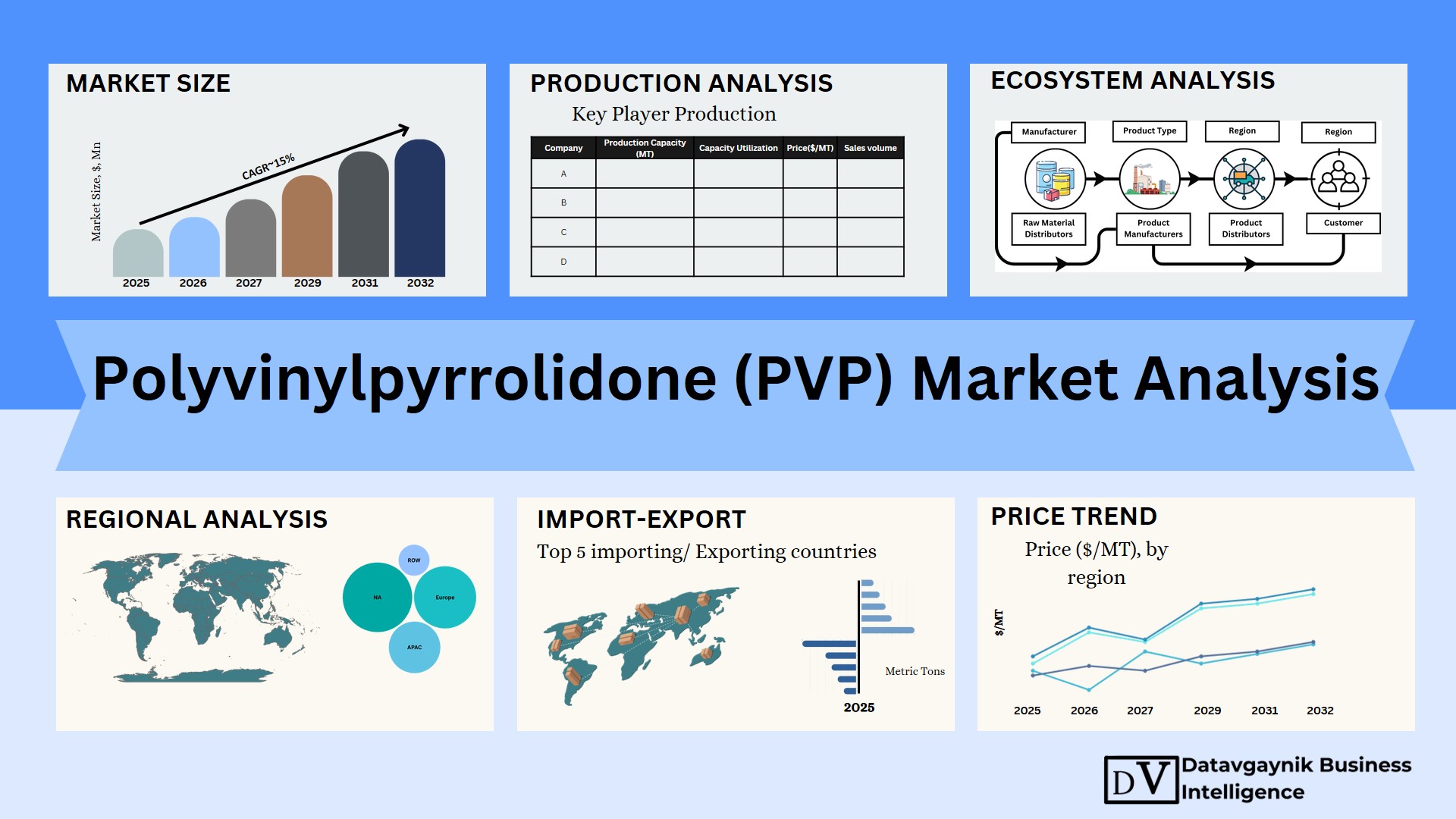
The Polyvinylpyrrolidone (PVP) Market is gaining momentum as global pharmaceutical innovation accelerates. PVP’s functionality as a binder, solubilizing agent, and stabilizer has made it indispensable in tablet and capsule production. With the pharmaceutical sector expanding rapidly, the demand for high-performance excipients like PVP has surged. Global prescription drug sales alone have exceeded USD 1.4 trillion, and the volume of solid dosage forms has grown at a compound annual rate of over 6%, directly translating to increased consumption of PVP.
The market is being driven by a rise in chronic diseases and an aging population. With nearly one in six individuals expected to be over the age of 65 by 2050, the demand for long-term medications continues to climb. As more complex drugs hit the market, the need for stabilizers and solubilizers like PVP grows. PVP is critical in the formulation of biopharmaceuticals and controlled-release drugs, categories which are projected to account for over 40% of total pharmaceutical innovation in the next decade.
Cosmetic Innovation and Demand Surge Boosting Polyvinylpyrrolidone (PVP) Market
The beauty and personal care industry’s global expansion is reinforcing the growth trajectory of the Polyvinylpyrrolidone (PVP) Market. PVP’s unique film-forming, adhesive, and moisture-retaining properties make it a foundational ingredient in hair styling products, facial masks, serums, and sunscreens. As consumer demand for multifunctional skincare and haircare formulations rises, manufacturers are increasingly integrating PVP into new-generation products.
For instance, the hair styling products segment alone has shown a revenue increase of more than 7% year-over-year in fast-growing economies. PVP-based formulations are particularly preferred for their ability to maintain style hold, gloss, and flexibility in varying humidity conditions. Additionally, with consumer trends shifting toward lightweight, non-oily, and long-wear cosmetics, PVP is emerging as a key enabler for modern formulations.
Expanding Processed Food and Beverage Sectors Fueling Polyvinylpyrrolidone (PVP) Market
The Polyvinylpyrrolidone (PVP) Market is also witnessing robust growth from the food and beverage industry. PVP is widely used as a clarifying agent in the brewing and wine-making industries, especially in premium and craft beverage segments. Its ability to remove polyphenols and proteins without affecting flavor profiles is making it a preferred solution among producers aiming for superior clarity and stability.
Processed food production is growing at an annual pace of over 6% in Asia-Pacific and Latin America. As demand increases for long-shelf-life beverages and packaged foods, PVP is finding broader application in food stabilization and emulsification. Its food-grade variant is increasingly utilized in functional beverages and nutritional supplements, particularly in developed markets where health-conscious consumption is rising. The role of PVP in enhancing visual appeal and consistency is positioning it as a value-adding agent in the evolving food sector.
Polyvinylpyrrolidone (PVP) Market Expands with Growth in Industrial Adhesives
Industrial adhesives represent a high-growth application within the Polyvinylpyrrolidone (PVP) Market, fueled by demand across packaging, automotive, textiles, and construction sectors. PVP’s strong adhesive and binding characteristics, coupled with water solubility and thermal stability, make it ideal for formulating pressure-sensitive adhesives, laminating glues, and sealants.
The global adhesives market is expanding at a CAGR of 5.5%, with water-based adhesives gaining significant traction due to environmental regulations. PVP fits perfectly into this trend as a safer, eco-friendlier alternative. Furthermore, in construction applications, where performance under varied temperatures and moisture conditions is critical, PVP-enhanced adhesives offer both strength and flexibility, giving manufacturers a competitive edge.
High Growth in Wound Care and Drug Delivery Advancing Polyvinylpyrrolidone (PVP) Market
The expanding field of advanced wound care is contributing significantly to the growth of the Polyvinylpyrrolidone (PVP) Market. PVP is being utilized in wound dressings, hydrogels, and surgical adhesives due to its excellent biocompatibility, film-forming capability, and ability to hold moisture while preventing microbial growth.
With the global wound care market crossing USD 20 billion, and with increasing demand for non-invasive and sustained-release drug delivery systems, PVP’s presence in medical innovation is growing steadily. It serves as a matrix in transdermal patches and a stabilizing polymer in nanoparticle-based delivery systems. These applications are seeing double-digit growth annually, driven by a global shift toward personalized and efficient healthcare.
Polyvinylpyrrolidone (PVP) Market Driven by Sustainable and Biodegradable Material Trends
Sustainability is becoming a defining trend in the Polyvinylpyrrolidone (PVP) Market. The material’s water solubility, low toxicity, and biodegradability are making it an appealing choice as industries shift away from petroleum-based and environmentally harmful alternatives. With mounting regulatory pressure in Europe and North America, manufacturers are now investing in greener production techniques for PVP, including biomass-derived raw materials and solvent-free processes.
The growing demand for sustainable packaging, biocompatible cosmetics, and eco-friendly cleaning agents is accelerating the adoption of PVP across sectors. For example, in laundry and dishwashing detergents, PVP acts as a dispersant and anti-redeposition agent that is both biodegradable and effective at low concentrations, making it popular in eco-labeled products.
Polyvinylpyrrolidone (PVP) Market Size Strengthened by Rising Emerging Market Demand
Emerging markets across Asia, Africa, and Latin America are playing an increasingly important role in shaping the Polyvinylpyrrolidone (PVP) Market size. The rapid urbanization of these regions, coupled with improving healthcare access and rising disposable incomes, is fueling consumption across key application areas such as pharmaceuticals, cosmetics, and food.
For instance, India’s pharmaceutical export volume has grown by over 12% annually, pushing up local and global demand for excipients like PVP. Meanwhile, Brazil’s personal care market, now among the top five globally, is driving innovation in haircare and skincare—sectors where PVP is a core ingredient. As more international companies invest in manufacturing and R&D in these high-growth geographies, the PVP market is poised for accelerated regional expansion.
Polyvinylpyrrolidone (PVP) Market Empowered by Advances in R&D and Functional Innovation
Technological advancement and research-driven innovation are reshaping the Polyvinylpyrrolidone (PVP) Market. R&D efforts are focused on enhancing PVP’s thermal stability, molecular weight customization, and compatibility with other excipients and polymers. These improvements are opening up new use cases in high-performance applications like biomedical devices, 3D printing resins, and smart drug delivery.
Innovative formulations of PVP, such as cross-linked and copolymer variants, are being developed for niche applications that require precise solubility and release profiles. For example, fast-dissolving oral thin films and ophthalmic solutions now incorporate PVP to improve drug bioavailability and shelf-life. This wave of functional diversification is expanding the addressable market beyond traditional sectors and driving higher margins for manufacturers.
Regional Production Strategies Influencing Polyvinylpyrrolidone (PVP) Market Growth
Regional production dynamics are becoming a competitive factor in the Polyvinylpyrrolidone (PVP) Market. Countries with robust chemical and pharmaceutical manufacturing ecosystems—such as China, Germany, and the United States—are consolidating their position through vertically integrated supply chains and domestic consumption.
In China, where pharmaceutical manufacturing continues to grow at over 10% annually, local PVP producers are scaling up rapidly to meet internal and export demands. The United States is focusing on premium-grade PVP production, serving advanced pharmaceutical and medical device markets. Meanwhile, Germany leads in sustainable production methods and high-purity industrial PVP formulations. These region-specific strategies are shaping global trade patterns and intensifying competition among producers.
Track Country-wise Polyvinylpyrrolidone (PVP) Production and Demand through our Polyvinylpyrrolidone (PVP) Production Database
-
-
- Polyvinylpyrrolidone (PVP) production database for 30+ countries worldwide
- Polyvinylpyrrolidone (PVP) sales volume for 31+ countries
- Country-wise Polyvinylpyrrolidone (PVP) production capacity, production plant mapping, production capacity utilization for 30+ manufacturers
- Polyvinylpyrrolidone (PVP) production plants and production plant capacity analysis by top manufacturers
-
Track real-time Polyvinylpyrrolidone (PVP) Prices, Polyvinylpyrrolidone (PVP) price charts for 30+ countries, Polyvinylpyrrolidone (PVP) weekly price tracker and Polyvinylpyrrolidone (PVP) monthly price tracker
-
-
- Track real-time Polyvinylpyrrolidone (PVP) prices and Polyvinylpyrrolidone (PVP) price trend in 30+ countries though our excel-based Polyvinylpyrrolidone (PVP) price charts
- Real-time Polyvinylpyrrolidone (PVP) price tracker dashboard with 30+ countries
- Complete transparency on Polyvinylpyrrolidone (PVP) price trend through our Polyvinylpyrrolidone (PVP) monthly price tracker, Polyvinylpyrrolidone (PVP) weekly price tracker
-
North America Solidifies Its Leadership in the Polyvinylpyrrolidone (PVP) Market
The Polyvinylpyrrolidone (PVP) Market in North America is firmly positioned for sustained growth, driven by the region’s dominance in pharmaceutical manufacturing and medical innovation. The United States remains the largest consumer of pharmaceutical-grade PVP, accounting for a significant portion of global demand due to its massive drug production output and widespread use of excipients in solid and liquid formulations.
For instance, the rising prevalence of chronic diseases has led to increased formulation of extended-release tablets, transdermal patches, and advanced injectables—all of which depend on PVP’s solubility-enhancing and stabilizing properties. Furthermore, North American companies have shifted towards customized PVP grades for high-value therapies, biosimilars, and novel drug delivery systems, resulting in a consistent upward trajectory in regional consumption.
Europe’s Regulatory Precision Shapes the Polyvinylpyrrolidone (PVP) Market
Europe plays a critical role in shaping the Polyvinylpyrrolidone (PVP) Market, especially through its focus on pharmaceutical compliance, cosmetic innovation, and sustainable manufacturing. Countries such as Germany, France, and the United Kingdom are not only major consumers of PVP but also significant producers, offering highly purified and specialty-grade variants that meet stringent regulatory standards.
For example, Germany’s pharmaceutical sector has prioritized the production of solubilizers and bioavailable excipients to support its expanding portfolio of oncology and cardiology medications. Meanwhile, French cosmetic brands are pioneering the use of PVP in clean-label beauty formulations, where performance and biodegradability are critical. These trends are pushing demand for both pharmaceutical and cosmetic-grade PVP across the continent, while also opening export opportunities to Middle Eastern and Asian markets.
Asia Pacific Emerges as a High-Growth Zone in the Polyvinylpyrrolidone (PVP) Market
The Polyvinylpyrrolidone (PVP) Market in Asia Pacific is experiencing an accelerated growth trajectory, underpinned by massive industrial capacity, low production costs, and surging domestic demand. China and India are at the forefront, combining cost-effective manufacturing with rising internal consumption across pharmaceuticals, adhesives, cosmetics, and food applications.
In China, the pharmaceutical industry has scaled rapidly, with domestic drug production growing at double-digit rates annually. This expansion has fueled significant investment in PVP capacity, especially for tablet binders and solubilizers. Simultaneously, India’s status as a global hub for generic drug exports is reinforcing demand for high-quality PVP excipients. Both countries are also exporting industrial-grade PVP for use in adhesives and coatings to Africa, Southeast Asia, and South America.
Japan and South Korea, on the other hand, are focused on producing high-purity grades tailored for premium cosmetics and precision drug delivery systems. Their emphasis on innovation and performance is positioning them as leaders in niche segments of the PVP market.
Latin America and Middle East Show Promising Potential in the Polyvinylpyrrolidone (PVP) Market
While smaller in size, the Polyvinylpyrrolidone (PVP) Market in Latin America and the Middle East is gaining momentum, driven by growing investments in healthcare infrastructure, personal care products, and food processing.
For example, Brazil’s pharmaceutical market is expanding due to public healthcare reforms and rising access to generic medications. This has increased the demand for local excipient production, including PVP. Additionally, the region’s beauty and personal care sectors are turning toward multifunctional, long-lasting formulations where PVP acts as a critical film-former and binder.
In the Middle East, countries like Saudi Arabia and the UAE are investing heavily in domestic pharmaceutical production, backed by government-led localization strategies. As a result, there is a rising need for raw materials like PVP to reduce dependency on imports and improve self-sufficiency.
Global Production Hubs Reshaping the Polyvinylpyrrolidone (PVP) Market
Production patterns in the Polyvinylpyrrolidone (PVP) Market are increasingly being determined by regional specialization, with China, the United States, Germany, and India leading the global output. China’s role as the largest manufacturer is built on scale and affordability, with bulk production targeting industrial and pharmaceutical applications alike.
Germany and the U.S. are investing in high-purity production and GMP-certified facilities to meet the demand from global pharma giants. India is expanding rapidly, focusing on supplying generic manufacturers with cost-effective excipients for tablets and capsules. These distinct production strategies are diversifying the market landscape, offering buyers a range of options from low-cost commodity grades to specialty, application-specific variants.
Polyvinylpyrrolidone (PVP) Market Segmentation Highlights Application Diversification
The Polyvinylpyrrolidone (PVP) Market is segmented by grade, application, form, and end-user, with each segment witnessing specific drivers and growth patterns.
Pharmaceutical-grade PVP leads in market share, driven by the rising demand for oral solid dosage forms, injectable drug solubilization, and targeted drug delivery. Cosmetic-grade PVP is rapidly growing due to its increasing adoption in hair fixatives, sunscreens, and skincare serums. Food-grade PVP, used as a clarifying and emulsifying agent, is seeing increased application in non-alcoholic beverages, energy drinks, and functional foods.
On the application front, pharmaceuticals dominate with a robust share, followed by cosmetics, food and beverages, adhesives, coatings, and textiles. Newer applications such as lithium-ion battery binders and agricultural carriers are emerging and expected to contribute to future demand.
Form-wise, powder PVP is the most widely used across pharmaceutical and industrial applications due to ease of handling and storage. Liquid PVP is preferred in cosmetic and personal care items for quick formulation integration, while pellet form is used in niche industrial processes.
End-User Expansion Broadens the Polyvinylpyrrolidone (PVP) Market Base
The Polyvinylpyrrolidone (PVP) Market is expanding across several end-user industries, with each sector contributing to the overall demand through distinct use cases.
The pharmaceutical industry remains the largest end-user, driven by consistent product innovation, generics manufacturing, and new drug delivery technologies. The cosmetics and personal care sector is growing at over 7% annually, with increased demand for multifunctional and premium formulations where PVP’s role is central. The food and beverage industry continues to adopt PVP as a stabilizer, particularly in clear beverages and health supplements.
The industrial sector, covering adhesives, detergents, and coatings, is expected to witness robust demand as manufacturers increasingly prefer high-performance, water-soluble binders to meet both performance and environmental standards.
Polyvinylpyrrolidone (PVP) Price Trend Reflects Raw Material and Energy Volatility
The Polyvinylpyrrolidone (PVP) Price trend has shown moderate fluctuations over the past few years, primarily influenced by changes in raw material costs, energy prices, and regulatory shifts in key producing regions. For example, vinylpyrrolidone, the key monomer used in PVP production, is subject to price volatility tied to global petrochemical supply chains.
During periods of high crude oil prices, the Polyvinylpyrrolidone (PVP) Price typically increases by 8–12%, impacting profit margins for manufacturers in cost-sensitive sectors like adhesives and detergents. However, in the pharmaceutical segment, higher costs are often absorbed into pricing due to the critical nature of the excipient and the relatively low proportion of PVP in the final drug cost.
Recent shifts toward sustainable production, including bio-based alternatives, are also impacting the Polyvinylpyrrolidone (PVP) Price Trend. Green manufacturing processes, while environmentally beneficial, come with a cost premium of 10–15%, which is reflected in the final product pricing—particularly in Europe and North America where such methods are more widely adopted.
Regional Disparities Influencing Polyvinylpyrrolidone (PVP) Price and Market Competitiveness
There is a clear regional disparity in the Polyvinylpyrrolidone (PVP) Price due to differences in production scale, regulatory costs, and energy access. Asia Pacific continues to offer the most competitive pricing, with China and India producing bulk PVP at significantly lower costs due to economies of scale and lenient regulatory frameworks.
Conversely, in the United States and Western Europe, compliance with environmental norms, labor costs, and energy expenses drive up the average Polyvinylpyrrolidone (PVP) Price by 15–20% compared to Asian counterparts. Despite this, these markets retain their edge in high-purity, specialty PVP grades required in pharmaceutical and biomedical applications.
As demand increases globally, particularly from regulated markets, price dynamics are expected to evolve. Buyers are now weighing cost-efficiency against quality, sustainability, and supply security, which is shaping sourcing strategies across industries.
Polyvinylpyrrolidone (PVP) Manufacturing Database, Polyvinylpyrrolidone (PVP) Manufacturing Capacity
-
-
- Polyvinylpyrrolidone (PVP) top manufacturers market share for 30+ manufacturers
- Top 11 manufacturers and top 18 manufacturers of Polyvinylpyrrolidone (PVP) in North America, Europe, Asia Pacific
- Polyvinylpyrrolidone (PVP) production plant capacity by manufacturers and Polyvinylpyrrolidone (PVP) production data for 30+ market players
- Polyvinylpyrrolidone (PVP) production dashboard, Polyvinylpyrrolidone (PVP) production data in excel format
-
Polyvinylpyrrolidone (PVP) price charts, Polyvinylpyrrolidone (PVP) weekly price tracker and Polyvinylpyrrolidone (PVP) monthly price tracker
-
-
- Factors impacting real-time Polyvinylpyrrolidone (PVP) prices in 30+ countries worldwide
- Polyvinylpyrrolidone (PVP) monthly price tracker, Polyvinylpyrrolidone (PVP) weekly price tracker
- Real-time Polyvinylpyrrolidone (PVP) price trend, Polyvinylpyrrolidone (PVP) price charts, news and updates
- Tracking Polyvinylpyrrolidone (PVP) price fluctuations
-
Top Manufacturers Driving the Polyvinylpyrrolidone (PVP) Market
The Polyvinylpyrrolidone (PVP) Market is characterized by the dominance of a few global manufacturers that control a significant portion of the supply chain. These companies have built strong portfolios across multiple application segments, from pharmaceuticals to industrial adhesives. Their strategies include large-scale production capacity, backward integration of raw materials, and tailored PVP product lines catering to niche sectors.
Among the top players, Ashland Global Holdings, BASF SE, Boai NKY Pharmaceuticals, JH Nanhang Life Sciences, and Shanghai Yuking Water Soluble Material Tech Co. Ltd. stand out as the largest contributors to global PVP capacity. Together, they hold a commanding share of the overall Polyvinylpyrrolidone (PVP) Market, estimated to be around 65 to 70 percent of global volume.
Ashland Global: High-Purity Leadership in the Polyvinylpyrrolidone (PVP) Market
Ashland has firmly positioned itself as a premium supplier of pharmaceutical-grade PVP under its well-recognized product line, Plasdone. This product family includes various grades such as Plasdone K-29/32, Plasdone S-630, and Plasdone K-90, each catering to specific solubility, viscosity, and stability needs in oral solid dosage forms.
Ashland’s strength lies in its specialization. It focuses exclusively on the pharmaceutical and nutraceutical sectors, with an emphasis on compliance with global pharmacopeial standards. Its Plasdone range is widely used in controlled-release, taste-masked, and fast-dissolving formulations. Ashland holds approximately 18 to 20 percent of the global Polyvinylpyrrolidone (PVP) Market share, primarily in high-purity segments.
BASF SE: Versatility and Scale Across the Polyvinylpyrrolidone (PVP) Market
BASF is one of the most diversified players in the Polyvinylpyrrolidone (PVP) Market, supplying products under the brand name Kollidon. The Kollidon line spans a wide range of applications, including Kollidon 30 for tablet binding, Kollidon VA64 for cosmetics, and Kollidon CL for disintegrant functionality. BASF’s vertical integration, from monomer production to final polymer solutions, gives it a pricing and supply advantage across geographies.
The company’s strong foothold in both Europe and Asia makes it a key player in balancing regional supply chains. BASF holds roughly 22 to 25 percent of the global PVP market share, leading in both pharmaceutical and industrial segments.
Boai NKY Pharmaceuticals: The Cost-Effective Giant in the Polyvinylpyrrolidone (PVP) Market
Boai NKY has emerged as the leading PVP producer in China and one of the largest globally by volume. Its NKY Povidone brand covers an extensive product range from K-15 to K-90 grades, designed for use in pharmaceuticals, cosmetics, and food processing. The company has expanded its production capacity significantly in the last five years to meet global bulk demand.
Boai NKY competes primarily on cost leadership and volume supply, serving emerging markets and large-scale manufacturers in need of affordable, high-capacity solutions. It accounts for approximately 15 to 18 percent of the global Polyvinylpyrrolidone (PVP) Market by volume, especially dominant in Asia-Pacific.
JH Nanhang and Shanghai Yuking: Regional Anchors in the Polyvinylpyrrolidone (PVP) Market
JH Nanhang Life Sciences and Shanghai Yuking have established themselves as competitive suppliers of PVP in Asia, with product offerings spanning both pharmaceutical and industrial applications. Their PVP grades are widely used in adhesive formulations, medical devices, and personal care items.
JH Nanhang focuses on rapid delivery cycles and customization, targeting mid-sized manufacturers and regional buyers. Shanghai Yuking, on the other hand, has positioned itself as an exporter to Europe and Latin America, offering food-grade and cosmetic-grade PVP variants. Each of these companies holds roughly 5 to 8 percent of the Polyvinylpyrrolidone (PVP) Market share, with growing international penetration.
Market Share Dynamics Among Polyvinylpyrrolidone (PVP) Manufacturers
The Polyvinylpyrrolidone (PVP) Market is moderately consolidated, with the top five manufacturers accounting for nearly 70 percent of global supply. The remaining 30 percent is distributed among regional and specialized producers, many of whom cater to niche industrial or agricultural applications.
While large multinational players dominate pharmaceutical-grade supply, smaller firms are gaining ground in low-viscosity and specialty industrial-grade segments. For example, demand for PVP in niche applications like 3D printing, bioadhesives, and electronic coatings has opened new market share opportunities for innovation-focused producers.
The distribution of market share also varies regionally. In North America and Europe, companies like Ashland and BASF lead due to high compliance requirements. In contrast, Asia-Pacific’s market share is fragmented, with Chinese manufacturers supplying both high-volume and mid-tier purity grades across industries.
Recent Developments in the Polyvinylpyrrolidone (PVP) Market
The Polyvinylpyrrolidone (PVP) Market has witnessed several strategic moves, capacity expansions, and product innovations in recent quarters. These developments reflect the growing competitiveness and evolving needs across end-use sectors.
- In January 2024, Ashland announced an expansion of its Plasdone K-29/32 production facility in Texas to support the rising demand for sustained-release pharmaceutical products. This move aims to reduce lead times and enhance supply resilience for North American clients.
- BASF introduced a new line extension under its Kollidon brand in Q3 2023, designed specifically for water-based cosmetic emulsions. The Kollidon Care series aims to deliver better viscosity control and skin-feel optimization, responding to the clean beauty trend.
- Boai NKY completed a new PVP production line in April 2024, increasing its annual capacity by 20 percent. This expansion supports its strategy to capture more market share in Europe and Africa through competitive pricing and improved logistics.
- Shanghai Yuking launched a pilot project in July 2023 to develop bio-based PVP for cosmetic and food applications. The company is targeting large multinationals aiming to reduce carbon footprint through biodegradable excipients.
- JH Nanhang signed a supply agreement in February 2024 with an Indian contract manufacturer to supply pharmaceutical-grade PVP for regional formulation plants, further strengthening its international footprint.
These events signal an active and competitive environment where capacity, customization, and compliance are becoming central to manufacturer strategy. As innovation cycles accelerate and demand patterns shift, market share dynamics among leading manufacturers are expected to evolve further over the next 3 to 5 years.
Polyvinylpyrrolidone (PVP) Production Data and Polyvinylpyrrolidone (PVP) Production Trend, Polyvinylpyrrolidone (PVP) Production Database and forecast
-
-
- Polyvinylpyrrolidone (PVP) production database for historical years, 11 years historical data
- Polyvinylpyrrolidone (PVP) production data and forecast for next 11 years
- Polyvinylpyrrolidone (PVP) sales volume by manufacturers
-
Track Real-time Polyvinylpyrrolidone (PVP) Prices for purchase and sales contracts, Polyvinylpyrrolidone (PVP) price charts, Polyvinylpyrrolidone (PVP) weekly price tracker and Polyvinylpyrrolidone (PVP) monthly price tracker
-
-
- Gain control on your purchase and sales contracts through our real-time Polyvinylpyrrolidone (PVP) price tracker and Polyvinylpyrrolidone (PVP) price trend analysis
- Polyvinylpyrrolidone (PVP) weekly price tracker and forecast for next four weeks
- Polyvinylpyrrolidone (PVP) monthly price tracker and forecast for next two months
-
Market Scenario, Demand vs Supply, Average Product Price, Import vs Export, till 2035
- Global Polyvinylpyrrolidone (PVP) Market revenue and demand by region
- Global Polyvinylpyrrolidone (PVP) Market production and sales volume
- United States Polyvinylpyrrolidone (PVP) Market revenue size and demand by country
- Europe Polyvinylpyrrolidone (PVP) Market revenue size and demand by country
- Asia Pacific Polyvinylpyrrolidone (PVP) Market revenue size and demand by country
- Middle East & Africa Polyvinylpyrrolidone (PVP) Market revenue size and demand by country
- Latin America Polyvinylpyrrolidone (PVP) Market revenue size and demand by
- Import-export scenario – United States, Europe, APAC, Latin America, Middle East & Africa
- Average product price – United States, Europe, APAC, Latin America, Middle East & Africa
- Market player analysis, competitive scenario, market share analysis
- Business opportunity analysis
Key questions answered in the Global Polyvinylpyrrolidone (PVP) Market Analysis Report:
- What is the market size for Polyvinylpyrrolidone (PVP) in United States, Europe, APAC, Middle East & Africa, Latin America?
- What is the yearly sales volume of Polyvinylpyrrolidone (PVP) and how is the demand rising?
- Who are the top market players by market share, in each product segment?
- Which is the fastest growing business/ product segment?
- What should be the business strategies and Go to Market strategies?
The report covers Polyvinylpyrrolidone (PVP) Market revenue, Production, Sales volume, by regions, (further split into countries):
- Asia Pacific (China, Japan, South Korea, India, Indonesia, Vietnam, Rest of APAC)
- Europe (UK, Germany, France, Italy, Spain, Benelux, Poland, Rest of Europe)
- North America (United States, Canada, Mexico)
- Latin America (Brazil, Argentina, Rest of Latin America)
- Middle East & Africa
Table of Contents:
- Introduction to Polyvinylpyrrolidone (PVP)
1 Definition and Chemical Properties of PVP
1.2 History and Development of Polyvinylpyrrolidone - Manufacturing and Synthesis of Polyvinylpyrrolidone
1 Key Manufacturing Methods
2.2 Raw Materials and Chemicals Involved in PVP Production
2.3 Innovations in the Production Process - Types of Polyvinylpyrrolidone (PVP)
1 Low Molecular Weight vs. High Molecular Weight PVP
3.2 Customization of PVP for Specific Applications
3.3 Comparison Between Different Grades of PVP - Applications of Polyvinylpyrrolidone
1 Use in Pharmaceuticals and Drug Delivery Systems
4.2 PVP in Cosmetics and Personal Care Products
4.3 Industrial Applications of PVP: Adhesives, Paints, and Coatings - Global Market Overview of PVP
1 Market Size, Trends, and Growth Forecast (2020-2035)
5.2 Key Market Drivers and Challenges
5.3 Regional Market Insights and Adoption Rates - Polyvinylpyrrolidone in Pharmaceuticals
1 Role in Drug Formulation and Delivery Systems
6.2 PVP in Solid Dosage Forms: Tablets, Capsules, and Powders
6.3 Use in Topical, Injectable, and Oral Drug Products - Polyvinylpyrrolidone in Cosmetics and Personal Care
1 Use in Skin Care, Hair Care, and Cosmetics
7.2 PVP as a Binder, Stabilizer, and Film-Former
7.3 Consumer Preferences and Market Growth in Beauty Products - Polyvinylpyrrolidone in Food and Beverage Industry
1 Applications as a Stabilizer and Clarifying Agent
8.2 PVP in Functional Foods and Beverages
8.3 Regulatory Standards and Consumer Safety - Polyvinylpyrrolidone in Industrial Applications
1 Role of PVP in Adhesives and Sealants
9.2 Use in Paints, Coatings, and Printing Inks
9.3 PVP in Textile and Paper Industries - Market Segmentation of PVP
1 By Application: Pharmaceuticals, Cosmetics, Industrial, and Food
10.2 By Grade: K-Value, Molecular Weight, and Specific Functionality
10.3 By End-Use: Commercial, Industrial, and Household Products - North America PVP Market Insights
1 Market Trends in the U.S. and Canada
11.2 Adoption of PVP in Pharmaceuticals and Personal Care
11.3 Regulatory Environment and Market Dynamics in North America - Europe PVP Market Insights
1 Market Demand and Key Applications in Europe
12.2 Growth in Pharmaceuticals and Cosmetics Sectors
12.3 Competitive Landscape and Regulatory Standards in Europe - Asia-Pacific PVP Market Insights
1 Growth Opportunities in Emerging Markets in Asia
13.2 Adoption of PVP in Industrial and Consumer Products
13.3 Key Regional Trends and Market Drivers - Latin America PVP Market Insights
1 Market Development in Latin America
14.2 Applications of PVP in Pharmaceuticals and Food Industries
14.3 Regulatory and Competitive Challenges in Latin America - Middle East & Africa PVP Market Overview
1 Demand for PVP in MENA Region
15.2 Growth of Pharmaceuticals and Cosmetics Industries
15.3 Opportunities and Barriers in the Middle East and Africa - Technological Innovations in PVP Production
1 Advances in PVP Synthesis and Quality Control
16.2 New Developments in PVP Functionalization
16.3 Innovations in PVP Product Customization - Regulatory Landscape for PVP
1 Global Regulatory Standards for PVP Applications
17.2 Safety and Efficacy Regulations for PVP in Pharmaceuticals
17.3 Compliance and Approvals in Food and Cosmetics - Cost Structure and Pricing of PVP
1 Breakdown of PVP Production Costs
18.2 Market Pricing Trends and Influencing Factors
18.3 Price Variability by Application and Region - Raw Materials and Supply Chain for PVP Production
1 Sourcing and Availability of Key Raw Materials
19.2 Supply Chain Dynamics and Distribution Channels
19.3 Impact of Raw Material Costs on the PVP Market - Impact of COVID-19 on the PVP Market
1 Disruptions in Manufacturing and Supply Chains
20.2 Shifts in Consumer Demand for PVP Products
20.3 Long-Term Effects and Recovery Trends in the PVP Market - Strategic Partnerships and Collaborations in PVP Market
1 Collaborations Between Chemical Manufacturers and End-Users
21.2 Research and Development Partnerships
21.3 Licensing and Distribution Agreements for PVP - Global Trade and Export Analysis for PVP
1 Export and Import Dynamics in the PVP Industry
22.2 Key Export Markets and Trade Barriers
22.3 Opportunities for Expansion in Global Markets - Market Forecast for PVP (2025-2035)
1 Revenue Projections by Region and Application
23.2 Long-Term Market Trends and Dynamics
23.3 Forecast for Consumer and Healthcare Adoption - Risks and Barriers to PVP Market Growth
1 Competition from Alternative Materials
24.2 Regulatory and Safety Risks
24.3 Barriers to Market Expansion in Developing Regions - Sustainability and Environmental Impact of PVP Production
1 Green Chemistry and Sustainable Manufacturing Practices
25.2 Environmental Impact of PVP Production and Disposal
25.3 Market Trends Towards Eco-Friendly and Biodegradable Products - Future Trends and Innovations in PVP
1 Emerging Applications in Biotechnology and Medicine
26.2 Innovations in PVP-Drug Delivery Systems
26.3 The Future of PVP in Sustainable Manufacturing - Conclusions and Strategic Recommendations
1 Key Insights and Market Analysis Findings
27.2 Strategic Recommendations for Industry Stakeholders
27.3 Future Directions for PVP Research and Market Expansion

