

Superior Strength and Durability Propel the Precipitation Hardening Stainless Steels Market
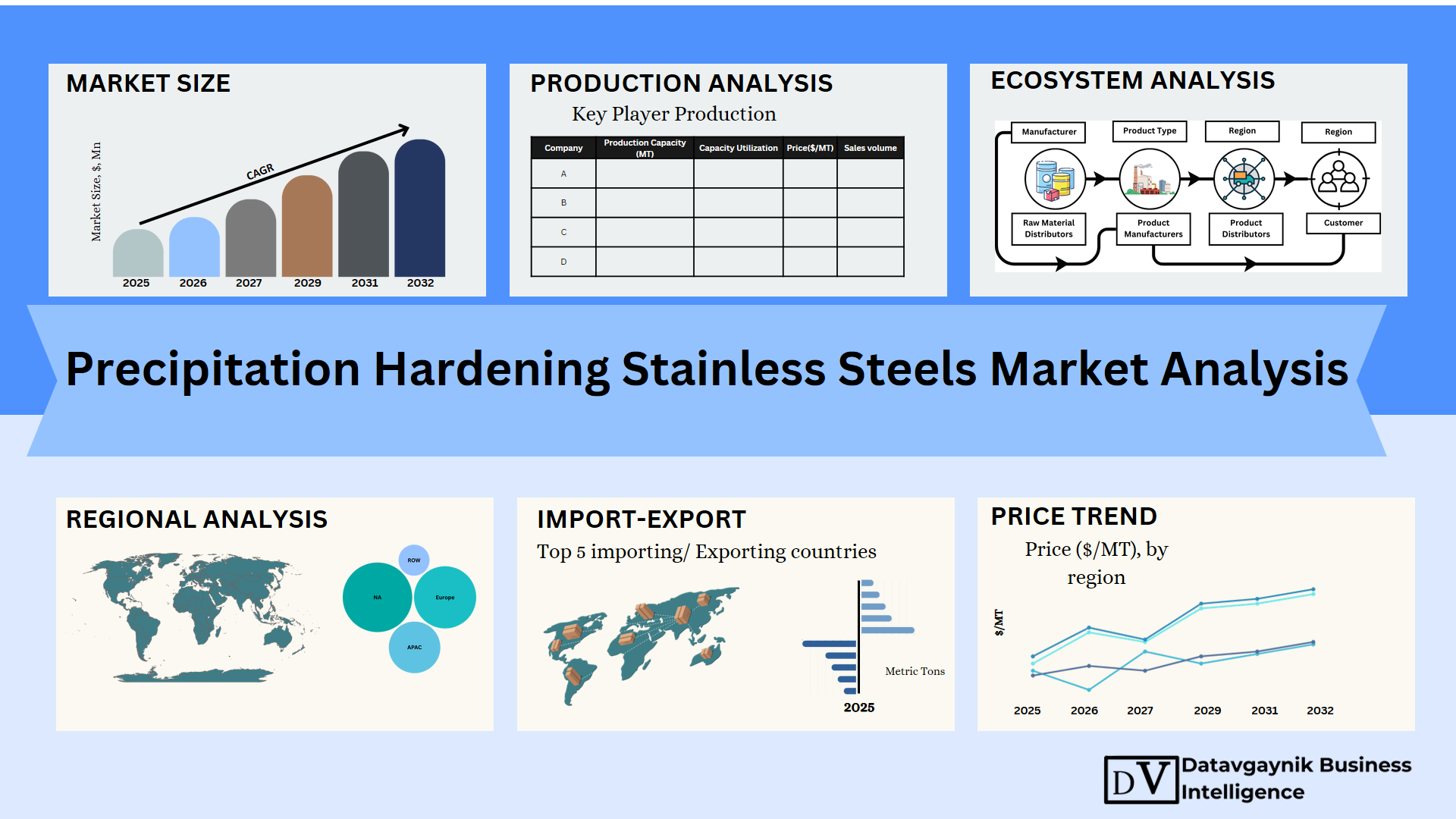
The Precipitation Hardening Stainless Steels Market is witnessing robust growth fueled by the rising demand for materials that deliver exceptional strength combined with durability. These steels offer unmatched mechanical properties, including high tensile strength and hardness, making them indispensable across sectors like aerospace, defense, and automotive. For example, aerospace manufacturing is growing steadily, with aircraft production expected to increase by more than 6% annually over the next decade. This surge requires components that can withstand high mechanical stress and extreme temperatures, perfectly aligning with the capabilities of precipitation hardening stainless steels.
In defense applications, where material failure is not an option, these steels are preferred for their ability to maintain integrity under intense wear and tear. This demand is reflected in the expanding military vehicle and aircraft production lines, both heavily reliant on these alloys for landing gears and critical structural elements, thus directly driving the growth of the Precipitation Hardening Stainless Steels Market.
Corrosion Resistance Boosts the Precipitation Hardening Stainless Steels Market Expansion
Corrosion resistance is a vital attribute pushing the Precipitation Hardening Stainless Steels Market forward, especially as industries increasingly operate in harsh environments. These steels uniquely combine strength with the ability to resist oxidation, moisture, and chemical exposure. This makes them indispensable in marine, oil and gas, and chemical processing industries, where corrosion can severely compromise operational safety and longevity.
For instance, the offshore oil and gas sector, projected to grow by 4.5% annually, demands materials that endure saltwater exposure and aggressive chemicals. Precipitation hardening stainless steels meet this need by extending equipment lifecycle and reducing maintenance costs. Similarly, chemical plants handling corrosive reagents prefer these alloys for reactors and piping, where failure risks are high. This dual capability significantly boosts the market, positioning precipitation hardening stainless steels as a critical enabler in these aggressive environments.
Weight Reduction Trends Accelerate the Precipitation Hardening Stainless Steels Market
One of the most significant trends impacting the Precipitation Hardening Stainless Steels Market is the global push toward weight reduction, particularly in aerospace and automotive sectors. Industries are shifting focus toward lighter yet stronger materials to improve fuel efficiency and reduce emissions. Precipitation hardening stainless steels provide a compelling alternative to traditional heavy alloys, offering a high strength-to-weight ratio that supports these sustainability goals.
In automotive manufacturing, the demand for lightweight components is rising at over 7% annually, driven by stringent emission regulations worldwide. Precipitation hardening stainless steels are increasingly used in engine parts, exhaust systems, and chassis to meet these targets without sacrificing strength or durability. Similarly, aerospace manufacturers are reducing aircraft weight to improve fuel consumption and extend flight ranges, reinforcing the demand and growth trajectory of the Precipitation Hardening Stainless Steels Market.
Customization of Mechanical Properties Elevates the Precipitation Hardening Stainless Steels Market
The ability to tailor mechanical properties through precise precipitation hardening processes is a powerful driver in the Precipitation Hardening Stainless Steels Market. This customization allows manufacturers to engineer steels with specific attributes such as high tensile strength, enhanced fatigue resistance, or improved impact toughness according to end-use requirements.
This flexibility is critical in producing components like aircraft landing gears, turbine blades, and medical implants, where unique performance parameters dictate material selection. For example, turbine blades operating at elevated temperatures demand exceptional creep resistance, achievable through customized precipitation hardening. As industries continue demanding specialized alloys, this adaptability strengthens the market’s appeal and spurs further innovation and adoption.
Manufacturing Advancements Propel Market Growth in Precipitation Hardening Stainless Steels
Technological progress in heat treatment and alloy processing has significantly expanded the accessibility and cost-effectiveness of precipitation hardening stainless steels, catalyzing the Precipitation Hardening Stainless Steels Market. Innovations such as precise temperature control during aging and novel alloy compositions have enabled manufacturers to optimize material properties while reducing production times and costs.
These advancements have made high-performance steels more viable for widespread industrial use, particularly in sectors with tight margins like automotive manufacturing and energy. For instance, improved heat treatment methods now allow faster processing of turbine components, meeting rising demand without compromising quality. Consequently, these manufacturing breakthroughs are key enablers for market growth, encouraging broader adoption across industries requiring both strength and corrosion resistance.
Aerospace and Defense Industries Amplify Demand in the Precipitation Hardening Stainless Steels Market
The aerospace and defense sectors remain dominant forces expanding the Precipitation Hardening Stainless Steels Market due to their rigorous material performance requirements. Components such as aircraft engines, structural airframes, and military vehicles require materials that maintain strength under high temperatures, extreme pressure, and corrosive conditions.
The aerospace industry alone is projected to grow significantly, with the global commercial aircraft fleet expected to double over the next 20 years. This growth increases demand for materials like precipitation hardening stainless steels, which offer an excellent strength-to-weight ratio essential for optimizing fuel efficiency and operational safety. Defense applications similarly demand these alloys for their wear resistance and toughness, especially in military vehicles and weapon systems, further solidifying market expansion.
Longer Lifecycle and Reduced Maintenance Costs Bolster the Precipitation Hardening Stainless Steels Market
A compelling factor driving the Precipitation Hardening Stainless Steels Market is the extended lifecycle of components manufactured from these alloys. Their resistance to wear, corrosion, and mechanical fatigue translates directly into reduced downtime and lower maintenance expenses for industries such as energy, petrochemical, and marine.
For example, offshore platforms utilizing precipitation hardening stainless steels experience fewer failures and require less frequent component replacement, reducing operational costs significantly. Similarly, in power generation, these steels prolong the lifespan of turbine blades and heat exchangers subjected to extreme environments. The financial benefits derived from durability and reliability are strong incentives that continue to push market demand upward.
Environmental and Regulatory Pressures Fuel Growth in the Precipitation Hardening Stainless Steels Market
Increasing environmental regulations worldwide are accelerating the adoption of precipitation hardening stainless steels as industries seek sustainable and efficient material solutions. These steels contribute to reducing carbon footprints by enabling lighter, more durable products that require less frequent replacement, supporting circular economy principles.
For instance, the global automotive sector’s move toward emission standards such as Euro 7 and China 7 drives demand for lightweight, high-strength materials, directly benefiting the Precipitation Hardening Stainless Steels Market. Similarly, energy and petrochemical industries under regulatory pressure to minimize environmental impact prefer corrosion-resistant, long-lasting alloys to optimize resource use and reduce waste, reinforcing market expansion.
Global Industrialization and Infrastructure Development Expand the Precipitation Hardening Stainless Steels Market
Ongoing infrastructure projects and accelerating industrialization, particularly in emerging economies, are pivotal in driving the Precipitation Hardening Stainless Steels Market. Large-scale developments in construction, power generation, and chemical processing require materials capable of enduring heavy loads and harsh conditions.
In countries witnessing rapid urbanization, the demand for high-performance materials that withstand environmental stressors is rising sharply. For example, expanding power plants and petrochemical refineries increasingly utilize precipitation hardening stainless steels for pressure vessels and piping systems due to their strength and corrosion resistance. This infrastructure growth is a fundamental market growth pillar, with steady industrial investments ensuring continued demand.
“Track Country-wise Precipitation Hardening Stainless Steels Production and Demand through our Precipitation Hardening Stainless Steels Production Database”
-
-
- Precipitation Hardening Stainless Steels production database for 30+ countries worldwide
- Precipitation Hardening Stainless Steels Powder sales volume for 31+ countries
- Country-wise Precipitation Hardening Stainless Steels production capacity and production plant mapping, production capacity utilization for 30+ manufacturers
- Precipitation Hardening Stainless Steels production plants and production plant capacity analysis for top manufacturers
-
Asia-Pacific Drives Rapid Growth in the Precipitation Hardening Stainless Steels Market
The Asia-Pacific region leads the global precipitation hardening stainless steels market, propelled by rapid industrialization and significant expansions in aerospace, automotive, and chemical sectors. Countries like China, India, Japan, and South Korea are key growth engines. China’s booming aerospace industry, growing at a rate of around 8% annually, demands materials that can withstand extreme temperatures and stresses, making precipitation hardening stainless steels critical for components such as turbine blades and structural airframes. Similarly, India’s automotive market is expanding at roughly 9% per year, with manufacturers seeking lightweight, high-strength alloys to meet tightening emission norms and fuel efficiency targets.
Japan and South Korea focus heavily on technological innovation and precision manufacturing, which supports the demand for specialized precipitation hardening stainless steels in aerospace and defense applications. The widespread adoption of advanced manufacturing techniques in these countries improves alloy performance and reduces production costs. Collectively, Asia-Pacific accounts for a substantial share of the market and is poised to maintain its position due to continuous investments in infrastructure and technology.
North America Maintains Strong Demand for Precipitation Hardening Stainless Steels Through Aerospace and Defense
North America remains a vital hub in the precipitation hardening stainless steels market, largely driven by its well-established aerospace and defense industries. The United States leads the region’s demand, fueled by ongoing modernization of military aircraft and increasing commercial aerospace production. Aerospace manufacturing is growing at an annual rate exceeding 5%, requiring materials with superior strength-to-weight ratios and corrosion resistance.
Military spending, exceeding $700 billion annually, sustains demand for precipitation hardening stainless steels used in critical applications like aircraft landing gears, turbine engines, and armored vehicles. Additionally, the presence of strong research and development facilities enables the creation of custom alloys tailored to meet the high-performance needs of aerospace and defense sectors. These factors collectively reinforce North America’s leading role in both production and consumption within the global market.
Europe’s Precipitation Hardening Stainless Steels Market Thrives on Industrial Diversification
Europe’s precipitation hardening stainless steels market thrives on a well-diversified industrial base, including aerospace, automotive, chemical processing, and defense sectors. Countries such as Germany, France, the United Kingdom, and Italy are major contributors, leveraging advanced manufacturing capabilities and a strong focus on sustainability.
Germany’s automotive sector is shifting rapidly towards lightweight materials to comply with stricter emission regulations, fueling demand for precipitation hardening stainless steels in engine and structural components. Meanwhile, the aerospace industry across Europe is investing heavily in materials that combine high strength and corrosion resistance to improve aircraft performance and fuel efficiency. French and UK defense sectors further drive demand for high-strength alloys in military aircraft and equipment. This broad industrial demand combined with innovation in sustainable production techniques is bolstering the market’s expansion.
Market Segmentation by Product Type Defines Precipitation Hardening Stainless Steels Market Dynamics
The precipitation hardening stainless steels market is segmented by product type, with chromium-based alloys, nickel-based alloys, martensitic alloys, and austenitic alloys commanding significant shares. Chromium-based alloys dominate due to their excellent corrosion resistance and high-temperature stability, making them popular in aerospace components and chemical processing equipment. Nickel-based alloys provide enhanced resistance to acidic environments, boosting their use in marine and nuclear power applications.
Martensitic alloys, known for high hardness and wear resistance, are favored in cutting tools, blades, and specific aerospace parts. Austenitic alloys, prized for their ductility and toughness alongside strength, are widely used in medical instruments and automotive applications requiring formability. This product diversity enables the precipitation hardening stainless steels market to cater to a broad spectrum of industrial needs and maintain steady growth.
Application Segmentation Drives Diverse Demand in the Precipitation Hardening Stainless Steels Market
The precipitation hardening stainless steels market is driven by multiple high-performance application sectors. Aerospace and defense continue to lead due to the materials’ ability to withstand extreme temperatures, pressures, and corrosive environments. Aircraft engines, turbine blades, and landing gears heavily depend on these alloys for strength and durability, supporting an expanding global aerospace fleet.
The automotive sector is rapidly increasing its consumption as manufacturers adopt precipitation hardening stainless steels to reduce vehicle weight, improve fuel efficiency, and meet strict emission standards. Engine components, exhaust systems, and structural parts benefit from these high-strength alloys.
In chemical and petrochemical industries, corrosion resistance is paramount, with reactors, pressure vessels, and piping systems increasingly utilizing precipitation hardening stainless steels to ensure safety and longevity in aggressive environments. Additionally, the medical and healthcare sectors rely on these steels for implants and surgical instruments due to their biocompatibility and mechanical strength. Energy sectors, including oil and gas, nuclear, and renewable energy, also contribute significantly to demand, employing these materials in critical infrastructure exposed to harsh operating conditions.
Precipitation Hardening Stainless Steels Price and Price Trend Reflect Market Dynamics
The precipitation hardening stainless steels price has been influenced by factors including raw material costs, production complexity, and demand fluctuations across end-use industries. In recent years, rising nickel and chromium prices have exerted upward pressure on alloy costs, reflecting in precipitation hardening stainless steels price adjustments. For instance, nickel prices increased substantially in the past five years due to supply constraints, pushing up production costs for nickel-based alloys.
Despite price volatility, technological advancements in manufacturing have helped optimize processes and mitigate cost escalations. Innovations such as precise heat treatment and alloy composition refinements have improved yield and reduced waste, helping stabilize precipitation hardening stainless steels price trends.
As demand grows, especially in aerospace and automotive sectors, manufacturers are focusing on balancing cost and performance, encouraging investment in efficient production methods to maintain competitive pricing. The precipitation hardening stainless steels price trend is expected to reflect these dynamics, with moderate increases aligned with raw material markets and ongoing demand strength.
Regional Production Capacities Shape the Precipitation Hardening Stainless Steels Market Landscape
Production of precipitation hardening stainless steels is concentrated in a few global regions with significant industrial capabilities. Asia-Pacific, led by China, Japan, and South Korea, dominates manufacturing due to its large-scale steel production infrastructure and expanding high-tech industries. China, as the largest producer, has invested heavily in modern alloy production facilities capable of meeting growing domestic and international demand.
Japan and South Korea focus on high-precision alloys, with advanced metallurgical technologies supporting production tailored to aerospace and defense needs. These countries leverage R&D investments to maintain leadership in producing specialty precipitation hardening stainless steels with enhanced properties.
North America and Europe maintain strong production capacities with an emphasis on high-performance alloys for aerospace, defense, and automotive industries. Germany, the United States, and France are known for manufacturing customized alloys that meet stringent industrial standards. These regions also prioritize sustainable production techniques and smart manufacturing practices to reduce environmental impact.
Emerging Markets Influence Future Growth of the Precipitation Hardening Stainless Steels Market
Emerging markets in Latin America, the Middle East, and Africa are increasingly influencing the Precipitation Hardening Stainless Steels Market due to growing industrial activities and infrastructure development. Brazil and Mexico, for example, are expanding their automotive and energy sectors, driving demand for high-strength, corrosion-resistant materials.
In the Middle East, rising investments in oil and gas infrastructure require alloys that can withstand extreme temperatures and corrosive conditions, supporting the use of precipitation hardening stainless steels in pipelines and pressure vessels. Similarly, Africa’s expanding mining and chemical industries create new opportunities for these materials.
As these regions continue industrializing, they are expected to increase both imports and local production of precipitation hardening stainless steels, contributing significantly to global market growth.
Precipitation Hardening Stainless Steels Price Trend to Respond to Market and Raw Material Dynamics
The precipitation hardening stainless steels price trend is closely linked to raw material availability and global demand patterns. Recent fluctuations in chromium and nickel prices, key alloying elements, have created upward pressure on overall alloy costs. For example, supply disruptions and increased demand in stainless steel production sectors have caused nickel prices to spike intermittently, influencing precipitation hardening stainless steels price adjustments.
However, manufacturers are employing innovative production methods, such as improved alloy recycling and energy-efficient heat treatments, to counterbalance raw material cost pressures. These advances help mitigate steep price increases and maintain market stability.
Looking ahead, the precipitation hardening stainless steels price trend will likely reflect a balance between raw material market volatility and technological gains, alongside evolving demand from aerospace, automotive, and chemical industries. This dynamic ensures ongoing opportunities for market participants who can optimize production and meet sector-specific requirements.
“Precipitation Hardening Stainless Steels Manufacturing Database, Precipitation Hardening Stainless Steels Manufacturing Capacity”
-
-
- Precipitation Hardening Stainless Steels top manufacturers market share for 30+ manufacturers
- Top 9 manufacturers and top 19 manufacturers of Precipitation Hardening Stainless Steels in North America, Europe, Asia Pacific
- Production plant capacity by manufacturers and Precipitation Hardening Stainless Steels production data for 30+ market players
- Precipitation Hardening Stainless Steels production dashboard, Precipitation Hardening Stainless Steels production data in excel format
-
Leading Manufacturers Shape the Precipitation Hardening Stainless Steels Market Landscape
The precipitation hardening stainless steels market is dominated by several key global manufacturers known for their advanced metallurgy, wide product portfolios, and extensive research capabilities. These companies hold significant market shares and continue to innovate by launching specialized product lines tailored to aerospace, automotive, defense, and chemical industries.
Major players include Aperam, Allegheny Technologies Incorporated (ATI), Outokumpu, Sandvik Materials Technology, and Jindal Stainless, each contributing to the market dynamics with their unique alloy offerings and technological advancements. Their market shares collectively represent a substantial portion of the global precipitation hardening stainless steels market, with the top five manufacturers controlling over 60% of production and sales worldwide.
Aperam: Innovating High-Performance Precipitation Hardening Stainless Steels
Aperam is a significant player in the precipitation hardening stainless steels market, known for its focus on high-performance stainless steel solutions. Its product lines include specialty precipitation hardening grades designed for aerospace and chemical processing applications. Aperam’s advanced precipitation hardening alloys emphasize corrosion resistance combined with high tensile strength, making them ideal for critical components such as turbine blades and chemical reactor parts.
The company’s strategic investments in R&D have enabled the launch of new grades with improved weldability and fatigue resistance, helping Aperam capture a growing share of the aerospace market. It holds an estimated 12% share of the global precipitation hardening stainless steels market, benefiting from its strong presence in Europe and expanding operations in Asia-Pacific.
Allegheny Technologies Incorporated (ATI): A Leader in Aerospace-Grade Stainless Steels
ATI stands out as a major manufacturer specializing in precipitation hardening stainless steels tailored for aerospace and defense applications. Its product portfolio includes the renowned ATI 17-4 PH stainless steel, widely used for high-strength structural components, aircraft landing gears, and turbine engine parts. This alloy is prized for its excellent balance of corrosion resistance and mechanical performance under extreme conditions.
ATI’s robust production capabilities and focus on lightweight alloys have helped it secure approximately 15% of the precipitation hardening stainless steels market share globally. The company’s innovations in powder metallurgy and advanced heat treatment processes allow it to deliver materials that meet stringent aerospace standards while maintaining competitive pricing.
Outokumpu: Comprehensive Alloy Solutions for Multiple Industries
Outokumpu is recognized for its diverse range of stainless steel products, including precipitation hardening grades that serve the aerospace, automotive, and chemical sectors. Its product lines include chromium and nickel-based alloys engineered for superior corrosion resistance and strength. The company emphasizes sustainability and eco-friendly manufacturing processes, aligning with increasing industry demands for green materials.
Outokumpu commands close to 10% of the precipitation hardening stainless steels market share, leveraging its extensive distribution network and innovation in alloy development. Its alloys are commonly employed in automotive exhaust systems, chemical processing equipment, and structural aerospace components, underscoring its cross-industry relevance.
Sandvik Materials Technology: Precision and High-Quality Precipitation Hardening Steels
Sandvik Materials Technology plays a vital role in the precipitation hardening stainless steels market, particularly through its focus on specialty steels for medical, aerospace, and industrial applications. Its 17-4 PH and 15-5 PH stainless steels are well-regarded for their high tensile strength, corrosion resistance, and excellent mechanical properties, making them ideal for aerospace fasteners, surgical instruments, and chemical plant components.
The company’s expertise in precision manufacturing and custom alloy solutions has secured it around 8% market share globally. Sandvik’s ability to supply tailored products to meet demanding specifications has helped it grow its footprint in niche segments, including the medical devices market where material performance is critical.
Jindal Stainless: Expanding Influence in Asia-Pacific
Jindal Stainless has emerged as a prominent manufacturer in the Asia-Pacific precipitation hardening stainless steels market, supported by its growing production capacity and expanding product portfolio. Its precipitation hardening grades cater primarily to the automotive, construction, and industrial machinery sectors, where strength and corrosion resistance are vital.
The company’s investment in modern steelmaking technology and capacity expansion has enabled it to capture a significant share—estimated at 7%—of the regional market. Jindal Stainless focuses on cost-effective solutions without compromising alloy performance, making it a preferred supplier in rapidly industrializing economies.
Market Share Distribution Among Leading Manufacturers
The global precipitation hardening stainless steels market share is notably concentrated, with the top five manufacturers—ATI, Aperam, Outokumpu, Sandvik, and Jindal Stainless—accounting for approximately 60 to 65% of total production and sales. ATI leads this pack, holding the largest share due to its specialized aerospace alloys and advanced manufacturing capabilities. Aperam and Outokumpu follow closely, leveraging their diverse product lines and innovation-driven growth.
Smaller manufacturers and regional players collectively make up the remaining market share, often focusing on niche applications or regional demand pockets. However, rising competition and increasing emphasis on technological innovation are gradually shaping a more dynamic competitive landscape, with companies expanding into emerging markets and diversifying their alloy offerings.
Recent Industry Developments and Market Trends
Recent developments in the precipitation hardening stainless steels market indicate a trend toward high-performance, environmentally friendly alloys that meet stringent regulatory and sustainability requirements. In late 2024, Aperam announced the launch of a new precipitation hardening alloy optimized for enhanced fatigue resistance, targeting the aerospace and automotive sectors aiming to reduce weight without compromising safety.
In early 2025, ATI expanded its production capacity for its flagship 17-4 PH alloy in response to increasing demand from defense contractors and commercial aerospace manufacturers. This move aligns with the projected doubling of the global commercial aircraft fleet over the next two decades, which is expected to drive sustained demand for high-strength stainless steels.
Outokumpu recently entered a strategic partnership with a leading chemical processing firm to co-develop precipitation hardening alloys that offer superior resistance to aggressive environments. This collaboration reflects the growing importance of customization and application-specific material solutions in the chemical industry.
Sandvik Materials Technology, focusing on medical and precision industries, unveiled advanced heat treatment technologies that significantly improve alloy uniformity and mechanical properties. This breakthrough is anticipated to strengthen Sandvik’s position in the medical device market, where reliability and material integrity are paramount.
In India, Jindal Stainless reported a record expansion of its precipitation hardening steel production facilities in 2024, aimed at supporting the country’s rapidly growing automotive and infrastructure sectors. This development is expected to boost the company’s market share in Asia-Pacific and increase local availability of high-performance alloys.
Summary
The precipitation hardening stainless steels market is led by a handful of major manufacturers who dominate production, innovation, and supply across key industries. ATI, Aperam, Outokumpu, Sandvik, and Jindal Stainless hold the lion’s share of the market, driven by strong aerospace, automotive, defense, and chemical industry demand.
Each player distinguishes itself through specialized product lines, advanced metallurgy, and targeted market strategies. Their continuous investments in R&D and capacity expansions are crucial to meeting growing global demand and evolving performance requirements.
Recent industry news underscores a push towards higher performance, sustainability, and customization, with market players rapidly adapting through innovation and partnerships. These developments set the stage for a competitive and dynamic market environment poised for steady growth over the coming years.
“Precipitation Hardening Stainless Steels Production Data and Precipitation Hardening Stainless Steels Production Trend, Precipitation Hardening Stainless Steels Production Database and forecast”
-
-
- Precipitation Hardening Stainless Steels production database for historical years, 10 years historical data
- Precipitation Hardening Stainless Steels production data and forecast for next 9 years
-
Market Scenario, Demand vs Supply, Average Product Price, Import vs Export, till 2035
- Global Precipitation Hardening Stainless Steels Market revenue and demand by region
- Global Precipitation Hardening Stainless Steels Market production and sales volume
- United States Precipitation Hardening Stainless Steels Market revenue size and demand by country
- Europe Precipitation Hardening Stainless Steels Market revenue size and demand by country
- Asia Pacific Precipitation Hardening Stainless Steels Market revenue size and demand by country
- Middle East & Africa Precipitation Hardening Stainless Steels Market revenue size and demand by country
- Latin America Precipitation Hardening Stainless Steels Market revenue size and demand by
- Import-export scenario – United States, Europe, APAC, Latin America, Middle East & Africa
- Average product price – United States, Europe, APAC, Latin America, Middle East & Africa
- Market player analysis, competitive scenario, market share analysis
- Business opportunity analysis
Key questions answered in the Global Precipitation Hardening Stainless Steels Market Analysis Report:
- What is the market size for Precipitation Hardening Stainless Steels in United States, Europe, APAC, Middle East & Africa, Latin America?
- What is the yearly sales volume of Precipitation Hardening Stainless Steels and how is the demand rising?
- Who are the top market players by market share, in each product segment?
- Which is the fastest growing business/ product segment?
- What should be the business strategies and Go to Market strategies?
The report covers Precipitation Hardening Stainless Steels Market revenue, Production, Sales volume, by regions, (further split into countries):
- Asia Pacific (China, Japan, South Korea, India, Indonesia, Vietnam, Rest of APAC)
- Europe (UK, Germany, France, Italy, Spain, Benelux, Poland, Rest of Europe)
- North America (United States, Canada, Mexico)
- Latin America (Brazil, Argentina, Rest of Latin America)
- Middle East & Africa
Table of Contents:
Precipitation Hardening Stainless Steels Market
- Executive Summary
- Key Market Insights and Growth Highlights
- Market Trends and Forecast Projections
- Strategic Recommendations for Industry Stakeholders
- Introduction to Precipitation Hardening Stainless Steels
- Definition and Properties of Precipitation Hardening Stainless Steels
- Metallurgical Processes: Aging and Precipitation Hardening
- Historical Development and Industrial Adoption
- Market Dynamics
- Drivers: Increasing Demand in Aerospace, Automotive, and Medical Sectors
- Challenges: Cost of Production, Raw Materials, and Market Penetration
- Opportunities: Technological Innovations and Emerging Applications
- Market Restraints: Competition from Alternative Alloys and Materials
- Global Precipitation Hardening Stainless Steels Market Overview (2020–2035)
- Market Size and Revenue Analysis
- Growth Rate Analysis and Key Market Indicators
- Factors Influencing Global Market Dynamics
- Segmentation by Stainless Steel Grades
- PH 13-8 Mo
- PH 15-5
- PH 17-4
- PH 18Ni
- Other Specialized Grades
- Segmentation by Application
- Aerospace and Defense Applications
- Automotive and Transportation
- Medical and Healthcare Devices
- Industrial Equipment and Tools
- Oil & Gas and Petrochemical Industries
- Segmentation by Form and Product Type
- Bars and Rods
- Sheets and Plates
- Wires and Tubes
- Custom and Precision-Formed Products
- Regional Market Analysis
- North America: Market Trends, Key Players, and Regulatory Landscape
- Europe: Market Maturity, Technological Innovation, and Manufacturing Hubs
- Asia Pacific: Rapid Industrialization, Key Manufacturing Markets, and Investment Opportunities
- Latin America: Growth Potential, Regulatory Framework, and Key Applications
- Middle East & Africa: Market Development, Opportunities, and Competitive Landscape
- Production and Manufacturing Process Analysis
- Precipitation Hardening Process Overview
- Key Manufacturers and Production Capacities
- Efficiency, Cost Structures, and Technological Advancements in Manufacturing
- Supply Chain and Logistics
- Overview of the Supply Chain for Precipitation Hardening Stainless Steels
- Raw Material Sourcing: Nickel, Chromium, Molybdenum, and Others
- Key Suppliers, Distributors, and Logistics Challenges
- Import & Export Analysis
- Global Trade Flow: Exporting and Importing Countries
- Trade Regulations, Tariffs, and Market Impact
- Regional Market Distribution and Demand Forecast
- Competitive Landscape
- Market Share of Key Companies
- Competitive Strategies: Product Development, Mergers, and Strategic Alliances
- Profiles of Leading Manufacturers and Emerging Players
- Pricing and Cost Structure Analysis
- Price Trends and Forecasting
- Key Factors Influencing Pricing: Raw Materials, Production Costs, and Market Demand
- Regional Price Comparison and Cost Breakdown
- Demand and Consumption Analysis
- Global Consumption by Industry and Region
- Future Demand Projections and Growth Trends (2020–2035)
- Consumption by Product Type and Key End-User Sectors
- Technological Innovations in Precipitation Hardening Stainless Steels
- Advances in Alloy Design and Heat Treatment Processes
- Innovations in Manufacturing Technologies and Equipment
- Role of Additive Manufacturing (3D Printing) and Automation
- Regulatory Environment and Industry Standards
- Global and Regional Standards: ASTM, ISO, SAE, and Others
- Compliance in Aerospace, Medical, and Industrial Applications
- Environmental Regulations and Sustainability Considerations
- Sustainability and Environmental Impact
- Sustainable Sourcing and Eco-friendly Manufacturing Practices
- Recycling and Lifecycle Impact of Precipitation Hardening Stainless Steels
- Initiatives and Innovations in Reducing Environmental Footprints
- Risk Assessment and Market Challenges
- Economic, Political, and Environmental Risks Impacting the Market
- Supply Chain Disruptions and Global Trade Tensions
- Risk Mitigation Strategies and Industry Resilience
- Investment Opportunities and Business Strategies
- Key Market Opportunities for Growth and Expansion
- Investment Trends in Emerging Markets and High-Growth Applications
- Recommendations for New Market Entrants and Existing Stakeholders
- Future Market Outlook (2020–2035)
- Long-Term Growth Projections and Market Shifts
- Emerging Trends in Material Science and Precipitation Hardening Technologies
- Industry Transformations and Technological Disruptions
- Appendix
- Glossary of Terms and Definitions
- Research Methodology and Data Sources
- Industry Abbreviations and Acronyms
- Company Profiles of Key Market Players
- Company Overview, Product Portfolio, and Strategic Focus
- Market Share and Financial Performance
- Recent Developments, Partnerships, and Innovations
- FAQs and Expert Insights
- Frequently Asked Questions About the Market
- Insights from Industry Experts on Market Trends and Opportunities
Other recently published reports:

