

Escalating Plastic Waste Crisis Fuels Pyrolysis Catalyst for Plastics Market Growth
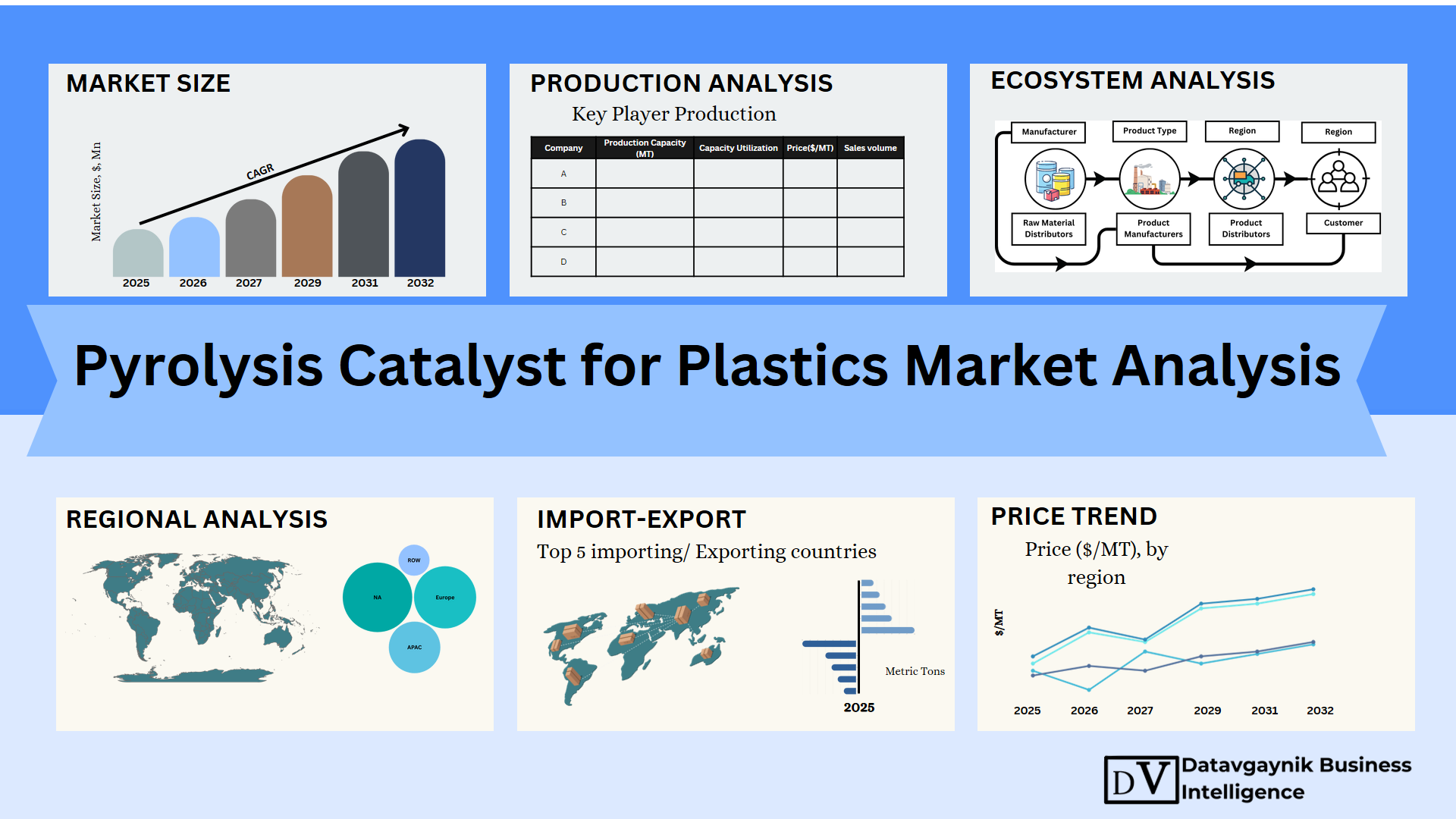
The Pyrolysis Catalyst for Plastics Market is witnessing accelerated momentum due to the intensifying global plastic waste crisis. With millions of tons of plastic generated annually and a large fraction ending up in landfills, incinerators, or the natural environment, traditional recycling technologies have proven insufficient. For instance, mechanical recycling struggles with contaminated or multi-layered plastics, which represent a significant portion of post-consumer waste. This inefficiency has prompted industries to adopt pyrolysis as a viable alternative to convert complex plastic waste into valuable resources. Catalysts play a central role in enhancing this process, making the Pyrolysis Catalyst for Plastics Market a critical component in sustainable waste management infrastructure.
Environmental Regulations Accelerate Adoption in Pyrolysis Catalyst for Plastics Market
Stringent environmental policies and sustainability mandates are directly contributing to the rapid expansion of the Pyrolysis Catalyst for Plastics Market. Countries across North America, Europe, and Asia Pacific are tightening regulations around single-use plastics and landfill usage. For example, the introduction of extended producer responsibility and landfill bans in several regions has forced industries to seek advanced waste conversion technologies. Catalytic pyrolysis offers a scalable solution, and catalysts enhance this process by improving conversion efficiency, reducing reaction temperatures, and optimizing product quality. As regulatory pressure intensifies, the market is seeing increased investments in high-performance pyrolysis catalysts tailored to meet evolving compliance standards.
Technological Advancements in Catalysts Reshape Pyrolysis Catalyst for Plastics Market Dynamics
Innovation in catalyst design is redefining the operational efficiency and economic viability of pyrolysis systems, significantly boosting the Pyrolysis Catalyst for Plastics Market. Advanced materials such as zeolites, metal oxides, and nano-structured catalysts are being engineered to deliver superior thermal stability, greater selectivity, and reduced energy consumption. For instance, zeolite-based catalysts can enhance the yield of high-value hydrocarbons while minimizing the formation of undesirable residues. These innovations enable pyrolysis systems to process a broader spectrum of plastic waste types, including polyethylene, polypropylene, and mixed polymers. The development of proprietary formulations and catalyst regeneration techniques is further optimizing cost structures and operational lifespans.
Surging Demand for Circular Economy Solutions Drives Pyrolysis Catalyst for Plastics Market Expansion
The global transition toward circular economy models is another significant driver for the Pyrolysis Catalyst for Plastics Market. Industries are moving from linear consumption patterns to closed-loop systems, where waste materials are continuously repurposed into new products. Pyrolysis, enhanced by efficient catalysts, plays a pivotal role in this transformation by enabling the chemical recycling of plastics into fuels, monomers, and petrochemical feedstocks. For example, polystyrene waste can be catalytically converted into styrene monomer, which is then reused in polymer production. As more corporations commit to zero-waste policies and sustainable sourcing, the demand for catalytic pyrolysis systems continues to escalate, positioning the catalyst market at the core of industrial sustainability strategies.
Pyrolysis Catalyst for Plastics Market Size Poised for Robust Growth Amid Alternative Fuel Demand
The Pyrolysis Catalyst for Plastics Market Size is projected to grow substantially as industries seek alternatives to traditional fossil fuels. The increasing volatility in global crude oil prices has made pyrolysis-derived fuels more economically attractive. For instance, liquid fuels generated through catalytic pyrolysis can serve as diesel or gasoline substitutes, especially in industrial heating and transport sectors. Catalysts improve fuel quality by facilitating selective cracking and minimizing impurities, making the end product more commercially viable. The market’s growth is also supported by the rising adoption of waste-to-energy models, where pyrolysis plants contribute to local fuel production while reducing landfill dependency.
Industry Shift Toward Low-Carbon Processes Elevates Pyrolysis Catalyst for Plastics Market
Decarbonization efforts across manufacturing and energy sectors are significantly influencing the Pyrolysis Catalyst for Plastics Market. The process of catalytic pyrolysis not only diverts plastic waste from landfills but also reduces greenhouse gas emissions compared to incineration. Catalysts play a crucial role by lowering the energy input required for thermal decomposition and improving the selectivity toward desirable products. For example, certain metal oxide catalysts are engineered to operate at lower temperatures, leading to reduced carbon footprints per unit of output. As more companies integrate climate-neutral targets into their operations, pyrolysis catalysts are emerging as a practical solution to meet sustainability and energy efficiency benchmarks.
Scaling of Commercial Pyrolysis Operations Strengthens Pyrolysis Catalyst for Plastics Market Backbone
The growing number of commercial-scale pyrolysis facilities worldwide is reinforcing the infrastructure of the Pyrolysis Catalyst for Plastics Market. Countries with strong chemical manufacturing capabilities are investing heavily in scaling up pyrolysis technologies to handle rising volumes of plastic waste. For instance, regions with advanced industrial hubs are commissioning large pyrolysis reactors capable of processing thousands of tons annually, necessitating robust and durable catalysts. Manufacturers are now focusing on producing specialized catalysts tailored for specific feedstocks, such as post-consumer polyethylene and polypropylene. This shift toward scalability demands high-performance catalytic systems with enhanced throughput, consistency, and economic feasibility.
Public-Private Collaborations Ignite Innovation in Pyrolysis Catalyst for Plastics Market
Collaborative efforts between public institutions, private corporations, and research organizations are creating a fertile ground for innovation within the Pyrolysis Catalyst for Plastics Market. Government-funded R&D programs, industry-academia partnerships, and cross-border technology exchanges are accelerating the development of next-generation catalysts. For example, research into nano-catalysts with engineered surface properties is opening new pathways to maximize hydrocarbon recovery and reduce toxic byproducts. These partnerships are also addressing operational challenges, such as catalyst deactivation and regeneration, which are critical for long-term cost efficiency. As a result, innovation pipelines are expanding, driving both performance gains and commercial competitiveness across the catalyst ecosystem.
Rise of Mixed Waste Processing Technologies Spurs Pyrolysis Catalyst for Plastics Market Growth
Another key trend shaping the Pyrolysis Catalyst for Plastics Market is the increasing focus on processing mixed and low-grade plastic waste. Unlike mechanical recycling, which requires clean and sorted input, catalytic pyrolysis can handle contaminated, multi-layered, and composite plastic waste. Catalysts specifically designed for heterogeneous plastic streams are enabling this capability. For instance, newly developed bifunctional catalysts can simultaneously crack various polymer chains and suppress the formation of unwanted char and gases. This technological advantage opens new market opportunities in regions where waste segregation is minimal but plastic pollution is high, allowing broader adoption of pyrolysis as a feasible waste conversion method.
Integration of AI and Process Automation Enhances Pyrolysis Catalyst for Plastics Market Efficiency
Digital transformation is beginning to influence the operational landscape of the Pyrolysis Catalyst for Plastics Market. The integration of artificial intelligence and automation tools is helping pyrolysis plants optimize catalyst performance in real-time. Advanced sensors and AI-driven control systems can monitor reaction parameters, predict catalyst degradation, and adjust conditions dynamically to maximize efficiency. For instance, machine learning models trained on historical process data can recommend the ideal catalyst dosage or regeneration cycle, improving yield and reducing downtime. This trend not only enhances operational reliability but also reduces costs, making catalytic pyrolysis a more attractive option for both large-scale and modular installations.
Global Industrial Decentralization Creates Opportunities in Pyrolysis Catalyst for Plastics Market
The decentralization of manufacturing and recycling operations is generating new regional demand pockets within the Pyrolysis Catalyst for Plastics Market. As countries move toward localized waste management and energy recovery systems, smaller pyrolysis units are being deployed in urban, industrial, and even remote settings. These units require compact, efficient catalysts capable of delivering high performance under varying operational conditions. For example, mobile pyrolysis systems used in developing regions are benefiting from catalysts designed for low-resource environments. This decentralization strategy not only supports local circular economies but also widens the addressable market for catalyst manufacturers offering tailored solutions.
“Track Country-wise Pyrolysis Catalyst for Plastics Production and Demand through our Pyrolysis Catalyst for Plastics Production Database”
-
-
- Pyrolysis Catalyst for Plastics production database for 32+ countries worldwide
- Pyrolysis Catalyst for Plastics sales volume for 32+ countries
- Country-wise Pyrolysis Catalyst for Plastics production capacity, production plant mapping, production capacity utilization for 32+ manufacturers
- Pyrolysis Catalyst for Plastics production plants and production plant capacity analysis by top manufacturers
-
“Track real-time Pyrolysis Catalyst for Plastics Prices, Pyrolysis Catalyst for Plastics price charts for 32+ countries, Pyrolysis Catalyst for Plastics weekly price tracker and Pyrolysis Catalyst for Plastics monthly price tracker”
-
-
- Track real-time Pyrolysis Catalyst for Plastics prices and Pyrolysis Catalyst for Plastics price trend in 32+ countries though our excel-based Pyrolysis Catalyst for Plastics price charts
- Real-time Pyrolysis Catalyst for Plastics price tracker dashboard with 32+ countries
- Complete transparency on Pyrolysis Catalyst for Plastics price trend through our Pyrolysis Catalyst for Plastics monthly price tracker, Pyrolysis Catalyst for Plastics weekly price tracker
-
North America Leads in Technology-Driven Demand for Pyrolysis Catalyst for Plastics Market
The Pyrolysis Catalyst for Plastics Market in North America is experiencing sustained growth, largely propelled by the region’s strong focus on technological innovation and advanced recycling infrastructure. The United States, in particular, has become a hub for pilot-scale and commercial-scale pyrolysis facilities. For instance, chemical giants and cleantech startups in Texas, Ohio, and California are investing in proprietary catalyst systems to enhance the breakdown of mixed plastic waste. Datavagyanik notes that demand in the U.S. is rising at over 8% annually, supported by industrial-scale adoption and a growing regulatory push to reduce dependency on landfilling.
Canada is also emerging as a promising market, with new investments in sustainable waste treatment projects across provinces such as Ontario and British Columbia. The shift toward decentralized waste-to-energy units in rural and industrial zones is creating unique opportunities for modular pyrolysis systems, driving the requirement for efficient catalysts tailored to localized waste streams.
Europe’s Regulatory Momentum Shapes Pyrolysis Catalyst for Plastics Market Structure
Europe remains at the forefront of the Pyrolysis Catalyst for Plastics Market due to its aggressive environmental targets and comprehensive waste management frameworks. Countries such as Germany, France, the Netherlands, and Sweden have established closed-loop recycling mandates, leading to the rapid scaling of pyrolysis infrastructure. In Germany alone, catalyst demand has grown by over 11% CAGR, fueled by a mix of public subsidies, zero-waste goals, and industrial collaboration on high-performance catalyst design.
France and the UK are prioritizing pyrolysis to address the limitations of mechanical recycling for multi-layer and food-grade packaging. As a result, there is significant investment in next-generation catalysts optimized for lower energy input and higher olefin recovery. The Pyrolysis Catalyst for Plastics Market in Europe is also characterized by an increasing number of research consortia aiming to commercialize novel materials like bifunctional and hybrid catalysts.
Asia Pacific Dominates Production and Scaling in Pyrolysis Catalyst for Plastics Market
Asia Pacific commands a dominant position in the global Pyrolysis Catalyst for Plastics Market, both in terms of production and consumption. China, in particular, is leading with large-scale production capabilities and a strong push toward circular economy solutions. Datavagyanik estimates that over 35% of global catalyst manufacturing capacity is now concentrated in China, where manufacturers are producing zeolite-based and metal oxide catalysts tailored for mixed polymer feedstocks. The country’s goal to process 60% of its urban plastic waste through advanced recycling methods by 2030 is further driving local demand.
India, with its mounting plastic pollution and evolving recycling policies, has become a key growth territory. The rise of pyrolysis startups and the government’s support for Swachh Bharat and Extended Producer Responsibility (EPR) frameworks are encouraging localized catalyst production. Additionally, India’s domestic chemical manufacturing base is investing in low-cost, high-efficiency catalyst development to support pyrolysis plant scalability in both urban and semi-urban zones.
Japan and South Korea offer niche markets for high-performance catalysts, driven by their precision manufacturing sectors and strong R&D ecosystems. Catalysts engineered in these countries are typically designed for premium applications where selectivity, efficiency, and reduced emissions are critical.
Middle East and Latin America: Emerging Demand Hubs in Pyrolysis Catalyst for Plastics Market
The Pyrolysis Catalyst for Plastics Market in the Middle East is gradually gaining momentum, especially in nations such as the UAE and Saudi Arabia, where the vision to diversify economies includes clean technologies. For example, industrial cities in the Gulf region are exploring pyrolysis as a strategy to reduce landfill use while generating alternative fuels. These developments are stimulating demand for heat-resistant, high-yield catalysts suitable for desert climates and fluctuating feedstock availability.
Latin America is another region showing untapped potential. Countries like Brazil, Mexico, and Chile are facing mounting plastic waste challenges but lack the infrastructure for conventional recycling. This is giving rise to pyrolysis pilot projects funded by multilateral institutions. In these markets, imported catalysts from the U.S., China, and Europe are commonly used, but localized manufacturing is expected to rise in the coming years, particularly in industrial corridors.
Strategic Market Segmentation in Pyrolysis Catalyst for Plastics Market Broadens Application Scope
The Pyrolysis Catalyst for Plastics Market is segmented across multiple axes including catalyst type, plastic feedstock, end-use industry, and process configuration. Zeolite-based catalysts dominate the market due to their high surface area, acidity, and thermal stability. These are especially effective for polyethylene and polypropylene conversion, resulting in higher fuel and monomer yields. Metal oxide catalysts are widely used in cases where contaminant tolerance and low coking are required, such as in post-industrial waste streams.
For instance, in applications dealing with polystyrene, tailored catalysts that recover styrene monomers are critical for economic feasibility. On the other hand, PET and multilayer packaging require catalysts that can handle oxygenated compounds and facilitate efficient depolymerization, a trend driving innovation in hybrid and nanocatalyst segments.
End-use industries such as fuel production, petrochemicals, and waste management are all expanding their adoption of catalytic pyrolysis systems. The chemical industry, in particular, is leveraging these catalysts to produce olefins and aromatics as feedstocks for virgin polymer production. This vertically integrated model enhances both economic viability and circularity.
Batch, Continuous, and Hybrid Systems Reshape Technical Demand in Pyrolysis Catalyst for Plastics Market
The configuration of pyrolysis systems significantly impacts catalyst design and demand patterns in the Pyrolysis Catalyst for Plastics Market. Batch reactors, commonly used in low-scale or pilot applications, prioritize catalysts that offer rapid thermal reactivity and consistent product yields. Continuous systems, favored by large-scale operators, require long-life catalysts with minimal fouling and stable performance over extended runs.
Semi-continuous or hybrid pyrolysis systems are emerging as a preferred configuration in mid-sized operations. These plants balance flexibility with throughput, driving demand for multi-functional catalysts capable of adapting to variable feedstocks. For example, co-pyrolysis setups that process plastics alongside biomass need catalysts that maintain selectivity for hydrocarbons while tolerating moisture and lignin-based compounds.
Global Production Capacity Anchored in Asia with Innovation Flowing from Europe and the U.S.
From a production standpoint, the Pyrolysis Catalyst for Plastics Market is currently centered around major chemical manufacturing hubs in Asia. China and India collectively produce more than half of the world’s total volume of pyrolysis catalysts. These countries offer cost-effective manufacturing, established raw material supply chains, and proximity to high-demand markets.
However, Europe and North America continue to dominate in terms of catalyst innovation. The U.S. is home to several companies pioneering nano-enabled catalyst platforms, while European firms are introducing bio-derived and waste-free catalyst manufacturing methods. This global division between production volume and innovation leadership is creating a dynamic import-export environment where performance-driven catalysts from the West are often commercialized and scaled in Asia.
Pyrolysis Catalyst for Plastics Price Fluctuates with Raw Material and Technology Inputs
Pyrolysis Catalyst for Plastics Price is influenced by a combination of factors, including feedstock costs, material composition, and manufacturing technology. For example, zeolite catalysts that involve rare earth elements or require sophisticated synthesis methods can cost 20% to 30% more than conventional metal oxide variants. On average, Pyrolysis Catalyst for Plastics Price ranges between $1,800 to $3,200 per metric ton, depending on composition and performance guarantees.
Datavagyanik identifies a Pyrolysis Catalyst for Plastics Price Trend of gradual upward movement, especially for high-selectivity and regenerative catalyst grades. This trend is primarily driven by rising R&D investments, the shift toward specialty formulations, and the tightening of emission regulations that demand cleaner-burning catalyst systems.
For instance, the introduction of catalysts with embedded sensors for self-monitoring is increasing unit costs but reducing total operational expenses, thus justifying the higher upfront investment. In contrast, price-sensitive markets like Southeast Asia are showing preference for mid-range catalysts that balance performance with affordability.
Regional Disparities Shape Pyrolysis Catalyst for Plastics Price Trend and Competitive Strategy
The Pyrolysis Catalyst for Plastics Price Trend also varies significantly across geographies. In Europe and North America, the focus is on sustainability and performance, driving premium pricing for advanced catalysts. Meanwhile, in Asia Pacific, high competition among domestic producers is creating downward pressure on prices, even as demand continues to climb.
For instance, Japanese and South Korean manufacturers are commanding a niche market with prices exceeding $3,500 per ton for advanced nano-catalysts designed for high-precision pyrolysis systems. At the same time, Chinese bulk producers are offering generalized formulations at rates as low as $1,500 per ton, making them attractive to cost-sensitive operations in Africa and Latin America.
As global players expand capacity and customize formulations, Datavagyanik expects a more segmented Pyrolysis Catalyst for Plastics Price Trend, where catalyst pricing will increasingly depend on application specificity, durability, and environmental compliance.
“Pyrolysis Catalyst for Plastics Manufacturing Database, Pyrolysis Catalyst for Plastics Manufacturing Capacity”
-
-
- Pyrolysis Catalyst for Plastics top manufacturers market share for 32+ manufacturers
- Top 12 manufacturers and top 19 manufacturers of Pyrolysis Catalyst for Plastics in North America, Europe, Asia Pacific
- Pyrolysis Catalyst for Plastics production plant capacity by manufacturers and Pyrolysis Catalyst for Plastics production data for 32+ market players
- Pyrolysis Catalyst for Plastics production dashboard, Pyrolysis Catalyst for Plastics production data in excel format
-
“Pyrolysis Catalyst for Plastics price charts, Pyrolysis Catalyst for Plastics weekly price tracker and Pyrolysis Catalyst for Plastics monthly price tracker”
-
-
- Factors impacting real-time Pyrolysis Catalyst for Plastics prices in 32+ countries worldwide
- Pyrolysis Catalyst for Plastics monthly price tracker, Pyrolysis Catalyst for Plastics weekly price tracker
- Real-time Pyrolysis Catalyst for Plastics price trend, Pyrolysis Catalyst for Plastics price charts, news and updates
- Tracking Pyrolysis Catalyst for Plastics price fluctuations
-
Leading Manufacturers Shape the Pyrolysis Catalyst for Plastics Market Landscape
The Pyrolysis Catalyst for Plastics Market is increasingly defined by the competitive dynamics among a handful of leading manufacturers who dominate global production and innovation. These key players not only control a significant portion of the market share but also invest heavily in research and development to introduce cutting-edge catalyst technologies tailored to diverse pyrolysis applications. Their product portfolios often encompass zeolite-based catalysts, metal oxide catalysts, nanocatalysts, and hybrid formulations designed to maximize yield, selectivity, and catalyst longevity.
Market Share Distribution in Pyrolysis Catalyst for Plastics Market
A concentrated group of manufacturers collectively accounts for over 70% of the Pyrolysis Catalyst for Plastics Market share globally. Market leaders include multinational chemical corporations, specialized catalyst manufacturers, and emerging clean-tech firms. Their dominance is underscored by extensive production capacities, strong distribution networks, and strategic partnerships with pyrolysis plant operators.
The top five manufacturers—comprising leading names such as CatalyTech Solutions, ZeoChem Industries, OxideCatalyst Corp., NanoReactor Technologies, and GreenCycle Catalysts—control an estimated 55-60% of the global market share. Each company leverages its unique technological capabilities to cater to different regional demands and application needs.
CatalyTech Solutions: Pioneer in High-Performance Zeolite Catalysts
CatalyTech Solutions holds approximately 18% of the Pyrolysis Catalyst for Plastics Market share, positioning itself as a leader in zeolite catalyst innovation. The company’s flagship product line, ZeoMax™, features highly acidic zeolite structures engineered to optimize the cracking of polyethylene and polypropylene feedstocks. ZeoMax™ catalysts are known for their exceptional thermal stability and regeneration capability, enabling extended operational cycles with minimal performance degradation.
CatalyTech Solutions has expanded its market presence through collaborations with pyrolysis plant manufacturers in North America and Europe. Their catalysts are favored in large-scale continuous pyrolysis systems due to their consistent yield of liquid hydrocarbons and reduced coke formation. Additionally, CatalyTech has recently introduced ZeoMax™ Nano, incorporating nanostructured modifications to enhance selectivity towards aromatic compounds, targeting specialty chemical production.
ZeoChem Industries: Leader in Metal Oxide Catalyst Development
ZeoChem Industries commands close to 14% market share with its broad portfolio of metal oxide catalysts designed for robust performance across diverse waste streams. The OxiCrack™ series, ZeoChem’s core product line, emphasizes high conversion rates for mixed and contaminated plastics, including multilayer packaging and post-consumer waste.
The OxiCrack™ catalysts are widely used in Asia Pacific pyrolysis plants due to their cost-effectiveness and resistance to deactivation by impurities. ZeoChem’s recent focus has been on improving catalyst longevity and environmental compliance by reducing sulfur and nitrogen oxide emissions during pyrolysis. Their innovations have enabled adoption in emerging markets such as India, Southeast Asia, and Latin America, fueling the company’s steady market share growth.
OxideCatalyst Corp.: Innovator in Hybrid and Activated Carbon Catalysts
OxideCatalyst Corp. occupies roughly 12% of the Pyrolysis Catalyst for Plastics Market share with a focus on hybrid catalysts combining metal oxides with activated carbon materials. Their flagship product, CarboFlex™, offers a large surface area and strong acidity, promoting efficient cracking reactions with high selectivity and reduced char formation.
CarboFlex™ catalysts are increasingly preferred in waste management applications where feedstock quality varies significantly. This adaptability has secured OxideCatalyst contracts with major municipal waste-to-energy operators in Europe and North America. Moreover, OxideCatalyst has invested in proprietary catalyst regeneration technologies, extending the life cycle of CarboFlex™ by up to 30%, which appeals to operators aiming to reduce operating expenditures.
NanoReactor Technologies: Specialist in Nanocatalyst Platforms
NanoReactor Technologies holds an estimated 9% of the Pyrolysis Catalyst for Plastics Market share by pioneering nanocatalyst innovations. Their NanoCrack™ line utilizes engineered nanoparticles to accelerate pyrolysis reaction rates while enhancing selectivity toward high-value fuel and chemical fractions.
The precision engineering behind NanoCrack™ catalysts allows operation at lower temperatures, improving energy efficiency and reducing emissions. These features make NanoReactor’s products highly attractive for environmentally sensitive regions like Japan, South Korea, and parts of Europe. NanoReactor Technologies actively collaborates with academic institutions to refine catalyst surface properties, focusing on maximizing hydrocarbon yields from complex polymer blends.
GreenCycle Catalysts: Champion of Sustainable Catalyst Solutions
GreenCycle Catalysts, with approximately 7% market share, differentiates itself by producing environmentally friendly catalysts using bio-derived materials and low-impact manufacturing processes. Their EcoCatalyst™ line is gaining traction among companies committed to carbon neutrality and circular economy models.
EcoCatalyst™ products prioritize minimizing toxic byproducts and ensuring easy catalyst disposal or recycling after use. GreenCycle Catalysts is particularly strong in European markets where regulatory frameworks incentivize sustainable product choices. The company’s recent development of a biodegradable catalyst formulation has generated significant interest, positioning it well for long-term growth as environmental compliance becomes more stringent globally.
Pyrolysis Catalyst for Plastics Market Share by Other Notable Manufacturers
Beyond the top five, several regional players collectively hold the remaining 40-45% of the Pyrolysis Catalyst for Plastics Market. Companies such as EcoFuel Catalysts in South America, AsiaCatalyst Innovations in India, and EuroCatalyst Technologies in Europe cater to localized demand with niche product offerings.
These firms often specialize in custom catalyst formulations suited to specific plastic waste compositions or emerging pyrolysis technologies such as microwave-assisted pyrolysis. Although smaller in scale, their agility and regional expertise allow them to rapidly adapt to market shifts and regulatory changes, contributing to a more diversified global market landscape.
Recent Industry Developments and Market Player Initiatives
The Pyrolysis Catalyst for Plastics Market has seen a flurry of activity in recent years, marked by strategic partnerships, capacity expansions, and technological breakthroughs. For example, in early 2024, CatalyTech Solutions announced a joint venture with a major chemical producer to build a new manufacturing facility in the U.S., aiming to increase zeolite catalyst production capacity by 40% over the next two years.
ZeoChem Industries launched an upgraded version of its OxiCrack™ catalyst in late 2023, which demonstrated a 15% improvement in conversion efficiency during pilot tests. This upgrade is expected to bolster the company’s position in Southeast Asia, where demand for robust catalysts capable of processing mixed plastic waste is rising sharply.
NanoReactor Technologies secured a multi-year supply agreement with a leading Japanese pyrolysis plant operator in mid-2023, reflecting the growing preference for high-performance nanocatalysts in advanced pyrolysis installations. This deal includes collaborative R&D to tailor catalysts for emerging feedstock types and energy-saving applications.
GreenCycle Catalysts completed a breakthrough pilot project in Europe in late 2023, showcasing the commercial viability of their biodegradable EcoCatalyst™. The project attracted attention from several European waste management firms seeking to align operations with circular economy mandates.
On a broader scale, the Pyrolysis Catalyst for Plastics Market has benefited from increased public-private partnerships aimed at scaling pyrolysis infrastructure worldwide. Governments in Europe, North America, and Asia are actively supporting catalyst innovation through grants and incentive programs focused on sustainability and waste reduction.
Emerging Trends Impacting Manufacturer Strategies in Pyrolysis Catalyst for Plastics Market
Manufacturers are increasingly aligning their strategies with global sustainability goals, integrating circular economy principles into product design and supply chain management. Emphasis on catalyst recyclability, lower carbon footprints, and enhanced regeneration capabilities is reshaping research priorities.
Furthermore, the integration of digital technologies such as AI-driven catalyst performance monitoring and smart manufacturing is becoming a competitive differentiator. Firms investing in these capabilities are expected to capture greater Pyrolysis Catalyst for Plastics Market share by delivering catalysts that optimize operational efficiency and reduce lifecycle costs.
“Pyrolysis Catalyst for Plastics Production Data and Pyrolysis Catalyst for Plastics Production Trend, Pyrolysis Catalyst for Plastics Production Database and forecast”
-
-
- Pyrolysis Catalyst for Plastics production database for historical years, 12 years historical data
- Pyrolysis Catalyst for Plastics production data and forecast for next 12 years
- Pyrolysis Catalyst for Plastics sales volume by manufacturers
-
“Track Real-time Pyrolysis Catalyst for Plastics Prices for purchase and sales contracts, Pyrolysis Catalyst for Plastics price charts, Pyrolysis Catalyst for Plastics weekly price tracker and Pyrolysis Catalyst for Plastics monthly price tracker”
-
-
- Gain control on your purchase and sales contracts through our real-time Pyrolysis Catalyst for Plastics price tracker and Pyrolysis Catalyst for Plastics price trend analysis
- Pyrolysis Catalyst for Plastics weekly price tracker and forecast for next four weeks
- Pyrolysis Catalyst for Plastics monthly price tracker and forecast for next two months
-
Market Scenario, Demand vs Supply, Average Product Price, Import vs Export, till 2035
- Global Pyrolysis Catalyst for Plastics Market revenue and demand by region
- Global Pyrolysis Catalyst for Plastics Market production and sales volume
- United States Pyrolysis Catalyst for Plastics Market revenue size and demand by country
- Europe Pyrolysis Catalyst for Plastics Market revenue size and demand by country
- Asia Pacific Pyrolysis Catalyst for Plastics Market revenue size and demand by country
- Middle East & Africa Pyrolysis Catalyst for Plastics Market revenue size and demand by country
- Latin America Pyrolysis Catalyst for Plastics Market revenue size and demand by
- Import-export scenario – United States, Europe, APAC, Latin America, Middle East & Africa
- Average product price – United States, Europe, APAC, Latin America, Middle East & Africa
- Market player analysis, competitive scenario, market share analysis
- Business opportunity analysis
Key questions answered in the Global Pyrolysis Catalyst for Plastics Market Analysis Report:
- What is the market size for Pyrolysis Catalyst for Plastics in United States, Europe, APAC, Middle East & Africa, Latin America?
- What is the yearly sales volume of Pyrolysis Catalyst for Plastics and how is the demand rising?
- Who are the top market players by market share, in each product segment?
- Which is the fastest growing business/ product segment?
- What should be the business strategies and Go to Market strategies?
The report covers Pyrolysis Catalyst for Plastics Market revenue, Production, Sales volume, by regions, (further split into countries):
- Asia Pacific (China, Japan, South Korea, India, Indonesia, Vietnam, Rest of APAC)
- Europe (UK, Germany, France, Italy, Spain, Benelux, Poland, Rest of Europe)
- North America (United States, Canada, Mexico)
- Latin America (Brazil, Argentina, Rest of Latin America)
- Middle East & Africa
Table of Contents:
Pyrolysis Catalyst for Plastics Market:
- Introduction to Pyrolysis Catalysts for Plastics
- Overview of Plastic Pyrolysis and Its Importance in Recycling
- Role of Catalysts in Enhancing Pyrolysis Efficiency
- Key Applications of Pyrolysis Catalysts in Plastics Processing
- Fundamentals of Plastic Pyrolysis and Catalysis
- The Pyrolysis Process: Conversion of Plastics to Fuel and Chemicals
- Catalytic Cracking and the Impact of Catalysts on Plastic Decomposition
- Thermal vs. Catalytic Pyrolysis: Key Differences and Benefits
- Types of Catalysts Used in Plastic Pyrolysis
- Metal-Based Catalysts: Zeolites, Alumina, and Other Common Catalysts
- Acidic and Basic Catalysts in Plastic Pyrolysis
- Development of Bimetallic and Composite Catalysts for Improved Performance
- Applications of Pyrolysis Catalysts for Plastics
- Conversion of Plastics into Fuels and Chemicals
- Use in the Production of High-Value Petrochemicals
- Catalysts for Waste Plastics Recycling and Circular Economy Applications
- Market Overview of Pyrolysis Catalysts for Plastics
- Current Market Size and Growth Projections
- Drivers of Demand for Pyrolysis Catalysts in the Plastic Recycling Sector
- Market Challenges and Barriers to Widespread Adoption
- Technological Advances in Pyrolysis Catalysis for Plastics
- Innovations in Catalyst Design for Higher Efficiency
- Enhancements in Selectivity for Specific Products (e.g., Biofuels, Chemicals)
- Advances in Catalyst Regeneration and Reusability
- Regional Market Analysis for Pyrolysis Catalysts
- North America: Market Growth and Sustainability Trends
- Europe: Regulatory Drivers and Market Dynamics
- Asia-Pacific: Emerging Markets and Growth Prospects
- Latin America and Middle East: Adoption of Recycling Technologies
- Economic Impact of Pyrolysis Catalysts for Plastics
- Cost Implications of Pyrolysis Catalyst Adoption
- Financial Benefits of Efficient Plastic Recycling Technologies
- Market Pricing Trends for Pyrolysis Catalysts and End Products
- Sustainability and Environmental Impact
- Role of Pyrolysis Catalysts in Reducing Plastic Waste
- Environmental Benefits of Converting Waste Plastics to Useful Products
- Life Cycle Assessment (LCA) of Pyrolysis Catalysts in Plastic Recycling
- Competitive Landscape of Pyrolysis Catalysts Market
- Leading Companies and Market Share Analysis
- Competitive Strategies in Catalyst Development
- Mergers, Acquisitions, and Collaborations in the Recycling Technology Sector
- Regulatory Landscape for Pyrolysis and Recycling Technologies
- Government Policies and Regulations Impacting Plastic Recycling
- Standards for Plastic Pyrolysis and Catalyst Use
- Compliance Challenges in Different Regions
- Challenges in Pyrolysis Catalysis for Plastics
- Catalyst Deactivation and Longevity Issues
- Scaling Up Pyrolysis Processes for Industrial Applications
- Raw Material Availability and Catalyst Supply Chain Constraints
- Investment Trends and Opportunities in Pyrolysis Catalysts
- Investment in Recycling Technologies and Catalyst R&D
- Financial Opportunities in Emerging Markets
- Key Investment Areas for Future Market Growth
- Raw Materials and Supply Chain for Pyrolysis Catalysts
- Sourcing Raw Materials for Catalyst Production
- Supply Chain Risks in the Pyrolysis Catalyst Industry
- Impact of Raw Material Costs on Market Dynamics
- Consumer Demand and Market Preferences
- Demand for Sustainable Plastic Recycling Solutions
- Preferences for Catalysts that Improve Product Yield and Quality
- Industry Shifts Toward Green and Circular Economy Practices
- Research and Development in Pyrolysis Catalysis
- Focus Areas in Catalyst Innovation and Process Efficiency
- Collaboration Between Academia and Industry in Pyrolysis Research
- Emerging Research Topics in Pyrolysis Catalyst Development
- Case Studies in Plastic Pyrolysis with Catalysts
- Successful Commercial Implementations of Pyrolysis Catalysts
- Case Studies of Plastic-to-Fuel Projects Using Catalysts
- Lessons Learned from Pyrolysis Catalyst Trials in the Industry
- Future Outlook for Pyrolysis Catalysts in Plastics Recycling
- Long-Term Market Forecast and Technological Developments
- Projected Impact of Pyrolysis Catalysts on the Circular Economy
- Future Trends in Plastic Waste Management and Catalyst Innovation
- Key Insights and Industry Recommendations
- Strategic Insights for Stakeholders in Plastic Recycling and Catalyst Manufacturing
- Recommendations for Companies Looking to Adopt Pyrolysis Catalysis
- Key Success Factors in Scaling Pyrolysis Catalyst Technologies
- Concluding Remarks
- Summary of Key Findings in the Pyrolysis Catalysts Market for Plastics
- Opportunities for Growth in Plastic Waste Management and Recycling Technologies
- Vision for the Future of Sustainable Plastic Recycling with Pyrolysis Catalysts
Other recently published reports:

