

Surging Petrochemical Output Fuels Pyrolysis Gasoline Hydrogenation Catalysts Market Growth
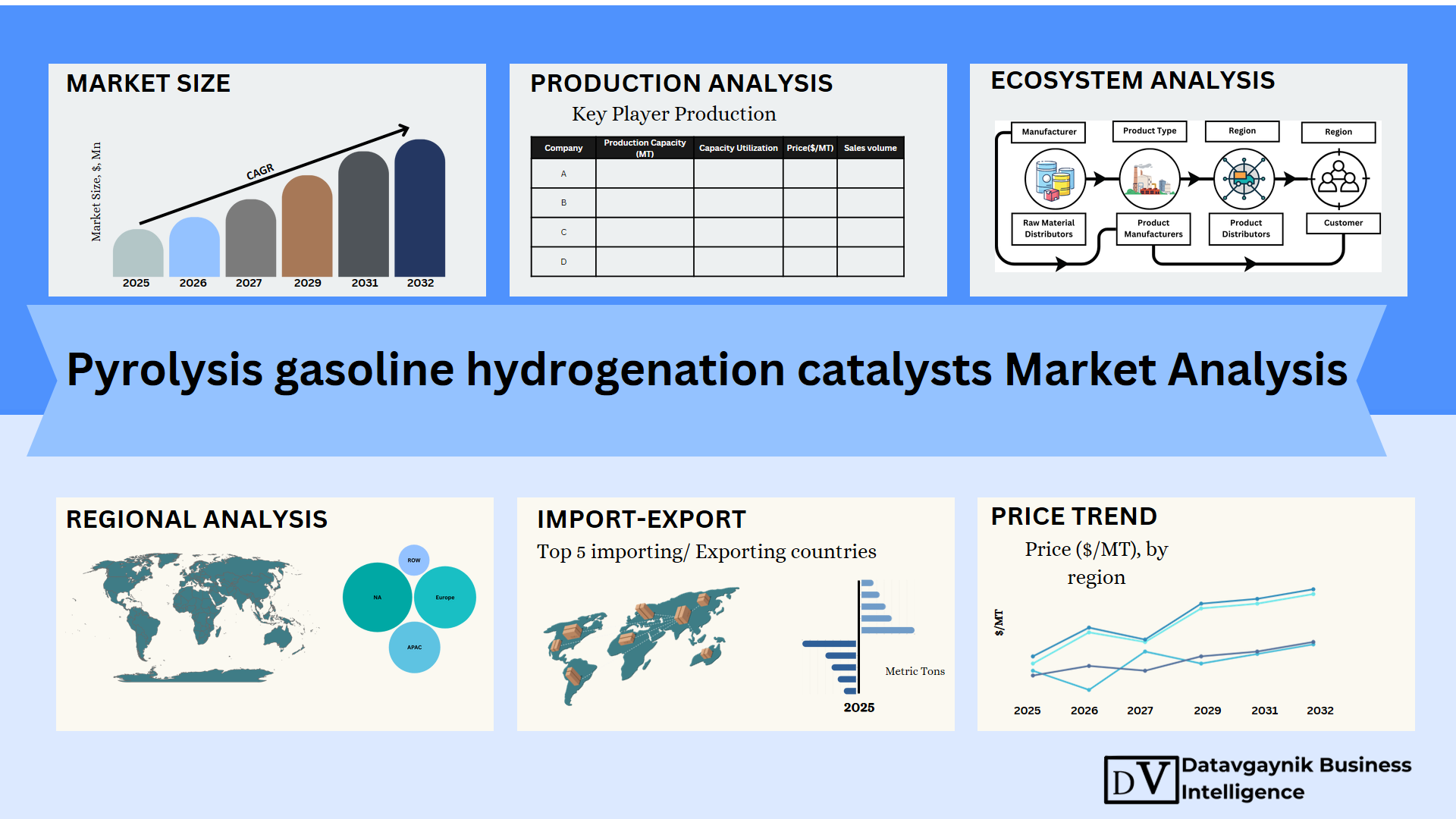
The Pyrolysis gasoline hydrogenation catalysts Market is undergoing rapid expansion, driven significantly by the surge in global petrochemical output. As steam cracking units across the globe continue to ramp up production to meet rising demand for olefins such as ethylene and propylene, the generation of pyrolysis gasoline as a byproduct has intensified. Pyrolysis gasoline, rich in valuable aromatics like benzene, toluene, and xylene, requires efficient hydrogenation to become a viable feedstock for downstream applications.
For instance, the rise in polyethylene and polypropylene demand across packaging, automotive, and consumer goods sectors is creating ripple effects upstream in olefin and aromatic markets. This directly translates into higher pygas production, which in turn is accelerating the growth trajectory of the Pyrolysis gasoline hydrogenation catalysts Market. As more refiners and petrochemical firms seek to extract maximum value from their feedstocks, hydrogenation catalysts are becoming indispensable components in production workflows.
Enhanced Fuel Standards Stimulating Demand in Pyrolysis Gasoline Hydrogenation Catalysts Market
Governments across the globe are enforcing stricter fuel specifications aimed at reducing emissions and improving combustion efficiency. This trend is driving sustained demand for hydrogenation processes that remove undesirable compounds such as diolefins and sulfur from pyrolysis gasoline. The Pyrolysis gasoline hydrogenation catalysts Market is witnessing consistent adoption in regions where fuel octane requirements and aromatic reduction targets are particularly stringent.
For example, Europe and North America have already implemented Tier 3 and Euro 6 fuel standards, which mandate lower sulfur content and reduced aromatics in gasoline. To comply with such regulations, refiners are integrating advanced hydrogenation catalyst systems to convert pygas into high-octane, environmentally compliant fuel components. This compliance-driven catalyst demand is not limited to developed economies—emerging markets in Asia-Pacific and the Middle East are rapidly aligning with these benchmarks, further expanding the global market scope.
Pyrolysis Gasoline Hydrogenation Catalysts Market Size Scales with Petrochemical Derivative Demand
A key growth vector in the Pyrolysis gasoline hydrogenation catalysts Market is the increasing utilization of hydrogenated pygas in producing high-value petrochemical derivatives. Hydrogenated pygas serves as a primary feedstock for BTX (benzene, toluene, xylene) production, which are critical inputs in the manufacturing of plastics, synthetic fibers, paints, adhesives, and industrial solvents.
With global benzene demand projected to grow steadily, fueled by its use in styrene and phenol production, the necessity for clean, high-purity feedstock is rising in parallel. For instance, the global xylene demand has seen a robust uptick due to increased consumption in polyester fiber and PET resin manufacturing. This trend enhances the need for efficient hydrogenation catalysts capable of delivering selective and stable performance, thereby reinforcing the importance of the Pyrolysis gasoline hydrogenation catalysts Market in supporting downstream value chains.
Environmental Pressures Accelerating Catalyst Adoption Across Refineries
One of the most transformative drivers in the Pyrolysis gasoline hydrogenation catalysts Market is the mounting pressure on refineries to adopt greener and more sustainable processes. As regulatory bodies escalate their commitment to reducing the carbon footprint of fuel production, the role of hydrogenation catalysts becomes central to environmental compliance strategies.
For instance, pyrolysis gasoline is typically high in unsaturated hydrocarbons and aromatic content, both of which are problematic from an emissions standpoint. Catalysts that enable the hydrogenation of these compounds not only reduce the environmental impact of the final fuel product but also improve its storage stability and performance characteristics. Refineries aiming to modernize operations and meet sustainability metrics are increasingly investing in high-activity and selective hydrogenation catalyst solutions, further expanding the Pyrolysis gasoline hydrogenation catalysts Market.
Technological Innovation Driving Competitive Edge in Pyrolysis Gasoline Hydrogenation Catalysts Market
Innovation in catalyst design and engineering has emerged as a significant growth enabler for the Pyrolysis gasoline hydrogenation catalysts Market. The development of catalysts with higher selectivity, longer operational lifespans, and superior thermal stability is redefining performance standards in pygas processing.
For example, new-generation nickel-based catalysts are being optimized for enhanced diolefin saturation while maintaining activity over extended cycles, reducing the need for frequent regeneration. Platinum and palladium-based systems are being tailored for high-selectivity applications where BTX purity is paramount. These innovations not only improve the economics of hydrogenation processes but also enable operators to meet the dual objectives of product quality and environmental compliance.
Moreover, the integration of advanced reactor technologies—such as fixed-bed and fluidized-bed systems—has enhanced catalyst contact efficiency and heat management, further boosting yield and throughput. Such technological advancements are positioning the Pyrolysis gasoline hydrogenation catalysts Market as a cornerstone of modern refining and petrochemical operations.
Emerging Economies Redefining Pyrolysis Gasoline Hydrogenation Catalysts Market Dynamics
While mature markets in North America and Europe continue to drive incremental innovation and regulatory compliance, the real volume growth in the Pyrolysis gasoline hydrogenation catalysts Market is emanating from Asia-Pacific and the Middle East. These regions are investing aggressively in new steam cracking units and integrated refining-petrochemical complexes, creating fertile ground for catalyst deployment.
For instance, major refinery expansions in China and India are being built with hydrogenation capability integrated into their core configurations. As these economies industrialize, the demand for higher-quality fuels and cleaner petrochemical products is pushing refiners to invest in top-tier hydrogenation catalyst systems. Additionally, nations like Saudi Arabia and the UAE are leveraging their hydrocarbon reserves to become downstream manufacturing powerhouses, further driving catalyst market expansion.
The Pyrolysis gasoline hydrogenation catalysts Market Size in these regions is expected to exhibit double-digit compound annual growth over the next five years, underpinned by rising fuel demand, increasing petrochemical output, and strengthening environmental regulations.
Strategic Refining Optimization Elevating Catalyst Utilization
Operational efficiency is a central focus in today’s refining landscape, and this has significant implications for the Pyrolysis gasoline hydrogenation catalysts Market. Refineries are under increasing pressure to maximize yield from available feedstocks while minimizing waste and energy usage. Hydrogenation catalysts play a pivotal role in this optimization process.
For instance, in integrated operations where pygas is routed to both gasoline blending and BTX extraction, the selectivity and flexibility of hydrogenation catalysts directly affect the economic outcomes of production runs. Catalysts that deliver consistent performance under variable feed conditions help refineries achieve production stability and enhance profitability. As a result, catalyst procurement is now viewed as a strategic decision that directly impacts a plant’s operational bottom line.
This has led to growing collaborations between catalyst manufacturers and refiners to develop customized formulations tailored to specific feedstock compositions and performance targets. Such strategic integration is deepening the reliance on advanced hydrogenation catalysts and reshaping competitive dynamics in the Pyrolysis gasoline hydrogenation catalysts Market.
“Track Country-wise Pyrolysis gasoline hydrogenation catalysts Production and Demand through our Pyrolysis gasoline hydrogenation catalysts Production Database”
-
-
- Pyrolysis gasoline hydrogenation catalysts production database for 32+ countries worldwide
- Pyrolysis gasoline hydrogenation catalysts sales volume for 32+ countries
- Country-wise Pyrolysis gasoline hydrogenation catalysts production capacity, production plant mapping, production capacity utilization for 32+ manufacturers
- Pyrolysis gasoline hydrogenation catalysts production plants and production plant capacity analysis by top manufacturers
-
“Track real-time Pyrolysis gasoline hydrogenation catalysts Prices, Pyrolysis gasoline hydrogenation catalysts price charts for 32+ countries, Pyrolysis gasoline hydrogenation catalysts weekly price tracker and Pyrolysis gasoline hydrogenation catalysts monthly price tracker”
-
-
- Track real-time Pyrolysis gasoline hydrogenation catalysts prices and Pyrolysis gasoline hydrogenation catalysts price trend in 32+ countries though our excel-based Pyrolysis gasoline hydrogenation catalysts price charts
- Real-time Pyrolysis gasoline hydrogenation catalysts price tracker dashboard with 32+ countries
- Complete transparency on Pyrolysis gasoline hydrogenation catalysts price trend through our Pyrolysis gasoline hydrogenation catalysts monthly price tracker, Pyrolysis gasoline hydrogenation catalysts weekly price tracker
-
Asia-Pacific Leads Global Growth in Pyrolysis Gasoline Hydrogenation Catalysts Market
The Pyrolysis gasoline hydrogenation catalysts Market is witnessing its strongest momentum in the Asia-Pacific region, driven by massive petrochemical investments and the scaling up of refining capacity. Countries such as China, India, South Korea, and Japan are making significant advances in steam cracking and aromatic extraction units, where pyrolysis gasoline hydrogenation plays a crucial role.
In China, the recent commissioning of mega petrochemical complexes with integrated refining capabilities has sharply increased the production of pyrolysis gasoline. As these facilities focus on producing higher-quality fuel components and BTX aromatics, the demand for hydrogenation catalysts has escalated. India, similarly, is upgrading existing refineries under its fuel quality improvement initiatives, pushing adoption of advanced hydrogenation catalyst technologies. The Pyrolysis gasoline hydrogenation catalysts Market in Asia-Pacific is projected to expand at a high single-digit CAGR over the next five years, driven by rising middle-class consumption and industrialization.
North America Pyrolysis Gasoline Hydrogenation Catalysts Market Driven by Advanced Catalyst Innovation
North America remains a key contributor to the Pyrolysis gasoline hydrogenation catalysts Market, underpinned by its mature refining sector and continued investments in catalyst R&D. The United States, in particular, has been a hub for hydrogenation catalyst development, with domestic refiners seeking highly efficient solutions to meet stringent fuel specifications.
The presence of multiple steam crackers along the U.S. Gulf Coast ensures steady production of pyrolysis gasoline, especially from ethane and propane feedstocks. With growing domestic and export demand for high-octane gasoline and BTX chemicals, the need for stable, high-performance hydrogenation catalysts remains critical. Additionally, catalyst producers in the region are focused on developing formulations that lower operating pressure and hydrogen consumption, aligning with sustainability targets and cost optimization.
Europe’s Environmental Policies Intensify Pyrolysis Gasoline Hydrogenation Catalysts Market Adoption
The Pyrolysis gasoline hydrogenation catalysts Market in Europe is largely shaped by aggressive environmental policies and the continent’s push toward cleaner fuel alternatives. Countries such as Germany, France, the Netherlands, and the UK have implemented robust emission reduction programs, mandating lower aromatic content in motor gasoline.
Refineries in Europe are investing in selective hydrogenation catalyst systems to meet EU fuel directives and reduce atmospheric pollutants. These catalysts are increasingly designed to operate in both pygas upgrading and aromatics recovery, supporting integrated refining and petrochemical objectives. The European market is also seeing a steady transition toward bio-based feedstocks, where the hydrogenation of biomass-derived pyrolysis streams opens new growth avenues for catalyst manufacturers.
Middle East Becoming a Strategic Export Hub for Pyrolysis Gasoline Hydrogenation Catalysts
In the Middle East, the Pyrolysis gasoline hydrogenation catalysts Market is being reshaped by the region’s diversification into downstream petrochemical production. Saudi Arabia, UAE, and Kuwait have launched multibillion-dollar refinery-petrochemical integration projects that are increasing pygas output and refining complexity.
As these countries look to maximize the value of their hydrocarbon resources, hydrogenation catalysts are being deployed to convert pygas into high-grade gasoline blending components and chemical feedstocks. The region’s low-cost energy, feedstock availability, and logistical proximity to both Europe and Asia-Pacific position it as a strategic supply center for pyrolysis gasoline derivatives. Demand for hydrogenation catalysts is rising in tandem with these investments, supported by strong government backing for energy efficiency and emissions reduction.
Latin America and Africa Offer Emerging Opportunities in Pyrolysis Gasoline Hydrogenation Catalysts Market
While still in the early stages of adoption, Latin America and Africa present emerging potential for the Pyrolysis gasoline hydrogenation catalysts Market. Brazil and Argentina are expanding their refining capabilities, supported by the need for higher-quality transportation fuels and petrochemical self-sufficiency.
In Africa, nations such as Nigeria, Angola, and Egypt are modernizing aging refining infrastructure. As they aim to reduce reliance on imported fuels and chemicals, investment in hydrogenation catalysts becomes essential for domestic pygas utilization. These regions, with rising urbanization and energy demand, offer untapped opportunities for global catalyst suppliers to establish market presence and support technology transfer initiatives.
Pyrolysis Gasoline Hydrogenation Catalysts Market Segmentation by Catalyst Type
The Pyrolysis gasoline hydrogenation catalysts Market is segmented by catalyst type into nickel-based, platinum-based, palladium-based, and rhodium-based catalysts. Nickel-based catalysts dominate due to their favorable cost-performance balance and proven efficiency in diolefin hydrogenation. They are widely used in standard refining operations where operational budgets and feedstock variability are key concerns.
Platinum-based catalysts, though more expensive, offer superior selectivity and are often deployed in high-purity BTX recovery operations. These catalysts are preferred in complex refinery setups where product yield optimization is critical. Palladium-based catalysts serve niche applications requiring selective hydrogenation, especially in sulfur-rich feedstocks. Rhodium-based catalysts, though used sparingly, are gaining interest in specialty hydrogenation and bio-pygas conversion processes, where extreme temperature and pressure stability is required.
Application Segmentation Expands Functional Scope of Pyrolysis Gasoline Hydrogenation Catalysts Market
The Pyrolysis gasoline hydrogenation catalysts Market is segmented by application into fuel refining, petrochemical production, biofuel conversion, and environmental applications. Fuel refining remains the largest segment, as hydrogenation catalysts are vital in upgrading pygas to meet octane and emission standards. Petrochemical production is another significant segment, driven by growing demand for aromatics in global manufacturing.
Notably, biofuel conversion is emerging as a high-growth segment. As pyrolysis of biomass becomes commercially viable, the need for catalysts that can hydrogenate oxygenated compounds and improve fuel quality is increasing. Environmental applications, including sulfur removal and olefin saturation, are also gaining traction, especially in facilities targeting ISO and environmental certification.
Reactor Configuration Impacting Pyrolysis Gasoline Hydrogenation Catalysts Market Dynamics
The reactor configuration used in the hydrogenation process significantly influences the Pyrolysis gasoline hydrogenation catalysts Market. Fixed-bed reactors are the most common, known for their straightforward design and ease of operation. These are well-suited for continuous processing in conventional refinery settings.
Fluidized-bed reactors offer better heat and mass transfer, making them ideal for high-throughput facilities. These reactors support more efficient contact between catalyst and feed, reducing reaction time and enhancing productivity. Slurry-phase reactors, although less common, are used where flexibility in feed composition is critical, such as in pilot projects or bio-pygas trials.
Pyrolysis Gasoline Hydrogenation Catalysts Price Trend Reflects Feedstock and Metal Market Volatility
The Pyrolysis gasoline hydrogenation catalysts Price Trend has shown considerable volatility over the past five years, influenced primarily by fluctuations in base metal prices and changes in feedstock composition. For instance, the price of nickel and platinum, two of the most commonly used metals in catalyst formulations, has experienced swings of 15–25% annually, impacting overall catalyst cost structures.
Additionally, changes in the supply of pygas due to cracker shutdowns or ethylene market corrections can alter demand for hydrogenation catalysts, indirectly affecting pricing. The Pyrolysis gasoline hydrogenation catalysts Price in 2024 ranged between $10,000 and $20,000 per metric ton depending on metal loading, activity level, and supplier region.
Premium catalysts, especially those using noble metals with advanced support structures, can command prices 30–40% higher due to longer cycle life and lower regeneration frequency. As refiners shift toward catalysts that reduce hydrogen consumption and increase selectivity, the price-value balance is becoming a central theme in procurement decisions.
Regional Disparities Driving Differentiated Pyrolysis Gasoline Hydrogenation Catalysts Price Trends
The Pyrolysis gasoline hydrogenation catalysts Price Trend varies by geography due to differences in manufacturing scale, import tariffs, and energy costs. In Asia-Pacific, particularly China and India, domestic catalyst production benefits from lower labor and material costs, creating downward pressure on pricing. However, product quality variation often leads to price segmentation even within this region.
In contrast, Europe’s high regulatory compliance costs and advanced R&D inputs push prices higher, especially for platinum and palladium-based systems. North American prices are largely stable, though subject to periodic increases tied to metal market movements and local demand surges. The Pyrolysis gasoline hydrogenation catalysts Price in the Middle East remains competitive, supported by regional metal smelting and cost-effective energy inputs.
Going forward, global decarbonization efforts are expected to influence the Pyrolysis gasoline hydrogenation catalysts Price Trend, as demand shifts toward more sustainable and recyclable catalyst systems. This evolution is likely to bring differentiated pricing models based on lifecycle performance, emissions impact, and metal recovery potential.
“Pyrolysis gasoline hydrogenation catalysts Manufacturing Database, Pyrolysis gasoline hydrogenation catalysts Manufacturing Capacity”
-
-
- Pyrolysis gasoline hydrogenation catalysts top manufacturers market share for 32+ manufacturers
- Top 12 manufacturers and top 19 manufacturers of Pyrolysis gasoline hydrogenation catalysts in North America, Europe, Asia Pacific
- Pyrolysis gasoline hydrogenation catalysts production plant capacity by manufacturers and Pyrolysis gasoline hydrogenation catalysts production data for 32+ market players
- Pyrolysis gasoline hydrogenation catalysts production dashboard, Pyrolysis gasoline hydrogenation catalysts production data in excel format
-
“Pyrolysis gasoline hydrogenation catalysts price charts, Pyrolysis gasoline hydrogenation catalysts weekly price tracker and Pyrolysis gasoline hydrogenation catalysts monthly price tracker”
-
-
- Factors impacting real-time Pyrolysis gasoline hydrogenation catalysts prices in 32+ countries worldwide
- Pyrolysis gasoline hydrogenation catalysts monthly price tracker, Pyrolysis gasoline hydrogenation catalysts weekly price tracker
- Real-time Pyrolysis gasoline hydrogenation catalysts price trend, Pyrolysis gasoline hydrogenation catalysts price charts, news and updates
- Tracking Pyrolysis gasoline hydrogenation catalysts price fluctuations
-
Competitive Landscape of the Pyrolysis Gasoline Hydrogenation Catalysts Market
The Pyrolysis gasoline hydrogenation catalysts Market is led by a concentrated group of multinational chemical and catalyst manufacturers. These companies control a significant portion of global supply, leveraging their integrated refining technology portfolios, proprietary formulations, and global client networks. As the demand for high-performance hydrogenation catalysts intensifies across refining and petrochemical sectors, market share is increasingly consolidated among a few dominant players.
BASF SE
BASF SE holds a strong position in the Pyrolysis gasoline hydrogenation catalysts Market. With decades of experience in refinery catalyst production, BASF offers tailored catalyst systems engineered for high selectivity and stability. Among its leading product lines is the E 24 series, designed specifically for pygas hydrogenation in both fixed-bed and trickle-phase reactors. These catalysts offer low pressure drop and superior resistance to coke formation.
BASF’s market share is estimated to be in the range of 15 to 18 percent globally. The company maintains a competitive edge through continuous innovation and global technical service support. BASF’s global production footprint, including facilities in Europe, Asia, and North America, ensures consistent supply and regional responsiveness.
Johnson Matthey
Johnson Matthey is another major player in the Pyrolysis gasoline hydrogenation catalysts Market, with a focus on noble metal catalyst systems. The company specializes in palladium and platinum-based catalysts that are widely used in the selective hydrogenation of aromatic-rich pygas streams. The PURASPEC and PRICAT product lines are known for their efficiency in impurity removal and hydrocarbon upgrading.
Johnson Matthey’s estimated market share stands at 10 to 12 percent. Its strengths lie in developing catalysts that meet evolving emission standards and support energy-efficient refining processes. The company’s strong presence in Europe and Asia-Pacific helps it serve advanced and emerging refining hubs effectively.
Albemarle Corporation
Albemarle Corporation has carved out a niche in the Pyrolysis gasoline hydrogenation catalysts Market, particularly in the United States and the Middle East. Its portfolio includes nickel-based and bi-metallic catalyst systems, primarily used in pygas diolefin saturation and sulfur removal applications. The company markets these under its ACT series, offering stable performance over multiple regeneration cycles.
Albemarle’s market share is estimated at 8 to 10 percent. The company has focused on building long-term partnerships with major refiners and investing in catalyst innovation that extends product life and reduces total cost of ownership.
Axens
Axens, a French process licensing and catalyst manufacturing firm, plays a pivotal role in the Pyrolysis gasoline hydrogenation catalysts Market. The company’s catalysts are integrated into its hydrogenation process units, which are widely adopted across Europe and the Middle East. Axens offers the HR and CR catalyst series, which are optimized for selective hydrogenation and diolefin removal.
With an estimated global market share of 12 to 14 percent, Axens benefits from its dual position as both a process licensor and a catalyst supplier. The company’s close collaboration with refiners on unit design and performance optimization gives it a unique advantage in securing long-term catalyst contracts.
Haldor Topsoe (Now Topsoe)
Topsoe, formerly Haldor Topsoe, is a key technology leader in the Pyrolysis gasoline hydrogenation catalysts Market. Known for its high-activity catalysts, Topsoe provides specialized solutions for both standard and high-severity hydrogenation conditions. Its TK series catalysts are widely used in Asia and the Middle East for pygas upgrading and aromatic purification.
Topsoe’s market share is approximately 10 percent. The company’s focus on decarbonization and energy efficiency aligns well with the evolving needs of the refining industry, making it a preferred supplier for future-ready catalyst systems.
Clariant
Clariant also holds a competitive position in the Pyrolysis gasoline hydrogenation catalysts Market, especially in Europe and Asia. The company offers both nickel and precious metal-based catalysts under its HYDEX and EnviCat lines. These are designed for optimal performance in low-pressure reactors and environmentally regulated facilities.
Clariant’s share is estimated at 6 to 8 percent. Its strategy centers around sustainability and operational flexibility, targeting mid-sized refiners and specialty chemical producers seeking cleaner fuel outputs.
China Petrochemical Corporation (Sinopec)
Sinopec Catalyst Company is emerging as a powerful force in the Pyrolysis gasoline hydrogenation catalysts Market. Leveraging its integrated refining operations, Sinopec produces in-house catalyst formulations tailored for domestic use and export. Its product range includes low-cost nickel-based catalysts widely used in Chinese cracker complexes.
Sinopec’s domestic dominance gives it a market share of over 20 percent within China and about 5 to 7 percent globally. As China continues to expand its refining and petrochemical capacity, Sinopec’s influence on pricing and catalyst deployment is expected to grow.
Market Share Dynamics in the Pyrolysis Gasoline Hydrogenation Catalysts Market
The global Pyrolysis gasoline hydrogenation catalysts Market is characterized by high concentration, with the top six players controlling over 60 percent of the market. Market share distribution reflects a balance between innovation capability, regional presence, and process integration. Product differentiation is increasingly focused on activity level, metal recovery value, catalyst regeneration frequency, and alignment with environmental compliance targets.
Companies offering bundled solutions—including unit design, catalyst supply, and technical service—are gaining competitive advantage. This trend favors vertically integrated firms like Axens and Topsoe, which can support end-to-end operations and performance optimization.
Recent Developments and Industry Milestones
The Pyrolysis gasoline hydrogenation catalysts Market has seen several strategic developments in the past two years, reflecting shifts in refining strategies and technology adoption.
In January 2024, BASF expanded its hydrogenation catalyst production facility in Ludwigshafen, Germany, adding capacity to support increased demand from European refiners adjusting to new sulfur regulations.
In April 2023, Johnson Matthey launched a new generation of PURASPEC catalysts targeting lower hydrogen consumption during pygas treatment. These products are now being piloted in select facilities across Southeast Asia.
In Q3 2023, Topsoe entered into a long-term catalyst supply agreement with a major refinery in the Middle East, integrating its TK-301 and TK-351 catalyst grades into the site’s pyrolysis gasoline upgrade units.
In October 2023, Axens signed a licensing agreement with an Indian public-sector refinery for its hydrogenation process unit, including supply of the latest HR-900 catalyst family. This deal is expected to strengthen Axens’ position in the South Asian market.
Clariant, in Q2 2024, announced a shift toward recyclable catalyst platforms as part of its sustainability roadmap. Its new EnviCat X product line is undergoing commercial trials in European refineries focused on circular fuel processing.
These developments indicate a growing emphasis on sustainability, lifecycle efficiency, and regional customization in the Pyrolysis gasoline hydrogenation catalysts Market. The competitive landscape is evolving toward higher performance standards, making innovation and strategic partnerships essential for market leadership.
“Pyrolysis gasoline hydrogenation catalysts Production Data and Pyrolysis gasoline hydrogenation catalysts Production Trend, Pyrolysis gasoline hydrogenation catalysts Production Database and forecast”
-
-
- Pyrolysis gasoline hydrogenation catalysts production database for historical years, 12 years historical data
- Pyrolysis gasoline hydrogenation catalysts production data and forecast for next 12 years
- Pyrolysis gasoline hydrogenation catalysts sales volume by manufacturers
-
“Track Real-time Pyrolysis gasoline hydrogenation catalysts Prices for purchase and sales contracts, Pyrolysis gasoline hydrogenation catalysts price charts, Pyrolysis gasoline hydrogenation catalysts weekly price tracker and Pyrolysis gasoline hydrogenation catalysts monthly price tracker”
-
-
- Gain control on your purchase and sales contracts through our real-time Pyrolysis gasoline hydrogenation catalysts price tracker and Pyrolysis gasoline hydrogenation catalysts price trend analysis
- Pyrolysis gasoline hydrogenation catalysts weekly price tracker and forecast for next four weeks
- Pyrolysis gasoline hydrogenation catalysts monthly price tracker and forecast for next two months
-
Market Scenario, Demand vs Supply, Average Product Price, Import vs Export, till 2035
- Global Pyrolysis gasoline hydrogenation catalysts Market revenue and demand by region
- Global Pyrolysis gasoline hydrogenation catalysts Market production and sales volume
- United States Pyrolysis gasoline hydrogenation catalysts Market revenue size and demand by country
- Europe Pyrolysis gasoline hydrogenation catalysts Market revenue size and demand by country
- Asia Pacific Pyrolysis gasoline hydrogenation catalysts Market revenue size and demand by country
- Middle East & Africa Pyrolysis gasoline hydrogenation catalysts Market revenue size and demand by country
- Latin America Pyrolysis gasoline hydrogenation catalysts Market revenue size and demand by
- Import-export scenario – United States, Europe, APAC, Latin America, Middle East & Africa
- Average product price – United States, Europe, APAC, Latin America, Middle East & Africa
- Market player analysis, competitive scenario, market share analysis
- Business opportunity analysis
Key questions answered in the Global Pyrolysis gasoline hydrogenation catalysts Market Analysis Report:
- What is the market size for Pyrolysis gasoline hydrogenation catalysts in United States, Europe, APAC, Middle East & Africa, Latin America?
- What is the yearly sales volume of Pyrolysis gasoline hydrogenation catalysts and how is the demand rising?
- Who are the top market players by market share, in each product segment?
- Which is the fastest growing business/ product segment?
- What should be the business strategies and Go to Market strategies?
The report covers Pyrolysis gasoline hydrogenation catalysts Market revenue, Production, Sales volume, by regions, (further split into countries):
- Asia Pacific (China, Japan, South Korea, India, Indonesia, Vietnam, Rest of APAC)
- Europe (UK, Germany, France, Italy, Spain, Benelux, Poland, Rest of Europe)
- North America (United States, Canada, Mexico)
- Latin America (Brazil, Argentina, Rest of Latin America)
- Middle East & Africa
Table of Contents:
Pyrolysis Gasoline Hydrogenation Catalysts Market:
- Introduction to Pyrolysis Gasoline Hydrogenation Catalysts
- What is Pyrolysis Gasoline (PyGas)?
- The Role of Hydrogenation in PyGas Processing
- Importance of Hydrogenation Catalysts in Refining
- Catalytic Mechanisms in Pyrolysis Gasoline Hydrogenation
- Hydrogenation Process: Fundamentals and Reactions
- Role of Catalysts in Aromatic and Olefin Saturation
- Key Chemical Pathways in PyGas Hydrogenation
- Types of Catalysts Used in Pyrolysis Gasoline Hydrogenation
- Metal-Based Catalysts: Nickel, Platinum, and Palladium
- Bimetallic Catalysts and Their Advantages
- Hybrid and Support Materials for Enhanced Catalysis
- Applications of Pyrolysis Gasoline Hydrogenation
- Improving Fuel Quality and Reducing Aromatics
- Hydrogenation in the Production of High-Grade Gasoline
- Use in Petrochemical Production and Olefin Saturation
- Market Overview of Pyrolysis Gasoline Hydrogenation Catalysts
- Current Market Size and Growth Trends
- Market Drivers: Demand for Cleaner Fuels and Products
- Key Market Dynamics and Challenges
- Regional Insights and Market Distribution
- North America: Market Trends and Technological Advancements
- Europe: Regulatory Influence and Market Growth
- Asia Pacific: Key Growth Drivers and Future Potential
- Latin America and Middle East & Africa: Emerging Markets and Demand
- Market Segmentation by Catalyst Type
- Metal-Based Hydrogenation Catalysts
- Metal Oxide and Heterogeneous Catalysts
- Speciality Catalysts for Specific PyGas Applications
- Technological Innovations in Pyrolysis Gasoline Hydrogenation Catalysts
- New Developments in Catalyst Efficiency and Activity
- Innovations in Catalyst Stability and Regeneration
- Emerging Technologies in Hydrogenation for Cleaner Fuels
- Economic Impact and Pricing Analysis
- Cost Factors in Pyrolysis Gasoline Hydrogenation
- Pricing Trends and Profit Margins for Catalysts
- Economic Implications of Catalytic Hydrogenation in Industry
- Sustainability and Environmental Impact
- Reducing Greenhouse Gas Emissions Through Hydrogenation
- Environmental Benefits of Hydrogenated PyGas
- Life Cycle Assessment (LCA) of Pyrolysis Gasoline Hydrogenation
- Competitive Landscape of Pyrolysis Gasoline Hydrogenation Catalysts
- Major Players in the Catalyst Market
- Competitive Strategies and Market Positioning
- Mergers, Acquisitions, and Collaborations in Catalyst Development
- Regulatory Landscape for Hydrogenation Catalysts
- Government Regulations on Fuel and Gasoline Quality
- Industry Standards for Hydrogenation Catalysts
- Compliance with Environmental and Safety Regulations
- Challenges in Pyrolysis Gasoline Hydrogenation
- Catalyst Deactivation and Performance Loss
- Cost and Supply Chain Issues for Catalyst Materials
- Overcoming Technological Barriers in Hydrogenation Efficiency
- Investment Trends and Market Opportunities
- Investment in Pyrolysis Gasoline Hydrogenation Technologies
- Opportunities in Catalyst Manufacturing and Production
- Future Investment Prospects in Cleaner Fuel Technologies
- Raw Materials and Supply Chain for Pyrolysis Gasoline Hydrogenation Catalysts
- Sourcing Raw Materials for Catalyst Manufacturing
- Challenges in Raw Material Availability and Cost
- Trends in the Global Supply Chain for Hydrogenation Catalysts
- Consumer Demand and Industry Preferences
- Demand for Low-Aromatic and Low-Sulfur Gasoline
- Preferences for Efficient and High-Performance Catalysts
- Industry Shifts Toward Sustainable and Cleaner Products
- Research and Development in Hydrogenation Catalysts
- R&D Focus on Improving Catalyst Life and Performance
- Collaboration Between Industry and Academia in Catalyst Innovation
- Emerging Trends and Areas of Exploration in PyGas Hydrogenation
- Case Studies in Pyrolysis Gasoline Hydrogenation
- Real-World Applications of Pyrolysis Gasoline Hydrogenation
- Success Stories in the Refining Industry
- Key Learnings from Large-Scale Hydrogenation Projects
- Future Outlook for Pyrolysis Gasoline Hydrogenation Catalysts
- Long-Term Market Forecasts and Technological Evolution
- The Future Role of Catalysts in Cleaner Fuels Production
- Anticipated Growth in Demand for Hydrogenated PyGas
- Concluding Remarks
- Summary of Key Insights in the Hydrogenation Catalysts Market
- Recommendations for Stakeholders and Industry Leaders
- Future Trends in Pyrolysis Gasoline Processing and Catalysis
Other recently published reports:


